Samsung unveils Galaxy S26 lineup with Privacy Display tech and expanded AI capabilities


33 Sources
33 Sources
[1]
Samsung reveals Galaxy S26 lineup with Privacy Display and exclusive Gemini smarts
There used to be countless companies making flagship Android phones, but a combination of factors has narrowed the field over time. Today, Samsung is the undisputed king of the Android device ecosystem with its Galaxy S line. So we can safely assume today's Unpacked has revealed the most popular Android phones for the next year -- the Galaxy S26 Ultra, Galaxy S26+, and Galaxy S26. Samsung didn't swing for the fences this time around, producing phones with a few cosmetic tweaks and upgraded internals. Meanwhile, Samsung is investing even more in AI, saying the S26 series includes the first "Agentic AI phones." Despite limited hardware upgrades, the realities of component prices in the age of AI mean the prices of the two cheaper models have gone up by $100 this year. The Ultra remains at an already eye-watering $1,300. Faster and more private Looking at the Galaxy S26 family, you'd be hard-pressed to tell them apart from last year's phones. The camera surround is different, and the measurements of the smallest and largest phone are ever so slightly different. You probably won't be able to tell just by looking, but the S26 Ultra has regressed from titanium to aluminum, a reversion Apple also made with its latest high-end phones. This phone also retains its S Pen stylus. Specs at a glance: Samsung Galaxy S26 series Galaxy S26 ($900) Galaxy S26+ ($1,100) Galaxy S26 Ultra ($1,300) SoC Snapdragon 8 Elite Gen 5 (3 nm) Snapdragon 8 Elite Gen 5 (3 nm) Snapdragon 8 Elite Gen 5 (3 nm) Memory 12GB 12GB 12GB, 16GB Storage 256GB, 512GB 256GB, 512GB 256GB, 512GB, 1TB Display 6.3-inch OLED, 10-bit color, 2340×1080, 1-120Hz 6.7-inch OLED, 10-bit color, 3120×1440, 1-120Hz 6.9-inch OLED, 10-bit color, 3120×1440, 1-120Hz, S Pen support Cameras 50MP primary, f/1.8, 1.0 μm; 12MP ultrawide, f/2.2, 1.4 μm, 10MP 3x telephoto, f/2.4, 1.0 μm; 12MP selfie, f/2.2, 0.7 μm 50MP primary, f/1.8, 1.0 μm; 12MP ultrawide, f/2.2, 1.4 μm, 10MP 3x telephoto, f/2.4, 1.0 μm; 12MP selfie, f/2.2, 0.7 μm 200MP primary, f/1.4, 0.6 μm; 50MP ultrawide, f/1.9, 0.7 μm; 10MP 3x telephoto, f/2.4, 1.12 μm; 50MP 5x telephoto, f/2.9, 0.7 μm Software Android 16 Android 16 Android 16 Battery 4,300 mAh 4,900 mAh 5,000 mAh Connectivity Wi-Fi 7, Bluetooth 5.4, USB-C 3.2, Sub6 5G Wi-Fi 7, Bluetooth 5.4, USB-C 3.2, Sub6 and mmWave 5G Wi-Fi 7, Bluetooth 5.4, USB-C 3.2, Sub6 and mmWave 5G Measurements 71.7×149.6×7.2 mm, 167g 75.8×158.4×7.3 mm, 190g 78.1×163.6×7.9 mm, 214 g These phones will again have the latest Snapdragon flagship processor (in North America, Japan, and China) with customizations exclusive to Samsung. The Snapdragon 8 Elite Gen 5 for Galaxy is a 3 nm chip with third-gen Oryon CPU cores, an Adreno 840 GPU, and a powerful Hexagon NPU for on-device AI processing. Samsung promises double-digit performance gains across the board, which is what we hear every year. Samsung flagship phones have extremely fast hardware, so they benchmark well. However, they also tend to heat up and throttle quickly during sustained use. Perhaps that won't be as much of a problem with the S26 series. Samsung says it has implemented its largest vapor chamber ever to better control temperatures. The batteries have also been redesigned for greater efficiency and charging speed, but the base model is the only one that saw a capacity boost (4,000 to 4,300 mAh). Charging speeds have gotten a much-needed increase at the Ultra level. Samsung has only said you can now get a 75 percent charge in 30 minutes using its most expensive phone -- it peaks at 60 W, up from 45 W for the last Ultra. Samsung has been using the same camera sensors for a few cycles now, and it's not changing anything major this time around. The Ultra still has four cameras (including two telephotos) that top out with the 200 MP primary, and the S26+ and base model still have three cameras with a 50 MP primary. The apertures on the Ultra sensors are a bit wider to allow for brighter photos in challenging conditions. More interesting, though, is the option to record high-quality 8K video directly to an external drive. The S26 also brings support for the Advanced Professional Video (APV) codec. While the display specs haven't changed much, they are home to the phone's most notable new feature: Privacy Display. As smartphone screens have improved, they have emphasized high brightness and wide viewing angles, which is what you want most of the time. However, that also makes it easy for people nearby to see what's on your screen. With one tap, the S26 can make it harder for shoulder surfers to see what you're doing. Privacy Display uses a technology called Black Matrix, which activates "narrow pixels." These pixels focus light more directly on the user to limit the viewing angle. Privacy Display can be activated system-wide as you like, but it can also be activated on a per-app basis or even just in the part of the screen where notifications appear. What is an Agentic AI phone anyway? Unsurprisingly, AI takes the lead with the S26 launch. Part of that is just Samsung following the zeitgeist, but companies can also add new AI capabilities to fill out spec sheets without a bunch of increasingly expensive hardware upgrades. In Samsung's words, it has sought to have "AI integrated into every layer" of the Galaxy S26 experience. That starts with expanded awareness of screen context. The company's Now Brief feature, which is supposed to pull together useful information from across your apps, has not been very impressive so far. With the S26, Samsung is piping notification content into Now Brief, allowing it to remind you about things even if you never added them to your calendar or to-do list. Like many of Samsung's Galaxy AI features, this data is processed on-device and won't go to the cloud. In a similar vein, Galaxy AI is also getting "Nudges," which look similar to Google's Magic Cue on the Pixel 10 series. The Galaxy S26 will be able to suggest content and apps based on what's happening on the screen. For example, Galaxy AI might see you want to share images and suggest the right ones, or perhaps it will check your calendar for openings to save you from switching apps. Of course, that assumes the AI will correctly recognize the context and call the right action. AI features will also be expanding in Samsung's stock apps. In the Browser, Samsung has partnered with Perplexity for a new "Ask AI" feature. Rather than juggling tabs to read original sources yourself, you can have the AI do it. It basically gives you a research report like you could get from Perplexity itself (or Gemini Deep Research), but it's integrated with the browser. Samsung's gallery app also gets expanded AI editing tools with the S26. These capabilities will really allow you to change the substance of photos, so Samsung has added a visible watermark to label them. We've asked if there are AI labels in the image metadata, like you get with some other editing systems. A major component of Samsung's "Agentic AI phone" pitch comes from a partnership with Google. For starters, Google's AI-powered scam detection features in the Messaging app, previously exclusive to Pixels, will launch on the S26 in preview before expanding to more devices later. Circle to Search is getting an upgrade that lets it identify multiple objects in a single image -- this is in testing on both the Pixel 10 series and the Galaxy S26. The other Google tie-in is more in keeping with the goal of agentic AI. For the first time, Gemini will be able to handle multistep tasks for you. You can watch it work if you prefer, but this can also happen entirely in the background while you do other things. It's a bit like the recently launched Chrome Auto Browse but for apps. The selection of apps is pretty slim during this testing period. Samsung and Google say you'll be able to order food and groceries in apps like DoorDash and Grubhub, and there will be a tie-in with Uber for both rides and food. Google currently says you should "supervise closely" when the agent is working on your behalf. So we'll see how that goes. When you can get it Samsung is accepting preorders for its new phones starting today. You can get them at every mobile carrier or directly from Samsung's website. Carriers will offer a variety of deals with monthly credits to reduce the sting of the new, higher prices. Samsung has enhanced trade-in values right now, which is a more straightforward way to get a discount if you have an old phone to unload. It's offering up to $900 off instantly with an S25 Ultra or Z Fold 6 trade-in. Even a phone from a couple of years ago can cut the price of a Galaxy S26 way down. The phones are available in violet cobalt, sky blue, white, and black at all retailers. Samsung's exclusive colors this time are silver shadow and pink gold. Devices will be on shelves and the doorsteps of preorderers on or around March 11.
[2]
Big Shock: Samsung's Galaxy S26 Ultra Camera Updates Have a Ton of AI
Samsung's Galaxy S26 Ultra is here, packing a wealth of upgrades from the design to its fancy new Privacy Display which aims to keep people from spying on whatever shady things you're up to on your commute. But the Ultra range has always been where Samsung has unleashed its latest, greatest camera technology, so let's take a closer look at what's new for the photographers among you. In terms of hardware, not a lot has changed. The main camera's resolution is 200-megapixels, there's a 50-megapixel ultrawide-angle camera, and 10-megapixel 3x telephoto and 50-megapixel 5x telephoto cameras too. Those specs are the same as the previous S25 Ultra, so those of you hoping for a wild overhaul of the cameras to keep pace with Xiaomi's upcoming 17 Ultra may be disappointed. But there have been some tweaks. The main and ultrawide cameras have wider apertures now which will help capture more light which should be especially useful in low light situations. In fact, Samsung especially highlighted the improved performance of night mode imagery for both stills and video, with the night video mode employing more advanced software processing for noise reduction and improved colors. Speaking of video, it'll still shoot in 8K but it also supports Log codecs with built-in LUTs (which are what cinema pros call filters, essentially) which should make the phones more appealing to serious video creators. To show the phone means business, Samsung took a leaf out of Apple's playbook and filmed and livestreamed its San Francisco launch event using the S26 Ultra. There's also a feature called Horizon Lock, which aims to keep the horizon level while shooting video no matter how you twist and turn your phone. This kind of stabilization exists in action cameras already and it can be helpful for filming intense action, like if you're running to keep up as you're filming your friend skateboarding. But because it's 2026 and AI is the word to rule us all, many of the major updates come in the form of generative AI. It's built deep into the camera experience, allowing you to use natural language prompts to edit images, including compositing one element of an image onto another, or even going so far as to change the outfit someone in your image is wearing. During its Unpacked event, Samsung demoed the features, showing how its AI tools can take a picture of dog from one image and put it in the arms of a girl in another. The company also showed how the phone can instantly change the outfit of a girl from a simple shirt to a cosy sweater and onto a more grungy skater aesthetic. To be fair, the images looked photo-realistic -- at least as far as I can see on the YouTube livestream -- though how these tools actually work in everyday use remains to be seen when we spend some time with them. The bigger question, of course, is do you actually need them? I won't answer that for you, but I will say that I'm disappointed that Samsung is following the trend of using AI gimmicks as the main upgrades for its cameras rather than focusing on taking better pictures in the real world. I'll reserve judgement for when I've been able to spend some time taking images around my beautiful home city of Edinburgh, Scotland. There I'll focus on finding out how well the phone can capture proper photographs that I'd want to share with family and friends, not just how easily I can put a fake sweater on myself.
[3]
Samsung hopes this year's Galaxy S phones make AI exciting
Just 20 percent of punters who bought Samsung's 2025 flagship smartphone, the Galaxy S25 Ultra, cited AI as the main reason for their purchase. With this year's S26 models, the Korean giant hopes to improve that number. But the company also told The Register that customers' main "pain point" isn't AI performance - it's battery life. Yet only the base model Galaxy S26 gets a bigger battery than last year's model, up 300 mAh to 4,300 mAh. The other two models, the S26 Ultra and S26+, must make do with faster charging. The Register last week handled all three models and can report they follow the familiar template for premium smartphones by incorporating gorgeously bright screens into small packages that are a little thinner and lighter than last year's efforts. The S26 Ultra gets the most interesting addition, a "privacy display" that renders the screen impossible to read except from directly in front. Samsung told us this is possible because the phone's display uses a mix of narrow and wide pixels, and turning off the latter enables private viewing. It's possible to apply privacy mode to whatever area of the screen you desire, or to choose apps that implement it. The Register suggested developers might appreciate an API that enables privacy display in apps, so businesses can deploy custom apps into the field with a little more confidence, or banks could suggest it to enhance security. Samsung execs could not confirm this will be possible, but did not rule it out, noting that the company has published APIs and developer documentation after device launches in the past. Another new addition also has privacy implications. An improved scanning app uses AI to automagically remove creases on paper and retains its ability to perform optical character recognition. Samsung has improved the AI it offers as a personal organizer. We're told that if you consult your calendar and the phone sees you have a meeting in the near future, it might suggest you summon an Uber. Or if a friend texts to suggest catching up on Tuesday, the phone can consult your calendar and propose a time. AI will also screen calls from unknown numbers by speaking to the caller. Users can divert a call to have it answered by AI, and with a few taps, have it indicate they're in a meeting and have outsourced their response to the machine. Additionally, we're told AI powers "Privacy Alerts" that inform users if apps attempt to access sensitive data, such as precise location, call logs, or contacts, beyond obviously useful contexts. Plenty of the new AI features are aimed squarely at consumers, to do things like tidy up photos - in some cases by adding imagined objects that Samsung thinks fit the scene - or lock video recordings horizontally even if users spin their phones. There's also a tool that analyses screenshots and then recommends where to buy any items depicted. Business buyers haven't been forgotten, as Samsung will again offer Enterprise editions of the handsets, which now come with a three-year warranty - one more than offered with last year's models. We're told Samsung has tools that offer "clearer visibility into firmware update status" to help with device fleet management. Samsung has signaled it wants to use more of its own Exynos processors in its handsets, but it hasn't got enough of them to power all S26+ and S26 base model units. A Qualcomm Snapdragon 8 Elite Gen 5 Mobile Platform for Galaxy is present in all S26 Ultra units, with its beefed-up NPU necessary to power some features. It will also ship in some of the lesser S26 range. ®
[4]
Samsung Unveils Galaxy S26 Ultra With Privacy Screen, Lighter Design and More AI
Samsung Electronics Co. unveiled its Galaxy S26 lineup of smartphones, with an emphasis on artificial intelligence features and real-world privacy over major design changes. The new devices, announced Wednesday at an event in San Francisco, include the extra-large Galaxy S26 Ultra ($1,300), the Galaxy S26 Plus ($1,100) and the more standard-sized Galaxy S26 ($900) -- with prices that put Samsung in direct competition with Apple Inc.'s iPhone 17 line. While the Ultra costs the same as its predecessor, the Plus and S26 are both $100 more expensive than last year's models, an increase that may partially be explained by the ongoing memory chip crunch. The South Korean company also announced two pairs of earbuds, the $249 Galaxy Buds 4 Pro and the $179 Galaxy Buds 4. All of the new Galaxy products are available for pre-order immediately and will arrive in stores March 11. With Samsung's new handsets, design and camera upgrades mostly take a backseat to AI software additions. That's a risky gambit when many consumers choose to hold off on trading in their phone until there's a new model with meaningfully different hardware. It's no coincidence, for example, that Apple's record sales last quarter coincided with the release of the iPhone 17 series, which brought a fresh look and new color options. Still, with the new Galaxy S26 lineup, Samsung is making the case that it can persuade customers to upgrade without many significant exterior changes. Galaxy S26 Ultra There is at least one exception to that: The high-end Galaxy S26 Ultra introduces what Samsung calls a "Privacy Display." When this mode is activated, the phone's 6.9-inch screen becomes much harder to view from the side, above or below. The effect is similar to using a third-party screen protector, but Samsung has built the privacy measure directly into the Ultra by turning off the pixels that would normally make the device more visible off angle. The Privacy Display can be left on at all times if a user wants. Alternatively, it can also be set to automatically engage if specific apps are opened -- like banking software, Gmail, Slack or anything that might involve sensitive data. Another mode shields notifications only, and Privacy Display can also be configured to turn on whenever a user is prompted to enter a password or PIN. Removing the need for a privacy screen protector lets S26 Ultra buyers enjoy the phone's anti-reflective display, which did better at fending off glare in a hands-on demonstration this week when compared with the iPhone 17 series. Like Apple did with its revamped Pro models, Samsung has moved away from using titanium side rails and switched back to aluminum. That allowed it to shave off some weight for the S26 Ultra, resulting in what the company hails as its lightest and thinnest version yet. The phone's cameras offer the same resolution as before -- 200 megapixels for the main sensor and 50 megapixels for the zoom lenses -- but they're capable of letting in more light thanks to a wider aperture. This should be beneficial in dimly lit environments, and Samsung has also optimized its "Nightography" video mode to recognize the noise patterns from each lens and automatically remove it from clips taken in the dark. The high-end Ultra model can charge the fastest of all three S26 phones: It supports 65-watt wired charging -- which can take the battery from empty to 75% in 30 minutes -- along with 25-watt wireless charging. The company has also upgraded the internal vapor chamber to dissipate heat faster and more efficiently for those who use the device to its fullest. The Ultra's signature S Pen stylus remains built into the device, though it doesn't offer any new features this year. Galaxy S26 Plus and S26 The 6.7-inch Galaxy S26 Plus and 6.2-inch S26 are tamer in comparison. Like the Ultra, they're powered by Qualcomm Inc.'s Snapdragon 8 Elite Gen 5 chip. Samsung hasn't made meaningful changes to the camera hardware, but it has added some fun new software tricks. Within the Super Steady stabilization video mode is a "Horizontal Lock" feature that will keep the horizon level while recording -- similar to a gimbal -- even when physically rotating the phone in your hand. This could appeal to those seeking creative perspectives for social media clips. Much like Google's recent Pixel phones, Samsung is bringing natural-language image editing to the S26 lineup. You can capture a photo and describe in a few words what to change or add to the image, and the company's generative AI tools will make it so. Call screening and in-call scam detection are also now present. AI Features Everywhere Samsung earlier this week said that the Galaxy S26 phones will include built-in support for Perplexity's AI technology, letting users quickly access its agent by saying "Hey Plex." The partnership runs deeper than that, with Perplexity also powering improvements to real-time web answers from Samsung's own Bixby assistant, a spokesperson for the AI company said. In addition, Bixby has gotten better at helping users adjust settings or find lesser-known features through natural conversation, according to Samsung. Perplexity is framing this as the first deal of its kind, with Samsung embracing a multi-agent philosophy that grants AI platforms deep system access and hooks into apps like Notes, Calendar, Gallery, Clock and Reminders. In the coming months, Perplexity will be deeply integrated within Samsung's mobile web browser app, Samsung Internet. Get the Tech Newsletter bundle. Get the Tech Newsletter bundle. Get the Tech Newsletter bundle. Bloomberg's subscriber-only tech newsletters, and full access to all the articles they feature. Bloomberg's subscriber-only tech newsletters, and full access to all the articles they feature. Bloomberg's subscriber-only tech newsletters, and full access to all the articles they feature. Bloomberg may send me offers and promotions. Plus Signed UpPlus Sign UpPlus Sign Up By submitting my information, I agree to the Privacy Policy and Terms of Service. But Google Gemini is still strongly represented across the S26 line. It's already the default assistant, and with its new phones, Samsung will let users trigger automated app actions through voice commands -- like "get me an Uber to SFO." Gemini will go through the steps of performing that request. Users can observe everything as it goes and intervene or cancel at any time. A final confirmation step is required from the user before Gemini actually hails any ride. Uber Technologies Inc. is the only launch partner for this feature, but Samsung said it's hopeful that companies like Instacart and DoorDash Inc. will also sign on. In an interview ahead of Samsung's press conference, Sameer Samat, a Google president overseeing the Android ecosystem, said that Gemini's automated actions will be a significant focus of Android 17 later this year. For now, the company is working with Samsung to offer an early preview in the US and South Korea. Google's Circle to Search, which lets users circle anything on their phone's screen for more information (like shopping links), is also being updated to allow multiple selections at once. This feature will arrive first on the S26 series and roll out to Pixel phones in the near future. Samsung has also tried to dial up the usefulness of Now Brief, its AI-powered feature that shows relevant reminders and other information throughout the day. The feature has been underwhelming since its debut, but now it can pull data from app notifications and tap into usage habits to provide a better snapshot of your day on the lock screen. Galaxy Buds 4 Pro The higher-end Galaxy Buds 4 Pro take aim at Apple's AirPods Pro 3, while the lower-priced Galaxy Buds 4 competes with the AirPods 4 and similarly priced earbuds from other brands. Both include active noise cancellation. Samsung said the Buds 4 Pro deliver deeper bass response and continue to offer high-resolution wireless streaming that Apple hasn't yet matched. But the company is playing catchup with the AirPods in other ways, like adding speech detection and head gestures for answering or ignoring calls. The Buds 4 Pro last a maximum of six hours on a single charge with active noise cancellation turned on, or seven hours with it off. The case brings that to a total of 26 hours or 30 hours, also depending on whether ANC is enabled. Playback time on the Buds 4 is slightly shorter since they have a smaller battery.
[5]

Samsung rolls out more AI, new privacy shield mode with the new Galaxy S26 lineup
SAN FRANCISCO (AP) -- Samsung on Wednesday unveiled its latest Galaxy smartphones, which boast an even bigger toolbox of artificial intelligence technology than the previous two generations and introduce a new privacy shield mode that blocks snoopy bystanders from sneaking a peek at the display screen. The upgrades on the Galaxy S26 lineup -- arriving in stores March 11 -- will also include price increases of 10% to 13% on the basic and mid-tier models while the Ultra device will cost the same as last year's version. The standard Galaxy S26 will sell for $899, while the Plus model will cost $1,099. That's $100 more than what Samsung charged for the comparable devices released in each of the past two years. The Galaxy S26 Ultra remains at $1,299. As has become commonplace for all new smartphones, Samsung has improved the camera and battery for the Galaxy S26 because those features weigh so heavily on consumers' decisions on whether it's worth upgrading from the devices they already have. Samsung is also dangling a new reason to pony up for its most expensive Galaxy S26 with a built-in feature called "Privacy Display" that will only be available on the Ultra. When the privacy protection option is turned on, the pixels on the Ultra change in a way that enables the display screen to only be seen when looking directly down at it. The screen appears off when viewed from the side, preventing "shoulder surfing" from people standing or sitting nearby. The controls can be set up so specific apps, such as those dealing with financial information or other sensitive information, will always open in the Privacy Display mode. But Samsung continues to highlight AI as a marquee attraction on its Galaxy phones, amplifying on a theme that it began harping on two years ago when the company began to embrace the technology as a way to make its devices even more versatile and compelling. "AI must become part of our infrastructure," said TM Roh, Samsung's CEO of device experience, during a showcase held in San Francisco. "You should be able to enjoy its benefits through the devices you use every day." Samsung is promising this year's Galaxy lineup is loaded with AI that will act as multipurpose agents that fetches information and content so users won't have to spend time doing it on their own. "This is the agentic AI phone," Roh said of the Galaxy S26. As it has in the previous years, Samsung is leaning heavily on Google's Gemini technology for its AI, but also is adding another assistant option from Perplexity, a rising star that is best known for running its own "answer engine" for finding online information. The Galaxy S26 phones will also include more tools that can doctor photos taken on the devices, including one that automatically softens a subject's skin tone if the selfie is taken with the phone's front camera. AI technology is being deployed on many other smart devices, including those made by Apple and Google, but it's unclear if the strategy is resonating with consumers. Although Apple has been promoting its own AI suite for nearly two years, the trendsetting company still hasn't been able to deliver on all the features it has been promising. Apple's AI shortcomings have become so glaring that it's depending on Google to help smarten up i ts often bumbling virtual assistant Siri. Despite all that, Apple's iPhone has remained the world's top-selling smartphone for the past three years -- a mantle that Samsung last held in 2022, according to the research firm International Data Corp. "AI is still not a sought-after feature among users," said Paolo Pescatore, an analyst for PP Foresight. "The big opportunity is making AI feel like a daily habit rather than a party trick, with tighter integration across core apps. AI must be boringly useful. Less 'look what it can do,' more 'this saves me time every day.' "
[6]

Samsung's Galaxy S26 Phones Are Light On Hardware Upgrades, Heavy on AI
Right on schedule: Samsung has just announced its latest flagship smartphones, the Galaxy S26 series, at its Galaxy Unpacked event in San Francisco. The Galaxy S26 series follows the same refresh pattern of past years: small tweaks to an established formula. That may make the new Galaxy S26, S26+, and S26 Ultra, which are available for preorder today, Feb. 25, and at retail starting on Mar. 11, sound a bit tame, but that's just how these annual phone launches are now. That doesn't mean there's nothing to get excited about. Specifically, the Galaxy S26 Ultra has a new display feature called "Privacy Screen" that I want every other phone to copy. See at Samsung.com Let's skip right to the most notable changes first. Just like Apple did with the iPhone 17 Pros, Samsung has ditched titanium for aluminum. Apple justified the metal frame downgrade as a way to improve the iPhone 17 Pro's thermals, allowing heat to disperse more evenly across the phone's backside with the aid of a new vapor chamber for better cooling, which in turn prevents performance throttling. In the S26 Ultra's case, the aluminum means a lighter device at 214g versus the S25 Ultra's 233g. I have not touched any of the Galaxy S26 phones in person -- I couldn't make it to Unpacked because of the blizzard that hit the U.S. Northeast just before the event -- but my colleague, Adriano Contreras, who took all of the photos in this article, did, and he told me they definitely feel lighter, though no less solid in the hand. The regular S26 and 26+ both stick with aluminum frames. This time around, the S26 Ultra also has the same rounded corner radii as the other S26 models. Altogether, Samsung says the less boxy design on the S26 Ultra gives the whole S26 lineup a more unified design. Beyond other small tweaks like an updated camera island that resembles the one found on the Galaxy Z Fold 7 and S25 Edge, the S26 series is just another touchscreen slab. If you're looking for a less traditional form factor, consider Samsung's foldables like the Z Fold 7 or the Z Flip 7. The biggest selling point the S26 Ultra has going for it is its new "Privacy Display." This is a pixel-level display technology that lets you darken the sides or top of the screen to prevent others from seeing your content. It's sort of like one of those privacy screen protectors that you can apply on top of your phone's screen, except it's built into the S26 Ultra. The Privacy Display feature is also more than just a built-in privacy screen protector. It can also obscure notifications, passwords, PIN codes, and pattern unlocks to safeguard them from potential peepers. Again, I have not seen or tried the Privacy Display feature for myself, but Adriano tells me that it's "impressive." In his own words: "When I saw it only blur a text notification bubble up top, that's when I said out loud, 'sold!'" Sounds really neat. The only downside is that the Privacy Display feature is exclusive to the S26 Ultra; the S26 and S26+ do not have it. As I said, the S26 series is mostly a minor hardware refresh. Almost everything is the same compared to the S25 series. The S26 Ultra has the same 6.9-inch screen; the S26+ has the same 6.7-inch display; the S26 screen is slightly larger at 6.3 inches versus the S25's 6.2 inches, though it retains the same previous resolution. All three S26 phones are powered by Qualcomm's latest Snapdragon 8 Elite Gen 5 for Galaxy chip. This is a customized version of the regular Snapdragon 8 Elite Gen 5 chip that other phone makers have access to. Samsung says you can expect a CPU that's up to 19% faster, a GPU that's up to 24% faster, and an NPU (neural processing unit for AI and machine learning) that's up to 39% faster. Combined with a redesigned vapor chamber that Samsung claims dissipates more heat, the phones should throttle less, too. The battery capacities for all three S26 phones are identical to their predecessors: 4,300mAh on the S26, 4,900 on the S26+, and 5,000mAh on the S26 Ultra. The only difference is in charging speeds on the S26 Ultra, which can now fast wire charge at up to 60W and fast wireless charge at up to 25W. The regular S26 supports fast wired charging at up to 25W; the S26+ at up to 45W. For fast wireless charging, the S26 supports up to 15W and the S26+ up to 20W. To my disappointment, none of the S26 phones have built-in magnetic wireless charging at all. Even Google added magnetic wireless charging (Pixelsnap) to its Pixel 10 series (except the new Pixel 10a). Samsung's defense is that all of its official S26 cases come with built-in magnets and that adding them would have made the phones thicker. I still think that Samsung shouldn't have cheaped out here, especially on the S26 Ultra. As for the cameras on the S26, S26+, and S26 Ultra -- they're basically the same as before, too. The S26 and S26+ have a triple-lens camera system made up of a 50-megapixel f/1.8 wide, a 12-megapixel f/2.2 ultrawide, and a 10-megapixel f/2.4 3x optical telephoto zoom. The S26 Ultra has a quad-lens camera system comprised of a 200-megapixel f/1.4 wide, 50-megapixel f/1.9 ultrawide, 10-megapixel f/2.4 3x optical telephoto zoom, and a 50-megapixel f/2.9 5x optical telephoto zoom (with 10x optical-quality zoom). Eagle-eyed tech nerds will notice that the apertures on all four of the S26 Ultra cameras are larger (smaller f-stop number). Samsung says the 200-megapixel shooter is 40% brighter and the 50-megapixel tele is 37% brighter, which means low-light shots should look a little better. The company is also highlighting improvements to its "Nightography" video recording. All of the S26 phones have a 12-megapixel f/2.2 selfie camera. Samsung says it's made improvements to exposing skin tones. No square-shaped image sensor to let you hold the S26 phones in portrait mode to shoot horizontal selfies like you can with the Center Stage camera on the iPhone 17 series and iPhone Air. I expected Samsung to add more Galaxy AI features, but I think it may have gone too far this time. Unlike previous years, when Samsung sprinkled a few new AI features into its phones to get users familiar with what's possible with the technology, the S26 phones feel like they have too many Galaxy AI features -- so many that it might be hard to remember them all. Samsung truly stuffed the S26 phones with AI everywhere. "Now Nudge" works like the Pixel 10's "Magic Cue" feature, proactively looking at your data and suggesting tasks like adding event details to a calendar, setting reminders, or sharing images from a specific day if you mention it in a text message. The "Now Brief" hub can now surface more timely reminders and events, pulling from incoming notifications. An "Automated app action" feature can let you enter a prompt like "call me an Uber to Seoul Station," and the AI will launch the app and tap through the various buttons, and then ask for your final payment confirmation. This is Samsung's take on agentic computing, where an AI does everything for you; it's also limited to Uber at launch. AI can now sort your screenshots into eight categories (social media, coupons, boarding passes, events, locations, barcodes, QR codes, and chats) to make it easier to find stuff later. "Circle to Search" can now identify multiple pieces of clothing in images of an outfit, which.... Samsung says will make it easier to shop for those pieces. There's an improved Photo Assist feature that lets you describe changes you want to make to a photo; it's similar to the Pixel's "Help me edit" feature that uses Gemini to make photo edits. A "Creative Studio" lets you use a prompt to create images for wallpapers and stickers -- I admit, creating stickers seems kind of fun. "Document Scan" is a beefed-up document scanner with settings to automatically remove fingers, creases, or page folds, and then compile the scanned pages into a single PDF. The "Audio Eraser" feature that uses AI to erase background noise from videos now works in select third-party apps like YouTube and Instagram. Samsung is also including "Call Screening," which uses Galaxy AI to answer calls from unknown numbers and then transcribe them, and "Scam Detection," which uses AI to identify potential scam callers. And if you thought Bixby was dead -- it's not. It's been rebooted as an "Intelligent Device Agent" that can better understand natural language when it comes to stuff like getting help with your device settings. Samsung also says it's integrated Perplexity to aid with expanded prompts when you might need an answer for a prompt that requires wider knowledge from the internet. Altogether, it's a lot of AI to take in. How useful any of these features will be will come down to the individual. Tech companies are telling us how useful AI this and that will be in automating time-consuming tasks, but on phones, I've yet to fully trust them. Even on the Pixel 10 Pro, which I'm still dailying, I still find myself ignoring most of the Gemini features. All three S26 phones will be available in four colors: Cobalt Violet, sky blue, black, and white. There will be two online-exclusive colors: Silver Shadow and Pink Gold. But the thing that likely won't sit well with consumers is the $100 price hike for the Galaxy S26 and S26+, which now start at $899.99 and $1,099.99, respectively, for 12GB of RAM and 256GB of storage. The S26 Ultra starts at the same as $1,299.99 as the S25 Ultra did for the same 12GB of RAM and 256GB of storage. Samsung didn't provide any specific reason for the price hike, but if I were to guess, it probably has to do with the RAM and storage shortage caused by AI data center hoarding, which has led to the skyrocketing of almost all consumer electronics that use the components. Or, maybe it's tariffs. Whatever the reason for the price increase, it sucks.
[7]

Samsung is cloning Pixel features for the Galaxy AI suite on S26
The Samsung Galaxy S26 series might not add a ton of new functions and features, but there are a few software functions and features being lifted right from Pixel phones. Yes, it feels like a first for the Pixel to influence the best Galaxy phones, but the Galaxy AI suite is flat out lifting functions first seen on Google's hardware and integrating right into One UI. The Samsung Gallery app is gaining its own built-in version of Pixel Screenshots feature that will auto-categorize based on screen context. Instead of requiring another app, you can go to the screenshots folder, and tags will appear for all the common categories, such as receipts, coupons, tickets, directions, and much more. This does feel like an improvement on the siloed experience on Pixel phones, as it doesn't fracture the experience. Google Photos' "Locked Folder" is also coming to the Samsung Gallery app as "Private Album." This lets you hide certain content without creating separate folders or an active Samsung Account. Creative Studio is a Gemini-powered take on the popular Pixel Studio application. Like that app, it allows you to describe what you'd like the AI to generate, or draw using the S Pen and then have Creative Studio turn into an image based on various criteria, themes, and styles. Magic Cue is "Now Nudge" on the new handsets. It'll work in much the same way, by surfacing relevant information like GPS locations, a telephone number, or even photos from a recent trip if someone asks using a messaging application. While Magic Cue is limited to Google's first-party apps, this will work with services like WhatsApp on the Samsung Galaxy S26, which might make it even more useful for many people. Call Screening has been a staple feature on Pixel phones for a number of years, but it is also making its bow on the Samsung Galaxy S26 series for the first time. Again, this works in much the same way it does on Pixel phones, allowing you to screen unknown callers with a live text feed of the ongoing conversation. It's often Samsung that debuts Google features ahead of integration into other Android devices, but it's interesting to see the Pixel leading the way and having Galaxy phones follow when it comes to AI functionality. The Galaxy S26 starts at $899, the Galaxy S26 Plus starts at $1,099, and the Galaxy S26 Ultra is priced at $1,299. All three devices are available for pre-order, and getting them straight from Samsung has its benefits. Those who pre-order the Galaxy S26 series devices can get a discounted pair of Galaxy Buds 4. Samsung generally ends that offer when pre-orders are up.
[8]

I asked Samsung to justify the Galaxy S26 price hike -- and why it skipped silicon-carbon batteries
Samsung's Drew Blackard has answers to all of our burning questions Right after the Galaxy S26 Ultra launch I had some burning questions: * What the heck does an agentic AI phone mean and how will it make my life better? * How does the Privacy Display really work -- and are their trade-offs? * Why did the Galaxy S26 and S26 Plus both get $100 price hikes? * Why ditch titanium on the Ultra for aluminum? * Is Samsung considering silicon carbon batteries for its flagships? Those are just some of the things on my mind right after Samsung Unpacked. So I spoke with Drew Blackard, Samsung's senior VP of mobile product development, to get some answers, and he was very open about the choices Samsung made with the Galaxy S26 Ultra, as well as the Galaxy S26 and S26 Plus. Here's just some of the highlights. And be sure to check out our in-depth video interview right here. Privacy Display: Amazing but at what cost? At a time Samsung (and everyone else) is stuffing as many AI features inside their phones as possible, it's nice to know that one of the best things about the Galaxy S26 Ultra is its hardware. The Privacy Display is the first of its kind on any phone, obscuring sensitive data from prying eyes by working at the pixel level. Yes, you can easily turn Privacy Display on and off from Quick Settings for by double tapping the power button, but this feature is much smarter than that. You can have it so that the Privacy Display turns on automatically based on the app you're using. The coolest part is that because Privacy Display works at a pixel level, it can do portions of the screen. So if you imagine you're looking at the browser just reading an update and a text message notification comes in at the top, you can have it just block out the text message notification. So it really takes kind of privacy to a whole new level." But does having a Privacy Display result in trade-offs? Based on our initial testing, the S26 Ultra's panel is dimmer and has narrower viewing angles than the S25 Ultra even with Privacy Display turned off when viewing SDR content. But the brightness in on par with HDR content. Samsung doesn't believe that it is sacrificing the viewing experience. "Users aren't going to be able to tell a difference," Blackard said."It's an amazing display. I can say with confidence that people will have an amazing experience with it off and have that added flexibility when it's on. What an 'Agentic AI phone' can do During the Galaxy S26 launch Samsung threw around the term 'Agentic AI phone' multiple times, but what does it actually mean? The gist is that the phone can do things on your behalf and save you time (hopefully). For example, Now Nudge can understand the context of your conversation in the Messaging app and then provide shortcuts based on what's being discussed. "So, for example, if you texted me to say 'Hey, are you free for dinner tonight at 7 pm,'" Blackard said. "Instead of having to leave the app and go look at my calendar to find the day and see if I'm free, it can immediately look in the calendar for me and pull up availability." But things really get interesting with app automation. Using Gemini, you'll be able to have your Galaxy S26 start to book an Uber for you while you're doing other things or put together a DoorDash order. If app automation works as intended, it could make entire categories of apps obsolete over time. "It takes it beyond just the traditional way of I need to go into a specific application to do a certain thing, and the device starting to understand more about your behaviors in the context of your situation," Blackard said, "whether that's location or time based or other things, and it can start to then take actions on your behalf. At least for now, the S26 won't actually make purchases for you. You'll still need to confirm everything, so you don't have to worry about your phone going rogue. Galaxy S26 prices: Why $100 more for the regular and Plus? While the Galaxy S26 Ultra has the same starting price of $1,299 as the Galaxy S25 Ultra, I was somewhat surprised that the prices for the base Galaxy S26 and S26 Plus have both increased by $100. In the case of the regular S26, the price hike is somewhat justified because you now get double the storage at 256GB. But the S26 Plus still comes with the same 256GB as the S25 Plus. So what gives? "We've been able to maintain prices for pretty long time, Blackard said. At one point, the Ultra went up without the others going up. With every generation we have to look at a variety of different factors. And we've packed so much innovation year after year in terms of custom processors, bigger batteries, better screen technology and improved camera technology. And a lot more AI. And we have to take all these into consideration and still want to provide it as the most accessible price point for consumers as possible." The end of noisy low-light videos? The Galaxy S26 Ultra got the most camera upgrades, especially with its larger apertures on the main and telephoto lenses. That means you should get brighter images and videos in low light. But the regular S26 and S26 Plus should also shine brighter when the lights go down. "All three devices have a new capability which is really cool within our AI ISP, the image signal processor," Blackard shared. Every camera sensor has its own unique noise profile, and the S26 series is smart enough to "actually learn that device's noise profile... and then it can actually create a noise filter very specific to that noise profile." Where is our silicon carbon batteries? While Chinese phone makers are pushing the envelope with high capacity silicon carbon batteries, Samsung decided to stick with Li-ion for the S26 lineup. And some of these competing phones are impressive, such as the 7,300 mAh OnePlus 15 that lasted over 25 hours in our battery test. It's not the champ in our best phone battery life list. So when might Samsung jump on this trend? Right now they're not making any commitments. "Yeah, I would say still investigating. We're always looking at new technologies and seeing what we can deliver," Blackard said. "Today I think we're prioritizing battery life effectively, and we feel really strongly that all three devices will have more than all-day battery life. And even in terms of some of the fast charging that we talked about, we'll have even faster charging times, which is really cool. So that's our priority for today, but we'll continue to investigate." Follow Tom's Guide on Google News and add us as a preferred source to get our up-to-date news, analysis, and reviews in your feeds.
[9]

'This is one feature we can't wait to try' -- 6 major Galaxy S26 updates for the Ultra and its siblings that could change how you use your phone
At a glance, the entire new Samsung Galaxy S26 lineup is incredibly uniform, which might not seem like a big deal, but it is a departure for the Galaxy lineup, as the Ultra is usually distinctly different from its sibling Galaxy phones. This new, unified design is, in my opinion, the first major S26 update, and it counts as the first big reveal of today's Samsung Galaxy Unpacked February 2026 event in San Francisco, California. New, unified look For the Ultra, that design change means rounder corners and the end of titanium cases. In fact, all three phones now use aluminum, though Samsung tells us the Armor Aluminum on the S26 Ultra is more rigid than the aluminum found on the S26 and S26 Plus. The S26 Ultra is also thinner and lighter than ever (but with a taller camera array bump). Not every update carries across all three new phones. The cameras on the S26 and S26 Plus are virtually unchanged from the previous S25 models. That's not the case with the S26 Ultra. Brighter cameras From one perspective, the Galaxy S26 Ultra update leaves its many cameras unchanged: * The main is still a 200MP wide * The ultrawide is still 50MP * The 3x telephoto is 10MP * The 5x telephoto is 50MP But two of the lenses you use most often are, Samsung claims, significantly brighter; The 200MP lens is 47% brighter, and the 50MP 5x lens is 37% brighter. How did Samsung do this? It lowered the apertures on both lenses (200MP from f1.7 to f1.4, and 50MP from f3.4 to f2.9), making them wider and able to pull in more available light. This could pay dividends in low-light and nighttime shots. You might gather better selfies across the entire S26 lineup. The 12MP front cameras on the S26 Ultra, S26 Plus, and S26 all now feature an 85-degree field of view (FoV). Twisting video The S26 Ultra also gets the lion's share of major video upgrades, including the fascinating new Super Steady enhancement that puts a virtual gimbal inside the phone, letting you turn it 360 degrees while keeping the action straight and smooth. This is one feature we can't wait to try. The S26 Ultra will also offer 8K 30fps video capture capabilities and even Advanced Professional Codec support, a feature that might not mean much to most users but could excite video professionals. AI everywhere and Perplexity The already rich array of AI tools on previous Galaxy phones only grows with the S26 lineup. First of all, the original trio remains: * Samsung Galaxy AI * Bixby * Google Gemini But there are upgrades across the board and, yes, even the addition of yet one more AI model: Perplexity, but more on that in a moment. Google Gemini enables the Samsung Galaxy S26 lineup's first brush with agentic capabilities. For now, it will only let you ask Gemini to grab you an Uber, handling the multi-step process in the background but still allowing you to step in at any moment - there's a little Gemini window where you can see what it's doing - to grab the proverbial wheel. Samsung is upgrading the Now Brief feature it introduced last year to let you read notifications and add their details to your Briefs. There's also a Google Magic Cue-like feature called Now Nudge, which aims to provide contextual suggestions in Messaging based on information it can pull from your calendar and Gallery photos. Imagine being in a text conversation with your aunt. Now Nudge might surface photos from a recent family birthday party to share. Bixby is getting an update, too. Samsung says it will still be the best assistant to use when you need help with the phone (or to change a setting), but in the Galaxy S26 lineup, Bixby will also use Perplexity to answer more general-interest questions that do not necessarily relate to the phone in your hand. Also, look for a smarter Circle to Search that can now identify multiple objects within a single search. The most private mobile display ever? One of the biggest and most buzz-worthy updates is the new Privacy Display. It's only available on the Galaxy S26 Ultra, but it could be an engineering marvel. Put simply, Privacy Display keeps prying eyes from seeing what's on your screen. This is a hardware feature that literally ensures that people off-angle (left, right, top, bottom) from your screen cannot see what is still perfectly clear to you. What's more, it doesn't have to be the entire screen. Privacy display works at a pixel level and can gray out just one part of the screen, say, Notifications. It can be set to act only on specific apps, such as Messages or banking. It's probably the feature people will be talking about long after the big Unpacked event is over. More power faster access All three Galaxy S26 phones use the second-generation Qualcomm Snapdragon 8 Elite Gen 5. Samsung claims the CPU is fast across CPU, NPU, and GPU operations. To keep that extra performance from over-cooking the phone, Samsung also upgraded the S26 Ultra's vapor chamber. Finally, while we don't yet know whether any of the batteries are longer-lasting (the S26 Ultra has the same 5,000mAh battery, the S26 Plus has a 4,900mAh battery, and the S26 4,300MAh), Samsung is promising that all the phones will charge faster via wired and wireless connections. The S26 Ultra now supports a wired 60W charger, which could deliver 75% charge in 30 minutes. The S26 now supports a 25W charger, and the S26 Plus can work with a 45W one. Wireless charging speeds are up year over year: the S26 Ultra supports a new 25W wireless charger, the S26 Plus supports 20W, and the S26 supports 15W. What this all means While these are your major updates, there are multiple other small ones (even the colors are new), and we have no idea how impactful any of these features will be until we get our hands on the new Samsung Galaxy S26 lineup. That process should start today. What do you think? Are these new looks, materials, camera, and AI capabilities, and that wild new Privacy Display enough to make you want to upgrade or even switch from the iPhone? Tell us in the comments below. Follow TechRadar on Google News and add us as a preferred source to get our expert news, reviews, and opinion in your feeds. Make sure to click the Follow button! And of course, you can also follow TechRadar on YouTube and TikTok for news, reviews, unboxings in video form, and get regular updates from us on WhatsApp too.
[10]

Every Samsung Galaxy Unpacked announcement, including S26
Samsung just wrapped Galaxy Unpacked 2026, and if there was one word the company wanted you to remember, it was "agentic." With the unveiling of the new S26 line of phones, Samsung wants to make clear that its smartphones will do the work for you. There were several neat breakout features for the S26 lineup that stood out during the AI-focused showcase. Between agentic AI integrations, gamer-grade performance, and a genuinely novel Privacy Display, Samsung clearly wants the Galaxy S26 Ultra in particular to feel like more than just an iterative upgrade. So, from the Galaxy S26 lineup to new Galaxy Buds4 earbuds, here's everything Samsung unveiled at its Feb. 25 event. At the center of Unpacked was the new Galaxy S26 series -- the Galaxy S26, Galaxy S26+, and Galaxy S26 Ultra -- which Samsung calls its "most intuitive, proactive, and adaptive Galaxy AI" experience yet. All three phones run Android 16 with One UI 8.5 and are powered (in North America, China, and Japan) by the Snapdragon 8 Elite Gen 5 for Galaxy chip. On the Ultra, Samsung says users can expect up to a 19% CPU boost, 39% NPU boost, and 24% GPU improvement compared to the previous generation -- performance gains clearly designed to keep up with always-on AI. Preorders open Feb. 25, with general availability starting March 11. Pricing starts at: Samsung's pitch this year is an AI phone that takes action for you. The Galaxy S26 series integrates multiple AI agents, including Bixby, Google Gemini, and Perplexity. Once configured, tasks can be completed with a button press or voice prompt, and multi-step actions can run in the background. Samsung demostrated several "practical" uses of agentic AI on the S26 like having it order a pizza for you on GrubHub or Galaxy AI surfacing trip photos automatically when a friend asks for them (via the Now Nudge feature). Samsung also expanded Circle to Search with multi-object recognition, allowing users to identify multiple items in an image at once Samsung frames these agentic AI features as a way to stop unnecessary app-hopping so users can focus on what's more important (usually something like spending more time with the family instead of fussing around with the delivery app). While AI dominated the keynote, the Galaxy S26 Ultra may be remembered for something else entirely: privacy. Samsung says the S26 Ultra introduces the mobile industry's first built-in Privacy Display: a hardware-level feature that narrows viewing angles to make it harder for bystanders to see your screen. In Mashable's hands-on, Amanda Yeo described it as "the coolest innovation by far," noting how activating Privacy Display significantly darkens the screen from side angles. A "Maximum privacy protection" mode makes the display appear almost off to anyone not looking straight at it. Unlike traditional privacy screen protectors, Samsung's solution is integrated into the panel itself. When off, full viewing quality is restored; when on, users can customize privacy levels and even limit protection to specific apps or PIN entry screens. Samsung describes it as privacy "at the pixel level," and in a year obsessed with AI data security, that framing feels deliberate. Samsung is also positioning the Ultra as a performance powerhouse. The S26 Ultra features: It also supports Super Fast Charging 3.0, reaching up to 75% charge in around 30 minutes. On the camera front, the Ultra sports: Samsung also introduced APV, a new professional-grade video codec for high-quality workflows. The standard Galaxy S26 and S26+ share much of the Ultra's AI foundation, but with more compact builds. Both support 120Hz adaptive refresh rates and the Snapdragon 8 Elite Gen 5 for Galaxy. The camera systems are led by a 50MP wide lens, with 3x optical zoom and up to 30x digital zoom Samsung expanded its AI editing toolkit across the lineup. The upgraded Photo Assist suite allows users to describe edits in natural language -- including changing time of day, restoring missing elements, or even altering outfits in photos. Creative Studio consolidates generation and customization tools into one workspace for stickers, wallpapers, and invitations. Document Scan automatically removes distortions (such as creases or fingerprints) and can bundle multiple images into a single PDF. On the security front, there's AI-powered Call Screening that summarizes unknown callers' intent along with Privacy Alerts that notify users if apps with device admin privileges attempt sensitive access. The new Galaxy Buds4 and Buds4 Pro launch alongside the S26 series, with general availability starting March 11. The Buds4 series supports hands-free activation of AI agents, including Bixby, Gemini, and Perplexity, reinforcing Samsung's "agentic" ecosystem story. Design-wise, Samsung introduced a new "blade" aesthetic, developed using ear-shape simulation data.
[11]

[Galaxy Unpacked 2026] A First Look at the Galaxy S26 Series: Samsung's Most Intuitive AI Phone Yet
On February 25, Samsung Electronics unveiled the Galaxy S26 series at Galaxy Unpacked 2026 in San Francisco. Marking the third generation of Samsung's Galaxy AI phone, the Galaxy S26 series combines the most powerful performance in Galaxy S series history with the most intuitive AI experience to date. Samsung Newsroom got an early hands-on look at the Galaxy S26 series during Galaxy Unpacked 2026. The Galaxy S26 series makes a strong first impression with its refined, modern aesthetic, featuring a rounded curvature and cohesive color palette that create a unified design identity across the lineup. The slimmer, lighter build is equally notable. Galaxy S26 Ultra is 0.3 mm thinner than its predecessor and weighs 214 grams. Its slimmer profile enhances portability while maintaining a secure, comfortable grip. Debuting on Galaxy S26 Ultra, Privacy Display limits side-angle viewing without the need for a separate screen protector. The display remains clear from the front while restricting visibility from the sides to help shield on-screen content from nearby onlookers. Users can also assign the Privacy Display to the side button's double-press function for greater convenience. Even when viewed from the side, content stays concealed -- making it especially useful on crowded public transportation or in elevators. Galaxy AI stands out on the Galaxy S26 series, combining enhanced contextual awareness with proactive suggestions to simplify everyday tasks. The new Now Nudge feature reduces app switching by surfacing relevant information in context. When a friend asks about evening plans on messaging apps, Galaxy AI checks the calendar, detects conflicts and displays a tailored "Nudge" pop-up. A fan favorite since its debut on the Galaxy S24 series, Circle to Search has evolved to support multi-element searches. Circling a celebrity's outfit, for example, generates curated pieces to recreate the look. The Galaxy S26 series further expands its AI ecosystem with Bixby, Gemini and Perplexity. For example, users can use natural language commands to adjust settings, allowing them to effortlessly control their device even without knowing exact setting names or specific commands. Saying "My eyes feel tired," for instance, prompts Bixby to suggest activating Eye comfort shield -- eliminating the need to navigate complex menus. Together, these agents understand user intent and context to streamline daily routines, reducing steps and delivering a more seamless, efficient mobile experience. The Galaxy S26 series marks another leap in mobile photography. Powered by advanced AI, the device enables effortless capture and editing of high-quality content -- no expertise required. Galaxy S26 Ultra features a 200-megapixel (MP) wide-angle camera and a 50 MP telephoto camera with 5x optical zoom and 10x optical-quality zoom, complemented by a wider aperture for enhanced low-light clarity. With upgraded Nightography, even a recreated San Francisco nightscape inside the exhibition hall appeared vivid and detailed despite dim surroundings. The AI ISP (Image Signal Processor), previously used in the rear camera, also extends to the front camera, capturing fine details -- from individual hair strands to eyebrows -- while preserving natural skin tones. Beyond capture, the Galaxy S26 series expands creative possibilities. Powered by Galaxy AI, it provides an intuitive environment that turns ideas into finished results in moments. The upgraded Photo Assist goes further -- removing unwanted objects and naturally adding new elements. When prompted to restore a cake with a bite taken out, AI seamlessly reconstructs it as if untouched. The feature can also transform day into night or adjust wardrobe details to match the mood, enabling faster, more effortless editing. With Creative Studio, edited photos can be turned into polished content. Users can simply type a prompt -- such as "Please draw me a dog" -- to generate a context-based sticker set, ready for use in messages or when editing photos. The feature also supports invitations, profile cards and wallpapers, expanding everyday creative possibilities in the future. Starting with the Galaxy S24 series, the Galaxy S series has ushered in a new era of AI phones. With the Galaxy S26 series, Samsung introduces its third-generation AI phone -- delivering personalized experiences that go beyond intent recognition. Featuring the most powerful performance and the most intuitive Galaxy AI to date, the Galaxy S26 series opens a new chapter in mobile innovation.
[12]

Samsung's New Galaxy S26 Smartphones Look Very Familiar
Samsung's annual winter Unpacked event revealed the latest trio of flagship Galaxy S26 smartphones. The new devices largely preserve the familiar design language of recent years, continuing the company's emphasis on software-driven upgrades rather than any dramatic makeover. This goes for all three, with the Galaxy S26 Ultra headlining on top of the Galaxy S26 and Galaxy S26+. There is no radical change here, just another iterative approach bent on fine-tuning the One UI ecosystem with AI-driven features and unique screen technology. I had a chance to spend time with the new phones ahead of the official announcement, garnering some early impressions. Compared to last year's Galaxy S25 family, the changes are subtle to the point of being almost academic. The Galaxy S26 Ultra is fractionally taller and wider, slightly thinner, and marginally lighter, while the S26 and S26+ grow just a touch in both size and weight. You're probably not going to notice these differences in day-to-day use, underscoring Samsung's conservative industrial design this time. Where the S26 series does move the needle is in a handful of spec-level upgrades. Base storage now starts at 256GB across all three models, eliminating the lower-capacity entry points of previous years. Charging speeds also start to diverge within the lineup: the standard Galaxy S26 sticks to 25W wired charging, the S26+ steps up to 45W, and the Ultra pushes further to 60W. Still no charger in the box. Battery capacity ticks up slightly for the S26 and S26+ at 4,300mAh and 4,900mAh, respectively, though the Ultra holds steady at 5,000mAh. Perhaps unsurprisingly, Samsung isn't going with silicon-carbon batteries for these phones to increase capacity in the same physical space, which puts it further behind some rival Android devices that have since made the move. All three models are powered by the Snapdragon 8 Elite Gen 5, Qualcomm's most powerful mobile chipset to date. Apart from the general performance, some Galaxy AI features run directly on the device rather than relying solely on the cloud. While not exactly an AI feature, the Galaxy S26 Ultra exclusively offers a feature called Privacy Display. It works by manipulating pixels to reduce screen visibility when viewed from the side, effectively dimming the display at off-angles while keeping it clear head-on. Users have the option to enable it across the whole system, limit it to specific apps, or even apply it to certain notifications when they come in. The effect is purely lateral, as tilting the phone up or down doesn't do the same thing, so someone hovering over one's shoulder could still catch a peek. The feature isn't available on the S26 and S26+, though the phones otherwise share many other software enhancements. Screen sizes across all the devices also don't radically change. The Galaxy S26 gets a nudge up to a 6.3-inch FHD+ (2340 x 1080) Dynamic AMOLED 2x, whereas the other two use the same Dynamic AMOLED 2x panels, so a 6.7-inch QHD+ (3120 x 1440) for the S26+ and 6.9-inch QHD+ (3120 x 1440) for the S26 Ultra. Yet again, Samsung chose to leave camera hardware largely untouched across the lineup. Samsung is using the same cameras as before, with one notable exception being that the Ultra's 200-megapixel main camera now features a faster f/1.4 aperture. That's the fastest currently available on a smartphone. The 50-megapixel periscope telephoto (111mm equivalent) also gets a brighter f/2.9 aperture. The company says it will lead to better low-light performance and improved night photography, though it's unclear whether any processing gains will yield significant image-quality improvements. The Galaxy S26 and S26+ use the exact same hardware as their S25 predecessors, so there are no physical changes there. On the video side, all three models gain a Super Steady Mode with Horizontal Lock, designed to prevent unwanted rotation while filming. When enabled, the phone maintains a level horizon even if you tilt the device while recording, preserving landscape orientation in situations where your grip isn't perfectly steady. One catch is that it only works with the main and ultra-wide cameras, not with the telephoto lens. Samsung keeps moving ahead with Galaxy AI-powered photo editing, blending voice and visual input in a way that basically builds off Samsung's existing software suite. From the Gallery app, users can tap the Create function and either type or speak instructions to alter an image. That could include simple environmental changes, like turning an overcast sky into a sunny one, or removing an object from an image. All AI-generated results include a labeled watermark in the lower left corner, also noted in the metadata. More complex edits enable users to circle a specific area of a photo and ask the AI to insert a new object, or even extract a person or item from another image and place it inside. It's hard to gauge how effective this will be without proper testing, but the AI is supposed to deliver a result that blends the added element in with the primary image by adjusting lighting and context. Taken together, the Galaxy S26 lineup feels like a year of consolidation for Samsung. Minimal hardware changes, familiar design traits, leaving the more interesting developments in software features and subtle display and camera refinements. Samsung seems to be betting that incremental improvements and deeper AI integration will be enough to carry its flagship phones forward this cycle. All three phones are available for pre-order starting today, with general availability beginning on March 11. The Galaxy S26 Ultra starts at $1,299.99, while the Galaxy S26+ starts at $1,099.99 and the Galaxy S26 starts at $899.99.
[13]

Samsung Galaxy S26 stuffs more power in a charmingly small and familiar package
The Galaxy S26 officially launches with next-gen AI tools, upgraded performance, and minor refinements across the board. Samsung has officially launched the Galaxy S26, the latest addition to its flagship smartphone lineup. The new device builds on the foundation of last year's model, bringing a series of updates across AI, performance, and software, though not much has changed in terms of looks and core hardware chops. What's new? Like the previous two years, Samsung's main focus is on adding and improving AI features. It starts with the new SoC. Samsung Galaxy S26 will be powered by the Snapdragon 8 Elite Gen 5 for Galaxy. The new chipset delivers significant performance gains, with the CPU, NPU, and GPU improving by 19%, 39%, and 24%, respectively. That said, like previous years, Exynos 2600 will power the S26 in some markets, while the rest get a Qualcomm chip. Samsung has said that its Exynos silicon is no slouch and brings significant performance improvements. Recommended Videos The CPU is 39% faster, while a new built-in NPU should result in 113% faster AI performance. On the other hand, the included Xclipse 960 GPU delivers twice the performance compared to last year's Xclipse 950, and 50% better ray-tracing performance. Aside from the SoC upgrade, the phone is not so different from the outgoing Galaxy S25. The display sees a modest increase in size and now measures 6.3 inches, while battery capacity has increased by a mere 300mAh. The cameras remain unchanged from previous years, so any improvements will stem from the new image engine and AI processing. Below is the full specifications list: A generous dose of AI features Samsung is calling the S26 the third generation of AI phones. This year, the company is focusing on features that make everyday tasks quicker and easier. Photo Assist lets you edit images by describing what you want in plain language, while Creative Studio can turn your sketches or text prompts into polished visuals. There's an improved Bixby that should provide better multi-step performance. But if you don't like it, you can always switch to Gemini or Perplexity thanks to their native integration. The Samsung Galaxy S26 will be available to pre-order today and will be up for grabs in Cobalt, Violet, White, Black, and Sky Blue, alongside the Samsung-exclusive Pink Gold and Silver Shadow colors.
[14]

Samsung's Galaxy S26 Billed as First 'Agentic AI Phone' -- Here's What That Means - Decrypt
There is also a toggleable hardware privacy display that blocks shoulder-surfers at the pixel level. Samsung CEO TM Roh stepped onto a San Francisco stage Wednesday, introduced the Galaxy S26 line of phones, and said something no phone maker has said before. "Imagine a phone that anticipates your needs before you even realize them," he said. "A phone that learns your habits and adapts in real time. A phone that takes actions on your behalf. This is the agentic AI phone." That sounds interesting, but what does "agentic AI phone" actually mean -- and why should anyone care? Up until now, AI in phones has been reactive. You ask, it answers. Agentic AI is different. It takes actions on your behalf, across apps, without you doing the tapping or talking. Think of the difference between a search engine and a personal assistant who actually books the restaurant after you mention that you're hungry. That shift feels like the thing every tech company has been chasing since Siri launched on Apple's iPhone 4S back in 2011 -- and yes, Siri was arguably the first real attempt at an agentic phone experience. You were supposed to just talk to your phone and have it do stuff. All these years later, we're not quite there yet, but Samsung and Google are the ones trying to build it. This is also what a wave of AI hardware startups spent the last two years trying -- and failing -- to do. The Humane AI Pin launched in late 2023 for $699 plus a $24 monthly subscription, got destroyed in reviews, sold barely 10,000 units, and ended up acquired by HP for $116 million -- a fraction of its $1 billion valuation. The Rabbit R1, a $199 pocket AI companion that Microsoft CEO Satya Nadella called the most impressive tech demo since Steve Jobs unveiled the iPhone, shipped to real users and underwhelmed almost everyone. Both devices shared the same core pitch: your phone can't do agentic AI, so you need a dedicated device. Turns out, the phone just needed better software. Samsung now says it's delivering exactly what those gadgets promised -- not with a new piece of hardware you have to carry alongside your phone, but through a software layer baked directly into a device you already own. The engine behind the Galaxy S26's agentic features is Google's Gemini -- specifically a new capability where the AI opens apps in a virtual background window and navigates them while you do something else entirely. At the Unpacked event, Google's Samir Samat showed a demo: The family group chat floods in with pizza requests, Gemini reads the thread, figures out everyone's order, opens DoorDash, builds the cart, and waits for your manual tap before actually confirming. Your phone stays usable the whole time. At launch, that works for DoorDash, GrubHub, Uber, Kroger, Walmart, and other selected apps in a very short list. It's rolling out first as a limited preview in the U.S. and South Korea, with more apps to come. Calling it a beta would be accurate -- Google is explicitly collecting feedback from S26 users. The important guardrail: Gemini never hits "confirm" or "pay" without your final tap. You can also watch it work in real time if you don't trust it to operate unsupervised, which, fair. Alongside Gemini, Samsung is bringing in Perplexity as a second system-level agent. Perplexity, which bills itself as an "answer engine" rather than a chatbot, will be accessible via a wake phrase or a side-button shortcut on the S26. Inside Samsung's web browser, Perplexity's Ask AI feature can sweep across all your open tabs and recent browsing history simultaneously to answer a research question without you jumping between sources. Samsung says nearly 80% of users already rely on more than two AI agents daily -- which is the practical justification for offering both instead of picking one. There's also a new Bixby, the AI assistant that Samsung refuses to let die. It has been overhauled to go beyond simple command executions and operate based on context understanding. Bixby now understands natural language well enough that you can say "My eyes hurt after looking at the screen," and it'll open the brightness settings automatically. It also pulls live information directly into your conversation without kicking you out to another app. Whether people will actually use Bixby this time is a separate conversation. Beyond the agentic stuff, the AI feature list for the S26 is long. "Now Brief" is a personalized daily digest -- it proactively surfaces your restaurant reservations pulled from notification history, schedule conflicts, and energy levels, even for events you never manually added to a calendar. "Call Screening" identifies unknown callers and summarizes their intent before you pick up. A new "Nudge" feature detects context in a chat -- if someone asks if you're free this weekend, it brings your calendar to you inside the message thread instead of making you switch apps. "Photo Assist" lets you describe something missing from a shot and Galaxy AI adds it in. The front camera also now uses an AI image signal processor for sharper detail on selfies, while night video gets cleaner grain reduction. The S26 Ultra shoots 8K video using the new APV codec, which supports near-lossless quality so footage survives multiple rounds of editing. The whole camera pipeline leans heavily on AI at the hardware level. On competition: Apple has been promising a smarter Siri since at least 2024 and still hasn't delivered the features it announced. Google's own Pixel 10 will get the same Gemini agentic features -- but Samsung ships first, in far larger volumes, to far more countries. No other phone maker is currently using the word "agentic" to describe its product. Samsung grabbed the label. Whether the tech giant earns it long-term depends on how fast the beta expands. But the actual standout from Wednesday wasn't the AI. It was a piece of display hardware that privacy-conscious people will appreciate: a built-in privacy display that lets you control whether onlookers can actually see what you're doing on your phone. It works like this: a "black matrix" layer physically narrows the path of light from each pixel so only the person holding the phone can see what's on screen. Those watching at an angle get nothing but pitch black, as if the display is off. Someone next to you on the subway sees nothing. Unlike the plastic privacy films that have existed for years and make your screen permanently darker and harder to share, this one toggles on and off. You can apply it only to specific apps -- banking stays private, for example, but your games don't -- or just to the notification bar, so a person next to you can see most of your screen but not your incoming messages. The Samsung Galaxy S26 Ultra, starting at $1,299, is the only phone in the world with this feature built into the display hardware. Pre-orders open today; shipping starts March 11. The standard Galaxy S26 starts at $899, while the larger Galaxy S26 Plus will sell for $1,099.
[15]
Galaxy S26 cameras: here's all the upgrades and new capabilities with Samsung's flagship phones
Galaxy Unpacked came and went, ushering in a new age for the Galaxy S26. As expected, we got three new flagship phones: the S26, S26 Plus, and S26 Ultra. As an avid photographer and videographer, I naturally gravitate toward the cameras more than anything else. There were plenty of camera rumors heading into the event that didn't turn out to be true -- like a variable aperture -- but the lineup was still greeted with some minor hardware upgrades and a slew of new photo and camera modes that should please serious users. I'll tell you exactly what they are and what I'm most excited about. Now, my only question is whether some of these camera features will trickle down to older devices. Galaxy S26 cameras: Specifications Galaxy S26 cameras: shared features Upgraded Photo Assist Taking a page out of Google's playbook, Samsung has introduced its own version of Ask Photos with an upgraded Photo Assist feature. This tool allows users to make complex changes to photos using simple text prompts or natural language. This Galaxy AI feature can perform complex edits that could take hours for the average Joe to do, including generative image additions, with impressive accuracy and realism. Creative Studio This new Galaxy AI tool helps you create unique imagery based on photos you've captured, or even generate new visuals from scratch. Creative Studio can handle tasks like transforming your photos into custom stickers or personalized wallpapers, all through simple conversational instructions. ProScaler Integrated directly with the processor, the Galaxy S26 lineup's new ProScaler feature improves image scaling to refine existing photos. It takes images that may appear grainy and polishes them by sharpening details and smoothing out textures. It's particularly effective for digital zoom shots where pixelation is usually noticeable, seeing that ProScaler upscales the shot to make it appear significantly more detailed and natural. Horizontal Lock Dedicated action cameras like the DJI Pocket 3 have the ability to lock onto the horizon. No matter how much movement occurs during recording, the footage remains perfectly level. The entire Galaxy S26 lineup now features Horizontal Lock, which keeps the horizon stable regardless of how the phone is oriented. AI ISP selfie camera Samsung is enlisting the help of AI to improve the quality of selfies across the Galaxy S26 lineup. While all three phones feature 12MP front-facing cameras, improvements to the AI ISP (Image Signal Processor) allow for more natural skin tones and finer detail, while also mitigating exposure issues caused by mixed lighting. Galaxy S26 cameras: S26 Ultra exclusives Wider apertures There's no hardware change to the Galaxy S26 and S26 Plus cameras, but the S26 Ultra on the other hand gets wider apertures to help improve its low light performance. Specifically, it has a wider f/1.4 aperture with its 200MP main camera -- along with an f/2.9 aperture with the 50MP telephoto camera with 5x optical zoom. This allows more light to reach the sensor, resulting in clearer, more detailed images under low light conditions. At the same time, these upgrades should reduce blurring due to how it lessens the exposure time of the cameras. AI-enhanced Space Zoom The Ultra phones have always featured a much longer zoom range, and that trend continues with the Galaxy S26 Ultra's AI-enhanced Space Zoom. Not only can it reach 100x digital zoom, but it now works in conjunction with the updated ProVisual Engine and ProScaler to clean up the shot, reduce noise, and draw out finer details that were previously lost to pixelation. Enhanced Nightography Video Leveraging its wider aperture, the Galaxy S26 Ultra features an Enhanced Nightography Video mode. This mode uses targeted noise reduction to analyze and remove artifacts in real-time, resulting in low-light footage that is not only brighter but also significantly more vibrant and sharp. APV Professional Codec Camera pros will love how the S26 Ultra is the first Galaxy device to support the APV (Advanced Professional Video) codec. It records video at a high bitrate in a perceptually lossless format to preserve as much detail as possible, allowing for extensive stretching and tweaking in post-production software. Follow Tom's Guide on Google News and add us as a preferred source to get our up-to-date news, analysis, and reviews in your feeds.
[16]

Samsung Is Very Confident in the Galaxy S26 Series' Cameras
Samsung recorded the entire livestream with the Galaxy S26 Ultra, which it saved as a surprise twist towards the end of the show. It probably will come as no surprise that Samsung claims its new S26 series delivers "the most powerful Galaxy experience yet." The company announced the new phones during its big Unpacked 2026 event, and, like most new smartphones these days, this year's models appear to be iterative updates to last year's S25 phones. The company particularly touted the S26 series' cameras, but the interesting thing is, the camera hardware hasn't much changed. If you look at the on-paper specs, you'll mostly see the same numbers across the lens and sensor sizes. The S26 and S26+ have three rear cameras, while the S26 Ultra adds a fourth; all three phones have the same 12MP selfie camera. Really, the only hardware change is to the S26 Ultra's 200MP main camera, which now has an f/1.4 aperture, compared to the f/1.7 aperture on the S25 Ultra's 200MP camera. Otherwise, Samsung kept things pretty much the same. And yet, there are some clear advantages to the S26 series, especially the S26 Ultra. While the selfie cameras are the same as last year, they now use a new AI processor to bring out more detail: When there's too much light in a shot, the S26 series can add virtual light to balance out the image. These phones are also better than previous models at filming video in low-light conditions, expanding on the company's "Nightography" feature, which previously boosted the detail in photos; now, it works for video as well. Speaking of video, Samsung says the S26 can automatically stabilize shots while maintaining a level image, even if you're not looking at the frame, using "Super Steady with Horizontal Lock" (catchy name!). If you pick up the Ultra, you'll also get some pro video features. First, the phone supports the APV video codec, Samsung's pro video codec, ideal for professional editors. Presumably, shooting in 8K APV will produce some large file sizes, which is why it's great that the S26 Ultra supports recording to external storage, like the recent Pro iPhones. If shooting in log, you'll be able to apply LUTs to your footage, to customize the overall color-grading of your images. One smaller upgrade is Ocean Mode, which takes detailed images in underwater environments. This feature was previously available to professionals only, but the S26 series gets it as part of the Expert RAW setting. Samsung added a surprise twist to Unpacked, revealing towards the end of the show that the entire livestream was filmed using S26 Ultras. That follows Apple's playbook of recording events with iPhones, though Apple doesn't do livestreams anymore. As far as I can tell, this is the first time a company like Samsung has livestreamed its entire presentation on one of its smartphone cameras. (Though both Apple and Samsung also deck out their smartphones with expensive equipment to capture these images.) Samsung's event focused a lot on Galaxy AI, and its benefits also applied to the cameras. For instance, the document scanner on the S26 can remove extraneous subjects from scans, such as your thumb or finger, and can combine multiple scans into one PDF. You can also use Galaxy AI for prompt-based editing. Samsung showed off how to merge two photos at once, so that the subject of one image is "seamlessly" edited into another. The example added a dog from one image into the arms of a woman sitting at a coffee shop in another. Other examples of prompt-based edits include swapping outfits in an image, or editing a bite out of a cupcake. None of these upgrades alone are necessarily worth upgrading from the S25, but they show that Samsung is quite confident in the features and quality of its cameras. Even if you don't care for AI editing, it's helpful to have added details when shooting in low light, and any budding cinematographers may enjoy the pro features -- especially codec support and the ability to shoot to external storage. But, as always, we'll need to wait for reviewers to get their hands on the phones before we know how good these cameras really are.
[17]

AI and privacy: Everything to know about Samsung's Galaxy S26 Ultra
There's little new in the look of the Samsung Galaxy S26 Ultra. Instead, Samsung says the real upgrade is AI. But will it be enough to stand out in a smartphone market already packed with AI? There's little new in the look of the Samsung Galaxy S26 Ultra. The design is familiar, the size is similar to last year's model, and the cameras remain in the same position. But Samsung says the real upgrade is artificial intelligence (AI) capabilities. One of the Ultra's most distinctive new features is a built-in Privacy Display designed to stop "shoulder surfers". It allows only the person directly in front of the device to see the screen, making it easier to check banking apps, messages or confidential emails in public. "I think it's a great move by them and they're really taking advantage of in-house technology from Samsung Display to add something that other smartphone manufacturers don't have today," said Ben Wood, founder of CCS Insight. Beyond privacy, the Galaxy S26 Ultra includes several new on-device AI features. The Ultra is powered by a Qualcomm Snapdragon 8 Elite chip, making it faster and more battery-efficient. For consumers, that means improved sharpness to videos, less lag for gaming, and more options to use AI in photos. The South Korean company also says its voice assistant, Bixby, should now understand natural language better, so users simply have to speak to their phone and Bixby will execute commands or even make suggestions to solve problems. But Wood says the AI enhancements may feel less groundbreaking. "This is a relatively safe bet for Samsung. They've essentially taken the design language of the S25, evolved it a little bit, and we've seen that everywhere," said Wood. "They're infusing it with an AI story. The challenge is that AI is everywhere now and quite frankly, a lot of the features that we're seeing here today are already available from Google, and Samsung is still having to tread this very fine line between what's Samsung AI and what is Google Gemini AI, and I think those lines are getting very blurred," he added. The S26 series comes in three models -- the 26, the 26 Plus and the 26 Ultra. The Ultra is available in four colours and includes the S Pen stylus that Samsung users will be familiar with from earlier series. "People are keeping their phones for longer, but they are going for more premium devices, so something like the S26 family is essential to Samsung," said Wood, adding that there are longer software updates. "However, they have really, really tough competition from Apple, so this product's going to be very, very important for them this year."
[18]
Samsung announces S26, S26 Plus, and S26 Ultra AI smartphones
The Galaxy S26 Ultra is Samsung's new flagship AI smartphone. Credit: Chris Taylor / Mashable Finally, after weeks of waiting, the full Samsung Galaxy S26 lineup is here: The Galaxy S26, S26 Plus, and S26 Ultra are all available for pre-order now and scheduled to launch on March 11. The Korean phone maker announced its latest series of Android flagships during a Galaxy Unpacked event in San Francisco on Wednesday. The S26 Ultra is Samsung's slimmest Ultra series phone yet, and it introduces the world's first-ever built-in Privacy Display. All three phones arrive with various improvements and new AI features, but the S26 and S26 Plus also bring a $100 price increase over the S25 models. In a hands-on demo, we found that the phones are slightly less boxy and lighter than the S25, and we'll be sharing a full review in the weeks ahead. Mashable is providing live updates from Galaxy Unpacked, so let's dive into everything we learned about the new S26 lineup. The new Galaxy S26 line delivers some key upgrades over Samsung's previous-gen phones. The phones feature a custom chipset, the Snapdragon 8 Elite Gen 5 Mobile Platform for Galaxy. The Galaxy S26 goes for $899, the S26+ for $1,099, and the S26 Ultra for $1,299. The S26 no longer offers a 128GB option, which is why the starting price is now $100 higher. However, the S26 memory and RAM options remain unchanged, yet the price is still $100 higher than last year. A global memory shortage, not to mention tariffs, has been putting upward pressure on phone prices. The new Samsung phones are available in six colors: Cobalt Violet, Sky Blue, Black, White, Silver Shadow, and Pink Gold. Those last two colors are online exclusives, as is normal for Samsung. Here are some of the other basic specs: As for cameras, the S26 Ultra is clearly the choice for pro-level photographers. Here are the cameras included with each handset this year: There isn't a lot in terms of super exciting new flagship features, but the two most worth talking about are Creative Studio and Privacy Display. The former is a new, unified home for all your AI image and video editing needs. Rather than putting all of those things into separate apps, Samsung has grouped them all together in one place. Privacy Display, on the other hand, is an industry-first. The display technology will make the screen dark for people who aren't looking at it head-on, hopefully giving users more peace of mind when using their phones in public. Other highlights include: For those interested in using AI assistants, S26 users will be able to choose between Google Gemini, Samsung Bixby, and Perplexity. In all, this looks to be a fairly incremental upgrade cycle for Samsung. Stay tuned for our reviews of these devices. If you're ready to pre-order, head to Samsung to see the latest launch offers.
[19]

Galaxy S26 Series Made Official, Starts at $899
We may earn a commission when you click links to retailers and purchase goods. More info. Samsung's Galaxy S26 lineup is now official, and for those who have been following Galaxy news for the past few months, the lineup differs from what was initially expected. It was reported that Samsung would introduce massive changes to the lineup, but following months of rumors and various reports, Samsung stayed consistent and has delivered the Galaxy S26, Galaxy S26+, and Galaxy 26 Ultra. Reintroducing an aluminum frame, the newest Galaxy devices are slim and light, moving away from last year's titanium material. While the weight numbers for the Galaxy S26 Ultra don't look like much on paper (218g last year, 214g this year), the in-hand feel is certainly lighter from our initial testing. What's New: As for "what's new," Samsung is looking to advance the onboard AI throughout its software system. If you were looking for major hardware changes, 2026 and the Galaxy S26 lineup is not the place to look. However, if you value year-over-year spec bumps and AI software advancements, then Samsung has certainly delivered that. The most user-facing AI changes include an upgraded Bixby, which now features a more conversational agent vibe. For example, you can ask Bixby, "My eyes are tired, what setting can I use to help with that?" Bixby will then deliver a helpful answer which will include a system toggle for a blue light filter. The goal is to make Bixby your go-to for any software/hardware issues, allowing users to skip getting lost in the massive Settings menu. The other AI feature that users will be shown often, so long as they use the Samsung Keyboard, is Now Nudge. This one should remind everybody that everything you do on your phone is being watched, so long as it's enabled. With it, let's say a friend texts you and asks for photos from a trip you took to Alaska. The system will recognize this all by itself and prompt you that it can group together your photos from Alaska and share them with your friend, letting you skip the entire process. Exclusive to the Galaxy S26 Ultra, Samsung's biggest hardware innovation is its Privacy Display. When enabled, certain pixels are shut off, making viewing the display from an angle not possible. You have to be looking directly at the screen to see anything on it. This can be enabled across the system, for certain apps, or even inside of Bixby Routines so it's only enabled when you're at a certain location. From our brief hands-on time, this is our favorite new feature on the S26 Ultra. Also in the privacy/security section, Samsung is including new AI-powered features like Call Screening and Privacy Alerts that utilize machine learning. Call Screening is similar to what we have on Pixel phones, with an AI capable of answering the phone for you and literally screening the call. Privacy Alerts proactively notify users in real time when apps with device admin privileges unnecessarily attempt to access sensitive data, such as precise location, call logs, or contacts. Samsung Gallery app users will also appreciate the new Private Album feature. Powering the lineup is the Qualcomm-made Snapdragon 8 Elite Gen 5 for Galaxy. On paper, users can look forward to bumps of 19% in CPU performance, 39% in NPU performance, and a 24% increase in GPU performance. While you'll notice these performance boosts when utilizing AI, let's not forget that people still game on these devices, which should also benefit from a redesigned Vapor Chamber on the S26 Ultra. For the full spec rundown of the Galaxy S26 series, look below. Pricing and Availability: All Galaxy S26 models are now up for pre-order, starting at $899 for the Galaxy S26, $1099 for the Galaxy S26+, and $1299 for Galaxy S26 Ultra. General availability begins March 11.
[20]
Samsung Galaxy S26 and S26 Plus hands-on: Better, but not $100 better
You should still pay attention to the Galaxy S26 and Galaxy S26 Plus, even if a more expensive model is taking the spotlight. The Galaxy S26 Ultra is impressive for sure, but don't ignore what Samsung's doing with its more typical flagship phones. There are a lot of new software and AI goodies to check out on the S26 and S26 Plus, plus a pair of new chipsets to put through their paces. We're also interested in how the base S26's new, larger body will change comparisons between it and other smaller premium phones. But in addition to checking out what's changed, it's important to see what's the same as before, like the cameras and charging tech. Perhaps the overall headline is the increased price, which seems like a bold move for Samsung to make at the same time as making only minor iterations to its new models. And while it feels like this is just as good an Android phone as any previous Galaxy S phone, I fear it's going to be harder to recommend than before. Make sure you look at our Galaxy S26 Ultra and Galaxy Buds 4 Pro hands-on reviews to get the full view of everything shown off at Galaxy Unpacked February 2026. But read on to learn about our initial impressions of the Galaxy S26 and S26 Plus. Samsung Galaxy S26: Specs Samsung Galaxy S26: Price and availability Sadly, I must report that the Galaxy S26 starts at $899/£879/AU$1,549, or $1099/£1,099/AU$1,849 for the Galaxy S26 Plus. That's $100 more than what the Galaxy S25 and Galaxy S25 Plus cost, and may be enough by itself to put you off of upgrading. Sadly, this could just be the reality of phone launches this year, as the ongoing RAM crisis prevents even the largest companies from getting access to in-demand components. Pre-orders for the whole Galaxy S26 series are open from February 25 to March 11, the date of the official launch. We'll share our favorite pre-order deals with you soon so you can make the best decision for your particular situation. Samsung Galaxy S26: Design and display Samsung's focused on family resemblance this year, so while the Galaxy S26 and S26 Plus effectively have the same design as last year, the Galaxy S26 Ultra now looks more like them, plus all three models share the same set of colors: Cobalt Violet, Sky Blue, Black and White, with Silver Shadow and Pink Gold being this year's Samsung Store-exclusive options. With their flat sides, flat display and matte-textured back panels, the Galaxy S26 and Galaxy S26 Plus don't feel any different from their S25 counterparts, if at all. But there is a slight change in the case of the basic S26, since it's been increased from 6.2 inches in size to 6.3 inches. That's made the S26 a little taller and heavier, but if you were OK with the S25's size, there's no reason why you'd dislike the enlarged S26. The Galaxy S26 Plus remains a 6.7-inch phone. And both it and the standard Galaxy S26 still feature AMOLED screens with 1 - 120Hz refresh rates. Both are also rated IP68 dust and water resistance once again for peace of mind should you drop your phone somewhere wet or gritty. Samsung Galaxy S26: Cameras For your photography needs, the Galaxy S26 and S26 Plus come with 50MP main, 12MP ultrawide, 10MP 3x telephoto and 12MP selfie cameras. If those sound familiar then there's a likely reason for that. It's the same camera arrangement that Samsung has been using since the Galaxy S23, or Galaxy S22 if you only care about the rear sensors. This generation, Samsung touts AI and processing improvements to its camera offering, like its updated Photo Assist AI editing tool that you can order around with text prompts, and adjust step-by-step to get the precise result you want. But ultimately this phone's camera hardware is getting old, so we would have liked to have seen some changes here. We'll have to wait for some real-world testing to see what the end result is, but the shots I took during the hands-on seemed at the very least passable, if not good. Samsung Galaxy S26: Performance There's an important difference to explore here, and it all depends on where you live. The Galaxy S26 and S26 Plus come with the 3-nanometer Snapdragon 8 Elite Gen 5 For Galaxy chipset in North America, China and Japan, just like the S26 Ultra does worldwide. But elsewhere in the world, the S26 and S26 Plus are instead equipped with a 2-nanometer Exynos 2600 chip, including in the U.K.. Going by previous years where Samsung has offered different chips in its flagship phones, we could be in for a situation where we have noticeably different performance depending on where you buy the phone. In those earlier instances, the Snapdragon version has been the superior one, but with Samsung using a smaller 2nm die for its Exynos chip, we could see the global version of the S26 do better in some tests than the U.S. version. Make sure to check back for our benchmark results. All Galaxy S26 and S26 Plus models come with 256GB default storage, which a first for the base Galaxy S model, which had long been stuck at a 128GB default. Every version comes with 12GB RAM to help with all your multi-tasking and AI needs, which sounds nice although I can't help but wonder if Samsung could have avoided the price increase by trying to get away with a lower RAM capacity, given the ongoing "RAMageddon" pricing crisis Samsung Galaxy S26: Software and AI features The Galaxy S26 series runs on Android 16, using Samsung's One UI 8.5 interface. And with Samsung's promise of seven years of full updates, the S26 lineup should be getting updates all the way up to the theoretical Android 23. Samsung isn't just relying on Android to bring users new features - it's got plenty of its own contributions to make. There's the Photo Assist AI image editing we mentioned earlier for one, but there's also an upgraded Creative Studio feature for full image generation. These creations can then be turned into something more practical than just a basic picture, like making stickers for your messaging apps or event invites, with the option to use the same subject across multiple generations for things like sticker sets. The most intriguing AI upgrade is Automated app action. With this feature you'll be able to tell Gemini to book you an Uber and it will complete the task on your behalf in the background. We'll have to see how well this works in practice but I'd be a bit nervous putting my reservations in the hands of an AI agent. Samsung will be partnering with other apps over time and could include the likes of Doordash and Instacart. Audio Eraser, the ability of previous Galaxy S phones to quieten down unwanted noise in video recordings, now works in third-party apps like Netflix, not just the Samsung defaults. And you can now easily access it with a new widget that lives in the Quick settings/notification panel. Similar to Google and other Android brands, screenshots on the Galaxy S26 series now have AI curation. This can help you out by sorting your screengrabs into one of eight preset categories or letting you search for the one you want with natural language. Now Brief, which debuted on the Galaxy S25 series last year, has been made more personalized, with adaptive recommendations depending on your upcoming activities, like sending reminders to catch a cab to an appointment. The feature has also developed a new function - Now Nudge - which sends contextual pop-ups when in other apps to surface relevant info, like the phone number of someone you mention in a conversation, or all relevant photos when discussing sharing holiday pics with a fellow traveller. Despite these new toys, Samsung hasn't given up on its Bixby assistant. Its abilities to adjust your phone's settings with natural language prompts, interact with your notes, or search the web for you (with the help of the Perplexity-enhanced Samsung Browser app) have been updated too. And while it isn't a Galaxy S26 exclusive, Circle to Search on the new Samsung phones, as well as on Google Pixel 10 models, can now read your whole screen at once. It can then break down what it captures and answer queries accordingly, in theory meaning that only one prompt is necessary where previously multiple were necessary. Samsung Galaxy S26: Battery and charging In line with the Galaxy S26's larger body, Samsung has given the base model a larger 4,300 mAh battery, up from 4,000 mAh. That should hopefully translate to a longer battery life, even when accounting for the additional display space the phone needs to power. The Galaxy S26 Plus' capacity at 4,900 mAh, only slightly smaller than the S26 Ultra's 5,000 mAh battery. Charging is unchanged on the Galaxy S26 and S26 Plus, but still differs between the two models. The S26 still has a 25W limit on its wired charging, and the S26 Plus a 45W one. Both also max out at 15W wireless charging like before, with the option to reverse wireless charge other devices as needed. Samsung Galaxy S26: Outlook Unlike the Galaxy S26 Ultra, which has seen a number of meaningful hardware changes, the Galaxy S26 and S26 Plus have to rely more on Samsung's new AI features to differentiate themselves from the phones that came before, plus a small increase in display and battery size for the basic S26. I would add the new chipsets as a plus point as well, but we don't know yet whether the Exynos 2600 will match up to (or perhaps even beat) the Snapdragon 8 Elite Gen 5 for Galaxy. This lack of upgrades perhaps makes for a higher threshold to clear for these phones to be worthy replacements of what you're already using. That said, these two phones still seem like worthy opponents for the Google Pixel 10 and Pixel 10 Pro, or the iPhone 17. They've just not developed as much in the last year as their competitors. We will have full reviews of the Galaxy S26 and S26 Plus soon. For now though, I have the undeniable feeling that there's wasted potential here. Follow Tom's Guide on Google News and add us as a preferred source to get our up-to-date news, analysis, and reviews in your feeds.
[21]
Samsung Just Announced the Galaxy S26 Series
The S26 Ultra has a new f/1.4 aperture, and the new Privacy Display feature. The newest Galaxy series is officially here. Samsung announced its latest batch of flagship phones During its big Unpacked 2026 event. The company had announced as much ahead of the presentation but was silent on the name, though few will be surprised to learn this year's phones are the Galaxy S26 series -- specifically, the Galaxy S26, Galaxy S26+ and Galaxy S26 Ultra. While the new devices look similar to last year's models, there are some new features and changes (including ones exclusive to the S26 Ultra) that may make them worth upgrading. Since Samsung is all-in on AI, it's only fitting there are a couple of new Galaxy AI features making their debut on the Galaxy S26 series. First is the "Now Nudge," Samsung's answer to the Pixel 10's Magic Cue feature. Now Nudge uses AI to understand the context of what's currently on your screen and prompts users with helpful information, such relevant photos, calendar availability and more. The Galaxy S26 series supports switching between three AI assistants at once. You can access Google Gemini and Bixby, of course, but users will now be able to use Perplexity as well. This includes hands-free voice commands (e.g. "Hey Plex.") Galaxy S26 users can utilize Perplexity to get info, manage tasks, or even navigate through their device using natural voice or text prompts. Samsung is also upgrading Circle to Search with version 3.0. Now, users can circle multiple items within an image, such as a whole outfit, and Galaxy AI can identify and itemize each item at once. Then, there's Notification Intelligence, where the AI will prioritize your most important messages and notifications, such as conversations with humans, above promotional or subscription notifications. The higher priority notifications will appear higher in your incoming notifications list. One of the S26 Ultra's exclusive features is Privacy Display, which allows users to make their screen only visible when viewing straight on, as if you're using a privacy screen protectors. Privacy Display can be enabled all the time or during certain conditions, like using certain apps or when entering a passcode or password. All models in the Galaxy S26 series are powered by the Qualcomm Snapdragon 8 Elite Gen 5 for Galaxy chip, a slightly overclocked version of the SoC exclusive to Samsung phones. Compared to last year's Snapdragon 8 Elite chip, the 8 Elite Gen 5 brings a 20% performance boost and 35% CPU power efficiency, thanks to the 3 nanometer manufacturing process. The new Adreno GPU in the 8 Elite Gen 5 should also improve graphics performance by 23%. Like the Galaxy S25 series, all three Galaxy S26 models feature a Dynamic AMOLED 2X display, which supports an adaptive refresh rate of 1-120Hz. Storage options include 256GB and 512GB on the S26 and S26+, while the S26 Ultra comes in an optional 1TB variant as well. All three come with 12GB of RAM, but the 1TB S26 Ultra comes with 16GB of RAM. Screen sizes have stayed relatively the same apart from the base S26, which has gone up to 6.3 inches: The base model S26 comes with a 4,300 mAh battery, up from the 4,000 mAh battery on the S25, while the S26+ stays with a 4,900 mAh battery and the S26 Ultra continues with a 5,000 mAh battery. The S26 supports 25W wired and 15W wireless charging, while the S26+ supports 45W wired and 20W wireless charging. The S26 Ultra, however, has the fastest speeds of all, with 60W wired and 25W wireless charging. Despite those speeds, the Galaxy S26 series does not support Qi2 with the built-in magnetic array like Pixelsnap on the Pixel 10 series. That being said, Samsung will happily sell you their official cases with magnets built-in and will offer a magnetic charging puck and magnet battery pack. As far as the cameras go, Samsung isn't changing much with the Galaxy S26 series. The S26 and S26+ have the same 12MP ultra-wide, 50MP wide, and 10MP telephoto lenses as the S25 and S25+. The Galaxy S26 Ultra gets a slight upgrade, at least to the 200MP wide lens, which now comes with a new f/1.4 aperture. It carries over the 50MP ultra-wide and two telephoto lenses, 10MP (3x) and 50MP (5x), of the S25 Ultra. The 12MP selfie camera on all three models also hasn't changed from the S25 series. Thanks to the wider aperture on the Galaxy S26 Ultra, you can shoot what Samsung calls Nightography Video. It allows users to capture more detail in low light environments, to complement Samsung's Nightography photo mode. The Galaxy S26 series is available for pre-order starting today. The phones will be available in a number of colors including, Cobalt Violet, Sky Blue and Black.
[22]

Samsung Rolls Out More AI, New Privacy Shield Mode With the New Galaxy S26 Lineup
SAN FRANCISCO (AP) -- Samsung on Wednesday unveiled its latest Galaxy smartphones, which boast an even bigger toolbox of artificial intelligence technology than the previous two generations and introduce a new privacy shield mode that blocks snoopy bystanders from sneaking a peek at the display screen. The upgrades on the Galaxy S26 lineup -- arriving in stores March 11 -- will also include price increases of 10% to 13% on the basic and mid-tier models while the Ultra device will cost the same as last year's version. The standard Galaxy S26 will sell for $899, while the Plus model will cost $1,099. That's $100 more than what Samsung charged for the comparable devices released in each of the past two years. The Galaxy S26 Ultra remains at $1,299. As has become commonplace for all new smartphones, Samsung has improved the camera and battery for the Galaxy S26 because those features weigh so heavily on consumers' decisions on whether it's worth upgrading from the devices they already have. Samsung is also dangling a new reason to pony up for its most expensive Galaxy S26 with a built-in feature called "Privacy Display" that will only be available on the Ultra. When the privacy protection option is turned on, the pixels on the Ultra change in a way that enables the display screen to only be seen when looking directly down at it. The screen appears off when viewed from the side, preventing "shoulder surfing" from people standing or sitting nearby. The controls can be set up so specific apps, such as those dealing with financial information or other sensitive information, will always open in the Privacy Display mode. But Samsung continues to highlight AI as a marquee attraction on its Galaxy phones, amplifying on a theme that it began harping on two years ago when the company began to embrace the technology as a way to make its devices even more versatile and compelling. "AI must become part of our infrastructure," said TM Roh, Samsung's CEO of device experience, during a showcase held in San Francisco. "You should be able to enjoy its benefits through the devices you use every day." Samsung is promising this year's Galaxy lineup is loaded with AI that will act as multipurpose agents that fetches information and content so users won't have to spend time doing it on their own. "This is the agentic AI phone," Roh said of the Galaxy S26. As it has in the previous years, Samsung is leaning heavily on Google's Gemini technology for its AI, but also is adding another assistant option from Perplexity, a rising star that is best known for running its own "answer engine" for finding online information. The Galaxy S26 phones will also include more tools that can doctor photos taken on the devices, including one that automatically softens a subject's skin tone if the selfie is taken with the phone's front camera. AI technology is being deployed on many other smart devices, including those made by Apple and Google, but it's unclear if the strategy is resonating with consumers. Although Apple has been promoting its own AI suite for nearly two years, the trendsetting company still hasn't been able to deliver on all the features it has been promising. Apple's AI shortcomings have become so glaring that it's depending on Google to help smarten up i ts often bumbling virtual assistant Siri. Despite all that, Apple's iPhone has remained the world's top-selling smartphone for the past three years -- a mantle that Samsung last held in 2022, according to the research firm International Data Corp. "AI is still not a sought-after feature among users," said Paolo Pescatore, an analyst for PP Foresight. "The big opportunity is making AI feel like a daily habit rather than a party trick, with tighter integration across core apps. AI must be boringly useful. Less 'look what it can do,' more 'this saves me time every day.' "
[23]

Samsung Galaxy S26 Ultra First Impressions
* Privacy Display is one of the highlights of Galaxy S26 Ultra * It is the slimmest Ultra model at 7.9mm thickness * It is powered by Snapdragon 8 Elite Gen 5 Samsung Galaxy Unpacked 2026 is here, which means I got new S-series devices to check out, and I will start with the Ultra, of course. While the world may have already seen the Galaxy S26 Ultra thanks to a leak mere days before the actual launch. But there are tons of details that aren't covered well, so let me dive straight into it. The biggest headline feature may be the Privacy Display on the Samsung Galaxy S26 Ultra, but there are plenty of upgrades hidden in plain sight, starting with the design, as this is the slimmest Ultra model yet at 7.9mm. Let me break down everything. Privacy Display: What Is It, and What's the Benefit? Samsung has introduced a new class of hardware-level display protection on the Galaxy S26 Ultra. It uses a "wide and narrow" pixel structure to prevent shoulder surfing. And what this does is black out the screen when viewed at an angle of more than 30 degrees. The best way to explain this is to imagine someone looking at your phone screen from any angle (30° or more), and the display appears black or heavily obscured. To you, looking head-on, the light remains fully clear and bright. Additionally, Samsung has added AI enhancements to the Galaxy S26 Ultra that can detect sensitive areas, such as an OTP in a text, a password field, or a banking app, and apply the privacy effect only to those specific pixels, while the rest of the screen remains normal. For Galaxy S26 Ultra users, this feature provides basic protection suitable for general browsing in public, and an aggressive mode for sensitive data that further narrows the viewing cone. Samsung Galaxy S26 Ultra: Upgrades All Around The Galaxy S26 Ultra has definitely taken design cues from the Galaxy Fold 7, and it looks better than ever and is less bulky than the S25 Ultra. The 10-bit display comes with upgraded colour production (from 16 million to over 1 billion colours) for high-fidelity landscape and sunset photography. Samsung has also added Corning Gorilla Armour 2 for enhanced durability at the front. Under the hood, the Galaxy S26 Ultra is powered by the Snapdragon 8 Elite Gen 5 (customised for Galaxy), making it the first smartphone featuring Qualcomm's latest flagship chip. On the camera front, Samsung says the Galaxy S26 Ultra gets the brightest camera yet, with a 47 percent larger aperture on the 200-megapixel primary camera, and the 50-megapixel telephoto lens is 37 percent brighter. In the limited time I spent with the device today, I couldn't test performance or the cameras to give you a verdict. Of course, Samsung will send us the review unit soon, so stay tuned for an in-depth look at the Galaxy S26 Ultra. Samsung stressed during the pre-launch briefing that the Galaxy S26 Ultra will feature new video capabilities, including 8K video at 30 fps and 4K auto-framing without sacrificing image quality. The company promises super-steady videos, including a new 360-degree horizontal lock that uses the gyroscope and accelerometer to keep footage level regardless of camera tilt. There's also the Photo Assist feature, which can enhance images with AI. On the battery front, the Galaxy S26 Ultra still packs a 5000mAh battery but finally gets 60W wired charging, which the company claims can charge the phone from 0 to 75 percent in 30 minutes. It also gets 25W wireless fast charging. Galaxy AI to the Agentic Era Samsung is leading the charge in adding AI features to its phones, and with the latest S26 series, the company takes it a notch above. A shift from AI being a tool to an assistant that acts on behalf. The Galaxy S26 Ultra gets Bixby and Gemini support. There's a new Now Nudge feature onboard that proactively alerts you to things you might miss, like downloading a boarding pass that's sitting in your email as your departure time approaches. Similarly, the Call Screen acts as an AI assistant that answers unknown numbers on your behalf, providing a real-time transcript so you can decide whether to pick up. This year, Samsung is introducing Now Assist, an AI agent that understands screen context across apps to suggest actions such as blocking a calendar event or finding specific photos for a chat. There's also Photo Assist, which moves beyond object removal and lets users regenerate images, add objects, or combine multiple images using text prompts. The Galaxy S26 Ultra also features Creative Studio, where users can create themes and templates using AI-generated stickers, posters, and wallpapers. The company is also bringing an audio eraser that will reduce noise in third-party apps like YouTube and Instagram, cleaning up background noise in non-professional videos. Final Thoughts The Samsung Galaxy S26 Ultra feels like a bigger upgrade than the Galaxy S25 Ultra in every way. Of course, for Samsung, the design should be something that becomes a signature, and the Fold 7-like camera island at the back is a signature element that the Galaxy S26 Ultra gets. The slim design scores highly for making single-handed use easier. Stay tuned to Gadgets 360 for an in-depth review of the Galaxy S26 Ultra, where we test the display, performance, camera and battery to see how big an upgrade the phone is compared to its predecessor.
[24]

Samsung Galaxy S26, S26+ and S26 Ultra launched in India with custom Snapdragon 8 Elite Gen 5 and deeper AI integration
Samsung has unveiled the Galaxy S26 series, including the S26, S26+ and S26 Ultra, with a strong focus on making AI feel seamless rather than feature-driven. The company says this generation embeds AI into everyday tasks like searching, editing, planning and photography, aiming to reduce effort and complexity in daily use. The Galaxy S26 Ultra leads the lineup with a customised Snapdragon 8 Elite Gen 5 for Galaxy chip, delivering notable boosts in CPU, GPU and AI performance, alongside improved cooling for sustained power.
[25]

Samsung Galaxy S26 Ultra: Privacy, Display, and AI Features Explained
The Samsung Galaxy S26 Ultra represents a significant evolution in smartphone technology, offering a harmonious blend of privacy-focused features, innovative display advancements, professional-grade camera tools, and AI-driven enhancements. Designed to cater to both casual users and professionals, this flagship device delivers a seamless experience that prioritizes performance, precision, and innovation. The video below from Sakitech gives us more details. Privacy takes center stage in the Galaxy S26 Ultra, thanks to its innovative Privacy Display technology. This feature ensures that your screen content remains visible only to you, effectively blocking side-angle views to safeguard sensitive information. Whether you're reviewing confidential documents or scrolling through personal messages, the customizable visibility settings allow you to adapt the screen's privacy level to your environment. The device further enhances privacy by automatically activating privacy mode in specific scenarios, such as when notifications appear. This hands-free functionality eliminates the need for constant manual adjustments, making sure your data remains secure without disrupting your workflow. For users who prioritize confidentiality, the Galaxy S26 Ultra offers a robust and intuitive solution that seamlessly integrates into daily use. The Galaxy S26 Ultra sets a new benchmark for display quality with its 10-bit color technology, capable of rendering over 1 billion colors. This leap from the standard 8-bit display results in richer, more accurate visuals, making it an ideal choice for content creators, media enthusiasts, and anyone who values exceptional image quality. Paired with QHD+ resolution and the enhanced ProScaler feature, the display delivers unparalleled clarity and sharpness. Whether you're streaming high-definition videos, editing intricate designs, or browsing through vibrant imagery, the S26 Ultra ensures an immersive visual experience that brings every detail to life. The combination of advanced color rendering and high resolution transforms the way users interact with their content, offering a display that is both functional and captivating. The Galaxy S26 Ultra's camera system is engineered to meet the demands of photographers and videographers, offering tools that rival professional equipment. Its Advanced Professional Video (APV) codec ensures lossless video quality, preserving every detail and nuance of color. This feature is particularly valuable for creators who require high-fidelity footage for their projects. Support for Look-Up Tables (LUTs) further enhances creative control, allowing advanced color grading directly on the device. Additionally, the Super Steady mode with Horizontal Lock guarantees ultra-stable video recording, even in dynamic or uneven environments. Whether you're capturing fast-paced action, cinematic scenes, or everyday moments, the S26 Ultra's camera system provides the tools needed to achieve professional-quality results with ease. Creativity is at the forefront of the Galaxy S26 Ultra, thanks to its AI-powered Creative Studio. This feature enables users to design personalized stickers, wallpapers, greeting cards, and more, all with minimal effort. Using advanced AI algorithms, the Creative Studio offers intelligent suggestions and customization options tailored to your unique preferences. The intuitive interface ensures that users of all skill levels can create visually stunning content, whether for social media, personal projects, or professional use. By transforming your smartphone into a versatile design tool, the Creative Studio opens up new possibilities for self-expression and creativity. The Galaxy S26 Ultra integrates AI into your daily routine with its "Now Nudges" feature, designed to enhance productivity and simplify multitasking. This intelligent system analyzes on-screen content and suggests relevant actions, such as linking a message to a calendar event, opening a specific app, or setting reminders. By anticipating your needs and offering context-aware suggestions, "Now Nudges" ensures your smartphone adapts to your workflow. This feature saves time and effort, making it easier to manage a busy schedule or juggle multiple tasks. Whether you're organizing meetings, responding to emails, or planning your day, "Now Nudges" provides a seamless and intuitive experience that keeps you efficient and focused. The Samsung Galaxy S26 Ultra redefines the smartphone experience by combining privacy innovation, innovative display technology, professional-grade camera tools, and AI-powered features. With its customizable privacy settings, 10-bit color display, advanced video capabilities, and intuitive AI tools, the S26 Ultra caters to a diverse range of user needs. Whether you're focused on protecting sensitive information, creating high-quality content, or streamlining your workflow, this device delivers a comprehensive solution. The Galaxy S26 Ultra is more than just a smartphone -- it's a powerful tool designed to enhance modern living, offering a seamless blend of functionality and innovation that adapts to your lifestyle. Discover other guides from our vast content that could be of interest on the Samsung Galaxy S26 Ultra. Disclosure: Some of our articles include affiliate links. If you buy something through one of these links, Geeky Gadgets may earn an affiliate commission. Learn about our Disclosure Policy.
[26]

Samsung Galaxy S26 and Buds 4 announced during Unpacked 2026
If you're going to San Francisco... you can visit Samsung Galaxy Unpacked. The event has wrapped, and it can really be summed up in two letters: AI. These two letters are a huge dividing line among people. The fact is that Samsung no longer makes mobile phones; they make AI phones. "Our belief is that AI should be something people can rely on in their everyday lives, designed to work consistently for everyone without requiring any technical expertise. With the Galaxy S26 series, we have focused on making AI as smooth and natural as possible, with the technology working discreetly in the background so that people can focus their energy on what really matters.", said TM Roh, Chief Executive Officer, President, and Head of Device eXperience (DX) Division of Samsung Electronics, to us gathered inside the beautiful Palace of Fine Arts building in San Francisco. It felt somewhat paradoxical to be in a place designed to look like a Roman ruin while listening to what the future holds. The big problem was that most of what was shown did not come as a surprise, as far too much had already been leaked online long ago. Personally, I find this disappointing, as those wow moments always feel special. The Samsung Galaxy S26 offers some excellent features, one of which is something we have never seen before in a mobile phone and which I believe will become standard in the future. What I'm talking about here is something called Privacy Display. You may have experienced this before at, say, a bank, where the screen cannot be seen from the sides and only the person sitting directly in front of the computer can see what is on the screen. This usually involves a sticker-type screen protector, whereas in the Samsung Galaxy S26 Ultra, it is built into the screen. It will be possible to hide the entire screen at all times, hide notifications, protect you when you enter passwords, and hide the screen when you open apps that you have chosen to enable the feature for. If you were to ask me which single feature makes the S26 Ultra stand out from the crowd, it would be this one. A genuinely useful feature in real life. In short, it works by blocking the amount of light emitted by certain pixels, and in which direction, using physical rings. Like a frame, basically. Pixels are usually designed to emit light at as wide an angle as possible for better visibility. Privacy Display uses a technology that Samsung calls Black Matrix, which makes the light go straight ahead, as if you had put a toilet roll in front of a torch. According to a previous press release, this is something the company has been working on for five years, and after holding the phone in my own hands, I can only say that they have succeeded. Then there was the matter of AI. It has been very difficult to avoid these two letters during our days in San Francisco. At a preview event at City View at Metreon, I couldn't even go for a coffee without seeing Galaxy AI on top of muffins. While waiting for the big Unpacked event to start, it wasn't the Galaxy S26 rolling across the screen, it was Galaxy AI. And the idea is that Galaxy AI will reduce the steps between intention and action. This could be anything from the Now Nudge feature, which automatically finds relevant information for you. If a friend asks you for a photo from a specific trip, you don't have to go into the album and scroll through hundreds of photos if you don't want to. Now Nudge will instead suggest relevant photos from the album based on what your friend asked for. Or if you receive a message from someone wanting to meet up for lunch, the Galaxy S26 will automatically check your calendar to see if you are free on that day and at that time. There's also the improved Circle to Search with Google feature, where you can circle something in your photo and the identification now works on multiple objects at the same time. For anyone worried that AI will take over our lives, I can only say that our mobile phones have already been taken over, in the Galaxy S26 by Bixby, Gemini, and Perplexity. I will go through how well all these features actually work in real life, and not just on paper, in my review of the Samsung Galaxy S26 Ultra once I have had a little more time to spend with it. As you have probably already noticed, I have not written anything about the other two variants of the Galaxy S26. However, I am not alone in this. The phones that most people will buy, the S26 and S26 Plus, were not mentioned much by Samsung themselves either, with the focus being more on the Ultra model. My experience of the S26 and S26 Plus therefore doesn't extend much further than what I was able to feel and squeeze on the evening before Galaxy Unpacked. The base model Galaxy S26 has a larger screen (6.3-inch FHD+) than the Galaxy S25 and is therefore also larger and wider, 149.6 x 71.7 x 7.2 mm compared to 146.9 x 70.5 x 7.2 mm. As for the S26 Plus, it is almost identical to the S25 Plus in terms of size and many other features. It has the same camera system, the same RAM and storage sizes, and the same battery capacity of 4900 mAh, although wireless charging is faster at 20W instead of 15W. The question is whether these two models are not a little too similar to each other. Both the S26 and S26 Plus have the Snapdragon 8 Elite Gen 5 for Galaxy processor, Exynos 2600. What about the price? The Galaxy S26 Ultra starts at a recommended price of £1,279, the Galaxy S26+ at £1,099, and the Galaxy S26 at £879. They can be ordered now ahead of the launch on 11 March. As I said, I will be reviewing the S26 Ultra and giving you my thoughts on the phone in the not too distant future. However, I will not be able to do the same for the second of the two products announced by Samsung, namely the Galaxy Buds4 earphones, which also come in a Pro model. The difference is that the Galaxy Buds4 Pro are in-ear earphones, while the Galaxy Buds4 have an open design. For someone like me, who finds it difficult to find in-ear headphones that fit well and don't try to fall out every other minute, it was nice to hear that they had taken into account that people actually have different ear shapes. One size doesn't fit all. Apparently, they used hundreds of millions of global ear measurements and over 10,000 simulations. I have to say that they actually fit like a glove, wedged snugly in my ears, during the admittedly very short time I had with the Pro model. And hidden beneath the surface is a speaker area that is almost 20 per cent larger than the previous generation, as they have maximised the vibration surface and minimised the speaker's edge. This is supposed to support 24-bit/96kHz audio. It's difficult for me to give any greater opinion on the quality after only having them in my ears for a few minutes, but they play music and the active noise cancellation (ANC), which is also said to be improved, works. "Our design philosophy with the Galaxy Buds4 series is to offer comfort without compromising on sound performance, as that is what users value most. We have combined our most powerful HiFi sound with our most secure and ergonomic fit to enhance each other and deliver the best listening experience we have ever created," said Ikhyun Cho, Corporate VP of Mobile Enhancement R&D Team, Mobile eXperience (MX) Business at Samsung Electronics. As you may have noticed, there are currently no over-ear headphones available, and this was something that Han-gil Moon, VP of Technology at Samsung Electronics, was asked about during an interview. It does not appear that any are in the pipeline in the near future, but the response was that the company is always looking at opportunities to meet customer demands. So as I begin my journey home from San Francisco, away from the Golden Gate bridges, roaring sea lions, and very steep hills, with a Samsung Galaxy S26 Ultra in my pocket, I look forward to trying out all the things they talked about. Super-Fast Charging 3.0, which charges up to 75 per cent in 30 minutes. Improved Nightography Video. AI ISP, which now also includes the selfie camera, even though I very rarely take selfies. The Photo Assist suite, where I can edit an image by typing in a prompt, such as removing all the fog around the Golden Gate Bridge and instead adding some very happy Golden State Warriors basketball players dunking huge balls into the water below. AI-based tools such as Document Scanner, which can turn even crumpled papers into neat PDF files. And last but not least, the aforementioned Privacy Display, which will actually affect the people around me more than myself. Will everything work as advertised? That remains to be seen, but at least I've already started tinkering with it.
[27]

No peeking: Samsung unveils Galaxy S26 series at cheaper cost, new Privacy Display feature - review
Samsung announced its new flagship device lineup on Wednesday evening in San Francisco: the Galaxy S26 series, led by the Galaxy S26 Ultra, which received most of the upgrades. Preorders began on the same day, with pricing detailed below. The main innovation in the S26 Ultra is the display, or more precisely its new privacy technology, Privacy Display. The feature eliminates the need for a physical privacy screen protector that prevents people nearby from seeing the content on the screen. Samsung has developed a new technology that redirects light beams at the pixel level and controls viewing angles. The solution combines software and hardware, allowing users to decide when the privacy blocking is active, whether while using public transportation or only within specific apps such as Gmail or WhatsApp. Users can also set the privacy feature to activate automatically when entering a password on a banking website. The display itself remains 6.9 inches, using AMOLED technology that delivers rich colors, a QHD Plus resolution, a 120Hz refresh rate for smooth interface motion, and the same Gorilla Armor 2 glass. The Ultra is slightly lighter this year, 214 grams compared to 218 grams, and also slimmer, measuring 7.9 mm instead of 8.2 mm. Another long awaited upgrade is charging speed. Samsung has been stuck at 45W charging for a long time, and now finally has switched the Ultra to 60W. While this still does not match Chinese manufacturers that exceed 100W, it is a step in the right direction. Wireless charging has also improved, from 15W to 25W. The battery remains at a 5000 mAh capacity, and unfortunately there is still no built in magnetic charging connection for accessories, instead only being available via compatible cases. Camera upgrades limited to aperture sizes In the camera department, the sensors remain the same, with upgrades limited to aperture sizes. The setup still consists of three sensors, a 200 megapixel main camera with an f/1.4 aperture instead of f/1.7, a 10 megapixel telephoto camera with 3x optical zoom, and an unchanged f/2.4 aperture, alongside an additional 50 megapixel telephoto camera with 5x optical zoom and an f/2.9 aperture instead of f/3.4. Samsung says the camera improvements focus on better detail in close up shots and brighter images thanks to the wider apertures. Video recording benefits from image stabilization that maintains locked, balanced stability. The selfie camera remains 12 megapixels with an f/2.2 aperture, with Samsung saying tones and textures now appear more natural. In terms of processing power, the device features Qualcomm's flagship Snapdragon 8 Elite Gen 5 processor built on a 3 nanometer version and customized specifically for Samsung devices. Compared to last year, it delivers 19% higher CPU performance, 24% stronger GPU performance, and 39% better AI processing via the NPU. The device body also includes a redesigned vapor chamber with material placed along the sides of the processor, enabling more efficient heat dissipation across a larger surface area. The device still includes a Bluetooth enabled S Pen. Third AI system added to Galaxy S26 This is the third year Samsung has offered AI capabilities in its smartphones. This year, alongside Google Gemini and Bixby, the company is adding Perplexity to its devices. Users will be able to turn to it for task execution. Perplexity's assistant will be called Plex and can be activated via the voice command "Hey Plex." It can operate Samsung apps such as Gallery, Calendar, and Reminders, as well as third party apps. Samsung is also enhancing in-device AI features such as photo editing. For example, if a user photographs a slice of cake, they can ask the system to display it as a whole cake, replace a wall background, or add birthday decorations to a table. Additional AI driven improvements appear in Samsung's built in document scanner, accessed through the camera app. It can now reduce noise or remove fingers holding a page. Users can also automatically combine multiple images into a single PDF file, useful for creating digital versions of receipts, forms, and notes. Samsung has for some time offered an app called Now, which presents daily updates such as missed calls from the night before, step counts, and photos taken during the day. The company is now expanding this into Now Nudge, which suggests helpful actions to the user. For example, when receiving a WhatsApp message asking about availability on a specific date, a small window will pop up that takes the user directly to the calendar for that date. In another case, a message from a friend requesting photos from a recent trip to San Francisco will immediately surface the relevant images from the gallery. Another useful feature is Call Screening. This tool answers calls from unknown numbers on the user's behalf, asking callers to identify themselves and state the purpose of the call, helping users avoid unwanted calls. The main drawback is that the feature supports 13 languages, including English and German, but not Hebrew. Most of the significant upgrades are reserved for the Ultra, but Samsung has also updated the Galaxy S26 and S26 Plus. The Plus model retains a 6.7 inch display, while the base model grows to 6.3 inches from 6.2 inches. Both models use Samsung's Exynos 2600 processor built on a 2 nanometer version. The Plus model keeps its 4900 mAh battery, while the standard model's battery increases from 4000 to 4300 mAh. Neither model sees improvements in charging speed. Prices for Galaxy S26 drop due to shekel value rising In positive news for Israeli consumers, prices have dropped due to the strengthening shekel. The Galaxy S26 Ultra with 256GB storage is priced at NIS 4,550, a NIS 600 reduction from last year. The 512GB version costs NIS 5,200, while the 1TB version, which includes 16GB of RAM instead of the 12GB in other versions, is priced at NIS 6,250. The S26 Plus with 256GB storage is priced at NIS 3,800, a NIS 150 reduction compared to the previous year. The base S26 model now comes with 256GB storage instead of 128GB and is priced at NIS 3,200, a modest NIS 50 reduction but with double the storage capacity. As part of the preorder campaign beginning today, with deliveries starting March 11, Samsung is offering a free storage upgrade. Upgrading the Ultra to 1TB storage requires an additional payment of NIS 300. Additional promotions include, with the Ultra, an original magnetic case and a 60W charging head. With the other models, buyers receive an original magnetic case and a 25W charging head for NIS 130. Consumers can also purchase Buds 4 Pro for NIS 400, Buds 4 for NIS 300, and the Watch 8 with a 15% discount.
[28]

Samsung Launches Galaxy S26 Series With Advanced AI, Enhanced Cameras, and Privacy Display
The Galaxy S26 series was engineered with Samsung's most advanced capabilities working together as one: incredible performance, an industry-leading camera system and Galaxy AI. Samsung Electronics announced the Galaxy S26 series, powered by the most intuitive, proactive and adaptive Galaxy AI experiences yet and designed to simplify the tasks people do on their phones every day. From managing plans and finding information to capturing and refining content, Galaxy S26 reduces the effort and number of steps required to get things done. As Samsung's third-generation AI phones, Galaxy S26, S26+ and S26 Ultra handle complex tasks in the background, allowing users to focus on results rather than how the technology works.
[29]

Galaxy S26 unveiled as multi-agent AI smartphone - The Korea Times
Roh Tae-moon, president and head of Samsung Electronics' Device Experience Division, introduces the Galaxy S26 Ultra during the Galaxy Unpacked 2026 event in San Francisco, Wednesday (local time). Courtesy of Samsung Electronics Samsung Electronics unveiled its latest Galaxy S26 series during an event in San Francisco, Wednesday (local time), positioning the smartphone as a multi-agent artificial intelligence (AI) platform designed to deliver a more seamless and intuitive user experience. As the series was expected to come with higher price tags due to the global surge in memory prices, the Galaxy S26 lineup is priced about 6 to 20 percent higher than its predecessor, with models offering larger memory capacity seeing steeper increases. In return for the higher price, Samsung equipped the device with the new Privacy Display, faster application processor and enhanced camera and AI functions. Preorders will start on Friday in Korea and will be released globally on March 11. During the unveiling event, Samsung Electronics CEO Roh Tae-moon said Samsung has been improving the mobile experience to help more people feel the usefulness of AI in their daily lives, and that the Galaxy S26 series is "a product that allows anyone to use AI easily and intuitively, based on powerful hardware." The Galaxy S25 series comes in Ultra, Plus and standard models. The Ultra model is powered by Qualcomm's Snapdragon 8 Elite Gen 5 for Galaxy, which delivers a 39 percent improvement in neural processing unit performance and up to 19 percent and 24 percent gains in CPU and graphics processing unit performance, respectively, compared with the previous generation. The Ultra model is equipped with a newly designed vapor chamber that helps maintain stable performance when running multiple apps or recording high-resolution videos. It also features a new image enhancement solution, called the Mobile Digital Natural Image engine, which improves display quality. The camera supports professional-grade video production codecs as well. The Plus and standard models are powered by Samsung's in-house application processor, Exynos 2600. The Galaxy S26 series features an image sensor with up to 200 million pixels. It is also known to incorporate a broad range of Samsung semiconductor technologies, including display driver ICs, power management integrated circuits and 5G modem chips. AI features have also been enhanced. For agent functions that allow AI to carry out multi-action tasks on behalf of users, users can choose not only Google Gemini but also Perplexity and Samsung's in-house Bixby, activating them through a button or voice commands. For example, when a user asks Gemini to book a taxi, the AI automatically calls one on the user's behalf, requiring only a final confirmation to complete the request. The agent feature was already supported in the previous Galaxy S25 Ultra, where Gemini mainly handled such tasks. With the Galaxy S26 series, however, users can now choose Bixby or Perplexity as well, which Samsung said will provide a more natural user experience. The Ultra model will offer a Privacy Display function for the first time, providing a more secure viewing experience. The technology controls the way light is emitted from display pixel spreads, limiting screen visibility from side angles. Samsung said the function was enabled through the integration of hardware and software at the initial design stage, allowing users to set when it is activated and define its scope. For example, a user can activate the function when entering passwords or patterns or launching specific apps. It also allows users to only block notification pop-ups if they choose. The Galaxy S26 series will begin its seven-day preorder in Korea on Friday. It will begin global sales on March 11, rolling out sequentially in Korea, the United States, the United Kingdom, India, Vietnam and 120 other countries. The prices range from 1,254,000 won ($874) for the S26 standard model with 12-gigabyte memory and 256-gigabyte storage to 2,540,000 won for the S26 Ultra with 16-gigabyte memory and 1-terabyte storage. Showing the sharpest increase was the S26 Ultra 1-terabyte model, as its price was heavily affected by soaring memory costs. During the Galaxy Unpacked event, Samsung also revealed the new Galaxy Buds 4 Pro and Buds 4 wireless earbuds.
[30]

Samsung Galaxy S26: Fadi Abu Shamat on how its redefining privacy, agentic AI, photography
Image: Supplied Samsung arrives at the Galaxy S26 launch with unusual momentum in this region. The company recently rolled out the Galaxy Z Tri-Fold to the UAE, one of just five markets globally selected for the debut of its most ambitious foldable yet. Fadi Abu Shamat, VP and head of the Mobile eXperience Division at Samsung Gulf Electronics, now discloses that three consecutive batches sold out within an hour each. For a device at that price point, in a category that remains genuinely niche, it was a signal about where the Gulf consumer sits on the early-adopter spectrum. The S26 is a different kind of statement. Where the Tri-Fold was about form, the S26 is about behaviour, specifically, Samsung's argument that the smartphone era is giving way to what it calls the agentic AI device, a phone that reads context and acts on it without being prompted. "Every year we start the year by raising the bar," Shamat says, "and then the rest of the year literally everyone just tries to measure up." For starters, the S26 Ultra ships with the mobile industry's first built-in Privacy Display, a redesigned camera system with wider apertures on the Ultra, and an AI framework running on the Snapdragon 8 Elite Gen 5. The Privacy Display is the S26 Ultra's most technically distinct feature and the most immediately testable. The technology is not a software overlay or an accessory; it is embedded in the display panel itself, controlling how pixels disperse light at the hardware level. When active, it preserves full brightness and colour accuracy for the primary user while blocking side-angle visibility. That distinction from existing solutions is meaningful. Stick-on privacy films work by degrading the viewing cone for everyone, including the person holding the phone. Samsung's implementation does not carry that tradeoff. The user experience is unchanged; only the side view is restricted. Control is granular. Shamat describes the options as follows: you can run it as always-on across every application, or configure it to activate only in selected apps, so browsing stays open but WhatsApp triggers the privacy lock automatically the moment the icon is pressed. You can also restrict it to the notification bar only, so that when your phone is sitting on a table during a meeting, and a message arrives, only the top strip of the screen is masked. The feature ships on the Ultra exclusively. Scaling it to the broader S-series will depend on display production capacity, built-in privacy glass remains expensive to manufacture at volume. Camera: Hardware inputs, AI processing The camera upgrade on the S26 Ultra follows a logic Samsung has applied consistently across recent generations: improve what the sensor captures, then let AI operate on better source material. On the Ultra specifically, wider apertures across the camera system allow more light to reach the sensor. Shamat puts a figure on it: 47 per cent more light absorbed than the S25 generation. The engineering principle holds regardless of the precise percentage. More light at capture means less computational noise reduction is required in processing, which matters most in low-light stills and video. As Shamat puts it, night shooting is fundamentally a light-deficit problem: less light means more grain, particularly in video, and the NPU working in real time to eliminate that noise is the S26's answer -- visible, he says, even in the darkest test conditions available at launch. On the software side, AI ISP improvements reach the front camera for the first time, targeting skin tone accuracy in mixed lighting. The S26 Ultra also introduces APV codec support, a professional-grade standard designed to maintain visually lossless quality through repeated editing, aimed at creators working directly from the device. The horizontal stabilisation lock in video, which adds a fixed horizontal axis option for smoother footage on uneven terrain, has broader appeal beyond that audience. Agentic AI: The gap between demo and daily use The S26's most consequential and least provable claim is the agentic AI framework. Samsung introduced Galaxy AI with the S24, iterated on it with the S25, and is now positioning the S26 as the point at which AI becomes proactive rather than reactive. The feature doing the most work here is NowNudge, a contextual suggestion layer that surfaces relevant actions during natural use, without the user initiating a search or opening an application. Shamat walks through three scenarios. The first: you are in conversation and mention meeting someone next Tuesday. The phone, understanding context, has already identified a 3pm conflict in your calendar and surfaces a NowNudge suggesting 4pm instead, tap once to inject the text. The second: you mention a recent family trip to Cairo. A friend asks to see photos. The phone surfaces a curated set of images geotagged in Egypt from the relevant dates, again via NowNudge, without you opening the gallery. The third: you have a 4pm meeting in downtown Dubai and you are running late. The phone identifies the situation from the calendar and location context, and offers to book a taxi through your preferred service -- in the background, one confirmation tap required. The appeal of the framework is clear. As Shamat describes it, the conventional interaction loop, home screen, search, locate the app, open it, complete the action, disappears entirely. "Agentic AI is carrying all that burden in the background on my behalf," he says. "I don't have to care about which app, I want the functionality, I want the service." He goes further: the concept of app stores, in his view, is on its way out, replaced by a layer that routes requests to whatever service is most appropriate without the user needing to know which one. That is a significant claim, and the honest caveat is that controlled launch demonstrations are the least reliable environment in which to assess it. Whether NowNudge performs consistently across ambient conversations, multiple languages, overlapping calendar entries and real-world context noise is a question that will only be answered over time. Samsung's on-device processing model -- AI runs locally by default, no cloud dependency unless the user opts in -- addresses privacy but also places a ceiling on model capability relative to cloud-based alternatives. The integration of Gemini and Perplexity as optional agents alongside Bixby suggests Samsung is keeping its architecture open on which layer will ultimately carry the most weight. Battery and thermal management The S26 Ultra supports 60W wired charging, reaching 75 per cent from empty in 30 minutes. Shamat cites a 21 per cent improvement in heat dissipation over the previous generation; like the camera light figure, this comes from the interview rather than official specifications. The thermal question has specific relevance in this market. A device running persistent AI workloads at 45°C ambient temperatures is under different stress than the same hardware in a temperate climate. Samsung's redesigned Vapor Chamber positions thermal interface material along the sides of the processor, distributing heat across a larger surface area. The Snapdragon 8 Elite Gen 5 delivers a 39 per cent NPU improvement and up to 19 per cent CPU gain over the prior generation, meaning AI processes that previously required visible processing time or cloud round-trips can now run continuously in the background without measurable impact on responsiveness. Ecosystem and what follows The S26 launches alongside the Galaxy Buds 4 series. The Buds 4 Pro introduce a pressure-sensitive stem that distinguishes between squeeze intensities to trigger different functions, a larger driver for improved bass, and head gesture controls for call management. Paired with the S26, AI features, including live translation, run on-device with no cloud processing by default. For the remainder of 2026, Shamat signals new form factors in the second half without specifics. The Ultra runs from 12GB/256GB to 16GB/1TB. Colours across the range: Cobalt Violet, White, Black, Sky Blue, with Pink Gold and Silver Shadow exclusive to Samsung.com. Samsung Galaxy S26: Availability and offers The Galaxy S26 Series is available for pre-order in the UAE until March 10, 2026, via Samsung.com/ae, Samsung stores, and select retail partners, and is available in four colours; Cobalt Violet, Sky Blue, Black, and White. Pre-order offers on Galaxy S26 Series include: Memory upgrade: 512GB for the price of 256GB and 1TB for the price 512GB Samsung Members benefits: including a 1-year Samsung Entertainer membership, Amazon Prime (12 months), OSN+ (4 months), Anghami Plus (3 months), and Careem Plus (6 months) Trade-in: Up to Dhs2,599 saved with trade-in Samsung Care+: Optional coverage for added peace of mind, backed by genuine Samsung parts Model Price Galaxy S26 Ultra (1TB) Dhs7,099 Galaxy S26 Ultra (512 GB) Dhs5,899 Galaxy S26 Ultra (256 GB) Dhs5,099 Galaxy S26 Plus (512 GB) Dhs5,099 Galaxy S26 Plus (256 GB) Dhs4,299 Galaxy S26 (512 GB) Dhs4,399 Galaxy S26 (256 GB) Dhs3,599
[31]

Samsung Galaxy S26 Series Launched: Most Advanced Galaxy AI Phone is Here
Samsung Galaxy Series Launching in India with AI-Powered Features, Advanced Privacy Settings, and Budget Options Samsung has expanded its new flagship smartphone series with the launch of the Galaxy S26 series. During the Galaxy Unpacked 2026 event, the tech giant showcased its three flagship smartphones. The mega Event took place on February 25, 2025. Samsung's new series includes Galaxy S26 Plus, Galaxy S26, and Galaxy S26 Ultra, packed with exciting features. The new Galaxy series is expected to come with faster performance, new AI features, and an upgraded design. Let's take a look at the detailed information about the new models.
[32]

Samsung unveils Galaxy S26 loaded with AI features -- and a privacy...
Samsung on Wednesday unveiled its latest Galaxy smartphones, which boast an even bigger toolbox of artificial intelligence technology than the previous two generations and introduce a new privacy shield mode that blocks snoopy bystanders from sneaking a peek at the display screen. The upgrades on the Galaxy S26 lineup -- arriving in stores March 11 -- will also include price increases of 10% to 13% on the basic and mid-tier models while the Ultra device will cost the same as last year's version. The standard Galaxy S26 will sell for $899, while the Plus model will cost $1,099. That's $100 more than what Samsung charged for the comparable devices released in each of the past two years. The Galaxy S26 Ultra remains at $1,299. As has become commonplace for all new smartphones, Samsung has improved the camera and battery for the Galaxy S26 because those features weigh so heavily on consumers' decisions on whether it's worth upgrading from the devices they already have. Samsung is also dangling a new reason to pony up for its most expensive Galaxy S26 with a built-in feature called "Privacy Display" that will only be available on the Ultra. When the privacy protection option is turned on, the pixels on the Ultra change in a way that enables the display screen to only be seen when looking directly down at it. The screen appears off when viewed from the side, preventing "shoulder surfing" from people standing or sitting nearby. The controls can be set up so specific apps, such as those dealing with financial information or other sensitive information, will always open in the Privacy Display mode. But Samsung continues to highlight AI as a marquee attraction on its Galaxy phones, amplifying on a theme that it began harping on two years ago when the company began to embrace the technology as a way to make its devices even more versatile and compelling. "AI must become part of our infrastructure," said TM Roh, Samsung's CEO of device experience, during a showcase held in San Francisco. "You should be able to enjoy its benefits through the devices you use every day." Samsung is promising this year's Galaxy lineup is loaded with AI that will act as multipurpose agents that fetches information and content so users won't have to spend time doing it on their own. "This is the agentic AI phone," Roh said of the Galaxy S26. As it has in the previous years, Samsung is leaning heavily on Google's Gemini technology for its AI, but also is adding another assistant option from Perplexity, a rising star that is best known for running its own "answer engine" for finding online information. The Galaxy S26 phones will also include more tools that can doctor photos taken on the devices, including one that automatically softens a subject's skin tone if the selfie is taken with the phone's front camera. AI technology is being deployed on many other smart devices, including those made by Apple and Google, but it's unclear if the strategy is resonating with consumers. Although Apple has been promoting its own AI suite for nearly two years, the trendsetting company still hasn't been able to deliver on all the features it has been promising. Apple's AI shortcomings have become so glaring that it's depending on Google to help smarten up its often bumbling virtual assistant Siri. Despite all that, Apple's iPhone has remained the world's top-selling smartphone for the past three years -- a mantle that Samsung last held in 2022, according to the research firm International Data Corp. "AI is still not a sought-after feature among users," said Paolo Pescatore, an analyst for PP Foresight. "The big opportunity is making AI feel like a daily habit rather than a party trick, with tighter integration across core apps. AI must be boringly useful. Less 'look what it can do,' more 'this saves me time every day.' "
[33]

Samsung Releases New Flagship Phones With Focus on Easy-to-Use AI
SEOUL--Samsung Electronics said the artificial-intelligence features on its latest flagship Galaxy smartphones unveiled Wednesday were designed to work effortlessly without the user needing to figure out the technology. "AI provides exactly what you need, exactly when you need it, without you having to go looking for it," said Kang Min-seok, a Samsung executive vice president who leads smartphone product planning. In one example, users of the new phones can press the side button to call up an Uber ride, entering the destination by voice or text. In partnership with Google's Gemini AI, the phone will take care of opening the Uber app, inputting the address and finding a driver. Samsung's Galaxy S26 phones, the company's flagship lineup, will hit the shelves in the U.S. and other markets on March 11. Reflecting higher memory-chip prices, the price of the base model will rise $40 from the prior generation to about $900. The larger-screen Galaxy S26 Plus costs about $1,100, an increase of $100. The top-line Galaxy S26 Ultra is priced at $1,300, the same as the prior year's model. Samsung says it has the most AI-enabled mobile devices of any company. It said roughly 800 million of its mobile devices--including smartphones, tablets, wearables and laptops--would be AI-enabled by the end of this year. The South Korean company has often been ahead of Apple in bringing generative AI features to smartphones, such as the "circle-to-search" feature offered with Google that lets users search an image on the screen by circling it. Samsung's internal research has found more than 80% of consumers think AI will be useful or necessary but the same proportion feel actually using it is hard. The Galaxy S26 phones deploy AI "without you even having to think about it," Kang said. He said he expected the smartphone to be the main vehicle through which people make use of AI because its tools and hardware such as the screen make it hard to be fully replaced by AI-dedicated devices such as AI glasses. With the Galaxy S26, photos can be edited directly in the gallery app by entering a prompt, such as a command to make a rainy day look sunny. If someone asks in a message about making lunch plans on a certain date, the user's schedule for the date will automatically appear on the side. Some AI features are offered by connecting to outside services via the cloud, while others run locally on the device using Samsung's proprietary generative AI model called Gauss, Kang said. The company is continuing to develop Gauss for products and internal company systems, he said.
Share
Share
Copy Link
Samsung introduced its Galaxy S26 series featuring Privacy Display technology that blocks side viewing, enhanced AI tools powered by Google Gemini and Perplexity, and modest hardware upgrades. The base and Plus models see $100 price increases to $900 and $1,100 respectively, while the Ultra holds at $1,300. Available March 11.
Samsung positions Galaxy S26 as first "Agentic AI phone"
Samsung unveiled its Galaxy S26 lineup at an Unpacked event in San Francisco, introducing what the company calls the first "Agentic AI phones" designed to act as multipurpose agents that fetch information and content autonomously[1](https://arstechnica.com/gadgets/2026/02/samsung-re veals-galaxy-s26-lineup-with-privacy-display-and-exclusive-gemini-smarts/)
5
. The new series includes the Galaxy S26 Ultra at $1,300, the Galaxy S26+ at $1,100, and the standard Galaxy S26 at $900, with the latter two models experiencing $100 price increases attributed to the ongoing memory chip crunch4
. Despite limited hardware changes, Samsung CEO TM Roh emphasized that "AI must become part of our infrastructure" as the company doubles down on artificial intelligence integration5
. All devices launch March 11 with pre-orders available immediately.
Source: AP
Privacy Display tackles shoulder surfing concerns
The Galaxy S26 Ultra introduces Privacy Display, the lineup's most notable hardware innovation that addresses growing concerns about visual privacy in public spaces
1
. Using Black Matrix technology with "narrow pixels," the 6.9-inch screen focuses light directly at the user, making it nearly impossible to view from the side, above, or below1
4
. The privacy screen can be activated system-wide, configured for specific apps like banking software or Gmail, or applied only to notification areas4
. Samsung told The Register that developers might eventually access an API enabling privacy display in custom business apps, potentially enhancing security for field deployments and banking applications3
. This feature eliminates the need for third-party privacy screen protectors while preserving the Ultra's anti-reflective display capabilities, which demonstrated superior glare resistance compared to Apple's iPhone 17 series in hands-on demonstrations4
.
Source: New York Post
AI features expand with Google Gemini and Perplexity integration
Samsung continues leveraging Google's Gemini technology while adding Perplexity as a new AI assistant option accessible via "Hey Plex" voice commands
4
5
. The partnership extends to powering real-time web answers through Samsung's Bixby assistant4
. Enhanced on-device AI processing through the Snapdragon 8 Elite Gen 5 chip's Hexagon NPU enables natural language image editing similar to Google Pixel phones, allowing users to describe desired changes and have generative AI implement them[1](https://arstechnica.com/gadgets/2026/02/samsung-re veals-galaxy-s26-lineup-with-privacy-display-and-exclusive-gemini-smarts/)4
. During demonstrations, Samsung showed AI compositing a dog from one image into another and instantly changing outfits from simple shirts to sweaters or grunge aesthetics2
. Additional AI capabilities include call screening, in-call scam detection, and Privacy Alerts that notify users when apps access sensitive data like precise location or call logs3
4
. The improved personal organizer can suggest summoning an Uber before meetings or propose meeting times when friends text about catching up3
.Camera updates emphasize software over hardware changes
The Galaxy S26 Ultra retains its 200-megapixel main camera, 50-megapixel ultrawide, 10-megapixel 3x telephoto, and 50-megapixel 5x telephoto configuration from the S25 Ultra
2
. However, wider apertures on the main and ultrawide cameras improve light capture for better low-light performance[1](https://arstechnica.com/gadgets/2026/02/samsung-re veals-galaxy-s26-lineup-with-privacy-display-and-exclusive-gemini-smarts/)2
. Samsung highlighted enhanced night mode imagery for stills and video, with advanced software processing for noise reduction and improved colors2
. The devices support 8K video recording with Log codecs and built-in LUTs, plus the ability to record high-quality 8K video directly to external drives using the Advanced Professional Video codec[1](https://arstechnica.com/gadgets/2026/02/samsung-re veals-galaxy-s26-lineup-with-privacy-display-and-exclusive-gemini-smarts/)2
. A new Horizon Lock feature maintains level horizons during video recording regardless of phone rotation, similar to action camera stabilization2
4
. Samsung filmed and livestreamed its San Francisco launch event using the S26 Ultra to demonstrate professional video capabilities2
.
Source: CNET
Related Stories

Hardware refinements address battery life and performance
All three Galaxy S26 models feature the Snapdragon 8 Elite Gen 5 for Galaxy processor with third-generation Oryon CPU cores, Adreno 840 GPU, and 12GB of RAM as standard[1](https://arstechnica.com/gadgets/2026/02/samsung-re veals-galaxy-s26-lineup-with-privacy-display-and-exclusive-gemini-smarts/). Samsung implemented its largest vapor chamber ever to control temperatures and reduce throttling during sustained use[1](https://arstechnica.com/gadgets/2026/02/samsung-re veals-galaxy-s26-lineup-with-privacy-display-and-exclusive-gemini-smarts/). Despite Samsung identifying battery life as customers' main "pain point," only the base Galaxy S26 received a capacity increase from 4,000 to 4,300 mAh
3
. The Galaxy S26 Ultra now supports 65-watt wired charging, achieving 75% charge in 30 minutes—up from 45 watts previously—plus 25-watt wireless charging[1](https://arstechnica.com/gadgets/2026/02/samsung-re veals-galaxy-s26-lineup-with-privacy-display-and-exclusive-gemini-smarts/)4
. Following Apple's lead, Samsung switched the Ultra from titanium to aluminum side rails, creating what the company claims is its lightest and thinnest flagship phone yet at 214 grams[1](https://arstechnica.com/gadgets/2026/02/samsung-re veals-galaxy-s26-lineup-with-privacy-display-and-exclusive-gemini-smarts/)4
. The Ultra retains its signature S Pen stylus without new features this year[1](https://arstechnica.com/gadgets/2026/02/samsung-re veals-galaxy-s26-lineup-with-privacy-display-and-exclusive-gemini-smarts/).Market challenges as AI adoption remains uncertain
The Register reported that only 20 percent of Galaxy S25 Ultra buyers cited AI as their primary purchase reason, highlighting Samsung's challenge in making artificial intelligence compelling to consumers
3
. PP Foresight analyst Paolo Pescatore noted that "AI is still not a sought-after feature among users" and emphasized that "AI must be boringly useful" with tighter integration across core apps rather than functioning as "party tricks"5
. Samsung's strategy of prioritizing AI software additions over meaningful camera hardware changes risks alienating consumers who typically wait for devices with significantly different specifications before upgrading4
. This approach contrasts with Apple, which saw record sales with the iPhone 17 series that brought fresh aesthetics and new color options despite its own AI shortcomings with Siri requiring Google assistance5
. Samsung remains the dominant Android flagship phone manufacturer but lost its position as the world's top-selling smartphone brand to Apple in 2023 according to International Data Corp5
. Enterprise editions of the Galaxy S26 series now include three-year warranties—one more than last year—plus improved firmware update visibility tools for device fleet management3
.References
Summarized by

Navi
[3]
Related Stories
Samsung Galaxy S26 Ultra: Pioneering AI-Powered Privacy with Flex Magic Pixel Display
20 Aug 2025•Technology

Samsung reveals Galaxy S26 launch date as Galaxy AI takes center stage at February 25 event
05 Feb 2026•Technology

Samsung teases Galaxy S26 AI camera with image editing, stickers, and low-light video tools
17 Feb 2026•Technology
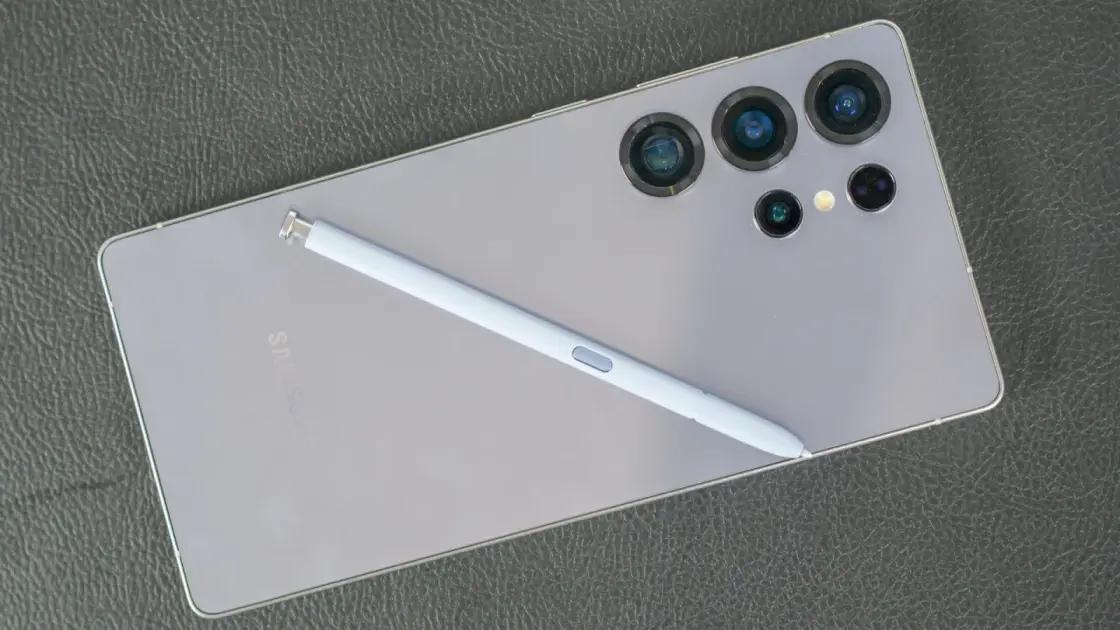
Recent Highlights
1
Google Maps unveils Ask Maps with Gemini AI and 3D Immersive Navigation in biggest update
Technology
2
Three Tennessee teens sue xAI over Grok AI creating child sexual abuse material from real photos
Policy and Regulation

3
Meta plans to cut 20% of workforce as AI spending reaches $600 billion, mirroring broader tech trend
Business and Economy
Recent Highlights
Today's Top Stories



Your Daily Dose of Curated AI News
Don’t drown in AI news. We cut through the noise - filtering, ranking and summarizing the most important AI news, breakthroughs and research daily. Spend less time searching for the latest in AI and get straight to action.

