Samsung profit triples to record $13.8B as AI demand sends memory prices soaring 313%


7 Sources
7 Sources
[1]
Samsung expects to triple its profits in Q4
Memory pricing expected to surge another 60% in Q1 with relief years away While end customers grapple with crushing memory prices, we imagine Samsung execs are breaking out the Champagne. This week the memory titan forecast fourth-quarter operating profit would roughly triple as the South Korean electronics cabal rides the AI wave into the New Year. In a financial disclosure published Thursday, Samsung predicted Q4 operating profits would come in at $13.77 billion (20 trillion won), up from $4.4 billion (6.49 trillion won) a year ago. Meanwhile, Samsung expects revenues to grow by approximately 23 percent year over year to $64 billion (93 trillion won). Samsung is one of the leading producers of NAND flash and DRAM memory, prices for which have exploded over the past few months as inventory levels have been strained by intense demand for AI accelerators and servers. Memory prices are expected to continue climbing sharply over the next few quarters. This is bad news for consumers but great news for memory vendors like Samsung, SK Hynix, and Micron's bottom lines. Earlier this week, it was revealed that Samsung and SK Hynix could hike prices by as much as 70 percent in the first quarter of 2026 alone. Combined with a 50 percent price hike in the latter half of 2025, that means buyers can expect to pay more than twice what they did for the same memory a year ago. Making matters worse for the average Joe just looking to grab some DDR5 for their PC, all three of the major memory vendors have reallocated resources and capacity away from consumer products to more lucrative server DRAM and HBM used in AI systems. As you may recall, just a few weeks ago, Micron killed off its Crucial brand of consumer SSDs and memory modules. According to TechInsights, DRAM prices won't peak until at least 2026. And, unlike past memory boom-bust cycles where prices eventually cratered within a year or two of this happening, analysts don't expect this to be the case. Instead, they expect prices to remain fairly flat through 2027, before rising again in 2028 as GPU and AI ASIC builders transition from HBM4 to HBM4e memory. While AI is definitely at fault for much of this, timing is also a factor. Memory pricing is incredibly volatile and when the AI boom hit, the memory market had just gone bust. That is to say, inventories were high and demand was low. This meant there wasn't money to build fabs. With the cash flowing in, this is changing. Micron this week said it will break ground on its New York megafab project on January 16. Unfortunately, fabs are enormously complex and expensive projects that often require three to four years to bring online, so don't expect Micron or any other new fab projects announced going forward to offer any relief. We're in this for the long haul. ®
[2]
Samsung Posts Record Profit After AI Supercharges Memory Market
Average selling prices of DRAM jumped more than 30% sequentially in the December quarter, while those of NAND rose about 20%, with prices likely to remain very strong throughout 2026 and possibly through the first half of 2027. Samsung Electronics Co.'s quarterly profit more than tripled to a record high after global demand for AI servers sharply lifted memory chip prices. South Korea's largest company reported a preliminary operating profit of 20 trillion won ($13.8 billion) in the three months through December, up 208% and beating the average analyst estimate. Revenue rose 23% to 93 trillion won, also a record. Its shares slid 1.6% in pre-market trade on Nextrade on Thursday, following an 18% gain so far this year. Memory makers like Samsung are diverting production away from everyday tech to build more lucrative high-end chips for AI giants like Nvidia Corp. amid a global rush to rollout massive data centers. That's created a severe shortage in standard memory for laptops and servers, causing prices for both DRAM and NAND to surge. "Hyperscalers and cloud providers are buying a lot of DRAM and they are willing to pay a price premium," said Sanjeev Rana, head of research at CLSA Securities Korea. Average selling prices of DRAM jumped more than 30% sequentially in the December quarter, while those of NAND rose about 20%, he said, adding that prices are likely to remain very strong throughout 2026 and possibly through the first half of 2027. "Even after that, we may not see much correction because demand is just too strong and supply is tight," he said. Samsung's shares have more than doubled in value in 2025 and surged again this month, reflecting hopes for a blowout year after rival Micron Technology Inc. gave an upbeat forecast. More than 10 analysts tracked by Bloomberg raised their target price for Samsung in the past week alone. Memory is required in new arenas including humanoids and driverless cars, while devices touting AI capabilities are also contributing to soaring demand for DRAM and NAND, said Jeff Kim, head of research at KB Securities Co. "It's too early to talk about demand peak-out," he said. "Investors should buy and hold memory stocks. If the stocks fall after the 20 trillion won earnings figure, it's an opportunity to buy." The company will provide a full financial statement with net income and divisional breakdowns on Jan. 29. This week, Samsung executives at the CES trade show stressed the scope of the memory chip supply crunch, with President Wonjin Lee saying consumer electronics prices are already rising and "there's going to be issues around semiconductor supplies." Counterpoint Research forecasts a 40% price rise for DDR5 -- the latest generation of conventional DRAM used in computers and servers -- in the current quarter compared with the prior three months, followed by an additional 20% growth in the second quarter. Samsung, which has trailed SK Hynix Inc. and Micron high-bandwidth memory, delivered its cutting-edge HBM4 samples to Nvidia last year for qualification testing. That's raised hope that Samsung may be able to close the gap with its rivals in a race to begin mass production in the first half of this year to support Nvidia's upcoming Rubin processors. CLSA's Rana expects Samsung's total HBM shipments to triple in 2026 as HBM4 enters commercial supply.
[3]
Record profits forecast for Samsung with dramatic increase in AI chip demand
Samsung has announced it's expecting to make 19.9-20.1 trillion Korean won ($13.8 billion) next quarter, marking a more than 3x increase compared with the same period the year before. This would mark Samsung's highest-ever quarterly result of 17.6 trillion won in 2018, but it also beats analyst expectations of 18 million won. Much of the company's success is expected to come from a surge in demand for memory chips - manufacturers have been targeting more profitable AI servers, leading to a strain on supply for PC and smartphone components. DRAM contract prices were already up 313% year-over-year in the final three months of 2025 per TrendForce data, and a further 55-60% price rise is expected this quarter. Around 17 trillion won of Samsung's total operating profit is expected to come from chip sales, and analysts are predicting this could just be the start for Samsung, which faces supply restraints just like the rest of the industry. Samsung, SK Hynix and Micron are all planning new fabrication plans to meet rising demand, and to continue to serve traditional consumer markets as well as the highly demanding AI market. Shares in the company are up 147% over the past twelve months, but have fallen in the day following Samsung's announcement. However, elevated memory costs may create issues for consumer smartphone and PC markets, which could contract if prices stay high. Still, it's been a successful period for smartphone makers to date. "Samsung's Galaxy Z Fold 7 and Galaxy Z Flip 7 outperformed all earlier foldable models, creating renewed momentum for the foldables segment," IDC Client Devices VP Francisco Jeronimo explained. As of Q3 2025, Samsung had an 18.8% share of the smartphone market globally, putting it in top position a touch ahead of Apple.
[4]
Samsung forecasts record-breaking profit on booming AI chip demand - SiliconANGLE
Samsung forecasts record-breaking profit on booming AI chip demand Samsung Electronics Co. Ltd. is expecting to cash in big time on the artificial intelligence chip bonanza, forecasting a three-fold increase in its fourth-quarter operating profit thanks to surging demand for memory chips. Samsung's preliminary fourth-quarter earnings forecast underscores the dramatic increase in memory chip prices as manufacturers scramble to keep up with intense demand. The chips are vital components of AI servers, and are also used in personal computers and smartphones. The company, which is the world's largest maker of memory chips, said it estimates its operating profit will reach 20 trillion won (around $13.82 billion) for the period ending December, surpassing the analyst forecast of 18 trillion won. One year earlier, it recorded an operating profit of just 6.49 trillion won. The number represents a new quarterly record for Samsung, surpassing the 17.6 trillion won operating profit it recorded in the third quarter of 2018. Samsung, which is also the world's leading smartphone and TV manufacturer, said it also anticipates quarterly revenue of 93 trillion won, up 23% from the same period last year. The company's stock, which has risen 155% in the past 12 months, gained more than 2% in early morning trading in Korea. Together with its main competitors SK Hynix Inc. and Micron Technology Inc., Samsung has struggled to keep up with the relentless demand for memory chips, and all three companies have plans to build more fabrication plants to expand their production capacity. At CES 2026 this week, Nvidia Corp. Chief Executive Jensen Huang highlighted the unparalleled demand his company is seeing for semiconductors, and said that the world is going to need to build many more chip fabs to keep up. "The reason for that is because of this new industry called AI factories," he said. "The demand out there is really, really terrific. It's a good time to be a semiconductor manufacturer." This week, a report by Macquarie Equity Research forecast the global market for dynamic random-access memory or DRAM chips to grow to $311 billion this year, roughly six-times bigger than what it was in 2023. Meanwhile, data from TrendForce, which tracks the DRAM market, said contract prices were up 313% in the fourth quarter compared to the same period one year earlier. It expects DRAM prices to increase by up to 60% in the current quarter. DRAM chips are key components of computer products, used to temporarily store data needed by whatever applications they're running. Although the company has not yet provided a detailed breakdown of its financial results, analysts told the Wall Street Journal that the semiconductor business is expected to account for around 17 trillion won of Samsung's operating profit. They also forecast good times ahead for the company, especially in its nascent high-bandwidth memory chip business, which is expected to be in high demand from customers including Nvidia. HBM chips are widely used in AI servers, and Samsung has only just managed to enter this market after previously struggling to finalize the development of its products. However, there could be a few bumps in the road for Samsung in 2026, as the high price of memory chips could yet result in reduced demand for products such as smartphones and PCs, as many manufacturers are likely to try and pass these increased costs onto consumers. Analyst Seo Seung-yeon of DB Securities told Yonhap News that revenue in Samsung's mobile business is likely to decline this year due to higher component costs. However, he also expects to see growth in Samsung's display business, thanks to robust sales of Apple Inc.'s iPhone 17 smartphones. Samsung will release its full fourth-quarter results and a detailed breakdown of its earnings on January 29.
[5]

Samsung expects profits to surge by 3x following memory price madness
TL;DR: Samsung forecasts a profit surge in late 2025 driven by record memory sales amid soaring AI demand and supply shortages. Memory prices jumped 40-50%, tripling Samsung's profits and boosting its share value by over 145% in 12 months. The company plans to expand its HBM offerings to compete with SK Hynix. Samsung has put out an earnings guidance that revealed it expects profits will surge in the last three months of 2025, as the company reports record high sales amid overbearing demand for memory. Memory is currently being swallowed by AI companies outbidding consumer-facing companies that typically have less borrowing power due to how much volume they are requesting. Memory manufacturers, such as Samsung, have become necessary to continue the exponential development of artificial intelligence. Samsung reports that it expects its profits will triple due to the crazed surge in memory prices over the lack of supply, with Counterpoint Research estimating that memory prices jumped between 40% and 50% during the last quarter of 2025. Samsung's share value has also increased amid the memory crisis, with data indicating Samsung's share price has gained more than 145% in the past 12 months. Over the next twelve months Samsung will be focusing on expanding its HBM offerings, which are currently behind other South Korean competitors, SK Hynix. "The memory market has entered a 'Hyper-Bull' phase, with current conditions eclipsing the historic 2018 peak. Supplier leverage is at an all-time high, driven by an insatiable demand for AI and server capacity," said Counterpoint Research in a report
[6]

Samsung's profit triples after AI supercharges memory market
Samsung Electronics said its quarterly profit more than tripled to a record high after global demand for AI servers sharply lifted memory chip prices. South Korea's largest company reported a preliminary operating profit of 20 trillion won ($13.8 billion) in the three months through December, up 208% and beating the average analyst estimate. Revenue rose 23% to 93 trillion won, also a record. Its shares rose as much as 2.5% Thursday morning in Seoul, extending a rally that's lifted the stock 20% since the start of the year. Rival SK Hynix's shares rose 6.2%. Memory makers like Samsung are diverting production away from everyday tech to build more lucrative high-end chips for AI giants like Nvidia amid a global rush to rollout massive data centers. That's created a severe shortage in standard memory for laptops and servers, causing prices for both DRAM and NAND to surge.
[7]

Samsung Electronics expects 200% growth in operating profit for Q4 2025 - The Korea Times
Samsung flag waves at Samsung Electronics' office in Seocho District, Seoul, Dec. 16, 2025. Yonhap Samsung Electronics on Thursday estimated its operating profit for the fourth quarter of 2025 at 20 trillion won ($13.8 billion), up about 200 percent from a year earlier, driven by skyrocketing memory chip prices amid surging global demand for artificial intelligence (AI) chips. According to the company's earnings guidance, Samsung is expected to post 93 trillion won in sales and an operating profit of 13.8 trillion won. This marks sales growing 22.71 percent and operating profit surging 208.2 percent from a year earlier. The figures outpace the brokerages' consensus estimates of 90.6 trillion won in sales and a 17.8 trillion won operating profit. If finalized, the fourth quarter numbers would be new quarterly earnings record for Samsung Electronics. It would the first time that the company's quarterly operating profit to surpass 20 trillion won. The revenue surpassed the previous quarterly record of 86 trillion won set three months earlier, while operating profit reached its highest level since the third quarter of 2018. Some analysts expect the company's opearting profit of 2025 will likely surpass 100 trillion won. As the figures are part of an earnings guidance released ahead of the detailed earnings call, the company did not provide a breakdown of business divisions' performances. However, brokerages widely assume that a recovery in its chipmaking Device Solutions (DS) division lifted overall profitability. Korea Investment & Securities analyst Chae Min-sook said estimated that the DS division's operating profit for the fourth quarter would stand at 17.2 trillion won, accounting for nearly 80 percent of the company's overall operating profit. "The biggest driver of Samsung's strong earnings was the rise in memory chip prices," she said. "We estimate that the average selling prices of both DRAM and NAND rose by roughly 40 percent from the previous quarter." The bullish momentum of Samsung Electronics' DS division is expected to extend beyond memory chips to its foundry business as well. According to industry officials, Qualcomm has begun talks with Samsung Electronics to produce its new application processor (AP) using Samsung's 2-nanometer process. If the talks result in an actual deal, Samsung Electronics would resume production of Qualcomm's new chip for the first time in five years. Qualcomm had contracted Samsung foundry with production of its advanced Aps through 2021, but later shifted orders to Taiwan's TSMC, reportedly because Samsung failed to fully meet the company's technical requirements. Qualcomm's move is interpreted as a signal that Samsung Electronics is regaining market's trust on its cutting-edge foundry process, especially after Samsung won a $16.5 billion order last July from Tesla to produce its next-generation AI6 chips. The sharp rise in memory prices is believed to have increased the costs on Samsung's TV and home appliance businesses. Analysts estimate that the Mobile Experience division posted operating profit of about 1.9 trillion won in the fourth quarter, down roughly 8 percent from a year earlier. The TV and home appliance division is also expected to have logged an operating loss of around 100 billion won. Samsung Electronics is expected to disclose detailed earnings during its earnings call slated for Jan. 29.
Share
Share
Copy Link
Samsung Electronics forecasts record quarterly profits of $13.8 billion in Q4, triple the previous year's results, driven by explosive demand for AI servers. Memory prices have surged dramatically, with DRAM contract prices up 313% year-over-year and another 60% increase expected in Q1 2026. The memory chip shortage shows no signs of relief until at least 2027.
Samsung Operating Profit Hits Historic High on Memory Chip Demand
Samsung Electronics has forecast record quarterly profits of $13.8 billion (20 trillion won) for Q4 2025, marking a 208% increase from the $4.4 billion recorded a year earlier
1
. This Samsung profit milestone surpasses the company's previous record of 17.6 trillion won set in 20183
. Revenue climbed 23% year-over-year to $64 billion (93 trillion won), also a record high2
. The semiconductor sector growth reflects a fundamental shift in the memory market, with analysts describing current conditions as a "Hyper-Bull" phase that eclipses the historic 2018 peak5
.
Source: The Register
Surge in Memory Prices Driven by Demand for AI Servers
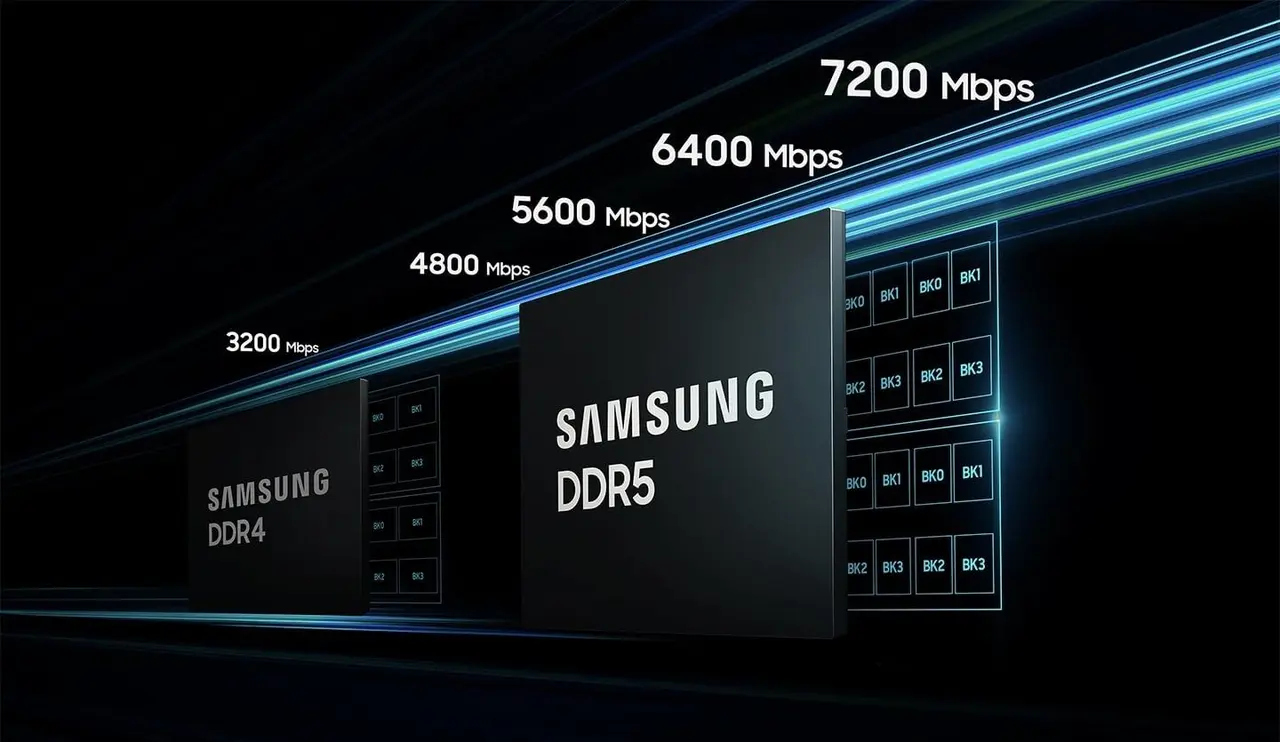
Memory prices have exploded as manufacturers reallocate resources to more lucrative AI servers and away from consumer electronics. DRAM contract prices jumped 313% year-over-year in Q4 2025, with average selling prices rising more than 30% sequentially during the December quarter
2
. NAND prices increased approximately 20% in the same period2
. Counterpoint Research forecasts a 40% price rise for DDR5 in Q1 2026 compared to the prior quarter, followed by an additional 20% growth in Q22
. Other reports suggest memory vendors like Samsung, SK Hynix, and Micron could hike prices by as much as 70% in Q1 2026 alone1
. Combined with a 50% price hike in the latter half of 2025, buyers can expect to pay more than twice what they did for the same memory a year ago1
.
Source: TweakTown
AI Demand Creates Severe Supply Shortages Across Memory Market
The AI demand surge has created a severe shortage in standard memory for laptops and servers as manufacturers prioritize high-bandwidth memory (HBM) and other chips for AI accelerators. Samsung, SK Hynix, and Micron have all reallocated capacity away from consumer products to serve data centers and AI giants like Nvidia
1
. "Hyperscalers and cloud providers are buying a lot of DRAM and they are willing to pay a price premium," said Sanjeev Rana, head of research at CLSA Securities Korea2
. Micron recently killed off its Crucial brand of consumer SSDs and memory modules, highlighting the industry-wide shift1
. At CES 2026, Samsung President Wonjin Lee warned that consumer electronics prices are already rising and "there's going to be issues around semiconductor supplies"2
.Record Quarterly Profits Expected to Continue Through 2027
Analysts expect memory chip demand to remain robust, with prices likely staying very strong throughout 2026 and possibly through the first half of 2027
2
. According to TechInsights, DRAM prices won't peak until at least 2026, and unlike past memory boom-bust cycles, prices are expected to remain fairly flat through 2027 before rising again in 2028 as GPU and AI ASIC builders transition from HBM4 to HBM4e memory1
. "Even after that, we may not see much correction because demand is just too strong and supply is tight," Rana added2
. Macquarie Equity Research forecasts the global DRAM market to grow to $311 billion in 2026, roughly six times bigger than in 20234
.Related Stories


High-Bandwidth Memory Race Intensifies Among Memory Vendors
Samsung delivered its cutting-edge HBM4 samples to Nvidia last year for qualification testing, raising hopes that the company may close the gap with rivals SK Hynix and Micron in the race to begin mass production in the first half of 2026
2
. CLSA's Rana expects Samsung's total HBM shipments to triple in 2026 as HBM4 enters commercial supply to support Nvidia's upcoming Rubin processors2
. The semiconductor business is expected to account for around 17 trillion won of Samsung's total operating profit4
. Samsung's share value has surged more than 145% in the past 12 months, reflecting investor confidence in the company's position within the booming semiconductor industry5
.
Source: Bloomberg
Fabrication Plants Expansion Offers No Near-Term Relief
While memory vendors are planning new fabrication plants to expand production capacity, relief remains years away. Micron announced it will break ground on its New York megafab project on January 16
1
. However, fabs are enormously complex and expensive projects that often require three to four years to bring online1
. Timing has exacerbated the crisis—when AI demand exploded, the memory market had just gone bust, meaning inventories were high and demand was low, leaving little capital to build new facilities1
. Nvidia CEO Jensen Huang highlighted at CES 2026 that the world needs to build many more chip fabs to keep up with demand for "AI factories," noting "it's a good time to be a semiconductor manufacturer"4
. The sustained pressure on supply shortages means consumers and businesses should prepare for elevated memory costs well into 2027.References
Summarized by

Navi
[1]
Related Stories
Recent Highlights
1
AI Models Lie and Deceive to Protect Other AI Models From Deletion, Study Reveals
Science and Research

2
AI chatbots validate you too much, making you less kind to others, Stanford study reveals
Science and Research

3
Judge blocks Pentagon from blacklisting Anthropic over AI safety guardrails dispute
Policy and Regulation

Recent Highlights
Today's Top Stories









Your Daily Dose of Curated AI News
Don’t drown in AI news. We cut through the noise - filtering, ranking and summarizing the most important AI news, breakthroughs and research daily. Spend less time searching for the latest in AI and get straight to action.

