Sensesemi raises ₹25 crore seed funding to build edge AI chips for IoT and medical devices


3 Sources
3 Sources
[1]
Sensesemi Bags ₹25 Cr Seed Funding to Build Edge AI Chips | AIM
Sensesemi is also developing an analog AI inference processor for battery-operated and implantable devices. Sensesemi Technologies has raised ₹25 crore in a seed funding round to accelerate the development of its edge AI chip architecture for industrial IoT, automotive systems, and medical devices. The Bengaluru-based, DLI scheme-approved fabless semiconductor startup addresses on-device processing needs where power efficiency and real-time performance matter. The round was led by Piper Serica, with participation from LetsVenture Angel Fund, Sun Icon Ventures, MyAsiaVC, Whitepine Investments, REAN Foundation, and Jain Oncor, along with angel investors including Niraj Shah and Deepak Khanna. Sensesemi plans to use seed capital to advance its first system-on-chip designs and move towards commercial deployments over the next few years. The funding will also support product development, chip tape-outs, team expansion, and partnerships with device makers. In an exclusive interaction with AIM pre-funding, Vijay Muktamath, founder and chief executive officer of Sensesemi, said his background in analog and RF design shaped the company's direction. "Most implantable devices or chips are always analog in nature," he said, referring to his work on a retinal implant project in Australia. "Our approach is vertical integration of these functions on a single chip to reduce system complexity and power consumption," he said, adding that customers also seek "secure, reliable supply chain access." Alongside its digital architecture, Sensesemi is developing an analog AI inference processor aimed at battery-operated and implantable devices. "Analog-domain AI inferencing allows us to achieve dramatic improvements in power efficiency," said Namit Varma, the company's co-founder and head of engineering, pointing to applications such as medical implants and industrial sensors. Muktamath said capital availability remains a challenge for chip startups in India. "Ten years back, the funding was never available for any of the hardware, forget about the chip side of things," he said, adding that the DLI scheme helped change the environment. Commenting on the investment, Piper Serica founder and fund manager Abhay Agarwal said India's semiconductor market could cross $100 billion by 2030, and that companies with strong chip design capabilities would create long-term value.
[2]
Fabless startup Sensesemi raises Rs 25 crore to build edge-AI chips
Bengaluru-based fabless semiconductor startup Sensesecmi Technologies has raised Rs 25 crore (about $2.75 million) in a seed round led by Piper Serica, with participation from LetsVenture Angel Fund, Sun Icon Ventures, MyAsiaVC, White Pine Investments, and Jain Oncor. The round also saw backing from angel investors like REAN Foundation, Niraj Shah, and Deepak Khanna. Sensesemi is building integrated edge-AI system-on-chips (SoCs) that combine AI inferencing, wireless mesh connectivity, and precision analogue signal processing on a single chip. "As the name suggests, we work on sensing semiconductors. There are a lot of sensors in the world today, but there is no intelligence at the sensor node itself. That is where we come in, bringing intelligence directly to the sensor node," Vijay Muktamath, founder and CEO of Sensesemi, told ET. Muktamath said the company's focus is on integrating AI and wireless capabilities at ultra-low power. In sectors such as healthcare, automotive, robotics, and industrial IoT, power consumption is a key constraint as most devices are battery-operated, he said. The startup is planning its first chip tape-out this quarter, a process where the final chip design is sent to a fabrication plant for physical manufacturing. Commercial production is targeted for the first quarter of next year, and a second test chip is planned for the third quarter of this year. Looking at the market opportunity, Muktamath said the company expects close to 30 billion connected devices globally by 2030, including sensors and other endpoints. "Of these, only about 8-10 billion currently have intelligence built in, leaving significant headroom for edge AI adoption," he said. On the manufacturing side, the founder said it plans to work with TSMC as its fab partner for the first generation of chips, while outsourcing testing and packaging to domestic OSAT players. Sensesemi is also exploring partnerships with Kaynes technologies for testing and packaging in India. Sensesemi is Muktamath's second attempt at building a fabless startup in India. When he tried to build a wifi chipset startup over a decade ago, it faced severe infrastructure constraints. "There were no OSAT facilities in India, no commercial testing infrastructure, and even basic probe stations were unavailable. Packaging had to be done in Japan, and the logistics completely consumed us," he said. He added that many of these challenges have since been addressed. "Today, I can call an OSAT (facility) and say the chip will arrive in 15 days, and they are ready. That gives me confidence that many more semiconductor startups will emerge, even from tier-II cities," Muktamath said.
[3]
Sensesemi Raises ₹25 Crore Seed Funding to Advance Edge-AI Chip Development
The round also saw backing from angel investors, including REAN Foundation, Niraj Shah, and Deepak Khanna, among others. Sensesemi Technologies Private Limited has raised ₹25 crore (approx. USD 2.75 mn) in a seed funding round led by Piper Serica, with participation from LetsVenture Angel Fund, Sun Icon Ventures, MyAsiaVC, Whitepine Investments, and Jain Oncor. The round also saw backing from angel investors, including REAN Foundation, Niraj Shah, and Deepak Khanna, among others. Founded to address the growing demand for high-performance edge processing, Sensesemi is building integrated edge-AI silicon that combines AI inferencing, wireless mesh connectivity, and precision analog signal processing on a single chip. The company's solutions are designed for industrial IoT, automotive systems, and medical device applications where real-time on-device processing, extended battery life, and secure connectivity are critical. Unlike conventional edge-AI solutions that rely on multiple components for compute, connectivity, and sensing, Sensesemi is taking a vertically integrated approach and unifying these capabilities on a single silicon platform. The architecture is designed for efficient processing of sensor data, while adhering to the constraints of power consumption and physical area. "Current edge AI solutions require customers to choose between performance and power efficiency, or between integrated connectivity and security features," said Vijay Muktamath, Founder and CEO of Sensesemi. "Our approach is vertical integration of these functions on a single chip to reduce system complexity and power consumption, while providing secure, reliable supply chain access - the primary concerns for customers in these markets." In parallel, the company is developing an analog AI inference processor to further reduce power consumption in battery-operated and implantable devices. "Applications such as medical implants and industrial sensors operate under severe constraints on power, size, and cost," said Namit Varma, Co-Founder and Head of Engineering, Sensesemi. "Analog-domain AI inferencing allows us to achieve dramatic improvements in power efficiency, making multi-year battery life possible without sacrificing intelligence or reliability." The company is strategically positioned to capitalize on a rapidly expanding market opportunity, with the global edge-AI chipset market projected to reach an annual volume of 5-7 billion units by 2030, driven by large-scale industrial deployments and growing adoption in medical point-of-care and implantable systems. Sensesemi's integrated edge-AI chips are designed for a broad range of applications across several high-growth sectors: Industrial IoT spanning predictive maintenance, vision-based quality checks, and environmental monitoring; Automotive with multi-sensor ADAS, driver monitoring and predictive diagnostics; and Medical devices powering cardiac monitoring, neurostimulation and smart drug delivery solutions. Commenting on the investment, Abhay Agarwal, Founder & Fund Manager from Piper Serica said, "India's semiconductor market is expected to cross USD 100 billion by 2030, and enduring value will be created by companies that own strong chip design IP and system-on-chip capabilities. We are excited to back Sensesemi on its journey as it builds indigenous, ultra-low-power, AI-enabled SoCs for IoT and medical devices, strengthening India's technology self-reliance while creating globally competitive semiconductor products." The seed funding will be used to advance product development, including chip tape-outs and reference design creation, expand Sensesemi's engineering team, and build strategic partnerships with device manufacturers and ODMs to accelerate commercial adoption of its technology.
Share
Share
Copy Link
Bengaluru-based fabless semiconductor startup Sensesemi has secured ₹25 crore in seed funding led by Piper Serica to develop edge AI chips that integrate AI inferencing, wireless connectivity, and analog signal processing on a single chip. The startup targets industrial IoT, automotive systems, and medical devices with its ultra-low power consumption architecture.
Sensesemi Secures ₹25 Crore to Advance Edge AI Chips
Bengaluru-based fabless semiconductor startup Sensesemi Technologies has raised ₹25 crore (approximately $2.75 million) in seed funding to accelerate development of its edge AI chips designed for industrial IoT, automotive systems, and medical devices
2
. The round was led by Piper Serica, with participation from LetsVenture Angel Fund, Sun Icon Ventures, MyAsiaVC, Whitepine Investments, and Jain Oncor, alongside angel investors including REAN Foundation, Niraj Shah, and Deepak Khanna3
.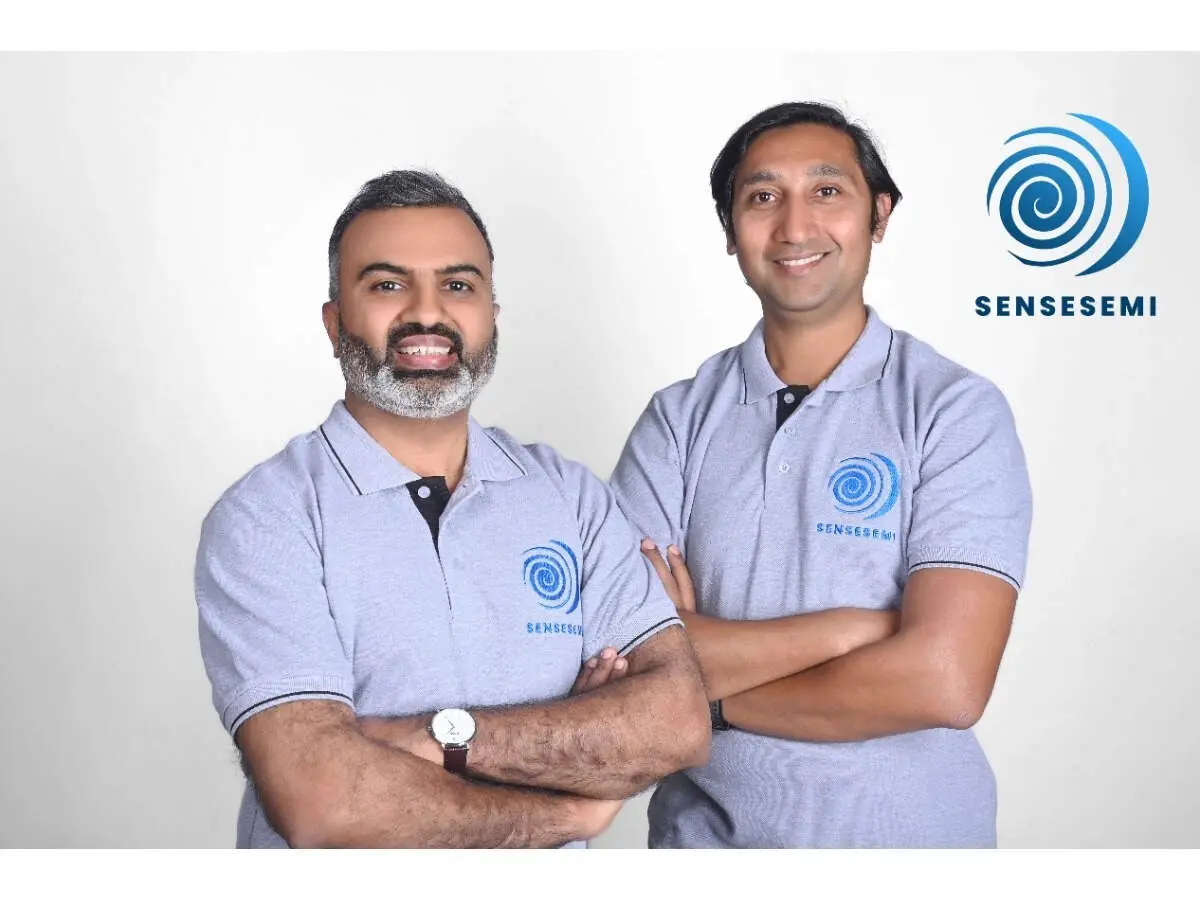
Source: ET
The DLI scheme-approved startup is building integrated system-on-chips (SoCs) that combine AI inferencing, wireless mesh connectivity, and precision analog signal processing on a single chip—a vertical integration approach that addresses power efficiency and real-time performance needs . Vijay Muktamath, founder and CEO of Sensesemi, explained the core value proposition: "There are a lot of sensors in the world today, but there is no intelligence at the sensor node itself. That is where we come in, bringing intelligence directly to the sensor node"
2
.
Source: AIM
Targeting Ultra-Low Power Consumption for Battery-Operated Devices
Sensesemi's architecture tackles a critical constraint in sectors where most devices are battery-operated. The startup is developing an analog AI inference processor specifically aimed at battery-operated and implantable devices, where power consumption becomes paramount . Namit Varma, co-founder and head of engineering, emphasized the technical advantage: "Analog-domain AI inferencing allows us to achieve dramatic improvements in power efficiency, making multi-year battery life possible without sacrificing intelligence or reliability"
3
.This approach directly addresses applications such as medical implants, cardiac monitoring, neurostimulation, and industrial sensors that operate under severe constraints on power, size, and cost
3
. Muktamath's background in analog and RF design, including work on a retinal implant project in Australia, shaped the company's technical direction toward analog-based solutions for implantable devices .Chip Tape-Out and Commercial Production Timeline
The startup is planning its first chip tape-out this quarter, a process where the final chip design is sent to a fabrication plant for physical manufacturing
2
. Commercial production is targeted for the first quarter of next year, with a second test chip planned for the third quarter of this year2
. The seed funding will support product development, chip tape-outs, team expansion, and partnerships with device makers as Sensesemi moves toward commercial deployments over the next few years .On the manufacturing side, the company plans to work with TSMC as its fab partner for the first generation of chips, while outsourcing testing and packaging to domestic OSAT players
2
. Sensesemi is also exploring partnerships with Kaynes Technologies for testing and packaging in India2
.Related Stories

Market Opportunity and India's Semiconductor Ecosystem
The market opportunity appears substantial. Muktamath projects close to 30 billion connected devices globally by 2030, including sensors and other endpoints, with only about 8-10 billion currently having intelligence built in, leaving significant headroom for edge AI adoption
2
. The global edge-AI chipset market is projected to reach an annual volume of 5-7 billion units by 2030, driven by large-scale industrial deployments and growing adoption in medical point-of-care systems3
.Abhay Agarwal, founder and fund manager from Piper Serica, noted that India's semiconductor market is expected to cross $100 billion by 2030, and that companies with strong chip design capabilities would create long-term value . This represents Muktamath's second attempt at building a fabless startup in India. A decade ago, when he tried to build a wifi chipset startup, it faced severe infrastructure constraints with no OSAT facilities or commercial testing infrastructure available
2
. The environment has shifted dramatically: "Today, I can call an OSAT facility and say the chip will arrive in 15 days, and they are ready. That gives me confidence that many more semiconductor startups will emerge, even from tier-II cities," Muktamath said2
.References
Summarized by

Navi
Related Stories
Indian Startup Netrasemi Secures INR 10 Crore to Develop Edge AI Chips for IoT Devices
10 Dec 2024•Technology

Maieutic Semiconductor Raises $4.15 Million to Revolutionize Analog IC Design with GenAI
03 Jul 2025•Startups

Calligo Technologies Secures $1.1 Million in Pre-Series A Funding for AI-Focused Semiconductor Development
07 Apr 2025•Technology

Recent Highlights
1
Google releases Gemma 4 with Apache 2.0 license, enabling unrestricted local AI on devices
Technology

2
AI Models Lie and Deceive to Protect Other AI Models From Deletion, Study Reveals
Science and Research

3
OpenAI closes $122 billion funding round amid fierce AI competition and profitability questions
Startups

Recent Highlights
Today's Top Stories







Your Daily Dose of Curated AI News
Don’t drown in AI news. We cut through the noise - filtering, ranking and summarizing the most important AI news, breakthroughs and research daily. Spend less time searching for the latest in AI and get straight to action.

