Silicon Valley start-ups embrace 'refounding' as A.I. scrambles business models across tech


2 Sources
2 Sources
[1]
Don't Call It a Pivot. These Executives Are 'Refounding' Their Start-Ups.
In the age of artificial intelligence, some company leaders are framing new business lines as radical reboots. Founding a company has always been prestigious in Silicon Valley. Pivoting a struggling company is less glamorous. So lately, as artificial intelligence has scrambled operations for many businesses, some executives are announcing that they are "refounding," essentially rebranding, as A.I. start-ups. In June, for example, Airtable, a project management platform, announced that "instead of just adding more A.I. capabilities to our existing platform, we treated this as a refounding moment for the company," sharing that it would be giving A.I. features to users as a default and rolling out a new pricing model. In October, Handshake, a careers site, announced its new business model, which includes hiring contractors to generate data to sell to large language model companies. "This is our refounding," the company said in a blog post. "Not a second act, but the next leap in the mission we started a decade ago." And last month, the new chief executive of Opendoor, a real estate start-up, told investors that "we are refounding Opendoor as a software and A.I. company." Opendoor, which did not respond to a request for comment, and Handshake both announced layoffs around the same time as their refounding announcements. How it's pronounced /rē-fau̇nd-iŋ/ The leadership team at Airtable, which was early to using the term, played around with words like "relaunch" and "transformation" to describe its A.I. era, Howie Liu, the company's co-founder and chief executive, said in an email. But it ended up choosing "the language of founding because the stakes feel the same," he said, in the sense that current decisions will shape the next decade of the company. The term, he added, captures the broad scope of changes, unlike a pivot, which he thinks implies a change of direction after getting something wrong. A refounding injects "start-up culture back into an existing business," said Katherine Kelly, the chief marketing officer of Handshake. It aims to capture the energy of founding without all the risks -- an approach that is "very seductive," she said, for the tech community. The return to an early-days mind-set can also encourage the all-out-grind approach that defines young start-ups. Handshake called its employees back into the office five days a week at the same time that it announced the refounding, Ms. Kelly said, and its leaders made clear that they "expect people to be operating with a pace and number of hours that is meaningful and will help us hit goals." Being part of a just-founded start-up can be invigorating; executives are hoping the same will be true in a refounded one. Though it heralds a new chapter, a refounding also involves looking at the fundamentals of a company and "reinterpreting" what has made the firm operate well in the past, said Jon Iwata, a lecturer at the Yale School of Management. Mr. Iwata, who has written about how established corporations manage such changes, predicted that "A.I. is going to cause many C.E.O.s to ponder existential questions," and to ask, "What business are we really in?" Once a company decides what business it's really in -- in many cases, the business of A.I. -- the stakes are high. Conventional wisdom says that you can found a company only once. The refounding mind-set suggests that perhaps founders can get another go. But after that, at least in Ms. Kelly's view, that's it. "If you're really going to make people believe it at your company," she said of refounding, "you have to put a lot of effort into it, because you only get this one chance."
[2]
Don't call it a pivot; these executives are 'refounding' their startups - The Economic Times
Executives are rebranding struggling firms as "refounded" AI companies, using the language of founding to signal high stakes and sweeping change. Firms like Airtable, Handshake, and Opendoor adopt AI-focused models, layoffs, and startup-style intensity.Founding a company has always been prestigious in Silicon Valley. Pivoting a struggling company is less glamorous. So lately, as artificial intelligence has scrambled operations for many businesses, some executives are announcing that they are "refounding," essentially rebranding, as AI startups. In June, for example, Airtable, a project management platform, announced that "instead of just adding more AI capabilities to our existing platform, we treated this as a refounding moment for the company," sharing that it would be giving AI features to users as a default and rolling out a new pricing model. In October, Handshake, a careers site, announced its new business model, which includes hiring contractors to generate data to sell to large language model companies. "This is our refounding," the company said in a blog post. "Not a second act, but the next leap in the mission we started a decade ago." And last month, the new chief executive of Opendoor, a real estate startup, told investors that "we are refounding Opendoor as a software and AI company." Opendoor, which did not respond to a request for comment, and Handshake both announced layoffs around the same time. The leadership team at Airtable played around with words like "relaunch" and "transformation" to describe its AI era, Howie Liu, the company's cofounder and CEO, said in an email. But it ended up choosing "the language of founding because the stakes feel the same," he said, in the sense that current decisions will shape the next decade of the company. The term, he added, captures the broad scope of changes, unlike a pivot, which he thinks implies a change of direction after getting something wrong. A refounding injects "startup culture back into an existing business," said Katherine Kelly, chief marketing officer of Handshake. It aims to capture the energy of founding without all the risks -- an approach that is "very seductive," she said, for the tech community. The return to an early-days mindset can also encourage the all-out-grind approach that defines young startups. Handshake called its employees back into the office five days a week at the same time that it announced the refounding, Kelly said, and its leaders made clear that they "expect people to be operating with a pace and number of hours that is meaningful and will help us hit goals." Being part of a just-founded startup can be invigorating; executives are hoping the same will be true in a refounded one. Though it heralds a new chapter, a refounding also involves looking at the fundamentals of a company and "reinterpreting" what has made the firm operate well in the past, said Jon Iwata, a lecturer at the Yale School of Management. Iwata, who has written about how established corporations manage such changes, predicted that "AI is going to cause many CEOs to ponder existential questions" and to ask, "What business are we really in?" Once a company decides what business it's really in -- in many cases, the business of AI -- the stakes are high. Conventional wisdom says that you can found a company only once. The refounding mindset suggests that perhaps founders can get another go. But after that, at least in Kelly's view, that's it. "If you're really going to make people believe it at your company," she said of refounding, "you have to put a lot of effort into it, because you only get this one chance."
Share
Share
Copy Link
Tech executives are ditching the term 'pivot' for 'refounding' as they transform their companies into A.I.-focused ventures. Airtable, Handshake, and Opendoor lead this trend, announcing sweeping changes including new pricing models, layoffs, and mandatory office returns. The approach aims to inject start-up energy into existing businesses while signaling high-stakes transformation in the A.I. era.
Silicon Valley Embraces Refounding as A.I. Reshapes Tech Landscape
A new trend is taking hold in Silicon Valley as executives move away from the less glamorous concept of pivoting and instead announce they are refounding their start-ups as A.I. companies
1
. The transformative impact of A.I. has prompted company leaders to frame their business transformations as radical reboots rather than simple course corrections, signaling a high-stakes transformation that could define the next decade of their operations.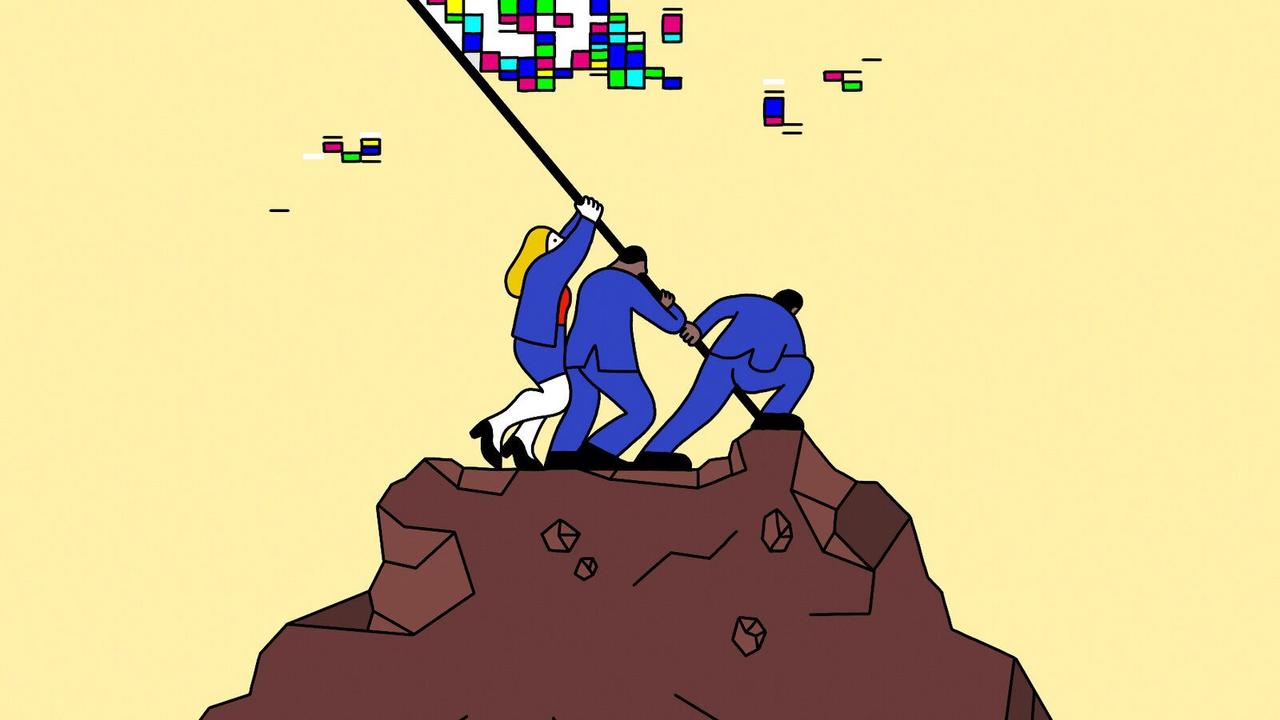
Source: NYT
In June, Airtable, a project management platform, became an early adopter of this terminology when it announced that "instead of just adding more A.I. capabilities to our existing platform, we treated this as a refounding moment for the company"
1
. The company rolled out A.I. features as a default for users and introduced a new pricing model to support its A.I.-centric models. Howie Liu, Airtable's co-founder and chief executive, explained that his leadership team considered words like "relaunch" and "transformation" but chose "the language of founding because the stakes feel the same"2
. Unlike a pivot, which implies correcting a mistake, refounding captures the broad scope of changes shaping the company's new strategic direction.Tech Companies Announce Sweeping Changes Alongside Refounding
Handshake, a careers site, declared its refounding in October with a dramatic shift in its business model. The company now hires contractors to generate data for sale to language model companies, describing the move as "not a second act, but the next leap in the mission we started a decade ago"
1
. Katherine Kelly, Handshake's chief marketing officer, explained that refounding aims to foster a start-up culture and "capture the energy of founding without all the risks"2
. The approach proves "very seductive" for the tech community, she noted.Opendoor, a real estate start-up, joined the refounding movement last month when its new chief executive told investors the company was rebranding as A.I. companies—specifically "a software and A.I. company"
1
. Both Opendoor and Handshake announced layoffs around the same time as their refounding declarations, suggesting these transformations involve difficult operational decisions alongside strategic repositioning2
.The Return to Start-up Intensity and Office Culture
Refounding their start-ups means more than just strategic repositioning—it involves reviving the intense work culture that defines early-stage ventures. Handshake called employees back to the office five days a week coinciding with its refounding announcement. Kelly said leaders made clear they "expect people to be operating with a pace and number of hours that is meaningful and will help us hit goals"
1
. Executives hope that the invigorating feeling of joining a just-founded start-up will translate to a refounded one, injecting renewed energy into established businesses.Jon Iwata, a lecturer at the Yale School of Management who has written about how established corporations manage such changes, predicts that "A.I. is going to cause many CEOs to ponder existential questions" and ask, "What business are we really in?"
2
. A refounding involves looking at company fundamentals and "reinterpreting" what has made the firm operate well in the past, he explained.Related Stories


High Stakes and One Chance to Get It Right
Once companies decide what business they're really in—increasingly, the business of A.I.—the stakes become exceptionally high. Conventional wisdom says you can found a company only once, but the refounding mindset suggests founders might get another opportunity. However, Kelly warns that companies have limited chances to make this transformation work. "If you're really going to make people believe it at your company, you have to put a lot of effort into it, because you only get this one chance"
1
. As more executives grapple with A.I.'s impact on their operations, the refounding trend signals how deeply artificial intelligence is reshaping tech business models and corporate identity across the industry.References
Summarized by

Navi
Related Stories
Recent Highlights
1
OpenAI shuts down Sora video app after six months, ending Disney's $1 billion investment deal
Technology

2
Apple plans major Siri AI overhaul in iOS 27 with standalone app and third-party chatbot support
Technology

3
Claude AI can now control your computer to complete tasks, but security risks remain
Technology
Recent Highlights
Today's Top Stories







Your Daily Dose of Curated AI News
Don’t drown in AI news. We cut through the noise - filtering, ranking and summarizing the most important AI news, breakthroughs and research daily. Spend less time searching for the latest in AI and get straight to action.

