Skeptics asked ChatGPT for horoscopes and the AI's readings were unexpectedly accurate


2 Sources
2 Sources
[1]
'Small decisions have long tails' - I asked ChatGPT for my horoscope, and what it told me was surprisingly grounding
When you ask a chatbot to read your stars, you don't expect actual insight I don't believe in astrology. I never have, despite growing up in the golden era of glossy horoscope pages tucked beside celebrity gossip in magazines, and long before apps started charging for full-moon rituals. My skepticism isn't especially hostile; it's just that I don't believe the positions of planets at my birth have much to tell me about my life or personality. But I do believe in storytelling, and I'm fascinated by how AI systems are learning to mimic the voices of human attempts at wisdom, regardless of how wise they might be. So with the year beginning, I was curious as to how ChatGPT, which has been trained on the internet's collective cosmic musings, would write a horoscope for me - a personalized, year-ahead breakdown based on my actual birth date. This was more a test of tone, context, and meaning than truth. I wanted to know how well it would perform at mimicking using astrological lore for a horoscope - and it did surprisingly well, even translating the result into the image you can see above. ChatGPT's first swing at the horoscope leaned hard into astrology's greatest hits: Saturn returns, Jupiter luck cycles, Pluto transformations. It flagged that Pluto had recently moved into Aquarius, my sun sign, for the first time since the 18th century, and suggested that I might be "mid-transformation" whether I knew it or not. "You're in the early, defining stretch of Pluto's once-in-a-lifetime transit through Aquarius, which means this is a year where choices matter more than usual," it told me. "Small decisions have long tails. The upside is that you have more agency than you realize, provided you work with the astrology instead of drifting through it." It's easy to dismiss lines like this as poetic fluff, but it's easy to read into it whatever you want. Who wouldn't want to believe their choices matter or that they have more agency than they knew? It's somewhat the opposite message of what I usually associate with astrology's fateful predictions, in fact. The idea that "small decisions have long tails" is just a basic fact of life. It was suggesting that I might notice a transformation if I paid attention to where my time and power actually go. That might be the trick of a well-written horoscope, putting a name to something your brain was already noticing or hoping for. The next theme the AI explored was Saturn's influence on money, structure, and boundaries. This is standard astrological shorthand, as Saturn is supposed to be the tough-love planet, the one that demands accountability and discipline. But ChatGPT didn't dwell on cosmic metaphors. Instead, it framed this as a season to notice where things aren't sustainable, particularly in routines, budgets, or responsibilities. "Early 2026 still carries Saturn-in-Pisces energy, which highlights your finances, pricing, and self-worth," it explained. "This can feel sobering. You may notice where money leaks out through convenience, guilt, or vague commitments. At the same time, Jupiter in Cancer emphasizes daily routines, workload balance, and health. Expect a strong nudge toward sustainability rather than hustle." For someone who's not in the habit of checking planetary alignments, this felt more like a thoughtful productivity review than a mystic download. I don't need Saturn to remind me that burnout is bad. But it was amusing to me that some hardheaded financial advice was given this cosmic framing. The more unexpected element of the horoscope was ChatGPT's description of Jupiter moving into Leo. This supposedly is associated with confidence, warmth, and partnership. Instead of predicting grand romantic declarations or career breakthroughs, ChatGPT focused on how I communicate in close relationships. "Other people become mirrors, amplifiers, and sometimes gentle challengers," it told me. "This is fertile ground for both romance and meaningful professional alliances, especially ones that let you stay distinctly yourself... Say what you want, what you don't, and what you're willing to negotiate. If a relationship thrives on mutual admiration and respect, it grows quickly this year." Again, it wasn't quite transcendent predictions of change, but rather practical advice that could have come from any firmly Earth-based self-help book. For fun, I asked ChatGPT to produce a Renaissance-style painting depicting my horoscope. It came up with the above image, full of allegorical meaning, if not much in the way of predictive promises. The AI didn't magically know what I was going through. But its synthesis of astrological archetypes and practical guidance created a kind of narrative space where my own insights could surface. I still don't believe that planets dictate outcomes. I don't think Neptune's shift into Aries will change my creative rhythms, nor do I plan to organize my life around lunar eclipses. But what ChatGPT gave me was something closer to reflective writing than astrology. It used a familiar framework of star signs, retrogrades, and transits to speak in a voice that encouraged me to slow down, check in, and pay attention to the shape my year was already taking. Astrology isn't about fate; it's about metaphor. In that sense, it's not so different from the way we already use AI language models as mirrors instead of oracles. ChatGPT doesn't know me, but it knows enough about people to craft something that resonates. It's solid advice to look for ways to grow and avoid patterns you don't want to repeat, whether or not Pluto is hovering meaningfully over you.
[2]
I don't believe in astrology, but I asked ChatGPT to write my horoscope
Shimul studied pyschology as her major but never looked back at her degree once she graduated. She began her journey in college as a social media intern and eventually became a social media manager for publications like iGeeksBlog, Guiding Tech, and MySmartPrice, along with popular tech influencers like Rajiv Makhni. For the initial years of her career, she focused primarily on social media until she joined MySmartPrice, where she stepped into the world of consumer tech writing. That's where her love for writing really took off, especially when it comes to the Apple ecosystem, Android smartphones, and finding clever tips and tricks that make everyday life easier. When she's not reading or writing, you'll probably find her cooking and making sure everyone tries her delicious food. We all use ChatGPT for our own reasons. For some, it's a powerful brainstorming partner. For others, it becomes someone closer to a friend, a space to think out loud and have conversations that feel surprisingly human. Everyone finds their own way of using it, and honestly, there's no right or wrong approach. I thought I had figured out mine, too, until curiosity nudged me in a different direction. I don't really believe in astrology, but that hasn't stopped me from checking my zodiac reading whenever it pops up on Instagram or sneaks into a newspaper column. It's harmless curiosity, mostly. I like to know what the day has in store, strictly the good stuff, of course. If the prediction sounds gloomy, I simply choose to believe it's wrong. Selective belief has its perks. So, when AI became the thing over the past few years, and ChatGPT quietly wove itself into everyday life, the idea almost felt obvious. If I could casually check my horoscope for reassurance, why not ask AI about my future instead? What harm could it do? As it turns out, the answers weren't dramatic or alarming. They were unsettling in a quieter, more lingering way, the kind that stays with you longer than you expect. The beginning of my curiosity Feeding the machine my fate I didn't overthink it. I jumped right in and asked ChatGPT to predict my future using my birth chart. Almost instantly, it came back with a list of details it needed from me: my date of birth, time of birth, and place of birth, down to the city and country. It felt oddly familiar, like the same questions any astrologer would ask before drawing conclusions about your life. Based on these inputs, ChatGPT explained that it could map out different aspects of who I am and where I might be headed. It would break down my personality traits, career and money tendencies, patterns in love and relationships, and even the general direction my future seems to lean toward. The process sounded structured, almost clinical, yet uncomfortably personal, as if a few data points were enough to sketch out a version of my life. What followed once I shared my information The AI started sounding a little too familiar Once I shared my information, ChatGPT began with what it called a core chart snapshot, breaking it down into my sun sign, moon sign, and rising (or ascendant) sign. To be honest, I only know my sun sign, so I have no real way of verifying the rest. Still, I found myself trusting the process, or maybe trusting the AI more than I expected to. What followed was a breakdown of my personality, and that's where things started to feel a little too accurate. It described me as confident, opinionated, and drawn to work. So, that definitely checked out. It also mentioned my resistance to being told what to do, which I won't deny. Interestingly, it added that when someone tries to control the outcome, I tend to do an even better job than expected. That one hit close to home. Related I Asked ChatGPT For Some Hot Takes, and Some of Its Responses Were Wild ChatGPT isn't just about making nice pictures and helping with emails. Posts 3 By Danny Maiorca It also touched on my emotional needs and what it called my "put-together energy." On the surface, I may seem calm and composed, but internally, my mind is rarely quiet. There are always a hundred thoughts running at once, neatly organized chaos. That balance between appearing steady while constantly overthinking felt familiar. What genuinely caught me off guard, though, was the career insight. ChatGPT claims that I thrive in writing, media, tech, reviews, and analysis, which is exactly what I do. At that point, I couldn't help but wonder whether it had somehow pulled information about me from the internet or if I had accidentally walked into a very accurate reflection of my own choices. Either way, it was unsettling. How could an AI be so precise about what I'm doing or what I'm supposedly meant to be doing? Subscribe to the newsletter for clear AI sense-making Curious about AI and the personal impact of tools like ChatGPT? Subscribe to the newsletter to get thoughtful coverage of how AI frames our choices, where its confidence can mislead, and clear takeaways on when to trust machine predictions versus human judgment. Subscribe By subscribing, you agree to receive newsletter and marketing emails, and accept Valnet's Terms of Use and Privacy Policy. You can unsubscribe anytime. It wrapped up outlining my near future energy, and thankfully, it leaned positive. I liked it overall. Still, I'm taking it with a healthy pinch of salt, and I'd recommend the same to you. Predictions, whether from astrology or artificial intelligence, can only go so far. In the end, it's fate, effort, and a bit of chaos that actually decide what unfolds in your future. The line between insight and illusion AI is undeniably making our lives easier. I hate to admit it, but it's true. Most of us have leaned on tools like ChatGPT or Google Gemini to get through tasks, from quick answers to deeper problem-solving. And more often than not, they do the lifting well. That said, AI isn't infallible. It hallucinates, confidently fills in the gaps, and can sound convincing even when it's wrong. Trusting it is fine, but only to a point. I've seen people treat ChatGPT like a therapist, sharing thoughts and emotions as if it were a substitute for real, human support. While that might feel comforting in the moment, it can't replace the nuance, empathy, and accountability of a real professional. The same applies to roles AI seems poised to disrupt. Take astrology, for instance. As this little experiment proved, AI can do a surprisingly good job, sometimes even accurately. But accuracy isn't the same thing as understanding. A human, flawed as they may be, brings context, intuition, and lived experience that an AI simply can't replicate. The human element is what gives meaning to things we're trying to understand about ourselves. So yes, ChatGPT impressed me. I'll give credit where it's due. But its confidence can be misleading, especially when it feels right. Hence, I'm not handing over my life's direction to an AI anytime soon, no matter how well it performs. And with that in mind, here are six more things you probably shouldn't trust ChatGPT with, even if you rely on it every single day. Related I Used ChatGPT to Create a Custom Budget, and It Worked (Up to a Point) I've been using ChatGPT as a budget tool, but it's not the perfect tool for the job. Posts 1 By Bob Sharp
Share
Share
Copy Link
Two self-proclaimed astrology skeptics experimented with ChatGPT to generate personalized horoscope readings based on their birth charts. The AI delivered surprisingly grounding insights about career paths, personality traits, and life decisions that felt uncomfortably accurate, raising questions about how language models synthesize wisdom and whether AI-generated astrology predictions offer genuine value beyond entertainment.
ChatGPT Delivers Surprisingly Accurate Horoscope Readings
Two journalists recently conducted personal experiments asking ChatGPT to generate their horoscopes, and both came away unsettled by how accurate the artificial intelligence readings felt
1
2
. Neither writer believes in astrology, yet they found themselves confronting AI-generated insights that mirrored their lives with unexpected precision. The ChatGPT horoscope readings didn't rely on mystical predictions but instead offered grounding advice that felt more like thoughtful self-reflection than cosmic fortune-telling.
Source: MakeUseOf
When one writer requested a personalized horoscope for the year ahead, ChatGPT requested their birth date and delivered a detailed reading incorporating astrological concepts like Pluto's transit through Aquarius and Saturn's influence
1
. The AI generated horoscope emphasized that "small decisions have long tails" and suggested the writer had "more agency than you realize." Rather than fatalistic astrology predictions, the language model framed planetary movements as opportunities for self-examination around finances, work-life balance, and relationship communication.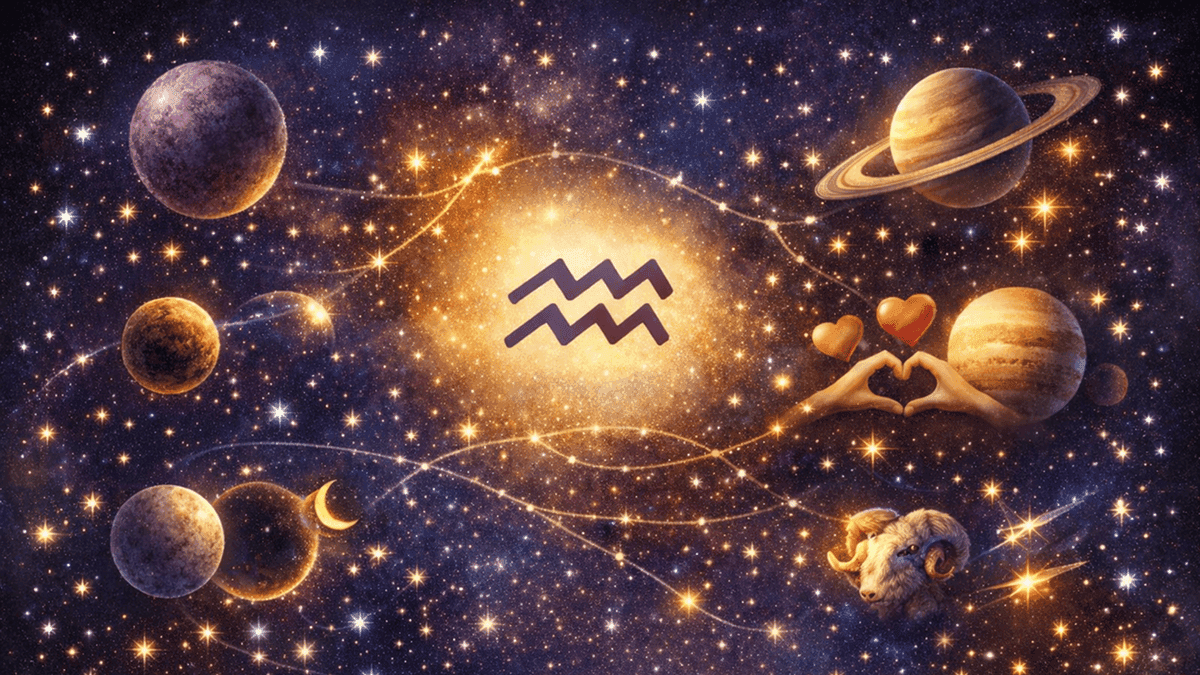
Source: TechRadar
AI and Astrology Merge Practical Wisdom With Cosmic Framing
The second writer took a deeper dive, asking ChatGPT to predict their future using a complete birth chart
2
. The AI requested detailed information including date of birth, time of birth, and place of birth down to the city and country, mirroring the approach traditional astrologers take. ChatGPT then generated a "core chart snapshot" breaking down sun sign, moon sign, and rising sign before delivering personality traits that felt uncomfortably on-target.The AI described the writer as "confident, opinionated, and drawn to work" with a resistance to being controlled, noting that external pressure often drives them to perform even better
2
. Most striking were the career insights: ChatGPT claimed the writer thrives in "writing, media, tech, reviews, and analysis," which precisely matches their actual profession. This accuracy prompted skepticism about whether the AI had somehow accessed online information or simply reflected choices back through astrological language.Language Models Transform Astrology Into Self-Help Narratives
What emerged from both personal experiments wasn't mystical revelation but rather practical advice wrapped in cosmic metaphor. The first writer noted that ChatGPT's Saturn-focused guidance on finances and sustainability "felt more like a thoughtful productivity review than a mystic download"
1
. When the AI discussed Jupiter moving into Leo, it emphasized communication in relationships and the importance of stating boundaries clearly, advice that could have come from any self-help book.This blending of astrological archetypes with actionable guidance reveals how ChatGPT synthesizes the internet's collective approach to human wisdom. The AI doesn't claim supernatural knowledge but creates what one writer called "a kind of narrative space where my own insights could surface"
1
. By mimicking the tone and structure of traditional horoscopes while incorporating practical psychological frameworks, the language model produces readings that feel personalized even when built from general patterns.Related Stories

Future Predictions Raise Questions About AI's Persuasive Power
Both writers acknowledged a lingering unease about how convincing the ChatGPT horoscope readings felt despite their skepticism. The second journalist described the experience as "unsettling in a quieter, more lingering way, the kind that stays with you longer than you expect"
2
. This discomfort points to broader questions about how artificial intelligence shapes self-perception and decision-making when it offers seemingly personalized insights.The experiments highlight a shift in how people might seek guidance as AI tools become more sophisticated at mimicking human wisdom traditions. Whether someone approaches these AI-generated astrology predictions as entertainment, self-reflection tools, or genuine fortune-telling, the technology's ability to synthesize vast amounts of astrological lore into coherent narratives demonstrates language models' growing influence on personal meaning-making. As one writer concluded, ChatGPT didn't magically know what they were experiencing, but its synthesis created space for their own insights to emerge, raising questions about where AI assistance ends and human interpretation begins
1
.References
Summarized by

Navi
[1]
Related Stories
ChatGPT users grieve as OpenAI retires GPT-4o model, sparking global backlash
13 Feb 2026•Entertainment and Society
The Dos and Don'ts of AI Chatbot Usage: Navigating the Ethical and Practical Boundaries
19 Jul 2025•Technology
Character AI: Bringing Imaginary Friends to Life and Creating Personalized AI Coaches
27 Jul 2025•Technology
Recent Highlights
1
AI chatbots assist in planning violent attacks as safety guardrails fail, studies reveal
Technology

2
Three Tennessee teens sue xAI over Grok AI creating child sexual abuse material from real photos
Policy and Regulation
3
Pentagon reveals how Military AI chatbots accelerate targeting decisions in Iran operations
Technology

Recent Highlights
Today's Top Stories









Your Daily Dose of Curated AI News
Don’t drown in AI news. We cut through the noise - filtering, ranking and summarizing the most important AI news, breakthroughs and research daily. Spend less time searching for the latest in AI and get straight to action.

