Skild AI triples valuation to $14 billion as SoftBank leads $1.4 billion robotics software bet


5 Sources
5 Sources
[1]
Robotics software maker Skild AI hits $14B valuation | TechCrunch
Skild AI, which makes foundation models for robots, seems to have more than tripled its valuation in just seven months. The startup has raised a $1.4 billion Series C round that values it at more than $14 billion, Bloomberg reported. The round was led by SoftBank, and Nvidia, Macquarie Group, 1789 Capital and others also invested. Skild AI last raised a funding at a $4.5 billion valuation this prior summer, Bloomberg reported. The company hasn't disclosed the exact value of that round -- it was rumored to be around $500 million -- but Skild AI CEO Deepak Pathak told Bloomberg that the company has now raised more than $2 billion to date. TechCrunch has reached out to Skild AI for more information on its fundraising history, and we'll update this piece when we hear more. Founded in 2023, Skild AI builds general-purpose robotic software and foundation models that can be retrofitted to a variety of different robots and tasks without requiring a ton of additional training. The hope is that these models can also learn from watching humans perform tasks. There has been a big push recently into this type of learn-as-you-go robotic software alongside the rising hype around humanoids. One of the biggest hurdles in robot adoption for both personal and industrial use cases is the sheer amount of training required for robots to learn each and every new task. Being able to learn and adapt as they go would clear the path for more robotic adoption.
[2]
Robotics Startup Skild AI Valued Above $14 Billion in New Funding Round
Skild AI Inc., a fast-rising startup that makes software to help robots learn to complete tasks, has secured about $1.4 billion in a new funding round that values the company at more than $14 billion, more than triple what it was worth just seven months ago. The Series C round was led by SoftBank Group Corp., with participation from Nvidia Corp., Macquarie Group Ltd., 1789 Capital and Jeff Bezos' private investment firm Bezos Expeditions, co-founder and Chief Executive Officer Deepak Pathak told Bloomberg.
[3]
Robotics Startup Skild AI Lands $1.4B, Tripling Valuation To $14B In Just 7 Months
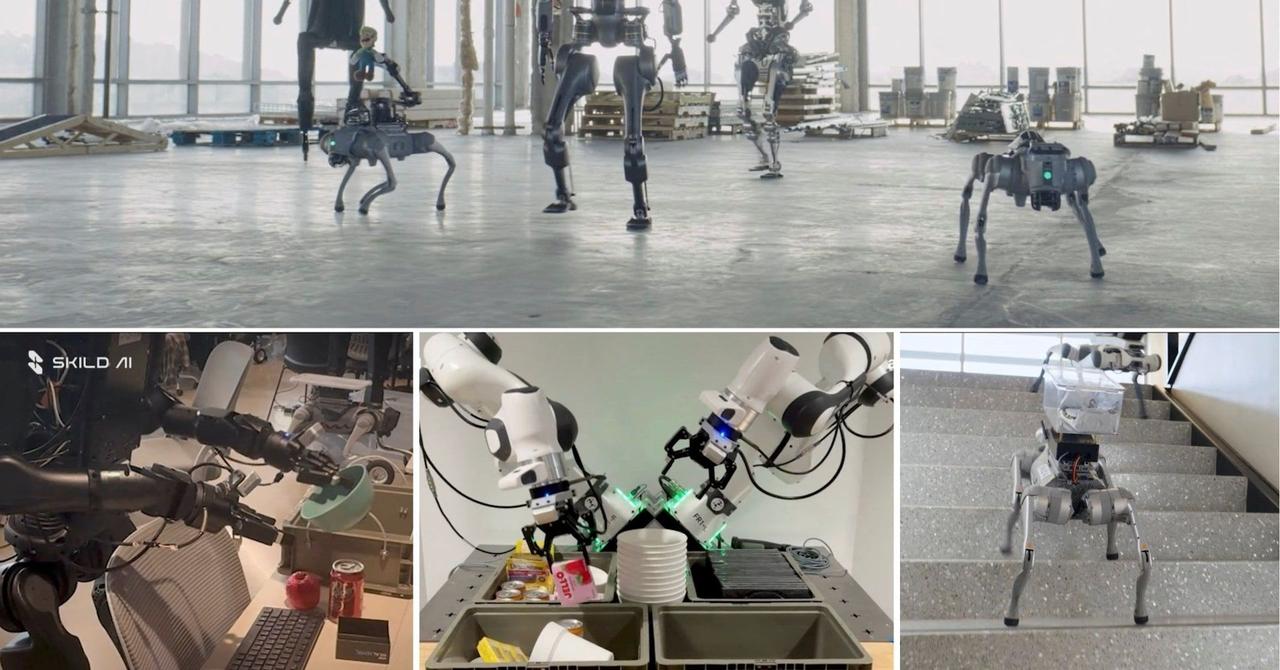
Skild AI, a robotics company building an "omni-bodied" brain to operate any robot for any task, announced Wednesday that it has raised $1.4 billion, tripling its valuation to over $14 billion. The fundraise comes just over seven months after Skild raised a $135 million Series B at a $4.5 billion valuation. SoftBank Group led the startup's latest financing, which included participation from NVentures, Nvidia's venture capital arm, entities administered by Macquarie Capital, Bezos Expeditions, Disruptive and 1789 Capital. Several strategic investors also wrote checks into the round, including Samsung, LG Technology Ventures, Schneider Electric, CommonSpirit Health, and Salesforce Ventures 1. The raise brings Pittsburgh-based Skild AI's total raised to over $1.83 billion, according to Crunchbase. The company says it grew from zero to about $30 million revenue "in just a few months" in 2025, and "is growing exponentially." It is deploying its technology in a variety of environments, including security and facility inspection, last-mile and point-to-point delivery, warehouses, manufacturing, data centers, and construction tasks, among others. Looking ahead, Skild AI plans to deploy robotics in consumers homes, with enterprise tasks as the first application. Last year was a good year for robotic startup funding. Overall, robotics startups raised $13.8 billion in funding in 2025, up from $7.8 billion in 2024 and even topping the $13.1 billion raised in the peak venture funding year of 2021. Another example of a company building a brain for robots that recently raised capital is Flexion. The Zurich-based startup, which says it's "building the brain for humanoid and human-capable robots," raised $50 million in funding in November. Multipurposing intelligence Skild AI claims to be building the industry's "first unified robotics foundation model" called the Skild Brain. The company says its model differs from traditional ones that are tailored to specific robot designs in that it is omni-bodied and "can control any robot without prior knowledge of their exact body form," including quadrupeds, humanoids, tabletop arms and mobile manipulators. As such, Skild AI says its technology gives robots the ability to perform simpler tasks such as household chores like cleaning, loading a dishwasher and making an egg, as well as more physically demanding activities such as navigating slippery terrain. "The Skild Brain can control robots it has never trained on, adapting in real time to extreme changes in form or environments. The model is forced to adapt rather than memorize -- much like intelligence in nature," said Deepak Pathak, CEO and co-founder of Skild AI, in a release.
[4]
Robot software startup Skild AI raises $1.4B round backed by Nvidia, Jeff Bezos - SiliconANGLE
Robot software startup Skild AI raises $1.4B round backed by Nvidia, Jeff Bezos Skild AI Inc., a startup that develops artificial intelligence software for robots, has raised $1.4 billion from a group of prominent investors. Today's funding announcement comes about a month after reports of the funding round first emerged. Skild AI has raised about $400 million more than expected. The consortium that provided the capital was led by SoftBank Group Corp., which has made robotics a major focus of its AI investment strategy. The OpenAI Group PBC backer recently inked a deal to acquire ABB Ltd.'s robotics business for $5.4 billion. SoftBank was joined in the round by Nvidia Corp.'s NVentures startup fund, Jeff Bezos' Bezos Expeditions, Salesforce Ventures, Samsung Electronics Co. and more than a half-dozen others. Skild AI, which is now valued at $14 billion, will use the funding to upgrade its model training infrastructure. The company has developed a foundation model called the Skild Brain that is specifically designed to power robots. The company says that the algorithm has several advantages over competing software. The training data that developers must use to develop a robot's AI model varies based on the hardware. An algorithm designed to power robotic arms, for example, must be trained on footage of robotic arms. That complicates development because there is only a limited amount of robotic arm footage available in the open-source ecosystem. The more specialized the robot design, the less training data is readily available. Skild AI tackled the challenge by equipping its Skild Brain model with a robot-agnostic architecture. The algorithm can run on many different types of robots without the need for extensive fine-tuning. That versatility enables the Skild Brain to learn from videos of humans on the web instead of robot footage. The company developed the model by creating a simulated environment with more than 100,000 robot form factors. During training, Skild Brain learned to operate each one. Skild AI says the model keeps learning after it's installed on a real robot. It analyzes data from the host system's sensors to identify mistakes and correct them. Under the hood, Skild Brain uses what the company describes as a hierarchical design. One module analyzes the task at hand and generates high-level instructions for the host robot. A second, significantly faster module maps the high-level instructions to specific motion details such as joint angles. Demo videos on Skild AI's website shows robots powered by its software watering plants, climbing down stairs and performing a range of other actions. Developers can customize how Skild Brain goes about a task using an application programming interface. The software automatically sorts out implementation details such as how to recover from unexpected setbacks in the middle of a task. "We believe that a unified, omni-bodied brain is the fastest way to establish a continuous data flywheel where the model gets better with every single deployment, no matter what the hardware or task," said co-founder and Chief Executive Deepak Pathak. In addition to enhancing its AI training infrastructure, Skild AI will use its funding round to finance research initiatives. The company plans to explore new model architectures and robot data collection methods.
[5]

Robotics Startup Skild AI Raises $1.4 Billion at Valuation Over $14 Billion
Skild AI, an artificial-intelligence robotics startup, raised nearly $1.4 billion in a funding round that values the company at more than $14 billion. The funding round was led by SoftBank Group, with participation from Nvidia's venture capital arm, Jeff Bezos, and 1789 Capital, the venture capital group at which Donald Trump Jr. is a partner, Skild AI said Wednesday. Other investors included Macquarie Capital, Disruptive, Lightspeed, and Sequoia Capital. The company is building a unified robotics foundation model called the Skild Brain, which is designed to work for any robot regardless of physical design. Skild said it has grown from zero to around $30 million in revenue in just a few months in 2025. It will use proceeds from the funding round to scale the model training and work toward deployment, beginning with enterprise tasks.
Share
Share
Copy Link
Pittsburgh-based Skild AI secured $1.4 billion in a Series C round led by SoftBank, with backing from Nvidia, Jeff Bezos, and others. The robotics startup, which builds general-purpose AI software that can control any robot without extensive retraining, has tripled its valuation to over $14 billion in just seven months. The company grew from zero to $30 million in revenue within months in 2025.
Skild AI Valuation Soars to $14 Billion
Skild AI has completed a massive funding round that catapults the robotics startup into the upper echelons of AI-focused companies. The Pittsburgh-based firm raised $1.4 billion in a Series C round led by SoftBank Group, with participation from Nvidia Corp through its NVentures arm, Jeff Bezos' Bezos Expeditions, Macquarie Group, and 1789 Capital
1
. Strategic investors including Samsung, LG Technology Ventures, Schneider Electric, CommonSpirit Health, Salesforce Ventures, Lightspeed, and Sequoia Capital also participated in the round3
. The investment values Skild AI at more than $14 billion, representing a remarkable tripling of its valuation in just seven months from the $4.5 billion it achieved during its Series B round last summer1
.Rapid Revenue Growth Signals Market Demand
The robotics software maker has demonstrated impressive commercial traction since its 2023 founding. According to CEO and co-founder Deepak Pathak, Skild AI grew from zero to approximately $30 million in revenue in just a few months during 2025, with the company reporting exponential growth
3
5
. The company has now raised over $1.83 billion in total funding since its inception3
. This funding round came in approximately $400 million higher than initially expected when reports first emerged about a month ago4
. The deployment of Skild AI's technology spans multiple sectors including security and facility inspection, last-mile and point-to-point delivery, warehouses, manufacturing, data centers, and construction tasks3
.Foundation Models for Robots Break Training Barriers
Skild AI's core innovation addresses one of the most significant hurdles in robot adoption: the extensive training required for robots to learn each new task. The company builds what it calls the "Skild Brain," marketed as the industry's first unified robotics foundation model with an omni-bodied AI brain capable of controlling any robot without prior knowledge of their exact body form
3
4
. This general-purpose software for robots can be retrofitted to various robot types including quadrupeds, humanoids, tabletop arms, and mobile manipulators without requiring extensive fine-tuning1
3
.
Source: Crunchbase
Related Stories
Robot-Agnostic Architecture Enables Learning From Humans
The technical approach behind Skild AI's foundation models for robots represents a departure from traditional robotics software development. The company created a simulated environment with more than 100,000 robot form factors during training, allowing the Skild Brain to learn to operate each one
4
. This robot-agnostic architecture enables the model to learn from videos of humans performing tasks on the web rather than requiring specific robot footage, which is often scarce for specialized robot designs4
. The model continues learning after deployment, analyzing data from the host robot's sensors to identify and correct mistakes. Pathak explained that "the Skild Brain can control robots it has never trained on, adapting in real time to extreme changes in form or environments. The model is forced to adapt rather than memorize -- much like intelligence in nature"3
.
Source: Bloomberg
Investment Reflects Growing Robotics Startup Momentum
The substantial backing from SoftBank Group aligns with the venture capital firm's broader AI investment strategy, which has made robotics a major focus. SoftBank recently inked a deal to acquire ABB Ltd.'s robotics business for $5.4 billion
4
. The funding round comes during a particularly strong period for robotics startup investment. Overall, robotics startups raised $13.8 billion in funding in 2025, up from $7.8 billion in 2024 and even surpassing the $13.1 billion raised during the peak venture funding year of 20213
. Skild AI plans to use the proceeds to upgrade its model training infrastructure and finance research initiatives exploring new model architectures and robot data collection methods4
5
. Looking ahead, the company plans to deploy robotics in consumer homes, with enterprise tasks serving as the first application3
. Demo videos showcase robots powered by the software watering plants, climbing down stairs, and performing household chores like cleaning, loading dishwashers, and making eggs, as well as navigating slippery terrain3
4
.
Source: SiliconANGLE
References
Summarized by

Navi
[4]
[5]
Related Stories
SoftBank and Nvidia in talks to fund Skild AI at $14 billion, nearly tripling its valuation
08 Dec 2025•Startups

SoftBank in Talks to Invest $500M in Robotics Startup Skild AI at $4B Valuation
29 Jan 2025•Business and Economy

Jeff Bezos and SoftBank Lead $300M Investment in AI Startup Developing Robot Brains
15 Jul 2024

Recent Highlights
1
Tennessee Teens Sue Elon Musk's xAI Over Grok AI-Generated Child Abuse Images
Policy and Regulation

2
Supermicro Co-Founder Indicted in $2.5 Billion Nvidia AI Chip Smuggling Scheme to China
Policy and Regulation
3
Val Kilmer to appear posthumously in As Deep as the Grave through AI-generated performance
Entertainment and Society

Recent Highlights
Today's Top Stories












Your Daily Dose of Curated AI News
Don’t drown in AI news. We cut through the noise - filtering, ranking and summarizing the most important AI news, breakthroughs and research daily. Spend less time searching for the latest in AI and get straight to action.

