SoftBank pauses $50 billion Switch acquisition, throwing Stargate AI infrastructure plans into limbo


4 Sources
4 Sources
[1]
SoftBank pauses $50bn AI data center operator acquisition talks -- move plunges Stargate data center plans into uncertainty as regulatory roadblocks pose significant challenge
Masayoshi Son's ambitions for direct control of U.S. AI infrastructure hit financial and regulatory roadblocks. SoftBank has paused talks to acquire U.S. data center operator Switch, stepping back from what would have been one of its largest deals to date, and a core pillar of founder and CEO Masayoshi Son's plans to build out OpenAI's Stargate project. A report claims that Son had pursued a full takeover for several months, only to concede in early January that an outright acquisition was no longer viable. OpenAI's $500 billion Stargate project is being funded by OpenAI, SoftBank, Oracle, and Abu Dhabi-backed MGX, among others. It's an ambitious effort to grow U.S. AI infrastructure to 10 gigawatts by 2029, with sites in Texas, New Mexico, Wisconsin, and Michigan. Control of physical infrastructure, not just chips or models, is -- or was meant to be -- a defining feature of the project. Switch, with its network of large-scale, energy-efficient campuses across the United States, would have played a major role in achieving these goals under SoftBank's control, as the full report by Bloomberg notes. Owning the physical layer Stargate's ambitions aren't limited to just adding a few more servers here or there. The project is a major buildout of up to 10 gigawatts of AI capacity stretching all across the United States. At that scale, potential limiting factors will not just be access to capital -- Trump has recently called for tech companies to "pay their own way" -- or GPUs, but the ability to secure land, grid connections, and cooling systems that can support extremely dense AI racks. Switch has built its facilities around solving those challenges, with campuses designed for large, contiguous deployments and an emphasis on power efficiency and the ability to support high per-cabinet power draw. An acquisition of Switch by SoftBank would have provided valuable vertical integration at a time when AI companies and hyperscalers are competing for scarce capacity and grappling with long lead times Bloomberg Intelligence analysts Kirk Boodry and Chris Muckenstrum noted that ending talks on a full acquisition leaves SoftBank's data center plans "in limbo, as Stargate announcements remain few and far between." A minority investment or partnership would provide some exposure to the sector, but it would also fall short of the overall control SoftBank has sought in other areas, such as semiconductors and robotics. Without that level of control, the Stargate project becomes more dependent on third-party operators, and there's less ability for SoftBank to exercise full control over factors like power allocation. The chips are stacked against Softbank Several factors appear to have weighed against a full acquisition by SoftBank. The first and most obvious is the sheer scale of it. With a reported valuation of around $50 billion, it would have made Switch one of SoftBank's largest ever purchases. Some within SoftBank were, according to unnamed sources, "wary" not only about the price, but also about the operational complexity of running dispersed data center campuses. Regulatory scrutiny was another factor because any takeover of a major U.S. data center operator by a foreign-owned entity would undoubtedly attract serious attention from regulators, particularly given the strategic importance and sensitivity of AI infrastructure to the United States. Even if the deal passed review by the Committee on Foreign Investment -- and that's a big if -- it's entirely feasible that such a review would have delayed or significantly reshaped the deal. All the while, Switch itself is preparing for an IPO as soon as this year, and its backers have discussed valuations of roughly $60 billion. SoftBank has doubled down on AI investments over the past year, buying an 11% stake in OpenAI and committing tens of billions in fresh capital. It agreed to buy CPU designer Ampere for $6.5 billion and announced a $5.4 billion acquisition of ABB's robotics unit. To fund this, SoftBank sold its T-Mobile US stake, exited its entire position in Nvidia, and expanded margin loans backed by its shares in Arm. Earlier this month, S&P Global warned that this combination of aggressive AI spending and a sharp decline in Arm's share price was increasing pressure on SoftBank's credit profile. Partnerships over ownership In late December, SoftBank completed a $4 billion deal to buy DigitalBridge, a New York-based investment firm that is a major backer of Switch. This deal, then, gives SoftBank that all-important albeit indirect access to data center assets without taking on full operational responsibility; SoftBank's position allows the company to co-invest and align infrastructure development with the needs of its AI portfolio companies. This is obviously a more asset-lite approach to infrastructure, but SoftBank has relied on similar structures before. The group owns an Ohio manufacturing facility operated by Foxconn under a partnership model. Applying that template to data centers will help to reduce regulatory and balance sheet risks, even if it ultimately limits SoftBank's control. Given all these factors, it's unlikely that SoftBank and Switch will re-enter talks about a full acquisition, at least in the near future. However, it's not completely off the table: Son himself has said that he eyed up Arm for several years before acquiring the company in 2016, only to return it to public markets via an IPO in 2023. In the near term, Stargate's eventual buildout looks like it will have to rely on third-party partnerships to bring capacity online on schedule.
[2]
SoftBank Hits the Brakes on Talks to Buy Data Center Firm Switch
SoftBank has doubled down on its bets in AI in recent months, including amassing an 11% stake in OpenAI and buying US chip designer Ampere Computing LLC for $6.5 billion. SoftBank Group Corp. has halted talks about an acquisition of US data center operator Switch Inc., a setback to founder Masayoshi Son's ambition to roll out Stargate AI infrastructure, according to people familiar with the matter. For months, Son pursued a deal of around $50 billion for Switch, convinced that direct control of the latter's network of energy-efficient data centers would help the $500 billion Stargate push to generate computing power for partner OpenAI. But earlier this month, Son conceded that a full acquisition was off the table and scrapped a planned January announcement, the people said, asking not to be named because the matter is private. The two sides remain in active discussions about a partial investment or a partnership, they said. Earlier this month, SoftBank inked a $3 billion deal to buy New York-listed investment firm DigitalBridge Group Inc., which holds a majority stake in Switch. A SoftBank spokesperson did not respond to a request for comment. Representatives of Switch and DigitalBridge declined to comment. The deal would have been one of the Japanese company's biggest to date, and would have given a much-needed boost to the Stargate Project to build US data centers. Son had seen that project as a key path to play a bigger role in an artificial intelligence race and had pledged to deploy $100 billion "immediately" alongside OpenAI, Oracle Corp. and Abu Dhabi's MGX. Some within the SoftBank camp had been wary about the size of the deal as well as the logistics of running data center campuses from Las Vegas to Atlanta, the people said. Switch is simultaneously preparing for an initial public offering as soon as this year, and the company's backers have considered a valuation of about $60 billion including debt via a stock-market listing. Any deal would also likely come under scrutiny from the Committee on Foreign Investment in the US. Get the Tech Newsletter bundle. Get the Tech Newsletter bundle. Get the Tech Newsletter bundle. Bloomberg's subscriber-only tech newsletters, and full access to all the articles they feature. Bloomberg's subscriber-only tech newsletters, and full access to all the articles they feature. Bloomberg's subscriber-only tech newsletters, and full access to all the articles they feature. Bloomberg may send me offers and promotions. Plus Signed UpPlus Sign UpPlus Sign Up By submitting my information, I agree to the Privacy Policy and Terms of Service. While it's unlikely that SoftBank and Switch will revive talks about a full acquisition, the two sides may find a way in the future, given Son's keen interest in a deal. The billionaire has said he eyed Arm Holdings Plc for years before he was able to acquire the UK chip designer in 2016. SoftBank also owns an Ohio manufacturing facility that is operated by Taiwan's Hon Hai Precision Industry Co., which might be a model for a partnership with Switch. Despite being early to invest in AI technologies, Son and SoftBank have largely missed out on a global rush to build the semiconductors, server racks and other hardware to support machine learning, with the lion's share of money flowing to a small circle of chipmakers including Nvidia Corp. and Taiwan Semiconductor Manufacturing Co. SoftBank has doubled down on its bets in AI in recent months. Over the past year, the Tokyo-based company has amassed an 11% stake in OpenAI, injecting $22.5 billion just last month. It bought US chip designer Ampere Computing LLC for $6.5 billion and announced a $5.4 billion acquisition of ABB Ltd.'s robotics unit. To finance some of that cost, SoftBank has sold down its T-Mobile US Inc. shares, unloaded its entire Nvidia stake and expanded a margin loan using its Arm shares. SoftBank's investments in AI, along with the sharp drop in the value of Arm shares at the end of last year, are heaping pressure on its creditworthiness, S&P Global Ratings warnedBloomberg Terminal earlier this month. While SoftBank has a record of discipline with managing its finances, "if it does not take prompt easing measures, such as liquidation of held assets, pressure will intensify on the credit ratings," analysts Kei Ishikawa and Makiko Yoshimura wrote in a report.
[3]
SoftBank's $50 Billion Data Center Bid To Power OpenAI Falls Apart - SoftBank Group (OTC:SFTBF), SoftBank Group (OTC:SFTBY)
SoftBank Group Corp. (OTC:SFTBF) (OTC:SFTBY) has paused acquisition discussions with U.S. data center operator Switch after founder Masayoshi Son pursued a deal valued at around $50 billion for several months. Son had sought direct control of Switch's energy-efficient data center network to support Stargate's goal of generating computing power for OpenAI, Bloomberg reported on Monday, citing sources familiar with the matter. Earlier this month, Son pulled a planned January announcement and accepted that a full purchase would not move forward. Partnership or Minority Investment Still Under Discussion The same people said SoftBank and Switch remain in active talks about a smaller investment or partnership. In December, SoftBank agreed to buy global alternative asset manager DigitalBridge Group in a $4 billion deal. Reportedly, DigitalBridge backs Switch. Deal Concerns and Broader AI Strategy Shape Next Steps People familiar with the situation told Bloomberg that some within SoftBank were concerned about the sheer size of the deal and the operational challenge of managing data center campuses across multiple U.S. cities. They also said Switch has been preparing for a potential IPO by 2026 and that its backers have discussed a valuation of about $60 billion. SoftBank has moved aggressively to reposition itself around artificial intelligence, completing a $40 billion investment in OpenAI that secured a stake of more than 10% at a $260 billion pre-money valuation. The company funded the deal by reshaping its balance sheet, selling its entire Nvidia Corp. (NASDAQ:NVDA) stake, scaling back Vision Fund activity, unloading billions of dollars in T-Mobile US, Inc. (NASDAQ:TMUS) shares, and tightening capital allocation. SoftBank has also lined up additional liquidity options, including potential asset sales, a PayPay IPO, and margin loans backed by its Arm Holdings Plc (NASDAQ:ARM) stake, to concentrate resources on AI infrastructure projects. Image via Shutterstock SFTBFSoftBank Group Corp $128.00381.0% Overview SFTBYSoftBank Group Corp $13.18-0.08% ARMARM Holdings PLC $116.840.66% NVDANVIDIA Corp $186.55-0.60% TMUST-Mobile US Inc $186.630.32% Market News and Data brought to you by Benzinga APIs
[4]
SoftBank pauses talks to acquire data center operator Switch
SoftBank (SFTBY) (SFTBF) has paused discussions about acquiring U.S. data center operator Switch, a potential setback to founder Masayoshi Son's aim to roll out Stargate AI infrastructure, Bloomberg News reported, citing people with knowledge of the matter. Last month, it was SoftBank paused the Switch acquisition, impacting rollout of its Stargate AI infrastructure plans; full acquisition is now ruled out, with a partial investment or partnership under discussion. Switch is preparing for an IPO with backers considering around $60B valuation; ongoing SoftBank talks could influence this process and valuation, though acquisition is paused. Acquiring or partnering with Switch would have greatly supported SoftBank's Stargate project local AI data center infrastructure alongside OpenAI and Oracle; missing the deal is a potential setback.
Share
Share
Copy Link
SoftBank has halted talks to acquire U.S. data center operator Switch for $50 billion after months of negotiations, dealing a blow to founder Masayoshi Son's ambitious Stargate project. The company now faces the challenge of securing critical AI infrastructure through alternative partnerships while managing mounting financial pressure and regulatory concerns over foreign ownership of strategic U.S. assets.
SoftBank Halts Ambitious Data Center Acquisition
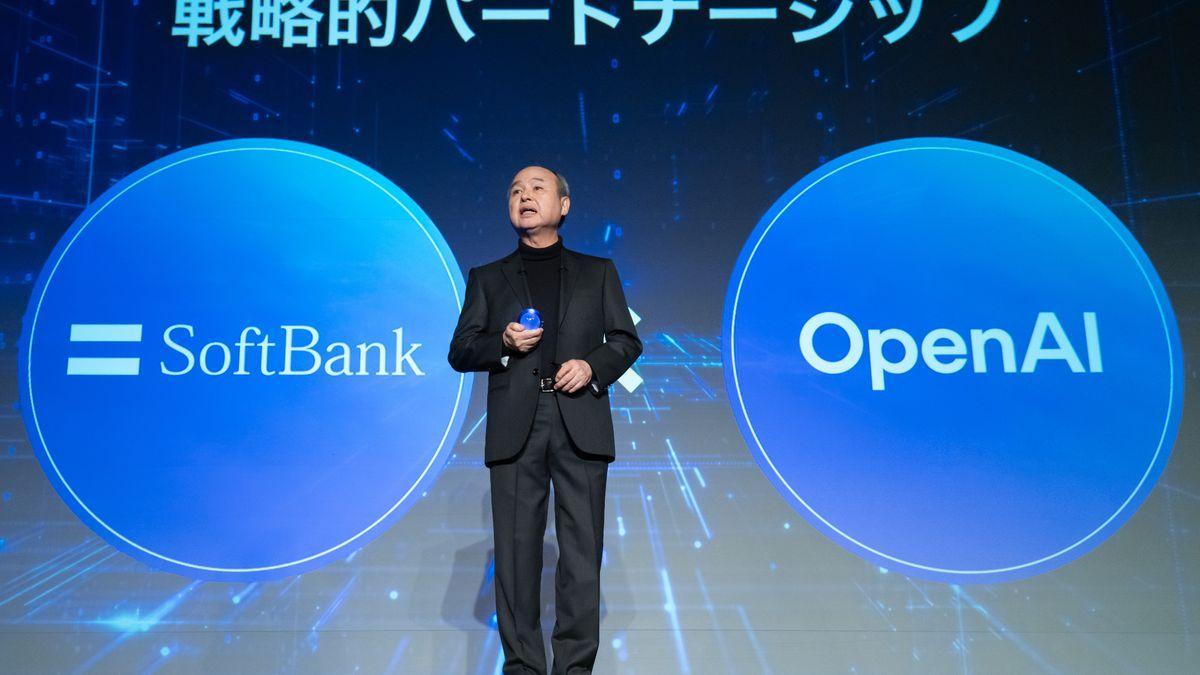
SoftBank has paused acquisition talks with U.S. data center operator Switch, stepping back from what would have been a $50 billion deal and one of the Japanese conglomerate's largest transactions to date
1
2
. For months, Masayoshi Son pursued direct control of Switch's network of energy-efficient data centers, convinced it would be essential to rolling out the ambitious $500 billion Stargate AI infrastructure project2
. Earlier this month, Son conceded that a full acquisition was off the table and scrapped a planned January announcement, though the two sides remain in active discussions about a partial investment or partnership2
4
.
Source: Tom's Hardware
Stargate Project Faces Infrastructure Uncertainty
The paused acquisition talks throw the Stargate AI infrastructure project into uncertainty at a critical moment. OpenAI's Stargate initiative, funded by OpenAI, SoftBank, Oracle, and Abu Dhabi-backed MGX, aims to build up to 10 gigawatts of AI capacity by 2029, with sites planned across Texas, New Mexico, Wisconsin, and Michigan
1
. Control of physical infrastructure—not just chips or models—was meant to be a defining feature of the project. Switch, with its large-scale, energy-efficient campuses designed to support high per-cabinet power draw and dense AI racks, would have played a major role in achieving these goals under SoftBank's control1
. Bloomberg Intelligence analysts Kirk Boodry and Chris Muckenstrum noted that ending talks on a full acquisition leaves SoftBank's data center plans "in limbo, as Stargate announcements remain few and far between"1
. Without direct ownership, the Stargate project becomes more dependent on third-party operators, limiting SoftBank's ability to control critical factors like power allocation and computing power deployment.Financial and Regulatory Roadblocks Mount
Several factors contributed to the collapse of the deal to acquire data center operator Switch. The sheer scale of the transaction presented significant challenges, with some within SoftBank reportedly "wary" about both the $50 billion price tag and the operational complexity of managing dispersed data center campuses from Las Vegas to Atlanta
2
. Regulatory scrutiny posed another substantial hurdle. Any takeover of a major U.S. data center operator by a foreign entity would attract serious attention from the Committee on Foreign Investment in the U.S., particularly given the strategic importance of AI infrastructure1
. Even if the deal passed review, the process could have delayed or significantly reshaped the transaction. Meanwhile, Switch is preparing for an IPO as soon as this year, with backers discussing valuations of roughly $60 billion including debt2
3
.Related Stories

Balance Sheet Pressure Intensifies
SoftBank's aggressive AI spending spree has placed mounting pressure on its creditworthiness and financial stability. Over the past year, the company has amassed an 11% stake in OpenAI by injecting $22.5 billion just last month, bought Ampere Computing for $6.5 billion, and announced a $5.4 billion acquisition of ABB's robotics unit
2
3
. To finance these investments, SoftBank sold its entire Nvidia stake, exited its T-Mobile US position, and expanded margin loans backed by its shares in Arm Holdings1
3
. Earlier this month, S&P Global warned that this combination of aggressive AI spending and a sharp decline in Arm's share price was increasing pressure on SoftBank's credit profile, noting that "if it does not take prompt easing measures, such as liquidation of held assets, pressure will intensify on the credit ratings"2
.
Source: Seeking Alpha
Alternative Pathways Through DigitalBridge
In late December, SoftBank completed a $4 billion deal to buy DigitalBridge, a New York-based investment firm that holds a majority stake in Switch
1
2
. This acquisition gives SoftBank indirect access to data center assets without taking on full operational responsibility, allowing the company to co-invest and align infrastructure development with the needs of its AI portfolio companies. This more asset-lite approach mirrors structures SoftBank has used before, including its Ohio manufacturing facility operated by Foxconn under a partnership model1
. While a minority investment or partnership would provide some exposure to the sector, it falls short of the overall control SoftBank has sought in other areas such as semiconductors and robotics. The question now is whether this indirect pathway will prove sufficient to support the massive computing power requirements of the Stargate project, or whether Son will find another route to secure the infrastructure control he has long pursued. Despite missing out on the AI hardware rush that enriched companies like Nvidia and Taiwan Semiconductor Manufacturing Co., Son has shown persistence in pursuing strategic assets—he famously eyed Arm Holdings for years before acquiring the UK chip designer in 20162
.
Source: Benzinga
References
Summarized by

Navi
[4]
Related Stories
OpenAI and SoftBank's $100B Stargate Project Faces Setbacks Amid Tariff Concerns
13 May 2025•Business and Economy

SoftBank scrambles to deliver $22.5 billion to OpenAI as year-end deadline looms
20 Dec 2025•Business and Economy
OpenAI's $500B Stargate AI data centers stall as partners clash over ownership and control
23 Feb 2026•Business and Economy
Recent Highlights
1
Google releases Gemma 4 with Apache 2.0 license, enabling unrestricted local AI on devices
Technology
2
AI Models Lie and Deceive to Protect Other AI Models From Deletion, Study Reveals
Science and Research

3
OpenAI closes $122 billion funding round amid fierce AI competition and profitability questions
Startups

Recent Highlights
Today's Top Stories






Your Daily Dose of Curated AI News
Don’t drown in AI news. We cut through the noise - filtering, ranking and summarizing the most important AI news, breakthroughs and research daily. Spend less time searching for the latest in AI and get straight to action.

