SoftBank's AI investments deliver $1.62 billion profit as OpenAI stake drives turnaround


8 Sources
8 Sources
[1]
SoftBank's $4.2bn OpenAI gain lifts quarterly profits as AI exposure deepens -- company swings back to profitability in Q3 results
Vision Fund divergence and expanding data center commitments show how SoftBank is aligning its capital with AI. SoftBank swung back to profitability in its fiscal third quarter, reporting net income of 248.6 billion yuan -- roughly $1.6 billion -- for the three months ending December. These numbers, as reported by the Financial Times, represent a stark reversal from the 369 billion yuan (53.4 billion USD) loss the company posted in the same quarter last year. This turnaround of the company's fortunes was primarily driven by a $4.2 billion gain tied to its stake in OpenAI, which is part of a broader $17 billion in gains the company says it has recorded on the ChatGPT-maker in the financial year to date -- strip out that contribution and the quarter would have looked very different. SoftBank has invested more than $34 billion in OpenAI and is understood to be in talks to commit another $30 billion in a funding round that could push its valuation to $750 billion. Following OpenAI's restructuring last year, SoftBank holds roughly 11% of the company, compared with Microsoft's near-27% stake. To fund this, SoftBank has aggressively reshaped its balance sheet, exiting its entire position in Nvidia for $5.8 billion and selling $12.7 billion worth of T-Mobile shares. In doing so, Masayoshi Son effectively traded SoftBank's exposure to public, liquid assets for a private AI platform and its associated infrastructure. The company's Vision Fund is reflective of why Son might have been keen to do this. Split into multiple parts, Vision Fund 1 recorded a $4.1 billion loss in the quarter, dragged down by declines in publicly-traded holdings like Coupang, which suffered a significant data breach. Meanwhile, Vision Fund 2, which includes OpenAI, generated a $6.6 billion gain, more than offsetting those losses. The older portfolio, heavy with late-stage tech companies that are now exposed to public market volatility, is under serious pressure while the newer fund, anchored by OpenAI, is delivering gains at a scale large enough to dominate consolidated earnings. In effect, SoftBank's quarterly performance is now increasingly tied to how OpenAI is valued. In addition to its heavy investment in OpenAI, SoftBank also retains a majority position in Arm, whose CPU architectures underpin much of the world's mobile computing and an expanding share of the server silicon market. Arm is also known to be interested in manufacturing its own chips. Over the past two years, SoftBank has also acquired Ampere, the Arm-based server CPU company founded by former Intel executive Renee James, and Graphcore, the UK AI accelerator startup that once claimed its Intelligence Processing Unit could be an alternative to GPUs in AI training and machine learning applications. SoftBank has said that these companies are now housed under a new unit -- the AI Computing Segment -- alongside Arm. Anyone looking at this collection of assets can easily come to the conclusion that it resembles what appears to be a developing hardware strategy. Arm's designs are already central to hyperscale data center applications, and Ampere's server CPUs target cloud-native and AI workloads with high core counts and power efficiency. Graphcore, despite facing commercial headwinds, developed architectures purpose-built for machine learning. Overlay OpenAI's model development needs on top of that, and you've got everything you need to support AI training and inference at scale. In fact, reports claim that Arm is developing a custom CPU to be used by OpenAI itself. OpenAI's valuation is tied to growth in both model capability and enterprise adoption -- and both require infrastructure. Training frontier models demands clusters built around high-performance accelerators and high-bandwidth memory, and serving them at a global scale requires data centers with robust power delivery and cooling capacity. SoftBank is playing a leading role in that buildout, with Son leading financing efforts for the $500 billion Stargate project -- antitrust challenges ongoing -- in the United States, which is aimed at scaling AI data centers and infrastructure in partnership with OpenAI, Oracle, and Abu Dhabi-backed DGX. It's impossible to understate the capital intensity of such an undertaking, which involves land acquisitions, grid interconnections, power contracts, and vast quantities of silicon. SoftBank's shares have nearly doubled as a result over the past 12 months as investors seek exposure to OpenAI through the Japanese conglomerate. This has effectively turned the company into a publicly traded proxy for private AI valuation. However, the stock price has fallen 29% from its October peak, reflecting growing concerns surrounding the so-called AI bubble and intensifying competition from the likes of Google and Anthropic, and, naturally, the enormous, seemingly endless amounts of capital needed to sustain frontier model development. As enterprise buyers grow increasingly sensitive to pricing and competition heats up from Anthropic's Claude and Google's Gemini models, which themselves are pushing performance boundaries, OpenAI's ability to maintain competitive pricing will depend on continued technical leadership and efficient deployment of compute resources. That dynamic creates risk for SoftBank, given that a large portion of its recent profit derives directly from mark-to-market gains on OpenAI. If investor sentiment around AI reprices downward, those gains could be wiped out as quickly as they appeared. SoftBank CFO Yoshimitsu Goto said that the group has made "over $40 billion of investments in the last nine months," including commitments to OpenAI, while maintaining net debt at roughly 20% of the value of its equity holdings and a cash position of $24 billion. That, at least on paper, suggests some degree of financial discipline.
[2]
SoftBank Vision Fund books $2.4 billion quarterly gain boosted by OpenAI bet
SoftBank CEO Masayoshi Son and OpenAI CEO Sam Altman attend an event to pitch AI for businesses in Tokyo, Japan Feb. 3, 2025. SoftBank posted a $2.4 billion gain at its Vision Fund in the December quarter as a jump in the value of its OpenAI investment helped offset losses in some of its other bets. With the Vision Fund, SoftBank has invested in AI companies it believes will be category winners, seeking to position itself at the center of the technology's development. This includes a roughly $40 billion investment in ChatGPT developer OpenAI as one of its core companies. Among SoftBank's other key bets is chip designer Arm and investments that span everything from robotics to driverless cars. SoftBank shares have jumped this week after strong results at its telecommunications unit and a rally in the price of Arm's stock.
[3]
Japan's technology investor SoftBank Group sees profitability return on AI boom
TOKYO (AP) -- Japanese technology and telecoms giant SoftBank Group Corp. swung back into profitability in the last quarter of 2025 as its investments in OpenAI and other ventures paid off, the company said Thursday. SoftBank Group reported a 248.6 billion yen ($1.62 billion) profit for the October-December period, a reversal from 369 billion yen in losses racked up in the same quarter a year earlier. Quarterly sales rose 8% to 1.98 trillion yen ($12.9 billion). Tokyo-based SoftBank Group sold its stake in Nvidia for $5.8 billion in October, in line with its focus on artificial intelligence. It has invested nearly $35 billion in OpenAI, the developer of the artificial intelligence chatbot ChatGPT, for an ownership interest of about 11%, which has brought investments gains, the company said. Among other investments, last year SoftBank Group acquired Ampere, a U.S.-based semiconductor design company, for $6.5 billion, after which it became a wholly owned U.S. subsidiary. Another interest is robotics. SoftBank Group reached an agreement with ABB last year to acquire its robotics business for $5.375 billion. The deal still needs regulatory approval, including in Europe, China and the U.S. For the nine months through December, SoftBank Group posted a 3.17 trillion yen ($20.7 billion) profit, about five times what it recorded in the previous year. Nine-month sales edged up nearly 8% to 5.7 trillion yen ($37 billion). SoftBank generally does not release annual profit forecasts. "Our investments are beginning to pay off," SoftBank Group's chief financial officer, Yoshimitsu Goto, told reporters. He stressed the gains were coming not just from OpenAI but from a variety of investments, including in Arm, an AI semiconductor company. SoftBank's financial performance tends to be erratic because it is an aggressive investor in innovative, often fledgling, technology. Although its banking on OpenAI appears to have paid off so far, some analysts caution that counting too much on OpenAI could be risky.
[4]
'Our investments are beginning to pay off': AI boom brings SoftBank back into the black | Fortune
Japanese technology and telecoms giant SoftBank Group Corp. swung back into profitability in the last quarter of 2025 as its investments in OpenAI and other ventures paid off, the company said Thursday. SoftBank Group reported a 248.6 billion yen ($1.62 billion) profit for the October-December period, a reversal from 369 billion yen in losses racked up in the same quarter a year earlier. Quarterly sales rose 8% to 1.98 trillion yen ($12.9 billion). Tokyo-based SoftBank Group sold its stake in Nvidia for $5.8 billion in October, in line with its focus on artificial intelligence. It has invested nearly $35 billion in OpenAI, the developer of the artificial intelligence chatbot ChatGPT, for an ownership interest of about 11%, which has brought investments gains, the company said. Among other investments, last year SoftBank Group acquired Ampere, a U.S.-based semiconductor design company, for $6.5 billion, after which it became a wholly owned U.S. subsidiary. Another interest is robotics. SoftBank Group reached an agreement with ABB last year to acquire its robotics business for $5.375 billion. The deal still needs regulatory approval, including in Europe, China and the U.S. For the nine months through December, SoftBank Group posted a 3.17 trillion yen ($20.7 billion) profit, about five times what it recorded in the previous year. Nine-month sales edged up nearly 8% to 5.7 trillion yen ($37 billion). SoftBank generally does not release annual profit forecasts. "Our investments are beginning to pay off," SoftBank Group's chief financial officer, Yoshimitsu Goto, told reporters. He stressed the gains were coming not just from OpenAI but from a variety of investments, including in Arm, an AI semiconductor company. SoftBank's financial performance tends to be erratic because it is an aggressive investor in innovative, often fledgling, technology. Although its banking on OpenAI appears to have paid off so far, some analysts caution that counting too much on OpenAI could be risky.
[5]

Japan's technology investor SoftBank Group sees profitability return on AI boom
TOKYO (AP) -- Japanese technology and telecoms giant SoftBank Group Corp. swung back into profitability in the last quarter of 2025 as its investments in OpenAI and other ventures paid off, the company said Thursday. SoftBank Group reported a 248.6 billion yen ($1.62 billion) profit for the October-December period, a reversal from 369 billion yen in losses racked up in the same quarter a year earlier. Quarterly sales rose 8% to 1.98 trillion yen ($12.9 billion). Tokyo-based SoftBank Group sold its stake in Nvidia for $5.8 billion in October, in line with its focus on artificial intelligence. It has invested nearly $35 billion in OpenAI, the developer of the artificial intelligence chatbot ChatGPT, for an ownership interest of about 11%, which has brought investments gains, the company said. Among other investments, last year SoftBank Group acquired Ampere, a U.S.-based semiconductor design company, for $6.5 billion, after which it became a wholly owned U.S. subsidiary. Another interest is robotics. SoftBank Group reached an agreement with ABB last year to acquire its robotics business for $5.375 billion. The deal still needs regulatory approval, including in Europe, China and the U.S. For the nine months through December, SoftBank Group posted a 3.17 trillion yen ($20.7 billion) profit, about five times what it recorded in the previous year. Nine-month sales edged up nearly 8% to 5.7 trillion yen ($37 billion). SoftBank generally does not release annual profit forecasts. "Our investments are beginning to pay off," SoftBank Group's chief financial officer, Yoshimitsu Goto, told reporters. He stressed the gains were coming not just from OpenAI but from a variety of investments, including in Arm, an AI semiconductor company. SoftBank's financial performance tends to be erratic because it is an aggressive investor in innovative, often fledgling, technology. Although its banking on OpenAI appears to have paid off so far, some analysts caution that counting too much on OpenAI could be risky. SoftBank Group shares rose 2.4% on Thursday. ___ Yuri Kageyama is on Threads: https://www.threads.com/@yurikageyama
[6]

SoftBank posts fourth straight quarterly profit of $1.6 billion on OpenAI gains - The Economic Times
Japan's SoftBank Group said on Thursday it logged a net profit of 248.6 billion yen ($1.62 billion) in the October-December quarter, boosted by the rising valuation of its investment in OpenAI.Japan's SoftBank Group said on Thursday it logged a net profit of 248.6 billion yen ($1.62 billion) in the October-December quarter, boosted by the rising valuation of its investment in OpenAI. The results, which mark SoftBank's fourth consecutive quarter in the black, compare to a net loss of 369 billion yen over the same period the previous year. SoftBank's earnings have been flattered by the rising valuation of its investment in ChatGPT-maker OpenAI, even as investors question the risk of overexposure to a single firm in the red-hot artificial intelligence sector. Five analysts surveyed by LSEG projected quarterly net income in a range between a gain of 1.1 trillion yen ($7.07 billion) and a loss of 480 billion yen. In the nine months to end-December, OpenAI has provided SoftBank with a 2.8 trillion yen investment gain. Masayoshi Son's conglomerate has now invested more than $30 billion in the firm, building a shareholding of around 11%, in an "all-in" wager it will emerge as a winner in the battle between competing developers of large language models. OpenAI is reportedly seeking another capital injection of $100 billion, with SoftBank joined by Amazon and Nvidia as prospective investors at a yet higher valuation of $830 billion. To fund its bets, the technology investment group has turned to asset sales, bond issuance and loans backed by its other holdings, such as chip designer Arm. The heavy exposure to OpenAI means SoftBank is increasingly seen as a publicly traded proxy for the U.S. firm, raising investor concerns over the impact on its finances. The group has already sold its $5.8 billion holding of Nvidia and, between June and December last year, sold part of its stake in T-Mobile for $12.73 billion. The conglomerate has expanded a margin loan using shares in Arm to $20 billion from $13.5 billion previously, and has used the remaining capacity. SoftBank has also raised the amount it can borrow against its shares of its domestic telecoms unit SoftBank Corp to 1.2 trillion yen from 800 billion yen. While OpenAI was once considered the dominant player among makers of large language models, it has recently been negotiating rising costs to train and run its AI models amid intensifying competition from the likes of Alphabet. SoftBank's shares closed up 2.4% in a flat market before its earnings were released.
[7]

SoftBank Returns to Profit in Q4 as OpenAI Valuation Boosts Investment Gains
SoftBank reported net income attributable to owners of the parent of 248.587 billion yen for the three months ended December 31, 2025. A year earlier, it reported a loss of 369.165 billion yen for the same period. SoftBank linked a large part of its recent investment gains to OpenAI. In its financial report, the group said Vision Fund 2 recorded investment gains tied to OpenAI, which supported overall returns. The company also detailed the scale of its . SoftBank said it completed an additional $22.5 billion investment on December 26, 2025. It said the funding fulfilled a commitment made in March 2025 and ran through SoftBank Vision Fund 2. SoftBank said its aggregate ownership interest in OpenAI now stands at approximately 11%. The company said other co-investors also participated, bringing the final aggregate commitment to $41.0 billion. Masayoshi Son, SoftBank's Chairman and CEO, said the group aligns with OpenAI's goal of broad benefits from advanced AI. OpenAI CEO Sam Altman said SoftBank's scale helps OpenAI move faster.
[8]

SoftBank Posts Quarterly Profit on $4.2 Billion Gain From OpenAI
SoftBank Group reported a quarterly net profit, driven by billions of dollars of gains from its OpenAI investment. The Japanese technology investment company said Thursday that it booked valuation gains of $4.2 billion from its investment in the ChatGPT maker for the three months ended December. SoftBank Group said its total investment of about $34.6 billion in OpenAI is now worth $54.4 billion. The Japanese company is one of OpenAI's largest shareholders. It held an 11% stake as of December after an additional $22.5 billion investment. In October, SoftBank Group sold its entire stake in Nvidia for $5.8 billion to fund its investment in the ChatGPT maker. Shares in the SoftBank Group nearly doubled in 2025, driven by hopes that stronger demand for artificial intelligence will buoy its investees such as Arm Holdings and OpenAI. The stock lost some momentum in recent months, however, weighed by concerns about the competitiveness of OpenAI as rivals such as Anthropic's Claude and Google's Gemini improve their capabilities. This week, it got a boost after Japanese Prime Minister Sanae Takaichi's election victory on Sunday fueled expectations that she will ramp up strategic investment in key industries such as artificial intelligence and semiconductors. SoftBank Group is in talks to invest as much as $30 billion more in OpenAI, The Wall Street Journal reported in late January, as the ChatGPT maker seeks up to $100 billion in new capital from investors. The funding round could value OpenAI at up to $830 billion if it raises the full amount. The Japanese company in December agreed to buy DigitalBridge Group, a Florida-based asset manager focused on investing in data centers and other digital infrastructure, for $4 billion, including debt. In October, it agreed to acquire Swiss industrial giant ABB's robotics business for $5.4 billion, aiming to combine the potential of AI with robots. SoftBank Group on Thursday posted a net profit of 248.59 billion yen, equivalent to $1.62 billion, for the three months ended December, compared with a net loss of Y369.2 billion in the year-earlier period. That missed the Y336.7 billion estimate in a poll of analysts by data provider Visible Alpha. Its Vision Funds business recorded a profit of Y735.49 billion, compared with a loss of Y309.93 billion a year ago. Write to Kosaku Narioka at [email protected]
Share
Share
Copy Link
SoftBank Group swung back to profitability with $1.62 billion in net income for Q3, reversing a $369 billion yen loss from the previous year. The turnaround was driven primarily by a $4.2 billion gain from its OpenAI stake, part of $17 billion in total gains from the ChatGPT-maker. The technology investor sold its Nvidia position for $5.8 billion to deepen its focus on AI infrastructure and private AI platforms.
SoftBank Return to Profitability Powered by OpenAI Stake
SoftBank Group delivered a dramatic financial reversal in its fiscal third quarter, posting net income of 248.6 billion yen, roughly $1.62 billion, for the October-December period
1
3
. This marks a stark turnaround from the 369 billion yen loss the technology investor SoftBank recorded in the same quarter a year earlier. Quarterly sales rose 8% to 1.98 trillion yen, approximately $12.9 billion, signaling growing momentum across the company's portfolio4
.
Source: Analytics Insight
The profitability surge was primarily driven by strategic investments in artificial intelligence, particularly a $4.2 billion gain from OpenAI stake
1
. This gain represents part of a broader $17 billion in investment gains SoftBank has recorded on the ChatGPT-maker in the financial year to date. Strip out that contribution, and the quarterly results would tell a very different story about the company's underlying performance.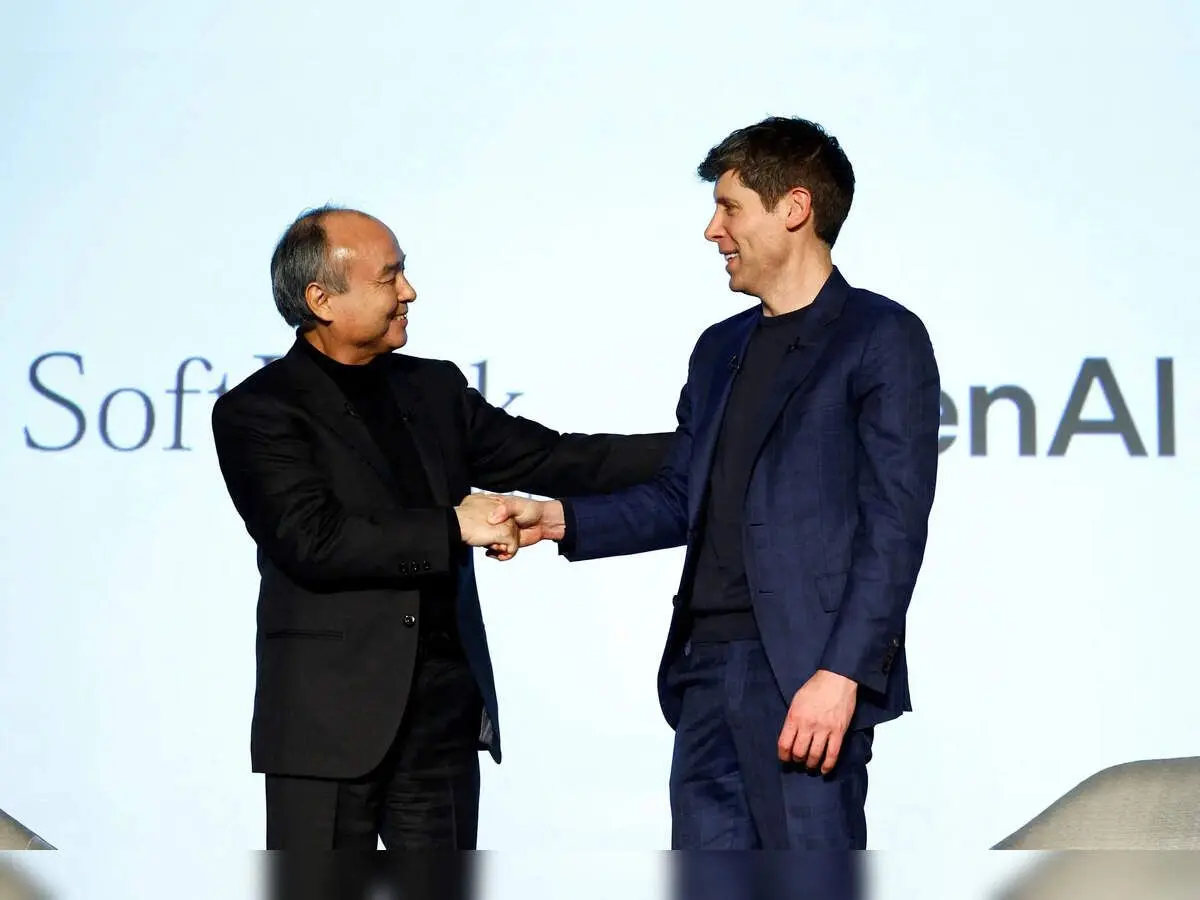
Source: ET
Vision Fund Divergence Reveals Strategic Shift
The SoftBank Vision Fund gain highlights a critical divergence in the company's portfolio strategy. Vision Fund 1 recorded a $4.1 billion loss in the quarter, weighed down by declines in publicly-traded holdings like Coupang, which suffered a significant data breach
1
. Meanwhile, Vision Fund 2, which includes OpenAI, generated a $6.6 billion gain, more than offsetting those losses. The Vision Fund posted an overall $2.4 billion gain for the December quarter, with the jump in OpenAI valuation helping offset losses in other bets2
.This split reveals how SoftBank's quarterly profit is now increasingly tied to how private AI platforms are valued, rather than public market volatility. The older portfolio, heavy with late-stage tech companies exposed to market fluctuations, faces serious pressure while the newer fund, anchored by OpenAI, delivers gains at a scale large enough to dominate consolidated earnings.
Aggressive Portfolio Reshaping for AI Boom
To fund its deepening AI investments, SoftBank has aggressively reshaped its balance sheet. The company sold its entire position in Nvidia for $5.8 billion in October, along with $12.7 billion worth of T-Mobile shares
1
3
. CEO Masayoshi Son effectively traded SoftBank's exposure to public, liquid assets for private AI platforms and associated infrastructure.
Source: Tom's Hardware
SoftBank has invested nearly $35 billion in OpenAI, the developer of ChatGPT, securing an ownership interest of about 11%
3
4
. This compares to Microsoft's near-27% stake. Reports indicate SoftBank is in talks to commit another $30 billion in a funding round that could push OpenAI's valuation to $750 billion1
.Building an AI Hardware and Infrastructure Empire
Beyond OpenAI, SoftBank is assembling what appears to be a comprehensive AI hardware strategy. The company retains a majority position in Arm, whose semiconductor architectures underpin much of the world's mobile computing and an expanding share of the server silicon market
1
. Last year, SoftBank acquired Ampere, the Arm-based semiconductor design company, for $6.5 billion, making it a wholly owned U.S. subsidiary3
4
.The company also acquired Graphcore, the UK AI accelerator startup that developed Intelligence Processing Units as alternatives to GPUs in AI training and machine learning applications. These companies now sit within a new AI Computing Segment alongside Arm
1
. Reports suggest Arm is developing a custom CPU to be used by OpenAI itself, tying the hardware and software strategies together.SoftBank is also expanding into robotics, reaching an agreement with ABB to acquire its robotics business for $5.375 billion, though the deal still needs regulatory approval in Europe, China and the U.S.
3
Related Stories
Stargate Project and Data Center Ambitions
Masayoshi Son is leading financing efforts for the $500 billion Stargate project in the United States, aimed at scaling AI data centers and infrastructure in partnership with OpenAI, Oracle, and Abu Dhabi-backed DGX
1
. The capital intensity of such an undertaking involves land acquisitions, grid interconnections, power contracts, and vast quantities of silicon—all critical for training frontier models and serving them at global scale.Nine-Month Performance and Future Outlook
For the nine months through December, SoftBank posted a 3.17 trillion yen ($20.7 billion) profit, about five times what it recorded in the previous year
3
4
. Nine-month sales edged up nearly 8% to 5.7 trillion yen ($37 billion). "Our investments are beginning to pay off," SoftBank's chief financial officer, Yoshimitsu Goto, told reporters, stressing that gains were coming not just from OpenAI but from a variety of investments, including in Arm4
.SoftBank shares have nearly doubled over the past 12 months as investors seek exposure to OpenAI through the Japanese conglomerate, effectively turning the company into a publicly traded proxy for private AI valuation
1
. However, the stock price has fallen 29% from its October peak, reflecting growing concerns about intensifying competition from Google and Anthropic, and the enormous amounts of capital needed to sustain frontier model development. Some analysts caution that counting too much on OpenAI could be risky, given SoftBank's historically erratic financial performance as an aggressive investor in innovative, often fledgling, technology3
4
.References
Summarized by

Navi
[1]
[4]
Related Stories
SoftBank Reports $7.8 Billion Annual Profit, Doubles Down on AI Investments
13 May 2025•Business and Economy
SoftBank Returns to Profit, Fueled by Tech Investments and AI Ambitions
12 Nov 2024•Business and Economy

SoftBank Reports $2.4 Billion Loss Amid Major AI Investment Plans
12 Feb 2025•Business and Economy

Recent Highlights
1
AI chatbots validate you too much, making you less kind to others, Stanford study reveals
Science and Research

2
Anthropic's Claude Code Source Leak Reveals Hidden AI Agent Plans and Extensive System Access
Technology

3
Judge blocks Pentagon from branding Anthropic a security risk over AI safety guardrails dispute
Policy and Regulation

Recent Highlights
Today's Top Stories










Your Daily Dose of Curated AI News
Don’t drown in AI news. We cut through the noise - filtering, ranking and summarizing the most important AI news, breakthroughs and research daily. Spend less time searching for the latest in AI and get straight to action.

