South Korea Approves Construction of Two New Nuclear Reactors


3 Sources
3 Sources
[1]
South Korea approves building two nuclear reactors
SEOUL (AFP) - South Korea approved the construction of two nuclear reactors on its east coast yesterday, reversing a previous administration's anti-nuclear policy as Seoul now works to expand its atomic energy capabilities. The Nuclear Safety and Security Commission approved permits to build the Shin Hanul 3 and 4 reactors after it "confirmed the safety" of the project in southeast Uljin city. "No factors have been found at the reactor construction site that could cause geological disasters such as subsidence or ground collapse," it said. Each reactor will have a capacity of 1.4 gigawatts, and they are scheduled to be built by 2033. Seoul sought to phase out nuclear energy under the leadership of Moon Jae-in, whose government aimed to make South Korea completely nuclear-free by 2084. But since Yoon Suk Yeol took office in 2022, his government has ambitions to increase the share of power generated from nuclear energy to 36 per cent by 2038, up from the current 30 per cent. The new reactors will "contribute to the development of cutting-edge technologies such as AI by providing a stable supply of clean and reliable energy", said Yoon's Chief of Staff for policy Sung Tae-yoon. The development could also "help the country secure reactor construction bids overseas", he told reporters. The approval came eight years after Korea Hydro and Nuclear Power Company first submitted the permit request. The process was suspended in 2017 amid the then-government's push to reduce the country's dependence on nuclear energy. Yesterday's decision was criticised by Korean activist group Energy Justice Actions as an "irresponsible move that threatens the safety of the people, in opposition to the global trend towards an energy shift" towards renewable resources. The two new reactors will be Uljin's ninth and tenth, the group said, calling such a concentration a "global rarity".
[2]
South Korea approves building two nuclear reactors
South Korea approved the construction of two nuclear reactors on its east coast Thursday, reversing a previous administration's anti-nuclear policy as Seoul now works to expand its atomic energy capabilities. The Nuclear Safety and Security Commission approved permits to build the Shin Hanul 3 and 4 reactors after it "confirmed the safety" of the project in southeast Uljin city. "No factors have been found at the reactor construction site that could cause geological disasters such as subsidence or ground collapse," it said. Each reactor will have a capacity of 1.4 gigawatts, and they are scheduled to be built by 2033. Seoul sought to phase out nuclear energy under the leadership of Moon Jae-in, whose government aimed to make South Korea completely nuclear-free by 2084. But since Yoon Suk Yeol took office in 2022, his government has ambitions to increase the share of power generated from nuclear energy to 36 percent by 2038, up from the current 30 percent. The new reactors will "contribute to the development of cutting-edge technologies such as AI by providing a stable supply of clean and reliable energy," said Sung Tae-yoon, Yoon's chief of staff for policy. The development could also "help the country secure reactor construction bids overseas," he told reporters. The approval came eight years after Korea Hydro & Nuclear Power Company first submitted the permit request. The process was suspended in 2017 amid the then-government's push to reduce the country's dependence on nuclear energy. Thursday's decision was criticized by Korean activist group Energy Justice Actions as an "irresponsible move that threatens the safety of the people, in opposition to the global trend towards an energy shift" towards renewable resources. The two new reactors will be Uljin's ninth and tenth, the group said, calling such a concentration a "global rarity."
[3]
South Korea Revives Plans to Build Two Nuclear Reactors
South Korea approved the construction of two nuclear reactors on the nation's east coast, reviving a project that was scrapped by the former administration, which had pursued an anti-nuclear policy. The Nuclear Safety and Security Commission greenlighted the building of Shin Hanul No. 3 and 4 reactors in Uljin, it said in a statement Thursday. The reactors will each have a capacity of 1.4 gigawatts, it added. South Korea is in the midst of a nuclear energy renaissance as President Yoon Suk Yeol, who took office in 2022, reverses his predecessor's policy and revives the role of atomic power to help slash emissions. Seoul is aiming for nuclear to account for 36% of power generation by 2038, up from 30% now. Read More: South Korea Gets New Nuclear Assurances From U.S. Amid Rising Tensions The country aims to satisfy soaring power demand from artificial intelligence with carbon-free sources such as nuclear and hydrogen, Vice Minister of Trade, Industry and Energy Choe Nam-ho said in an interview earlier this month. A proposed national energy strategy in May called for three new reactors with 1.4 gigawatts capacity each, and a 700-megawatt small modular reactor by 2038. South Korea expects to complete building Shin Hanul No. 3 and 4 units by 2032 and 2033, respectively, according to the presidential office. The announcement comes after Korea Hydro & Nuclear Power Co., the state-run developer of atomic plants, first sought construction approval in 2016. The project had been abandoned under former President Moon Jae-in as he pledged to phase out nuclear power from the country's energy mix, citing safety concerns. The renewed push for nuclear power got a boost earlier this year, when South Korea won a $17 billion project to export its nuclear technology to the Czech Republic.
Share
Share
Copy Link
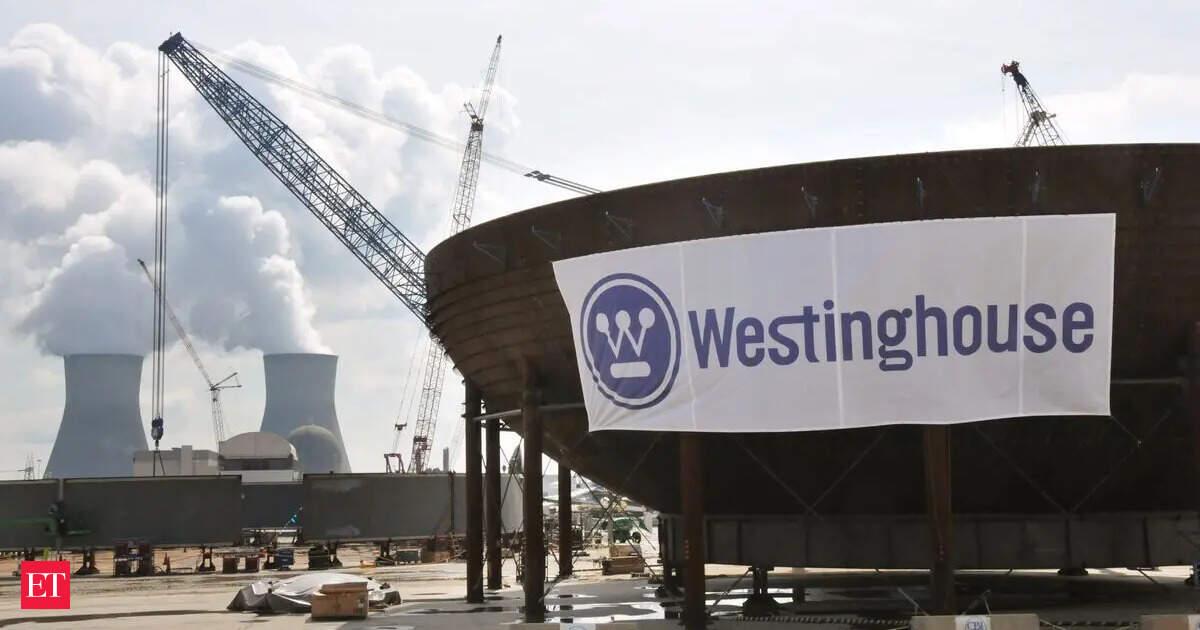
South Korea's government has given the green light for the construction of two new nuclear reactors, marking a significant shift in the country's energy policy. This decision aligns with President Yoon Suk Yeol's commitment to expanding nuclear power as a key component of South Korea's energy mix.

South Korea's Nuclear Expansion Plan
South Korea has taken a decisive step in its energy policy by approving the construction of two new nuclear reactors. The decision, made by the government on Wednesday, marks a significant shift from the previous administration's nuclear phase-out plan
1
. This move aligns with President Yoon Suk Yeol's commitment to expanding nuclear power as a crucial component of the country's energy mix.Details of the New Reactors
The two approved reactors, Shin-Hanul No. 3 and No. 4, will be built in Uljin, about 330 kilometers southeast of Seoul
2
. These reactors are expected to have a combined capacity of 2,800 megawatts and will be operational by 2032 and 2033, respectively. The total cost of the project is estimated at 12.7 trillion won ($9.5 billion)1
.Shift in Energy Policy
This decision represents a significant reversal from the previous administration's policy. Former President Moon Jae-in had pledged to phase out nuclear power, citing safety concerns in the wake of Japan's 2011 Fukushima disaster
3
. However, President Yoon Suk Yeol, who took office in May 2022, has been advocating for nuclear power as a key solution to the country's energy needs.Rationale Behind the Decision
The South Korean government justifies this move based on several factors:
-
Energy Security: Nuclear power is seen as a stable and reliable source of electricity, crucial for the country's energy independence
2
. -
Economic Benefits: The construction and operation of these reactors are expected to create jobs and stimulate the local economy
1
. -
Climate Goals: Nuclear energy is considered a low-carbon option, aligning with South Korea's commitment to reducing greenhouse gas emissions
3
.
Related Stories

Current Nuclear Capacity and Future Plans
South Korea currently operates 25 nuclear reactors, which generate about 30% of its electricity
2
. The government aims to increase nuclear power's share in the country's energy mix to 34.6% by 2036. This plan includes extending the lifespan of existing reactors and potentially building more new ones3
.Public Opinion and Safety Concerns
While the government pushes forward with nuclear expansion, public opinion remains divided. Some citizens express concerns about safety, particularly in light of past incidents and the proximity of nuclear plants to populated areas. However, proponents argue that nuclear power is necessary for stable energy supply and achieving carbon neutrality goals
2
.References
Summarized by

Navi
[1]
Related Stories
New York Plans First Major US Nuclear Power Plant in Over 15 Years, Driven by AI Energy Demands
24 Jun 2025•Technology

Trump Administration Strikes $80 Billion Nuclear Deal to Power AI Data Centers
29 Oct 2025•Business and Economy
NuScale's 77 MW Small Modular Reactor Design Approved by US Regulators, Paving Way for AI-Driven Energy Demand
30 May 2025•Technology

Recent Highlights
1
Google Gemini 3.1 Pro doubles reasoning score, beats rivals in key AI benchmarks
Technology

2
Pentagon Summons Anthropic CEO as $200M Contract Faces Supply Chain Risk Over AI Restrictions
Policy and Regulation

3
Canada Summons OpenAI Executives After ChatGPT User Became Mass Shooting Suspect
Policy and Regulation
Recent Highlights
Today's Top Stories






Your Daily Dose of Curated AI News
Don’t drown in AI news. We cut through the noise - filtering, ranking and summarizing the most important AI news, breakthroughs and research daily. Spend less time searching for the latest in AI and get straight to action.

