Indie Developer Deletes AI-Made Game From Steam After Girlfriend Sparks Moral Awakening


4 Sources
4 Sources
[1]
Indie Developer Deleting Entire Game From Steam Due to Shame From Having Used AI
"I have realized [that] AI is not actually free, and it has a major effect on the economy and environment." An indie game developer experienced a moment of profound moral clarity, and is now deleting his partially-AI-made game from the digital storefront Steam. The game, dubbed "Hardest," is a free-to-play "rock-paper-scissors" roguelike card game released last July to mixed-to-negative reviews (of which there are barely thirty total.) Some users called it "soulless" and disparaged it for using AI art. Now the developer, Eero "Rakuel" Laine, appears to agree with those haters. On January 10, Laine posted a surprise update to the Hardest page announcing that he would be deleting the game by the end of January, sounding penitent for his mortal sin of indulging in an AI shortcut. "I made this game during the summer in [a] couple months and thought to use AI because in university there is so much brainwashing on students and all the tools are given for free," he explained. "But I have realized [that] AI is not actually free, and it has a major effect on the economy and environment." "Some AI companies can use this game just existing as a reason the get more investment for their AI companies, that benefit no one, but rather suck resources from the economy from hard working people," he added. Laine clarified that he didn't vibe-code the whole game, and actually programmed "everything myself," so he's ready to make a new game in the future with real, human-made assets. But his current game, he says, "is a disgrace to all game makers and players." "The girl I've been dating for a month made me realize this," he added, in yet another wild twist. The use of generative AI has been a hot button issue in art and entertainment, and game development has been no exception. In recent months, the debate over how it should be used in the industry, if at all, has been reignited over its role in the creation of several high profile titles. When the fantasy RPG sensation Claire Obscur: Expedition 33 racked up a historical number of accolades at last year's The Game Awards, including game of the year, concerned observers noted the fact that the creators had openly admitted to using AI assets during its development, though no AI is said to have made it into the final product. Then the Indie Game Awards announced that it was rescinding its GOTY award given to Expedition 33 because of its AI usage, blowing the debate wide open. Adding to the swirling discourse, after dropping a trailer for its upcoming title Divinity at the Game Awards ceremony, the CEO of the Baldur's Gate 3 maker Larian boasted that the studio would be using AI to "explore ideas" and "develop concept art." The message seemed to be that AI in game development was here to stay, and would not be an obstacle to games having both critical and commercial success, as further evidenced by the popularity of new fan-favorite Arc Raiders, an multiplayer extraction shooter that uses AI to generate the voices of both player characters and NPCs. Perhaps the entire industry is overdue for an epiphany like Laine's.
[2]
A Steam dev is deleting his own game after girlfriend made him realize AI is bad
AI in video games is a caustic enough subject that Valve requires developer disclosure if a title utilizes the generative technology. This way, people who have qualms about AI or its impact can opt out of purchasing anything that uses the genAI. One developer, however, is saving everyone from the moral quandary in the first place by just deleting their game altogether. Hardest is a free-to-play roguelike on Steam that was released in the summer of 2025 with the tagline, "stop time, summon tsunamis, shoot with bubble guns, feed cards to mimic, collect rare negative cards!" Except for a user who says the game helped him bond with his son, Hardest mostly got a negative reception. "I assume the whole thing is AI slop," one reviewer wrote. You'd think flopping like this would be the end of the story, but half a year later, Rakuel, the developer, has undergone a revelation. On Jan. 10, the indie creator posted an update to Hardest announcing that he would pull the game from the platform by the end of the month. In the announcement, Rakuel explained that he made the small game in a couple of months through the help of AI. At the time, he didn't see the harm in it; if anything, people around him encouraged it. The tools were free, and the possibilities seemed limitless. Since then, however, Rakuel says that he started dating a girl. The relationship is only a month old, but that's long enough for the persuasive paramour to convince Rakuel about the pitfalls of AI-generated assets. "I have realized the AI is not actually free, and it has a major effect on the economy and environment," Rakuel wrote. "Some AI companies can use this game just existing as a reason the get more investment for their AI companies, that benefit[s] no one, but rather suck resources from the economy from hard working people," he continued. Earlier in the post, he disowned his previous actions by noting he had been "brainwashed" by university students who used AI frequently. The change of heart won't be a huge loss for Rakuel, who considers the whole thing a learning experience. He notes that he did actually code some of Hardest himself, and that he's confident he can make something with bespoke art in the future. "But the game existing in its current form is a disgrace to all game makers and players," he declared. "Ethically, [the] only logical reason is to delete the game from Steam. The girl I've been dating for a month made me realize this." For now, you can still download Hardest and see what the fuss is about. After Rakuel pulls it from Steam, it'll remain in your library until you get rid of it. The developer might encourage it, anyway.
[3]
Indie dev is delisting his AI game from Steam because his new girlfriend convinced him it's evil: 'The game existing in its current form is a disgrace to all game makers and players'
Our politics are shaped in many ways. Loss of employment might shift your feelings on labor politics. Moving to a walkable city might make you a public transit radical. Or, in the case of indie developer Rakuel, you might start dating a girl who helps you realize your game's AI-generated art is a moral evil that should be destroyed for the good of society. In a Steam news post titled "AI is bad, game will be deleted 30.1," Rakuel developer Eero Laine says his roguelike rock-paper-scissors game Hardest, which features AI-generated art and music assets, will be delisted from Steam at the end of the month. Since releasing the game in July 2025, Laine says his attitudes about AI asset generation have changed enough that deleting the game is "ethically" the only rational choice. Laine explains that he used generative AI for Hardest's development "because in university there is so much brainwashing on students and all the tools are given for free." "But I have realized the AI is not actually free, and it has a major effect on the economy and environment," Laine says. His game's mere existence, he says, could be used to help justify investment in AI companies -- companies that he says "benefit no one, but rather suck resources from the economy and hard working [sic] people." Laine says he coded the game himself, and can rerelease it at a later point using original assets. Until then, he says "the game existing in its current form is a disgrace to all game makers and players." The ideological shift motivating his noble sacrifice, Laine explains, didn't occur on its own. "The girl I've been dating for a month made me realize this," he says. Whatever your AI persuasion, you can't fault her initiative. That AI art didn't seem to do Hardest any favors; since its July release, it's only managed a Mixed review rating. But if -- despite the admirable efforts of Laine's girlfriend -- you're insistent on trying it while it's available, you've got two and a half weeks.
[4]
"A disgrace to all game makers and players": A dev is deleting their AI-aided roguelike from Steam after realizing "AI is bad" and "has a major effect on the economy and environment"
A developer who used AI-generated assets in the roguelike card game they released on Steam in June 2025 says they'll remove the game from sale at the end of the month after realizing "AI is bad". In a January 10 Steam post, developer Rakuel confirms that free-to-play roguelike Hardest will "be deleted" on January 30. The game's Steam page has the following AI-generated content disclosure: "AI-generated assets." "I made this game during the summer in [a] couple months and thought to use AI because in university there is so much brainwashing on students and all the tools are given for free, so I could generate unlimited images for free and so," Rakuel says. "But I have realized the AI is not actually free, and it has a major effect on the economy and environment," they continue. "Some AI companies can use this game just existing as a reason [to] get more investment for their AI companies, that benefit no one, but rather suck resources from the economy from hard working people. "I coded everything myself, so I can in the future make a new game with real assets if I feel like it, but the game existing in its current form is a disgrace to all game makers and players. Ethically only logical reason is to delete the game from Steam," Rakuel concludes. This decision, and this updated stance on AI, was apparently sparked by "the girl I've been dating for a month," says Rakuel, as she "made me realize" the real and potential hazards of AI. Hardest has earned 31 mixed (54% positive) reviews on Steam since launch. It's described by Rakuel as a "rock-paper-scissors" card game roguelike where you "stop time, summon tsunamis, shoot with bubble guns, feed cards to mimic, collect rare negative cards!" It was always positioned as a learning exercise of sorts, with Rakuel promoting the public GitHub code repository in the Steam description, and apparently ended up being a personal lesson in AI.
Share
Share
Copy Link
Indie developer Eero 'Rakuel' Laine is deleting his roguelike game 'Hardest' from Steam after recognizing the ethical concerns around AI-generated assets. The decision came after his girlfriend helped him understand AI's negative economic and environmental impacts. The move highlights growing tensions in game development over generative AI usage.
Indie Developer Removes AI-Generated Game After Personal Revelation
An indie developer is taking the unusual step of deleting game from Steam after experiencing what he describes as moral clarity about AI usage in game development. Eero "Rakuel" Laine announced on January 10 that his roguelike game "Hardest" will be removed from the platform by January 30, citing ethical concerns over the AI-generated assets used in its creation
1
. The free-to-play rock-paper-scissors card game, released in July 2025, received mixed-to-negative reviews from its small player base, with some users calling it "soulless" and criticizing its reliance on AI art1
.
Source: PC Gamer
Laine's change of heart came after dating someone for a month who helped him recognize the broader implications of generative AI. "The girl I've been dating for a month made me realize this," he stated candidly in his Steam announcement
2
. This personal influence prompted him to reconsider his initial assumptions about AI being a cost-free shortcut for solo developers.
Source: Futurism
Understanding the Negative Economic and Environmental Impacts
In his announcement, Laine explained that he initially turned to AI because "in university there is so much brainwashing on students and all the tools are given for free"
1
. However, he now understands that "AI is not actually free, and it has a major effect on the economy and environment"4
. His concerns extend beyond personal use to systemic issues, noting that "some AI companies can use this game just existing as a reason [to] get more investment for their AI companies, that benefit no one, but rather suck resources from the economy from hard working people"4
.The developer's perspective reflects growing awareness about the hidden costs of AI technology, from the massive energy consumption required to train and run AI models to the economic displacement of artists and creators. Laine now views his game as "a disgrace to all game makers and players," declaring that "ethically only logical reason is to delete the game from Steam"
3
.
Source: Polygon
AI Debate Intensifies Across Game Development
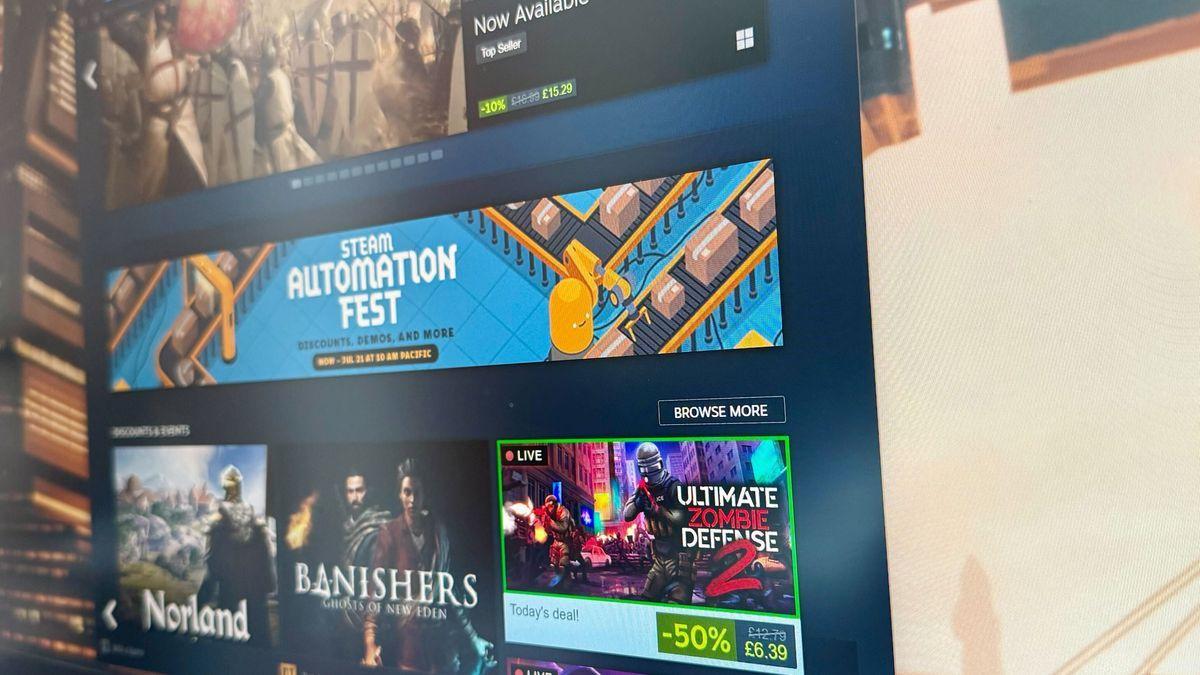
Laine's decision arrives amid escalating tensions over AI usage in entertainment industries. Steam now requires developer disclosure for titles utilizing generative AI, allowing players with ethical concerns to make informed purchasing decisions
2
. The controversy reached new heights when Claire Obscur: Expedition 33, which won game of the year at The Game Awards, faced scrutiny after creators admitted using AI assets during development, though none appeared in the final product1
. The Indie Game Awards subsequently rescinded its GOTY award to Expedition 33 specifically because of its AI usage, signaling a hardening stance within certain industry circles1
.Meanwhile, major studios continue embracing the technology. Larian, the creator behind Baldur's Gate 3, announced plans to use AI to "explore ideas" and "develop concept art," suggesting that AI companies will remain integral to mainstream game development
1
. The popular multiplayer extraction shooter Arc Raiders has also adopted AI to generate voices for both player characters and NPCs, demonstrating commercial viability despite ethical implications1
.Related Stories
What This Means for Independent Creators
Laine clarified that he "coded everything myself" and retains the technical skills to create future projects with bespoke art made by human artists
3
. His experience serves as a learning exercise for other indie developers weighing the apparent convenience of AI-generated assets against their ethical implications. The roguelike game "Hardest" earned only 31 mixed reviews with 54% positive ratings since launch, suggesting that AI shortcuts may not deliver the quality or soul that resonates with players4
.For developers watching this unfold, Laine's moral clarity raises questions about whether investment in AI tools truly serves independent creators or primarily benefits AI companies seeking legitimacy through widespread adoption. As the debate continues, more developers may face similar reckonings about the true cost of seemingly free AI tools and their role in shaping the future of game development.
References
Summarized by

Navi
Related Stories
Indie Game Awards strips Clair Obscur: Expedition 33 of Game of the Year over generative AI use
21 Dec 2025•Entertainment and Society
AI in Video Games Triggers Player Backlash as Developers Navigate Quality vs Cost Savings
19 Feb 2026•Entertainment and Society

Balatro Developer Takes Stand Against AI-Generated Art in Game's Subreddit
13 Mar 2025•Technology

Recent Highlights
1
AI chatbots assist in planning violent attacks as safety guardrails fail, studies reveal
Technology

2
Three Tennessee teens sue xAI over Grok AI creating child sexual abuse material from real photos
Policy and Regulation

3
Pentagon reveals how Military AI chatbots accelerate targeting decisions in Iran operations
Technology

Recent Highlights
Today's Top Stories










Your Daily Dose of Curated AI News
Don’t drown in AI news. We cut through the noise - filtering, ranking and summarizing the most important AI news, breakthroughs and research daily. Spend less time searching for the latest in AI and get straight to action.

