SwitchBot AI MindClip debuts at CES as a 'second brain' to organize your conversations


4 Sources
4 Sources
[1]
SwitchBot's AI audio recorder is a 'second brain' for memories
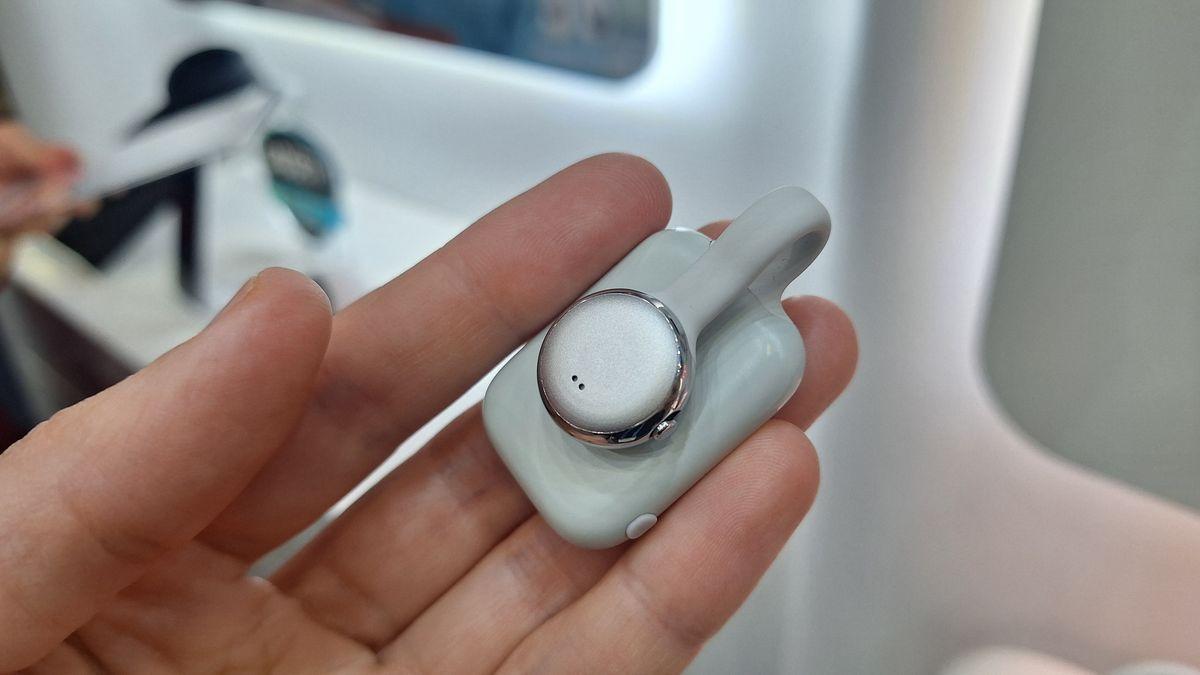
SwitchBot is joining the AI voice recorder bandwagon, introducing its own clip-on gadget that captures and organizes your every conversation. The SwitchBot AI MindClip announced at CES records spoken information from your daily life and work meetings and converts those conversations into summaries, to-do actions, and a personal audio memory database. This announcement follows competing AI recorder launches like Bee, Plaud's NotePin, and Anker's Soundcore Work. The MindClip weighs 18 grams, supports more than 100 languages, and has a similar design to the lighter Soundcore Work -- both sport a button-like recorder and square-shaped clip. The MindClip is designed to work like a "second brain," according to SwitchBot, allowing users to search and retrieve previous discussions that may have otherwise been forgotten. The AI-powered summarization, task creation, and information recall features will only be available to users who subscribe to an unspecified "cloud service," according to SwitchBot's press release. The company hasn't shared how much this service and the device itself will cost, or when either is expected to launch.
[2]
SwitchBot turned up to CES with an AI wearable that records everything you say
We've all fantasied about sprawling on an embroidered chaise lounge while our amanuensis faithfully typed out everything we said. SwitchBot turned up to CES with something that does a similar job, but without the romance of the amanuensis, the typewriter or the chaise lounge. Instead, it's launching the AI MindClip, a wearable microphone which records and transcribes every noise to come from your mouth. The company isn't alone, with many others turning up to CES this year offering devices to log your thoughts through the day. But SwitchBot does hope to distinguish itself from the crowd with an AI which can both summarize and extract useful data from your chats. The company's representatives said it will use its initiative and create its own reminders based on what it thinks you'll need to remember. Sadly, we couldn't get to see it working in person, and we don't know when it'll be available or how much it'll cost. But it'll probably be a little bit cheaper than a chaise lounge.
[3]
SwitchBot's new AI audio recorder promises to organize your conversations -- here's how it'll work
SwitchBot, the smart home automation company, has arrived at CES 2026 this year and joined the list of companies in the AI wearable space with the Switchbot AI MindClip. Like the wearable AI devices from Plaud, Bee or Anker's Soundcore Work, SwitchBot's AI MindClip is there to take down notes and record conversations and meetings for you. This new clip weighs just 18g/0.6oz, supports more than 100 languages, and, like its competitors, allows you to record and listen back to conversations and meetings, along with transcriptions and AI-powered notes. While details are still light on this particular product, it will have a focus on its user being able to search through 'memories' and track down important information that it has recorded in the past. No price has been announced yet, but SwitchBot has hinted at a subscription-type model to access a lot of the key features. This is a similar route to what its competitors have done. In the world of AI devices, the market is surprisingly slim. The area that has seen the most success is the one that Switchbot has ventured into, with a robust competition of different AI recording devices. However, while these devices make up most of the AI tools you'll see, there are other areas companies are trying to move into. We've seen 'AI friendship' wearables, like Friend, where a device interacts with the world, making conversation with you throughout the day. There have also been companies like the Humane Pin, which tried to replace smartphones, and Rabbit R1 (a company that has gone through some issues in recent months). While the successful devices seem to be limited to just AI audio recorders right now, there is a push for more AI tools. OpenAI, for example, has been rumoured to be working on its own set of devices for years, with a potential release date looming. If this proves successful, we could then see a whole new set of AI devices offering assistants, audio recorders, cameras and more.
[4]
SwitchBot's new gadget clips to your collar and records your conversations, so you'll never have to pay attention ever again
Prone to daydreaming in meetings? Awful at remembering what you've agreed to do? SwitchBot has a new gadget that could save you from getting fired / shouted out by your loved one. The SwitchBot AI MindClip attaches to your collar and records all your conversations, then puts them all into a private, searchable database. I got a chance to check one out at CES 2026, where it's making its debut. If you want to up the ante by using AI to turn that audio into summaries and to-do lists, there's a cloud-based subscription service that'll help with that. With that service, you can also ask AI to help you find a discussion you need to refresh yourself on the details of. The AI MindClip is multilingual, with support for over 100 languages, and lightweight at just 18g. SwitchBot assures me there's end-to-end encryption for privacy. Although I can clearly see its potential usefulness, it all feels a bit invasive and creepy to me. The name and the fact that SwitchBot is referring to it as a 'second brain' doesn't help, nor does the fact it's a literal Black Mirror episode brought to life. In a work setting, with the MindClip positioned clearly on someone's collar, there's an argument this is kind of thing is perfectly appropriate. It's not that different from recording a video call. But there's nothing to stop you using it for all your private conversations too, which is where we get into slightly murkier waters. Most people seem to immediately jump to its potential for checking exactly who said what, to settle arguments (the immediate response of the two journalists I was being shown around the CES booth with was, "Woah, my wife's going to hate this.") Plus, it can very easily be concealed. If you can get over the creepiness and want something to help aid a wandering brain during business meetings though, this still looks like a cool innovation.
Share
Share
Copy Link
SwitchBot unveiled the AI MindClip at CES, a lightweight clip-on AI voice recorder that captures daily conversations and meetings. The 18-gram device transcribes audio into summaries and to-do lists, creating a searchable database. While it promises to help users recall forgotten discussions, the wearable microphone raises privacy concerns as it records everything you say.
SwitchBot Enters the AI Wearable Market with MindClip
SwitchBot has joined the growing field of AI audio recorder devices with the launch of its AI MindClip at CES, a clip-on AI voice recorder designed to capture and organize your conversations throughout the day
1
. The smart home automation company is positioning itself against established competitors like Plaud's NotePin, Bee, and Anker's Soundcore Work in what has become one of the most successful categories of AI wearable devices3
.
Source: Engadget
The SwitchBot AI MindClip weighs just 18 grams and features a button-like recorder with a square-shaped clip, similar in design to the Soundcore Work
1
. This wearable microphone supports more than 100 languages, making it accessible to a global audience3
. The device attaches to your collar and records your conversations, then processes them into a private, searchable database4
.
Source: The Verge
How AI Powers the 'Second Brain' Concept
SwitchBot markets the device as a "second brain," allowing users to search and retrieve previous discussions that might otherwise be forgotten
1
. The AI technology doesn't just transcribe—it actively works to summarize conversations and extract useful data from your chats2
. Company representatives explained that the AI will use its initiative to create actionable tasks and reminders based on what it determines you'll need to remember2
.The device converts spoken information from daily life and work meetings into summaries, to-do actions, and a personal audio memory database
1
. However, the AI-powered summarization, task creation, and information recall features will only be available through a subscription model to an unspecified AI cloud service1
. This approach mirrors what competitors have implemented, suggesting a cloud service subscription is becoming standard in this market3
.
Source: TechRadar
Privacy Implications and the Black Mirror Comparison
While the MindClip promises to help users organize your conversations and recall important details, it raises significant privacy implications. The device has been compared to a "literal Black Mirror episode brought to life" by tech journalists who previewed it at CES
4
. Although SwitchBot assures end-to-end encryption for privacy, concerns remain about its potential misuse4
.In work settings, where the device is clearly visible on someone's collar, its use may be considered appropriate—not unlike recording a video call
4
. However, nothing prevents users from deploying it in private conversations, and it can easily be concealed. Early reactions suggested immediate concerns about relationship dynamics, with journalists noting, "my wife's going to hate this"4
.Related Stories

What This Means for the AI Device Market
The AI wearable space remains surprisingly narrow, with audio recorders representing the most successful category to date
3
. Other ventures, such as the Humane Pin that attempted to replace smartphones and the Rabbit R1, have faced significant challenges3
. Even "AI friendship" wearables like Friend, which interact with users throughout the day, remain niche products3
.SwitchBot hasn't announced pricing or a launch date for the MindClip, nor has it revealed subscription costs for the cloud service
1
. The company couldn't demonstrate the device working in person at CES2
. As OpenAI is rumored to be developing its own AI devices with a potential release date approaching, the market could see significant expansion beyond audio recorders into assistants, cameras, and more3
. For now, users should watch how searchable audio memory technology develops and whether regulatory frameworks emerge to address the privacy concerns these devices create.References
Summarized by

Navi
[3]
Related Stories
Anker's Soundcore Work: A Coin-Sized AI Voice Recorder Sparks Debate on AI Integration
05 Sept 2025•Technology

Plaud debuts NotePin S with physical button and desktop app to capture meeting notes seamlessly
04 Jan 2026•Technology

Vocci AI Smart Ring Records and Transcribes Work Meetings With a Button Press
06 Jan 2026•Technology

Recent Highlights
1
Apple Plans Major Siri AI Overhaul in iOS 27 With Third-Party Chatbot Integration
Technology

2
OpenAI shuts down Sora after six months, ending Disney's $1 billion licensing partnership
Technology

3
AI chatbots validate you too much, making you less kind to others, Stanford study reveals
Science and Research
Recent Highlights
Today's Top Stories





Your Daily Dose of Curated AI News
Don’t drown in AI news. We cut through the noise - filtering, ranking and summarizing the most important AI news, breakthroughs and research daily. Spend less time searching for the latest in AI and get straight to action.

