Temporal raises $300M at $5B valuation as AI agents demand durable execution infrastructure


3 Sources
3 Sources
[1]
Temporal raises $300 million in Andreessen-led round amid AI agent boom
Feb 17 (Reuters) - Software startup Temporal has raised $300 million in a funding round led by Andreessen Horowitz, valuing the company at $5 billion, as demand rises for infrastructure to support artificial intelligence systems, the company told Reuters. The valuation doubles the $2.5 billion that the company reached after a secondary financing round in October led by GIC, Singapore's sovereign wealth fund. Lightspeed Venture Partners and Sapphire Ventures joined the Series D round, along with existing investors including Sequoia Capital, Temporal said. Founded in 2019, Temporal builds open-source software and a cloud service designed to ensure "durable execution" of code - allowing applications to resume where they left off after failures without requiring engineers to write custom recovery logic. Co-founder and Chief Executive Samar Abbas said that capability is becoming more critical as AI systems move from generating responses to carrying out real-world tasks. "We've been building Temporal for over a decade now and what we are trying to solve is these core reliability problems for distributed systems," Abbas said in an interview. "When the software moves from generating answers to executing work, the tolerance of failure basically becomes tiny." Abbas said the funding was not about "chasing an AI moment," but about building a platform made to address reliability challenges in complex, long-running processes common for AI agents. The company offers its open-source software for free and monetizes through Temporal Cloud, a multi-tenant managed service that charges customers based on usage. Temporal counts AI firms like OpenAI among its customers, as well as companies in other industries, including Snap (SNAP.N), opens new tab , Netflix (NFLX.O), opens new tab and JPMorgan Chase (JPM.N), opens new tab . The San Francisco-based company, which employs more than 380 people, plans to use the funds for research and product development, as well as to expand its sales and marketing efforts. "Reliability is not like an optimization, it's actually a gating factor for these systems to work," said Sarah Wang, a partner at Andreessen Horowitz who led the investment. "Temporal is essentially the execution layer for all of that, so we believe this is the perfect gen AI infrastructure bet." Reporting by Krystal Hu in San Francisco; Editing by Kevin Buckland Our Standards: The Thomson Reuters Trust Principles., opens new tab * Suggested Topics: * Media & Telecom Krystal Hu Thomson Reuters Krystal reports on venture capital and startups for Reuters. She covers Silicon Valley and beyond through the lens of money and characters, with a focus on growth-stage startups, tech investments and AI. She has previously covered M&A for Reuters, breaking stories on Trump's SPAC and Elon Musk's Twitter financing. Previously, she reported on Amazon for Yahoo Finance, and her investigation of the company's retail practice was cited by lawmakers in Congress. Krystal started a career in journalism by writing about tech and politics in China. She has a master's degree from New York University, and enjoys a scoop of Matcha ice cream as much as getting a scoop at work.
[2]
Temporal raises $300M, hits $5B valuation as Seattle-area infrastructure startup rides AI wave
Temporal has raised $300 million in a Series D funding round at a $5 billion valuation, positioning the company as a key infrastructure provider for the emerging wave of AI agents moving into real-world production. The latest round, led by Andreessen Horowitz, doubles the company's valuation from October. Temporal builds open-source software and a cloud service that helps companies run long-running, complex workflows reliably -- what it calls "durable execution." The Bellevue, Wash.-based company says that as AI systems become more autonomous and take actions across multiple services, reliability has become a challenge. "Agentic AI doesn't fail because the models aren't good enough," Samar Abbas, CEO and co-founder of Temporal, said in a press release. "It fails because the systems around them can't handle real-world execution." Temporal says revenue grew more than 380% year-over-year, weekly active usage increased 350%, and installations rose 500%. Its cloud platform has processed 9.1 trillion lifetime action executions, including 1.86 trillion for AI-native companies. OpenAI uses Temporal to help power certain production workflows. Other customers include ADP, Yum! Brands, and Block. Andreessen Horowitz described Temporal as becoming a foundational execution layer for the AI era. "For long-running agents operating over extended horizons, the durability that Temporal provides is the difference between a compelling demo and a production system," the Silicon Valley firm wrote in a blog post. "The underlying execution layer has become a central piece of the emerging AI agent stack." Temporal originally focused on helping developers manage complex, distributed workflows. But the rise of AI agents has amplified the need for infrastructure that can safely execute long-running, stateful systems over extended periods. Temporal's platform preserves application state, automatically retries failed steps, and allows workflows to resume exactly where they left off instead of starting over. Temporal co-founders Samar Abbas and Maxim Fateev previously worked together at Uber and helped build an internal open-source orchestration engine called Cadence. The experience helped inspire them to launch Temporal in 2019. Fateev previously worked at Amazon, Microsoft, and Google. Abbas also worked at Microsoft and Amazon. Abbas took over CEO duties from Fateev in 2024. Fateev is now CTO. Temporal has raised $650 million to date. It closed a $105 million secondary transaction in October, and raised $146 million Series C round earlier in 2025. The company employs 375 people. Temporal also announced Tuesday that Raghu Raghuram, former VMware CEO and general partner at Andreessen Horowitz, is joining the company as a board observer. Other backers in the latest round include Lightspeed Venture Partners and Sapphire Ventures, along with existing investors including Sequoia Capital, Index, Tiger, GIC, Madrona, and Amplify.
[3]
AI agent reliability startup Temporal raises $300M in funding - SiliconANGLE
Temporal Technologies Inc., a startup with a cloud platform that makes artificial intelligence agents more reliable, has closed a $300 million funding round. Andreessen Horowitz led the Series D investment. Temporal stated in its announcement of the raise that Lightspeed Venture Partners, Sapphire Ventures and several returning backers chipped in as well. The company is now valued at $5 billion. An AI application can malfunction for a variety of reasons, including internal bugs and external factors such as an outage in a third-party service. As a result, developers must write code that enables the application to automatically recover in the event of a technical issue. The process can take a significant amount of time and effort. San Francisco-based Temporal offers a cloud platform that eases the task. It's based on an open-source project also called Temporal that is downloaded more than 20 million times per month. The company says that its installed base includes OpenAI Group PBC, Nordstrom Inc. and other major brands. Temporal creates an activity log that contains information on every single task performed by an application. After an outage, the application can check the log to find the task that it was working on immediately before the malfunction. It can then pick up where it left off. Temporal also mitigates the impact of technical issues in other ways. If an external service that an AI agent uses to automate tasks experiences downtime, the platform can route the AI agent's requests to a different service with similar features. Furthermore, Temporal's application activity log doubles as a debugging tool that developers can use to diagnose malfunctions. Temporal monetizes its eponymous open-source project with a paid offering called Temporal Cloud. It's a cloud-based version of Temporal that doesn't require developers to manually set up the software or manage the underlying infrastructure. According to the company, its service also offers better performance than self-hosted environments. Temporal Cloud includes an autoscaling feature that adjusts the amount of hardware available to a workload based on usage. According to the company, the mechanism can process more than 300,000 AI agent actions per second. If the data center that hosts a Temporal Cloud environment goes offline, the platform reroutes requests to a standalone environment in a different facility. "Rather than create new problems, agentic AI tends to expose old ones such as managing state and failures," said Temporal co-founder and Chief Executive Officer Samar Abbas. "We've been solving these same problems for years. Temporal exists to make agentic AI work in production as well as any other class of application, reliably, predictably, and at scale."
Share
Share
Copy Link
Temporal secured $300 million in Series D funding led by Andreessen Horowitz, doubling its valuation to $5 billion. The infrastructure startup addresses reliability challenges as AI agents move from generating responses to executing real-world tasks. With customers including OpenAI and Netflix, Temporal's platform has processed 9.1 trillion lifetime action executions.
Temporal Secures $300 Million in Series D Funding Round
Temporal has closed a $300 million Series D funding round led by Andreessen Horowitz, propelling the company to a $5 billion valuation and positioning it as essential infrastructure for AI systems moving into production environments
1
. The valuation doubles the $2.5 billion the San Francisco and Bellevue, Washington-based company reached after a secondary financing round in October led by GIC, Singapore's sovereign wealth fund1
. Lightspeed Venture Partners and Sapphire Ventures joined the round alongside existing investors including Sequoia Capital1
.
Source: SiliconANGLE
Addressing AI Agent Reliability Through Durable Execution
Founded in 2019, Temporal builds open-source software and a cloud platform designed to ensure durable execution of code, allowing applications to resume where they left off after failures without requiring engineers to write custom recovery logic
1
. Co-founder and Chief Executive Samar Abbas explained that this capability becomes critical as AI agents transition from generating responses to carrying out real-world tasks. "When the software moves from generating answers to executing work, the tolerance of failure basically becomes tiny," Abbas said1
. The platform creates an activity log containing information on every task performed by an application, enabling automatic application recovery after outages3
.Explosive Growth Signals Market Demand for Workflow Infrastructure
Temporal reported revenue growth exceeding 380% year-over-year, with weekly active usage increasing 350% and installations rising 500%
2
. The company's cloud platform has processed 9.1 trillion lifetime action executions, including 1.86 trillion for AI-native companies2
. Temporal counts OpenAI among its customers, using the platform to power certain production workflows, along with companies across industries including Snap, Netflix, JPMorgan Chase, ADP, Yum! Brands, Block, and Nordstrom1
3
.Building the Execution Layer for Generative AI
Sarah Wang, a partner at Andreessen Horowitz who led the investment, emphasized that reliability challenges represent a gating factor for AI systems. "Temporal is essentially the execution layer for all of that, so we believe this is the perfect gen AI infrastructure bet," Wang stated
1
. The firm noted that for long-running agents operating over extended horizons, the durability that Temporal provides differentiates compelling demos from production systems2
. The platform preserves application state, automatically retries failed steps, and allows workflows to resume exactly where they left off instead of starting over2
.Related Stories
From Uber Origins to AI Infrastructure Leader
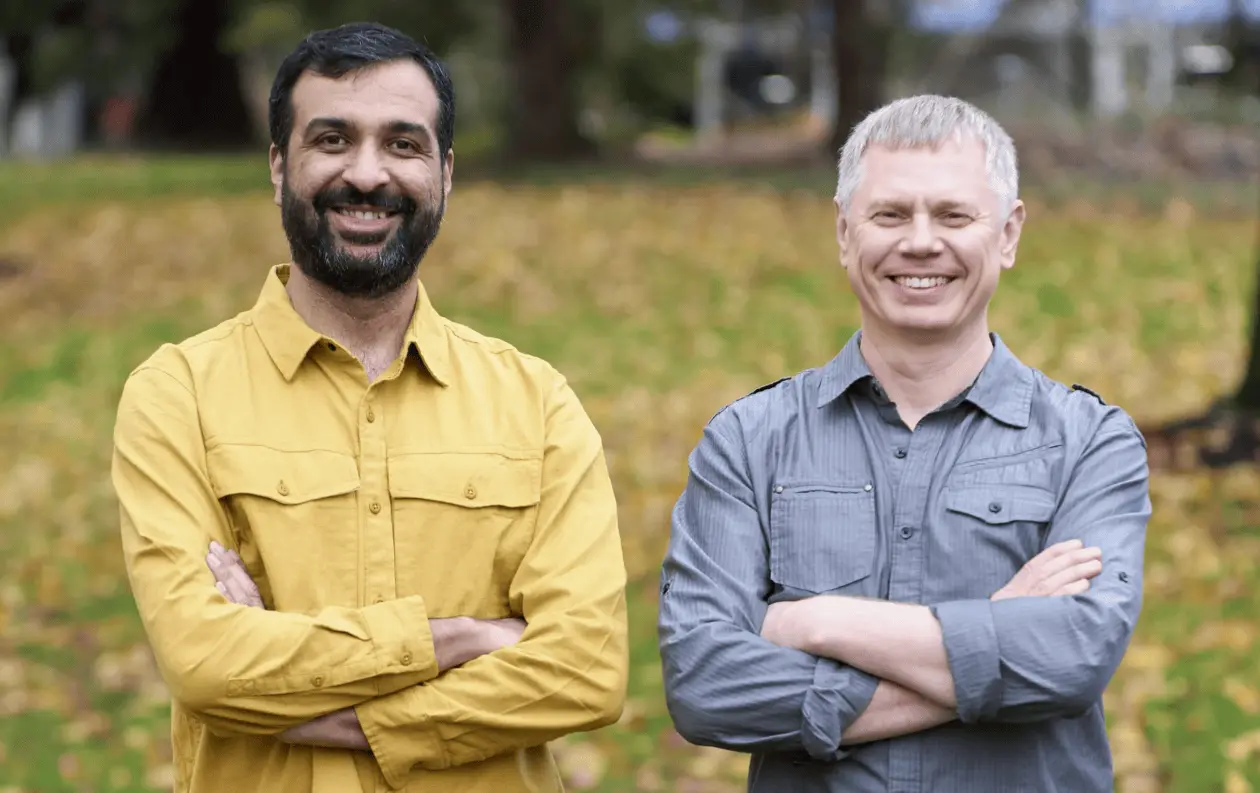
Temporal co-founders Samar Abbas and Maxim Fateev previously worked together at Uber, where they helped build an internal open-source orchestration engine called Cadence that inspired them to launch Temporal in 2019
2
. Abbas took over CEO duties from Fateev in 2024, with Fateev now serving as CTO2
. The company offers its open-source software for free, downloaded more than 20 million times per month, and monetizes through Temporal Cloud, a multi-tenant managed service that charges customers based on usage1
3
.
Source: GeekWire
Strategic Expansion Plans and Market Position
The company, which employs more than 375 people, plans to use the funds for research and product development as well as to expand sales and marketing efforts
1
2
. Temporal has now raised $650 million to date, following a $105 million secondary transaction in October and a $146 million Series C round earlier in 20252
. The company also announced that Raghu Raghuram, former VMware CEO and general partner at Andreessen Horowitz, is joining as a board observer2
. Temporal Cloud includes autoscaling capabilities that can process more than 300,000 AI agent actions per second, with failover mechanisms that reroute requests if data centers go offline3
.References
Summarized by

Navi
[2]
Related Stories
Together AI Secures $305 Million in Series B Funding to Expand AI Acceleration Cloud
21 Feb 2025•Business and Economy

Traversal Emerges from Stealth with $48M to Revolutionize Site Reliability in the AI Era
19 Jun 2025•Technology
Fal secures $140M Series D funding led by Sequoia, tripling valuation to $4.5 billion
09 Dec 2025•Startups

Recent Highlights
1
Apple Plans Major Siri AI Overhaul in iOS 27 With Third-Party Chatbot Integration
Technology

2
OpenAI shuts down Sora after six months, ending Disney's $1 billion licensing partnership
Technology

3
AI chatbots validate you too much, making you less kind to others, Stanford study reveals
Science and Research
Recent Highlights
Today's Top Stories









Your Daily Dose of Curated AI News
Don’t drown in AI news. We cut through the noise - filtering, ranking and summarizing the most important AI news, breakthroughs and research daily. Spend less time searching for the latest in AI and get straight to action.

