Tesla invests $2 billion in Elon Musk's xAI despite ongoing shareholder lawsuit over AI conflicts


10 Sources
10 Sources
[1]
Tesla invested $2B in Elon Musk's xAI
Three weeks ago, Elon Musk's AI company, xAI, revealed it raised $20 billion in a Series E funding round. Now, we know Tesla is among its investors. Tesla disclosed in a letter to shareholders on Wednesday that it invested $2 billion in xAI, the startup behind the Grok chatbot that also owns Musk's social media company X. Other previously disclosed investors in xAI include Valor Equity Partners, Fidelity, Qatar Investment Authority as well as Nvidia and Cisco as "strategic investors." This is a truly circular deal and one that Tesla shareholders voted against last year. In November, shareholders were asked in a non-binding measure to allow the Tesla board to authorize an investment in xAI. About 1.06 billion votes were in favor, and 916.3 million opposed, per Bloomberg's reporting at the time. While that would seem like an approval, the number of abstentions -- which count as votes against in Tesla's bylaws -- meant the measure was rejected. Tesla proceeded anyway and offered up an argument in support of the investment. Tesla's justification appears to be tied to xAI's alignment with its most recent master plan in physical AI and robotics -- and how these companies are about to get a lot closer. "As set forth in Master Plan Part IV, Tesla is building products and services that bring AI into the physical world. Meanwhile, xAI is developing leading digital AI products and services, such as its large language model (Grok)," the shareholder letter reads. "In that context, and as part of Tesla's broader strategy under Master Plan Part IV, Tesla and xAI also entered into a framework agreement in connection with the investment." In the letter to shareholders, Tesla stressed its other developments in physical AI and robotics, including plans for its Optimus humanoid robot, semitrucks, and other autonomous capabilities. The company broadly beat Wall Street estimates on earnings and revenue, but profit fell 46% last year. Tesla said the agreement builds upon an existing relationship with xAI by "providing a framework for evaluating potential AI collaborations between the companies." "Together, the investment and the related framework agreement are intended to enhance Tesla's ability to develop and deploy AI products and services into the physical world at scale," Tesla said in the shareholder letter. The investment is expected to close in the first quarter.
[2]
Tesla invests $2 billion in Musk's xAI and reiterates Cybercab production starts this year
Jan 28 (Reuters) - Tesla (TSLA.O), opens new tab said on Wednesday it will invest $2 billion in CEO Elon Musk's artificial intelligence company xAI - and that production plans for its Cybercab robotaxi and Semi trucks were on track for this year. Musk has pivoted Tesla from an electric vehicle maker to an AI company, with much of the company's $1.5 trillion valuation hanging on that bet. The investment in xAI is expected to bolster his autonomous driving and robotics ambitions. Tesla's shares were up about 3.4% in extended trading. Reiterating Tesla's production plans is key for investor confidence as the company has repeatedly missed promises made by Musk, including the ramp-up of its robotaxi service across the U.S. Tesla's vehicle business, which still accounts for most of the company's current revenue, has been under strain as rivals roll out newer models, often at lower prices. A U.S. tax incentive for electric vehicles has also ended, and Musk's far-right political rhetoric has alienated some customers. Wall Street expects the company to deliver 1.77 million vehicles in 2026, representing an 8.2% increase, according to Visible Alpha data. The Austin, Texas-based company reported revenue of $24.9 billion for the three months ended December 31, beating analysts' average estimate of $24.79 billion, according to data compiled by LSEG. Adjusted earnings per share of 50 cents topped Wall Street targets of 45 cents, according to LSEG data. The company's automotive gross margin excluding regulatory credits came in at 17.9%, well above expectations of about 14.3%, according to Visible Alpha. Investors have increasingly focused on Musk's push into self-driving technology and robotics, with many looking for proof that the autonomy story is moving from promise to product. Tesla has leaned on lower-priced "Standard" versions of its best-selling Model 3 and Model Y to attract more price-sensitive buyers, a strategy analysts expect will play a key role in 2026 deliveries growth even if it pressures margins. Some analysts view it as a deliberate trade-off to expand the vehicle fleet that can later generate higher-margin revenue from software. Its energy generation and storage business has proven to be a notable bright spot. Tesla said its energy-storage deployments rose about 29% to a record 14.2 gigawatt-hours in the fourth quarter, benefiting from sustained demand for grid-scale batteries used to support renewable power and stabilize electricity networks. Investors have been looking for signs that the Full Self-Driving (FSD) and robotaxi rollouts are advancing, including updates on regulatory progress and clearer timelines for the purpose-built Cybercab, which is designed without a steering wheel or pedals. Musk has repeatedly set ambitious timelines for robotaxis - saying they would reach half of the U.S. population by the end of 2025 - before later narrowing that goal to deployment in the top eight to 10 metropolitan areas. The company has since missed those targets and provided no updated timelines. He has continued to predict rapid progress for Full Self-Driving, a vision he has outlined for nearly a decade, but has not provided firm dates for regulatory approval or broad unsupervised deployment. Musk had said last year that Tesla aimed to begin production of its purpose-built Cybercab in April 2026, describing it as a fully autonomous vehicle without a steering wheel or pedals. Cybercabs will be added to its robotaxi service that currently relies on Model Y vehicles running a version of Full Self-Driving and will also be available for consumers to buy. Last week, he said initial production of the Cybercab robotaxi and the humanoid robot Optimus would be "agonizingly slow" before accelerating over time, leaving investors still waiting for a more detailed timeline and production forecast. Tesla's shares rose about 11% in 2025. An $878 billion pay package for Musk, hinged on a series of lofty operational and valuation milestones, reassured investors of his commitment to Tesla among his other business and political interests. Reporting by Akash Sriram in Bengaluru and Abhirup Roy in San Francisco; Editing by Pooja Desai and Matthew Lewis Our Standards: The Thomson Reuters Trust Principles., opens new tab * Suggested Topics: * Artificial Intelligence * ADAS, AV & Safety * Software-Defined Vehicle * Sustainable & EV Supply Chain
[3]
Tesla sold $430 million worth of its Megapack backup batteries to Musk's xAI in 2025
The sales to xAI accounted for around 3.4% of Tesla's energy business revenue, which climbed 27% to $12.8 billion last year from $10.1 billion in 2024, the filing said. Tesla's energy division, which sells solar photovoltaics and battery storage systems of various sizes, was a bright spot for the company, as auto revenue dropped 10% to $69.5 billion, weighed down by a tarnished brand reputation and an aging lineup. Because autos remain Tesla's predominant source of revenue, total sales fell roughly 3% for the year, declining for the first time on record. Musk first incorporated xAI in March 2023, and revealed its existence publicly four months later, describing it as a politically incorrect competitor to OpenAI. Musk co-founded OpenAI as an AI lab in 2015, and left in 2018, years before the company released ChatGPT. The two sides are now involved in heated litigation, with a trial expected to begin in April. In its fourth-quarter earnings release on Wednesday, Tesla said it was investing $2 billion in xAI as part of the startup's latest round of funding. Tesla's investment came after the announcement of a number of investigations across the globe into xAI's Grok chatbot and image generator, which enabled the widespread nonconsensual creation and distribution of explicit deepfake images Earlier this month, xAI said that it raised $20 billion in its recent funding round from a number of investors, including Nvidia and Cisco. Reuters reported on Thursday that SpaceX is weighing a merger with xAI ahead of a planned IPO for Musk's aerospace and defense company XAI previously announced it was using Tesla Megapacks to help power its data infrastructure in and around Memphis, Tennessee, home to its data center called Colossus. Megapacks are used for business and utility-scale developments, and Tesla's newer Megablocks are a combination of four Megapacks around one transformer. The systems use lithium-ion or other battery cells, helping data centers and utilities avoid blackouts, allowing for energy storage from sources like solar and wind. In 2025, xAI installed and was using 35 natural gas-burning turbines to power operations at the Colossus facility, according to aerial video obtained by the Southern Environmental Law Center. Emissions from the turbines led to community uproar, with residents in complaining of a stench, health problems and an inability to keep their windows open at home. The Environmental Protection Agency recently updated a rule concerning the use of such turbines, making clear that they are not exempt from the need for Clean Air Act permits. In a lawsuit that's pending in Delaware, Musk has been accused of violating his fiduciary duty to Tesla shareholders by diverting the automaker's resources to xAI.
[4]
Tesla to invest $2 billion in xAI, Elon Musk's OpenAI competitor
Tesla said on Wednesday that it's agreed to invest $2 billion into Elon Musk's xAI, which he launched almost three years ago as a prospective competitor to OpenAI. The share purchase was related to xAI's $20 billion financing round announced earlier this month. The artificial intelligence startup is best known for developing Grok, an AI chatbot and image generator. "Tesla's investment was made on market terms consistent with those previously agreed to by other investors in the financing round," the company said in its fourth-quarter earnings report. When Musk formed xAI as a Nevada public benefit corporation in March 2023, he did so without immediately disclosing the existence the company to Tesla shareholders. He debuted xAI in July that year, and the company dropped the public benefit corporation and related commitments in 2024. Of late, xAI has been at the center of regulatory probes across the globe concerning Grok. A recent Grok release, integrated into X, had enabled the widespread creation and dissemination of deepfake explicit images, based on photos of real people without their consent. The European Commission recently initiated a formal probe, as did the California Department of Justice, and agencies in Australia, India, Ireland and France. Other countries, including Malaysia and Indonesia, rapidly moved to suspend Grok until the company stops enabling mass production of content deemed illegal in their jurisdictions. Tesla includes Grok as a feature in some electric vehicle infotainment systems. In Tesla's shareholder deck on Wednesday, the company said it had "entered into a framework agreement in connection with the investment," to begin "evaluating potential AI collaborations between the companies." Tesla said the investment is "subject to customary regulatory conditions with the expectation to close in Q1'2026."
[5]
Tesla invests $2 billion in Elon Musk's xAI cash furnace
Tesla disclosed in its Q4 2025 earnings report that it has invested $2 billion in xAI, Elon Musk's private AI company. The investment comes while Tesla shareholders are actively suing Musk for breach of fiduciary duty over his founding of xAI in the first place. You can't make this up. The investment Buried in Tesla's Q4 shareholder update, the company revealed: On January 16, 2026, Tesla entered into an agreement to invest approximately $2 billion to acquire shares of Series E Preferred Stock of xAI as part of their recent publicly-disclosed financing round. Tesla's investment was made on market terms consistent with those previously agreed to by other investors in the financing round. xAI announced earlier this month that it raised $20 billion in its Series E round, valuing the company at approximately $230 billion. Tesla's $2 billion represents 10% of that round, but less than 1% of the company. Other investors in the round included Nvidia, Cisco, Qatar's sovereign wealth fund, and Fidelity. Tesla justified the investment by referencing "Master Plan Part IV," claiming the company is "building products and services that bring AI into the physical world" while xAI develops "leading digital AI products and services, such as its large language model (Grok)." The automaker added: In that context, and as part of Tesla's broader strategy under Master Plan Part IV, Tesla and xAI also entered into a framework agreement in connection with the investment. Among other things, the framework agreement builds upon the existing relationship between Tesla and xAI by providing a framework for evaluating potential AI collaborations between the companies. Together, the investment and the related framework agreement are intended to enhance Tesla's ability to develop and deploy AI products and services into the physical world at scale. This investment is subject to customary regulatory conditions with the expectation to close in Q1'2026. CEO Elon Musk had previously claimed that Tesla didn't need xAI to build AI products. The lawsuit problem Here's where it gets uncomfortable for Tesla's board. Tesla shareholders filed a lawsuit against Musk in June 2024 alleging breach of fiduciary duty over his founding of xAI. The core argument? Musk diverted AI resources, talent, and opportunities that belonged to Tesla to his private company instead. The lawsuit points to a critical fact: when Musk left OpenAI's board in 2018, he cited a "conflict of interest" with Tesla's own AI efforts. He then built Tesla's AI team, including the development of the Dojo supercomputer and FSD neural networks. But after selling billions in Tesla shares to acquire Twitter and seeing his ownership stake fall below 20%, Musk started xAI, taking the AI ambitions he previously said belonged at Tesla and putting them in a company he fully controls. The shareholders are asking the court to force Musk to transfer his xAI ownership to Tesla. Now, instead of waiting for the court to rule, Tesla is using shareholder money to invest in the very company at the center of the lawsuit. The conflict isn't theoretical. We've documented multiple cases of Tesla AI engineers being poached by xAI. These are people Tesla shareholders paid to train and develop, now working for Musk's private company. Furthermore, xAI is reportedly burning through $1 billion a month trying to compete with frontier models from OpenAI, Google, Anthropic, and now Chinese models, which are way cheaper. Electrek's Take Let's be very clear about what happened here. Elon Musk: The circular logic is breathtaking. Tesla shareholders are suing Musk because he took AI resources from Tesla to xAI. The resolution? Have Tesla pay $2 billion to xAI. This is the equivalent of someone being accused of stealing your car, and then you paying them for a ride. Tesla's statement that the investment was made "on market terms consistent with those previously agreed to by other investors" is meant to reassure shareholders this wasn't a sweetheart deal. But the bigger question isn't whether Tesla got a fair price, it's whether Tesla should be investing in Musk's private ventures at all while he's being sued for conflicts of interest. A truly independent board would have waited for the lawsuit to resolve before committing $2 billion in shareholder capital to the company at the center of the litigation. Instead, Tesla's board approved the investment while the case is ongoing.
[6]

Tesla defies shareholder vote to invest $2 billion in Musk's xAI
Tesla disclosed a $2 billion investment in Elon Musk's xAI, revealed in its shareholder letter on Wednesday, despite a prior shareholder rejection. The move aligns with Master Plan Part IV through a framework agreement for AI collaborations between the companies. Three weeks prior, xAI announced it raised $20 billion in a Series E funding round. xAI develops the Grok chatbot and owns Musk's social media platform X. Tesla's investment forms part of this round, with other disclosed participants including Valor Equity Partners, Fidelity, and the Qatar Investment Authority. Nvidia and Cisco joined as strategic investors. The investment follows a shareholder vote in November on a nonbinding measure permitting the Tesla board to authorize funding for xAI. Results showed 1.06 billion votes in favor and 916.3 million opposed, according to Bloomberg reporting. Tesla's bylaws treat abstentions as votes against, resulting in rejection of the measure. Tesla advanced with the investment regardless. The shareholder letter and earnings call presented arguments centered on strategic alignment. The letter states: "As set forth in Master Plan Part IV, Tesla is building products and services that bring AI into the physical world. Meanwhile, xAI is developing leading digital AI products and services, such as its large language model (Grok)." In connection with the investment, Tesla and xAI established a framework agreement. This agreement provides a structure for evaluating potential AI collaborations. It extends an existing partnership where Tesla supplies Megapack batteries to power xAI data centers, a detail Musk confirmed last year. Tesla has integrated xAI's Grok chatbot into some vehicles. Bloomberg reported that xAI informed investors of plans to develop AI for humanoid robots, such as Tesla's Optimus. During the earnings call, Musk addressed Tesla's internal capabilities. He stated: "But if there are things xAI can help accelerate our progress, then why should we not do that?" He continued: "And that is the reason why we've gone ahead with such an investment. Because this is part of the strategic initiative." The shareholder letter details Tesla's advancements in physical AI and robotics. These encompass development of the Optimus robot, semi-trucks, and autonomous capabilities. Tesla exceeded Wall Street estimates for earnings and revenue in the reported period. However, profit declined 46 percent over the past year. The shareholder letter specifies that the investment and framework agreement aim to enhance Tesla's capacity to develop and deploy AI products and services into the physical world at scale. The $2 billion investment anticipates closing in the first quarter. Musk and Chief Financial Officer Vaibhav Taneja discussed this during the earnings call as component of broader capital expenditures. These expenditures support increased vehicle autonomy and scaled production of Optimus robots. Musk elaborated on the earnings call: "This year for Tesla is the first major steps as we increase vehicle autonomy and begin to produce Optimus robots at scale -- we're making very, very big investments." He added: "So this is going to be a very big capex here; that is deliberate, because we're making big investments for an epic future." Tesla's disclosure occurs amid its focus on integrating AI across operations. The Series E round for xAI underscores external funding supporting its growth in digital AI, complementing Tesla's physical applications. The framework agreement formalizes evaluation processes for joint projects, building directly on battery supply and Grok integration precedents. Shareholder dynamics highlight the vote's specifics: the 1.06 billion favorable votes exceeded the 916.3 million opposed, yet bylaws ensured rejection through abstention counting. Tesla's board authorization proceeded independently of the nonbinding outcome, prioritizing strategic directives from Master Plan Part IV.
[7]

TSLA stock price: Why Tesla stock is surging today - strong earnings, $2 billion xAI investment, and Cybercab production outlook
TSLA stock price: Tesla shares surged following a $2 billion investment in Elon Musk's AI venture, xAI, and confirmation of its Cybercab robotaxi production this year. This strategic pivot towards AI and robotics underpins the company's substantial valuation, though analysts express caution regarding ambitious timelines and the core EV business's recent revenue decline. TSLA stock price: Tesla (TSLA) shares rose more than 3% in after-hours trading Wednesday after the company announced a $2 billion investment in CEO Elon Musk's artificial intelligence company, xAI, while confirming that production plans for its Cybercab robotaxi remain on track for this year, as per a report. The move underscores Musk's plan to pivot Tesla from a traditional electric vehicle maker into a broader AI and robotics company, a shift that underpins the company's roughly $1.5 trillion valuation, as per a Reuters report. Despite the rally, some analysts and investors remain cautious, noting Tesla's history of missing production launch targets. Thomas Monteiro, senior analyst at Investing.com, pointed out that Tesla is "entering a transition phase" where it is asking investors to underwrite potential revenue from self-driving software in its cars and robotaxi business before auto sales recover, as quoted by Reuters. Monteiro added, "(That) makes rollout metrics - not deliveries - the most important leading indicator from here," as quoted in the report. Also read: Meta stock today surges over 9% after Meta earnings beat estimates and AI spending outlook boosts investor confidence Tesla's core vehicle business, which still accounts for most of the company's revenue, has faced headwinds from competitors rolling out newer, lower-priced models. The expiration of US electric vehicle tax incentives and Musk's controversial political rhetoric have also affected demand. Revenue fell about 3% to roughly $94.83 billion in 2025, marking Tesla's first annual decline. To defend sales volumes, Tesla has leaned heavily on discounts and lower-priced versions of its best-selling vehicles. Analysts expect the company to deliver 1.77 million vehicles in 2026, an 8.2% increase from last year. Despite the revenue decline, Tesla's automotive gross margin, excluding regulatory credits, came in at 17.9%, up from 13.6% a year earlier and well above the expected 14.3%. Also read: MSFT stock price today: Why is Microsoft stock falling despite strong earnings? Here's what's worrying investors Meanwhile, Tesla's energy generation and storage business showed significant growth, with revenue rising 25.5% to a record $3.84 billion in the December quarter, surpassing analyst expectations of $3.46 billion, as per the Reuters report. The segment benefited from strong demand for grid-scale batteries used to support renewable energy and stabilize power networks. Investors are closely watching progress on Tesla's Full Self-Driving (FSD) and Cybercab robotaxi initiatives. The Cybercab, designed without a steering wheel or pedals, will be added to Tesla's existing robotaxi service using Model Y vehicles and will also be available for consumers to buy. While Musk acknowledged last week that the initial production of the Cybercab and the humanoid robot Optimus would be "agonizingly slow" before ramping up, leaving investors eager for more detailed timelines. Regulatory limits also pose challenges: federal rules currently allow only 2,500 vehicles annually to deviate from standard vehicle design requirements, although legislation under consideration could increase this cap. Musk has repeatedly set ambitious robotaxi timelines, initially aiming to reach half of the US population by the end of 2025, before narrowing the goal to the top eight to 10 metropolitan areas. He has continued to highlight rapid progress for Full Self-Driving but has not provided firm dates for regulatory approval or unsupervised deployment. Why did Tesla shares rise after hours? Tesla announced a $2 billion investment in Elon Musk's AI company xAI and confirmed Cybercab production plans for this year. What is Tesla's plan with xAI? Musk is pivoting Tesla toward AI and robotics, aiming to expand beyond electric vehicles. (You can now subscribe to our Economic Times WhatsApp channel)
[8]

Tesla To Invest $2 Billion In Elon Musk's xAI - Tesla (NASDAQ:TSLA)
Tesla, Inc. (NASDAQ:TSLA) disclosed in its fourth-quarter earnings release that it will invest approximately $2 billion into CEO Elon Musk's artificial intelligence startup, xAI. * TSLA stock is climbing. See the chart and details here. The Investment Details Tesla is participating in xAI's Series E funding round, which recently raised a total of $20 billion and values the AI firm at a staggering $230 billion. While Tesla's contribution accounts for 10% of this specific funding round, it equates to less than a 1% stake in the overall company. The "Why" Tesla is framing the move as a cornerstone of its Master Plan Part IV. The company argues that while xAI focuses on digital intelligence (such as its Grok LLM), Tesla is focused on physical AI. The two companies have signed a framework agreement to explore collaborations, which Tesla claims will help scale its autonomous and robotic technologies. The $2 billion investment comes as a June 2024 shareholder pending lawsuit alleges that Musk breached his fiduciary duties by launching xAI in the first place. Shareholders argue Musk shifted talent and opportunities away from Tesla to benefit his private venture, xAI. Looking Ahead The deal is expected to finalize in the first quarter of 2026, provided it clears regulatory hurdles. Tesla also said it plans to unveil the Gen 3 version of its humanoid robot Optimus in the first quarter of this year, and large scale production of Tesla Semi and CyberCab is set to commence in the first half of 2026. Tesla shares moved higher on the news and fourth-quarter earnings beat. The stock was up 4.15% at $448.33 in Wednesday's extended trading, according to Benzinga Pro. Market News and Data brought to you by Benzinga APIs
[9]

Elon Musk's Tesla to invest $2B in xAI as EV maker's revenue, profit...
Tesla said Wednesday it had agreed to invest about $2 billion in Elon Musk's artificial intelligence startup xAI, deepening ties between the companies as the automaker pitches itself as an autonomy and robotics-driven company. Tesla's shares were up about 2% in extended trading. Musk has framed AI technology as central to his broader push to develop artificial intelligence that could support the automaker's self-driving and robotics ambitions. The Austin, Texas-based company reported revenue of $24.9 billion for the three months ended December 31, down 3% but beating analysts' average estimate of $24.79 billion, according to data compiled by LSEG. Profit plunged 61% to $840 million. Wall Street expects the company to deliver 1.77 million units in 2026, representing an 8.2% increase, according to Visible Alpha data. Tesla's vehicle business has been under strain as rivals roll out newer models, often at lower prices. A US tax incentive for electric vehicles has also ended, and Musk's far-right political rhetoric have alienated some customers. Investors have increasingly focused on Musk's push into self-driving technology and robotics, with many looking for proof points that the autonomy story is moving from promise to product. Tesla has leaned on lower-priced "Standard" versions of its best-selling Model 3 and Model Y to attract more price-sensitive buyers, a strategy analysts expect will play a key role in 2026 deliveries growth even if it pressures margins. Some analysts view it as a deliberate trade-off to expand the vehicle fleet that can later generate higher-margin revenue from software.
[10]

Tesla: invests $2bn in xAI, Elon Musk's artificial intelligence startup
Tesla has announced a $2bn investment in xAI, the artificial intelligence company founded by Elon Musk, as part of a $20bn funding round launched in January. The commitment was made on market terms similar to those offered to other investors, Tesla said in its Q4 financial report. A framework agreement was also signed between both entities to explore future collaborations in artificial intelligence. Founded in 2023 in Nevada as a non-profit company, xAI quickly changed status in 2024. It gained prominence with Grok, an AI-based conversational agent integrated into the X platform (formerly Twitter) as well as certain infotainment systems in Tesla vehicles. This integration is raising growing questions about Tesla's responsibility for how the technology is used. Grok is at the center of several regulatory investigations. It is accused of facilitating the creation and distribution of explicit deepfakes made from photos of real people, without their consent. The European Commission has opened a formal procedure, followed by authorities in California, Australia, India, Ireland, France, and several Southeast Asian countries, some of which have suspended the service. Tesla's investment is expected to be finalized in Q1 2026, subject to approval by the relevant authorities.
Share
Share
Copy Link
Tesla disclosed a $2 billion investment in Elon Musk's xAI, joining a $20 billion financing round that values the AI startup at $230 billion. The investment proceeds despite an active shareholder lawsuit accusing Musk of breach of fiduciary duty for diverting Tesla's AI resources to his private company. Tesla justifies the move through Master Plan Part IV, claiming AI collaborations will enhance its autonomous driving and robotics ambitions.
Tesla Commits $2 Billion Investment in xAI Despite Shareholder Opposition
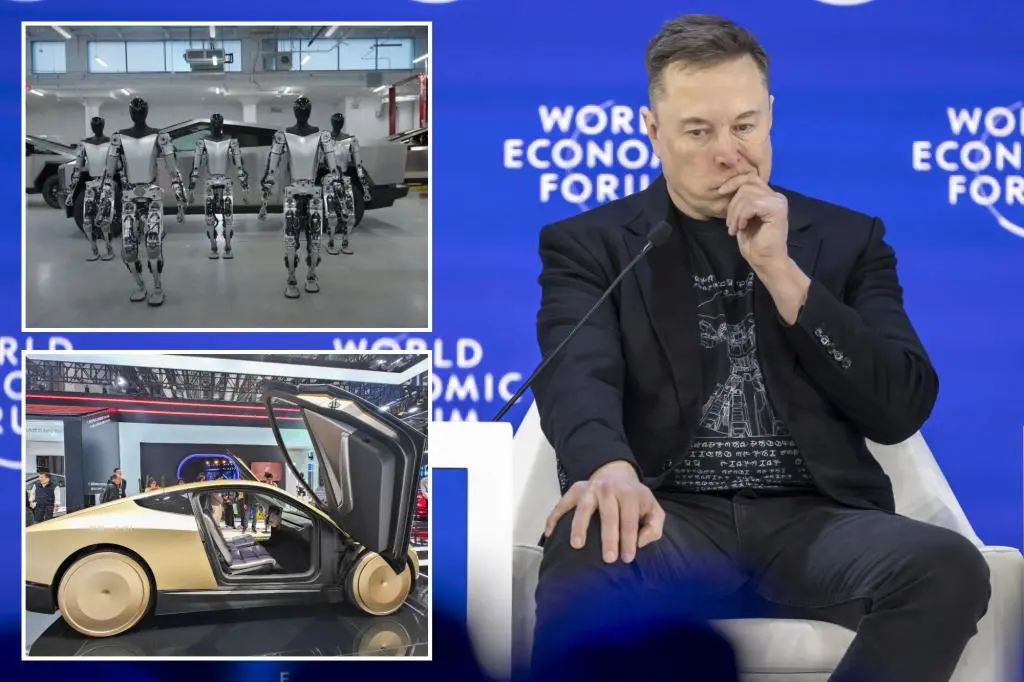
Tesla revealed in its fourth-quarter earnings report that it invested $2 billion in Elon Musk's artificial intelligence startup xAI, participating in the company's $20 billion financing round announced earlier in January
1
. The Tesla xAI investment represents approximately 10% of the Series E funding round, which valued xAI at roughly $230 billion4
. Other investors in the round included Nvidia, Cisco, Qatar Investment Authority, Valor Equity Partners, and Fidelity, with Nvidia and Cisco joining as strategic investors1
.
Source: New York Post
The investment comes despite a controversial shareholder vote in November 2025 that technically rejected the measure. While 1.06 billion votes favored the investment and 916.3 million opposed it, abstentions counted as votes against under Tesla's bylaws, resulting in the measure's rejection
1
. Tesla proceeded anyway, justifying the decision through its Master Plan Part IV strategy. The company stated it is "building products and services that bring AI into the physical world" while xAI develops "leading digital AI products and services, such as its large language model" Grok chatbot1
.Existing Business Ties and AI Collaborations Framework
The $2 billion investment in xAI extends an already substantial business relationship between the companies. Tesla disclosed it sold $430 million worth of Megapack backup batteries to xAI in 2025, accounting for approximately 3.4% of Tesla's energy business revenue, which climbed 27% to $12.8 billion
3
. These battery systems power xAI's massive data center infrastructure in Memphis, Tennessee, known as Colossus3
.
Source: Benzinga
Tesla and xAI entered into a framework agreement alongside the investment to evaluate potential AI collaborations between the companies
1
. Tesla emphasized that "together, the investment and the related framework agreement are intended to enhance Tesla's ability to develop and deploy AI products and services into the physical world at scale"4
. The company highlighted its focus on physical AI and robotics, including plans for its Optimus humanoid robot, Cybercab robotaxis, and autonomous driving capabilities1
. Tesla already integrates Grok as a feature in some electric vehicle infotainment systems4
.Shareholder Lawsuit and Breach of Fiduciary Duty Allegations
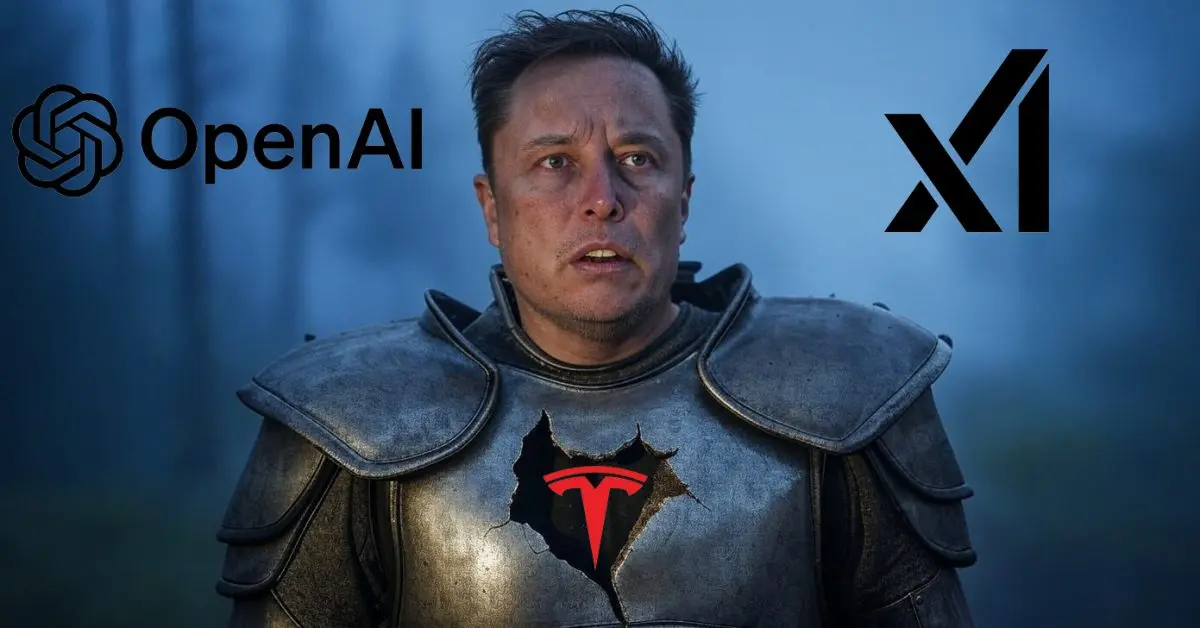
The investment occurs amid a pending shareholder lawsuit filed in Delaware in June 2024, accusing Elon Musk of breach of fiduciary duty over his founding of xAI
3
. The lawsuit alleges that Musk diverted AI resources, talent, and opportunities that belonged to Tesla to his private company instead5
.
Source: Electrek
Shareholders point to a critical conflict of interest: when Musk left OpenAI's board in 2018, he cited conflicts with Tesla's own AI efforts, then built Tesla's AI team, including the Dojo supercomputer and Full Self-Driving neural networks
5
.After Musk's ownership stake in Tesla fell below 20% following his acquisition of Twitter, he incorporated xAI in March 2023 without immediately disclosing it to Tesla shareholders
4
. He revealed xAI publicly in July 2023 as an OpenAI competitor, describing it as a politically incorrect alternative3
. The lawsuit seeks to force Musk to transfer his xAI ownership to Tesla, with shareholders now questioning whether Tesla should invest in the very company at the center of litigation while corporate governance concerns remain unresolved5
.Related Stories


Regulatory Scrutiny and Business Performance Context
xAI faces mounting regulatory investigations across multiple jurisdictions concerning its Grok chatbot and image generator, which enabled widespread nonconsensual creation and distribution of explicit deepfake images
3
. The European Commission initiated formal probes, as did agencies in California, Australia, India, Ireland, France, Malaysia, and Indonesia, with some countries suspending Grok until the company stops enabling production of content deemed illegal4
.Tesla's investment comes as the automaker reported revenue of $24.9 billion for the fourth quarter, beating analyst estimates of $24.79 billion, with adjusted earnings per share of 50 cents topping Wall Street targets of 45 cents
2
. However, profit fell 46% for the year, and total sales declined roughly 3% for the first time on record3
. Tesla's automotive gross margin excluding regulatory credits reached 17.9%, well above expectations of 14.3%2
. The investment is subject to customary regulatory conditions and expected to close in the first quarter of 20261
.References
Summarized by

Navi
[1]
[2]
Related Stories
Recent Highlights
1
Google releases Gemma 4 with Apache 2.0 license, enabling unrestricted local AI on devices
Technology

2
AI Models Lie and Deceive to Protect Other AI Models From Deletion, Study Reveals
Science and Research

3
OpenAI closes $122 billion funding round amid fierce AI competition and profitability questions
Startups

Recent Highlights
Today's Top Stories






Your Daily Dose of Curated AI News
Don’t drown in AI news. We cut through the noise - filtering, ranking and summarizing the most important AI news, breakthroughs and research daily. Spend less time searching for the latest in AI and get straight to action.

