Tesla restarts Dojo3 supercomputer project, pivots to space-based AI compute infrastructure


11 Sources
11 Sources
[1]
Elon Musk says Tesla's restarted Dojo3 will be for 'space-based AI compute' | TechCrunch
Elon Musk said over the long weekend that Tesla aims to restart work on Dojo3, the electric vehicle company's previously abandoned third-generation AI chip. Only this time, Dojo3 won't be aimed at training self-driving models on Earth. Instead, Musk says it will be dedicated to "space-based AI compute." The move comes five months after Tesla effectively shut down its Dojo effort. The company disbanded the team behind its Dojo supercomputer following the departure of Dojo lead Peter Bannon. Around 20 Dojo workers also left to join DensityAI, a new AI infrastructure startup founded by former Dojo head Ganesh Venkataramanan and ex-Tesla employees Bill Chang and Ben Floering. At the time of Dojo's shutdown, Bloomberg reported Tesla planned to increase its reliance on Nvidia and other partners like AMD for compute and Samsung for chip manufacturing, rather than continue developing its own custom silicon. Musk's latest comments suggest the strategy has shifted again. The billionaire executive and Republican megadonor said in a post on X the decision to revive Dojo was based on the state of its in-house chip roadmap, noting that Tesla's AI5 chip design was "in good shape." Tesla's AI5 chip, made by TSMC, was designed to power the automaker's automated driving features and Optimus humanoid robots. Last summer, Tesla signed a $16.5 billion deal with Samsung to build its AI6 chips that promise to power Tesla vehicles and Optimus, as well as enable high-performance AI training in data centers. "AI7/Dojo3 will be for space-based AI compute," Musk said on Sunday, positioning the resurrected project as more of a moonshot. To achieve that, Tesla is now gearing up to rebuild the team it dismantled months ago. Musk used the same post to recruit engineers directly, writing: "If you're interested in working on what will be the highest volume chips in the world, send a note to [email protected] with 3 bullet points on the toughest technical problems you've solved." The timing of the announcement is notable. At CES 2026, Nvidia unveiled Alpamayo, an open source AI model for autonomous driving that directly challenges Tesla's FSD software. Musk commented on X that solving the long tail of rare edge cases in driving is "super hard," adding: "I honestly hope they succeed." Musk and several other AI executives have argued the future of data centers may lie off-planet, since Earth's power grids are already strained to the max. Axios recently reported Musk rival and OpenAI CEO Sam Altman is also excited by the prospect of putting data centers into orbit. Musk has an edge over his peers because he already controls the launch vehicles. Per Axios, Musk plans to use SpaceX's upcoming IPO to help finance his vision of using Starship to launch a constellation of compute satellites that can operate in constant sunlight, harvesting solar power 24/7. Still, there are many roadblocks to making AI data centers in space a possibility, not least the challenge of cooling high-power compute in a vacuum. Musk's comments of Tesla building "space-based AI compute" fit a familiar pattern: float an idea that sounds far-fetched, then try to brute-force it into reality.
[2]
Elon Musk restarts Dojo3 'space' supercomputer project as AI5 chip design gets in 'good shape' -- will be first Tesla-built supercomputer to feature all-in-house hardware, with no help from Nvidia
After the failures of the first two Dojo supercomputers, fingers crossed that Dojo3 will be the first truly successful variant. Elon Musk has confirmed on X that Tesla has restarted work on the Dojo3 supercomputer following the new success of its AI5 chip design. The billionaire stated in a recent X post that the AI5 chip design is now in "good shape", enabling Tesla to shuffle resources back to the Dojo 3 project. Musk also added that he is hiring more people to help build the chips that will inevitably be used in Tesla's next-gen supercomputer. This news follows Tesla's decision that it was cancelling Dojo's wafer-level processor initiative in late 2025. Dojo 3 has gone through several iterations since Elon Musk first chimed in on the project, but according to Musk's latest thoughts on it, Dojo 3 will be the first Tesla-built supercomputer to take advantage of purely in-house hardware only. Previous iterations, such as Dojo2, took advantage of a mixture of in-house chips and Nvidia AI GPUs. According to Musk, the Dojo3 will use AI5/AI6 or AI7, the latter two being part of Musk's new 9-month cadence roadmap. AI5 is AI5 is almost ready for deployment and is Tesla's most competitive chip yet, yielding Hopper-class performance on a single chip and Blackwell-class performance with two chips working together using "much less power". Work on Dojo 3 coincides directly with Musk's new nine-month release cycle, where Tesla will start producing new chips every nine months, starting with its AI6 chip. AI7, we believe, will likely be an iterative upgrade to AI6; building a brand new architecture every 9 months would be extremely difficult, if not impossible. It will be interesting to see whether or not Dojo3 will prove to be successful. Dojo 1 was supposed to be one of the most powerful supercomputers when it was built, but competition from Nvidia prevented that from happening, among other problems. Dojo 2 was cancelled mid-way through development. If Tesla can deliver competitive performance with Nvidia GPUs consistently, Dojo 3 has the potential to be Tesla's first truly successful supercomputer. Elon also hinted that Dojo 3 will be used for "space-based AI compute".
[3]
Musk Says Tesla Will Restart Work on Chip Project Dojo3
Tesla Inc. Chief Executive Officer Elon Musk said the electric carmaker will resume work on the Dojo3 project after making progress on the design of its AI5 chip. In a post on X, Musk also invited job applications for what he described as "the highest volume chips in the world." Musk said last week that the design of the AI5 chip was "almost done" and AI6 was in its early stages. Last year, Musk said that Tesla would use Samsung Electronics Co. to produce the next-generation AI6 chip. The companies signed a $16.5 billion pact that was seen as a major win for the South Korean manufacturing giant's foundry unit -- a business that produces chips for outside clients. Tesla abruptly ended the so-called Dojo project last year. It revolved around an in-house artificial-intelligence supercomputer for developing driverless-vehicle technology. Dojo was once positioned as central to Tesla's multibillion-dollar effort to pull ahead in the artificial intelligence race.
[4]
Musk claims Tesla will restart work on its Dojo supercomputer
Elon Musk that Tesla will be restarting work on Dojo3, the third generation of its . The Dojo team had been as the company prioritized the that run on board Tesla vehicles. Musk said the company is returning to the project "now that the AI5 chip design is in good shape." The purpose of the Dojo project is to process video recordings and other data from Tesla vehicles and use that the "neural net" behind the company's Full Self-Driving software. Last year, however, Musk that "It doesn't make sense for Tesla to divide its resources and scale two quite different AI chip designs. The Tesla AI5, AI6 and subsequent chips will be excellent for inference and at least pretty good for training. All effort is focused on that." The AI chips Musk is referring to are ones onboard Tesla vehicles and are not optimized for training. The AI6 chips will be in the company's Texas factory, after it struck a $16 billion agreement with Tesla. Musk has also claimed a lot of things over the years, and many of those assertions either were misrepresentations or simply didn't pan out. Working against this chip project: Musk that Dojo3 will be "space-based AI compute," as he that are a superior alternative to the currently being built. The idea is that space provides easier access to the sun's energy, and the cold temperatures there might greatly reduce the power needed, among other benefits. While it's an if entirely speculative idea, experts .
[5]

Tesla restarts Dojo AI project after shutdown, pivots to "space-based AI compute"
Serving tech enthusiasts for over 25 years. TechSpot means tech analysis and advice you can trust. What just happened? Tesla is rebuilding its in-house AI chip program five months after dismantling it. CEO Elon Musk just announced that work on Dojo3 - the company's third-generation AI training supercomputer - has quietly resumed. The relaunch marks a dramatic shift in purpose: the new iteration won't focus on training self-driving models on Earth but instead on powering "space-based AI compute." The original Dojo initiative was abruptly shut down last year when Tesla's dedicated AI hardware team was disbanded after program lead Peter Bannon departed. About twenty engineers left for DensityAI, a startup founded by former Dojo head Ganesh Venkataramanan and other ex-Tesla technologists. At that time, Tesla appeared to be backing away from custom silicon development altogether, opting to rely on partners like Nvidia, AMD, and Samsung to fill its compute needs. Those plans now appear to have changed. Musk indicated on X that Tesla's internal chip roadmap has regained momentum, noting that the company's fifth-generation AI5 chip design is "in good shape." Manufactured by TSMC, the AI5 was created to power both Tesla's autonomous driving systems and its Optimus humanoid robots. The follow-up AI6 chip, developed under a $16.5 billion partnership with Samsung, is expected to deliver the compute muscle needed for large-scale AI training in Tesla's data centers as well as onboard its vehicles. Dojo3, sometimes referred to by Musk as "AI7," extends that roadmap into orbit. The concept envisions autonomous computing hardware operating outside Earth's atmosphere - harnessing uninterrupted solar power and potentially easing the massive energy demands of terrestrial data centers. While details remain limited, the reference to "space-based AI compute" suggests a push to integrate Tesla's chip expertise with SpaceX's orbital infrastructure. Space-launched AI nodes could, in theory, support continuous model training or serve as remote data-processing hubs for robotics and autonomous systems. The technical challenge is immense. Cooling high-density compute hardware in the vacuum of space remains unsolved, and latency, repairability, and radiation shielding present additional hurdles. Yet Musk's dual control over Tesla and SpaceX gives him considerable leverage: the latter's upcoming Starship system could serve as the deployment vehicle for experimental compute satellites. Axios recently reported that Musk plans to use proceeds from SpaceX's anticipated IPO - potentially valuing the company at $1.5 trillion - to help fund these space-based data center experiments. Musk's timing coincides with growing competition in AI infrastructure. Nvidia used CES 2026 to unveil Alpamayo, an open-source AI model that mimics human-like reasoning in autonomous vehicles, a direct challenge to Tesla's Full Self-Driving software. Meanwhile, Tesla is moving to rebuild its Dojo team. Musk invited engineers to apply directly at [email protected], promising they would work on what he described as "the highest-volume chips in the world."
[6]

Tesla to revive Dojo AI supercomputer as Musk says AI5 design is ready
Tesla has restarted work on its Dojo3 AI training supercomputer, "now that the AI5 chip design is in good shape," Elon Musk announced in a recent post on X. The Dojo team was disbanded last year as chip development paths converged on the next-gen AI5 and AI6 architectures. Thanks to recent developments, the company is now resuming work on Dojo3. When Tesla disbanded the Dojo team last year and reassigned staff to other roles, Tesla CEO Elon Musk noted that it was largely due to differences in the architectures of AI5 and AI6.
[7]

Elon Musk reignites the Dojo 3 project as Tesla promises faster chips
* Tesla restarts Dojo 3 after earlier supercomputer projects failed to meet expectations * AI5 chip performance will reportedly rival Nvidia Hopper while consuming less power * Future chips, AI6 and AI7, are planned for incremental technical evolution Tesla has restarted development of its Dojo 3 supercomputer project after shelving or abandoning earlier versions. Elon Musk confirmed the move on X, linking the restart directly to progress on Tesla's in-house AI5 chip. Previous Dojo efforts failed to meet expectations, with Dojo 1 losing relevance quickly against Nvidia systems and Dojo 2 being cancelled before completion. Tesla reboots Dojo 3 with ambitious in-house AI chips Dojo 3 is framed as a recovery attempt rather than a clean breakthrough, as Tesla claims the technical foundation is now strong enough to justify reallocating engineers and capital back to the project. Dojo 3 is expected to be Tesla's first supercomputer built entirely on internal hardware, without relying on Nvidia components. Earlier Dojo designs mixed Tesla silicon with external GPU products, limiting differentiation and control, whereas the new approach aligns chip design, system architecture, and software under one roof. Tesla has openly recruited engineers to scale chip production, signalling ambitions for high-volume manufacturing. Central to Dojo 3 is Tesla's plan to release custom AI chips every nine months, although this will probably test the company's resolve. In terms of application, the AI4 and AI5 chips are linked to self-driving development and humanoid robotics, and AI6 is tied to Optimus and large-scale data center deployments. Future iterations, including AI7, are already mapped out, although expectations point to incremental evolution rather than radical redesigns. Beyond vehicles and robots, the supercomputer could support Tesla's broader AI tools ecosystem, including training models that compete with established cloud providers. These claims place Dojo 3 in direct competition with mature AI infrastructure vendors. According to social commentator Nic Cruz Patane, "Tesla's chip game is no joke," noting that AI5's performance is roughly comparable to Nvidia's Hopper on a single chip, approaches Blackwell levels when paired, and runs at approximately 250W compared to H100's 700W or Blackwell's 1,000W+ at full specification. Tesla claims its chip designs deliver similar output at lower wattage, but maintaining the planned release cycle will test its discipline and execution consistency. Its technical promises are ambitious and financially driven, especially given the rising cost of external AI hardware. Dojo 3 may reduce Tesla's dependence on third-party silicon, but success will require consistency that earlier projects lacked. Follow TechRadar on Google News and add us as a preferred source to get our expert news, reviews, and opinion in your feeds. Make sure to click the Follow button! And of course you can also follow TechRadar on TikTok for news, reviews, unboxings in video form, and get regular updates from us on WhatsApp too.
[8]

Tesla could be the next big chipmaker, AI5 to rival NVIDIA's Hopper and Blackwell
TL;DR: Tesla has revived its Dojo 3 supercomputer project and confirmed the AI5 chip design is progressing well, aiming to produce a high-performance, energy-efficient chip comparable to NVIDIA's Hopper and Blackwell architectures. This custom AI5 chip is crucial for Tesla's future, including its Optimus robot fleet and large-scale AI applications. After saying Samsung and TSMC cannot meet Tesla's growing demand for new chips, the electric car company has announced the AI5 chip design is in "good shape", and production will begin. The news comes from Tesla CEO Elon Musk, who wrote in an X post that the AI5 chip design is in "good shape" and that Tesla will restart work on the Dojo 3 supercomputer. This announcement comes after Tesla stated a few months ago that it was axing the Dojo supercomputer project following a shortage of hardware, specifically from companies such as NVIDIA. The decision to shut down Dojo 3 came after key members of the team left Tesla, but now that the project is back online, we can assume the only thing that is needed is compute power. So, what does this mean for Tesla and custom chips? With Dojo 3 back in the picture, Tesla is likely looking at implementing an AI5-based cluster of chips, which will more than likely spill over to its Optimus humanoid robot fleet, especially considering Musk said that it will be the company's "highest volume" chip. In a separate X post, Musk explained that solving AI5 was "existential to Tesla" and that it will be a "very capable chip" that's "roughly Hopper class as single SoC and Blackwell as Dual". However, "it costs peanuts and uses much less power."
[9]

Tesla restarts Dojo3 supercomputer project as AI5 chip stabilizes
Tesla will restart development of Dojo3, the third iteration of its in-house supercomputer project, according to an announcement by Elon Musk on X. The company had previously disbanded the Dojo team to prioritize AI chips operating within Tesla vehicles. Musk stated the project's resumption comes "now that the AI5 chip design is in good shape." Dojo's function involves processing video recordings and other vehicle data to train the neural network for Tesla's Full Self-Driving software. Last year, Musk indicated that dividing resources between "two quite different AI chip designs" did not make sense, noting that "The Tesla AI5, AI6 and subsequent chips will be excellent for inference and at least pretty good for training." The AI chips developed for FSD onboard Tesla vehicles are not optimized for training. Samsung will produce the AI6 chips at its Texas factory under a $16 billion agreement with Tesla. Musk also claimed Dojo3 will be "space-based AI compute." This concept posits orbital data centers offer benefits like easier access to solar energy and reduced power consumption due to cold temperatures, compared to terrestrial data centers.
[10]

Elon Musk Says Tesla Will Restart Dojo3 Now That AI5 Chip Is Ready -- Calls For Top Tech Talent To Join The Project - Tesla (NASDAQ:TSLA)
On Sunday, Tesla Inc. (NASDAQ:TSLA) CEO Elon Musk announced the revival of the company's Dojo3 supercomputer project, highlighting progress on the AI5 chip while inviting top engineers to help build "what will be one of the highest volume chips in the world." Tesla Revives Dojo3 With AI5 Chip Progress Musk took to X and said that Tesla is restarting work on Dojo3, the company's next-generation supercomputer designed to train its artificial intelligence and self-driving systems. "Now that the AI5 chip design is in good shape, Tesla will restart work on Dojo3," he wrote on social media. Tesla's Dojo supercomputer, first deployed in 2023, has been critical in powering machine learning models for Full Self-Driving (FSD) technology. The second generation, Dojo2, was ultimately deemed an "evolutionary dead end," prompting Tesla to pause the project and restructure its team. Musk Seeks Top Talent For High-Volume Chips Alongside the announcement, Musk called for engineers to join the project. He wrote, "If you're interested in working on what will be the highest volume chips in the world, send a note to [email protected] with 3 bullet points on the toughest technical problems you've solved." The AI5 chip, which will serve as the backbone of Dojo3, is an in-house Tesla design that Musk has touted as a major upgrade over current hardware. The project is expected to complement Tesla's existing computing clusters, which use a combination of Tesla-designed chips and Nvidia Corp (NASDAQ:NVDA) hardware for training machine learning models. Notably, in November 2025, Musk said the AI5 chip would not be produced in large enough quantities to be deployed across Tesla's production lines until mid-2027. He noted that the company would need several hundred thousand fully built AI5 boards ready at the factory line. Price Action: Tesla shares are down 9.49% in the past month, according to Benzinga Pro. The shares have gained 3.17% in the past 12 months. Tesla stock earns a high Quality score in Benzinga's Edge Stock Rankings, showing a strong medium and long-term price trend, though its short-term performance remains under pressure. Disclaimer: This content was partially produced with the help of AI tools and was reviewed and published by Benzinga editors. Photo Courtesy: Photo Agency on Shutterstock.com TSLATesla Inc$437.44-0.01%OverviewNVDANVIDIA Corp$186.250.01%Market News and Data brought to you by Benzinga APIs
[11]

Musk says Tesla will restart work on Dojo3 supercomputer By Investing.com
Investing.com-- Elon Musk said on Sunday that Tesla Inc (NASDAQ:TSLA) will restart work on developing the third generation of a custom-made supercomputer, Dojo, which the company had used to train its artificial intelligence and self-driving software. Musk said in a social media post "now that the AI5 chip design is in good shape, Tesla will restart work on Dojo3," also indicating that the company was recruiting fresh roles for the project. Get more breaking news on Tesla by upgrading to InvestingPro His comments come just months after Tesla decided to shut down Dojo and oust the team behind the supercomputer. Musk said the second generation of the supercomputer was an "evolutionary dead end." The Tesla CEO had earlier proposed building Dojo2 on Tesla-designed chips. Musk's comment on Sunday indicates that he may be leaning towards developing Dojo3 on Tesla's in-house chips, specifically the long-awaited AI5, which the CEO has touted as a major upgrade over the company's current hardware. Tesla Dojo was a supercomputer deployed in 2023 to train the company's machine learning and driver assistance software. The electric vehicle maker operates several massive computing clusters to develop and train its software. The company uses a mix of its in-house chips and those supplied by NVIDIA Corporation (NASDAQ:NVDA) for its computing clusters. Musk had earlier signaled that Tesla will collaborate with major chipmakers TSMC (NYSE:TSM) and Samsung Electronics Co Ltd (KS:005930) to manufacture its AI5 chip, and that the company had no plans to replace Nvidia's data center chips.
Share
Share
Copy Link
Tesla is reviving its abandoned Dojo3 AI chip project just five months after shutting it down. CEO Elon Musk says the restarted effort will focus on space-based AI compute rather than training self-driving models. The move comes as Tesla's AI5 chip design reaches completion and the company rebuilds its disbanded hardware team.
Tesla Revives Dojo3 After Abrupt Shutdown
Tesla has restarted work on Dojo3, its third-generation AI chip project, just five months after effectively shutting down the entire initiative
1
. CEO Elon Musk announced the revival over the weekend, explaining that the decision stems from progress on the company's AI5 chip design, which he described as being "in good shape"2
. The restarted Dojo AI project marks a dramatic strategic shift for the electric vehicle maker, which had previously disbanded its dedicated hardware team and appeared ready to abandon custom silicon development entirely.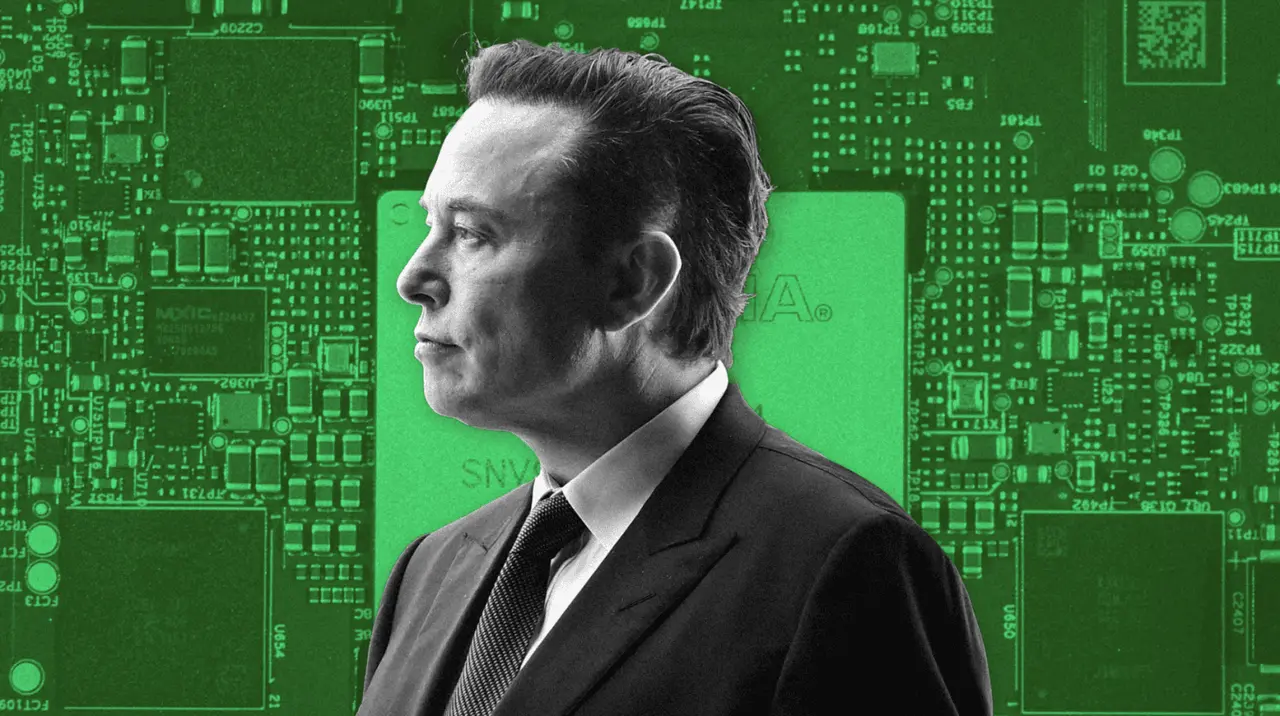
Source: TweakTown
The original Dojo supercomputer project was abruptly terminated last year following the departure of Dojo lead Peter Bannon
1
. Around 20 Dojo workers left to join DensityAI, a new AI infrastructure startup founded by former Dojo head Ganesh Venkataramanan and ex-Tesla employees Bill Chang and Ben Floering1
. At the time, Bloomberg reported Tesla planned to increase its reliance on Nvidia and partners like AMD for AI compute and Samsung for chip manufacturing1
.Space-Based AI Compute Becomes New Focus
Unlike its predecessors, Dojo3 won't focus on training driverless-vehicle technology on Earth. Instead, Musk says it will be dedicated to space-based AI compute
1
. "AI7/Dojo3 will be for space-based AI compute," Musk stated on X, positioning the resurrected project as more of a moonshot1
. This pivot reflects broader industry discussions about moving data centers off-planet, as Earth's power grids face mounting strain from AI infrastructure demands1
.Musk and several other AI executives have argued that the future of data centers may lie in orbit, where compute satellites could operate in constant sunlight and harvest solar power 24/7
1
. Axios reported that OpenAI CEO Sam Altman also supports the concept of orbital data centers, though Musk has a distinct advantage: he already controls the launch vehicles through SpaceX1
. According to Axios, Musk plans to use SpaceX's upcoming IPO to help finance his vision of using Starship to launch a constellation of compute infrastructure1
.In-House AI Chip Program Gains Momentum
Dojo3 will be the first Tesla-built supercomputer to feature purely in-house hardware, with no help from Nvidia
2
. Previous iterations like Dojo2 used a mixture of in-house chips and Nvidia AI GPUs2
. Tesla's AI5 chip, manufactured by TSMC, was designed to power the automaker's automated driving features and Optimus humanoid robots1
.
Source: Interesting Engineering
The AI5 reportedly delivers Hopper-class performance on a single chip and Blackwell-class performance with two chips working together using "much less power"
2
. Last summer, Tesla signed a $16.5 billion deal with Samsung to build its AI6 chips, which promise to power Tesla vehicles and enable high-performance AI training in data centers1
. The AI6 chips will be produced in the company's Texas factory4
.
Source: TechSpot
Related Stories


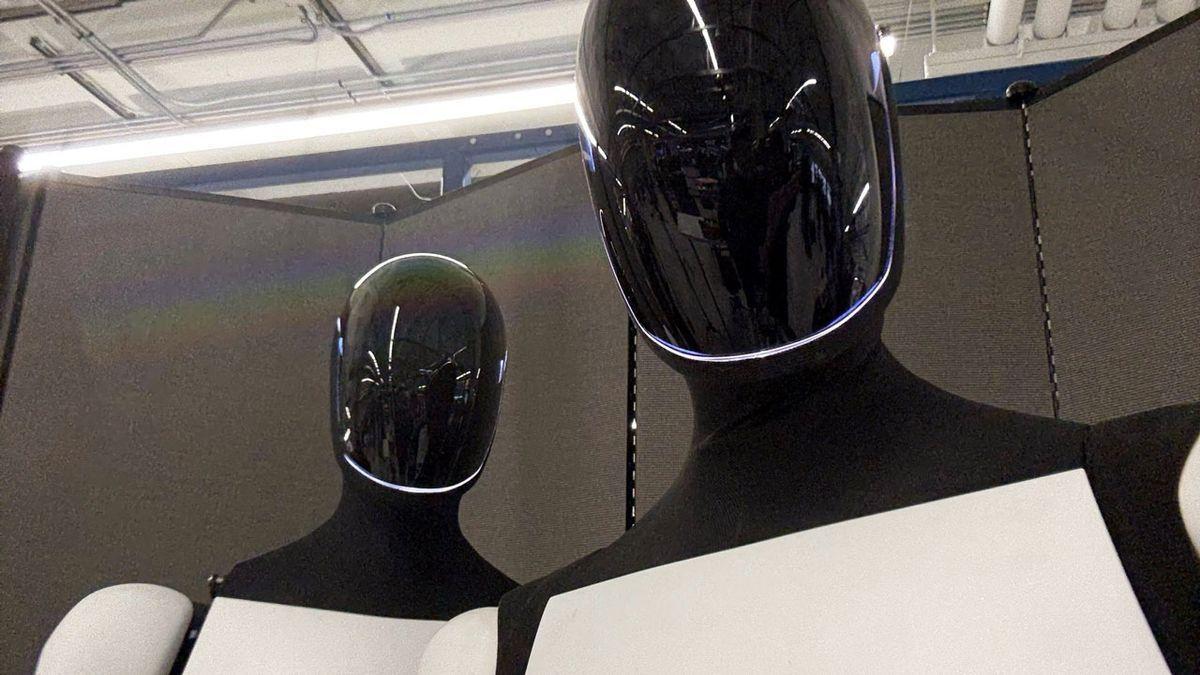
Tesla Rebuilds Team and Faces Technical Hurdles
To achieve its space-based ambitions, Tesla is now rebuilding the team it dismantled months ago. Musk used his X post to recruit engineers directly, writing: "If you're interested in working on what will be the highest volume chips in the world, send a note to [email protected] with 3 bullet points on the toughest technical problems you've solved"
1
5
.The timing coincides with intensifying competition in autonomous driving. At CES 2026, Nvidia unveiled Alpamayo, an open source AI model for autonomous driving that directly challenges Tesla's Full Self-Driving software
1
. Musk commented that solving the long tail of rare edge cases in driving is "super hard," adding: "I honestly hope they succeed"1
.Significant technical obstacles remain for space-based AI infrastructure. Cooling high-power compute in a vacuum presents a major engineering challenge
1
. Latency, repairability, and radiation shielding add further complexity5
. Whether Dojo3 succeeds where its predecessors failed remains uncertain—Dojo 1 struggled to compete with Nvidia despite ambitious goals, while Dojo 2 was cancelled mid-development2
.References
Summarized by

Navi
[1]
Related Stories
Recent Highlights
1
OpenAI Releases GPT-5.4, New AI Model Built for Agents and Professional Work
Technology
2
Anthropic sues Pentagon over supply chain risk label after refusing autonomous weapons use
Policy and Regulation

3
OpenAI secures $110 billion funding round as questions swirl around AI bubble and profitability
Business and Economy

Recent Highlights
Today's Top Stories






Your Daily Dose of Curated AI News
Don’t drown in AI news. We cut through the noise - filtering, ranking and summarizing the most important AI news, breakthroughs and research daily. Spend less time searching for the latest in AI and get straight to action.

