Trump's Executive Order Targets State AI Laws, Sparking Bipartisan Pushback and Legal Uncertainty


73 Sources
73 Sources
[1]
Trump tries to block state AI laws himself after Congress decided not to
President Trump issued an executive order yesterday attempting to thwart state AI laws, saying that federal agencies must fight state laws because Congress hasn't yet implemented a national AI standard. Trump's executive order tells the Justice Department, Commerce Department, Federal Communications Commission, Federal Trade Commission, and other federal agencies to take a variety of actions. "My Administration must act with the Congress to ensure that there is a minimally burdensome national standard -- not 50 discordant State ones. The resulting framework must forbid State laws that conflict with the policy set forth in this order... Until such a national standard exists, however, it is imperative that my Administration takes action to check the most onerous and excessive laws emerging from the States that threaten to stymie innovation," Trump's order said. The order claims that state laws, such as one passed in Colorado, "are increasingly responsible for requiring entities to embed ideological bias within models." Congressional Republicans recently decided not to include a Trump-backed plan to block state AI laws in the National Defense Authorization Act (NDAA), although it could be included in other legislation. Sen. Ted Cruz (R-Texas) has also failed to get congressional backing for legislation that would punish states with AI laws. "After months of failed lobbying and two defeats in Congress, Big Tech has finally received the return on its ample investment in Donald Trump," US Sen. Ed Markey (D-Mass.) said yesterday. "With this executive order, Trump is delivering exactly what his billionaire benefactors demanded -- all at the expense of our kids, our communities, our workers, and our planet." Markey said that "a broad, bipartisan coalition in Congress has rejected the AI moratorium again and again." Sen. Maria Cantwell (D-Wash.) said the "executive order's overly broad preemption threatens states with lawsuits and funding cuts for protecting their residents from AI-powered frauds, scams, and deepfakes." Trump orders Bondi to sue states Sen. Brian Schatz (D-Hawaii) said that "preventing states from enacting common-sense regulation that protects people from the very real harms of AI is absurd and dangerous. Congress has a responsibility to get this technology right -- and quickly -- but states must be allowed to act in the public interest in the meantime. I'll be working with my colleagues to introduce a full repeal of this order in the coming days." The Trump order includes a variation on Cruz's proposal to prevent states with AI laws from accessing broadband grant funds. The executive order also includes a plan that Trump recently floated to have the federal government file lawsuits against states with AI laws. Within 30 days of yesterday's order, US Attorney General Pam Bondi is required to create an AI Litigation Task Force "whose sole responsibility shall be to challenge State AI laws inconsistent with the policy set forth in section 2 of this order, including on grounds that such laws unconstitutionally regulate interstate commerce, are preempted by existing Federal regulations, or are otherwise unlawful in the Attorney General's judgment." Americans for Responsible Innovation, a group that lobbies for regulation of AI, said the Trump order "relies on a flimsy and overly broad interpretation of the Constitution's Interstate Commerce Clause cooked up by venture capitalists over the last six months." Section 2 of Trump's order is written vaguely to give the administration leeway to challenge many types of AI laws. "It is the policy of the United States to sustain and enhance the United States' global AI dominance through a minimally burdensome national policy framework for AI," the section says. Colorado law irks Trump The executive order specifically names a Colorado law that requires AI developers to protect consumers against "algorithmic discrimination." It defines this type of discrimination as "any condition in which the use of an artificial intelligence system results in an unlawful differential treatment or impact that disfavors an individual or group of individuals on the basis" of age, race, sex, and other protected characteristics. The Colorado law compels developers of "high-risk systems" to make various disclosures, implement a risk management policy and program, give consumers the right to "correct any incorrect personal data that a high-risk system processed in making a consequential decision," and let consumers appeal any "adverse consequential decision concerning the consumer arising from the deployment of a high-risk system." Trump's order alleges that the Colorado law "may even force AI models to produce false results in order to avoid a 'differential treatment or impact' on protected groups." Trump's order also says that "state laws sometimes impermissibly regulate beyond State borders, impinging on interstate commerce." Trump ordered the Commerce Department to evaluate existing state AI laws and identify "onerous" ones that conflict with the policy. "That evaluation of State AI laws shall, at a minimum, identify laws that require AI models to alter their truthful outputs, or that may compel AI developers or deployers to disclose or report information in a manner that would violate the First Amendment or any other provision of the Constitution," the order said. States would be declared ineligible for broadband funds Under the order, states with AI laws that get flagged by the Trump administration will be deemed ineligible for "non-deployment funds" from the US government's $42 billion Broadband Equity, Access, and Deployment (BEAD) program. The amount of non-deployment funds will be sizable because it appears that only about half of the $42 billion allocated by Congress will be used by the Trump administration to help states subsidize broadband deployment. States with AI laws would not be blocked from receiving the deployment subsidies, but would be ineligible for the non-deployment funds that could be used for other broadband-related purposes. Beyond broadband, Trump's order tells other federal agencies to "assess their discretionary grant programs" and consider withholding funds from states with AI laws. Other agencies are being ordered to use whatever authority they have to preempt state laws. The order requires Federal Communications Commission Chairman Brendan Carr to "initiate a proceeding to determine whether to adopt a Federal reporting and disclosure standard for AI models that preempts conflicting State laws." It also requires FTC Chairman Andrew Ferguson to issue a policy statement detailing "circumstances under which State laws that require alterations to the truthful outputs of AI models are preempted by the Federal Trade Commission Act's prohibition on engaging in deceptive acts or practices affecting commerce." Finally, Trump's order requires administration officials to "prepare a legislative recommendation establishing a uniform Federal policy framework for AI that preempts State AI laws that conflict with the policy set forth in this order." The proposed ban would apply to most types of state AI laws, with exceptions for rules relating to "child safety protections; AI compute and data center infrastructure, other than generally applicable permitting reforms; [and] state government procurement and use of AI." It would be up to Congress to decide whether to pass the proposed legislation. But the various other components of the executive order could dissuade states from implementing AI laws even if Congress takes no action.
[2]
Trump's AI executive order promises 'one rulebook.' Startups may get legal limbo instead. | TechCrunch
President Donald Trump signed an executive order Thursday evening that directs federal agencies to take aim at state AI laws, arguing startups need relief from a "patchwork" of rules. But legal experts and startups say the order could prolong uncertainty, sparking court battles that leave young companies navigating shifting state requirements while waiting to see if Congress can agree on a single national framework. The order, titled "Ensuring a National Policy Framework for Artificial Intelligence," directs the Department of Justice to set up a task force within 30 days to challenge certain state laws on the grounds that AI is interstate commerce and should be regulated federally. It gives the Commerce Department 90 days to compile a list of "onerous" state AI laws, an assessment that could affect states' eligibility for federal funds, including broadband grants. It also asks the Federal Trade Commission and Federal Communications Commission to explore federal standards that could preempt state rules and instructs the administration to work with Congress on a uniform AI law. The order lands amid a broader push to rein in state-by-state AI rules after efforts in Congress to pause state regulation stalled. Lawmakers in both parties have argued that without a federal standard, blocking states from acting could leave consumers exposed and companies largely unchecked. "This David Sacks-led executive order is a gift for Silicon Valley oligarchs who are using their influence in Washington to shield themselves and their companies from accountability," said Michael Kleinman, Head of U.S. Policy at the Future of Life Institute, which focuses on reducing extreme risks from transformative technologies, in a statement. Sacks, Trump's AI and crypto policy czar, has been a leading voice behind the administration's AI preemption push. Even supporters of a national framework concede the order doesn't create one. With state laws still enforceable unless courts block them or states pause enforcement, startups could face an extended transition period. Sean Fitzpatrick, CEO of LexisNexis North America, U.K., and Ireland, tells TechCrunch that states will defend their consumer protection authority in court, with cases likely escalating to the Supreme Court. While supporters argue the order could reduce certainty by centralizing the fight over AI regulation in Washington, critics say the legal battles will create immediate headwinds for startups navigating conflicting state and federal demands. "Because startups are prioritizing innovation, they typically do not have...robust regulatory governance programs until they reach a scale that requires a program," Hart Brown, principal author of Oklahoma Gov. Kevin Stitt's Task Force on AI and Emerging Technology recommendations, told TechCrunch. "These programs can be expensive and time-consuming to meet a very dynamic regulatory environment." Arul Nigam, co-founder at Circuit Breaker Labs, a startup that performs red-teaming for conversational and mental health AI chatbots, echoed those concerns. "There's uncertainty in terms of do [AI companion and chatbot companies] have to self-regulate?" Nigam told TechCrunch, noting the patchwork of state AI laws does hurt smaller startups in his field. "Are there open-source standards they should adhere to? Should they continue building?" He added that he is hopeful that Congress could move more quickly now to pass a better federal framework. Andrew Gamino-Cheong, CTO and co-founder of AI governance company Trustible, told TechCrunch the EO will backfire on AI innovation and pro-AI goals: "Big Tech and the big AI startups have the funds to hire lawyers to help them figure out what to do, or they can simply hedge their bets. The uncertainty does hurt startups the most, especially those that can't get billions of funding almost at will," he said. He added that legal ambiguity makes it harder to sell to risk-sensitive customers like legal teams, financial firms, and healthcare organizations, increasing sales cycles, system work, and insurance costs. "Even the perception that AI is unregulated will reduce trust in AI," which is already low and threatens adoption, Gamino-Cheong said. Gary Kibel, a partner at Davis + Gilbert, said businesses would welcome a single national standard, but "an executive order is not necessarily the right vehicle to override laws that states have duly enacted." He warned that the current uncertainty leaves open two extremes: highly restrictive rules or no action at all, either creating a "wild west" that favors big tech's ability to absorb risk and wait things out. Morgan Reed, president of The App Association, meanwhile, urged Congress to quickly enact a "comprehensive, targeted, and risk-based national AI framework. We can't have a patchwork of state AI laws, and a lengthy court fight over the constitutionality of an Executive Order isn't any better."
[3]
Trump Signs Executive Order That Threatens to Punish States for Passing AI Laws
President Donald Trump signed a highly anticipated executive order on Thursday that sets in motion a plan to establish a national regulatory framework for artificial intelligence while undercutting states' abilities to enact their own rules. The order, titled "Ensuring a National Policy Framework for Artificial Intelligence," creates an AI litigation task force within the Justice Department to directly challenge state AI laws the administration finds to conflict with federal policy. It also directs the Department of Commerce to craft guidelines that could make states ineligible for future broadband funding if they pass "onerous" AI laws. The push for sweeping federal preemption of state AI laws has largely been fueled by AI investors, conservative policy shops, and tech industry trade groups. These groups have argued that a patchwork approach to AI regulation could stunt Silicon Valley's AI boom, and reduce America's competitiveness on the global stage. White House AI and crypto adviser David Sacks has been one of the most vocal proponents of a light-touch approach to AI regulation. "The EO gives your administration tools to push back on the most onerous and excessive state regulations," Sacks told Trump during Thursday's signing ceremony. "We're not going to push back on all of them. For example, kids safety, we're going to protect." The order is similar in many respects to an earlier draft obtained by WIRED, but with a few key differences. The executive order instructs Sacks and the assistant to the President for science and technology, Michael Kratsios, to prepare a legislative recommendation establishing a federal policy framework for AI. One of the new additions is a carveout within this legislative recommendation, asking Congress not to preempt state AI laws that aim to protect children, promote data center infrastructure, and encourage state governments to procure AI tools. "We want one central source of approval, and we have great Republican support. I think we probably have Democrat support too, because it's common sense," Trump said during Thursday's signing ceremony. "Every time you make a change, and it could be a very reasonable change, you still won't get it approved if you have to go to 50 states. This centralizes it." In the absence of federal regulations, officials from states across the country have pushed through their own investigations and legislation to govern the use and development of AI. Trump's executive order specifically calls out certain state AI laws -- such as Colorado's SB24-205, which aims to limit "algorithmic discrimination" in AI models -- as an attempt to "embed ideological bias." Several other state AI laws may also fall in the crosshairs of this executive order. California governor Gavin Newsom signed a law in September requiring large tech companies to publish safety frameworks around their AI models. In June, New York's legislature passed a bill that would empower the state's attorney general to bring civil penalties of up to $30 million against AI developers that fail to meet safety standards. That bill is currently sitting on New York governor Kathy Hochul's desk, awaiting her signature or veto -- though she's reportedly considering amendments that could weaken the bill significantly.
[4]
'ONE RULE': Trump says he'll sign an executive order blocking state AI laws despite bipartisan pushback | TechCrunch
President Donald Trump said on Monday he plans to ink an executive order this week that would limit states from enacting their own regulation of AI technology. "I will be doing a ONE RULE Executive Order this week," Trump posted on social media. "You can't expect a company to get 50 Approvals every time they want to do something." "There must be only One Rulebook if we are going to continue to lead in AI," Trump said. "We are beating ALL COUNTRIES at this point in the race, but that won't last long if we are going to have 50 States, many of them bad actors, involved in RULES and the APPROVAL PROCESS...AI WILL BE DESTROYED IN ITS INFANCY!" Trump's statement comes days after an effort to preempt states from regulating AI was quashed in the Senate, as Congress couldn't agree to insert the deeply unpopular proposal into a must-pass defense budget bill. The fast pace of AI development and the lack of general consumer protections from the federal government has led many states to enact their own rules around the technology. California, for example, has the AI safety and transparency bill SB 53, while Tennessee's ELVIS Act protects musicians and performers from unauthorized AI-generated deepfakes of their voices and likenesses. Silicon Valley figures, including OpenAI President Greg Brockman and VC-turned-White House 'AI czar' David Sacks, have argued that such laws by states would create an unworkable patchwork of laws that would stifle innovation and threaten the U.S.'s lead against China in the race to develop AI technology. Silicon Valley has a mighty lobbying arm that has blocked meaningful technology regulation for years, and proponents of states' regulatory rights say there's no reason to believe state AI laws could "destroy AI progress," as VCs and tech companies claim. Trump's executive order, a draft of which was leaked a couple of weeks ago, would create an "AI Litigation Task Force" to challenge state AI laws in court, direct agencies to evaluate state laws deemed "onerous," and push the Federal Communications Commission and Federal Trade Commission toward national standards that override state rules. The Order would also give Sacks direct influence over AI policy, superseding the usual role of the White House Office of Science and Technology Policy, currently headed by Michael Kratsios. Attempts to block states' power to regulate AI have been deeply unpopular on both sides of Congress. Earlier this year, Senator Ted Cruz (R-TX) introduced a proposal that would place a 10-year moratorium on AI legislation into the federal budget bill, but it was rejected 99-1, in a rare moment of bipartisan agreement that tech companies shouldn't operate without oversight. And when Trump's draft was leaked last month, several Republican politicians spoke out. Rep. Marjorie Taylor Greene (R-GA) posted on X: "States must retain the right to regulate and make laws on AI and anything else for the benefit of their state. Federalism must be preserved." Gov. Ron DeSantis (R-FL) posted late last week: "I oppose stripping Florida of our ability to legislate in the best interest of the people. A ten year AI moratorium bans state regulation of AI, which would prevent FL from enacting important protections for individuals, children and families." DeSantis has also called data centers as drains on power and water resources, as well as potential job killers. "The rise of AI is the most significant economic and cultural shift occurring at the moment; denying the people the ability to channel these technologies in a productive way via self-government constitutes federal government overreach and lets technology companies run wild," he said in a November X post. Late last week, Sen. Marco Rubio (R-FL) warned Trump against the EO, advising him to "leave AI to the states" to preserve federalism and allow local protections. The desire to protect people from potential harms of AI technology is not unfounded. There have been several deaths by suicide following prolonged conversations with AI chatbots, and psychologists have recorded an uptick in cases of a condition they're calling "AI psychosis." A bipartisan coalition of over 35 state attorneys general warned Congress last month that overriding state AI laws could have "disastrous consequences," and more than 200 state lawmakers have issued an open letter opposing federal preemption, citing setbacks to progress on AI safety.
[5]
Trump Signs AI Executive Order Blocking State Regulations
President Donald Trump signed an executive order on Thursday that aims to block state regulations with the goal of creating a national framework for the tech industry to follow. The Ensuring a National Policy Framework for Artificial Intelligence executive order says the tech industry must be "free to innovate without cumbersome regulation" as state regulations are creating a patchwork of laws. The order calls out states like Colorado for demanding AI models account for "ideological bias," which the administration says can lead to "false results" that impact protected groups. The order also says that some state laws regulate beyond state borders, infringing on interstate commerce, which is the domain of the federal government. The order says it shall ensure that "children are protected, censorship is prevented, copyrights are respected, and communities are safeguarded." The executive order says it won't target "lawful state AI laws," which include child safety protections, data center permitting reforms, government procurement and use of AI, with "other topics as shall be determined." Beyond that, the order is slim on exact details of what the administration would ultimately try to enforce in regards to AI. The administration will set up an AI litigation task force within the next 30 days with the goal of challenging state laws. Within the next 90 days, Secretary of Commerce Howard Lutnick must publish a report on existing state laws that go against the executive order or violate the First Amendment, as well as any other parts of the Constitution. The order may also withhold broadband development funding from states. The executive order is a follow-up to a Truth Social post by the president on Monday. The White House didn't immediately respond to a request for comment. Don't miss any of our unbiased tech content and lab-based reviews. Add CNET as a preferred Google source. "On the heels of Congress correctly deciding for the second time not to pass legislation that would ban states from regulating artificial intelligence, the president should recognize that this is a misguided, unpopular, and dangerous policy choice," Travis Hall, director for state engagement at the Center for Democracy & Technology, told CNET in a statement. Hall said the states need to be allowed to safeguard their citizens. "The power to preempt rests firmly with Congress, and no executive order can change that," he said. "State lawmakers have an important role to play in protecting their constituents from AI systems that are untrustworthy or unaccountable. They should remain steadfast in responding to the real and documented harms of these systems." The report of a new executive order comes as states have been attempting to regulate AI, particularly as the technology infiltrates all aspects of technology and society, with Congress and the Executive Branch seeking to push back. Some states have passed laws making it a crime to create sexual images of people without their consent. Others have placed restrictions on insurance companies using AI to approve or deny health care claims. Currently, Congress hasn't passed any legislation regulating AI on a national scale. Last month, 35 states and the District of Columbia urged Congress not to block state laws regarding AI regulation, warning of "disastrous consequences." Congress ultimately chose not to interfere earlier this month. Companies, including Google, Meta, OpenAI and Andreessen Horowitz, have been calling for national AI standards rather than litigating across all 50 states. (Disclosure: Ziff Davis, CNET's parent company, in April filed a lawsuit against OpenAI, alleging it infringed Ziff Davis copyrights in training and operating its AI systems.)
[6]

Trump signs AI executive order pushing to ban state laws
President Donald Trump and Commerce Secretary Howard Lutnick look on as White House artificial intelligence (AI) and crypto czar David Sacks speaks On Thursday evening, with White House AI and crypto czar David Sacks looking over his shoulder, Donald Trump signed an executive order aiming to grab unilateral power over regulating artificial intelligence for the federal government. The order can't by itself unilaterally override state AI laws, but it directs federal agencies to take steps to reduce or eliminate their influence, and discourage states from passing laws that the federal government might challenge, or put crucial funding for other programs at risk.
[7]

Trump Signs Executive Order to Go After 'Burdensome' State AI Laws
UPDATE 12/11: President Trump on Thursday signed an executive order intended to override certain state laws on AI. The EO calls on various department heads to determine which state-level AI laws the administration deems objectionable. Attorney General Pam Bondi, for example, has 30 days to establish an AI Litigation Task Force, which will challenge "burdensome" state AI laws. Within 90 days, Commerce Secretary Howard Lutnick must publish an evaluation of existing state AI laws and identify "onerous laws that conflict with [White House] policy," though he can also identify laws that the Trump administration likes. States with onerous laws may be ineligible to receive funds from the Broadband Equity Access and Deployment (BEAD) Program. Meanwhile, FTC Chairman Andrew Ferguson has 90 days to develop a policy under which a state law would be preempted based on violations of the FTC Act. And FCC Chair Brendan Carr will be required to initiate a proceeding to determine whether to adopt a federal reporting and disclosure standard for AI models that preempts conflicting state laws. All these agencies will be consulting with David Sacks, Trump's Special Advisor for AI and Crypto. The executive order calls out Colorado's AI law banning algorithmic discrimination, which the White House says "may even force AI models to produce false results in order to avoid a 'differential treatment or impact' on protected groups." The EO notes that, ideally, Congress would step in with a national AI law. But "until such a national standard exists, however, it is imperative that my Administration takes action to check the most onerous and excessive laws emerging from the States that threaten to stymie innovation." The White House doesn't want Congress to create a law that preempts state AI laws related to child safety protections; AI compute and data center infrastructure, other than generally applicable permitting reforms; or state government procurement and use of AI. On X, Sen. Ted Cruz (R-TX), who was in the Oval Office when Trump signed the EO, said the president "took an important step today to promote American leadership in AI. We don't want China's values of surveillance and communist control governing AI. We want American values of free speech, individual liberty, and respect for the individual." In a statement, Cody Venzke, senior policy counsel with the ACLU, noted that Congress has twice struck down moratoriums on state-level AI regulation, and argued that Trump's EO "is not just dangerous, it's unconstitutional," particularly as it relates to funding. "The Supreme Court has made clear that the president may not unilaterally and retroactively change the conditions on federal grants to states after the fact," Venzke says. "Each of those grants are an agreement between states and the federal government, and threatening to withhold funds for schools, broadband buildout, nutritional support, and more for unrelated AI policy fights will unnecessarily harm the American people." Original Story 12/8: President Trump is preparing to block US states from regulating AI, claiming that a patchwork of potentially conflicting laws could cripple the technology's development. "There must be only One Rulebook if we are going to continue to lead in AI," Trump wrote in a Truth Social post on Monday. "We are beating ALL COUNTRIES at this point in the race, but that won't last long if we are going to have 50 States, many of them bad actors." In response, the president plans on announcing "a ONE RULE Executive Order this week" that would go after state-level AI laws. "THERE CAN BE NO DOUBT ABOUT THIS! AI WILL BE DESTROYED IN ITS INFANCY!" Trump further warned. "You can't expect a company to get 50 Approvals every time they want to do something. THAT WILL NEVER WORK!" A draft EO seen by Politico suggests the White House would use the Justice Department to go after state laws it doesn't like via an "AI Litigation Task Force." It also says Commerce Secretary Howard Lutnick would be able to withhold federal broadband funds from states whose AI laws the White House doesn't approve of. Those efforts would likely face legal challenges, however. Numerous states, including California and Texas, have introduced or enacted laws aimed at ensuring the safe use of AI. However, the White House has been pressuring Congress to pass federal AI legislation that would preempt state laws. Trump's Big Beautiful Bill, for example, initially included a provision that would have put a 10-year moratorium on state-level AI regulation. It was removed by a 99-1 vote in July. Lawmakers tried again with the pending National Defense Authorization Act (NDAA), but axed that provision, too. So, Trump faces an uphill battle, which is probably why he's going the executive order route. Whatever happens, it's likely a win for technology companies racing to build new data centers and deploy new models, despite concerns about AI's impact on society and the environment.
[8]

What's at stake in Trump's executive order aiming to curb state-level AI regulation
President Donald Trump signed an executive order on Dec. 11, 2025, that aims to supersede state-level artificial intelligence laws that the administration views as a hindrance to innovation in AI. State laws regulating AI are increasing in number, particularly in response to the rise of generative AI systems such as ChatGPT that produce text and images. Thirty-eight states enacted laws in 2025 regulating AI in one way or another. They range from prohibiting stalking via AI-powered robots to barring AI systems that can manipulate people's behavior. The executive order declares that it is the policy of the United States to produce a "minimally burdensome" national framework for AI. The order calls on the U.S. attorney general to create an AI litigation task force to challenge state AI laws that are inconsistent with the policy. It also orders the secretary of commerce to identify "onerous" state AI laws that conflict with the policy and to withhold funding under the Broadband Equity Access and Deployment Program to states with those laws. The executive order exempts state AI laws related to child safety. Executive orders are directives to federal agencies on how to implement existing laws. The AI executive order directs federal departments and agencies to take actions that the administration claims fall under their legal authorities. Big tech companies have lobbied for the federal government to override state AI regulations. The companies have argued that the burden of following multiple state regulations hinders innovation. Proponents of the state laws tend to frame them as attempts to balance public safety with economic benefit. Prominent examples are laws in California, Colorado, Texas and Utah. Here are some of the major state laws regulating AI that could be targeted under the executive order: Algorithmic discrimination Colorado's Consumer Protections for Artificial Intelligence is the first comprehensive state law in the U.S. that aims to regulate AI systems used in employment, housing, credit, education and health care decisions. However, enforcement of the law has been delayed while the state legislature considers its ramifications. The focus of the Colorado AI act is predictive artificial intelligence systems, which make decisions, not newer generative artificial intelligence like ChatGPT, which create content. The Colorado law aims to protect people from algorithmic discrimination. The law requires organizations using these "high-risk systems" to make impact assessments of the technology, notify consumers whether predictive AI will be used in consequential decisions about them, and make public the types of systems they use and how they plan to manage the risks of algorithmic discrimination. A similar Illinois law scheduled to take effect on Jan. 1, 2026, amends the Illinois Human Rights Act to make it a civil rights violation for employers to use AI tools that result in discrimination. On the 'frontier' California's Transparency in Frontier Artificial Intelligence Act specifies guardrails on the development of the most powerful AI models. These models, called foundation or frontier models, are any AI model that is trained on extremely large and varied datasets and that can be adapted to a wide range of tasks without additional training. They include the models underpinning OpenAI's ChatGPT and Google's Gemini AI chatbots. The California law applies only to the world's largest AI models - ones that cost at least US$100 million and require at least 1026 - or 100,000,000,000,000,000,000,000,000 - floating point operations of computing power to train. Floating point operations are arithmetic that allows computers to calculate large numbers. Machine learning models can produce unreliable, unpredictable and unexplainable outcomes. This poses challenges to regulating the technology. Their internal workings are invisible to users and sometimes even their creators, leading them to be called black boxes. The Foundation Model Transparency Index shows that these large models can be quite opaque. The risks from such large AI models include malicious use, malfunctions and systemic risks. These models could potentially pose catastrophic risks to society. For example, someone could use an AI model to create a weapon that results in mass casualties, or instruct one to orchestrate a cyberattack causing billions of dollars in damages. The California law requires developers of frontier AI models to describe how they incorporate national and international standards and industry-consensus best practices. It also requires them to provide a summary of any assessment of catastrophic risk. The law also directs the state's Office of Emergency Services to set up a mechanism for anyone to report a critical safety incident and to confidentially submit summaries of any assessments of the potential for catastrophic risk. Disclosures and liability Texas enacted the Texas Responsible AI Governance Act, which imposes restrictions on the development and deployment of AI systems for purposes such as behavioral manipulation. The safe harbor provisions - protections against liability - in the Texas AI act are meant to provide incentives for businesses to document compliance with responsible AI governance frameworks such as the NIST AI Risk Management Framework. What is novel about the Texas law is that it stipulates the creation of a "sandbox" - an isolated environment where software can be safely tested - for developers to test the behavior of an AI system. The Utah Artificial Intelligence Policy Act imposes disclosure requirements on organizations using generative AI tools with their customers. Such laws ensure that a company using generative AI tools bears the ultimate responsibility for resulting consumer liabilities and harms and cannot shift the blame to the AI. This law is the first in the nation to stipulate consumer protections and require companies to prominently disclose when a consumer is interacting with generative AI system. Other moves States are also taking other legal and political steps to protect their citizens from the potential harms of AI. Florida Republican Gov. Ron DeSantis said he opposes federal efforts to override state AI regulations. He has also proposed a Florida AI bill of rights to address "obvious dangers" of the technology. Meanwhile, the attorneys general of 38 states and the attorneys general of the District of Columbia, Puerto Rico, American Samoa and the U.S. Virgin Islands called on AI companies, including Anthropic, Apple, Google, Meta, Microsoft, OpenAI, Perplexity AI and xAI, to fix sycophantic and delusional outputs from generative AI systems. These are outputs that can lead users to become overly trusting of the AI systems or even delusional. It's not clear what effect the executive order will have, and observers have said it is illegal because only Congress can supersede state laws. The order's final provision directs federal officials to propose legislation to do so.
[9]

Trump gives state AI laws the presidential middle finger
Executive order sidesteps Congress and sets up Litigation Task Force President Trump and his patrons in big tech have long wanted to block states from implementing their own AI regulations. After failing twice to do so in Congress, the US president has issued an executive order that would attempt to punish states that try to restrain the bot business. The executive order, issued Thursday, largely mirrors a draft order leaked last month despite the White House declining to verify the draft's veracity. In short, Trump has empowered Attorney General Pam Bondi to set up an AI Litigation Task Force "whose sole responsibility shall be to challenge state AI laws" that the administration considers inconsistent with its policy "to sustain and enhance the United States' global AI dominance through a minimally burdensome national policy framework for AI." What that policy will look like remains undetermined, with Trump also declaring in the order that he wants his special advisor for AI and crypto, venture capitalist David Sacks, and his science and tech advisor, Michael Kratsios, former chief of staff to Peter Thiel, to propose legislative recommendations for what a federal AI policy framework will look like. The AI industry, which has lobbied hard against state regulation, will be thrilled to have a of couple AI-friendly individuals crafting federal policy recommendations, which is one of the only portions of the EO not given a deadline. Trump wants Bondi's task force to be set up within 30 days to fight state AI laws, and has given administration officials 90 days to accomplish a number of other tasks. The 90-day measures include asking the Commerce Department to compile a list of state laws it wants referred to the AG's task force for litigation, figuring out which states will be restricted from accessing Broadband Equity Access and Deployment (BEAD) funding or discretionary grants due to their AI laws, how to squeeze state AI laws into Federal Trade Commission Act prohibitions on unfair and deceptive acts or practices, and even initiating a proceeding to determine whether the government should adopt a reporting and disclosure standard for AI models in lieu of state-level ones. Actual legislation, on the other hand, can just happen whenever, setting us up for the regulation-free AI hellscape that state attorneys general warned about when Trump's 2025 budget reconciliation bill first came out with its ten-year state AI law moratorium. That moratorium was the first state AI law ban that Congress struck down, with the Senate voting 99-1 to remove it from the bill. The second attempt to squeeze a ban in came in the 2026 National Defense Authorization Act, which also passed without the measure. It's unclear whether Congress will change its mind about banning state AI laws, even if future federal policy proposals claim to reduce regulation. One thing is for sure, though. Yet again, both liberal and conservative experts are unhappy with Trump's move. "The executive order is not just dangerous, it's unconstitutional," American Civil Liberties Union senior policy counsel Cody Venzke said in a statement today. "The Supreme Court has made clear that the president may not unilaterally and retroactively change the conditions on federal grants to states after the fact." In other words, attempts to restrict discretionary grants or BEAD funding to states in the EO could render it null and void if challenged. On the other side of the house, Ryan Hauser, a research fellow at the the Mercatus Center think tank, opined that the US needs some sort of federal AI regulation, but is worried Trump's EO will only stifle innovation through more regulatory uncertainty. "Raising the implementation costs on bad state laws that directly contravene existing federal law is a strategy that has some merit, but the admin will have a weaker argument in the courts without legislation passed by Congress," Hauser said. Hauser also said that the EO's prongs of regulatory, prosecutorial, and budgetary measures are probably only going to piss off state and federal legislators, making it harder to get any "pro-innovation" legislation through Congress. "By not leading on Congressional AI legislation and slow-walking any legislative recommendations, the White House leaves the door open for more restrictive and reactive legislation to gain traction in the House and Senate," Hauser predicted. "In the long run, many of these counter-proposals would undercut America's long-run AI dominance." So here we are with the President taking unilateral action in spite of Congress's overwhelming rejection of stopping state AI laws and offering no actual alternative. Until the EO is blocked by the courts or Congress, or weak, industry-friendly federal legislation replaces state laws, welcome to the AI hellscape. ®
[10]
Trump Says He'll Sign Executive Order Preempting State AI Regulations
Imad is a senior reporter covering Google and internet culture. Hailing from Texas, Imad started his journalism career in 2013 and has amassed bylines with The New York Times, The Washington Post, ESPN, Tom's Guide and Wired, among others. President Donald Trump plans to issue an executive order this week that'll create a single set of rules for AI, forgoing the need for companies to litigate across states, the president posted on Truth Social on Monday. The post didn't detail how the executive order would regulate AI, but the president argued that too onerous regulation would hinder the industry's growth, given increased international competition. "On the heels of Congress correctly deciding for the second time not to pass legislation that would ban states from regulating artificial intelligence, the President should recognize that this is a misguided, unpopular, and dangerous policy choice," Travis Hall, director for state engagement at the Center for Democracy & Technology, told CNET in a statement. Hall said the states need to be allowed to safeguard their citizens. "The power to preempt rests firmly with Congress, and no executive order can change that," he said. "State lawmakers have an important role to play in protecting their constituents from AI systems that are untrustworthy or unaccountable. They should remain steadfast in responding to the real and documented harms of these systems." The report of a new executive order comes as states have been attempting to regulate AI, particularly as the technology infiltrates all aspects of technology and society, with Congress and the Executive Branch seeking to push back. Some states have passed laws making it a crime to create sexual images of people without their consent. Others have placed restrictions on insurance companies using AI to approve or deny health care claims. Currently, Congress hasn't passed any legislation regulating AI on a national scale. Last month, 35 states and the District of Columbia urged Congress not to block state laws regarding AI regulation, warning of "disastrous consequences." Congress ultimately chose not to interfere earlier this month. Companies, including Google, Meta, OpenAI and Andreessen Horowitz have been calling for national AI standards rather than litigating across all 50 states. (Disclosure: Ziff Davis, CNET's parent company, in April filed a lawsuit against OpenAI, alleging it infringed Ziff Davis copyrights in training and operating its AI systems.)
[11]
Trump: US Needs One Set of AI Rules, Not 50, or Else 'AI WILL BE DESTROYED'
President Trump is preparing to block US states from regulating AI, claiming that a patchwork of potentially conflicting laws could cripple the technology's development. "There must be only One Rulebook if we are going to continue to lead in AI," Trump wrote in a Truth Social post on Monday. "We are beating ALL COUNTRIES at this point in the race, but that won't last long if we are going to have 50 States, many of them bad actors." In response, the president plans on announcing "a ONE RULE Executive Order this week" that would go after state-level AI laws. "THERE CAN BE NO DOUBT ABOUT THIS! AI WILL BE DESTROYED IN ITS INFANCY!" Trump further warned. "You can't expect a company to get 50 Approvals every time they want to do something. THAT WILL NEVER WORK!" A draft EO seen by Politico suggests the White House would use the Justice Department to go after state laws it doesn't like via an "AI Litigation Task Force." It also says Commerce Secretary Howard Lutnick would be able to withhold federal broadband funds from states whose AI laws the White House doesn't approve of. Those efforts would likely face legal challenges, however. Numerous states, including California and Texas, have introduced or enacted laws aimed at ensuring the safe use of AI. However, the White House has been pressuring Congress to pass federal AI legislation that would preempt state laws. Trump's Big Beautiful Bill, for example, initially included a provision that would have put a 10-year moratorium on state-level AI regulation. It was removed by a 99-1 vote in July. Lawmakers tried again with the pending National Defense Authorization Act (NDAA), but axed that provision, too. So, Trump faces an uphill battle, which is probably why he's going the executive order route. Whatever happens, it's likely a win for technology companies racing to build new data centers and deploy new models, despite concerns about AI's impact on society and the environment.
[12]

Trump's AI order may be 'illegal,' Democrats and consumer advocacy groups claim
U.S. lawmakers say Rubio told Trump's Ukraine peace plan is Russia's 'wish list' It follows a push by some Republicans in Congress to impose a moratorium on state AI laws. A recent plan to tack on that moratorium to the National Defense Authorization Act was scuttled. Collin McCune, head of government affairs at Andreessen Horowitz, celebrated Trump's order, calling it "an important first step" to boost American competition and innovation. But McCune urged Congress to codify a national AI framework. "States have an important role in addressing harms and protecting people, but they can't provide the long-term clarity or national direction that only Congress can deliver," McCune said in a statement. Sriram Krishnan, a White House AI advisor and former general partner at Andreessen Horowitz, during an interview Friday on CNBC's "Squawk Box," said that Trump is was looking to partner with Congress to pass such legislation. "The White House is now taking a firm stance where we want to push back on 'doomer' laws that exist in a bunch of states around the country," Krishnan said. He also said that the goal of the executive order is to give the White House tools to go after state laws that it believes make America less competitive, such as recently passed legislation in Democratic-led states like California and Colorado. The White House will not use the executive order to target state laws that protect the safety of children, Krishnan said. Robert Weissman, co-president of the consumer advocacy group Public Citizen, called Trump's order "mostly bluster" and said the president "cannot unilaterally preempt state law." "We expect the EO to be challenged in court and defeated," Weissman said in a statement. "In the meantime, states should continue their efforts to protect their residents from the mounting dangers of unregulated AI." Weissman said about the order, "This reward to Big Tech is a disgraceful invitation to reckless behavior by the world's largest corporations and a complete override of the federalist principles that Trump and MAGA claim to venerate." In the short term, the order could affect a handful of states that have already passed legislation targeting AI. The order says that states whose laws are considered onerous could lose federal funding. One Colorado law, set to take effect in June, will require AI developers to protect consumers from reasonably foreseeable risks of algorithmic discrimination. Some say Trump's order will have no real impact on that law or other state regulations. "I'm pretty much ignoring it, because an executive order cannot tell a state what to do," said Colorado state Rep. Brianna Titone, a Democrat who co-sponsored the anti-discrimination law. In California, Gov. Gavin Newsom recently signed a law that, starting in January, will require major AI companies to publicly disclose their safety protocols. That law's author, state Sen. Scott Wiener, said that Trump's stated goal of having the United States dominate the AI sector is undercut by his recent moves. "Of course, he just authorized chip sales to China & Saudi Arabia: the exact opposite of ensuring U.S. dominance," Wiener wrote in an X post on Thursday night. The Bay Area Democrat is seeking to succeed Speaker-emerita Nancy Pelosi in the U.S. House of Representatives.
[13]

Trump orders creation of litigation task force to challenge state AI laws
On Thursday evening, President Donald Trump signed an executive order calling for a single, nationwide regulatory framework governing artificial intelligence at the expense of the ability of different states to regulate the nascent technology. "To win, United States AI companies must be free to innovate without cumbersome regulation," the order states. "But excessive State regulation thwarts this imperative." As was expected after a draft of the order leaked earlier this week, the centerpiece of the document is an "AI Litigation Task Force whose sole responsibility shall be to challenge state AI laws inconsistent" with the president's policy vision. US Attorney General Pam Bondi has 30 days to create the task force, which shall meet regularly with the White House's AI and crypto czar, David Sacks. As laid out in the president's AI Action Plan from July, the administration will also limit states with "onerous" AI laws from accessing federal funding. Specifically, the secretary of commerce will target funding available under the Broadband Equity Access and Deployment (BEAD) Program, a $42.5 billion effort to expand high-speed internet access in rural communities. Advocacy groups were quick to criticize the president's order. "This executive order is designed to chill state-level action to provide oversight and accountability for the developers and deployers of AI systems, while doing nothing to address the real and documented harms these systems create," Alexandra Givens, president and CEO of the Center for Democracy and Technology, said in a statement provided to Engadget. "States that take steps to protect their residents from such harms should not be subject to threats of legal attacks; nor should the administration punish rural Americans by threatening to withhold funding for the broadband services that could connect them to AI in the first place." It's worth noting President Trump's previous attempts to curb the ability of states to regulate AI as they see fit has proven unpopular across the political spectrum. As part of his One Big Beautiful Bill, the president attempted to impose a 10-year moratorium on state-level AI regulation. That clause was eventually removed from the legislation in a decisive 99-1 vote by the Senate.
[14]

Trump signs executive order to block state AI regulations
President Donald Trump signed an executive order Thursday aimed at blocking states from crafting their own regulations for artificial intelligence, saying the burgeoning industry is at risk of being stifled by a patchwork of onerous rules while in a battle with Chinese competitors for supremacy. Members of Congress from both parties, as well as civil liberties and consumer rights groups, have pushed for more regulations on AI, saying there is not enough oversight for the powerful technology. But Trump told reporters in the Oval Office that "there's only going to be one winner" as nations race to dominate artificial intelligence, and China's central government gives its companies a single place to go for government approvals. "We have the big investment coming, but if they had to get 50 different approvals from 50 different states, you can forget it because it's impossible to do," Trump said. The executive order directs the Attorney General to create a new task force to challenge state laws, and directs the Commerce Department to draw up a list of problematic regulations. It also threatens to restrict funding from a broadband deployment program and other grant programs to states with AI laws. David Sacks, a venture capitalist with extensive AI investments who is leading Trump's policies on cryptocurrency and artificial intelligence, said the Trump administration would only push back on "the most onerous examples of state regulation" but would not oppose "kid safety" measures. Four states -- Colorado, California, Utah and Texas -- have passed laws that set some rules for AI across the private sector, according to the International Association of Privacy Professionals. Those laws include limiting the collection of certain personal information and requiring more transparency from companies. The laws are in response to AI that already pervades everyday life. The technology helps make consequential decisions for Americans, including who gets a job interview, an apartment lease, a home loan and even certain medical care. But research has shown that it can make mistakes in those decisions, including by prioritizing a particular gender or race. States' more ambitious AI regulation proposals require private companies to provide transparency and assess the possible risks of discrimination from their AI programs. Beyond those more sweeping rules, many states have regulated parts of AI: barring the use of deepfakes in elections and to create nonconsensual porn, for example, or putting rules in place around the government's own use of AI.
[15]

Sam Altman Got What He Wanted
OpenAI turned 10 yesterday, and President Donald Trump incidentally gave the company a very special birthday gift: a sweeping executive order aiming to dismantle and preempt many state-level regulations of artificial intelligence. "There's only going to be one winner here, and it's probably going to be the U.S. or China," Trump said in a press conference announcing the order. And for the United States to win, "we have to be unified. China is unified." Almost all of the AI industry's biggest players have been pushing for this move. OpenAI has been asking all year for the Trump administration to preempt state-level AI regulations, which the company believes would be burdensome in various ways; Microsoft, Google, Meta, Nvidia, and the major venture-capital firm Andreessen Horowitz have made similar requests. These firms and Trump have the same argument: Having to comply with dozens or hundreds of state regulations would be onerous, slowing the pace of AI development and putting China at an advantage. (OpenAI, which has a business partnership with The Atlantic, did not respond to a request for comment.) Yesterday's executive order instructs a set of federal agencies to identify state AI regulations that could be deemed cumbersome and then take action against those policies, such as through litigation or conditioning federal funding on not enacting or enforcing the policies. The order also takes aim at state laws that "embed ideological bias within models," part of both Trump's and Silicon Valley's siege on equity and antidiscrimination initiatives. Many civil-society groups and elected Democrats have already come out against the order, calling it, for instance, a "terrible idea" that will allow AI firms and products to run amok. Trump's order will surely meet legal resistance from tech-regulation advocates, states, and federal lawmakers, who may argue that it bypasses state laws and usurps congressional authority. Nevertheless, it is a culmination of a trend that has been clear since Trump's inauguration, when the leaders of Google, Meta, Apple, Amazon, and Tesla stood on the dais just behind him. This administration and Silicon Valley are broadly aligned in their technological accelerationism. Read: Billions of people in the palm of Trump's hand There are bountiful examples. The day after Trump was sworn in, he hosted OpenAI CEO Sam Altman at the White House and announced Stargate, a $500 billion AI-infrastructure venture. Elon Musk, of course, spearheaded the White House's early attempts to remake the federal government through the Department of Government Efficiency. Trump has heaped praise on Altman, Nvidia CEO Jensen Huang, Apple CEO Tim Cook, and others. And the Trump administration's AI Action Plan, released this summer, made clear the president's intention to essentially grant the chatbot industry's every wish. There is not perfect harmony between Trump's coalition and Silicon Valley. Throughout the second Trump administration, there have been disagreements over skilled immigration, which many MAGA supporters resist and tech CEOs support. One of OpenAI's major competitors, Anthropic, has vocally opposed attempts to undermine state AI regulations, as have some Senate Republicans. (Dario Amodei, Anthropic's CEO, also likened Trump to a "feudal warlord" in a preelection Facebook post endorsing Kamala Harris.) But these arguments haven't been a real obstacle to the Trump-AI accord. The president has recently said that allowing skilled immigrants to train U.S. workers in high-tech factories "is MAGA," much of the AI industry has labored to prove that its chatbots are not "woke," and major tech firms are among the donors for Trump's White House ballroom. Read: Donald Trump is fairy-godmothering AI Of course, Trump is mercurial, his views influenced by whomever he's happened to meet with most recently. Also this week, the Trump administration lifted export controls banning the sale of one of Nvidia's most advanced AI chips to China. This has been a subject of heated debate among tech executives, even hawkish ones: OpenAI, Anthropic, and other AI firms have argued against selling advanced American AI chips to China, as a way to maintain the nation's technological edge. Nvidia, which stands to profit handsomely from the rule change, has argued that making Chinese firms dependent on American technology is the best way to establish dominance. And as Nvidia caught Trump's ear on this issue over the past several months, Altman has softened his position, saying that export controls may not provide an effective form of leverage over China's AI industry after all. Meanwhile, there is an emerging populist sentiment against AI -- for the threat it poses to some users (through chatbot-associated delusions, for instance, or through AI-generated child porn), as well as for spiking electricity prices due to data-center development. Despite the AI industry's push to build a huge number of data centers, and repeated requests to deregulate that construction, Trump's executive order notably includes a carve-out for state laws regarding "data center infrastructure" -- which means that the federal government "would not force communities to host data centers they don't want," as the White House AI adviser David Sacks explained on X. Many people have started to ask reasonable questions about the circular AI economy, which has yet to produce profits for companies such as OpenAI. Trump, meanwhile, is in his last term, and the MAGA coalition is arguably fracturing. The preemption itself may not even be all that popular among MAGA Republicans, many of whom have previously been highly critical of such a policy. And executive orders are famously impermanent. Perhaps the AI industry's best bet is to secure everything available while it can.
[16]

Trump moves to override state AI regulations with new executive order
Serving tech enthusiasts for over 25 years. TechSpot means tech analysis and advice you can trust. What just happened? President Donald Trump signed an executive order Thursday granting the US attorney general broad authority to challenge state laws regulating artificial intelligence, setting the stage for a confrontation between Washington and state governments over control of the technology. The order directs the Justice Department to overturn any state law deemed inconsistent with what the White House calls the United States' global AI dominance. It also instructs federal regulators to withhold infrastructure funding - including for broadband projects - from states that refuse to rescind such laws. The administration argues that a unified national policy will eliminate what Trump described as a confusing patchwork of state rules that stifle innovation and jeopardize America's lead over China in AI development. Trump said during the signing that federal policy should come from one source. The administration has positioned this order as the next step in a broader effort to expand the artificial intelligence industry by easing regulatory barriers and facilitating infrastructure for computing power. That campaign has included earlier orders to expand access to federal data, accelerate chip production for AI workloads, and smooth export restrictions on advanced processors. The new mandate immediately drew backlash from state governments and advocacy groups. They argue that the president lacks constitutional authority to nullify state measures without congressional action. Legal experts predicted swift court challenges because the order oversteps executive power and circumvents federalism principles. The controversy comes as nearly every US state has advanced some form of AI regulation this year, ranging from consumer protection and transparency mandates to restrictions on deepfake political ads. The order is likely to face court challenges on the grounds that only Congress can override state laws According to the National Conference of State Legislatures, lawmakers in all 50 states and territories introduced AI-related bills in 2025, and 38 adopted about 100 measures collectively. California enacted rules requiring major generative AI developers, such as OpenAI and Google, to conduct safety tests on their largest models and publicly release the results. South Dakota restricted the use of synthetic videos in election advertising, while Utah, Illinois, and Nevada adopted laws requiring chatbot disclosure and protecting mental health data. The White House threatens to invalidate or preempt many of those laws. The order stops short of preempting child-safety statutes specifically, but offers little clarity on how such exemptions would be interpreted, leaving questions about enforcement and jurisdiction. The executive order represents a significant victory for Silicon Valley firms that have fought against what they view as inconsistent and burdensome state restrictions. Venture capitalists and AI startup leaders have argued that compliance costs across 50 separate jurisdictions could cripple innovation. "A 50-state patchwork is a startup killer," Marc Andreessen of Andreessen Horowitz wrote on social media.
[17]

Trump signs order blocking states from enforcing own AI rules
The move marks a win for technology giants who have called for US-wide AI legislation as it could have a major impact on America's goal of leading the fast-developing industry. AI company bosses have argued that state-level regulations could slow innovation and hinder the US in its race against China to dominate the industry, with firms pouring billions of dollars into the technology. The BBC has contacted AI firms OpenAI, Google, Meta, and Anthropic for comment. But the announcement has been met with opposition. The state of California, which is the home to many of the world's biggest technology companies, already has its own AI regulations. "President Trump is attempting to limit the ability of states - red states and blue states alike - to implement common sense protections for our residents," the office of California's Attorney General Rob Bonta said in a statement. Earlier this year, California's Governor Gavin Newsom signed a bill requiring the largest AI developers to lay out plans to limit risks stemming from their AI models. States including Colorado and New York have also passed laws regulating the development of the technology. Newsom has said the law sets a standard that US lawmakers could follow. Other critics of Trump's executive order argue that state laws are necessary in the absence of meaningful guardrails at the federal level. "Stripping states from enacting their own AI safeguards undermines states' basic rights to establish sufficient guardrails to protect their residents," said Julie Scelfo, from advocacy group Mothers Against Media Addiction in a statement.
[18]

Trump Signs Executive Order to Neuter State A.I. Laws
President Trump signed an executive order on Thursday that aims to neuter state laws that place limits on the artificial intelligence industry, a win for tech companies that have lobbied against regulation of the booming technology. Mr. Trump, who has said it is important for America to dominate A.I., has criticized the state laws for generating a confusing patchwork of regulations. He said his order would create one federal regulatory framework that would override the state laws, and added that it was critical to keep the United States ahead of China in a battle for leadership on the technology. "It's got to be one source," Mr. Trump said to reporters in the Oval Office. "You can't go to 50 different sources." The president has increasingly embraced the A.I. industry, signing executive orders to limit regulation, provide access to federal data and make it easier for companies to build infrastructure to power the technology. He has also knocked down barriers to exporting chips that drive A.I., including this week, and publicly praised the companies' leaders. And he has given David Sacks, his A.I. and crypto czar and a Silicon Valley investor, heavy influence over policy decisions. The order on Thursday, which has sparked broad, bipartisan opposition, is likely to be challenged in court by states and consumer groups on the grounds that only Congress has the authority to override state laws, legal experts said. If Mr. Trump succeeds in neutering state laws, he should instead offer a robust national standard on A.I. regulations, said Wes Hodges, the acting director of the Center for Technology and the Human Person at the right-leaning Heritage Foundation. "Doing so before establishing commensurate national protections is a carve-out for Big Tech," Mr. Hodges said. New generative A.I. technology that can imitate human writing and voices and create realistic videos and images has taken off. But the technology can be misused to trick consumers, and chatbots have been documented offering harmful advice to minors, among other issues. States have rushed to fill a void of federal regulation with their own laws on A.I. safety, requiring certain safety measures from companies and putting guardrails around the way the technology can be used. This year, all 50 states and territories introduced A.I. legislation and 38 states adopted about 100 laws, according to the National Conference of State Legislatures. California and Colorado have passed laws that require the biggest A.I. models, including OpenAI's ChatGPT and Google's Gemini, to test for safety and to disclose the results. South Dakota passed a law banning deep fakes, which are realistic A.I.-generated videos, in political advertisements within months of an election. Utah, Illinois and Nevada passed laws related to A.I. chatbots and mental health, requiring disclosures that users are engaging with chatbots and adding restrictions on data collection. States have also passed a growing number of child-safety regulations targeting A.I. chatbots and social media companies that use A.I.-based technologies. "Blocking state laws regulating A.I. is an unacceptable nightmare for parents and anyone who cares about protecting children online," said Sarah Gardner, the chief executive of Heat Initiative, a child safety group. "States have been the only effective line of defense against A.I. harms." A.I. companies have waged a fierce lobbying campaign in Congress and the White House to get rid of the state regulations. Earlier this year, some lawmakers attempted to include a decade-long moratorium on state A.I. laws in the domestic policy bill, but dropped the measure after strong bipartisan opposition. "A 50-state patchwork is a startup killer," Marc Andreessen of the venture capital firm Andreessen Horowitz posted on social media last month.
[19]

Against the Federal Moratorium on State-Level Regulation of AI
Cast your mind back to May of this year: Congress was in the throes of debate over the massive budget bill. Amidst the many seismic provisions, Senator Ted Cruz dropped a ticking time bomb of tech policy: a ten-year moratorium on the ability of states to regulate artificial intelligence. To many, this was catastrophic. The few massive AI companies seem to be swallowing our economy whole: their energy demands are overriding household needs, their data demands are overriding creators’ copyright, and their products are triggering mass unemployment as well as new types of clinical psychoses. In a moment where Congress is seemingly unable to act to pass any meaningful consumer protections or market regulations, why would we hamstring the one entity evidently capable of doing soâ€"the states? States that have already enacted consumer protections and other AI regulations, like California, and those actively debating them, like Massachusetts, were alarmed. Seventeen Republican governors wrote a letter decrying the idea, and it was ultimately killed in a rare vote of bipartisan near-unanimity. The idea is back. Before Thanksgiving, a House Republican leader suggested they might slip it into the annual defense spending bill. Then, a draft document leaked outlining the Trump administration’s intent to enforce the state regulatory ban through executive powers. An outpouring of opposition (including from some Republican state leaders) beat back that notion for a few weeks, but on Monday, Trump posted on social media that the promised Executive Order is indeed coming soon. That would put a growing cohort of states, including California and New York, as well as Republican strongholds like Utah and Texas, in jeopardy. The constellation of motivations behind this proposal is clear: conservative ideology, cash, and China. The intellectual argument in favor of the moratorium is that “freedomâ€-killing state regulation on AI would create a patchwork that would be difficult for AI companies to comply with, which would slow the pace of innovation needed to win an AI arms race with China. AI companies and their investors have been aggressively peddling this narrative for years now, and are increasingly backing it with exorbitant lobbying dollars. It’s a handy argument, useful not only to kill regulatory constraints, but alsoâ€"companies hopeâ€"to win federal bailouts and energy subsidies. Citizens should parse that argument from their own point of view, not Big Tech’s. Preventing states from regulating AI means that those companies get to tell Washington what they want, but your state representatives are powerless to represent your own interests. Which freedom is more important to you: the freedom for a few near-monopolies to profit from AI, or the freedom for you and your neighbors to demand protections from its abuses? There is an element of this that is more partisan than ideological. Vice President J.D. Vance argued that federal pre-emption is needed to prevent “progressive†states from controlling AI’s future. This is an indicator of creeping polarization, where Democrats decry the monopolism, bias, and harms attendant to corporate AI and Republicans reflexively take the opposite side. It doesn’t help that some in the parties also have direct financial interests in the AI supply chain. But this does not need to be a partisan wedge issue: both Democrats and Republicans have strong reasons to support state-level AI legislation. Everyone shares an interest in protecting consumers from harm created by Big Tech companies. In leading the charge to kill Cruz’s initial AI moratorium proposal, Republican Senator Masha Blackburn explained that “This provision could allow Big Tech to continue to exploit kids, creators, and conservativesâ€| we can’t block states from making laws that protect their citizens.†More recently, Florida Governor Ron DeSantis wants to regulate AI in his state. The often-heard complaint that it is hard to comply with a patchwork of state regulations rings hollow. Pretty much every other consumer-facing industry has managed to deal with local regulationâ€"automobiles, children's toys, food, and drugsâ€"and those regulations have been effective consumer protections. The AI industry includes some of the most valuable companies globally and has demonstrated the ability to comply with differing regulations around the world, including the EU’s AI and data privacy regulations, substantially more onerous than those so far adopted by US states. If we can’t leverage state regulatory power to shape the AI industry, to what industry could it possibly apply? The regulatory superpower that states have here is not size and force, but rather speed and locality. We need the “laboratories of democracy†to experiment with different types of regulation that fit the specific needs and interests of their constituents and evolve responsively to the concerns they raise, especially in such a consequential and rapidly changing area such as AI. We should embrace the ability of regulation to be a driverâ€"not a limiterâ€"of innovation. Regulations don’t restrict companies from building better products or making more profit; they help channel that innovation in specific ways that protect the public interest. Drug safety regulations don’t prevent pharma companies from inventing drugs; they force them to invent drugs that are safe and efficacious. States can direct private innovation to serve the public. But, most importantly, regulations are needed to prevent the most dangerous impact of AI today: the concentration of power associated with trillion-dollar AI companies and the power-amplifying technologies they are producing. We outline the specific ways that the use of AI in governance can disrupt existing balances of power, and how to steer those applications towards more equitable balances, in our new book, Rewiring Democracy. In the nearly complete absence of Congressional action on AI over the years, it has swept the world’s attention; it has become clear that states are the only effective policy levers we have against that concentration of power. Instead of impeding states from regulating AI, the federal government should support them to drive AI innovation. If proponents of a moratorium worry that the private sector won’t deliver what they think is needed to compete in the new global economy, then we should engage government to help generate AI innovations that serve the public and solve the problems most important to people. Following the lead of countries like Switzerland, France, and Singapore, the US could invest in developing and deploying AI models designed as public goods: transparent, open, and useful for tasks in public administration and governance. Maybe you don’t trust the federal government to build or operate an AI tool that acts in the public interest? We don’t either. States are a much better place for this innovation to happen because they are closer to the people, they are charged with delivering most government services, they are better aligned with local political sentiments, and they have achieved greater trust. They’re where we can test, iterate, compare, and contrast regulatory approaches that could inform eventual and better federal policy. And, while the costs of training and operating performance AI tools like large language models have declined precipitously, the federal government can play a valuable role here in funding cash-strapped states to lead this kind of innovation.
[20]

How Trump's tech advisers overcame a MAGA rebellion over AI
President Donald Trump signs an executive order on artificial intelligence on Thursday as, from left, senior White House AI policy adviser Sriram Krishnan, Sen. Ted Cruz (R-Texas), Commerce Secretary Howard Lutnick, White House AI and crypto czar David Sacks and Treasury Secretary Scott Bessent join him in the Oval Office. (Demetrius Freeman/The Washington Post) President Donald Trump was flanked by his tech advisers last week as he signed an executive order limiting states' power to regulate artificial intelligence, capping weeks of debate that split his supporters and highlighted the growing influence of his Silicon Valley allies over his agenda. Populist forces within the Republican Party mounted an extensive campaign to derail the action after a draft of the order leaked last month, arguing that fears over AI's potential to automate jobs would undermine the party's messaging to workers. A handful of tech leaders neutralized those fears for now, convincing the president, a longtime real estate developer, that burdensome regulation could cripple the industry. The episode provided new evidence that a broader power struggle over the future of technology is playing out inside the administration, as officials confront high-stakes decisions that touch everything from national security and jobs to online safety for children, according to more than a dozen White House officials and people familiar with the administration's AI policies. Most spoke on the condition of anonymity to detail private conversations. The debate over Trump's AI policies reflect a simmering rift between the populists and technology businessmen who together helped send Trump to the White House for a second time -- discord that was commonplace in the president's first administration but has been largely absent from this one. The order he signed Thursday marked the second major win in a week for Trump's powerful and wealthy tech allies. On Monday, Trump said he would allow industry titan Nvidia to export H200 chips to China in a setback for China hard-liners who warned the move could accelerate the foreign competitor's AI development. The decision also rattled some longtime MAGA loyalists, already uneasy over his plans to expand high-skilled immigration at the urging of tech leaders seeking foreign talent -- a split, with midterms less than a year away, that could strain the unusual coalition that helped deliver Trump the White House in 2024. Some Republicans successfully squashed an effort in Congress this summer to implement a 10-year moratorium on state AI laws, and they were primed for a fight when a draft of the executive order -- intended to avert a patchwork of laws -- leaked. As Trump signaled support for limits on states' abilities to regulate AI, some staff in the White House became frustrated with the approach of Trump's White House AI czar David Sacks and AI adviser Sriram Krishnan, two well-known Silicon Valley investors. Outside groups provided alternative executive orders to staff in key White House offices, sparking confusion among lobbyists and activists, who didn't know which order the White House was actually considering. The draft from Sacks would create a legal task force to challenge state laws that are inconsistent with the Trump administration's goal to sustain global dominance in AI -- sparking fears among some conservatives and AI safety advocates that the administration could challenge state laws intended to protect children online or regulate data centers amid concerns about rising energy bills. The alternative proposals included a more narrowly tailored order to specifically challenge state laws that conservatives fear could lead to "woke AI." Governors, members of Congress and conservative advocacy groups called the White House to raise their concerns. Publicly, Florida Gov. Ron DeSantis (R) and conservative commentator Stephen K. Bannon derided the order in posts on X and in podcasts. "All of this is viewed as a family intervention of people who actually love the president," said one person who opposed the order, who spoke on the condition of anonymity to describe the private conversations. The person said many in the GOP base are struggling with the president's alignment with tech leaders who have given generously to his political operations and White House ballroom project -- noting the contrast from his campaign when he shoveled fries at McDonald's. "It feels like millions of votes across the country just got traded for thousands of [venture capitalist] and tech rich votes in regions Republicans will never win." White House spokesman Kush Desai said Trump was focused on ensuring America delivers "cutting-edge technologies of the future -- without compromising on our national security." "While the president regularly interacts with business and tech leaders toward this end, the only special interest guiding his ultimate decision-making is the best interest of the American people," he said. Overcoming the divide Sacks and Krishnan worked overtime to meet the concerns of GOP leaders, messaging to lobbyists, governors and their staffs that the proposal was not an assault on state's rights. On a recent call with Republican state executives, including Arkansas Gov. Sarah Huckabee Sanders, who had previously criticized efforts in Congress to preempt state AI laws, Sacks said the effort would avoid a confusing patchwork of different state AI laws. He also raised concerns about existing laws in blue states, particularly a law in Colorado that requires developers to protect against algorithmic bias when using AI to make decisions related to hiring, housing and loans. Sacks and Krishnan also met with Mike Davis, a conservative political activist who wrote a Fox News op-ed warning that lawmakers needed to stop "Big Tech's AI amnesty scam" amid the growing effort to create policies that would curb states' ability to craft their own AI laws. Trump spoke by phone with Sen. Marsha Blackburn (R-Tennessee), who pulled her support for the effort to include a 10-year moratorium on state AI laws in Trump's One Big Beautiful Bill. In representing a state with a large music industry, Blackburn has raised concerns about AI systems' impact on musicians and copyrighted music. Additionally, Krishnan fielded feedback from Sen. Maria Cantwell (Washington), the top Democrat on the Senate Commerce Committee. Following the discussions, Sacks released a post on X on Monday intended to address the concerns of this coalition. He emphasized that the order would not override legislators' ability to address the "4 Cs" -- child safety, communities (a reference to data centers), creators and censorship. For weeks, Davis had warned in conservative media appearances that legislators needed to maintain their rights to legislate in these areas. The tech advisers ultimately updated the language of their draft to specify that the administration would advocate for federal AI legislation that would not preempt states' abilities to pass children's safety laws or craft local policies governing data centers. "The administration understands the various concerns stakeholders have about federal preemption, and we believe the EO took these concerns into account," Sacks told The Washington Post. Ultimately, this effort appeared to assuage some of the concerns of the order's initial critics. On Friday, Davis told Bannon on his "War Room" show that the final version was a win for Trump -- not the "tech bros." Other Republicans who had criticized the initial draft were silent. Sanders said in a statement that she "looks forward to working with his administration and other stakeholders to make sure we win the race against China and also protect Americans." A Blackburn spokesperson said in a statement that the senator is leading work on a federal framework that would codify the president's executive order and protect children, creators and conservatives. The order is almost certain to face legal challenges from state attorneys general and consumer advocacy groups, some of whom questioned whether the order represented trying an end run on Congress. "They are pushing for a legally questionable EO because they know their no-guardrails position is so unpopular that they can't win in Congress," said Nathan Calvin, vice president of state affairs and general counsel at Encode, a group that advocates for AI restrictions. Sacks told The Post that the administration would "like to see Congress enact a federal framework, and in the meantime, we're going to push back on the most excessive state laws, which this EO does." A rising influence The order and the chip exports announcement last week highlight the immense influence of Jensen Huang, the Nvidia CEO who first met with Trump in late January, amid rising fears that China was growing more competitive in artificial intelligence following the release of the AI app DeepSeek. Huang, at the helm of a company valued at more than a trillion dollars, had never been in the Oval Office. The meeting was the first of several attended by the tech CEO, Trump, Sacks and Krishnan. Since then, Huang has become a frequent fixture at the White House, regularly talking to Trump about lifting restrictions on exports of Nvidia's chips to China. Huang expressed support for an executive order that would limit a growing patchwork of state AI laws in a meeting last month with Sacks and Krishnan. The meeting was first reported by the Wall Street Journal. Huang is one of the many tech executives with whom Trump has built relationships and consulted in his second term, along with Elon Musk, Jeff Bezos and other CEOs who surrounded him at his January swearing in. (Bezos is the founder of Amazon and owns The Washington Post.) Democratic lawmakers have criticized the coziness and the donations that many have made to Trump's White House ballroom project, warning the administration is handing the tech industry too much influence and the leeway to write its own rule book. National security experts and lawmakers from both parties have criticized Trump's decision to permit the sale of the H200 chips in China -- for which the United States is set to receive 25 percent of sales. A bipartisan groups of lawmakers put forward the GAIN AI Act, which would ensure that U.S. companies get priority to AI chips over companies in China or other countries, and the SAFE Chips Act, which would limit what types of AI chips U.S. companies can sell to China. "There has been strong bipartisan pushback on this issue," said Chris McGuire, a National Security Council official during the Biden administration. "There certainly are many people in the administration, including people in the Cabinet, who are deeply skeptical about the idea of selling our most advanced technologies to China." One former Trump Commerce official, speaking on the condition of anonymity to discuss the administration's policy, said the lack of semiconductor experts among the White House's officials has made it easier for Huang and Nvidia to sway Trump to their view on chip exports. "There is no chip expert in the White House. That's why we're in the trouble we're in," the person said. The person said Trump appears to be making these decisions outside of the usual bureaucratic interagency process for export controls. "This was just a conversation with the president, and they just did it." When asked this week about the Nvidia decision, Commerce Secretary Howard Lutnick told CNBC that the decision was a deal between Huang and Trump. "So it's the great American technologist talking to the great businessman president, and they reached what they thought was the right answer for this particular moment," Lutnick said. Will Oremus contributed to this report.
[21]
Trump's AI-Regulation Ban Is a Threat to National Security
The United States should not be lobbied out of protecting its own future. On Monday, Donald Trump announced on Truth Social that he would soon sign an executive order prohibiting states from regulating AI. "You can't expect a company to get 50 Approvals every time they want to do something," the president wrote. "THAT WILL NEVER WORK!" This followed an ultimately unsuccessful attempt to slip sweeping preemption language into the National Defense Authorization Act, which would have nullified existing state laws regulating the sector. Proponents of AI preemption equate competitiveness with deregulation, arguing that state-level guardrails hamper innovation and weaken the United States in its technological competition with China. The reality is the opposite. Today's most serious national-security vulnerabilities involving AI stem not from too much oversight, but from the absence of it. AI systems already underpin essential functions across our economy and national-security apparatus, including airport routing, energy-grid forecasting, fraud-detection systems, real-time battlefield data integration, and an expanding range of defense-industrial-base operations. These systems create extraordinary operational advantages, but they also present concentrated, high-impact failure points. Every one of these points is an attractive target. Adversaries know that when crucial infrastructure depends on opaque, unregulated algorithms, a single manipulated output can shut down power in an entire region, destabilize financial markets, or degrade military readiness in ways that are extremely difficult to detect in real time. The Pentagon has repeatedly warned that state-of-the-art models remain acutely vulnerable to manipulation through tactics such as data poisoning, when hostile actors corrupt the information used to train a system, or adversarial prompting, where carefully crafted inputs bypass safeguards and force models into dangerous behavior. According to U.S. intelligence reporting, China, Russia, Iran, and North Korea are investing heavily in model theft, insider recruitment, and targeted penetration of AI-development pipelines precisely because the United States has left this terrain largely undefended. The same actors are already conducting AI-enabled disinformation and cognitive-warfare campaigns designed to distort elections, fracture alliances, and erode civic trust. In 2024 alone, foreign adversaries pushed more than 160 distinct false narratives to Americans across websites and social-media platforms, many reinforced with convincing synthetic video and audio. These campaigns thrive on gaps created by inconsistent testing and the absence of enforceable security standards. Matteo Wong: Chatbots are becoming really, really good criminals The threat is now moving from influence operations into active cyber conflict. In just the past several weeks, Google disclosed that hackers had used AI-powered malware in an active cyberattack, and Anthropic reported that its models had been used by Chinese state-backed actors to orchestrate a large-scale espionage operation with minimal human intervention. The greatest challenges facing the United States do not come from overregulation but from deploying ever more powerful AI systems without minimum requirements for safety and transparency. Yet instead of confronting these harms, major technology companies are spending unprecedented sums on a coordinated lobbying campaign to avoid or overturn the very safeguards that would prevent foreseeable harms. Their strategy is straightforward: secure broad federal preemption that immobilizes the states, then delay and weaken meaningful regulation at the federal level. This is a tragically myopic approach. Contrary to the narrative promoted by a small number of dominant firms, regulation does not have to slow innovation. Clear rules would foster growth by hardening systems against attack, reducing misuse, and ensuring that the models integrated into defense systems and public-facing platforms are robust and secure before deployment at scale. Critics of oversight are correct that a patchwork of poorly designed laws can impede that mission. But they miss two essential points. First, competitive AI policy cannot be cordoned off from the broader systems that shape U.S. stability and resilience. The sorts of issues that state legislators are trying to tackle -- scams, deepfake impersonation of public officials and candidates, AI-driven cyberattacks, whistleblower protections -- are not "social issues" separate from national defense; they are integral components of it. Weaknesses in any of these areas create soft targets that foreign actors can use to disrupt essential services and destabilize institutions. These pressures accumulate over time, degrading the shared national identity and operational readiness that underpin American power. Treating these domains as disconnected from a national-security-oriented AI strategy reflects a fundamental misunderstanding of how modern competition works. Matteo Wong: Donald Trump is fairy-godmothering AI Second, states remain the country's most effective laboratories for developing and refining policy on complex, fast-moving technologies, especially in the persistent vacuum of federal action. Congress has held scores of hearings, launched a task force, and introduced more than a hundred AI-related bills, yet has failed to pass anything approaching a comprehensive framework. In the meantime, states are filling the void: testing approaches, debating policies, and producing real-world evidence far more quickly than Congress can. This iterative, decentralized process is exactly how the United States has historically advanced both innovation and security. Companies can choose to collaborate constructively -- or, if they prefer, decide not to operate in a given state. That tension is productive. What is not productive is a top-down preemption regime written to freeze state experimentation before any federal standards exist. Federal preemption without federal action is not strategy; it is self-inflicted paralysis. The solution to AI's risks is not to dismantle oversight but to design the right oversight. American leadership in artificial intelligence will not be secured by weakening the few guardrails that exist. It will be secured the same way we have protected every crucial technology touching the safety, stability, and credibility of the nation: with serious rules built to withstand real adversaries operating in the real world. The United States should not be lobbied out of protecting its own future.
[22]

Trump is trying to preempt state AI laws via an executive order. It may not be legal
President Trump, center, and Secretary of Commerce Howard Lutnick, right, listen as U.S. Sen Ted Cruz, R-Tex. speaks during a signing ceremony for an executive order on AI at the White House on Dec. 11, 2025. Alex Wroblewski/AFP via Getty Images hide caption The Trump administration is seeking to challenge state laws regulating the artificial intelligence industry, according to an executive order the president signed on Thursday, The order directs the Justice Department to set up an "AI Litigation Task Force" to sue states over their AI-related laws and also directs the the Federal Trade Commission and the Federal Communications Commission to work with the DOJ to follow the White House's AI action plan to circumvent "onerous" state and local regulations. The order also directs Commerce Secretary Howard Lutnick to study whether the department can withhold federal rural broadband funding from states with unfavorable AI laws. "We have to be unified.," said Trump, "China is unified because they have one vote, that's President Xi. He says do it, and that's the end of that." Trump's AI advisor, venture capitalist David Sacks, said the administration will not push back on all state laws, "Kid safety, we're going to protect. We're not pushing back on that, but we're going to push back on the most onerous examples of state regulations" The executive order is almost certain to be challenged in court and tech policy researchers say the Trump administration cannot restrict state regulation in this way without Congress passing a law. The order also directs Sacks to work with Congress to help draft legislation. Trump's executive order drew criticism from some of his supporters, including organizations that are part of a bipartisan effort to pass laws protecting children from AI harms. "This is a huge lost opportunity by the Trump administration to lead the Republican Party into a broadly consultative process," said Michael Toscano, director of the Family First Technology Initiative at the Institute for Family Studies, a conservative think tank. "It doesn't make sense for a populist movement to cut out the people on the most critical issue of our day. But nonetheless, that is what they are vigorously trying to do." "Even if everything is overturned in the executive order, the chilling effect on states' willingness to protect their residents is going to be huge because they're all now going to fear getting attacked directly by the Trump administration," said Adam Billen, vice president of Encode, a nonprofit focused on child safety and threats posed by AI. "That is the point of all of this - it is to create massive legal uncertainty and gray areas and give the companies the chance to do whatever they want." Sacks can recommend some state laws, such as around child safety, to not be challenged if Congress does come up with a national policy for AI. While Congress has stalled on passing AI regulation, dozens of states have passed laws related to AI, which include banning creating nonconsensual nude images using AI technology, mandating government agencies and businesses to disclose AI usage, requiring checks for algorithmic discrimination and protecting whistleblowers. The Trump administration has pushed for less regulation of the AI industry, citing competitive pressure with China. But Trump has also recently allowed chipmaker Nvidia to sell its second-most advanced AI chips to China. Depending on the quantity, said Michael Sobolik, a senior fellow at Hudson Institute who studies U.S.-China competition, the export could end up "diluting what is our most significant advantage in the AI race." Trump and some of his allies have attempted multiple times this year to halt state-level AI regulation. Earlier this month, GOP lawmakers tried and failed to insert AI preemption into the annual defense spending bill. An earlier version of the executive order signed Thursday leaked last month, sparked a round of opposition from across the political spectrum. In July, the Senate dropped an AI moratorium from the reconciliation bill it was debating. While Democrats broadly support more AI regulation, the issue has divided Republicans. A faction of the party, including the president, welcome the support of tech billionaires, though others continue to view them with distrust. Sen. Ted Cruz of Texas, an industry ally, introduced the failed AI moratorium during the reconciliation bill debate and stood next to Trump at a signing ceremony for the order on Thursday. After the effort to slip a similar measure in the defense spending bill failed last week, Sen. Josh Hawley of Missouri posted on X, "This is a terrible provision and should remain OUT." Many Republican governors are also opposed to the move. Earlier in the day, Utah Gov. Spencer Cox posted on X that he preferred an alternative executive order that did not include barring state laws. "States must help protect children and families while America accelerates its leadership in AI," he wrote. "An executive order doesn't/can't preempt state legislative action," posted Florida Gov. Ron DeSantis on X Monday in response to Trump's Truth Social post announcing the upcoming order, "Congress could, theoretically, preempt states through legislation." DeSantis has recently proposed a series of AI-related measures. John Bergmayer, the legal director of the nonprofit advocacy group Public Knowledge, agreed. "They're trying to find a way to bypass Congress with these various theories in the executive order. Legally, I don't think they work very well." In a post on X on Tuesday, Sacks suggested that the federal government can override state AI laws because it has the power to regulate interstate commerce. Bergmayer disagreed, "States are, in fact, allowed to regulate interstate commerce. They do it all the time. And the Supreme Court just recently said it was fine." Bergmayer cited a 2023 Supreme Court decision where the court supported California's power to regulate its pork industry even though the regulations affected farmers in other states.
[23]
Ron DeSantis Proposes AI Bill of Rights as Trump Says He'll Kill State AI Laws
Donald Trump said on Truth Social this morning that he plans to sign an executive order that will preempt any and all state regulations on AI, which was apparently news to Florida Governor Ron DeSantis, who just last week announced a proposal to establish an AI Bill of Rights for Floridians and introduce protections for communities where AI data centers are being built. DeSantis's Bill of Rights would establish several protections that mirror what other states like California have done, including requiring companies to notify a consumer when they are interacting with a chatbot, prohibiting companies from using a person's likeness without consent, and restricting companies from sharing user information with third parties. The bill also hits on some more conservative-aligned concerns, as well, like banning any local government from using "Chinese-created AI tools" like DeepSeek. Two specific industries also get a call-out in DeSantis' proposal: mental health services and insurance providers. The bill of rights would prohibit any licensed therapist or mental health counselor from using AI and bar AI imitations of a licensed professional. It would also limit the ability of insurance companies to use AI for claims, preventing them from relying on AI as the sole determiner in adjusting or denying a claim. In a separate proposal, the Florida governor also introduced potential protections for Floridians who may have a data center as a neighbor. Most notably, the proposal would prohibit utilities from charging residents more on their energy bills to support hyperscale data centers. It'd also restrict taxpayer subsidies flowing to Big Tech firms setting up shop in the Swamp State, give local governments more ability to block unwanted projects, and prevent the construction of data centers on agricultural lands or nature reserves. It also slips in an apparent ban on the construction or operation of data centers by "foreign principals." All of that sounds, frankly, pretty solid! It was good enough to piss off the people at the prominent conservative think tank the American Enterprise Institute, which accused DeSantis of "drifting toward the regulatory reflexes" of blue states, and at the center-right R Street Institute, which accused Florida's governor of "opening the door to let Gavin Newsom and Zohran Mamdani run America’s AI marketplace and decimate our nation’s ability to counter Chinese advances in the rising AI Cold War." DeSantis will also find President Trump on the opposite side of this fight. Trump said he will be introducing "One Rulebook" for AI, which could be read as finally passing a federal framework or (more likely) could mean he will finally give the AI industry what it has been asking for and attempt to prohibit states from passing AI regulations. There are some similarities in this case to Trump's handling of healthcare, which involves constantly threatening to repeal the Affordable Care Act because of its shortcomings, while having nothing waiting in the wings to replace it. Technically, banning states from having their own rules does create a single rulebook, but it just has no rules in it. The AI battle has caused some rifts within the MAGA movement, most notably being one of the areas of disagreement that eventually pushed Marjorie Taylor Greene out. And while it's hard to imagine a fight over state-level regulations would be enough to split the party, there's certainly a start of a tear in the fabric. DeSantis seems like he might be ready to keep pulling where it's threadbare.
[24]

Gavin Newsom pushes back on Trump AI executive order preempting state laws
California governor says order pushes 'grift and corruption' instead of innovation just hours after president's dictum The ink was barely dry on Donald Trump's artificial intelligence executive order when Gavin Newsom came out swinging. Just hours after the order went public Thursday evening, the California governor issued a statement saying the presidential dictum, which seeks to block states from regulating AI of their own accord, advances "grift and corruption" instead of innovation. "President Trump and David Sacks aren't making policy - they're running a con," Newsom said, referencing Trump's AI adviser and crypto "czar". "Every day, they push the limits to see how far they can take it." Trump's executive order is a major victory for tech companies that have campaigned against legislative barriers to developing and deploying their AI products. It also sets up a clash between state governments and the White House over the future of AI regulation. The immediate backlash from groups including child safety organizations, unions and state officials has highlighted the deeply contentious nature of the order and diverse range of interests it affects. Several officials and organizations have already questioned the legality of the executive order, stating that Trump does not have the power to undermine state legislation on AI and denouncing the decree as the result of tech industry lobbying. California, home to some of the world's most prominent AI companies and one of the most active states legislating AI, has been a locus for pushback against the order. "This executive order is deeply misguided, wildly corrupt, and will actually hinder innovation and weaken public trust in the long run," California Democratic representative Sara Jacobs said in a statement. "We will explore all avenues - from the courts to Congress - to reverse this decision." After a draft version of Trump's order leaked in November, state attorney general Rob Bonta said that his office would "take steps to examine the legality or potential illegality of such an executive order", teeing up a precedent-setting duel between California and the White House. In September, Newsom signed a landmark AI law that would compel developers of large, powerful AI models known as "frontier models" to provide transparency reports and promptly report safety incidents or face fines up to $1m. The governor touted the Transparency in Frontier Artificial Intelligence act as an example for how to regulate AI companies nationwide. "Our state's status as a global leader in technology allows us a unique opportunity to provide a blueprint for well-balanced AI policies beyond our borders," Newsom said in an address to the California state senate. "Especially in the absence of a comprehensive federal AI policy framework and national AI safety standards." The September bill and more California legislation could be in Trump's crosshairs. Thursday's executive order calls for an AI litigation taskforce that would review state laws that do not "enhance the United States' global AI dominance" and then pursue legal action or potentially withhold federal broadband funding. The taskforce will also consult with the administration's AI and crypto "czar" to determine which laws to target. Although Trump has framed the executive order as a means of streamlining legislation and removing onerously patchwork regulation, critics have alleged that the government has never provided any comprehensive federal framework for regulating AI to replace state laws. The order follows attempts to include similar AI moratoriums in bills earlier this year, which failed due to bipartisan backlash. Instead, opponents view the order as a gift to major tech companies that have cozied up to the administration over the course of the year. "President Trump's unlawful executive order is nothing more than a brazen effort to upend AI safety and give tech billionaires unchecked power over working people's jobs, rights and freedoms," AFL-CIO president, Liz Shuler, said in a statement. Within hours of Trump signing the order, opposition loudened among lawmakers, labor leaders, children's advocacy groups and civil liberties organizations that decried the policy. Other California Democratic leaders said the executive order was an assault on state rights and the administration should instead focus on federal agencies and academic research to boost innovation. "No place in America knows the promise of artificial intelligence technologies better than California," said Alex Padilla, a senator for California. "But with today's executive order, the Trump administration is attacking state leadership and basic safeguards in one fell swoop." Similarly, Adam Schiff, another California senator, emphasized: "Trump is seeking to preempt state laws that are establishing meaningful safeguards around AI and replace them with ... nothing." Lawmakers from Colorado to Virginia to New York also took issue with the order. Don Beyer, a Virginia congressmember called it a "terrible idea" and said that it would "create a lawless Wild West environment for AI companies". Likewise, Alex Bores, a New York state assemblymember, called the order a "massive windfall" for AI companies, adding that "a handful of AI oligarchs bribed Donald Trump into selling out America's future". Even Steve Bannon, Trump loyalist and former adviser, criticized the policy. In a text message to Axios, Bannon said Sacks had "completely misled the President on preemption". Mike Kubzansky, the CEO of Omidyar Network, a philanthropic tech investment firm that funds AI companies, similarly said "the solution is not to preempt state and local laws" and that ignoring AI's impact on the country "through a blanket moratorium is an abdication of what elected officials owe their constituents". Blowback against the order has also included child protection organizations that have long expressed concerns over the effects of AI on children. The debate over child safety has intensified this year in the wake of multiple lawsuits against AI companies over children who died by suicide after interacting with popular chatbots. "The AI industry's relentless race for engagement already has a body count, and, in issuing this order, the administration has made clear it is content to let it grow," said James Steyer, the CEO of child advocacy group Common Sense Media. "Americans deserve better than tech industry handouts at the expense of their wellbeing." A group of bereaved parents and child advocacy organizations have also spoken out. They have been working to pass legislation to better protect children from harmful social media and AI chatbots and released a national public service announcement on Thursday opposing the AI preemption policy. Separately, Sarah Gardner, the CEO of Heat Initiative, one of the groups in the coalition, called the order "unacceptable". "Parents will not roll over and allow our children to remain lab rats in big tech's deadly AI experiment that puts profits over the safety of our kids," Gardner said. "We need strong protections at the federal and state level, not amnesty for big tech billionaires."
[25]

States defiant in face of Trump's AI executive order
Why it matters: Trump's order is expected to pull states into legal battles and leave the U.S. AI rulebook in flux unless Congress acts. * The order looks to gut state AI laws by launching legal challenges and conditioning federal grants on compliance. What they're saying: Policymakers behind key state AI bills scoffed at the order, and some vowed to bring legal action if the White House moves forward with implementation. * "It's absurd for Trump to think he he can weaponize the DOJ and Commerce to undermine those state rights," said California state Sen. Scott Wiener, who authored a state AI bill, SB 53, that was signed into law this year. * "If the Trump Administration tries to enforce this ridiculous order, we will see them in court." * New York state Assemblymember Alex Bores, who is behind a similar AI bill to SB 53 and is running for Congress, said in a statement that Trump is "throwing the door wide open" for "out-of-control AI development" and Congress needs to put guardrails in place "before it's too late." Republican governors who previously spoke up against the preemption effort are charging ahead with their own AI plans. * Florida Gov. Ron DeSantis has a proposal for an AI Bill of Rights in the works that would establish parental controls, data privacy, consumer protection and restrictions on non-consensual use of a person's name, image and likeness as well as to protect against data center-related harms. * He's previously objected to Congress wanting to block state regulation without coming up with a "coherent regulatory scheme." * Ahead of the executive order's unveiling, Utah Gov. Spencer Cox called for a MAGA-backed alternative that would protect kids and America competitiveness. The alternative proposals were not reflected in the executive order, and ex-Trump adviser Steve Bannon, a major MAGA voice, told Axios that AI czar David Sacks is "completely" misleading the president on preemption. Between the lines: The White House can't preempt state-level regulation -- that's Congress' job -- and the order punts the thorniest issues like kids' safety, censorship, and copyright back to the Hill. * Sen. Maria Cantwell (D-Wash.) said the executive order is "overly broad" and that Congress needs to "get it right and pass a bipartisan national AI framework." * Sen. Marsha Blackburn (R-Tenn.), who fought against congressional efforts for a state AI moratorium and has been vocal about protecting kids and artists online, said that she'll work with the president to draft the federal framework called for in the order. * Sen. Brian Schatz (D-Hawaii), meanwhile, said he plans to introduce legislation to repeal the order. What's next: A lot of litigation.
[26]

Trump signs 'one rule' AI executive order against states
AI is still the Wild West when it comes to government regulation. But 2025 was the year U.S. states started to make an effort. Some states, including California and New York, passed legislation that required some pretty basic things from AI companies -- including transparency, whistleblower protections, and the well-being of teen users in particular. Tech world proponents of unfettered AI innovation have made no secret of wanting to shut down state-based regulation efforts, arguing that such laws would dampen growth and give China an advantage in AI. On Thursday, President Donald Trump signed an executive order that attempts to federalize AI regulation, calling for a "national framework." "To win, United States AI companies must be free to innovate without cumbersome regulation," the order says. "But excessive State regulation thwarts this imperative." States with "onerous AI laws" may be punished through withholding of federal funds that help provide high-speed internet access to rural areas, according to the order. Agencies may condition their state grants on not enacting an AI law that conflicts with the order's policy. The executive order was produced in consultation with David Sacks, a tech venture capitalist and the Trump administration's special advisor for AI and crypto. A New York Times investigation recently revealed how many of Sacks' investments will benefit from his policies. Michael Kleinman, head of US Policy at the the tech research nonprofit Future of Life Institute, called the order a "gift for Silicon Valley oligarchs." "No other industry operates without regulation and oversight, be it drug manufacturers or hair salons; basic safety measures are not just expected, but legally required," Kleinman says. "AI companies, in contrast, operate with impunity. Unregulated AI threatens our children, our communities, our jobs and our future." OpenAI, the maker of ChatGPT, is being sued by multiple families of teens who died by suicide after heavy engagement with the chatbot. The company recently denied responsibility for the death of Adam Raine, a 16-year-old who talked to ChatGPT about his suicidal feelings and killed himself earlier this year. The order states that the national framework should "ensure that children are protected." The same day Trump signed the order, a trio of child safety advocacy groups began airing a PSA highlighting the dangers of AI chatbots for children. The spot ends with an appeal not to stop states from regulating AI. Earlier this year, Trump's One Big Beautiful Bill Act attempted to ban state regulation of AI for 10 years, a provision that Republican Congresswoman Marjorie Taylor Greene, then a Trump ally, fought against. The moratorium was very unpopular amongst registered voters, according to a poll conducted in mid-May. The measure was eventually voted down by the Senate in a stunning display of bipartisanship, 99 votes to 1. Some MAGA supporters, including Trump ally Steve Bannon, continue to oppose industry-led regulation of AI. How popular the executive order will be with that level of opposition remains to be seen -- as is the question of whether it will pass muster if challenged in the courts.
[27]
Opinion | AI regulation is properly a national issue
President Donald Trump holds a pen to sign an AI executive order on Thursday in the Oval Office. (Al Drago/Reuters) An executive order issued late Thursday by President Donald Trump says it is federal policy "to sustain and enhance the United States' global AI dominance through a minimally burdensome national policy framework for AI." That is the correct stance for the federal government to take. It ought to do so with legislation. The order purports to restrict states' ability to regulate AI. It sets up a litigation task force under the attorney general to challenge state laws on AI. It threatens to restrict federal funding to states that pass restrictive AI laws. It directs the FCC and FTC to take actions to assert federal primacy on the issue. These actions might not be legal. AI, like the internet, is under the federal government's jurisdiction because it concerns interstate commerce. But the Constitution gives the power to regulate interstate commerce to Congress, not the president, and past efforts to pass legislation to preempt state regulation of AI have failed. In this summer's tax bill, a provision to preempt state AI regulation was removed at the last minute to ensure passage. In the National Defense Authorization Act, which passed the House with a large majority on Thursday, Republicans again tried and failed to include such language. For the president to now try doing by executive fiat what Congress failed to do with legislation is an affront to the separation of powers, no matter how correct he is as a matter of policy. When new technologies appear, the government should wait and see what problems arise rather than proactively regulate based on fear. Some concerns with AI, such as copyright issues, are the subject of well-developed bodies of law that courts can interpret as cases are brought to them. Other concerns, such as effects on the job market, are too speculative for government to respond with any confidence that it is doing the right thing. A patchwork of state laws creates chaos for a fast-moving industry, making it harder for startups to take on established players. It also allows a single state to create a de facto regulatory regime for the entire country. AI companies aren't going to make separate products for California or Texas. State-level Republicans such as Gov. Ron DeSantis (Florida), Gov. Sarah Huckabee Sanders (Arkansas) and Gov. Spencer Cox (Utah) are among the leaders most strongly in favor of allowing states to regulate AI. The White House appears to have acknowledged some of their concerns. Trump's executive order says the federal government will not interfere with state-level child safety protections, a major concern for social conservatives. The order also says the administration will prepare legislative recommendations to implement the AI policy. That's the right thing to do. It has the added benefits of being constitutional and creating more certainty for businesses as they bring products to market. Bullying state governments on AI policy isn't a good way to create the stable business environment the administration says it wants. Trump's instinct is correct, but the process matters, both for the rule of law and the economy.
[28]

Trump will sign executive order to block states from regulating AI
President Donald Trump walks on the South Lawn of the White House (Aaron Schwartz/CNP/Bloomberg via Getty Images). President Donald Trump said he will sign an executive order this week to bar states from regulating artificial intelligence. "There must be only one rulebook if we are going to continue to lead in AI," the president said in a Monday morning social media post. He added that the U.S.'s lead in developing the technology "won't last long" if there are 50 different sets of AI rules in place. "You can't expect a company to get 50 approvals every time they want to do something," he said. It's not clear whether such an order would kick in immediately or sometime next year. The White House did not immediately respond to a request for comment. White House National Economic Council Director Kevin Hassett said in a CNBC interview Monday that the order would help clarify the regulatory landscape for AI firms. "There are some states that want to regulate these companies within an inch of their lives," Hassett said. "This executive order that he's promised to come out is going to make it clear that there's one set of rules for American companies in the U.S." The order would hand a victory for companies like OpenAI, which has argued that maneuvering through a thicket of differing AI rules is damaging to the sector's competitiveness. As AI usage has proliferated among companies and the public, it has prompted concerns from tech safety advocates about how to adopt a cutting-edge technology capable of streamlining decision-making while also ensuring its used safely. Earlier GOP attempts to pass a moratorium in Congress have twice collapsed this year in the face of opposition from conservatives who usually favor states' rights. In addition, Florida Gov. Ron DeSantis and Arkansas Gov. Sarah Huckabee Sanders have criticized the concept of the federal government overriding states on the matter.
[29]

Trump's New AI Order Sets Up Federal Fight With US States Over Industry Regulation - Decrypt
Agencies were told to review state rules and weigh funding restrictions tied to compliance. President Donald Trump signed an executive order on Thursday directing the Justice Department to challenge state artificial intelligence laws, setting up a direct confrontation with states that had advanced their own rules in the absence of federal legislation. The order creates an AI Litigation Task Force under the Attorney General and instructed the Justice Department to contest state laws on federal preemption grounds and potential conflicts with interstate commerce protections. The order identified Colorado's new "algorithmic discrimination" statute as a key concern and signaled that additional state measures could face scrutiny. "My administration must act with the Congress to ensure that there is a minimally burdensome national standard -- not 50 discordant State ones," Trump wrote in the order. "The resulting framework must forbid State laws that conflict with the policy set forth in this order." In the 2025 legislative session, all 50 states considered AI-related legislation, and 38 states enacted roughly 100 AI measures, according to a report from the bipartisan National Conference of State Legislatures. In November, rumors began to circulate that Trump would issue an executive order to rein in state-backed AI policies. Thursday's executive order stipulates that "State-by-State regulation by definition creates a patchwork of 50 different regulatory regimes that makes compliance more challenging, particularly for start-ups." "To win, United States AI companies must be free to innovate without cumbersome regulation," the order said. "But excessive State regulation thwarts this imperative." The order drew immediate criticism from labor groups, technology policy organizations, and AI researchers, who said the order sidestepped documented risks from AI systems, targeted the states trying to address them, and amounted to a power grab for big tech companies. "President Trump's unlawful executive order is nothing more than a brazen effort to upend AI safety and give tech billionaires unchecked power over working people's jobs, rights, and freedoms," labor union AFL-CIO wrote in a statement. "The EO attempts to intimidate states by threatening their federal funding and infringing on their legal right to enact commonsense protections that elected leaders on both sides of the aisle support." "This executive order is designed to chill state-level action to provide oversight and accountability for the developers and deployers of AI systems, while doing nothing to address the real and documented harms these systems create," Alexandra Reeve Givens, President and CEO of the Center for Democracy and Technology, said in a statement. "Anything that goes wrong, from AI-fueled cybercrime to bioweapons attacks facilitated by AI to teen suicides apparently linked to GenAI will be on his hands, and his reputation," cognitive scientist, AI researcher, and author, Gary Marcus wrote on Substack. "And because he has become so tight with Silicon Valley, he will also be closely tied to any AI-tinged economic debacle that happens on his watch." Despite the criticism, some praised the administration's preemption approach, while others supported it but criticized its execution. "We need federal preemption of most state AI regulation in order to successfully compete with China in the race to lead AI," Director of the Center for Technology and Innovation with the Competitive Enterprise Institute, Jessica Melugin, said in a statement. "The White House gets the basic need for federal AI preemption right, but its failure to shepherd AI legislation through Congress threatens to undo the general progress the administration has made in securing American innovation," Ryan Hauser, Research Fellow with the Mercatus Center at George Mason University, wrote. The executive order followed Trump's July directive barring federal agencies from using systems the administration described as exhibiting "ideological biases."
[30]

Trump signs executive order blocking US states from enforcing AI rules
Members of Congress from both parties, as well as civil liberties and consumer rights groups, have pushed for more regulations on AI, saying there is not enough oversight for the powerful technology. US President Donald Trump signed an executive order aimed at blocking states from crafting their own regulations for artificial intelligence (AI), saying the burgeoning industry is at risk of being stifled by a patchwork of onerous rules while in a battle with Chinese competitors for supremacy. Members of Congress from both parties, as well as civil liberties and consumer rights groups, have pushed for more regulations on AI, saying there is not enough oversight for the powerful technology. But Trump told reporters in the Oval Office on Thursday that "there's only going to be one winner" as nations race to dominate artificial intelligence, and China's central government gives its companies a single place to go for government approvals. "We have the big investment coming, but if they had to get 50 different approvals from 50 different states, you can forget it because it's impossible to do," Trump said. The executive order directs the Attorney General to create a new task force to challenge state laws and directs the Commerce Department to draw up a list of problematic regulations. It also threatens to restrict funding from a broadband deployment program and other grant programs to states with AI laws. David Sacks, a venture capitalist with extensive AI investments who is leading Trump's policies on cryptocurrency and artificial intelligence, said the Trump administration would only push back on "the most onerous examples of state regulation" but would not oppose "kid safety" measures. What states have proposed Four states -- Colorado, California, Utah and Texas -- have passed laws that set some rules for AI across the private sector, according to the International Association of Privacy Professionals. Those laws include limiting the collection of certain personal information and requiring more transparency from companies. The laws are in response to AI that already pervades everyday life. The technology helps make consequential decisions for Americans, including who gets a job interview, an apartment lease, a home loan and even certain medical care. But research has shown that it can make mistakes in those decisions, including by prioritising a particular gender or race. States' more ambitious AI regulation proposals require private companies to provide transparency and assess the possible risks of discrimination from their AI programs. Beyond those more sweeping rules, many states in the country have regulated parts of AI: barring the use of deepfakes in elections and to create nonconsensual porn, for example, or putting rules in place around the government's own use of AI.
[31]

Trump signs executive order to block "excessive" state AI regulations
President Trump signed an executive order Thursday aimed at restricting states from crafting their own regulations for artificial intelligence, saying the burgeoning industry is at risk of being stifled by a patchwork of onerous rules while in a battle with Chinese competitors for supremacy. Members of Congress from both parties, as well as civil liberties and consumer rights groups, have pushed for more regulations on AI, saying there is not enough oversight for the powerful technology. But Mr. Trump told reporters in the Oval Office that "there's only going to be one winner" as nations race to dominate artificial intelligence, and China's central government gives its companies a single place to go for government approvals. "We have the big investment coming, but if they had to get 50 different approvals from 50 different states, you can forget it because it's impossible to do," the president said. The executive order directs Attorney General Pam Bondi to create a new task force to challenge state laws, and directs the Commerce Department to draw up a list of problematic regulations. It also threatens to restrict funding from a broadband deployment program and other grant programs to states with AI laws. David Sacks, a venture capitalist who is leading Mr. Trump's policies on cryptocurrency and artificial intelligence, said Thursday the Trump administration would only push back on "the most onerous examples of state regulation" but would not oppose "kid safety" measures. Four states -- Colorado, California, Utah and Texas -- have passed laws that set some rules for AI across the private sector, according to the International Association of Privacy Professionals. Those laws include limiting the collection of certain personal information and requiring more transparency from companies. The laws are in response to AI that already pervades everyday life. The technology helps make consequential decisions for Americans, including who gets a job interview, an apartment lease, a home loan and even certain medical care. But research has shown that it can make mistakes in those decisions, including by prioritizing a particular gender or race. States' more ambitious AI regulation proposals require private companies to provide transparency and assess the possible risks of discrimination from their AI programs. Beyond those more sweeping rules, many states have regulated parts of AI: barring the use of deepfakes in elections and to create nonconsensual porn, for example, or putting rules in place around the government's own use of AI. Those who support regulations that would prevent states from restricting AI -- including some GOP lawmakers and advocates like Sacks -- argue that forcing tech companies to contend with varied or even contradictory rules would hurt the industry. "At best, we'll end up with 50 different AI models for 50 different states - a regulatory morass worse than Europe," Sacks wrote on X earlier this week. "This will stymie innovation, especially by small startups who can't afford the compliance burden. Meanwhile, China will race ahead." But members of both parties have pushed back. Last month, when congressional Republicans weighed adding restrictions on state AI regulations to a defense bill, Florida Republican Gov. Ron DeSantis called the idea a "subsidy to Big Tech." "The rise of AI is the most significant economic and cultural shift occurring at the moment; denying the people the ability to channel these technologies in a productive way via self-government constitutes federal government overreach and lets technology companies run wild," the governor wrote. Earlier this week, Democratic Sen. Ed Markey of Massachusetts called Mr. Trump's plan to restrict AI regulations via an executive order an "early Christmas present for his CEO billionaire buddies."
[32]

Trump signs executive order seeking to ban states from regulating AI companies
President Donald Trump signaled Monday that he would signing an order this week targeting state AI laws.Andrew Caballero-Reynolds / AFP - Getty Images President Donald Trump signed an executive order Thursday evening that seeks to limit the ability of states to regulate artificial intelligence and prevent the enforcement of existing state laws. AI companies "want to be in the United States, and they want to do it here, and we have big investment coming. But if they had to get 50 different approvals from 50 different states, you could forget it," Trump said at a signing ceremony in the Oval Office, flanked by Sen. Ted Cruz, R-Texas, Commerce Secretary Howard Lutnick and other key White House officials. The order comes on the heels of a failed push to enact similar policy in Congress in late November, which followed a similar unsuccessful attempt in July. House Republicans recently tried to include a provision in the must-pass National Defense Authorization Act asserting that only the federal government could legislate AI; the effort faced backlash and the language was eventually removed. Given halting and slow-moving efforts to regulate AI at the federal level, critics of the executive order view it as an attempt to block all meaningful regulation on AI and put little faith in Congress to replace existing state laws with a nationwide standard. Brad Carson, director of the bipartisan AI advocacy group Americans for Responsible Innovation and a former member of Congress, called the order another attempt to push through unpopular and unwise policy. "Big Tech has failed twice to jam an AI amnesty into legislation," Carson told NBC News on Wednesday, predicting the executive order will soon be blocked in court. Trump indicated in a Truth Social post Monday that he would sign an AI order this week. "There must be only One Rulebook if we are going to continue to lead in AI," Trump wrote. "That won't last long if we are going to have 50 States, many of them bad actors, involved in RULES and the APPROVAL PROCESS." Shortly after Trump's post, White House AI czar and Silicon Valley venture capitalist David Sacks elaborated on the rationale for the executive order in a post on X. Sacks argued that this domain of "interstate commerce" was "the type of economic activity that the Framers of the Constitution intended to reserve for the federal government to regulate." At the Oval Office signing ceremony, Sacks said, "We have 50 states running in 50 different directions. It just doesn't make sense." "We're creating a confusing patchwork of regulation, and what we need is a single federal standard, and that's what the EO says," he added. Mackenzie Arnold, director of U.S. policy at the Institute for Law and AI, said Wednesday that it's crucial to put arguments like Sacks' into context. "By that same logic, states wouldn't be allowed to pass product safety laws -- almost all of which affect companies out of state that sell their goods nationally. But those laws are the classic example of acceptable state legislation," he said. At the signing ceremony, supporters of the order also highlighted its importance for securing America's AI advantage over China. "It's a race, and if China wins the race, whoever wins, the values of that country will affect all of AI," Cruz said. "We don't want China's values of surveillance centralized control by the communist government governing AI." "We want American values of free speech, of individual liberty, of respecting the individual. So this executive order, I believe, is tremendously important," he added. Regulation surrounding AI is quickly emerging as a hot-button political topic. From concerns about pollution, soaring electricity prices and noise from data centers to the potential for AI chatbots to exacerbate teens' mental health struggles, many Americans -- on both sides of the aisle -- are beginning to call for effective AI laws. Many MAGA supporters view the current AI boom as a series of corporations run amuck, with a handful of powerful AI companies and CEOs acting as de-facto oligarchs. On Wednesday's broadcast of his War Room podcast, Steve Bannon said it "doesn't make sense" if "we're having a Sputnik moment and we can't have any controls over the frontier labs." "You have more regulations about launching a nail salon on Capitol Hill than you have on the frontier labs. We have no earthly idea what they're doing," Bannon said. Politicians on the other side of the political spectrum are equally skeptical. Sen. Ed Markey, D-Mass., said in a statement earlier this week that the executive order is "an early Christmas present for his CEO billionaire buddies." Markey called the order "irresponsible, shortsighted, and an assault on states' ability to safeguard their constituents."
[33]

Trump says to sign order blocking AI regulation by states
Washington (United States) (AFP) - President Donald Trump said Monday he will attempt to strip states of the right to regulate the surging AI industry, arguing centralized rulemaking is vital to maintain US dominance. "There must be only One Rulebook if we are going to continue to lead in AI," he posted on his Truth Social platform, announcing an executive order that would seek to prevent state-level regulation. Trump has made a major play to position the United States at the head of the global race to build and control AI tools predicted to transform everything from the way the economy works to military technology. However, the White House is running up against deep skepticism in Congress and within his own MAGA movement, where many voices are wary of the technology's potential economic and social harms. They point to polls that show increasing concern about AI, especially among young people who are nervous about getting or keeping a job. Figures within his own MAGA movement, such as strategy guru Steve Bannon, complain of Trump's closer ties to Big Tech that put the president out of touch with his political base. The announcement that he will sign an executive order centralizing AI regulation comes after Congress has twice refused to vote for allowing the overriding of state-level laws on AI. "We are beating ALL COUNTRIES at this point in the race, but that won't last long if we are going to have 50 States, many of them bad actors, involved in RULES and the APPROVAL PROCESS," Trump wrote in his post. "THERE CAN BE NO DOUBT ABOUT THIS! AI WILL BE DESTROYED IN ITS INFANCY! I will be doing a ONE RULE Executive Order this week." The order is likely to stir more political opposition and legal challenges even if no details are yet known about what it would say. A draft order seen by The Hill last month would have created a task force dedicated to challenging state AI laws and restricted certain broadband funding for states with AI laws deemed overly burdensome. The idea to stop states going their own way has been advanced by Trump's AI and Crypto Czar David Sacks, a Silicon Valley insider, with the support of AI's biggest players, including OpenAI boss Sam Altman and Nvidia CEO Jensen Huang. "State by state AI regulation would drag this industry to a halt, and it would create a national security concern as we need to make sure that United States advances AI technology as quickly as possible," Huang told reporters during a visit to US Congress last week. Industry bosses complain that there are more than 1,000 AI-related bills currently moving through state legislatures. "How do you cope with those varied regulations (and)compete with countries like China, which are moving fast in this technology?" Google CEO Sundar Pichai told "Fox News Sunday."
[34]
Trump signs executive order blocking states from regulating AI
Order, which lacks the force of law, also creates taskforce whose 'sole responsibility' will be challenging states' AI laws Donald Trump signed an executive order on Thursday that seeks to halt any laws limiting artificial intelligence and block states from regulating the rapidly emerging technology. The order also creates a federal taskforce that will have the "sole responsibility" of challenging states' AI laws. At a signing ceremony, the president touted AI companies' enthusiasm for wanting to "invest" in the United States and said that "if they had to get 50 different approvals from 50 different states, you could forget it". Republicans earlier this year failed to pass a similar 10-year moratorium on state laws that regulate AI as part of Trump's One Big Beautiful Bill Act, with the Senate voting 99-1 to remove that ban from the legislation. Trump's order resurrects that effort, which failed after bipartisan pushback and Republican infighting, but as an order that lacks the force of law. The "Ensuring a national policy framework for artificial intelligence" order is a victory for Silicon Valley and AI companies that have lobbied against regulation of their technology, arguing that a hodgepodge of state laws would burden the industry with unnecessary bureaucracy. AI firms and the Trump administration have not presented any comprehensive proposals for regulating AI's social, environmental and political harms, however, leaving in place only federal regulation, lax in comparison with legislation some states have passed or considered. The order includes various mandates aimed at preventing the regulation of AI, including instructing the Department of Justice to create an "AI Litigation Task Force" whose sole responsibility is to challenge state laws. The order also demands a review of existing state laws that could "require AI models to alter their truthful outputs". Likely targets include California, which requires companies to disclose their safety testing for new AI models, and Colorado, which requires employers to conduct risk assessments for algorithmic discrimination in hiring and take precautions against it. Trump's order has received pushback from state leaders across the country and various civil liberties groups. They say this order will lead to more power in the hands of Silicon Valley companies and that, in turn, more vulnerable people and children will be exposed to the harms of chatbots, surveillance and algorithmic control. "Trump's campaign to threaten, harass and punish states that seek to pass commonsense AI regulations is just another chapter in his playbook to hand over control of one of the most transformative technologies of our time to big tech CEOs," said Teri Olle, the vice-president of Economic Security California Action, which co-sponsored AI safety legislation in California this year. "This is not about allowing for American innovation." Trump has framed the need for comprehensive AI regulation as both a necessity for the technology's development and as a means of preventing leftist ideology from infiltrating generative AI - a common conservative grievance among tech leaders such as Elon Musk. "You can't go through 50 states. You have to get one approval. Fifty is a disaster. You'll have one woke state and you'll have to do all woke," Trump said at the US-Saudi Investment Forum last month. "You'll have a couple of wokesters and you don't wanna do that. You wanna get the AI done." Earlier this week, he reiterated that sentiment in a post on Truth Social, saying: "We are beating ALL COUNTRIES at this point in the race, but that won't last long if we are going to have 50 States, many of them bad actors, involved in RULES and the APPROVAL PROCESS. THERE CAN BE NO DOUBT ABOUT THIS! AI WILL BE DESTROYED IN ITS INFANCY!" The Trump administration has repeatedly vowed to make the US possess the most advanced artificial intelligence capabilities in the world, part of an intensifying AI arms race between the US and China. In doing so, the White House has largely ignored concerns from rights groups and researchers over the environmental costs of AI, alarm over the possibility of a financial bubble devastating the economy or AI's potential for damaging mental health or spreading misinformation. "The AI future is not going to be won by hand-wringing about safety," JD Vance said in a February speech at an AI summit. The Trump administration has fostered close ties with tech leaders and appointed industry figures to key roles within the government. The executive order gives an influential role to the special adviser for AI and crypto - a role occupied by billionaire venture capital investor and tech booster David Sacks - who is instructed to consult with the litigation taskforce when deciding which state laws to challenge. Sacha Haworth, executive director of the Tech Oversight Project, called the order "bad policy". "The Trump-Sacks executive order proves that the White House only listens to powerful big tech CEOs who fund ballrooms rather than the everyday people they pretend to serve," Haworth said. "The AI EO will go down as an unmitigated disaster that puts the Trump administration at odds with over two-thirds of Americans, and his AI-skeptic Maga base."
[35]
Trump signs executive order targeting state AI laws
Why it matters: The president and his AI czar David Sacks are moving aggressively in favor of industry to rein in state regulation of the technology. * MAGA populists made a last-minute bid to try to shape the executive order, pitching two draft proposals to the White House this week. * The White House also consulted Republican governors for the executive order, Axios first reported. What they're saying: "There's only going to be one winner here, and that's probably going to be the U.S. or China. And right now, we're winning by a lot," Trump said. * Trump suggested China does not have any regulatory hurdles, but said that "people want to be in the United States and they want to do it here, and we have the big investment coming but if they had to get 50 different approvals from 50 different states, you can forget it because that's not possible to do." * Trump added he thinks this effort has "great Republican support" and "probably" Democratic support, too. Catch up quick: The White House suffered a significant loss when Congress rejected including preemption language in the annual defense policy bill despite intense pressure from Trump, the White House and the tech industry. * It was the second major defeat this year in the administration's bid to reshape the AI policy landscape through Congress: senators stripped a similar provision from the budget bill in a 99-1 vote. * The White House first floated an executive order targeting state AI laws in November after Trump publicly backed a ban. What's next: Expect legal challenges from states -- and Republican infighting. This is breaking news. Check back for updates.
[36]
Trump to ban states from restricting AI
President Donald Trump announced Monday that he plans to sign an executive order permitting only "one rule" for regulating artificial intelligence in the U.S. "There must be only One Rulebook if we are going to continue to lead in AI. We are beating ALL COUNTRIES at this point in the race, but that won't last long if we are going to have 50 States, many of them bad actors, involved in RULES and the APPROVAL PROCESS," Trump wrote in a Truth Social post. Several states, including California and New York, have passed statewide legislation this year regulating various aspects of AI, including transparency, whistleblower protections, and user and teen safety. Trump did not elaborate on which states he considered bad actors in the regulatory process, or what qualified them as bad actors. A version of an executive order that leaked online last week reportedly directed federal agency and cabinet leaders to determine how to punish states with existing AI laws, according to The Verge. Earlier this year, Trump's One Big Beautiful Bill Act attempted to ban state regulation of AI for 10 years, a provision that Republican Congresswoman Marjorie Taylor Green notably rejected. The moratorium was very unpopular amongst registered voters, according to a poll conducted in mid-May. The measure was eventually voted down 99-1 by the Senate. Some MAGA supporters, including Trump ally Steve Bannon, continue to oppose industry-led regulation of AI. Still, proponents of a regulatory ban still want to provide AI companies carte blanche to innovate without having to address state-by-state regulations. David Sacks, a tech venture capitalist and the Trump administration's special advisor for AI and crypto, is reportedly behind the executive order, according to The Verge. It's not clear how Trump's executive order would affect Congressional legislation, like the bipartisan bill sponsored by Republican Sen. Josh Hawley and Democrat Sen. Mark Hawley that would require federal agencies and major U.S. companies to account for AI-related workforce reductions. A report released last week by the tech research nonprofit Future of Life Institute found that only three of eight major AI models got a passing grade on safety.
[37]

Trump pushes back against states regulating AI with executive order - SiliconANGLE
Trump pushes back against states regulating AI with executive order President Donald Trump today signed an executive order that will limit the ability of states to regulate artificial intelligence while attempting to address state AI laws already in place. "To win, United States AI companies must be free to innovate without cumbersome regulation," the order says. "But excessive State regulation thwarts this imperative." In order to achieve AI superiority over China, the White House contends that one federal regulatory framework should replace individual state laws. In terms of compliance, what Trump (pictured) called "a patchwork of 50 different regulatory regimes" will make it difficult for startups. He also believes that giving states the power to regulate AI could create "ideological bias within models" that favor certain groups - what Trump has previously referred to as "woke AI". "My Administration must act with the Congress to ensure that there is a minimally burdensome national standard -- not 50 discordant State ones," the order said. "The resulting framework must forbid State laws that conflict with the policy set forth in this order. That framework should also ensure that children are protected, censorship is prevented, copyrights are respected, and communities are safeguarded." As the order was signed in the Oval Office, Trump was flanked by AI and crypto czar David Sacks and tech investor Chamath Palihapitiya, a former senior executive in the early days of Facebook Inc. They were joined by Republican Senator Ted Cruz and Commerce Secretary Howard Lutnick. "It's a race, and if China wins the race, whoever wins, the values of that country will affect all of AI," Cruz said. "We don't want China's values of surveillance and centralized control by the communist government governing AI. We want American values of free speech, of individual liberty, of respecting the individual. So this executive order, I believe, is tremendously important." Sacks explained that child safety regulations will remain in place, but the order will "push back" on what he called "the most onerous examples of state regulations." The move will be seen as a major win for leading AI firms and investors who have spent months lobbying against tighter regulation. Marc Andreessen, co-founder of the venture capital firm Andreessen Horowitz, has been outspoken against what he calls AI "doomers," arguing that the U.S. must shed regulatory restraints if it hopes to lead the global AI race. Under the order, Attorney General Pam Bondi is instructed to form an "AI Litigation Task Force" within 30 days, whose sole mandate is to contest state-level AI regulations that run counter to the Trump administration's policy framework. States that transgress could find themselves facing funding restrictions. The order will likely be challenged in court by states. According to the National Conference of State Legislatures, all 50 states and U.S. territories introduced AI legislation this year, and 38 states enacted around 100 new laws. "President Trump and Davis Sacks aren't making policy - they're running a con," California Governor Gavin Newsom, a proponent of regulation, said. "And every day, they push the limits to see how far they can take it. California is working on behalf of Americans by building the strongest innovation economy in the nation while implementing commonsense safeguards and leading the way forward."
[38]

Trump Cracks Down on State AI Regulations, Launches National Policy Push | AIM
The order, titled Ensuring a National Policy Framework for Artificial Intelligence, represents the administration's most decisive move yet. United States President Donald Trump, on December 11, signed an executive order aimed at curbing state-level AI regulations and accelerating the creation of a unified federal framework. The order, titled Ensuring a National Policy Framework for Artificial Intelligence, represents the administration's most decisive move yet to preempt what it calls a "patchwork" of state rules that threaten US dominance in AI development. In the order, Trump argues that the US is "in a race with adversaries for supremacy" in AI and that companies must be able to innovate "without cumbersome regulation". He directly criticises emerging state laws that seek to govern algorithmic discrimination, transparency or model outputs. Citing Colorado's recently enacted rules, the president claims such laws "may even force AI models to produce false results in order to avoid a 'differential treatment or impact' on protected groups". The executive order establishes a new AI Litigation Task Force inside the justice department, directing it to challenge state laws the administration views as unconstitutional or obstructive. It also instructs the commerce department to publish, within 90 days, an evaluation identifying state AI laws that are "onerous" or inconsistent with federal policy. Trump's directive further calls on the Federal Communications Commission (FCC) and the Federal Trade Commission (FTC) to explore federal reporting and disclosure standards that could explicitly preempt conflicting state requirements. "It is the policy of the United States to sustain and enhance the United States' global AI dominance through a minimally burdensome national policy framework," the order states. The administration will also send Congress a legislative proposal establishing a federal artificial intelligence framework that overrides state regulations, except in areas like child safety and government procurement. "We remain in the earliest days of this technological revolution," Trump wrote, adding, "It is imperative that we act now to ensure that America wins the AI race." The order comes amid escalating friction between state governments and Washington over how AI should be governed. In recent months, scrutiny from the states has intensified as 42 attorneys general, including those from Colorado, Florida, Massachusetts, Texas, Virginia, Washington and Illinois, warned that generative AI systems may already be violating consumer-protection and child-safety laws. The bipartisan group has also demanded independent audits from Microsoft, Google, Meta and Apple, arguing that developers have not done enough to curb harmful or misleading outputs. State legislatures have also moved aggressively to craft their own rules, creating the patchwork the White House says it is now trying to dismantle. California passed its Transparency in Frontier Artificial Intelligence Act, which requires developers of large-scale AI systems to publish risk assessments and safety documentation. Texas adopted a different approach, enacting criminal penalties for the possession or promotion of AI-generated obscene material involving minors.
[39]

Trump vows to block state AI regulations, calling them a threat to innovation
President Donald Trump just announced that he plans to issue an executive order this week to set federal rules around artificial intelligence -- and prevent states from setting their own. "I will be doing a ONE RULE Executive Order this week. You can't expect a company to get 50 Approvals every time they want to do something," Trump wrote in a Truth Social post on Monday. "We are beating ALL COUNTRIES at this point in the race, but that won't last long if we are going to have 50 States, many of them bad actors, involved in RULES and the APPROVAL PROCESS." The executive order is just the latest dramatic act of deregulation from Trump, who, since taking office, has slashed rules from banking regulations to environmental protections. Under Trump's plan, the federal government's framework on AI would override any rules that individual states might put in place to shape the technology's use or development. Trump's AI executive order isn't out yet, but a draft version that circulated last month proposed an aggressive framework that would go as far as creating a federal legal task force designed to punish states with AI regulations. Under the order, which would likely attract its own legal challenges, states with AI laws could be denied federal funds.
[40]
Trump defies GOP critics by signing controversial order threatening states over AI laws
President Donald Trump displays a freshly signed executive order on artificial intelligence as, from left, senior White House artificial intelligence policy adviser Sriram Krishnan, Sen. Ted Cruz (R-Texas), Commerce Secretary Howard Lutnick and White House AI and crypto czar David Sacks join him in the Oval Office. (Alex Wong/Getty Images) SAN FRANCISCO -- President Donald Trump signed an executive order Thursday directing the federal government to file lawsuits against states that introduce regulations on artificial intelligence technology deemed to undermine the "global AI dominance" of the United States, doubling down on the White House's industry-friendly approach to tech policy, despite growing pushback from politicians on both sides of the aisle.
[41]

Trump signs executive order limiting state AI laws
President Donald Trump signed an executive order in the White House to consolidate federal control over artificial intelligence regulation, directing agencies to limit state laws' influence through challenges and funding risks, with AI and crypto czar David Sacks present. The executive order addresses the growing patchwork of state-level AI regulations by instructing federal agencies to take actions that reduce or eliminate the impact of these laws. It aims to prevent states from enacting measures that the federal government could contest in court or that might lead to the withholding of essential funding for various programs. This approach seeks to establish a unified national framework for AI oversight, prioritizing federal authority in an area seen as critical to national interests. A key target of the order is Colorado's recently enacted consumer protection law, which addresses algorithmic discrimination. The order argues that such prohibitions could compel AI models to generate inaccurate outputs to prevent any disparate treatment or impact on protected groups. It states verbatim, "banning algorithmic discrimination may even force AI models to produce false results in order to avoid a differential treatment or impact on protected groups." This provision highlights concerns over how state mandates might interfere with the operational integrity of AI systems. The signed document remains largely identical to the draft version reported the previous month, maintaining its core directives without significant alterations. Among these is the establishment of an "AI Litigation Task Force," to be led by the attorney general. This task force will pursue legal action against states whose AI laws conflict with the objective of sustaining and enhancing the United States' global AI dominance via a minimally burdensome national policy framework for AI. The Federal Trade Commission receives specific instructions to release a policy statement. This statement will outline the circumstances under which state laws mandating changes to the truthful outputs of AI models are preempted by the Federal Trade Commission Act's prohibition on engaging in deceptive acts or practices affecting commerce. The directive quotes, "circumstances under which State laws that require alterations to the truthful outputs of AI models are preempted by the Federal Trade Commission Act's prohibition on engaging in deceptive acts or practices affecting commerce." Additionally, Commerce Secretary Howard Lutnick must produce a report within 90 days. The report will identify states with laws conflicting with the executive order and assess which of these states may lose eligibility for rural broadband funding under the Broadband Equity Access and Deployment program. This measure ties AI regulatory compliance to broader infrastructure support, potentially influencing state policy decisions.
[42]

Trump signs executive order to block state AI regulations
President Donald Trump signed an executive order Thursday aimed at blocking states from crafting their own regulations for artificial intelligence, saying the burgeoning industry is at risk of being stifled by a patchwork of onerous rules while in a battle with Chinese competitors for supremacy. Members of Congress from both parties, as well as civil liberties and consumer rights groups, have pushed for more regulations on AI, saying there is not enough oversight for the powerful technology. But Trump told reporters in the Oval Office that "there's only going to be one winner" as nations race to dominate artificial intelligence, and China's central government gives its companies a single place to go for government approvals. "We have the big investment coming, but if they had to get 50 different approvals from 50 different states, you can forget it because it's impossible to do," Trump said. The executive order directs the Attorney General to create a new task force to challenge state laws, and directs the Commerce Department to draw up a list of problematic regulations. It also threatens to restrict funding from a broadband deployment program and other grant programs to states with AI laws. David Sacks, a venture capitalist with extensive AI investments who is leading Trump's policies on cryptocurrency and artificial intelligence, said the Trump administration would only push back on "the most onerous examples of state regulation" but would not oppose "kid safety" measures. What states have proposed Four states -- Colorado, California, Utah and Texas -- have passed laws that set some rules for AI across the private sector, according to the International Association of Privacy Professionals. Those laws include limiting the collection of certain personal information and requiring more transparency from companies. The laws are in response to AI that already pervades everyday life. The technology helps make consequential decisions for Americans, including who gets a job interview, an apartment lease, a home loan and even certain medical care. But research has shown that it can make mistakes in those decisions, including by prioritizing a particular gender or race. States' more ambitious AI regulation proposals require private companies to provide transparency and assess the possible risks of discrimination from their AI programs. Beyond those more sweeping rules, many states have regulated parts of AI: barring the use of deepfakes in elections and to create nonconsensual porn, for example, or putting rules in place around the government's own use of AI.
[43]
President Trump says he will sign AI executive order, sparking fears it would upend Minnesota's regulations
Caroline Cummings is an Emmy-winning reporter with a passion for covering politics, public policy and government. She is thrilled to join the WCCO team. President Trump said he would soon provide "one rulebook" for regulations, sparking some concern a move by the White House would upend individual states' efforts at putting safeguards around the technology. In a social media post Monday, the president said the U.S. is "beating all countries" when it comes to developing AI, "but that won't last long if we are going to have 50 States, many of them bad actors, involved in rules and approval process." He vowed to sign an executive order later this week. "I will be doing a One Rule Executive Order this week," Mr. Trump wrote. "You can't expect a company to get 50 approvals every time they want to do something. That will never work!" Though the details of any forthcoming directive aren't fully clear, U.S. Sen. Amy Klobuchar, the senior Democrat from Minnesota, said she is concerned that it might upend existing state laws on AI since Congress hasn't taken significant steps on its own, except for a bill targeting "revenge porn" generated by the technology that she backed in the Senate. The New York Times reported that a draft version of the executive order circulated last month, including provisions directing the U.S. Attorney General to sue states with their own laws and also for agencies to withhold broadband grants to those states. "If you have a federal law, which we must do, then you can maybe say to the states, 'Hey, this, this governs instead.'" Klobuchar said in an interview. "But when you have nothing because the companies have lobbied against any rules at all to protect the safety of people and their kids -- the last thing you should do is then say 'We're going to get rid of all the state's work on this.'" She said AI can be a tool that can yield great possibilities, but the country needs "some rules of the road to protect people because right now, people are just seeing the dark side." Minnesota is among the states with its own laws on the books, with more proposals under discussion in recent years. In 2023, the Legislature approved a bill to regulate the misuse of "deepfakes," or manipulated images, video and audio, designed to hurt a political candidate or influence an election. That same law also made it a crime to send out nonconsensual sexual images generated by AI, similar to the "Take It Down" Act that Congress approved. GOP State Sen. Eric Lucero, who spent 20 years in cybersecurity and has worked on AI issues at the state capitol, said he understands the national security interests of being the world leader on the tech, calling it the new "space race." But there should be a balance between that and allowing states to take their own action, he added. "Congress should have answered this question years ago," Lucero said. "Because they have not, that's why there have been bipartisan efforts at the state level to protect individuals' data. And in the absence of that, we will continue to press forward, working to protect individuals against the advancement of technology, answering that question for ourselves that individuals own their data." He "sincerely hopes" that the states are given the latitude to continue their work in Mr. Trump's order to protect against "abuse" of artificial intelligence. Going forward, Lucero explained he wants to work on putting guardrails around facial recognition technology and other biometrics. State Sen. Erin Maye Quade, a Democrat, has pushed for a bill to ban "nudify" apps that generate fake -- but very realistic -- nude images of people simply by taking their photo. An employee of a Twin Cities school district faced federal charges in February, accused of using that very technology to create sexualized images of children under his care. "Companies' haphazard, 'wild west' rollout of this technology shows that they do not care about the harm AI creates when misused. Advocates and elected officials across the political spectrum have sounded the alarm and introduced bipartisan legislation in state houses across the country designed to protect our constituents and harness AI's potential when used to help, not harm," Maye Quade said in a statement. "In the absence of federal action to protect all Americans, states have the right to legislate and regulate to protect our residents." She urged Congress to pass comprehensive regulations. Every state introduced some AI regulation bill in its legislature this year, according to the National Conference of State Legislatures. Thirty-eight states adopted 100 proposals.
[44]
MAGA scrambles to influence Trump's AI executive order
Why it matters: Republicans are split on regulating AI, but with President Trump pursuing aggressive action to boost the industry some conservatives are desperately trying to intervene. * Some MAGA conservatives and Republican governors view the White House's draft executive order as too broad and a giveaway to AI companies at the expense of states' rights. * They're also warning that the president's political future is at risk if he doesn't get AI regulation right. Behind the scenes: Three sources familiar with the matter described the effort as a "family intervention" where conservatives are trying to tamp down the language in the White House's previously leaked draft executive order. * The White House reached out to several Republican governors and asked for feedback for an AI executive order that the president could sign, sources said. They did not disclose which specific governors were consulted. Florida Gov. Ron DeSantis, Arkansas Gov. Sarah Huckabee Sanders and Utah Gov. Spencer Cox have previously spoken out against the preemption efforts, saying that states need to have a say in protecting kids and jobs. * "Governor Sanders supports President Trump's leadership to unleash American AI dominance and looks forward to working with his administration and other stakeholders to make sure we win the race against China and also protect Americans," spokesperson Sam Dubke told Axios in a statement. * DeSantis' office did not respond to a request for comment. State of play: Trump said on Monday that he would sign an AI executive order before the end of this week. * "If Republicans throw us under the bus and basically hand our future over to the Jensen Huangs and the Elon Musks and the Sam Altmans of the world, they're gonna get wrecked," Joe Allen, Steve Bannon's AI expert on his "War Room" podcast, said on Wednesday. * Earlier in the day, Allen praised two alternative executive orders that he said were circulating in the administration. * The White House told Axios that any discussion of executive orders was speculation. What's inside: The alternate proposals were written with some input from AI and family issues groups on the right, sources told Axios. * One alternative executive order draft would make "human flourishing" -- "defined as the enhancement of American national security, middle class economic prosperity, family health, and human well-being" -- the "primary objective of national AI policy." * It would create a Federal-State AI Working Group, to be co-chaired by the Office of Science and Technology Policy, the National Governors Association and other state and local groups. * Another executive order proposal would seek to eliminate "woke state AI laws" by opposing state laws that allegedly discriminate on the basis of race, sex, or other protected characteristics. What they're saying: The Heritage Foundation's Wes Hodges called the "human flourishing" proposal "a legitimate effort" that appropriately involves an interagency process and described the "woke" proposal as appropriately targeted. * "The idea that you need to strike all state AI laws just because there are a few bad apples is extreme," Hodges said. The bottom line: Preemption without a federal standard is a political loser.
[45]

Trump's AI Order Faces Political and Legal Hurdles
Dec 12 (Reuters) - U.S. President Donald Trump's executive order seeking to bar state laws on artificial intelligence that he says slow innovation will face political and legal opposition from states seeking to preserve their right to regulate the rapidly growing technology. The order instructing federal agencies to sue and withhold funds from states whose AI laws the administration deems problematic is a win for tech companies, who argue a patchwork of state laws hinders U.S. competition with China on AI. But the Trump administration will face legal obstacles in implementing it, experts said, and potential opposition from Republican states. "There is not a lot of legal authority that the administration can rely on to enforce a significant portion of the order," said Joel Thayer, head of the Digital Progress Institute. FIGHTS OVER INTERNET ACCESS FUNDING One of the order's major enforcement mechanisms directs the Commerce Department to block states with onerous AI regulations from the $42 billion Broadband Equity, Access, and Deployment program (BEAD). The order might be opposed by some of the president's staunchest rural supporters. BEAD funding is vital for increasing Internet access in rural areas, a key voting group for Trump. He won voters living in rural areas by 40 points (69%-29%) in 2024, which was higher than his margins in 2020 or 2016. Dean Ball, a former White House official who contributed to the AI Action Plan the administration issued in the summer, said the attempt to tie the funding to AI laws faces uncertainty. Courts would consider how related the AI laws are to the purpose of the broadband statute, and the fact that many states have already received funding pre-approval. Whether Congress intended to give the administration authority over state AI regulation when it authorized broadband funding will also be a significant legal question, he said. "I think the administration has a 30 to 35% chance of this working legally," said Ball. Some Republican governors, including Arkansas Governor Sarah Huckabee Sanders, have previously spoken against the federal government blocking their states' laws. Florida Governor Ron DeSantis, a Republican, last month called a then-pending bid by Congress to block states from regulating AI a "subsidy to Big Tech." DeSantis has proposed an AI bill of rights that includes data privacy, parental controls and consumer protections. CHALLENGE OVER INTERSTATE COMMERCE The order also tasks the Department of Justice with challenging state laws because they violate the Constitution by meddling in interstate commerce. Venture capital firm Andreessen Horowitz has supported that argument, saying the Supreme Court has held that the Constitution implicitly limits state lawmaking authority. But courts have rejected previous attempts to block state privacy legislation by invoking that part of the Constitution known as the "dormant commerce clause," said Slade Bond, a former DOJ official who works with Americans for Responsible Innovation, a group that has opposed blocking state AI laws. "The lodestone of the constitutional analysis is really about, are you treating out-of-state businesses differently than in-state businesses?" Bond said. (Reporting by Jody Godoy in New York, additional reporting by Karen Freifeld and Courtney Rozen in WashingtonEditing by Rod Nickel)
[46]

Trump signs order blocking state AI laws
President Trump signed Thursday night an executive order to impose a national AI standard, a move that would seemingly limit states' efforts to enact their own AI laws. "We have to be unified. China is unified because they have one vote and that's President Xi [Xinping]," Trump said, speaking in the Oval Office. "We have a different system, but we have a system that's good. But we only have a system that's good if it's smart." White House AI and crypto czar David Sacks, who joined the president in the Oval alongside Commerce Secretary Howard Lutnick and Sen. Ted Cruz (R-Texas), said the order would give the administration "tools to push back on the most onerous and excessive state regulations." However, Sacks suggested they would not fight all state AI laws, pointing to kids' safety measures as an example. Trump hinted at the order Monday, arguing in a Truth Social post that there should be "only One Rulebook if we are going to continue to lead in AI." The president initially appeared to be considering an order last month, as House Republican leaders faced pushback amid a renewed effort to pass a measure preempting state AI laws. A draft order seen by The Hill would have created a task force dedicated to fighting state AI measures in court and restricted federal broadband funding for states whose AI laws are deemed overly burdensome. GOP leaders reportedly urged the president to hold off, as they sought to include a preemption provision in the National Defense Authorization Act (NDAA). However, the issue faced resistance from several Republicans, including Rep. Marjorie Taylor Greene (Ga.), Sen. Josh Hawley (Mo.) and Florida Gov. Ron DeSantis. It was ultimately not included in the final legislation, with House Majority Leader Steve Scalise (R-La.) saying last week that they were "looking at other places" for the measure. This is the second time that Republicans lawmakers have attempted to include such a provision in key legislation. A 10-year moratorium on state AI laws was included in Trump's tax and spending bill earlier this year but was ultimately stripped out by the Senate. The Trump White House and its Silicon Valley allies have argued that preemption is necessary to prevent a patchwork of state AI laws that could disrupt innovation amid fierce competition with China. However, state lawmakers contend that they are better positioned to regulate the rapidly evolving technology, especially given Congress's previous struggles to pass legislation on social media and privacy. Updated at 7:05 p.m. EST
[47]

Trump's Idea to Use an Executive Order on State AI Regulations Has 1 Key Problem
The president on Monday posted on Truth Social, the social media platform he owns, that he would "be doing a one rule executive order this week" addressing AI governance. How to regulate AI is something that Congress has discussed for years, convening multiple times with little result. A measure to block states from inking their own AI laws failed to make it into the so-called One Big Beautiful Bill, as did a similar provision thrown into the $900 billion annual defense spending package, which lawmakers are currently deliberating. But Trump argued that there should only be "one rulebook" if the U.S. wants to lead in the AI race. "We are beating ALL COUNTRIES at this point in the race, but that won't last long if we are going to have 50 States, many of them bad actors, involved in RULES and the APPROVAL PROCESS," Trump wrote.
[48]

Trump is signing an order on federal AI rules. Here's why.
Grok AI is being used to create porn-like deepfakes of women, including feminist X user Evie. President Donald Trump will sign an executive order this week establishing a federal framework around artificial intelligence, a move aimed at pre-empting states from imposing their own laws on the mega-popular technology. "There must be only One Rulebook if we are going to continue to lead in AI," Trump wrote on Truth Social on Dec. 8. "We are beating ALL COUNTRIES at this point in the race, but that won't last long if we are going to have 50 States, many of them bad actors, involved in RULES and the APPROVAL PROCESS." However, this isn't the first time Trump has expressed an interest in creating a federal rulebook. "We MUST have one Federal Standard instead of a patchwork of 50 State Regulatory Regimes," he wrote on Truth Social Nov. 18. Artificial intelligence covers a massive amount of technology, from taking on tasks that used to require a human's touch to creating the latest viral trends and more. Lawmakers, activists and others have repeatedly sounded alarms over deepfakes and many other AI applications. All 50 states, Puerto Rico, the Virgin Islands, and Washington, DC, have introduced a variety of AI-focused legislation this year. At least 38 states have also adopted around 100 AI measures in 2025, according to the National Conference of State Legislatures. It's also not clear how many lawmakers will support the president's latest push. When Trump signed his tax and spending bill into law on July 4, a previously proposed 10-year federal ban on state and local artificial intelligence had already been stripped from it. Just days before, the Senate voted 99-1 in favor of an amendment co-sponsored by Sen. Maria Cantwell, D-Washington, and Sen. Marsha Blackburn, R-Tennessee, to remove a ten-year moratorium on state AI regulations from the Republican-backed legislation, which GOP leaders dubbed the "big, beautiful" bill. Cantwell argued at the time that the Senate "can't just run over good state consumer protection laws." "States can fight robocalls, deepfakes and provide safe autonomous vehicle laws," she said in July. "This also allows us to work together nationally to provide a new federal framework on Artificial Intelligence that accelerates U.S. leadership in AI while still protecting consumers." South Carolina State Rep. Brandon Guffey told nonprofit consumer advocacy organization Public Citizen that it makes "zero sense" to remove the state's ability to protect citizens. The group has long monitored federal and private sector efforts to ditch state-level AI regulations. "Two years ago, no one would have thought an AI chatbot would coach kids to take their lives. We sit here today with that knowledge yet those that took an oath to defend us, are considering a moratorium on any AI regulations, regardless of harm," said Guffey, who serves on the South Carolina House of Representatives Committee on AI, according to a Public Citizen news release. "This is done in the interest of the world's richest companies and at the expense of our children." Still, Trump argued in his Dec. 8 post that letting each state come up with its own regulations would be detrimental to the development of AI technology. "AI would be AI WILL BE DESTROYED IN ITS INFANCY!," he wrote. in his Truth Social post. " You can't expect a company to get 50 Approvals every time they want to do something. THAT WILL NEVER WORK!"
[49]

Trump's order targeting state AI laws faces political and legal hurdles
President Trump's order to challenge state AI laws faces significant opposition. States aim to protect their regulatory rights. The administration's move to block federal funding for states with AI laws is also contested. Legal experts express doubts about the order's enforceability. Republican governors are also voicing concerns about federal overreach. U.S. President Donald Trump's executive order seeking to bar state laws on artificial intelligence that he says slow innovation will face political and legal opposition from states seeking to preserve their right to regulate the rapidly growing technology. The order instructing federal agencies to sue and withhold funds from states whose AI laws the administration deems problematic is a win for tech companies, who argue a patchwork of state laws hinders U.S. competition with China on AI. But the Trump administration will face legal obstacles in implementing it, experts said, and potential opposition from Republican states. "There is not a lot of legal authority that the administration can rely on to enforce a significant portion of the order," said Joel Thayer, head of the Digital Progress Institute. FIGHTS OVER INTERNET ACCESS FUNDING One of the order's major enforcement mechanisms directs the Commerce Department to block states with onerous AI regulations from the $42 billion Broadband Equity, Access, and Deployment program (BEAD). The order might be opposed by some of the president's staunchest rural supporters. BEAD funding is vital for increasing Internet access in rural areas, a key voting group for Trump. He won voters living in rural areas by 40 percentage points (69%-29%) in 2024, which was higher than his margins in 2020 or 2016. Dean Ball, a former White House official who contributed to the AI Action Plan the administration issued in the summer, said the attempt to tie the funding to AI laws faces uncertainty. Courts would consider how related the AI laws are to the purpose of the broadband statute, and the fact that many states have already received funding pre-approval. Whether Congress intended to give the administration authority over state AI regulation when it authorized broadband funding will also be a significant legal question, he said. "I think the administration has a 30 to 35% chance of this working legally," said Ball. Some Republican governors, including Arkansas Governor Sarah Huckabee Sanders, have previously spoken against the federal government blocking their states' laws. Florida Governor Ron DeSantis, a Republican, last month called a then-pending bid by Congress to block states from regulating AI a "subsidy to Big Tech." DeSantis has proposed an AI bill of rights that includes data privacy, parental controls and consumer protections. CHALLENGE OVER INTERSTATE COMMERCE The order also tasks the Department of Justice with challenging state laws because they violate the Constitution by meddling in interstate commerce. Venture capital firm Andreessen Horowitz has supported that argument, saying the Supreme Court has held that the Constitution implicitly limits state lawmaking authority. But courts have rejected previous attempts to block state privacy legislation by invoking that part of the Constitution known as the "dormant commerce clause," said Slade Bond, a former DOJ official who works with Americans for Responsible Innovation, a group that has opposed blocking state AI laws. "The lodestone of the constitutional analysis is really about, are you treating out-of-state businesses differently than in-state businesses?" Bond said. (You can now subscribe to our Economic Times WhatsApp channel)
[50]
Trump Signs Executive Order to Block State AI Regulations
President Donald Trump signed an executive order Thursday aimed at blocking states from crafting their own regulations for artificial intelligence, saying the burgeoning industry is at risk of being stifled by a patchwork of onerous rules while in a battle with Chinese competitors for supremacy. Members of Congress from both parties, as well as civil liberties and consumer rights groups, have pushed for more regulations on AI, saying there is not enough oversight for the powerful technology. But Trump told reporters in the Oval Office that "there's only going to be one winner" as nations race to dominate artificial intelligence, and China's central government gives its companies a single place to go for government approvals. "We have the big investment coming, but if they had to get 50 different approvals from 50 different states, you can forget it because it's impossible to do," Trump said. The executive order directs the Attorney General to create a new task force to challenge state laws, and directs the Commerce Department to draw up a list of problematic regulations. It also threatens to restrict funding from a broadband deployment program and other grant programs to states with AI laws. David Sacks, a venture capitalist with extensive AI investments who is leading Trump's policies on cryptocurrency and artificial intelligence, said the Trump administration would only push back on "the most onerous examples of state regulation" but would not oppose "kid safety" measures. What states have proposed Four states -- Colorado, California, Utah and Texas -- have passed laws that set some rules for AI across the private sector, according to the International Association of Privacy Professionals. Those laws include limiting the collection of certain personal information and requiring more transparency from companies. The laws are in response to AI that already pervades everyday life. The technology helps make consequential decisions for Americans, including who gets a job interview, an apartment lease, a home loan and even certain medical care. But research has shown that it can make mistakes in those decisions, including by prioritizing a particular gender or race. States' more ambitious AI regulation proposals require private companies to provide transparency and assess the possible risks of discrimination from their AI programs. Beyond those more sweeping rules, many states have regulated parts of AI: barring the use of deepfakes in elections and to create nonconsensual porn, for example, or putting rules in place around the government's own use of AI.
[51]
Trump says "One Rulebook" for AI law is coming. Here's when
Why it matters: It's another sign that Trump wants to promote AI with as little regulation as possible -- an approach that could set up a clash with his own MAGA supporters. What he's saying: "There must be only One Rulebook if we are going to continue to lead in AI," Trump wrote in a Truth Social post. * "We are beating ALL COUNTRIES at this point in the race, but that won't last long if we are going to have 50 States, many of them bad actors, involved in RULES and the APPROVAL PROCESS ... AI WILL BE DESTROYED IN ITS INFANCY!" * "You can't expect a company to get 50 Approvals every time they want to do something. THAT WILL NEVER WORK!" What we're watching: The executive order isn't likely to try to block state AI laws outright. Instead, it's expected to attempt to gut state AI laws by launching legal challenges and conditioning federal grants on compliance. * This approach has far less teeth than legislation -- and will certainly face legal challenges. Catch up quick: One version of the executive order that would have made internet grants and other federal funds conditional on limiting AI regulation was put on hold but is back in play, sources tell Axios' Ashley Gold and Maria Curi.
[52]

Trump's AI Order Under Fire -- Amy Klobuchar Says It's 'Likely Illegal' While Bernie Sanders Calls It 'Extremely Dangerous' - Alphabet (NASDAQ:GOOG), Alphabet (NASDAQ:GOOGL)
President Donald Trump's sweeping executive order aimed at curbing state-level artificial intelligence (AI) regulation is triggering fierce political backlash, legal questions, and sharply divided reactions across Washington, labor groups, and Silicon Valley. Trump Pushes Single National AI Framework Trump on Thursday signed an executive order seeking to establish a unified national approach to AI regulation, arguing that state laws have created a fragmented system that threatens U.S. leadership in AI. The order directs the Justice Department to form an AI Litigation Task Force charged with challenging state AI laws deemed inconsistent with federal policy. Trump criticized what he called a "patchwork of 50 different regulatory regimes," saying such rules slow innovation and undermine competitiveness. The task force could sue states if their AI laws are found to unlawfully regulate interstate commerce, conflict with federal authority, or otherwise violate the Constitution. Trump said a national standard is needed to ensure "the United States wins the AI race." See Also: Nvidia Stock Dips After Oracle Snub: Larry Ellison Calls It 'Chip Neutrality' White House Defends Move, Targets 'Doomer' Laws White House AI adviser Sriram Krishnan, speaking on CNBC's Squawk Box, said the administration plans to work with Congress on federal AI legislation while pushing back on overly restrictive state laws. "The White House is now taking a firm stance," Krishnan said, describing some state policies as "doomer" regulations that hurt U.S. competitiveness. He added the order would focus on laws passed in states such as California and Colorado, while stressing that rules protecting children's safety would not be targeted. Democrats And Labor Groups Sound Alarm Democratic lawmakers quickly condemned the move. Sen. Amy Klobuchar (D-Minn.) called the order "the wrong approach -- and most likely illegal," arguing that it strips away some of the few existing protections Americans have against AI harms. Sen. Scott Wiener (D-Calif.) said Trump was declaring "war" on state AI transparency laws under the banner of U.S. dominance, while pointing to the latest decision of approving Nvidia Corp (NASDAQ:NVDA) chip sales abroad as contradictory. Sen. Bernie Sanders (I-Vt.) called the order "unconstitutional" and "extremely dangerous," warning that unchecked AI threatens privacy, jobs, and democracy. "We cannot let a handful of oligarchs decide the future of humanity," he said. The American Federation of Labor and Congress of Industrial Organizations, or AFL-CIO, also echoed those concerns, accusing Trump of empowering tech billionaires at the expense of workers' rights and vowing to support state legal challenges. Wall Street Applauds Trump's AI Order Wedbush analyst Dan Ives called the order a major win for U.S. tech firms, saying limits on state regulation remove "significant innovation hurdles." The move is widely seen as benefiting companies such as OpenAI, Alphabet Inc. (NASDAQ:GOOG) (NASDAQ:GOOGL), Meta Platforms, Inc. (NASDAQ:META), Microsoft Corp (NASDAQ:MSFT), and Nvidia, which have increased lobbying efforts to curb state-by-state AI rules. Benzinga's Edge Stock Rankings rank the company in the 97th percentile for Growth and the 92nd percentile for Quality, highlighting its strong competitive position. Read Next: Nvidia Eyes Bigger AI Chip Output After China Orders Flood In Disclaimer: This content was partially produced with the help of AI tools and was reviewed and published by Benzinga editors. Image via Shutterstock GOOGAlphabet Inc$309.60-0.30%OverviewGOOGLAlphabet Inc$308.79-0.16%METAMeta Platforms Inc$643.18-0.16%MSFTMicrosoft Corp$477.17-0.28%NVDANVIDIA Corp$175.170.09%Market News and Data brought to you by Benzinga APIs
[53]

President Trump's Ban on State AI Rules Faces Legal Pushback | PYMNTS.com
By completing this form, you agree to receive marketing communications from PYMNTS and to the sharing of your information with our sponsor, if applicable, in accordance with our Privacy Policy and Terms and Conditions. "For banks, payments firms and FinTechs leaning on AI for fraud detection, credit decisioning and customer-facing chatbots, the message is straightforward: the White House is seeking one federal playbook, not a patchwork of state requirements," PYMNTS wrote. But making that order a reality could face legal and political opposition from states who want some say in how artificial intelligence (AI) is governed, Reuters reported Friday (Dec. 12). The report noted that Trump's order, which instructs federal agencies to sue and withhold funding from states whose AI laws the White House finds problematic, is a victory for tech companies. Those firms had argued that a hodgepodge of state AI regulations hurts the U.S. as it competes with China. However, experts tell Reuters that the administration will face legal roadblocks in carrying out the order, and could see opposition from Republican-led states. "There is not a lot of legal authority that the administration can rely on to enforce a significant portion of the order," said Joel Thayer, head of the Digital Progress Institute. One of the order's major enforcement mechanisms calls on the Commerce Department to keep states with onerous AI regulations from accessing the $42 billion Broadband Equity, Access, and Deployment program (BEAD). That program, Reuters said, is crucial for increasing internet access in rural areas, a key voting bloc for Trump, who won voters living in rural areas by 40 points last year. Dean Ball, a former White House official who contributed to the AI Action Plan the administration published in the summer, said the effort to tie the funding to AI laws faces uncertainty. "I think the administration has a 30 to 35% chance of this working legally," Ball said. As PYMNTS wrote last week, there is a growing divide on AI regulation and development between the federal government and the states. State lawmakers have put forth hundreds of bills addressing a wide range of AI-related issues. And earlier this month, Florida Gov. Ron DeSantis (R), a potential 2028 presidential candidate, announced a package of legislative proposals designed to protect Floridians' personal data from misuse by AI systems and restrict development of data centers.
[54]
What to know about Trump's executive order to curtail state AI regulations
Critics from both political parties - as well as civil liberties and consumer rights groups - worry that banning state regulation would amount to a favor for big AI companies, who enjoy little to no oversight and that Trump's effort oversteps the limits of presidential power. President Donald Trump signed an executive order Thursday pressuring states not to regulate artificial intelligence, even as some in Congress also consider whether to temporarily block states from regulating AI. Trump and some Republicans argue that the limited regulations already enacted by states, and others that might follow, will dampen innovation and growth for the technology. Critics from both political parties - as well as civil liberties and consumer rights groups - worry that banning state regulation would amount to a favor for big AI companies, who enjoy little to no oversight and that Trump's effort oversteps the limits of presidential power. Here's what to know about states' AI regulations and what Trump signed.What state-level regulations exist and why Four states - Colorado, California, Utah and Texas - have passed laws that set some rules for AI across the private sector, according to the International Association of Privacy Professionals. Those laws include limiting the collection of certain personal information and requiring more transparency from companies. The laws are in response to AI that already pervades everyday life. The technology helps make consequential decisions for Americans, including who gets a job interview, an apartment lease, a home loan and even certain medical care. But research has shown that it can make mistakes in those decisions, including by prioritizing a particular gender or race. "It's not a matter of AI makes mistakes and humans never do," said Calli Schroeder, director of the AI & Human Rights Program at the public interest group EPIC. "With a human, I can say, 'Hey, explain, how did you come to that conclusion, what factors did you consider?'" she continued. "With an AI, I can't ask any of that, and I can't find that out. And frankly, half the time the programmers of the AI couldn't answer that question." States' more ambitious AI regulation proposals require private companies to provide transparency and assess the possible risks of discrimination from their AI programs. Beyond those more sweeping rules, many states have regulated parts of AI: barring the use of deepfakes in elections and to create nonconsensual porn, for example, or putting rules in place around the government's own use of AI.What the executive order seeks to do The executive order directs federal agencies to identify burdensome state AI regulations and pressure states not to enact them, including by withholding federal funding, including for broadband, or challenging the state laws in court. It would also begin a process to develop a lighter-touch regulatory framework for the whole country that would override state AI laws. It does not seek to preempt some laws states have adopted, such as AI-related child safety protections and provisions on how state governments can procure and use AI. Trump argues that the patchwork of regulations across 50 states impedes AI companies' growth and allows China to catch up to the US in the AI race. The president has also said state regulations are producing "Woke AI." Separately, House Republican leadership is discussing a proposal to temporarily block states from regulating AI, the chamber's majority leader, Steve Scalise, told Punchbowl News last month. It remains unclear what that proposal would look like, or which AI regulations it would override. TechNet, which advocates for tech companies including Google and Amazon, has previously argued that pausing state regulations would benefit smaller AI companies still getting on their feet and allow time for lawmakers develop a country-wide regulatory framework that "balances innovation with accountability." Why attempts at federal regulation have failed Some Republicans in Congress have previously tried and failed to ban states from regulating AI. Part of the challenge is that opposition is coming from their party's own ranks. Florida's Republican governor, Ron DeSantis, said a federal law barring state regulation of AI was "Not acceptable" in a post on X last month. DeSantis argued that the move would be a "subsidy to Big Tech" and would stop states from protecting against a list of things, including "predatory applications that target children" and "online censorship of political speech." A federal ban on states regulating AI is also unpopular, said Cody Venzke, senior policy counsel at the ACLU's National Political Advocacy Department. "The American people do not want AI to be discriminatory, to be unsafe, to be hallucinatory," he said. "So I don't think anyone is interested in winning the AI race if it means AI that is not trustworthy." What could be next for the executive order There's a good chance it ends up being part of a court battle. Democratic state attorneys general and governors have already challenged scores of policies in Trump's executive orders in court. No one has announced a lawsuit over this one yet, but it's an area with bipartisan interest. In May, attorneys general for 40 states and territories - Republicans and Democrats - signed a letter to congressional leaders calling on them not to pass a provision blocking state AI regulation for 10 years. Shatorah Roberson, a senior policy counsel at the Lawyers' Committee for Civil Rights Under Law, says that in this case, it's clear that the president does not have the authority to preempt state laws. "This is an issue of our democracy and the president through executive order can't just preempt state laws without going through the democratic process," she said. California state Sen. Scott Wiener, who authored a landmark AI safety bill that was signed into law this year, called the order "blatantly corrupt and blatantly illegal." "If the Trump Administration tries to enforce this ridiculous order, we will see them in court," Wiener, a Democrat, said in a statement.
[55]
Chamath Palihapitiya Argues State-Level AI Laws Threaten US Dominance, Backing Trump's AI Overhaul: 'China Is Unified' - Alphabet (NASDAQ:GOOGL)
Silicon Valley venture capitalist Chamath Palihapitiya has publicly endorsed President Donald Trump's new executive order aimed at dismantling state-level artificial intelligence (AI) regulations, arguing that a fragmented legal landscape threatens the investment pipeline driving the American economy. Economic Case For Federal Standard Palihapitiya's comments come immediately after the White House announced a sweeping directive to establish a single national AI framework, a move designed to override what the administration calls "excessive State regulation." In a statement on X, Palihapitiya argued that the federal government must take the lead in defining the rules of the road for the burgeoning technology. He warned that navigating a "patchwork" of contradictory laws across the country would stifle the capital needed to fuel innovation. "Playing a game with 50 sets of rules isn't viable," Palihapitiya wrote. "Having to do so would slow down investment." He emphasized that the stakes are remarkably high, noting that AI investments are "currently responsible for half of American GDP." For the "All-In" podcast co-host, the executive order represents a crucial opportunity to create a streamlined environment where these investments can continue unimpeded. See Also: Trump Signs Executive Order Targeting 'Excessive State Regulation' of AI, Will Launch Task Force To Challenge Laws 'Inconsistent' With Federal Policy Unified Against Global Competitors Palihapitiya's endorsement aligns closely with the geopolitical rationale used by the Trump administration. He shared a clip of the President signing the order, highlighting the quote: "We have to be unified. China is unified." The executive order explicitly positions U.S. leadership in AI as a matter of national security, warning that the country is in a "race with adversaries for supremacy." To enforce this unified front, the Department of Justice is launching an AI Litigation Task Force tasked with suing states whose laws are inconsistent with federal policy or burden interstate commerce. Win For Big Tech The move marks a significant victory for major AI players, including OpenAI, Alphabet Inc. (NASDAQ:GOOG) (NASDAQ:GOOGL), and Meta Platforms Inc. (NASDAQ:META), who have lobbied heavily for federal preemption of stricter state laws. However, the deregulation push has drawn sharp criticism from progressives. Senator Bernie Sanders (I-Vt.) condemned the order as a gift to "oligarchs," arguing it allows tech billionaires to operate without sufficient oversight at the expense of workers. Here is a list of a few AI-linked ETFs for investors to consider: Read Next OpenAI Steps Up Lobbying Efforts As It Seeks To Shape AI Regulations Amid Growing Concerns About Safety Disclaimer: This content was partially produced with the help of AI tools and was reviewed and published by Benzinga editors. Photo courtesy: Shutterstock/ Brian Jason GOOGLAlphabet Inc$313.500.34%OverviewFDNFirst Trust DJ Internet Index Fund$273.32-0.04%FTECFidelity MSCI Information Technology Index ETF$230.92-0.25%GOOGAlphabet Inc$314.700.32%IGMiShares Expanded Tech Sector ETF$133.00-0.32%IXNiShares Global Tech ETF$107.45-0.60%IYWiShares U.S. Technology ETF$203.22-0.19%MAGSRoundhill Magnificent Seven ETF$66.67-0.02%METAMeta Platforms Inc$652.01-0.11%QTUMDefiance Quantum ETF$115.500.30%Market News and Data brought to you by Benzinga APIs
[56]
Trump Plans Executive Order This Week to Squelch State AI Regulations | PYMNTS.com
By completing this form, you agree to receive marketing communications from PYMNTS and to the sharing of your information with our sponsor, if applicable, in accordance with our Privacy Policy and Terms and Conditions. The statement by Trump comes days after Republican leadership on Capitol Hill agreed to remove a provision from the National Defense Authorization Act bill that would ban states from enacting or enforcing laws affecting AI for 10 years. The same measure had been removed at the last minute from the One Big Beautiful budget bill passed earlier this year. The executive order, a draft of which leaked last week, would create an "AI Litigation Task Force" with the Department of Justice to challenge state laws in court, direct federal agencies to evaluate state laws deemed "onerous," and push the Federal Communications Commission (FCC) and Federal Trade Commission (FTC) toward national standards that override state rules. Federal preemption of state laws has become a top policy priority for the AI industry and investors. States lawmakers have introduced over 1,000 related to AI, and California, New York, Colorado and Tennessee, among others, have enacted statutes to regulate various uses of the technology. Former Silicon Valley VC David Sacks, who now serves as White House "AI czar," has also been a strong supporter of federal preemption. Last month, per CNBC, a new industry super PAC named New York State Assemblyman Alex Bores, author of the state's RAISE Act and who is now running for the Manhattan Congressional seat being vacated by the retiring Jerry Nadler, as the first target of a $10 million advertising campaign aimed at defeating candidates that oppose their agenda. Related: State AI Moratorium Dropped From Defense Authorization Bill Although backing for preemption has generally come from Republicans, not all in the GOP support the idea. Florida governor Ron DeSantis, a potential 2028 presidential candidate, said in a post on X last week, "I oppose stripping Florida of our ability to legislate in the best interest of the people." He also released a package of legislative proposals last week aimed at protecting Floridians' personal data from misuse by AI systems and restricting development of data centers. Sens. Josh Hawley (R-MO) and Marsha Blackburn (R-TN) have also strongly opposed federal preemption. Last month, coalition of 36 state attorneys general, including Republicans as well as Democrats, sent a letter to the bipartisan leaders of the House and Senate opposing federal preemption. "States must be empowered to apply existing laws and formulate new approaches to meet the range of challenges associated with AI," the letter said. What effect Trump's EO will have is uncertain. "The executive branch is limited in what it can do," Mackenzie Arnold, director of US policy at the think tank LawAI, told the Financial Times. "Agencies can only pre-empt state law insofar as Congress has given them the power to, and in this case, neither the Federal Communications Commission nor the Federal Trade Commission has that power."
[57]
'It's got to be one source...': Trump signs executive order aimed at curbing state AI laws
President Donald Trump signed an executive order Thursday that aims to neuter state laws that place limits on the artificial intelligence industry, a win for tech companies that have lobbied against regulation of the booming technology. Trump, who has said it is important for the United States to dominate AI, has criticized the state laws for generating a confusing patchwork of regulations. He said his order would create one federal regulatory framework that would override the state laws, and added that it was critical to keep the United States ahead of China in a battle for leadership on the technology. "It's got to be one source," Trump said to reporters in the Oval Office. "You can't go to 50 different sources."
[58]
Trump Signs Executive Order Targeting 'Excessive State Regulation' of AI, Will Launch Task Force To Challenge Laws 'Inconsistent' With Federal Policy - Alphabet (NASDAQ:GOOG), Meta Platforms (NASDAQ:META)
President Donald Trump signed a sweeping executive order aimed at creating a single national framework for artificial intelligence, moving to sideline state-level rules he argued were hindering America's ability to maintain its leadership in this space. Order Targets 'Excessive State Regulation' of AI On Thursday, Trump signed the order aimed at curbing what he calls "excessive State regulation" of artificial intelligence, rolling out a series of steps to confront existing state laws that he said were hurting the industry. In the order, Trump warned that U.S. leadership in AI is central to "national and economic security and dominance across many domains," arguing that a growing thicket of state-level statutes is undermining that goal. He said the country remains "in the earliest days of this technological revolution" and is "in a race with adversaries for supremacy within it." See Also: Nvidia CEO Huang Blasts Proposed State AI Laws Moments After Trump Meeting Trump criticized state laws on AI that create a "patchwork of 50 different regulatory regimes," noting that it hinders the industry's development. To counter this, the administration is launching an AI Litigation Task Force within the Department of Justice. Its sole responsibility will be to challenge state AI laws "inconsistent with the policy" of establishing a minimally burdensome national standard. The task force may sue states on grounds that their laws "unconstitutionally regulate interstate commerce," are preempted by federal regulations, or are otherwise unlawful. Trump said a unified framework is necessary to ensure "the United States wins the AI race, as we must." Outcome of Big Tech Lobbying Efforts This marks a big win for leading AI companies such as ChatGPT-parent OpenAI, Alphabet Inc. (NASDAQ:GOOG) and Meta Platforms Inc. (NASDAQ:META), which have been shoring up their lobbying efforts on Capitol Hill over the past couple of months. Leaders such as Sen. Bernie Sanders (I-Vt.) have criticized Trump's plans to override state AI laws, calling it a gift to wealthy big tech executives at the expense of workers. "Trump wants to deregulate AI and let the richest people on earth do whatever they want. Unacceptable," Sanders said, in a post on X last month. Photo Courtesy: Joshua Sukoff on Shutterstock.com Read More: Trump's AI Czar David Sacks Supports President's 'One Rulebook' For The Technology, Warns 50-State Regulatory Patchwork Could Cripple US GOOGAlphabet Inc$314.700.32%OverviewMETAMeta Platforms Inc$652.01-0.11%Market News and Data brought to you by Benzinga APIs
[59]

Tech honchos rejoice as Trump signs order kneecapping California AI...
Tech bosses rejoiced as President Donald Trump signed an executive order to stymie states from enforcing AI regulations -- delighting the president's allies but infuriating critics who say that AI left unchecked could kill jobs and risk people's safety. Trump directed the US attorney general to create an "AI litigation task force" to challenge state regulations that could impede a national regulatory standard -- a move that critics say is illegal. The president also aims to make state funding contingent on compliance with the order. Billionaires including David Sacks, the White House AI and crypto czar who pushed the executive order, celebrated its signing and said it would help companies who might otherwise have to navigate a patchwork of state laws. "Thank you to President Trump for his extraordinary vision and leadership on AI and for looking out for the interests of the entire country, as the Framers of the Constitution intended and as only the President of the United States can do," gushed Sacks in a Dec. 8 post on X. "Playing a game with 50 sets of rules isn't viable. Having to do so would slow down investment," wrote Chamath Palihapitiya, venture capitalist and Trump ally who co-hosts the All-In podcast with Sacks, on X. The two looked in festive spirits around the signing, with Palihapitiya sharing a Christmas greeting Thursday showing him and Sacks cheesing at the White House. The executive order was a culmination of months of lobbying by top firms like OpenAI, Nvidia, and Google. California stands to lose as much as $1.8 billion in federal broadband funding if it enforces AI regulations in conflict with the order, per the LA Times. Backers of the order argue that lower regulatory burdens will help ensure U.S. development of AI remains competitive with China, and that entrepreneurs will prosper free from pesky state bills. Sacks, on Fox Business, argued that AI has created a "broad-based boom" boosting plumbers, electricians and other blue-collar workers. "What we're actually seeing is a huge boom that's benefiting construction workers," Sacks told Fox host Maria Bartiromo. Others have a much dimmer take, saying the order violates states' rights and smacks of a giveaway to Trump fans in Silicon Valley. "This blatantly corrupt and blatantly illegal order is a gift to David Sacks and other MAGA donors at the expense of transparency and public safety," said California state Sen. Scott Wiener, who authored a bill requiring AI companies to disclose safety incidents. "If the Trump Administration tries to enforce this ridiculous order, we will see them in court," Wiener added.
[60]

Trump threatens funding for states over AI regulations
WASHINGTON -- U.S. President Donald Trump on Thursday said he will withhold federal broadband funding from states whose laws to regulate artificial intelligence are judged by his administration to be holding back American dominance in the technology. "We want to have one central source of approval," Trump told reporters, flanked by top advisers, including Treasury Secretary Scott Bessent, arguing that 50 different regulatory regimes hamper the growth of the nascent industry. "To win, United States AI companies must be free to innovate without cumbersome regulation," the order said, adding that the current patchwork of different regulatory regimes made compliance more challenging, especially for start-ups. Trump has embraced AI as a critical technology, working closely with U.S. companies to boost investment in a sector where China has also made great strides. But critics worry that unfettered development could leave Americans vulnerable. The order also reflects the Trump administration's broader attack against anti-discrimination efforts, taking aim at states such as Colorado that have sought to prevent discriminatory language from being embedded in AI models. Such efforts could result in "ideological bias" and produce false results, it said. The order will give the Trump administration tools to push back on the most "onerous" state regulations, said White House AI adviser David Sacks. The administration will not oppose rules governing AI that relate to child safety, he added. It directs the Secretary of Commerce to evaluate state laws for conflicts with Trump's AI priorities and to block those states in conflict from accessing the US$42-billion Broadband Equity Access and Deployment fund. Democratic Representative Don Beyer, who co-chairs a bipartisan caucus on AI, said the order would squelch safety reforms passed by states and create "a lawless Wild West environment for AI companies that puts Americans at risk." He warned that the order would reduce the likelihood of congressional action and likely violated the 10th Amendment, which says that any powers not specifically given to the federal government belong to the states or the people. Trump's order called for his administration to work with Congress to craft a national standard that forbids state laws which conflict with federal policy, protects children, prevents censorship, respects copyrights and protects communities. Until such a standard was in place, the order called for actions to "check the most onerous and excessive laws emerging from the states that threaten to stymie innovation." Major AI players including ChatGPT maker OpenAI, Alphabet's Google, Meta Platforms, and venture capital firm Andreessen Horowitz have said the federal government, not states, should regulate the industry. Yet state leaders from both major political parties have said they need the power to put guardrails around AI, particularly as Congress has consistently failed to pass laws governing the tech industry. New York state last month became the first to enact a law requiring online retailers that employ "surveillance pricing" to disclose their use of algorithms and customers' personal data. California and lawmakers in Washington are considering bans on such methods, which are also known as "personalized pricing." Florida Governor Ron DeSantis, a Republican, has proposed an AI bill of rights that includes data privacy, parental controls and consumer protections. California Governor Gavin Newsom, whose state is home to several major AI companies, signed off on a bill this year requiring major AI developers to explain plans to mitigate potential catastrophic risks. Other states have passed laws banning AI-generated non-consensual sexual imagery and unauthorized political deepfakes. By Andrea Shalal, Jody Godoy and Courtney Rozen
[61]

Trump signs executive order creating national AI regulatory framework By Investing.com
Investing.com-- U.S. President Donald Trump on Thursday signed an executive order establishing a national standard for regulating artificial intelligence, aiming to preempt a growing patchwork of state AI laws and centralize oversight in Washington. The order creates "one central source of approval" for AI governance, empowering federal agencies to challenge onerous state rules, though it exempts certain protections such as those involving children's safety, Trump said during the signing. State officials from both parties have criticized the action, arguing that states should retain authority to protect privacy and consumer rights. Several states, including California and Florida, have already passed their own AI laws on issues ranging from deepfakes to risk mitigation. In a related move, the administration on Thursday also announced new federal requirements for AI vendors to measure political bias in large language models for eligibility in government contracts.
[62]
Trump to Sign Executive Order Preventing States From Regulating AI | PYMNTS.com
By completing this form, you agree to receive marketing communications from PYMNTS and to the sharing of your information with our sponsor, if applicable, in accordance with our Privacy Policy and Terms and Conditions. "There must be only One Rulebook if we are going to continue to lead in AI," he wrote in a post on Truth Social. "We are beating ALL COUNTRIES at this point in the race, but that won't last long if we are going to have 50 States, many of them bad actors, involved in RULES and the APPROVAL PROCESS. THERE CAN BE NO DOUBT ABOUT THIS! AI WILL BE DESTROYED IN ITS INFANCY! I will be doing a ONE RULE Executive Order this week. You can't expect a company to get 50 Approvals every time they want to do something. THAT WILL NEVER WORK!" It was reported Tuesday (Dec. 2) that Republican leadership on Capitol Hill confirmed that an AI moratorium would not be added to a must-pass National Defense Authorization Act (NDAA) as proposed in November, despite intense pressure from the White House to include it. The AI moratorium would have imposed a ban on states enacting laws to regulate artificial intelligence. Its exclusion from the NDAA marked the second time leadership was forced to strip the provision from a larger bill. The state-law moratorium measure was originally attached to the sweeping "One Big Beautiful Bill" passed in August but was stripped out in the face of bipartisan opposition. It was reported in November that the Trump administration was considering new challenges to state-level AI regulation, including an executive order calling for an attorney general-led task force to challenge AI laws deemed too burdensome. The order would also call for federal funding to be withheld from those states via a federal interest access program, The Wall Street Journal reported at the time, citing a draft of the order seen by the WSJ, as well as sources familiar with the discussion. Big Tech companies have pressed the White House and Congress to pass legislation that would block states from regulating AI. Tech industry representatives argue that the regulation would slow the development of artificial intelligence, that a patchwork of state laws would be more difficult to deal with than federal legislation, and that regulations should apply to how the technology is used, rather than the technology itself. However, there is a growing divide on AI regulation and development between the federal government and the states. State lawmakers have introduced hundreds of bills addressing a wide range of AI-related issues. On Thursday (Dec. 4), Florida Governor Ron DeSantis (R), a potential 2028 presidential candidate, announced a package of legislative proposals aimed at protecting Floridians' personal data from misuse by AI systems and restricting development of data centers. Without sufficient safeguards, DeSantis said at a news conference, AI could usher in "an age of darkness and deceit."
[63]
Trump signs executive order to block state AI regulations
President Trump signed an executive order Thursday to block states from creating their own AI regulations, citing concerns about stifling innovation and falling behind China. The order directs the Attorney General to challenge state laws and the Commerce Department to identify problematic rules, threatening to restrict funding for states with AI legislation. President Donald Trump signed an executive order Thursday aimed at blocking states from crafting their own regulations for artificial intelligence, saying the burgeoning industry is at risk of being stifled by a patchwork of onerous rules while in a battle with Chinese competitors for supremacy. Members of Congress from both parties, as well as civil liberties and consumer rights groups, have pushed for more regulations on AI, saying there is not enough oversight for the powerful technology. But Trump told reporters in the Oval Office that "there's only going to be one winner" as nations race to dominate artificial intelligence, and China's central government gives its companies a single place to go for government approvals. "We have the big investment coming, but if they had to get 50 different approvals from 50 different states, you can forget it because it's impossible to do," Trump said. The executive order directs the Attorney General to create a new task force to challenge state laws, and directs the Commerce Department to draw up a list of problematic regulations. It also threatens to restrict funding from a broadband deployment programme and other grant programmes to states with AI laws. David Sacks, a venture capitalist with extensive AI investments who is leading Trump's policies on cryptocurrency and artificial intelligence, said the Trump administration would only push back on "the most onerous examples of state regulation" but would not oppose "kid safety" measures. What states have proposed Four states -- Colorado, California, Utah and Texas -- have passed laws that set some rules for AI across the private sector, according to the International Association of Privacy Professionals. Those laws include limiting the collection of certain personal information and requiring more transparency from companies. The laws are in response to AI that already pervades everyday life. The technology helps make consequential decisions for Americans, including who gets a job interview, an apartment lease, a home loan and even certain medical care. But research has shown that it can make mistakes in those decisions, including by prioritising a particular gender or race. States' more ambitious AI regulation proposals require private companies to provide transparency and assess the possible risks of discrimination from their AI programmes. Beyond those more sweeping rules, many states have regulated parts of AI: barring the use of deepfakes in elections and to create non-consensual porn, for example, or putting rules in place around the government's own use of AI.
[64]
Democrats will strangle AI with woke rules -- unless Trump takes...
After watching President Bill Clinton let the internet grow without federal rules, Democrats want to control artificial intelligence -- and if need be, to kill it in the crib. The only question is, where? The executive order issued by President Joe Biden would have turned AI into a federal hand puppet serving the public policy goals of unions, educators and leftist activists. But President Donald Trump reversed it, closing that path. Now Democrats are looking to blue states to regulate AI instead, balkanizing its development under a hodgepodge of state rules. That's why Trump is pushing to place AI under federal jurisdiction. He's aiming to preempt state authority, thus avoiding a European Union-style AI quagmire here while protecting America's national security position vis-à-vis China. But Trump's efforts are not going well. In 1996, as the internet age dawned, Clinton declared that "the private sector should lead" its development. Under his policy, the web "develop[ed] as a market-driven arena, not a regulated industry." Clinton's approach meshed with those of congressional Republicans: Their 1996 Telecommunications Act established federal control over interstate service, with limits on liability exposure. Today's mobile communications miracles, with thousands of apps serving users on millions of phones, is a legacy to Clinton's pragmatism. Biden's AI legacy would have been the opposite. His EO, among the longest in history, imposed a federal top-down, command-and-control regulatory approach. It required AI models to undergo extensive "impact assessments" before going forward, and "post-deployment performance monitoring" as well. America's AI would have been forced to reflect Biden's "dedication to advancing equity and civil rights" by advancing "racial equity and support for underserved communities" and by improving "environmental and social outcomes." Now, with Biden out and Trump in, the AI traps have moved to the states -- with California, of course, and Colorado taking the lead. California has long wielded its economy -- the fourth-largest in the world -- in a tail-wagging-the-dog approach to push political and social change. It's thrown its economic weight around to make all US businesses meet California's standards, such as its stringent CAFE auto fuel-efficiency rules. California's proposed AI legislation would empower its state attorney general as an AI uber-czar, making all AI models comply with Sacramento's requirements for "safe, ethical, equitable, and sustainable" systems. With $1 million in fines per violation, California's law would create massive industry uncertainty, hindering AI's development. Colorado's state law involves a "Mother, may I" approach to AI innovation -- a process so unworkable that its Democrat-controlled legislature and governor have agreed to delay implementation to ease its burdens on Colorado businesses. If AI nationwide developed under Colorado's rules, the US Chamber of Commerce projects, the US would lose 713,000 jobs, shed $53 billion of GDP and cut national productivity -- the single most important determinant of real wage growth -- by 1%. And that's just one state and one law, with more than 1,100 AI bills pending in state legislatures. To avoid an EU-like jambalaya of state rules and regulations, Sen. Ted Cruz (R-Texas) tried to add a limited federal preemption of state AI laws in the One Big Beautiful Bill when it was still being hammered out. Under Cruz's plan, states could still impose AI restrictions preventing unfair or deceptive practices and protecting children -- provided they did not impose excessive burdens on development. His solution left some hot topics unaddressed -- in particular, that of AI models' use of intellectual property and their allegedly illegal lifting of copyrighted work. But the Cruz amendment failed, and Congress remains deadlocked on a potential federal solution. That's why Trump is on the verge of taking action. "There must be only One Rulebook if we are going to continue to lead in AI," he declared Monday in a Truth Social post. This week, the president is expected to issue an executive order to put Cruz's proposal into practice, limiting states' ability to handcuff AI development. To give it teeth, the order could direct regulators to withhold federal broadband funding and other grants from states that implement restrictive AI laws. It's a jerry-rigged solution at best: Federal legislation is still necessary to effectively override state AI rules. Congress' next shot will come in the New Year, as part of the Jan. 30 government funding bill. Leaving the cutting-edge technology that will determine both our nation's future economic prospects and its military security in the hands of 50 state legislatures seems unwise and dangerous -- but that appears to be Congress' plan.
[65]
Trump signs order aimed at curbing state AI laws
WASHINGTON - U.S. President Donald Trump on Thursday signed an executive order on artificial intelligence that will attempt to preempt a growing number of state laws governing the technology with a national standard. "We want to have one central source of approval," Trump told reporters, flanked by top advisers, including Treasury Secretary Scott Bessent. The order will give the Trump administration tools to push back on the most "onerous" state regulations, said White House AI adviser David Sacks. The administration will not oppose rules governing AI and kids safety, he added. Major AI players including ChatGPT maker OpenAI, Alphabet's Google, Meta Platforms, and venture capital firm Andreessen Horowitz have said the federal government, not states, should regulate the industry. Yet state leaders from both major political parties have said they need the power to put guardrails around AI, particularly as Congress has consistently failed to pass laws governing the tech industry. Florida Governor Ron DeSantis, a Republican, has proposed an AI bill of rights that includes data privacy, parental controls and consumer protections. California Governor Gavin Newsom, whose state is home to several major AI companies, signed off on a bill this year requiring major AI developers to explain plans to mitigate potential catastrophic risks. Other states have passed laws banning AI-generated nonconsensual sexual imagery and unauthorized political deepfakes.
[66]
Trump's AI Czar David Sacks Supports President's 'One Rulebook' For The Technology, Warns 50-State Regulatory Patchwork Could Cripple US
Enter your email to get Benzinga's ultimate morning update: The PreMarket Activity Newsletter Venture capitalist David Sacks is backing President Donald Trump's push for a "one rulebook" for Artificial Intelligence, warning that fragmented state laws could undermine U.S. innovation and global competitiveness. Unified Rulebook Not 'AI Amnesty' On Monday, Sacks, who currently serves as the Chair of the President's Council of Advisors on Science and Technology, lauded Trump's move in a post on X, saying that it was not an "AI amnesty" or "AI moratorium," but rather an attempt to determine "a question of jurisdiction." He argued that when AI development, training and deployment occur across multiple states, it is "clearly interstate commerce," which is exactly the type of economic activity that the writers of the Constitution "intended to reserve for the Federal government." See Also: AI Isn't Just Replacing Workers. It Is Also Making College Degrees Less Valuable And Can Leave Recent Graduates With 'Long-Lasting Scars For Decades' Sacks said the absence of federal preemption has already produced a "patchwork of 50 different regulatory regimes," pointing to more than 1,200 state-level bills and over 100 enacted measures. He pointed to states such as Colorado, California and Illinois, which have created liability for AI developers if their models contribute to "algorithmic discrimination," defined as having a "disparate impact" on protected groups. "This type of ideological meddling is how we ended up with 'black George Washington,'" Sacks said, referring to Google's Gemini, which was accused of generating historically inaccurate images last year. According to Sacks, "AI models should strive for the truth and be ideologically unbiased." He cautioned that if every state sets its own rules, the industry could splinter into "50 different AI models for 50 different states," creating what he called a regulatory morass "worse than Europe" that would slow innovation, squeeze smaller startups, and leave room for China to "race ahead." Sacks addressed concerns around "the 4 C's," which refers to child safety, communities, creators and censorship, which he said will remain protected under a federal framework. He added that a fifth concern, "competitiveness," should guide national policy. Executive Order On AI Expected This Week In a Truth Social post on Monday, Trump argued that "AI will be destroyed in its infancy" if each of the 50 states adopts its own regulatory framework, while adding that many of those states were "bad actors." According to a draft order that was obtained last month, the government will create an AI Litigation Task Force inside the Justice Department, with the sole purpose of challenging state AI laws that federal officials believe is hindering the industry's growth. Sen. Bernie Sanders (I-Vt.) criticized Trump's plan, saying, "Trump wants to deregulate AI and let the richest people on earth do whatever they want. Unacceptable." Read More: Google CEO Sundar Pichai Predicts AI Will Act For You -- From Investments To Medical Advice -- Calling The Coming Shift 'Really Interesting' Photo Courtesy: otello-stpdc on Shutterstock.com Market News and Data brought to you by Benzinga APIs
[67]
Trump to issue executive order on AI regulation this week By Investing.com
Investing.com -- President Trump announced plans to issue an executive order this week aimed at creating a unified regulatory framework for artificial intelligence in the United States. In a post on Truth Social, Trump emphasized the need for a single set of rules governing AI development, arguing that having regulations vary across all 50 states would hinder American leadership in the technology. "There must be only One Rulebook if we are going to continue to lead in AI," Trump wrote. "We are beating ALL COUNTRIES at this point in the race, but that won't last long if we are going to have 50 States, many of them bad actors, involved in RULES and the APPROVAL PROCESS." The president expressed concern that fragmented state-level regulations would impede innovation in the AI sector. "You can't expect a company to get 50 Approvals every time they want to do something. THAT WILL NEVER WORK!" he stated. Trump indicated his executive order would establish a unified regulatory approach, though specific details about the planned "ONE RULE" framework were not provided in his announcement.
[68]
Trump says he will sign executive order this week on AI approval process
President Donald Trump said on Monday he would sign an executive order this week related to the artificial intelligence approval process to avoid having different rules in each US state. "There must be only One Rulebook if we are going to continue to lead in AI... I will be doing a ONE RULE Executive Order this week. You can't expect a company to get 50 Approvals every time they want to do something," Trump said in a post on Truth Social. Trump did not provide details on the executive order but Reuters reported last month that the US president was considering an executive order that would seek to preempt state laws on AI through lawsuits and by withholding federal funding. ChatGPT maker OpenAI, Alphabet's Google, Meta Platforms, and venture capital firm Andreessen Horowitz have called for national AI standards instead of a 50-state patchwork of laws, saying the laws stifle innovation. The move is likely to face pushback from the states, who have previously warned of "disastrous consequences" if the technology is left unregulated.
[69]

Trump's order targeting state AI laws faces political and legal hurdles
Dec 12 (Reuters) - U.S. President Donald Trump's executive order seeking to bar state laws on artificial intelligence that he says slow innovation will face political and legal opposition from states seeking to preserve their right to regulate the rapidly growing technology. The order instructing federal agencies to sue and withhold funds from states whose AI laws the administration deems problematic is a win for tech companies, who argue a patchwork of state laws hinders U.S. competition with China on AI. But the Trump administration will face legal obstacles in implementing it, experts said, and potential opposition from Republican states. "There is not a lot of legal authority that the administration can rely on to enforce a significant portion of the order," said Joel Thayer, head of the Digital Progress Institute. FIGHTS OVER INTERNET ACCESS FUNDING One of the order's major enforcement mechanisms directs the Commerce Department to block states with onerous AI regulations from the $42 billion Broadband Equity, Access, and Deployment program (BEAD). The order might be opposed by some of the president's staunchest rural supporters. BEAD funding is vital for increasing Internet access in rural areas, a key voting group for Trump. He won voters living in rural areas by 40 percentage points (69%-29%) in 2024, which was higher than his margins in 2020 or 2016. Dean Ball, a former White House official who contributed to the AI Action Plan the administration issued in the summer, said the attempt to tie the funding to AI laws faces uncertainty. Courts would consider how related the AI laws are to the purpose of the broadband statute, and the fact that many states have already received funding pre-approval. Whether Congress intended to give the administration authority over state AI regulation when it authorized broadband funding will also be a significant legal question, he said. "I think the administration has a 30 to 35% chance of this working legally," said Ball. Some Republican governors, including Arkansas Governor Sarah Huckabee Sanders, have previously spoken against the federal government blocking their states' laws. Florida Governor Ron DeSantis, a Republican, last month called a then-pending bid by Congress to block states from regulating AI a "subsidy to Big Tech." DeSantis has proposed an AI bill of rights that includes data privacy, parental controls and consumer protections. CHALLENGE OVER INTERSTATE COMMERCE The order also tasks the Department of Justice with challenging state laws because they violate the Constitution by meddling in interstate commerce. Venture capital firm Andreessen Horowitz has supported that argument, saying the Supreme Court has held that the Constitution implicitly limits state lawmaking authority. But courts have rejected previous attempts to block state privacy legislation by invoking that part of the Constitution known as the "dormant commerce clause," said Slade Bond, a former DOJ official who works with Americans for Responsible Innovation, a group that has opposed blocking state AI laws. "The lodestone of the constitutional analysis is really about, are you treating out-of-state businesses differently than in-state businesses?" Bond said. (Reporting by Jody Godoy in New York, additional reporting by Karen Freifeld and Courtney Rozen in WashingtonEditing by Rod Nickel)
[70]
Trump to issue 'one rulebook' AI executive order after Congress fails...
WASHINGTON -- President Trump vowed to take executive action this week establishing "One Rulebook" nationally for regulating artificial intelligence after similar efforts repeatedly failed in Congress. Trump contended that allowing all 50 states to craft their own rules on AI would cripple America's competitiveness in the global race to master the emerging and powerful technology. "There must be only One Rulebook if we are going to continue to lead in AI," Trump declared on Truth Social Monday. "We are beating ALL COUNTRIES at this point in the race, but that won't last long if we are going to have 50 States, many of them bad actors, involved in RULES and the APPROVAL PROCESS. THERE CAN BE NO DOUBT ABOUT THIS! AI WILL BE DESTROYED IN ITS INFANCY!" Congress has repeatedly been forced to scrap plans for an AI moratorium on state-level tech regulation after enough members revolted. The most recent attempt was to tack an AI moratorium into the National Defense Authorization Act (NDAA), which was rolled out Sunday evening, but GOP leadership confirmed that the attempt was abandoned. Over the summer, lawmakers tried to sneak a 10-year federal pause on state-level AI regulation into the GOP's marquee One Big Beautiful Bill Act, now known as the Working Families Tax Cut Act, but that bid failed as well. Several prominent Republicans, such as retiring firebrand Rep. Marjorie Taylor Greene (R-Ga.), staunchly opposed the moratorium, arguing in favor of federalism. Throughout Trump's second term, the president has sought to ensure the US dominates the AI race and has courted Big Tech giants. He tapped White House AI and Crypto Czar David Sacks as his point person to oversee that effort. Last month, Politico reported on leaked plans for an executive order to push back on states creating a labyrinth of AI rules by establishing an "AI Litigation Task Force" to slap lawsuits against states. Those lawsuits would center around the notion "that such laws unconstitutionally regulate interstate commerce, are preempted by existing Federal regulations, or are otherwise unlawful." "You can't expect a company to get 50 Approvals every time they want to do something. THAT WILL NEVER WORK!" Trump added on Truth Social. The NDAA was one of the last major legislative vehicles lawmakers had been eyeing this year to pass an AI moratorium. NDAAs are required annual bills to set policy for national security and defense. This year's defense budget clocked in $8 billion more than the $892.6 billion that Trump sought for the department. It also repeals two Authorization for Use of Military Force (AUMFs), including the AUMF for the 1991 Gulf War and the 2002 AUMF that came before the invasion of Iraq. Other significant policies for Trump in the NDAA include codification of 15 of his executive orders and a further crackdown on diversity, equity, and inclusion initiatives in the Department of War.
[71]
Trump signs order aimed at curbing state AI laws
WASHINGTON, Dec 11 (Reuters) - U.S. President Donald Trump on Thursday signed an executive order on artificial intelligence that will attempt to preempt a growing number of state laws governing the technology with a national standard. "We want to have one central source of approval," Trump told reporters, flanked by top advisers, including Treasury Secretary Scott Bessent. The order will give the Trump administration tools to push back on the most "onerous" state regulations, said White House AI adviser David Sacks. The administration will not oppose rules governing AI and kids safety, he added. Major AI players including ChatGPT maker OpenAI, Alphabet's Google, Meta Platforms , and venture capital firm Andreessen Horowitz have said the federal government, not states, should regulate the industry. Yet state leaders from both major political parties have said they need the power to put guardrails around AI, particularly as Congress has consistently failed to pass laws governing the tech industry. Florida Governor Ron DeSantis, a Republican, has proposed an AI bill of rights that includes data privacy, parental controls and consumer protections. California Governor Gavin Newsom, whose state is home to several major AI companies, signed off on a bill this year requiring major AI developers to explain plans to mitigate potential catastrophic risks. Other states have passed laws banning AI-generated nonconsensual sexual imagery and unauthorized political deepfakes.
[72]
Trump threatens funding for states over AI regulations
WASHINGTON, Dec 11 (Reuters) - U.S. President Donald Trump on Thursday said he will withhold federal broadband funding from states whose laws to regulate artificial intelligence are judged by his administration to be holding back American dominance in the technology."We want to have one central source of approval," Trump told reporters, flanked by top advisers, including Treasury Secretary Scott Bessent, arguing that 50 different regulatory regimes hamper the growth of the nascent industry. "To win, United States AI companies must be free to innovate without cumbersome regulation," the order said, adding that the current patchwork of different regulatory regimes made compliance more challenging, especially for start-ups. Trump has embraced AI as a critical technology, working closely with U.S. companies to boost investment in a sector where China has also made great strides. But critics worry that unfettered development could leave Americans vulnerable. The order also reflects the Trump administration's broader attack against anti-discrimination efforts, taking aim at states such as Colorado that have sought to prevent discriminatory language from being embedded in AI models. Such efforts could result in "ideological bias" and produce false results, it said. FEDERAL FUNDING THREATENED The order will give the Trump administration tools to push back on the most "onerous" state regulations, said White House AI adviser David Sacks. The administration will not oppose rules governing AI that relate to child safety, he added. It directs the Secretary of Commerce to evaluate state laws for conflicts with Trump's AI priorities and to block those states in conflict from accessing the $42 billion Broadband Equity Access and Deployment fund. Democratic Representative Don Beyer, who co-chairs a bipartisan caucus on AI, said the order would squelch safety reforms passed by states and create "a lawless Wild West environment for AI companies that puts Americans at risk." He warned that the order would reduce the likelihood of congressional action and likely violated the 10th Amendment, which says that any powers not specifically given to the federal government belong to the states or the people. Trump's order called for his administration to work with Congress to craft a national standard that forbids state laws which conflict with federal policy, protects children, prevents censorship, respects copyrights and protects communities. Until such a standard was in place, the order called for actions to "check the most onerous and excessive laws emerging from the states that threaten to stymie innovation". NUMEROUS STATE LAWS IN PLACE Major AI players including ChatGPT maker OpenAI, Alphabet's Google, Meta Platforms, and venture capital firm Andreessen Horowitz have said the federal government, not states, should regulate the industry. Yet state leaders from both major political parties have said they need the power to put guardrails around AI, particularly as Congress has consistently failed to pass laws governing the tech industry. New York state last month became the first to enact a law requiring online retailers that employ "surveillance pricing" to disclose their use of algorithms and customers' personal data. California and lawmakers in Washington are considering bans on such methods, which are also known as "personalized pricing." Florida Governor Ron DeSantis, a Republican, has proposed an AI bill of rights that includes data privacy, parental controls and consumer protections. California Governor Gavin Newsom, whose state is home to several major AI companies, signed off on a bill this year requiring major AI developers to explain plans to mitigate potential catastrophic risks. Other states have passed laws banning AI-generated non-consensual sexual imagery and unauthorized political deepfakes. (Reporting by Courtney Rozen and Andrea Shalal in Washington and Jody Godoy in New York; Additional reporting by Gram Slattery in Washington; Editing by Jamie Freed and Stephen Coates) By Andrea Shalal, Jody Godoy and Courtney Rozen
[73]
Trump says he will sign executive order this week on AI approval process
Dec 8 (Reuters) - President Donald Trump said on Monday he would sign an executive order this week related to the artificial intelligence approval process to avoid having different rules in each U.S. state. "There must be only One Rulebook if we are going to continue to lead in AI... I will be doing a ONE RULE Executive Order this week. You can't expect a company to get 50 Approvals every time they want to do something," Trump said in a post on Truth Social. Trump did not provide details on the executive order but Reuters reported last month that the U.S. president was considering an executive order that would seek to preempt state laws on AI through lawsuits and by withholding federal funding. ChatGPT maker OpenAI, Alphabet's Google, Meta Platforms, and venture capital firm Andreessen Horowitz have called for national AI standards instead of a 50-state patchwork of laws, saying the laws stifle innovation. The move is likely to face pushback from the states, who have previously warned of "disastrous consequences" if the technology is left unregulated. (Reporting by Bhargav Acharya in Toronto; Editing by Doina Chiacu and Chizu Nomiyama )
Share
Share
Copy Link
President Trump signed an executive order directing federal agencies to challenge state AI laws, arguing for a single national framework. But the move faces bipartisan opposition from lawmakers who say states must protect residents from AI harms while Congress remains deadlocked. Legal experts warn the order could create prolonged uncertainty for startups, triggering court battles while companies navigate a patchwork of state laws.
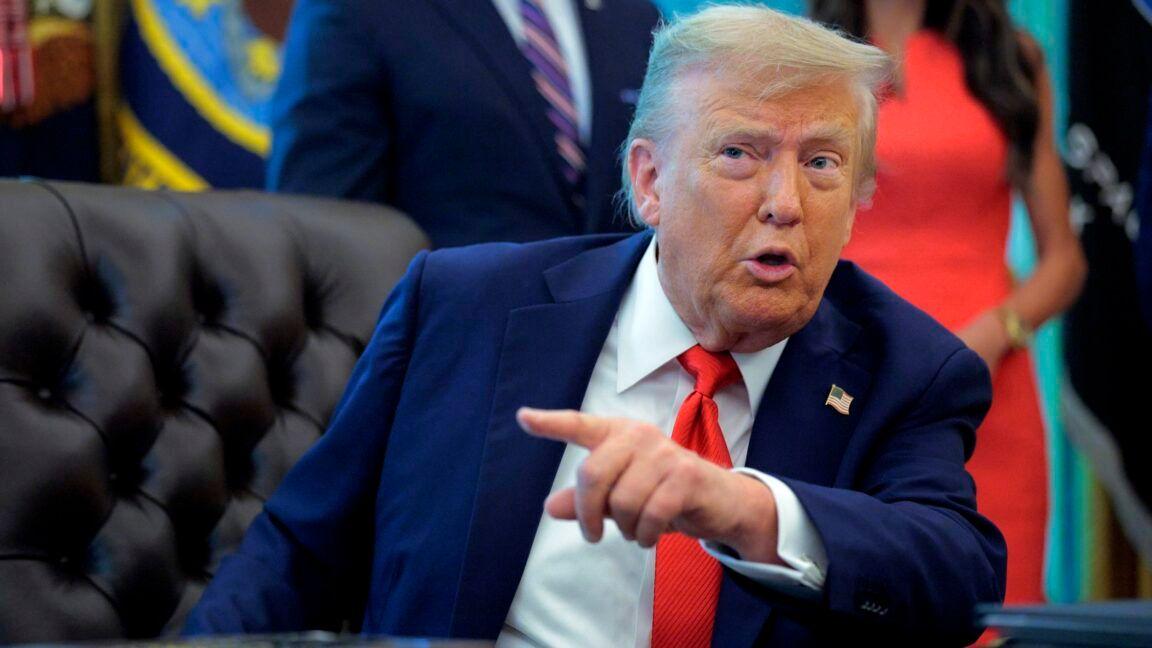
Trump Signs Executive Order to Override State AI Laws
President Donald Trump signed an executive order Thursday titled "Ensuring a National Policy Framework for Artificial Intelligence," directing federal agencies to challenge state AI laws and establish a unified national regulatory framework
1
3
. The executive order instructs the Justice Department, Commerce Department, Federal Communications Commission, and Federal Trade Commission to take action against what Trump calls a "patchwork of state laws" that threatens to stifle innovation1
.The order specifically targets Colorado's law requiring AI developers to protect consumers against "algorithmic discrimination," claiming it forces AI models to "embed ideological bias" and produce "false results"
1
5
. Trump's directive comes after Congress rejected similar proposals twice, including a Ted Cruz-backed plan that failed 99-1 in a rare moment of bipartisan agreement4
.AI Litigation Task Force to Challenge State Regulations
Within 30 days, Attorney General Pam Bondi must create an AI Litigation Task Force whose sole responsibility is to challenge state AI laws on grounds they unconstitutionally regulate interstate commerce, are preempted by existing federal regulations, or are otherwise unlawful
1
2
. The Commerce Department has 90 days to compile a list of "onerous" state AI laws, an assessment that could affect states' eligibility for broadband funding2
3
.White House AI and crypto adviser David Sacks, a leading proponent of federal preemption, told Trump during the signing ceremony that the order "gives your administration tools to push back on the most onerous and excessive state regulations"
3
. The order includes carveouts for state laws protecting children, promoting data center infrastructure, and encouraging government procurement of AI tools3
.Bipartisan Pushback From Congress and State Leaders
The move has triggered fierce bipartisan pushback from lawmakers who argue states must retain authority to protect residents from consumer harms. Sen. Ed Markey called it a gift to "Big Tech" after "months of failed lobbying and two defeats in Congress"
1
. Sen. Maria Cantwell warned the "overly broad preemption threatens states with lawsuits and funding cuts for protecting their residents from AI-powered frauds, scams, and deepfakes"1
.Republican governors have also voiced opposition. Florida Gov. Ron DeSantis posted that he opposes "stripping Florida of our ability to legislate in the best interest of the people," while Sen. Marco Rubio warned Trump to "leave AI to the states" to preserve federalism
4
. Rep. Marjorie Taylor Greene declared that "states must retain the right to regulate and make laws on AI"4
. A bipartisan coalition of over 35 state attorneys general warned Congress that overriding state AI laws could have "disastrous consequences"4
.Related Stories
Legal Uncertainty Threatens Startups More Than Big Tech
While the order promises "one rulebook," legal experts warn it may create prolonged legal uncertainty that hurts startups navigating conflicting state regulations while awaiting federal clarity
2
. Sean Fitzpatrick, CEO of LexisNexis North America, predicts states will defend their consumer protection authority in court, with cases likely escalating to the Supreme Court2
.Andrew Gamino-Cheong, CTO of AI governance company Trustible, told TechCrunch the order will backfire on innovation: "Big Tech and the big AI startups have the funds to hire lawyers to help them figure out what to do, or they can simply hedge their bets. The uncertainty does hurt startups the most"
2
. Legal ambiguity makes it harder to sell to risk-sensitive customers like legal teams, financial firms, and healthcare organizations, increasing sales cycles and insurance costs2
.Hart Brown, principal author of Oklahoma Gov. Kevin Stitt's Task Force on AI recommendations, noted that startups "typically do not have robust regulatory governance programs until they reach a scale that requires a program. These programs can be expensive and time-consuming to meet a very dynamic regulatory environment"
2
.What Happens Next: Court Battles and Congressional Action
Travis Hall, director for state engagement at the Center for Democracy & Technology, emphasized that "the power to preempt rests firmly with Congress, and no executive order can change that"
5
. Americans for Responsible Innovation criticized the order for relying on "a flimsy and overly broad interpretation of the Constitution's Interstate Commerce Clause cooked up by venture capitalists over the last six months"1
.Sen. Brian Schatz announced plans to introduce legislation for a full repeal of the order, stating that "preventing states from enacting common-sense regulation that protects people from the very real harms of AI is absurd and dangerous"
1
. Morgan Reed, president of The App Association, urged Congress to quickly enact a "comprehensive, targeted, and risk-based national AI framework," warning that "a lengthy court fight over the constitutionality of an Executive Order isn't any better" than conflicting state regulations2
.The order leaves companies facing two extremes: highly restrictive rules or no action at all, potentially creating a "wild west" that favors Big Tech's ability to absorb risk and wait things out
2
. With state laws still enforceable unless courts block them, the tech industry faces an extended transition period while watching whether Congress can agree on a single national regulatory framework.References
Summarized by

Navi
[2]
[4]
Related Stories
Trump Administration Puts AI Regulation Executive Order on Hold Amid Republican Backlash
19 Nov 2025•Policy and Regulation

Trump Overturns Biden's AI Safeguards, Calls for 'Ideologically Unbiased' Development
21 Jan 2025•Policy and Regulation

OpenAI Lobbies Trump Administration for Light AI Regulation and Focus on China Competition
14 Mar 2025•Policy and Regulation

Recent Highlights


Recent Highlights
Today's Top Stories




Your Daily Dose of Curated AI News
Don’t drown in AI news. We cut through the noise - filtering, ranking and summarizing the most important AI news, breakthroughs and research daily. Spend less time searching for the latest in AI and get straight to action.

