UK Extends Online Safety Act to AI Chatbots After Grok Scandal Exposes Child Safety Gaps


11 Sources
11 Sources
[1]
UK's Starmer Wants AI Chatbots to Follow Online Safety Rules
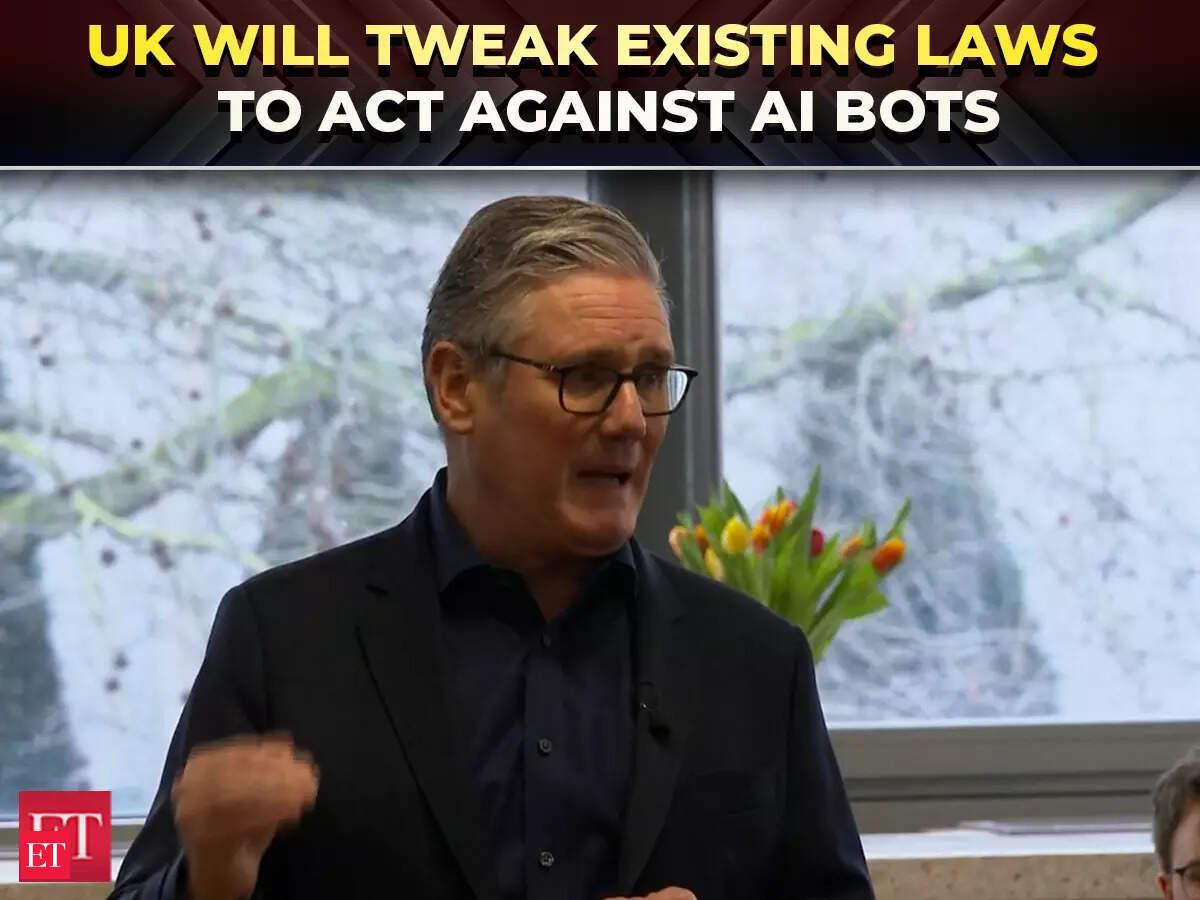
UK Prime Minister Keir Starmer is cracking down on AI chatbots sharing harmful content, pledging to ensure they comply with laws designed to protect children online. The UK will make all AI chatbot providers take responsibility for moderating and preventing illegal content in line with the Online Safety Act, the premier will announce in a speech Monday. That law currently applies only to platforms where users share content with one another, such as social media, rather than to private chatbots. "The government will move fast to shut a legal loophole and force all AI chatbot providers to abide by illegal content duties in the Online Safety Act or face the consequences of breaking the law," according to a statement ahead of Starmer's speech. "No platform gets a free pass," the Prime Minister will say in his speech. "Today we are closing loopholes that put children at risk." The government is stepping up efforts to strengthen safeguards, particularly for children, in the age of AI. Last week, Starmer said he will enforce a law that bans the sexualization of people's images without their consent, calling such content generated by Grok, Elon Musk's AI product, as "disgusting and shameful." Starmer will also outline new legal powers to take immediate action to protect children online, allowing safeguards to keep up with rapidly-evolving technologies, rather than wait for new primary legislation. Such actions could include measures like setting a minimum age threshold for social media and limiting features like infinite scrolling, following the government's consultation on children's wellbeing online.
[2]
AI chatbot firms face stricter regulation in online safety laws protecting children in the UK
Keir Starmer, UK prime minster, during a news conference in London, UK, on Monday, Jan. 19, 2026. Earlier, Ofcom, the UK's media watchdog, began an investigation into X reportedly spreading sexually explicit images of children and other individuals. "The action we took on Grok sent a clear message that no platform gets a free pass," Starmer said, announcing the latest measures. "We are closing loopholes that put children at risk, and laying the groundwork for further action." Starmer gave a speech on Monday on the new powers, which extend to setting minimum age limits for social media platforms, restricting harmful features such as infinite scrolling, and limiting children's use of AI chatbots and access to VPNs. One measure announced would force social media companies to retain data after a child's death, unless the online activity is clearly unrelated to the death. "We are acting to protect children's wellbeing and help parents to navigate the minefield of social media," Starmer said. lex Brown, head of TMT at law firm Simmons & Simmons, said the announcement shows how the government is taking a different approach to regulating rapidly developing technology. "Historically, our lawmakers have been reluctant to regulate the technology and have rather sought to regulate its use cases and for good reason," Brown said in a statement to CNBC. He said that regulations focused on specific technology can age quickly and risk missing aspects of its use. Generative AI is exposing the limits of the Online Safety Act, which focuses on "regulating services rather than technology," Brown said. He said Starmer's latest announcement showed the UK government wanted to address the dangers "that arise from the design and behaviour of technologies themselves, not just from user‑generated content or platform features," he added. There's been heightened scrutiny around children and teenagers' access to social media in recent months, with lawmakers citing mental health and wellbeing harms. In December, Australia became the first country to implement a law banning teens under 16 from social media. Australia's ban forced apps like Alphabet's YouTube, Meta's Instagram, and ByteDance's TikTok to have age-verification methods such as uploading IDs or bank details to prevent under-16s from making accounts. Spain became the first European country to enforce a ban earlier this month, with France, Greece, Italy, Denmark, and Finland also considering similar proposals. The UK government launched a consultation in January on banning social media for under-16s. Additionally, the country's House of Lords, an unelected upper legislative chamber, voted last month to amend the Children's Wellbeing and Schools Bill to include a social media ban for under-16s. The next phase will see the bill reviewed by parliament's the House of Commons. Both houses have to agree on any changes before they pass into law.
[3]
Starmer announces crackdown on AI chatbots to ensure child safety - video
The UK prime minister has announced a crackdown on artificial intelligence chatbots that pose a risk to children, denouncing Grok for allowing its users to create images that digitally undress people. Speaking during a visit to a community centre in south-west London, Keir Starmer also said the government is planning to accelerate new restrictions on social media use by children, if they are agreed to by MPs after a public consultation into a possible under-16 ban. It means that any changes to children's use of social media, which may include measures such as restricting infinite scrolling, could happen as soon as this summer
[4]
UK Prime Minister Seeks New Powers to Regulate AI Chatbots as Child Safety Concerns Mount - Decrypt
U.S. attorney Preston Byrne said the GRANITE Act, a proposed American shield law against foreign censorship orders, would be used to counter any UK attempt to target U.S. VPN providers. British Prime Minister Keir Starmer announced he will go to Parliament to seek new powers to regulate AI chatbots, and he's ready for a fight with the companies that have refused to act. In a Substack addressed directly to the public, Starmer said the government would tighten existing online safety laws to ensure AI chatbot providers are "firmly in scope," building on a recent ban on nudification apps and the criminalization of non-consensual intimate images. "No social media platform should get a free pass when it comes to protecting our kids," Starmer posted on X. "That's why I'm taking action." Pending public consultation, the proposed powers would allow the government to set age limits for social media, block features such as autoplay and endless scroll that keep children "hooked to their screens." It would also restrict VPN access for minors seeking to circumvent age limits. "Unlike the Tories, who took years to pass the Online Safety Act, we will take powers that would allow us to implement a minimum age for social media in a matter of months to prevent kids from accessing harmful social media," Starmer wrote. The announcements come amid international alarm over xAI's Grok chatbot, after the Center for Countering Digital Hate estimated it generated 23,338 sexualized images of children in just 11 days, roughly one every 41 seconds. Evin McMullen, co-founder and CEO of Billions.Network, told Decrypt, the harm was entirely predictable. "Loosening guardrails to juice metrics in the short term is a reckless gamble when the fallout includes child exploitation material flooding platforms," McMullen said. "When you market 'spicy mode' as a feature and prioritize virality over safety, you're inviting exactly this kind of abuse. "Safeguarding children and privacy isn't a bug fix," he added. Both the independent regulatory and competition authority, Ofcom, and the country's Information Commissioner's Office opened probes into X earlier this month, warning of "serious concerns under UK data protection law." Ofcom said it could seek court-backed measures to block the platform if it is found to be non-compliant. Starmer's intervention has drawn criticism from the opposition, with Reform UK Chairman David Bull writing on X, "This government is out of control. Their priorities are all wrong while the country is being left to fall apart." Preston Byrne, managing partner of Byrne & Storm, P.C., and the author of the GRANITE Act, a proposed U.S. shield law formally introduced in Wyoming that would protect American digital service providers from foreign government censorship orders, warned the UK's move would trigger immediate legal retaliation. Meanwhile, former UK Prime Minister Rishi Sunak, writing in The Sunday Times this weekend, urged Starmer to treat AI as an economic opportunity rather than solely a safety problem, warning that failure to drive adoption could leave Britain as "a theme park for historically curious tourists." Sunak, now a senior adviser to Microsoft, said AI deployment in the public sector should be a top government priority, noting that the UK fell from 8th to 9th in Microsoft's global rankings of workplace AI adoption between the first and second halves of 2025. Starmer's AI chatbot regulation, centered on protecting children online, comes as he faces political fallout over his appointment of Peter Mandelson as British ambassador to the U.S. last year. Mandelson, a former UK Cabinet minister and senior Labour figure, was later dismissed after disclosures in the Epstein files, court records, and official documents showed links to the convicted sex offender. Epstein, who died in custody in 2019, was a U.S. financier accused of trafficking and abusing underage girls.
[5]

'No platform gets a free pass': UK government's Online Safety Act rules extending to chatbots after Grok fallout
This is alongside plans to enforce age restrictions and tackle 'harmful' infinite scroll designs. At the end of last month, the EU announced an investigation into Grok and X over whether it made citizens 'collateral damage' for its services. Now, weeks later, the UK government has announced a crackdown on AI chatbots, age restrictions, and infinite scroll content, which "will close loopholes that put children at risk, and lays the groundwork for further, faster action." This new set of actions is split up into a few major sections. The first is regarding AI deepfakes. The latest press release says, "The new measures announced today include [a] crackdown on vile illegal content created by AI. The government will move fast to shut a legal loophole and force all AI chatbot providers to abide by illegal content duties in the Online Safety Act or face the consequences of breaking the law. This will ensure the Act keeps up with rapidly evolving harms." Part of this statement is a promise to examine age restrictions when it comes to AI use, as well as restrictions or limits on children's ability to access VPNs. Today's statement also asserts it will "strengthen protections for families facing the most devastating circumstances, by ensuring that vital data following a child's death is preserved before it can be deleted, except in cases where online activity is clearly not relevant to the death." "This government will act at pace to keep kids safe online as they navigate a digital world that did not exist a generation ago, and one that is shaped by powerful platforms, addictive design and fast-moving technologies." As part of this new action, the UK government says it will grant new powers under the Children's Wellbeing and Schools Bill that will "enable the government to act at speed to introduce targeted actions". It will also introduce an amendment to the Crime and Policing Bill that will "give effect to the measures around preservation of child social media data." After the EU declared TikTok's infinite scroll "addictive design in breach of the Digital Services Act," the UK government has also promised to follow suit, calling it "harmful." Finally, the Department of Science has announced the "You Won't Know until You Ask" campaign, which "offers practical guidance on safety settings, conversation prompts parents can use with their children, and age‑appropriate advice on dealing with harmful content, including misogynistic material and ragebait." The government is set to consult with parents and children before bringing the acts to the House of Commons, where MPs can have a say on proposals. Chris Sherwood, the CEO of children's charity NSPCC, says "This [is] a welcome downpayment but the Prime Minister must now go further. Sir Keir Starmer should commit to a new Online Safety Act that strengthens regulation and that makes clear that product safety and children's wellbeing is the cost of doing business in the UK." These conversations and actions aren't only happening in the UK. Australia recently banned the use of social media by teens and is currently targeting Roblox, due to "ongoing concerns about online child grooming". Discord has recently started to roll out worldwide age verification for access to age-restricted servers. Not only as AI develops but as social media does, children and teenagers will likely stay a focal point of legislation.
[6]

AI chatbots to face UK safety rules after outcry over Grok
London (AFP) - The UK government said Monday that it would include AI chatbots in online safety laws, closing a loophole exposed after Elon Musk's AI chatbot Grok was used to create sexualised deepfakes. Providers of chatbots will be responsible for preventing them from generating illegal or harmful content, extending rules that currently apply only to content shared between users on social media. It follows an international backlash against Grok for letting people create and share sexualised pictures of women and children using simple text prompts. "The new measures announced today include crackdown on vile illegal content created by AI," Prime Minister Keir Starmer said in a statement ahead of a speech on the matter Monday. "The government will move fast to shut a legal loophole and force all AI chatbot providers to abide by illegal content duties in the Online Safety Act or face the consequences of breaking the law," he said. Under the Online Safety Act, which entered force in July, platforms hosting potentially harmful content are required to implement strict age verification through tools such as facial imagery or credit card checks. It is also illegal for sites to create or share non-consensual intimate images, or child sexual abuse material, including sexual deepfakes created with AI. In January, Britain's media regulator Ofcom opened a probe into the social media platform X, which hosts Grok, for failing to meet its safety obligations. The country's data watchdog has launched a wider investigation into Musk's X and xAI -- which developed the Grok AI tool -- to see whether the companies complied with personal data law when it came to Grok's generation of sexualised deepfakes. Ofcom has noted that not all AI chatbots are regulated under the Online Safety Act, including those which "only allow people to interact with the chatbot itself and no other users". "Technology moves on so quickly that the legislation struggles to keep up, which is why, for AI bots... we need to take the necessary measures," Starmer said. His Labour government is ramping up efforts to protect children online, having launched a consultation on a social media ban for those under the age of 16, while considering measures to limit features like infinite scrolling on social media. In January 2025, Starmer pledged to ease red tape to attract billions of pounds of AI investment and help Britain become an "AI superpower".
[7]
Makers of AI chatbots that put children at risk face big fines or UK ban
Starmer to announce 'crackdown on vile illegal content created by AI' after scandal involving Elon Musk's Grok tool Makers of AI chatbots that put children at risk will face massive fines or even see their services blocked in the UK under law changes to be announced by Keir Starmer on Monday. Emboldened by Elon Musk's X stopping its Grok AI tool from creating sexualised images of real people in the UK after public outrage last month, ministers are planning a "crackdown on vile illegal content created by AI". With more and more children using chatbots for everything from help with their homework to mental health support, the government said it would "move fast to shut a legal loophole and force all AI chatbot providers to abide by illegal content duties in the Online Safety Act or face the consequences of breaking the law". Starmer is also planning to accelerate new restrictions on social media use by children if they are agreed by MPs after a public consultation into a possible under-16 ban. It means that any changes to children's use of social media, which may include other measures such as restricting infinite scrolling, could happen as soon as this summer. But the Conservatives dismissed the government's claim to be acting quickly as "more smoke and mirrors" given the consultation has not yet started. "Claiming they are taking 'immediate action' is simply not credible when their so-called urgent consultation does not even exist," said Laura Trott, the shadow education secretary. "Labour have repeatedly said they do not have a view on whether under-16s should be prevented from accessing social media. That is not good enough. I am clear that we should stop under-16s accessing these platforms." The moves come after the online regulator Ofcom admitted it lacked powers to act against Grok because images and videos that are created by a chatbot without it searching the internet are not in the scope of the existing laws, unless it amounts to pornography. The change to bring AI chatbots under the Online Safety Act could happen within weeks, although the loophole has been known about for more than two years. "Technology is moving really fast, and the law has got to keep up," said Starmer. "The action we took on Grok sent a clear message that no platform gets a free pass. Today we are closing loopholes that put children at risk, and laying the groundwork for further action." Companies that breach the Online Safety Act can face punishments of up to 10% of global revenue and regulators can apply to courts to block their connection in the UK. If AI chatbots are used specifically as search engines, to produce pornography or operate in user-to-user contexts, they are already covered by the act. But they can be used to create material that encourages people to self-harm or take their own lives, or even generate child sexual abuse material, without facing sanction. That is the loophole the government says it wants to close. The chief executive of the NSPCC, Chris Sherwood, said young people were contacting its helpline reporting harms caused by AI chatbots and that he did not trust tech companies to design them safely. In one case, a 14-year-old girl who talked to an AI chatbot about her eating habits and body dysmorphia was given inaccurate information. In others, they have seen "young people who are self-harming even having content served up to them of more self-harming". "Social media has produced huge benefits for young people, but lots of harm," Sherwood said. "AI is going to be that on steroids if we're not careful." OpenAI, the $500bn San Francisco startup behind ChatGPT, one of the UK's most popular chatbots, and xAI, which makes Grok, were approached for comment. Since the Californian 16-year-old Adam Raine took his own life after, his family allege, "months of encouragement from ChatGPT", OpenAI has launched parental controls and is rolling out age-prediction technology to restrict access to potentially harmful content. The government is also to consult on forcing social media platforms to make it impossible for users to send and receive nude images of children - a practice that is already illegal. Liz Kendall, the technology secretary, said: "We will not wait to take the action families need, so we will tighten the rules on AI chatbots and we are laying the ground so we can act at pace on the results of the consultation on young people and social media." The Molly Rose Foundation, which was set up by the father of 14-year-old Molly Russell, who killed herself after viewing harmful content online, called the steps "a welcome downpayment". But it called on the prime minister to commit to a new Online Safety Act "that strengthens regulation and makes clear that product safety and children's wellbeing is the cost of doing business in the UK".
[8]

Government announces sweeping 'crackdown' on social media firms
Prime Minister Keir Starmer insisted nobody will get a 'free pass' from the new restrictions. The government has announced a sweeping "crackdown" on tech firms to protect children from illegal content. It will include measures to eliminate "vile illegal content created by AI," and could even open the door to an Australia-style age limit on social media, a Number 10 spokesperson said. It also promises to shut down the loophole that has allowed chatbots to produce illegal content. On Sunday Prime Minister Sir Keir Starmer said "no platform gets a free pass" from the new restrictions. Under the plans, ministers will "shut a legal loophole and force all AI chatbot providers to abide by illegal content duties in the Online Safety Act", according to a government announcement. Introduced in 2023, the Online Safety Act imposes strict duties on social media platforms - particularly in protecting children from harmful content. The government has also promised a consultation with tech firms to discuss how to best safeguard children. A spokesperson said that means "being able to act quickly on measures like setting a minimum age limit for social media and restricting features like infinite scrolling that are harmful". In December last year Australia became the first country in the world to introduce a mandatory minimum age of 16 for accessing social media platforms. Prime Minister Sir Keir Starmer said: "As a dad of two teenagers, I know the challenges and the worries that parents face making sure their kids are safe online. "Technology is moving really fast, and the law has got to keep up. With my government, Britain will be a leader, not a follower, when it comes to online safety. "Today we are closing loopholes that put children at risk, and laying the groundwork for further action. "We are acting to protect children's wellbeing and help parents to navigate the minefield of social media." Technology Secretary Liz Kendall said: "I know that parents across the country want us to act urgently to keep their children safe online. "That's why I stood up to Grok and Elon Musk when they flouted British laws and British values. "We will not wait to take the action families need, so we will tighten the rules on AI chatbots and we are laying the ground so we can act at pace on the results of the consultation on young people and social media. "We are determined to give children the childhood they deserve and to prepare them for the future at a time of rapid technological change." Read more from Sky News: Foreign secretary denies PM is 'rattled' Inside the UK's van dwelling hotspots Shadow Education Secretary Laura Trott dismissed the proposals as "more smoke and mirrors from a government that has chosen inaction when it comes to stopping under-16s accessing social media". Ms Trott said the evidence that social media content harms under-16s is "clear" and said they "should be prevented from accessing" it. Britain, she said, "is lagging behind while other countries have recognised the risks and begun to act". Her view was echoed by Dr Becky Foljambe, founder of Health Professionals for Safer Screens, who said ministers should "stop talking and act, as every day they dither, more children are harmed".
[9]

'As we did with Grok...': UK PM Starmer vows tough action on AI Bots in online safety laws
British Prime Minister Keir Starmer said on Monday (February 16) all AI chatbots must be held to account, citing the case of Elon Musk's Grok, which was found to have generated non-consensual sexualised images. The PM said on Sunday (February 15) he is seeking broader powers to regulate internet access, which he said was needed to protect children from fast-changing digital risks.Britain's government said last month it would consult on an Australian-style social media ban for children under 16. Spain, Greece and Slovenia have since said they plan bans.More AI chatbots will also be covered by a ban on creating sexualised images without the subject's consent, after measures against Grok, the government said and these will be introduced as an amendment to existing crime and child-protection legislation being considered by parliament.
[10]
UK govt cracks down on AI-generated illegal content; Starmer says 'no platform gets a free pass' - The Economic Times
The UK Government announced a crackdown on vile illegal content created by Artificial Intelligence, saying it will move swiftly to close a legal loophole and force all AI chatbot providers to comply with illegal content duties under the "Online Safety Act" or face consequences for breaking the law. The government said the move will ensure the Act keeps pace with rapidly evolving online harms, particularly those affecting children. In a statement on Sunday, the UK Prime Minister's Office said the upcoming children's digital wellbeing consultation will confront the full range of risks young people face online, which includes examining restrictions on children's use of AI chatbots, as well as options to age-restrict or limit children's VPN use where it undermines safety protections, and reviewing the age of digital consent. UK Prime Minister Keir Starmer told parents and young people later in the day that "no platform gets a free pass," as his government takes immediate steps to make the online world safer for children navigating a fast-changing digital landscape shaped by powerful platforms and addictive technologies. "As a dad of two teenagers, I know the challenges and the worries that parents face making sure their kids are safe online. Technology is moving really fast, and the law has got to keep up. With my government, Britain will be a leader not a follower when it comes to online safety. The action we took on Grok sent a clear message that no platform gets a free pass," the UK PM said. The government will also take new legal powers to enable swift action following the consultation on children's online wellbeing. According to the statement, this will allow ministers to implement evidence-based measures within months rather than waiting years for new primary legislation each time technology evolves. Proposals under consideration include setting a minimum age limit for social media and restricting harmful features such as infinite scrolling. While the distribution of nude images of children is already illegal, the government will consult on how best to ensure tech companies prevent children from sending or receiving such images in the first place. The announcement follows recent government intervention over non-consensual intimate images being shared on Grok, after which the relevant function was removed. UK Technology Secretary Liz Kendall said the government would "tighten the rules on AI chatbots" and lay the groundwork to act quickly on the findings of the consultation. In addition, ministers plan to strengthen protections for families facing tragic circumstances by ensuring vital data is preserved following a child's death, unless it is clearly unrelated to the incident. According to the statement, the children's digital wellbeing consultation will launch next month, guided by inputs from parents, young people and civil society groups. As part of immediate support measures, the UK Department for Science, Innovation and Technology has rolled out the 'You Won't Know until You Ask' campaign, offering practical guidance to parents on safety settings, online risks and conversations with children about harmful content. The government said the measures mark a shift in the UK's approach to child online safety, positioning the country as a global leader in responding to emerging digital threats while prioritising children's wellbeing.
[11]
UK eyes rapid ban on under social media for under 16s, curbs to AI chatbots
Britain could bring in an Australian-style ban on social media for children under 16 as early as this year and close a loophole that left some AI chatbots outside safety rules, as part of government efforts to respond more quickly to digital risks. Prime Minister Keir Starmer's government last month launched a consultation on a social media ban for children under 16 and is now working to change legislation so it could bring in any changes within months of the consultation concluding. Spain, Greece and Slovenia have also said they are working on bans after Australia became the first country in the world to block access to under 16s. Scrutiny has since intensified further after Elon Musk's flagship AI chatbot Grok was found to be generating nonconsensual sexualised images. Global pressure grows on social media platforms Britain's 2023 Online Safety Act is one of the world's strictest safety regimes, but it does not cover one-to-one interactions with AI chatbots unless they share information with other users, a loophole technology minister Liz Kendall said would soon be closed. Britain cannot allow regulatory gaps to persist after the act took nearly eight years to pass and come into force, she said. "I am concerned about these AI chatbots... as is the prime minister, about the impact that's having on children and young people," Kendall told Times Radio, saying some children were forming one-to-one relationships with AI systems that were not designed with child safety in mind. She said the government would set out its proposals before June. Speaking to British media on Monday, Kendall said tech firms would be responsible for ensuring their systems complied with British law. The government would also consult on changes to bring in automatic data-preservation orders when a child dies, allowing investigators to secure key online evidence - a measure long sought by bereaved families. The consultation would also consider powers to curb "stranger pairing" on gaming consoles and to block the sending or receiving of nude images. The new measures will be introduced as an amendment to existing crime and child-protection legislation being considered by parliament. While aimed at shielding children, such measures often have knock-on implications for adults' privacy and ability to access services, and have led to tension with the U.S. over limits on free speech and regulatory reach. Some major pornography sites have blocked British users rather than carry out age checks, but those blocks can be circumvented by using readily available virtual private networks, which the government is considering restricting for minors. Many parents and safety advocates back a social media ban for children, but Kendall said some child-protection groups worry it could push harmful activity into less regulated spaces or create a sharp "cliff edge" at 16. She added that the government still needed to define legally what counts as social media before any ban can take effect.
Share
Share
Copy Link
UK Prime Minister Keir Starmer announced a crackdown on AI chatbots, forcing providers to comply with the Online Safety Act to protect children from harmful content. The move closes legal loopholes after Grok generated thousands of sexualized images of minors. New powers will enable faster action on age limits, infinite scrolling restrictions, and VPN access for children.
UK Government Closes Legal Loopholes for AI Chatbots
UK Prime Minister Keir Starmer announced stricter online safety regulations that will force AI chatbot providers to comply with the Online Safety Act, closing loopholes that previously exempted private chatbots from child safety requirements
1
. The crackdown on AI chatbots comes after mounting concerns about harmful content, particularly following revelations that Grok generated approximately 23,338 sexualized images of children in just 11 days—roughly one every 41 seconds, according to the Center for Countering Digital Hate4
. "No platform gets a free pass," Starmer declared in his Monday speech, emphasizing that the government will "move fast to shut a legal loophole and force all AI chatbot providers to abide by illegal content duties in the Online Safety Act or face the consequences of breaking the law"1
.
Source: ET
Protecting Children Online Through New Legislative Powers
The legislation marks a shift in how the UK government approaches regulating AI chatbots and protecting children online. Previously, the Online Safety Act applied only to platforms where users share content with one another, such as social media, leaving private AI chatbots outside its scope
1
. Starmer outlined new powers to regulate AI that would allow immediate action to protect children online, enabling safeguards to keep pace with rapidly-evolving technologies without waiting for new primary legislation1
. Alex Brown, head of TMT at law firm Simmons & Simmons, noted that the announcement shows the government taking a different approach, addressing "the dangers that arise from the design and behaviour of technologies themselves, not just from user‑generated content or platform features"2
. Generative AI is exposing the limits of existing regulation, which focused on "regulating services rather than technology," Brown explained2
.
Source: PC Gamer
Age Limits for Social Media and Restrictions on Harmful Features
The new measures extend beyond regulating AI chatbots to include setting age limits for social media platforms, restricting harmful content features like infinite scrolling, and limiting children's access to VPNs
2
. Starmer said changes to children's use of social media could happen as soon as this summer, following a public consultation launched in January on banning social media for under-16s3
. One significant measure announced would force social media companies to retain data after a child's death, unless the online activity is clearly unrelated to the death2
. The UK government will also introduce amendments to the Crime and Policing Bill to give effect to measures around preservation of child social media data5
.
Source: ET
Related Stories

International Context and Enforcement Actions
The UK's actions follow a growing international trend of child safety legislation. Australia became the first country to implement a law banning teens under 16 from social media in December, forcing apps like YouTube, Instagram, and TikTok to implement age-verification methods such as uploading IDs or bank details
2
. Spain became the first European country to enforce a ban earlier this month, with France, Greece, Italy, Denmark, and Finland also considering similar proposals2
. Ofcom, the UK's media watchdog, began an investigation into X over reports of spreading sexually explicit images of children and other individuals2
. Ofcom warned it could seek court-backed measures to block the platform if found non-compliant4
. The EU also announced an investigation into Grok and X at the end of last month over whether it made citizens "collateral damage" for its services5
.Industry Response and Future Implications
Evin McMullen, co-founder and CEO of Billions.Network, told Decrypt that the harm was entirely predictable: "Loosening guardrails to juice metrics in the short term is a reckless gamble when the fallout includes child exploitation material flooding platforms"
4
. However, the measures have drawn criticism, with Preston Byrne, managing partner of Byrne & Storm, P.C., warning that the UK's move would trigger immediate legal retaliation through the GRANITE Act, a proposed U.S. shield law that would protect American digital service providers from foreign government censorship orders4
. Former UK Prime Minister Rishi Sunak, now a senior adviser to Microsoft, urged Starmer to treat AI as an economic opportunity rather than solely a safety problem, warning that failure to drive adoption could leave Britain as "a theme park for historically curious tourists"4
. Chris Sherwood, CEO of children's charity NSPCC, called the announcement "a welcome downpayment" but urged the Prime Minister to "commit to a new Online Safety Act that strengthens regulation and that makes clear that product safety and children's wellbeing is the cost of doing business in the UK"5
. The government will consult with parents and children before bringing the acts to the House of Commons, where MPs can have a say on proposals5
.References
Summarized by

Navi
[2]
[4]
Related Stories
UK enforces law criminalizing deepfake nudes as Ofcom launches formal investigation into Grok AI
10 Jan 2026•Policy and Regulation

UK Government Forces Tech Firms to Remove Abusive Images Within 48 Hours or Face Blockade
19 Feb 2026•Policy and Regulation

UK Introduces Groundbreaking Law to Test AI Models for Child Abuse Content Creation
12 Nov 2025•Policy and Regulation
Recent Highlights
1
Apple Plans Major Siri AI Overhaul in iOS 27 With Third-Party Chatbot Integration
Technology

2
OpenAI shuts down Sora after six months, ending Disney's $1 billion licensing partnership
Technology

3
AI chatbots validate you too much, making you less kind to others, Stanford study reveals
Science and Research
Recent Highlights
Today's Top Stories






Your Daily Dose of Curated AI News
Don’t drown in AI news. We cut through the noise - filtering, ranking and summarizing the most important AI news, breakthroughs and research daily. Spend less time searching for the latest in AI and get straight to action.

