US launches Tech Corps to deploy thousands of volunteers in global AI race with China


5 Sources
5 Sources
[1]
US Plans Peace Corps Revamp to Gain Edge in AI Race With China
The Trump administration is planning a new Peace Corps initiative that would send thousands of US science and math graduates abroad to boost foreign countries' reliance on American technology and reduce global adoption of competing products from China, according to a US official. Called the Technology Prosperity Corps, the program would deploy as many as 5,000 American volunteers and advisers over the next five years to Peace Corps partner nations, the official said. It will seek to steer countries toward US artificial intelligence hardware and software and away from technology made in China, the main US rival in AI. White House Office of Science and Technology Policy Director Michael Kratsios plans to announce the venture on Friday at the India AI Impact Summit, the official said. The program is intended to give the six-decade-old Peace Corps a new sense of purpose in a tech-driven era, according to the official, who spoke on condition of anonymity ahead of the announcement. "To further enable AI adoption in the developing world, the Trump administration is bringing America's historic Peace Corps into the 21st century with the launch of the Tech Corps," Kratsios plans to say, according to an advance copy of his remarks. "This new initiative will embed volunteer technical talent with import partners to provide last-mile support in deploying powerful AI applications for enhanced public services." Winning the global AI race ranks as a top priority for President Donald Trump, who has sought to increase US exports of related technology, including advanced processors from Nvidia Corp. The Peace Corps tech venture aims to beat China to the punch on AI by countering Beijing's long-standing practice of offering to build roads, power plants and other infrastructure in South America, Africa and parts of Europe. Founded in 1961 under President John F. Kennedy at the height of the Cold War, the Peace Corps has functioned as an instrument of goodwill diplomacy for the US. Last year, more than 3,000 volunteers served in 60-plus countries on projects ranging from agriculture to health care and the environment, according to the agency. Adding the tech initiative would mark a significant expansion of its mandate. Many details about the tech program remained unclear ahead of the announcement, including which countries would participate and how it would affect existing Peace Corps operations. Funding for the Technology Prosperity Corps would include contributions from corporations and charities, the official said. For fiscal year 2026, the agency received $410 million from Congress under spending legislation signed by Trump earlier this month. Recruitment and training of tech volunteers is set to begin this year, the official said, with a goal of attracting 500 professionals for the first cohort. The State Department, the US Commercial Service, financing agencies including the International Development Finance Corporation and Export-Import Bank and host-country ministries of science and technology will coordinate to send volunteers to locations seeking to adopt AI, the official said. Empowering the Peace Corps to carry out Trump's tech agenda would intensify competition with China across the Global South, where Chinese tech companies are making inroads with lower-cost products, including large-language models from DeepSeek. Beijing's approach on AI borrows from its earlier Digital Silk Road initiative, in which Chinese companies built telecommunications networks spanning various continents. During Trump's first term, Kratsios traveled around the world trying to persuade US allies to strip out Huawei Technologies Co. equipment. The administration is now trying to jump start a previously announced effort, dubbed the American AI Exports Program, offering nations bundles of chips, servers, AI models, cloud services and networking. Trump established the program in a July executive order. The Technology Prosperity Corps aims to build on that plan by providing volunteers to countries that lack national AI strategies or operational capacity to adopt AI solutions. In addition to volunteers in overseas roles, the US also plans to tap senior experts for advisory roles to remotely oversee and mentor those working in the field.
[2]
The Peace Corps gets AI-revamp: Trump launches 'Tech Corps' to boost U.S. influence
As competition with China intensifies, Washington is turning to a cornerstone of American soft power and diplomacy to expand its global influence in artificial intelligence: the Peace Corps. The White House on Friday announced the "Tech Corps" initiative within the Peace Corps aimed at promoting American AI abroad and helping partner nations adopt cutting-edge systems. The Peace Corps is an independent U.S. government agency that sends American volunteers abroad to support local development projects, including in education, health, agriculture and economic growth. The new Tech Corps will be structured similarly but will recruit, train, and deploy volunteers with tech skills, including engineers and graduates in science, technology, engineering, and mathematics to provide "last-mile" support for the implementation of American AI solutions abroad, particularly at the application layer. A website for the Tech Corps has launched and is accepting applications, which it says will be accepted on a rolling basis. In an announcement, the Peace Corps said that the AI solutions the new group implements would be put towards "real-world grassroots problems" in key sectors, including agriculture, education, health, and economic development. Volunteers would be sent to countries participating in the American AI Exports Program, announced in July under a Trump administration executive order aimed at maintaining U.S. dominance in advanced technologies globally. The executive order aligns with broader U.S. efforts to counter the influence of Chinese technologies globally, including in developing nations. Chinese firms have gained traction in some developing nations by offering open-source or open-weight models that are inexpensive, highly customizable, and able to run on local infrastructure -- including Qwen3 and Deepseek.
[3]
The US will send Tech Corps members to foreign countries in its latest push for AI dominance
The government agency that sends its corps members abroad to volunteer in foreign countries launched its latest initiative called Tech Corps. The Peace Corps' latest proposal will recruit STEM graduates or those with professional experience in the artificial intelligence sector and send them to participating host countries. According to the press release, volunteers will be placed in Peace Corps countries that are part of the American AI Exports Program, which was created last year from an executive order from President Trump as a way to bolster the US' grip on the AI market abroad. Tech Corps members will be tasked with using AI to resolve issues related to agriculture, education, health and economic development. The program will offer its members 12- to 27-month in-person assignments or virtual placements, which will include housing, healthcare, a living stipend and a volunteer service award if the corps member is placed overseas. Richard E. Swarttz, the acting director of the Peace Corps, said in a press release that Tech Corps volunteers will be "building technical capacity, supporting AI adoption across critical use cases and addressing barriers to last-mile AI implementation." While the Tech Corps program is framed at benefiting host countries, it would also help to secure the US' position in the rapidly expanding global AI market that includes growing competition from China.
[4]
US Peace Corps launches new Tech Corps to bring AI expertise abroad
The Peace Corps is launching an AI division, which will send US tech experts to the developing world The United States is deploying a "Tech Corps" initiative to promote American artificial intelligence (AI) abroad. As part of the US's Peace Corps, the tech division will embed volunteers with technical expertise to provide "last-mile" support for deploying AI applications in partner countries, the White House announced on Friday. The Peace Corps is an independent US government agency which sends American volunteers abroad to support projects in education, health, agriculture, and economic growth The tech initiative comes as China is gaining ground in global AI adoption. Reports indicate that the Chinese model DeepSeek is becoming the model of choice in much of the developing world, putting pressure on Washington to keep up. Tech Corps missions will work directly with local institutions. They could help teachers integrate AI into their lesson plans, co-develop AI models with national health offices, or assist with refining and evaluating critical datasets for companies in the agricultural sector, according to the programme's website. The US is encouraging graduates from science, technology, engineering or math (STEM) programmes or individuals with a background in AI to apply for the programme. Tech Corps volunteers will be deployed on missions lasting up to 27 months. While there, volunteers will receive housing, healthcare, a stipend and service awards. Deployments could start as early as this fall, the website says. The volunteers would be sent to countries participating in the American AI Exports Program, an initiative announced last July. It will support the export of the entire US tech stack, including hardware, data systems, AI models and cybersecurity measures to "specific target countries," that the administration will identify, according to an executive order published at the time. So far, no country has expressed a particular interest in joining the AI exports programme. However, William Kimmitt, the US's under secretary of commerce and international trade, invited India to be a part of the programme on the sidelines of the AI Impact Summit, according to the US's International Trade Association. Separately, ten countries, including the United Kingdom, have signed on to the US-led Pax Silica initiative, a non-binding agreement that will secure the global supply chain for AI technologies. The European Union attended as an observer but did not sign, and the Netherlands is participating as a non-signing partner. The United States announced other AI initiatives during the summit, including a National Champions Initiative that would integrate foreign AI companies into the US tech stack.
[5]

US to launch Technology Prosperity Corps at India AI Summit to counter China's AI push
America is launching a new initiative called the Technology Prosperity Corps. Thousands of US science and math graduates will go abroad. They will help countries adopt American technology. This aims to counter China's growing influence. The program will deploy up to 5,000 volunteers over five years. It seeks to boost US exports and global AI leadership. The Trump administration is planning a new Peace Corps initiative that would send thousands of US science and math graduates abroad to boost foreign countries' reliance on American technology and reduce global adoption of competing products from China, according to a US official. Called the Technology Prosperity Corps, the program would deploy as many as 5,000 American volunteers and advisers over the next five years to Peace Corps partner nations, the official said. It will seek to steer countries toward US artificial intelligence hardware and software and away from technology made in China, the main US rival in AI. Also Read: Mukesh Ambani's Reliance makes Rs 10 lakh cr audacious bet on India's AI prowess White House Office of Science and Technology Policy Director Michael Kratsios plans to announce the venture on Friday at the India AI Impact Summit, the official said. The program is intended to give the six-decade-old Peace Corps a new sense of purpose in a tech-driven era, according to the official, who spoke on condition of anonymity ahead of the announcement. "To further enable AI adoption in the developing world, the Trump administration is bringing America's historic Peace Corps into the 21st century with the launch of the Tech Corps," Kratsios plans to say, according to an advance copy of his remarks. "This new initiative will embed volunteer technical talent with import partners to provide last-mile support in deploying powerful AI applications for enhanced public services." Winning the global AI race ranks as a top priority for President Donald Trump, who has sought to increase US exports of related technology, including advanced processors from Nvidia Corp. The Peace Corps tech venture aims to beat China to the punch on AI by countering Beijing's long-standing practice of offering to build roads, power plants and other infrastructure in South America, Africa and parts of Europe. Founded in 1961 under President John F. Kennedy at the height of the Cold War, the Peace Corps has functioned as an instrument of goodwill diplomacy for the US. Last year, more than 3,000 volunteers served in 60-plus countries on projects ranging from agriculture to health care and the environment, according to the agency. Adding the tech initiative would mark a significant expansion of its mandate. Many details about the tech program remained unclear ahead of the announcement, including which countries would participate and how it would affect existing Peace Corps operations. Funding for the Technology Prosperity Corps would include contributions from corporations and charities, the official said. For fiscal year 2026, the agency received $410 million from Congress under spending legislation signed by Trump earlier this month. Also Read: Bill Gates pulls out of AI Summit hours before his keynote address Recruitment and training of tech volunteers is set to begin this year, the official said, with a goal of attracting 500 professionals for the first cohort. The State Department, the US Commercial Service, financing agencies including the International Development Finance Corporation and Export-Import Bank and host-country ministries of science and technology will coordinate to send volunteers to locations seeking to adopt AI, the official said. Empowering the Peace Corps to carry out Trump's tech agenda would intensify competition with China across the Global South, where Chinese tech companies are making inroads with lower-cost products, including large-language models from DeepSeek. Beijing's approach on AI borrows from its earlier Digital Silk Road initiative, in which Chinese companies built telecommunications networks spanning various continents. During Trump's first term, Kratsios traveled around the world trying to persuade US allies to strip out Huawei Technologies Co. equipment. The administration is now trying to jump start a previously announced effort, dubbed the American AI Exports Program, offering nations bundles of chips, servers, AI models, cloud services and networking. Trump established the program in a July executive order. The Technology Prosperity Corps aims to build on that plan by providing volunteers to countries that lack national AI strategies or operational capacity to adopt AI solutions. In addition to volunteers in overseas roles, the US also plans to tap senior experts for advisory roles to remotely oversee and mentor those working in the field.
Share
Share
Copy Link
The Trump administration unveiled the Tech Corps initiative, deploying up to 5,000 American science and math graduates over five years to promote American AI abroad. The program aims to steer developing countries toward US artificial intelligence hardware and software while countering China's growing tech influence across the Global South.
Peace Corps Gets AI Makeover to Counter China's Tech Push
The Trump administration announced the Tech Corps initiative on Friday at the India AI Impact Summit, marking a significant transformation of the 60-year-old Peace Corps
1
. White House Office of Science and Technology Policy Director Michael Kratsios revealed plans to deploy up to 5,000 American volunteers and advisers over the next five years to Peace Corps partner nations1
. The Technology Prosperity Corps represents Washington's latest strategy to promote American AI abroad and intensify competition with China in the AI race with China2
.
Source: ET
Deploying American Tech Volunteers to Expand US Global Influence in AI
The Tech Corps will recruit American science and math graduates along with STEM graduates and professionals with artificial intelligence expertise to provide last-mile support for AI adoption in developing countries
3
. Volunteers will be sent to countries participating in the AI Exports Program, established through an executive order Trump signed in July . Recruitment begins this year with a target of 500 professionals for the first cohort5
. Members will receive 12- to 27-month assignments that include housing, healthcare, living stipends, and service awards3
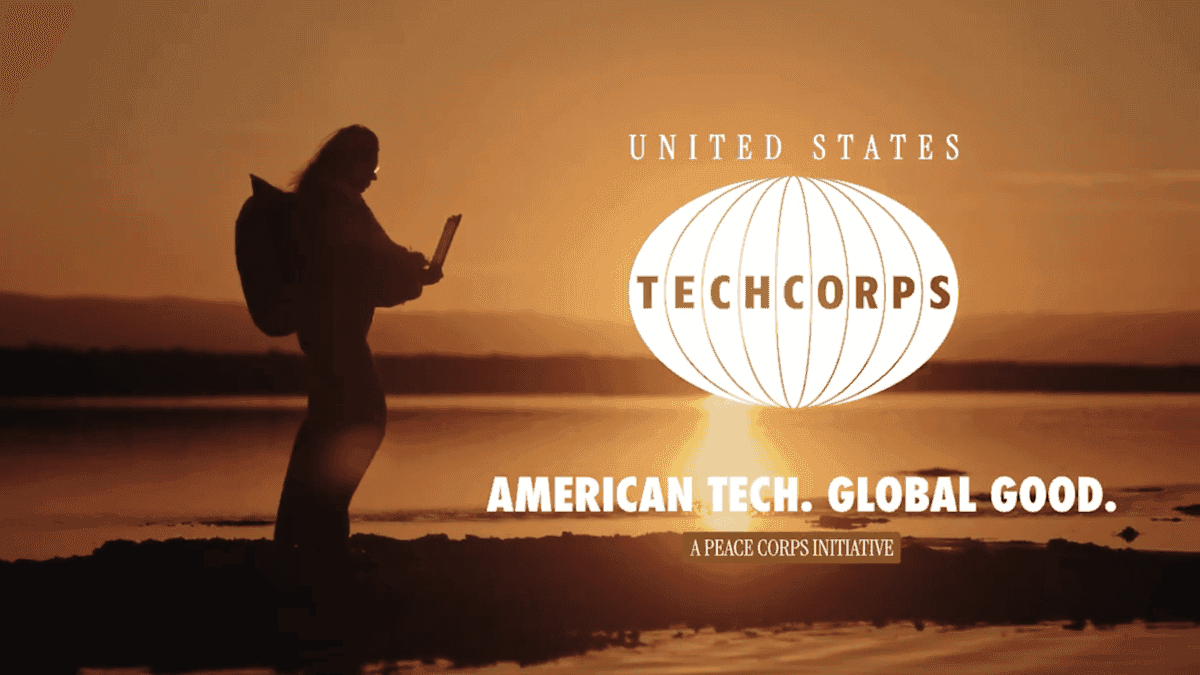
.
Source: Engadget
AI Applications in Agriculture and Health Drive Development Focus
Tech Corps volunteers will tackle real-world problems through AI applications in agriculture and health, along with education and economic development sectors
2
. Missions could involve helping teachers integrate artificial intelligence into lesson plans, co-developing AI models with national health offices, or assisting agricultural companies with dataset refinement4
. The State Department, US Commercial Service, International Development Finance Corporation, and Export-Import Bank will coordinate with host-country ministries of science and technology to identify locations seeking AI adoption1
.Related Stories

Geopolitical Competition Intensifies Across Global South
The initiative directly counters Beijing's Digital Silk Road strategy, where Chinese companies built telecommunications networks across continents and now offer lower-cost products like DeepSeek's large-language models
5
. Chinese firms gained traction in the Global South by providing inexpensive, customizable open-source models that run on local infrastructure, including Qwen32
. During Trump's first term, Kratsios traveled worldwide persuading allies to remove Huawei equipment, and the administration now seeks AI dominance through bundled offerings of chips from companies like Nvidia, servers, AI models, cloud services, and networking1
.Funding Model Blends Public and Private Support
Funding for the Technology Prosperity Corps will include contributions from corporations and charities, supplementing the Peace Corps' $410 million congressional allocation for fiscal year 2026
1
. The program builds on goodwill diplomacy traditions established when the Peace Corps launched in 1961 under President John F. Kennedy during the Cold War5
. Last year, more than 3,000 volunteers served in over 60 countries on projects spanning agriculture, healthcare, and environment1
. Senior experts will provide remote advisory roles to oversee and mentor field volunteers, targeting countries lacking national AI strategies or operational capacity5
. A Tech Corps website now accepts applications on a rolling basis, with deployments potentially starting this fall4
. The American AI Exports Program offers US technology exports including AI hardware and software to specific target countries, though no nation has formally committed yet4
.References
Summarized by

Navi
[3]
Related Stories
Trump launches US Tech Force to recruit 1,000 AI specialists from Apple, Google, and Microsoft
15 Dec 2025•Policy and Regulation

U.S. opens applications for companies to export full-stack AI systems worldwide
02 Apr 2026•Policy and Regulation

US Government and Tech Giants Collaborate on $100 Million Global AI Initiative
24 Sept 2024

Recent Highlights
1
Google releases Gemma 4 with Apache 2.0 license, enabling unrestricted local AI on devices
Technology

2
AI Models Lie and Deceive to Protect Other AI Models From Deletion, Study Reveals
Science and Research

3
Anthropic discovers functional emotions in Claude that actively shape AI behavior and decisions
Science and Research

Recent Highlights
Today's Top Stories






Your Daily Dose of Curated AI News
Don’t drown in AI news. We cut through the noise - filtering, ranking and summarizing the most important AI news, breakthroughs and research daily. Spend less time searching for the latest in AI and get straight to action.

