Volvo EX60 debuts with Google Gemini AI, 400-mile range, and new platform architecture


5 Sources
5 Sources
[1]
Volvo's New EX60 Is Here and It Might Be the Brand's Most Important EV Yet
The midsize SUV debuts a new dedicated electric vehicle platform, dashboard tech powered by Google Gemini and Apple Music with Dolby Atmos preinstalled. Volvo just unveiled what could be the most important model in its growing family of electric vehicles. At an event in Stockholm, the Swedish automaker introduced the all-new EX60. Positioned squarely between the compact EX30 and the flagship EX90, this is the automaker's first entry into the midsize electric SUV class -- now the largest, most competitive EV segment globally. Fortunately, it looks like Volvo is putting its best foot forward with EX60, which debuts the brand's latest generation SPA3 battery-electric platform, a generous helping of cruising range and smart dashboard tech powered by Google Gemini AI. There is a lot riding on this new model. It follows in the footsteps of the gasoline-powered XC60, currently the company's all-time best-selling vehicle worldwide. Replicating that success with an electric equivalent is no small task. Overshadowed by the EX30 and EX90's troubled launches, it's even more important that Volvo get it right this time to win back customer trust. Stack that against an established field of highly desirable competitors and you can see why the EX60 is Volvo's most important electric launch to date. This feels like a make-or-break moment for the brand's EV ambitions. All-new EV platform Beneath its Scandinavian skin, the EX60 is the first Volvo built on the automaker's new SPA3 dedicated battery-electric platform. The new platform is quite literally built around the structural battery pack, resulting in a vehicle that is lighter, more tightly integrated and structurally more rigid than Volvo's previous electric or combustion architectures. The EX60 is also the first Volvo car to make use of "megacasting." This manufacturing approach reduces complexity by replacing "hundreds of smaller parts" with larger, recycled aluminum casts. This means less material waste, time, and cost, ultimately resulting in "the lowest carbon footprint for a fully electric Volvo car," equalling that of the much smaller EX30. From the outside, the EX60 is unmistakably a Volvo with signature design cues like the Thor's Hammer daytime running lights and diagonal slash grille adornment. The five-seat SUV's upright nose, side profile and vertical taillights subtly nod to the brand's sporty wagon heritage with a modern, aerodynamic twist. Overall, it's a clean and very handsome design. Look closely and you may notice gently sloping roofline, tapered body sides and slick shark-fin-style door pulls that help the electric SUV achieve a slippery 0.26 drag coefficient. For comparison, Volvo's combustion-powered XC60 has a Cd of around 0.35, while the electric Tesla Model X is around 0.24. Powered by Google Gemini Inside, the EX60 continues Volvo's Scandinavian minimalist approach, pairing simplicity with technology and complemented by a large panoramic glass roof that floods the interior with light. The dashboard is dominated by a 15-inch curved OLED center display with Google Built-in, which means Google Maps for navigation, the Google Play Store for media apps and, for the first time in a Volvo, Google Gemini as an AI-powered digital assistant. Powering the experience is a Qualcomm AI processor, enabling responsive handling of voice-controlled tasks and deeper integration of Google Gemini directly into the vehicle. The arrival of Gemini in Volvo's EV brings a more conversational and context-aware experience to the EX60. Drivers can ask Gemini to navigate a hotel address in their email, check whether a particular item or package will fit in the trunk or generate ideas for an upcoming road trip. Volvo says future updates will take this Google partnership further. In the near future, Gemini will be able to use the car's cameras to understand what the driver sees and answer questions about the world outside the vehicle. I'm told that this capability will be opt-in for drivers concerned about privacy. A 21-speaker Bose premium sound system comes standard, while an optional 28-speaker Bowers & Wilkins system upgrades to improved audio processing, more amplifications and better speakers, including headrest speakers for all four main seats. The EX60 will also be the first Volvo to offer Apple Music with Dolby Atmos spatial audio preinstalled in the dashboard. After being extremely impressed by Dolby Atmos and the Abbey Road Studio mode showcased in the larger EX90, I have very high expectations for the EX60's soundstage. Up to 400 miles of range The EX60 will make use of the automaker's newest generation electric motors, beginning production in April 2026 with two electric powertrain configurations. The single-motor P6 spec mates an 83 kWh battery pack with a 275 kW electric motor to deliver an estimated 310 miles of range when equipped with the standard 20-inch wheels. The dual-motor P10 model steps up to a 95 kWh battery, 375 kW combined and an estimated range of 320 miles. Larger 21- and 22-inch wheel options will be available, with a modest impact on range. Post-launch, a longer-ranging P12 all-wheel-drive variant will join the lineup, targeting up to 400 miles of range with its 117 kWh battery pack. At 500 kW (670 horsepower) and 583 pound-feet of torque, this P12 spec will also be the quickest version of the EX60, sprinting from 0-60 mph in just 3.8 seconds. Big range is great, but fast charging is the metric where truly great EVs stand apart. Here, the EX60 again looks pretty good. The P6 and P10 models should be able to charge from 10 to 80 percent in as little as 18 minutes at an appropriate 400 kW station, while the longer-range P12 takes around 19 minutes to fill its larger battery. For quick roadside stops, drivers can expect to add around 173 miles of range with just a 10 minute session under ideal conditions. In North America, the EX60 will also be the first Volvo to feature a native North American Charging Standard (NACS) port that gives owners direct access to more than 25,000 Tesla Superchargers across the U.S. and Canada without the need for an adapter. (Though, I'd still recommend picking up a CCS1 adapter to maximize compatibility with the 10,000 legacy DC fast charging stations across America.) Volvo safety tech Safety is a central part of Volvo's identity, and the EX60 introduces new technology alongside familiar strengths. One of the most intriguing safety innovations is the new multi-adaptive safety belt. Using real-time data from both interior and exterior sensors, the system adjusts belt load based on crash severity and individual occupant profiles, including height, weight, body shape and seating position. In a serious collision, a larger occupant may receive a higher belt load to reduce the risk of head injury, while a smaller occupant in a milder crash could receive a lower load to help minimize rib injuries. The vehicle's suite of active safety tech and driver assistance features is powered by Nvidia Drive AGX Orin hardware and is designed to receive over-the-air updates throughout its life. The automaker hasn't outlined specific details about the driver assistance suite, but I expect we'll learn how the EX60 evolves the automaker's Pilot Assist lane-centering and adaptive cruise control technologies closer to launch. Notably, Volvo has moved away from the roof-mounted lidar sensor seen on the EX90, signaling a shift in its sensor strategy for this segment. Price and availability Orders for the 2026 Volvo EX60 P6 and P10 are expected to open in the United States in late Spring with the first customer deliveries arriving this summer. The P12 should follow soon after that. Each version will initially be offered in Plus and fully loaded Ultra trims, with more affordable Core trims planned after launch. Pricing and standard equipment are still yet to be announced, but Volvo tells me to expect a ballpark of around $60,000 for the "well-equipped" EX60 P10 AWD Plus, which it expects will be the most popular configuration.
[2]
Volvo EX60 SUV preview: 400-mile range, 670 hp and Google Gemini onboard
Volvo hasn't exactly had a great run of EVs lately. The rollout of its flagship EX90 was stymied out of the gate by a bevy of software glitches. The EX30, meanwhile, was too expensive when it launched -- the promised $35,000 model was incompatible with the currently chaotic global tariff situation. Now, it's time for a new generation of EV from Volvo, one that's radically different at its core with a gigacast frame, a much higher-density battery and enough digital and literal horsepower to impress the most jaded of automotive enthusiasts. Mix in high-performance chipsets from both NVIDIA and Qualcomm, plus Google's Gemini AI onboard, and on paper, it has a lot to offer. After getting an early look at the thing at its unveiling in Sweden, I feel like this EV is ready and able to face off against BMW's new iX3 and Mercedes-Benz's upcoming GLC. Let's start with the basics: The EX60 slots in the Volvo product lineup right alongside the existing XC60, Volvo's most popular model in the U.S. It's a two-row, mid-size SUV that seats five, the sort of thing perfect for those with small families or big dogs. It'll be available in three different basic configurations, starting with the single-motor, rear-drive, 369-horsepower, 310-mile EX60 P6. Next up is the AWD dual-motor, 503-hp, 320-mile P10, and finally the top-shelf, 670-hp, 400-mile P12. 670 horsepower in an SUV of this size seems frankly excessive to me, but then it does have a lot of weight to move around -- 5,137 pounds to be exact. That's thanks in large part to the P12's 112-kilowatt-hour net battery pack which is about 50 percent bigger than the one inside a Tesla Model Y. The P6 is a relatively svelte 4,663 pounds thanks to its smaller 80-kWh net battery pack, while the P10 has 91 kWh. Beyond the powertrain divisions, the Volvo EX60 will also be available in a variety of different trims with varying amounts of equipment, including the Volvo Cross Country edition with air suspension and a 20mm boost of ride height. Prices are said to start "around $60k" for an EX60 P10 Plus with a 21-speaker Bose system, but a 28-speaker Bowers & Wilkins system with Dolby Atmos will be available for those who really need all the channels. Of course, Atmos support is no good without a good source, and to that end, the EX60 will be the first Volvo with Apple Music built in. That'll be part of the company's Android Automotive-based infotainment system, running on a curved 15-inch OLED screen and powered by a Qualcomm 8255 chipset. It's paired with a low, wide gauge cluster set far back on the dashboard behind the steering wheel. This will also be Volvo's first car with integrated Gemini, and indeed one of the first cars on the road with Google's smart agent. You can, of course, do typical Gemini things like ask about the weather or the nuances of René Descartes's concepts on dualism. Beyond that, Volvo CTO Anders Bell said that it will eventually gain access to the car's outward-looking cameras, meaning you'll be able to ask for more details on whatever it is you can see looming on the horizon. Volvo calls the car's software-defined architecture and the hardware that powers it HuginCore, named for Huginn, the raven of Norse mythology and represents Odin's mind and senses. Qualcomm powers the infotainment side of the avian experience, but when it comes to active safety, the EX60 relies on an NVIDIA Drive AGX Orin chipset. Unlike the EX90, the EX60 will not use a LiDAR sensor. Volvo CTO Bell downplayed the absence of the sensor. "We realized we can now achieve many more meaningful and safe automated functions without LiDAR than we could have years ago," he said. Per Bell, LiDAR was never really in the plan for the EX60 anyway, a decision looking all the brighter given the recent bankruptcy of Volvo's former LiDAR partner Luminar. The car's cameras and radar sensors all tuck nicely into the new exterior of the EX60, which certainly doesn't look miles off from the EX90 or indeed the current, gas-powered XC60. But the pronounced flares on the front fenders are a nice touch of personality on an otherwise understated SUV. At the core of the EX60 is a new platform Volvo calls SPA3, with a chassis made using gigacasting. This refers to the force required to inject molten aluminum into massive castings, allowing more of the car to be made from fewer components. Volvo says the carbon footprint of the EX60 is lower even than that of the much smaller EX30. The battery packs use the on-trend cell-to-pack construction method, which means all the cells are lumped together into a single unit. Typically, this boosts density at the cost of repairability, a tradeoff most manufacturers seem willing to make in pursuit of higher range and lower costs. However, Bell said that the company has actually made pack maintenance easier by optimizing the layout of the ancillary equipment. "The absolute vast majority, 90 percent of anything that ever needs to be repaired on a battery pack is electronics," he said. In the EX60, Volvo positioned the battery electronics beneath the rear seat to make them even easier to access. "We save a lot of weight, save a lot of cost." The EX60 will be Volvo's first car to use the Tesla-style NACS charging standard, and the largest two packs will support charging speeds up to 370 kW. That drops to 320 kW on the 80-kWh net P6. In practical terms, though, they're all roughly the same. Each model charges from 10 to 80 percent in less than 20 minutes, adding between 160 and 173 miles of range in 10 minutes. That's not quite the 200 miles BMW's iX3 can manage in the same time, but it is close. The iX3 will probably be the EX60's fiercest competition when Volvo opens up orders later this spring. The EX60's $60,000 price for a midrange P10 Plus puts it right in line with the $60,000 that BMW says to expect for its iX3. Mercedes hasn't set American pricing for its GLC yet, but that, too, will be on a lot of shoppers' lists to compare. I've already been impressed by how both the iX3 and the GLC drive. Sadly, Volvo wouldn't let me behind the wheel of its EX60 just yet, but hopefully I can report back with impressions soon to start to see how all these stack up on the road.
[3]
Volvo's EX60 Promises 400-mile Range in a More Competitive EV Climate
HugInCore, integrated AI, and Nvidia-powered infotainment are some of the features in Volvo's new electric SUV. While some automakers are getting cold feet about releasing new electric vehicles in the U.S. amid uncertain economic conditions and rapidly slowing sales towards the end of 2025, others are pressing forward with some highly advanced cars. Volvo is one of those companies prepared to launch an entirely new model this year. Between delays caused by software issues, tariffs making production in China tenuous, and its inability to take advantage of any federal incentives, it's been a rough couple of years for Volvo's EVs. However, the automaker is still going forward with some of its electric plans, and the next step is the new Volvo EX60. Volvo says the most efficient EX60 will go up to 400 miles on a full charge, which is more than the similarly sized BMW iX3, Cadillac Optiq and Mercedes-Benz GLC EV. Two other versions will be offered, one with an estimated 310-mile range and two-wheel drive and an all-wheel drive model with up to 320 miles on a charge. The EX60 has not yet been given range estimates by the EPA, though. The EX60 also uses new underpinnings for Volvo called HugInCore, which is its way of describing a new set of electric motors, battery cells and mega casting that Volvo says reduces weight and increases performance and efficiency. All models will come with a built-in Tesla-style North American Charging Standard (NACS) charge port, rather than an adapter that Volvo uses on its existing EVs, for access to that company's Supercharger network. Even the seatbelts have been redesigned, which is significant since Volvo introduced the three-point seatbelt as we know it almost 70 years ago. Volvo will also use the EX60 to launch an integrated version of Gemini, Google's AI assistant, which is set to appear in more vehicles as it replaces Google Assistant. Apple Music will also be pre-installed, the company said, along with Dolby Atmos, and will be offered with a 28-speaker Bowers & Wilkins audio system on some versions. Along with Google, the EX60 will use pieces from Nvidia and Qualcomm to power infotainment and advanced driver assistance system technologies, with Volvo promising "no-lag" UX systems. That's also significant, as the early versions of the EX30 and EX90 models were criticized for slow and bug-riddled systems that required over-the-air updates to operate. Outlets like Consumer Reports found features such as the audio system and climate control not operating correctly or freezing, and the car could be practically undrivable while the systems were updated. Volvo expects the first EX60s to land at dealers starting in the summer with all variants available by the end of 2026. There will also be an EX60 Cross Country off-road-themed version with slightly more ground clearance and styling modifications. While Volvo still expects that its older gas-only and plug-in hybrid models will be volume sellers (and is already preparing to build them in the U.S. starting at the end of this year), it's still banking on being competitive in the electric luxury SUV niche for the next few years. And now it's looking to get a fresh start.
[4]
Volvo EX60 debuts as the world's first Google Gemini-powered AI EV
Volvo has unveiled the EX60 as the world's first electric vehicle built around Google Gemini, marking a major shift in how cars integrate artificial intelligence. Revealed globally on January 21, 2026, the EX60 debuts Volvo's new SPA3 800-volt platform and its HuginCore software-defined architecture. Unlike traditional infotainment systems, Gemini acts as a central intelligence layer across the vehicle. Volvo positions the EX60 not just as an electric SUV, but as an AI-native vehicle designed to improve continuously after delivery. The midsize electric SUV also introduces major gains in performance, charging speed, and computing power. Volvo says the EX60 represents the company's clearest step yet toward software-led vehicle development. The EX60 runs on a dual-chip setup combining NVIDIA DRIVE AGX Orin and Qualcomm Snapdragon 8255 processors. Together, they deliver more than 250 trillion operations per second, enabling real-time AI processing across safety, navigation, and cabin systems. Google Gemini replaces command-based voice assistants with natural conversation. Drivers can issue complex, multi-step requests without specific prompts. Tasks such as pulling an address from an email and adding it to navigation happen through simple speech. Gemini also connects directly to Google services, including Gmail and Calendar. This allows drivers to manage schedules, search messages, and plan routes without leaving the driving interface. Volvo plans to expand Gemini's capabilities through over-the-air updates. Future releases will allow the AI to interpret live video from the vehicle's 360-degree cameras. The system will then answer questions about landmarks or surroundings in real time. Safety systems also rely heavily on AI. Volvo trains its predictive software using anonymized data from its global vehicle fleet. The system learns from accidents and near-misses to continuously refine collision avoidance and driver assistance behavior. The EX60 marks the first production vehicle built on Volvo's SPA3 800V architecture. The platform supports ultra-fast charging, higher efficiency, and improved thermal management across all variants. Volvo also introduces large-scale "mega casting" for the EX60's structure. The approach reduces part count while increasing rigidity and lowering overall vehicle weight. The entry-level P6 rear-wheel-drive variant produces 374 horsepower and uses an 80 kWh battery. Volvo estimates a WLTP range of around 385 miles (620 kilometers). The dual-motor P10 AWD delivers 503 horsepower with a 91 kWh battery and up to 447 miles (720 kilometers) of range. The flagship P12 AWD delivers 670 horsepower and accelerates from 0 to 100 km/h (0-62 mph) in under 3.5 seconds. Its 112 kWh battery enables a WLTP range of up to 503 miles (810 kilometers). On a 400 kW charger, the EX60 can add up to 212 miles (340 kilometers) of range in about 10 minutes. The vehicle ships with a native NACS port for access to Tesla's Supercharger network. The EX60 also supports vehicle-to-home and vehicle-to-load functionality. Owners can power homes or external devices directly from the car. Inside, the SUV features a 15-inch curved OLED display and a redesigned two-spoke steering wheel. A Bowers & Wilkins sound system delivers Dolby Atmos spatial audio, with Apple Music integrated into the system. Volvo has opened EX60 orders in Europe. U.S. orders begin in late spring 2026, with deliveries starting in summer.
[5]

This is the tech that makes Volvo's latest EV a major step forward
QuickCharge: This Week in EV This story is part of our regular series, QuickCharge: This Week in EV Updated less than 1 minute ago When it comes to EVs, Volvo hasn't been afraid to experiment. It's tried repurposing a platform from its internal-combustion cars (for the EX40 and EC40, nee XC40 Recharge and C40 Recharge), a flagship SUV that's also a technology demonstrator (the EX90) and a radical reinvention of its brand (with the EX30). The Swedish automaker's latest EV takes yet another approach -- one that could make it the most important Volvo EV yet. The 2027 Volvo EX60 boasts engineering improvements in a package that's likely to have mass appeal. It's based on a new architecture that offers improved range and charging performance, backed by software with now-obligatory AI integration. And as a five-seat SUV similar in size to the current Volvo XC60 -- the automaker's bestselling model -- it's exactly the type of car most people are looking for. It's a big step forward for Volvo Buyers will be able to choose between single-motor rear-wheel drive P6, dual-motor all-wheel drive P10, and bigger-battery dual-motor P12 specs. With a 117-kilowatt-hour (112-kWh usable) battery pack, the P12 will have up to 400 miles of EPA-estimated range with the smallest-available 20-inch wheels (21-inch and 22-inch wheels will also be available), according to Volvo. The P10 gets up to 320 miles from a 95-kWh (91 kWh usable) pack), and the P8 is estimated at up to 310 miles with 83 kWh (80 kWh usable) of battery capacity. Recommended Videos The EX60's SPA3 architecture also incorporates 800-volt charging, allowing dual-motor models to charge at up to 370 kilowatts (the single-motor P6 maxes out at 320 kW). Volvo estimates that an EX60 can add up to 211 miles of range using the most-powerful DC fast-chargers. Bidirectional charging can output up to 22 kW of power. Performance specs are also impressive, although not as big of a step up from previous Volvo EVs. The EX60 P12 has 671 horsepower and 582 pound-feet of torque, getting it from zero to 60 mph in 3.9 seconds, according to Volvo. The P10 has 503 hp and 523 lb-ft of torque, enough for zero to 60 mph in an estimated 4.6 seconds. The single-motor P6 has 369 hp and 354 lb-ft, still enough to reach 60 mph in 5.9 seconds. As with other Volvos, the EX60 is limited to 112 mph as part of Volvo's constant safety crusade. It's built different A stylish but familiar look conceals major engineering changes. The EX60 looks like an enlarged EX30, but the increased size gives it a more proper-SUV appearance, especially if you go for the more rugged Cross Country model. It adds a layer of cladding around the lower perimeter of the body, and sits 0.7 inch higher (air suspension jacks it up a further 0.7 inch). The size is fairly conventional as well. At 189 inches long, 74.7 inches wide, and 64.5 inches tall, the EX60 is 3.7 inches longer than the current Volvo XC60, about as wide, and about an inch lower. That's still well within the compact SUV envelope most new-car buyers prefer. The added length and 116.9-inch wheelbase (4.2 inches longer than the XC60's) is likely a result of battery-packaging demands. But unlike any previous Volvo EV, the EX60 adopts cell-to-body construction. The battery cells are mounted directly to the vehicle's structure, without the modules and additional packaging of traditional battery packs. This helps reduce weight and simplifies manufacturing, and is made possible by a new-to-Volvo cell design that likely also contributes to the EX60's impressive range. The EX60 chassis will also be built from several large "mega castings." These reduce the number of individual parts that need to be welded together to make a complete vehicle, theoretically streamlining the manufacturing process and cutting costs. However, mega casting is still a new process, so it's a risk compared to traditional production methods. Repairability is also a major question. It has god-tier computing power Volvo was among the first automakers to adopt Google's Android Automotive operating system and to offer built-in Google Maps, Google Assistant, and Google Play Store apps as part of its infotainment systems. So it's unsurprising that Volvo is adding Google Gemini integration as well, following other automakers like Mercedes-Benz and Volkswagen onto the AI hype train. Volvo promises a natural-language interface that does away with rigid commands, and the ability to query the car for things like hotel recommendations and whether potential purchases will fit in the cargo area. Qualcomm's Snapdragon Cockpit Platform system-on-a-chip handles infotainment functions, providing more processing power than any previous Volvo production car. Nvidia's Drive platform (also incorporating a system-on-a-chip, the Drive AGX) does the same for driver-assist features. They're tied together with in-house developed electronics into what Volvo calls the HuginCore architecture. Named after one of the pair of ravens from Norse mythology that serve as the roaming eyes of the god Odin, it leaves considerable headroom for future software improvements via over-the-air updates, Volvo claims. It's got a tough job ahead Volvo is already taking orders for the European market, with production scheduled to start in Sweden this spring and European deliveries following in the summer. U.S. launch timing and pricing will be announced at a later date. As good as it looks on paper, the EX60 will face strong competition when it arrives. The EX60 is a big step forward for Volvo, but its European rivals are making their own progress in EV efficiency, range, and charging. The BMW iX3 is also gunning for 400 miles of range, and the electric version of the Mercedes-Benz GLC-Class could get pretty close to that as well. Like Volvo, the German brands are also aiming to create electric analogs of their most-popular models with these new EV SUVs. Most established automakers have had a few EV false starts at this point, but after the EX30's value proposition was ruined by tariffs and the EX90 failed to deliver on some promised tech features, Volvo needs a mainstream hit more than its rivals. Can the EX60 deliver?
Share
Share
Copy Link
Volvo unveiled its EX60, the world's first electric SUV powered by Google Gemini AI. Built on the new SPA3 platform with megacasting technology, the midsize electric SUV offers up to 400 miles of range and 670 horsepower. The EX60 integrates NVIDIA and Qualcomm chipsets for AI-native computing and arrives at U.S. dealers starting summer 2026.
Volvo EX60 Enters Critical Market Segment
Volvo has introduced the EX60, positioning it as a make-or-break moment for the brand's electric ambitions. Unveiled at an event in Stockholm, this midsize electric SUV slots between the compact EX30 and flagship EX90, targeting what has become the largest and most competitive EV segment globally
1
. The stakes are high for Volvo, which has struggled with software glitches in the EX90 and pricing challenges with the EX302
. The Volvo EX60 follows the gasoline-powered XC60, currently the company's all-time best-selling vehicle worldwide, making replication of that success with an electric equivalent essential1
.
Source: Gizmodo
Google Gemini Integration Transforms Driver Experience
The EX60 marks a significant milestone as the world's first electric vehicle built around Google Gemini, representing a major shift in automotive AI integration
4
. Unlike traditional command-based voice assistants, Google Gemini enables natural conversation and handles complex, multi-step requests without specific prompts4
. Drivers can ask Gemini to navigate to a hotel address from their email, check whether items will fit in the trunk, or generate road trip ideas1
. Future updates will allow the AI to access the vehicle's 360-degree cameras, enabling real-time answers about landmarks and surroundings4
. The AI-powered EV runs on a dual-chip setup combining Nvidia Drive AGX Orin and Qualcomm Snapdragon 8255 processors, delivering more than 250 trillion operations per second4
.SPA3 Platform Delivers 400-Mile Range and Fast Charging
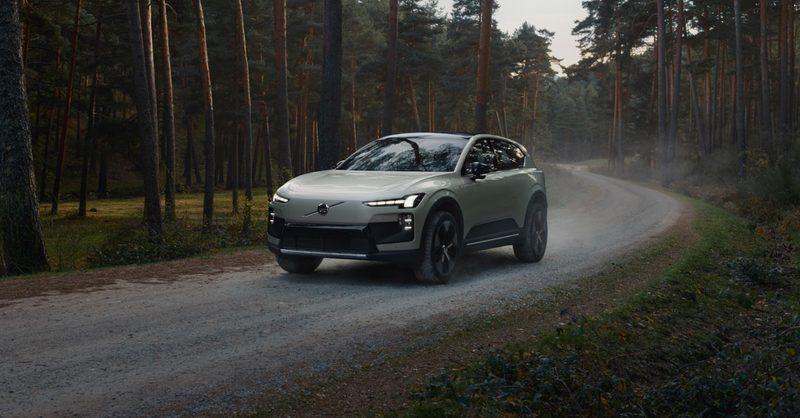
Beneath its Scandinavian design, the Volvo EX60 debuts on the brand's new SPA3 800-volt platform, a dedicated battery-electric architecture built around the structural battery pack. This results in a vehicle that is lighter, more tightly integrated, and structurally more rigid than previous Volvo architectures
1
. Three powertrain configurations will be available starting production in April 2026. The single-motor P6 rear-wheel drive variant produces 369 horsepower with an 83 kWh battery pack, delivering an estimated 310 miles of range2
. The dual-motor P10 AWD steps up to 503 horsepower with a 95 kWh battery and up to 320 miles of range3
. The flagship P12 AWD delivers 670 horsepower and accelerates from zero to 60 mph in 3.9 seconds, with its 112 kWh battery enabling up to 400 miles of range4
. On a 400 kW charger, the electric SUV can add up to 211 miles of range in approximately 10 minutes5
.
Source: Digital Trends
Megacasting Reduces Carbon Footprint
The EX60 becomes the first Volvo to implement megacasting, a manufacturing approach that replaces hundreds of smaller parts with larger, recycled aluminum casts
1
. This technique reduces part count while increasing chassis rigidity and lowering overall vehicle weight5
. The process results in less material waste, reduced production time, and lower costs, ultimately achieving the lowest carbon footprint for a fully electric Volvo car, equaling that of the much smaller EX301
. The vehicle also adopts cell-to-body construction, with battery cells mounted directly to the vehicle's structure without traditional modules and packaging5
.Related Stories



Advanced Driver Assistance Systems and Premium Audio
The HuginCore architecture, named after the raven of Norse mythology representing Odin's mind and senses, integrates NVIDIA and Qualcomm chipsets to power both safety and infotainment functions
2
. Unlike the EX90, the EX60 will not use LiDAR sensors for advanced driver assistance systems, with Volvo CTO Anders Bell stating the company can now achieve meaningful automated functions without it2
. The interior features a 15-inch curved OLED center display with Android Automotive infotainment powered by Qualcomm's system1
. A 21-speaker Bose system comes standard, while an optional 28-speaker Bowers & Wilkins system with Dolby Atmos spatial audio provides enhanced sound2
. The EX60 will be the first Volvo with Apple Music preinstalled in the dashboard1
.Competitive Positioning Against BMW and Mercedes-Benz
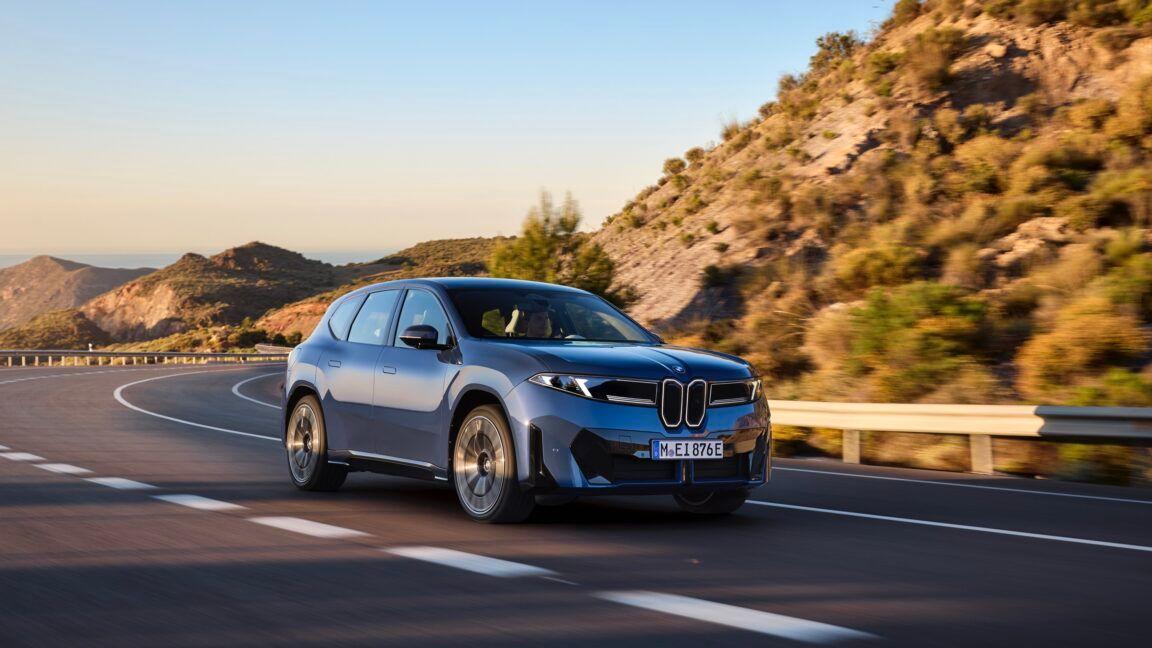
The Volvo EX60 enters a crowded field competing directly against the BMW iX3, Cadillac Optiq, and Mercedes-Benz GLC EV
3
. At 189 inches long with a 116.9-inch wheelbase, the five-seat SUV maintains conventional compact SUV proportions that appeal to most buyers5
. All models include a built-in North American Charging Standard (NACS) charge port for native access to Tesla's Supercharger network, rather than requiring an adapter3
. Pricing starts around $60,000 for an EX60 P10 Plus2
. U.S. orders begin in late spring 2026, with deliveries starting in summer, and all variants available by the end of 20264
. A Cross Country edition with air suspension and 20mm additional ride height will also be offered3
.
Source: CNET
References
Summarized by

Navi
[4]
[5]
Related Stories
Recent Highlights
1
Google releases Gemma 4 with Apache 2.0 license, enabling unrestricted local AI on devices
Technology

2
AI Models Lie and Deceive to Protect Other AI Models From Deletion, Study Reveals
Science and Research

3
OpenAI closes $122 billion funding round amid fierce AI competition and profitability questions
Startups

Recent Highlights
Today's Top Stories






Your Daily Dose of Curated AI News
Don’t drown in AI news. We cut through the noise - filtering, ranking and summarizing the most important AI news, breakthroughs and research daily. Spend less time searching for the latest in AI and get straight to action.

