Washington Post uses AI to set subscription prices, Democrats push to ban surveillance pricing


2 Sources
2 Sources
[1]
Washington Post's Surveillance Pricing Under Fire From Dems Who Want to Ban the Practice
Can Jeff Bezos squeeze a little more money out of his dying newspaper? Some subscribers to the Washington Post have been receiving emails that their subscription rates will be going up, according to the Washingtonian. That part isn't surprising, given the fact that Post owner Jeff Bezos has reportedly been upset that the newspaper is losing money, especially since ditching about half of his workforce. But some folks who scrolled down to the bottom of the email were surprised when they read about how the new price was determined: “This price was set by an algorithm using your personal data.†It's a concept called surveillance pricing, and it's not entirely new. People can often be charged different prices for the same product, depending on any number of factors. If your phone battery is low, rideshare companies like Uber or Lyft might charge more because they know you're desperate. Instacart was recently caught charging up to 23% more to some shoppers based on unknown criteria. Many Democrats aren't happy about it, including Rep. Greg Casar of Texas. On Monday, Casar wrote on Bluesky that surveillance pricing "should be illegal," adding, "I have a bill to ban it." Last year, Casar and Rashida Tlaib of Michigan introduced legislation called the Stop AI Price Gouging and Wage Fixing Act. And last month, two other Democrats in the Senate, Ben Ray Luján from New Mexico and Jeff Merkley from Oregon, introduced very similar legislation called the Stop Price Gouging in Grocery Stores Act of 2026. The Washington Post hasn't explained how it determines pricing by using personal data. But there could be a number of factors, including zip code, estimated income, and purchase history. Bezos, the founder of Amazon, presumably has more data on what people buy than just about anyone in the country. And he's a big supporter of utilizing AI to maximize profits. The problem is that AI can't really make up for losses any business might incur by offering a bad product. The newspaper first hemorrhaged subscribersâ€"250,000 in one week aloneâ€"after Bezos stopped the Washington Post editorial board from endorsing Kamala Harris in the 2024 presidential election against Donald Trump. The Washington Post had no reporters at the Academy Awards on Sunday, according to the paper's former culture writer. And it was the last of the major news outlets to report that the U.S. had started bombing Iran late last month. The paper has purged any writer on the opinion side deemed to be liberal and has instead become a mouthpiece for the Bezos worldviewâ€"a worldview that happens to align perfectly with that of the Trump regime. Bezos has been criticized for buying the distribution rights to First Lady Melania Trump's "documentary" Melania for a whopping $40 million, but the movie itself helps explain why he'd bother. There are several shots of the Trumps with Big Tech oligarchs like Elon Musk, Tim Cook, and Bezos himself. All of these guys need something from Trump, whether it's space contracts or just tariff relief. News of what Bezos has in store for the future of his newspaper doesn't instill confidence that it can survive much longer as a respected institution. The Washington Post's news side still breaks major stories, but the New York Times reports Bezos's big idea was to chop the newsroom's budget in half and demand twice the productivity through AI. Columnist Dana Milbank and economics correspondent Jeff Stein both announced they were leaving the Post on Monday. Businesses are increasingly turning to algorithms to set their prices, and it doesn't look like that's going to change anytime soon unless legislators get involved. At least a dozen states are considering legislation about surveillance pricing, but so far, only New York has passed a law in this area. Unfortunately, it doesn't have much teeth since it only requires companies to notify consumers when a price has been set with AI. On the other hand, New York's law may be the only reason we know that the Washington Post is using AI for subscription rates. The paper has little other incentive to include the disclaimer: "This price was set by an algorithm using your personal data.†Notifying consumers may not fix the problem of surveillance pricing, but at least people can take it into account when deciding where they want to spend their money.
[2]
Jeff Bezos' Washington Post Now Setting Readers' Subscription Prices With Uber-Style AI
Amid its pivot to AI, the Washington Post is abandoning the traditional fix-priced subscription model. According to new reporting from Washingtonian, the once-venerable newspaper will now be setting readers' subscription rates based on an AI-driven algorithm that interprets their personal data, mirroring controversial schemes used by services like Uber, Ticketmaster, and airlines. Readers were informed of the change in the fine-print of an email they received last week warning them that their fee was being set at a higher price. "This price was set by an algorithm using your personal data," it stated. The Post is being opaque about how the pricing algorithm works. When Washingtonian asked the Post for comment on the new pricing mechanism, it directed the paper to a blog post from its engineering team which explains its new AI-driven "smart metering model." The model determines the number of articles that anonymous users, who aren't registered on the Post's website, and registered users, who've signed up but don't pay for a subscription, can read before being shown a paywall. It's the latest sign of how the newspaper has undergone a tech- and AI-inflected pivot under the ownership of Jeff Bezos. Bezos's Amazon, for instance, uses a dynamic pricing scheme that determines prices based on details like demand and location. On top of putting an extra squeeze on customers, the use of algorithms to make real-time pricing changes can be alarmingly invasive. Luca Cian, a professor at the University of Virginia's Darden School of Business, told Washingtonian that algorithmic pricing models typically rely on user demographics and location to tease out how much someone is willing to pay for a product, as when the college prep service The Princeton Review was caught charging more for SAT tutoring in areas with a higher Asian population in a so-called "tiger mom tax." But it can go deeper. A newspaper like the Post, he said, "can calculate in real time a high level of complexity based on massive data they acquire throughout the year, based on all the data that they know about their subscribers and when they did or did not renew their subscription." "If you use an Apple product, usually people increase prices because they assume that if you have an iPhone, you may have a higher income than if you have an Android," Cian continued. "They know exactly from your IP address where you are reading most of the time, so they can access through Zillow how much is the average cost of a house in that area [and] probably infer really quickly your income." It's likely how much readers use the Post will factor in how much they have to pay up. Read a lot, and the algorithm will determine that the customer values the paper "so we can charge them a little bit more"; read only every now and then, "maybe you don't want to affect their pricing too much, because otherwise you stand to lose them." "We are in an age and time where we might need to assume that there is very little privacy left," Cian warned. The pricing changes come amid a backdrop of a rapid AI infusion at the newspaper. In December, the Post sparked an uproar among staffers and readers after launching an AI-generated podcast feature for providing a personalized curation of the paper's latest stories for users that was immediately caught inventing facts, misattributing quotes, and wrongfully editorializing. Before that, the Post had already been using AI to generate summaries of its articles, and had set up an "Ask The Post AI" page for answering reader questions with a chatbot. The Post was even ravaged with a tech company-style layoff, when Bezos ordered the firing of a third of its newsroom staff, who produce the paper's vital reporting, in early February. Whether this proves to be a floodgate-opening moment for journalism remains to be seen. In an industry long suffocated by the rise of a social-media centric internet, and now further threatened by AI automation, it's not inconceivable that more publications could follow in the Post's footsteps.
Share
Share
Copy Link
The Washington Post has begun using an AI-driven algorithm to dynamically set subscription prices based on readers' personal data, marking a controversial shift from traditional fixed-price models. The move has drawn criticism from Democratic lawmakers who are pushing legislation to ban surveillance pricing practices, while raising concerns about invasive data collection and the future of journalism in the AI era.
Washington Post Adopts AI-Driven Algorithm for Subscription Pricing
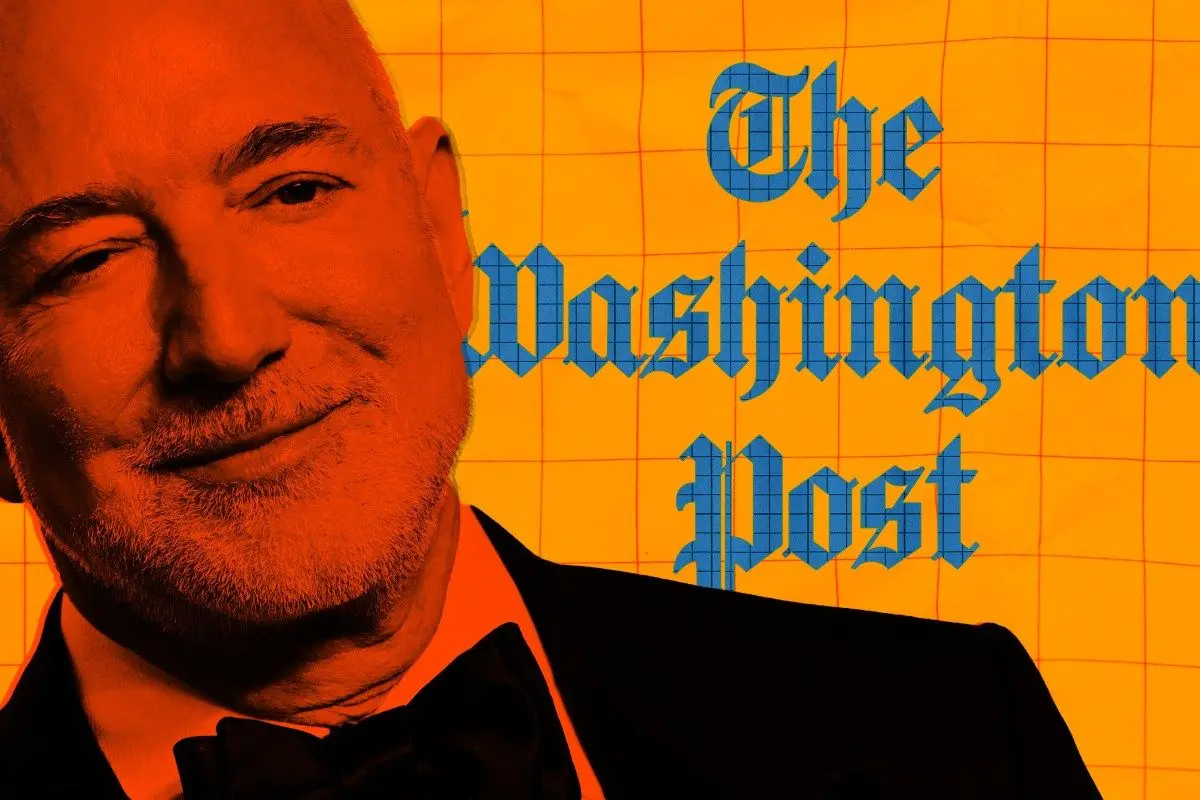
The Washington Post has abandoned its traditional fixed-price subscription model in favor of surveillance pricing that uses an AI-driven algorithm to determine what individual readers pay
1
2
. Subscribers received emails last week informing them of price increases, with fine print revealing a stark disclosure: "This price was set by an algorithm using your personal data"1
. The Jeff Bezos-owned newspaper is now mirroring controversial pricing schemes used by companies like Uber, Ticketmaster, and airlines to dynamically set subscription prices based on customer information2
.
Source: Futurism
The Washington Post has remained opaque about how its pricing algorithm works, directing inquiries to a blog post about its "smart metering model" that determines paywall thresholds for non-subscribers
2
. However, experts suggest the system likely analyzes multiple data points to calculate prices based on personal data. Luca Cian, a professor at the University of Virginia's Darden School of Business, explained that such systems can determine "in real time a high level of complexity based on massive data they acquire throughout the year"2
.Invasive Data Collection Raises Privacy Concerns
The invasive data collection underlying surveillance pricing extends far beyond basic demographics. According to Cian, the algorithm can infer income levels from device type—Apple users typically face higher prices than Android users—and use IP addresses to access property values through sites like Zillow
2
. Reading habits also factor into pricing decisions: frequent readers may be charged more because the algorithm determines they value the publication highly, while occasional readers receive lower prices to prevent cancellations2
. "We are in an age and time where we might need to assume that there is very little privacy left," Cian warned2
.This approach mirrors Amazon's dynamic pricing strategy, unsurprising given that Jeff Bezos founded the e-commerce giant and has pushed to utilize AI to maximize profits
1
. Previous examples of AI-powered price gouging include Instacart charging up to 23% more to some shoppers based on undisclosed criteria, and The Princeton Review charging higher SAT tutoring fees in areas with larger Asian populations1
2
.Democrats Push Legislation to Ban AI Pricing Practices
The pricing model has sparked backlash from Democratic lawmakers advocating for legislation to ban AI pricing schemes. Rep. Greg Casar of Texas declared on Bluesky that surveillance pricing "should be illegal," noting he has introduced a bill to prohibit the practice
1
. Last year, Casar and Rep. Rashida Tlaib of Michigan introduced the Stop AI Price Gouging and Wage Fixing Act1
. Separately, Senators Ben Ray Luján from New Mexico and Jeff Merkley from Oregon introduced similar legislation called the Stop Price Gouging in Grocery Stores Act of 20261
.At least a dozen states are considering legislation addressing surveillance pricing, though only New York has passed a law requiring companies to notify consumers when prices are set by AI
1
. This notification requirement may be the only reason the Washington Post disclosed its algorithmic pricing to subscribers, as businesses have little incentive to reveal such practices1
.Related Stories

Broader AI Pivot Transforms Newsroom Operations
The pricing changes represent just one facet of the newspaper's rapid AI infusion under Bezos's ownership. In December, the Washington Post launched an AI-generated podcast feature that was immediately caught inventing facts, misattributing quotes, and wrongfully editorializing
2
. The publication had already been using AI to generate article summaries and set up an "Ask The Post AI" chatbot page2
. In February, Bezos ordered the firing of a third of the newsroom staff in a tech company-style layoff2
. According to the New York Times, Bezos's vision involves cutting the newsroom budget in half while demanding twice the productivity through AI1
.The newspaper has faced mounting challenges beyond its technological transformation. It hemorrhaged 250,000 subscribers in one week after Bezos prevented the editorial board from endorsing Kamala Harris in the 2024 presidential election
1
. Prominent journalists including columnist Dana Milbank and economics correspondent Jeff Stein announced their departures on Monday1
. The publication had no reporters at the Academy Awards and was the last major outlet to report on U.S. bombing operations in Iran1
.Whether this pricing model proves to be a watershed moment for journalism remains uncertain. As the industry faces threats from social media disruption and AI automation, other publications may follow the Washington Post's lead in adopting algorithmic pricing
2
. For now, businesses increasingly turn to algorithms to set prices, and this trend shows no signs of reversing unless legislators intervene1
. Readers must now factor these pricing practices into their decisions about where to spend their money and which institutions to support1
.References
Summarized by

Navi
Related Stories
The Washington Post's AI-Assisted Opinion Section: A Controversial Shift in Journalism
05 Jun 2025•Technology

Instacart caught using AI pricing to charge different prices for the same groceries across stores
10 Dec 2025•Business and Economy

AI-Driven Personalized Pricing: A Double-Edged Sword for E-Commerce
20 Oct 2025•Business and Economy

Recent Highlights
1
Google Maps unveils Ask Maps with Gemini AI and 3D Immersive Navigation in biggest update
Technology

2
Three Tennessee teens sue xAI over Grok AI creating child sexual abuse material from real photos
Policy and Regulation
3
Meta plans to cut 20% of workforce as AI spending reaches $600 billion, mirroring broader tech trend
Business and Economy

Recent Highlights
Today's Top Stories




Your Daily Dose of Curated AI News
Don’t drown in AI news. We cut through the noise - filtering, ranking and summarizing the most important AI news, breakthroughs and research daily. Spend less time searching for the latest in AI and get straight to action.

