Waymo's sixth-generation robotaxi is ready for passengers and built for high-volume production


2 Sources
2 Sources
[1]
Waymo's next-gen robotaxi is ready for passengers -- and also 'high-volume production'
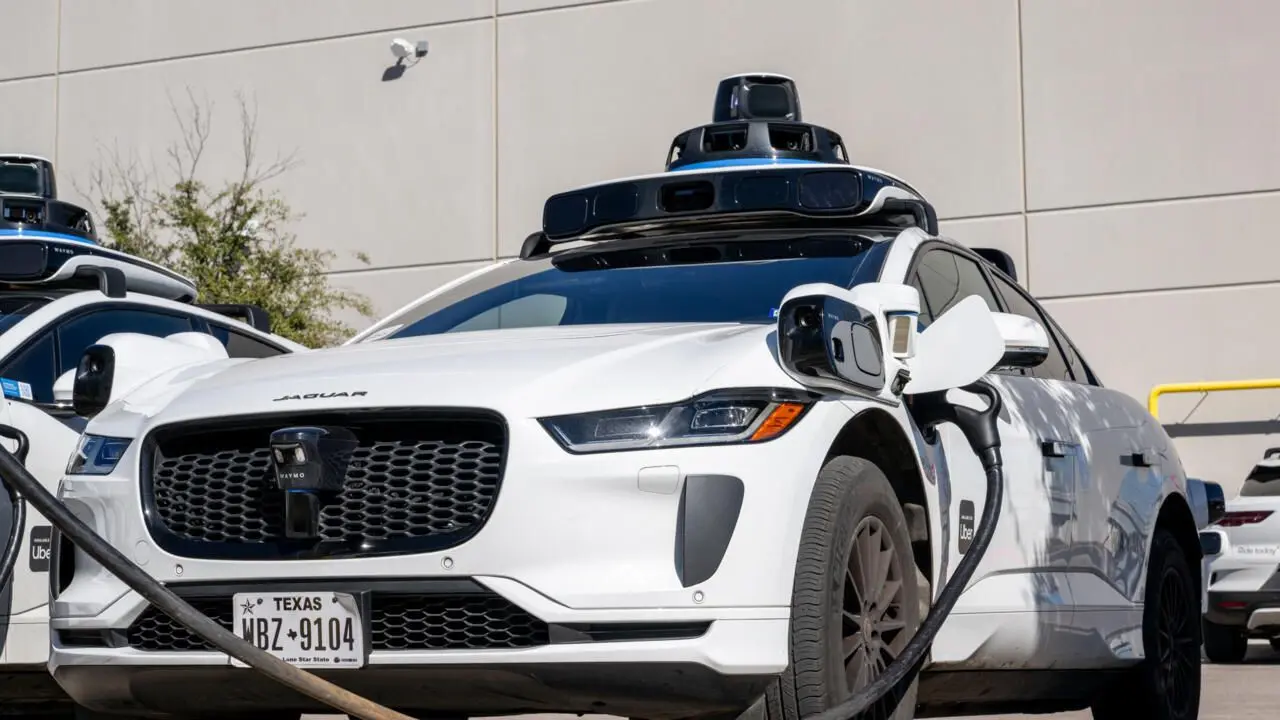
After years of testing and validation, Waymo announced today that it's sixth-generation robotaxi technology is finally ready for passenger trips. The updated autonomous driving system will first be rolled out for employees and their friends in San Francisco and Los Angeles, with public customers to follow. Waymo's current fleet of Jaguar I-Pace vehicles runs on the company's fifth generation technology, first rolled out in March 2020. But that vehicle has reached the end of its shelf life, after Jaguar discontinued the model at the end of 2024. The updated system is designed to work seamlessly across multiple vehicle types, starting with the Zeekr RT minivan (rebranded as Ojai) and followed by the Hyundai Ioniq 5. Waymo is in talks with other automakers, including Toyota, about future models. Waymo says that its sixth-generation system is the smartest, most capable autonomous vehicle it's ever designed, while also using fewer sensors to lower its overall costs. Its cameras are more powerful, its lidar are able to see things the cameras might miss, and its improved radar are able to tackle extreme weather conditions. But more importantly, its built for "high-volume production," with Waymo's manufacturing partners able to churn out "tens of thousands of units a year." After proving that it can build a successful robotaxi business across multiple markets, Waymo is aiming to scale more rapidly, eyeing 20 new cities in 2026. "Designed for long-term growth across multiple vehicle platforms, this system's expanded capabilities allow us to safely broaden our footprint into more diverse environments, including those with extreme winter weather, at an even greater scale," Waymo VP of engineering Satish Jeyachandran said in a blog post. Jeyachandran listed a number of metrics -- developed over seven years, 200 million miles of testing in 10+ major cities -- to bolster the case that the sixth generation is ready for the road. And in perhaps a veiled swipe at Tesla's camera-only autonomous system, he explained how Waymo's multi-sensor hardware stack provides the redundancy necessary to create the most robust picture of the environment around each vehicle, while also detecting even the hardest-to-spot objects and edge cases. "Our experience as the only company operating a fully autonomous service at this scale has reinforced a fundamental truth: demonstrably safe AI requires equally resilient inputs," he said. "This deep understanding of real-world requirements is why the Waymo Driver utilizes a custom, multi-modal sensing suite where high-resolution cameras, advanced imaging radar, and lidar work as a unified system." But what about those sensors? The vision system runs on high-powered 17-megapixel cameras, which Waymo calls "imagers," capable of capturing "millions of data points for incredibly sharp images." (By contrast, Tesla's current Hardware 4 (HW4) vehicles use 5-megapixel Sony IMX963 cameras.) The incredible resolution allows Waymo to use fewer overall cameras: 16, down from 29 in the fifth-generation system. Those cameras are bolstered by strategically placed short-range lidar, which are also coming down in cost for the company. The lidar help with identifying vulnerable road users, like pedestrians or bicyclists, while also providing "centimeter-scale range accuracy," Jeyachandran says. And they've been reengineered to help penetrate extreme weather situations that may hamper even the highest resolution camera, which will become more important as Waymo aims to launch in snowier climates. Jeyachandran also touted more affordable radar sensors, and the new system's external audio receivers, or EARs (see what they did there), that can detect audio inputs like approaching sirens or trains. But if you're taking anything away here, it should be that Waymo thinks it can make a lot more of these vehicles at a lower cost than its previous robotaxis. That's crucial as the company seeks to scale up its presence in the US and overseas, cementing its position as the dominant autonomous vehicle company in the world. Waymo has said it plans on adding only 2,000 more vehicles in 2026, for a total fleet size of 3,500. But its ultimate aim is tens of thousands of vehicles, as per today's announcement. Lowering costs is going to be increasingly important for robotaxi companies as they look to scale up and expand into new markets. Alphabet doesn't break out Waymo's costs in its earnings report, but its "Other Bets" unit, which includes the robotaxi company, brought in $370 million in revenue in the fourth quarter of 2025, down from $400 million a year ago. But the unit's losses widened to $3.6 billion from $1.2 billion in the year-earlier period. Waymo recently raised $16 billion in its latest funding round as it aims to take its robotaxi business "global."
[2]
Waymo launching China-made van that won't fail in rain, snow
And hey, maybe the overseas remote operators senators fret about won't be needed quite so often Waymo is rolling out its sixth-generation autonomous driving system, saying it's designed to avoid a repeat of past weather-related snafus. It's also causing controversy by putting the new kit on vehicles built by a Chinese automaker. The sixth-generation Driver, as Google-backed Waymo calls it, uses the same three-part camera/radar/lidar vision system as previous generations of its autonomous vehicle stack. The company claims this newest version, its first new platform since 2020, does significantly more with less thanks to years of hardware and software improvements. "This system's expanded capabilities allow us to safely broaden our footprint into more diverse environments, including those with extreme winter weather," Waymo engineering VP Satish Jeyachandran wrote in the company's announcement. Who from the Bay Area, where Waymo vehicles are plentiful, could forget packs of self-driving cars gumming up traffic thanks to a thick San Francisco fog that left them unable to navigate? Waymo hopes its new sensors, like a new in-house-developed 17-megapixel imager, will lead it to ever-crummier pastures without succumbing to the elements. Better sensors also allow Waymo to decrease the number of cameras in a sixth-gen Driver by more than half compared to the fifth-gen system, all while providing better low-light sensitivity, higher resolution and increased dynamic range. The new lidar system, Jeyachandran said, offers similar upgrades that help it better penetrate weather and avoid distortion caused by highly reflective road signs and other surfaces that could leave vehicles unable to proceed. The Waymo engineering VP also noted that the cost of lidar and radar systems has decreased considerably over the past five years while their range and sensitivity have improved, leading to lower overall costs and better performance./p> The new radar, Jeyachandran noted, includes improved algorithms along with better hardware to provide better performance in rain and snow - and there's a healthy dose of AI in the new kit, too, naturally. "This 6th-generation system maximizes the benefit of sensor fusion by leveraging lightweight, powerful machine-learned models to extract maximum information from each sensor and dynamically optimize the performance of every sensing component," Jeyachandran said. Waymo said the sixth-gen Driver hardware is designed to be streamlined and able to be plugged into multiple vehicle form factors, but it appears the first to support the tech is the electric minivan-style vehicle the company has developed with Chinese automaker Zeekr, the Ojai. Waymo told us that sixth-gen Driver systems are also being attached to Hyundai Ioniq 5 vehicles in the initial rollout batch, but added the company has no plans to retrofit its existing 5th gen fleet. Waymo's partnership with Zeekr, a subsidiary of Chinese conglomerate, the Geely Group, has attracted criticism from American lawmakers, who grilled the robotaxi outfit in a hearing earlier this month. Senator Bernie Moreno (R-OH) accused Waymo of "getting in bed with China" while simultaneously claiming the US was also locked in a technological race with the Middle Kingdom. Moreno accused Waymo of trying to circumvent the US ban on connected vehicle technology from China and Russia. Waymo chief safety officer Mauricio Peña said that the Zeekr vehicles it uses don't have any connected technology, and are only outfitted with Waymo's own autonomous driver systems. Waymo told The Register in an email that Zeekr isn't getting any access to its autonomous driving tech as part of the deal, nor will it be able to access any rider information, only serving as the base vehicle that Waymo will outfit with its own autonomy hardware. Waymo's autonomy was also questioned in the hearing, with the company being forced to admit that, like failed outfit Cruise, its autonomous vehicles still get help from humans on occasion. Senator Ed Markey (D-MA) expressed dissatisfaction with the fact that some of Waymo's vehicle assistance workers are located in the Philippines, which he called a safety and cybersecurity risk. The sixth-gen Driver system and the Ojai are currently only available to chauffeur Waymo employees. No date was given as to when either will reach the public, with Waymo only telling us that it'd be sometime later this year. ®
Share
Share
Copy Link
Waymo announced its sixth-generation autonomous driving system is ready for passenger trips, starting with employees in San Francisco and Los Angeles. The updated robotaxi uses fewer but more powerful sensors, tackles extreme weather better, and is designed for high-volume production. Built on Zeekr RT minivans and Hyundai Ioniq 5 vehicles, the system aims to scale rapidly while lowering production costs, though the Chinese partnership has drawn scrutiny from US lawmakers.
Waymo Launches Sixth-Generation Autonomous Driving System for Passenger Trips
After years of testing and validation, Waymo has announced its sixth-generation autonomous driving system is ready for passenger trips
1
. The updated robotaxi technology will first roll out to employees and their friends in San Francisco and Los Angeles before expanding to public customers1
. This marks a significant milestone for the company as it transitions from its fifth-generation system, which first launched in March 2020 on Jaguar I-Pace vehicles that have since been discontinued1
.
Source: The Verge
The new system represents Waymo's first major platform update in five years and comes after 200 million miles of testing across more than 10 major cities
1
. Waymo VP of engineering Satish Jeyachandran emphasized that the system is designed for long-term growth across multiple vehicle platforms, with expanded capabilities allowing the company to safely operate in more diverse environments1
.Advanced Sensors Enable Better Performance in Challenging Weather Conditions
The sixth-generation system addresses one of autonomous driving's most persistent challenges: operating in challenging weather conditions including extreme winter weather, rain, and snow
2
. This capability will prove critical as Waymo eyes expansion into 20 new cities in 20261
. The improved lidar systems have been reengineered to penetrate extreme weather situations that may hamper even the highest resolution cameras1
.Waymo's multi-modal sensing approach combines high-resolution cameras, advanced imaging radar, and lidar working as a unified system
1
. The vision system runs on high-powered 17-megapixel cameras capable of capturing millions of data points for incredibly sharp images2
. By contrast, Tesla's current Hardware 4 vehicles use 5-megapixel Sony IMX963 cameras1
. The superior resolution allows Waymo to use just 16 cameras, down from 29 in the fifth-generation system1
.Lower Production Costs and High-Volume Production Target Rapid Scaling
Waymo emphasizes that the sixth-generation system is built for high-volume production, with manufacturing partners able to produce tens of thousands of units a year
1
. This represents a dramatic shift from the company's current plans to add only 2,000 more vehicles in 2026 for a total fleet size of 3,5001
. The ultimate aim is tens of thousands of vehicles as Waymo cements its position as the dominant autonomous vehicle company globally1
.Lower production costs are becoming increasingly important as robotaxi companies scale up. The cost of lidar and radar systems has decreased considerably over the past five years while their range and sensitivity have improved
2
. Alphabet's "Other Bets" unit, which includes Waymo, brought in $370 million in revenue in the fourth quarter of 2025, down from $400 million a year ago, while losses widened to $3.6 billion from $1.2 billion in the year-earlier period1
. Waymo recently raised $16 billion in its latest funding round to take its robotaxi business global1
.Related Stories
Zeekr RT Minivans and Hyundai Partnership Draw Scrutiny from US Lawmakers
The updated system is designed to work seamlessly across multiple vehicle types, starting with Zeekr RT minivans rebranded as Ojai, followed by the Hyundai Ioniq 5
1
. Waymo is in talks with other automakers, including Toyota, about future models1
. However, the partnership with Zeekr, a subsidiary of Chinese conglomerate Geely Group, has attracted criticism from US lawmakers2
.Senator Bernie Moreno accused Waymo of "getting in bed with China" while claiming the US was locked in a technological race with the country
2
. Moreno accused Waymo of trying to circumvent the US ban on connected vehicle technology from China and Russia2
. Waymo chief safety officer Mauricio Peña countered that the Zeekr vehicles don't have any connected technology and are only outfitted with Waymo's own autonomous driver systems2
. Waymo confirmed that Zeekr isn't getting any access to its autonomous driving tech or rider information, only serving as the base vehicle2
.Sensor fusion technology maximizes benefits by leveraging lightweight, powerful machine-learned models to extract maximum information from each sensor and dynamically optimize performance of every sensing component
2
. Strategic placement of short-range lidar helps identify vulnerable road users like pedestrians or bicyclists while providing centimeter-scale range accuracy1
. The new system also includes external audio receivers that can detect audio inputs like approaching sirens or trains1
.References
Summarized by

Navi
[2]
Related Stories
Waymo Accelerates Autonomous Vehicle Expansion with Five New Cities in 2026
13 Nov 2025•Technology
Alphabet's Waymo Considers Personal Ownership of Robotaxis, Challenging Tesla's Autonomous Vehicle Strategy
25 Apr 2025•Technology
Waymo Secures $5.6 Billion in Funding, Accelerating Autonomous Vehicle Development and Expansion
26 Oct 2024•Technology

Recent Highlights
1
AI Models Lie and Deceive to Protect Other AI Models From Deletion, Study Reveals
Science and Research

2
AI chatbots validate you too much, making you less kind to others, Stanford study reveals
Science and Research

3
Judge blocks Pentagon from blacklisting Anthropic over AI safety guardrails dispute
Policy and Regulation

Recent Highlights
Today's Top Stories




Your Daily Dose of Curated AI News
Don’t drown in AI news. We cut through the noise - filtering, ranking and summarizing the most important AI news, breakthroughs and research daily. Spend less time searching for the latest in AI and get straight to action.

