YouTube AI Expands to Smart TVs, Letting Users Ask Questions Without Pausing Videos


5 Sources
5 Sources
[1]
YouTube's latest experiment brings its conversational AI tool to TVs | TechCrunch
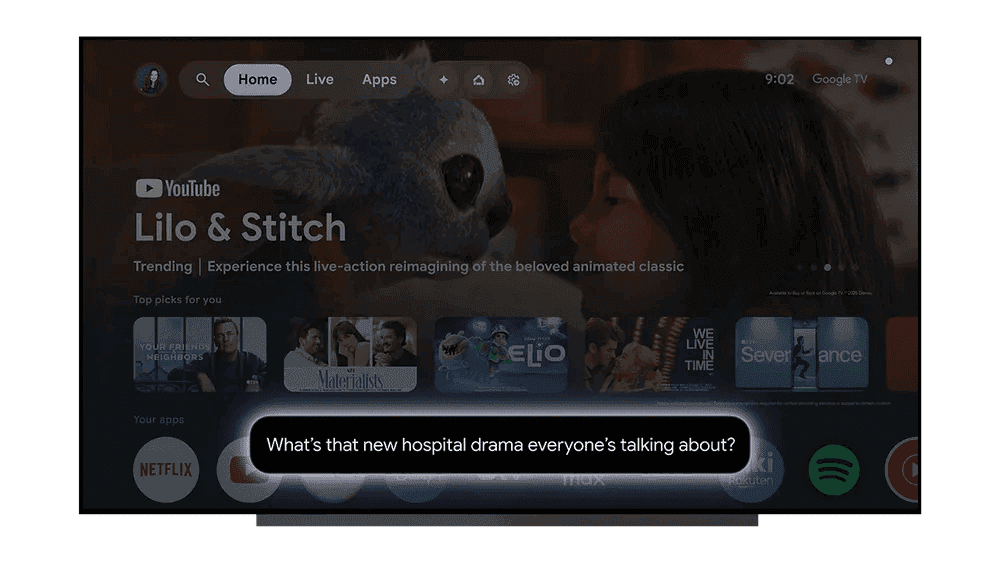
The race to advance conversational AI in the living room is heating up, with YouTube being the latest to expand its tool to smart TVs, gaming consoles, and streaming devices. This experimental feature, previously limited to mobile devices and the web, now brings conversational AI directly to the largest screen in the home, allowing users to ask questions about content without leaving the video they're watching. According to YouTube's support page, eligible users can click the "Ask" button on their TV screen to summon the AI assistant. The feature offers suggested questions based on the video, or users can use their remote's microphone button to ask anything related to the video. For instance, they might ask about recipe ingredients or the background of a song's lyrics, and receive instant answers without pausing or leaving the app. Currently, this feature is available to a select group of users over 18 and supports English, Hindi, Spanish, Portuguese, and Korean. YouTube first launched this conversational AI tool in 2024 to help viewers explore content in greater depth. The expansion to TVs comes as more Americans now access YouTube through their television than ever before. A Nielsen report from April 2025 found that YouTube accounted for 12.4% of total television audience time, surpassing major platforms like Disney and Netflix. Other companies are also making significant strides with their conversational AI technologies. Amazon rolled out Alexa+ on Fire TV devices, enabling users to engage in natural conversations and ask Alexa+ for tailored content recommendations, hunt for specific scenes in movies, or even ask questions about actors and filming locations. Meanwhile, Roku has enhanced its AI voice assistant to handle open-ended questions about movies and shows, such as "What's this movie about?" or "How scary is it?" Netflix is also testing its AI search experience. Another way YouTube has tried to improve its TV experience with AI is the recent launch of a feature that automatically enhances videos uploaded at lower resolutions to full HD. Additionally, the company continues to launch other AI features, like a comments summarizer that helps viewers catch up on video discussions and an AI-driven search results carousel. In January, the company announced that creators will soon be able to make Shorts using AI-generated versions of their own likeness. Last week, YouTube launched a dedicated app for the Apple Vision Pro, too, letting users watch their favorite content on a theater-sized virtual screen in an immersive environment.
[2]
YouTube on the big screen quietly tests a smarter way to watch
Rahul Naskar has years of experience writing news and features related to Android, phones, and apps. Outside the tech world, he follows global events and developments shaping the world of geopolitics. In a blog post last year, Neal Mohan, who is the CEO of YouTube, said that TV was the primary device for YouTube viewing in the US. Since people were spending more time watching YouTube videos on TV screens, the company launched a plethora of changes throughout 2025 to make the big screen even better. YouTube hasn't shared any update on whether TV is still the primary device for YouTube viewing in the US, but it has given us enough reason to believe that it is committed to introducing more new features for YouTube on the big screen. The company has recently given us an update about a new YouTube feature that it's currently testing on big screens. YouTube on TV screens may soon get a lot smarter In a YouTube support thread, Google has announced that it's currently experimenting with bringing a conversational AI tool to smart TVs, gaming consoles, and streaming devices. This is the same conversational AI tool that's already available on YouTube for mobile and desktop. So, if you have already used that Ask button (Gemini sparkle icon) on YouTube, there is a chance that you can use the same feature on your TV screens while watching YouTube videos. For those who aren't aware, Google first introduced the conversational AI tool on YouTube back in 2024 to allow viewers to ask AI to summarize the video, recommend similar content, and more. The conversational AI tool is available behind the Ask button that's available below the playback screen. You can ask any question related to the video, as well as select any of the suggested prompts to get answers. The same Ask button is now available for YouTube on smart TVs. It should appear on the playback screen, but you'll be able to trigger it and ask questions by using the microphone button on your TV remote. It'll also show you suggested prompts, as the conversational AI tool does on other devices. However, since this is still in the testing phase, only a "small group of users" will be able to use YouTube's Ask button on their TVs. It's also worth noting that the AI tool appears on the watch page for select videos. So, if you're not seeing it on your TV screen, it means either it isn't available for you, or the video you're watching isn't supported yet. Subscribe for deeper coverage of YouTube's TV AI Get our newsletter for deeper analysis and context on YouTube's move to add conversational AI on TVs -- expert perspectives, technical explainers, and thoughtful takes that help you understand the implications and significance of these features. Subscribe By subscribing, you agree to receive newsletter and marketing emails, and accept our Terms of Use and Privacy Policy. You can unsubscribe anytime. YouTube's conversational AI tool is available only in select regions in five different languages, including English, Hindi, Spanish, Portuguese, and Korean.
[3]
Google is cramming Gemini AI chat into YouTube on smart TVs
Users can ask questions about videos, jump to specific timestamps, and use voice commands to enhance their viewing experience. YouTube is planning to test a new Gemini-powered AI feature on smart TVs that allows users to interact with the TV -- such as by asking questions about what they're watching, jumping to a specific timestamp, etc. -- using prompts and voice commands, reports Android Authority. The "Ask" feature is based on Google's AI assistant Gemini. You'll be able to call it up by selecting an "Ask" button and then interface with it by choosing from prewritten questions or ask your own questions using the microphone on your TV remote control. This feature is already available in YouTube's mobile and web versions, but it will be tested on smart TV platforms such as Google TV, Samsung Tizen, LG webOS, gaming consoles, and streaming boxes. Google is initially rolling out the test to a small number of users and may expand the launch depending on the response.
[4]
YouTube TV users can now ask AI questions without pausing videos
YouTube is expanding its conversational AI tool to television screens and other large-format devices. The feature, previously available on mobile and web platforms, now operates on smart TVs, gaming consoles, and streaming devices. Users can ask questions about video content without pausing or navigating away from playback. The tool is currently in an experimental phase and supports multiple languages. Accessing the AI assistant on televisions involves tapping a dedicated "Ask" button displayed on the screen interface. Alternatively, users can press the microphone button on their remote control to speak a query. The system provides suggested questions relevant to the specific video being watched, though viewers may ask custom questions. For example, a user watching a cooking tutorial can inquire about ingredient lists, or a listener can request song lyrics without interrupting the audio stream. The feature requires the user to be at least 18 years old. It supports English, Hindi, Spanish, Portuguese, and Korean. This tool was initially launched in 2024 to help viewers explore content in greater depth. The expansion to television environments coincides with a shift in viewing habits. Data from a Nielsen report released in April 2025 indicates that YouTube captured 12.4% of total television audience time in the United States. This figure places YouTube ahead of traditional media giants and streaming competitors, including Disney and Netflix, in terms of total watch time. The platform's presence in the living room has grown as more households access the service through connected TVs. Competitors are simultaneously integrating advanced AI to improve content discovery on television interfaces. Amazon has deployed Alexa+ on Fire TV devices, allowing for natural language interactions. Users can ask Alexa+ for recommendations, locate specific scenes within movies, or query details regarding actors and filming locations. Roku has also upgraded its voice assistant to interpret open-ended questions, such as inquiries about a movie's plot or intensity level. Netflix is currently testing an AI-powered search experience to refine how users find content within its library. Beyond conversational interfaces, YouTube is utilizing AI to improve video quality and user navigation. The platform recently introduced a feature that automatically enhances lower-resolution uploads to full HD on television screens. The company has also launched a comments summarizer to help viewers quickly understand video discussions, alongside an AI-driven search results carousel. In January 2025, YouTube announced a forthcoming capability allowing creators to produce Shorts using AI-generated versions of their own likeness. Furthermore, the company released a dedicated app for the Apple Vision Pro, enabling users to view content on a theater-sized virtual screen.
[5]

YouTube's conversational AI is making its way to the big screen - Phandroid
If you've used YouTube's Ask button on your phone or computer, you already know the drill. You tap it, ask a question about the video you're watching, and Gemini gives you an answer without you having to leave the page. Now, YouTube is testing that same conversational AI on smart TVs, gaming consoles, and streaming devices, and it could change how interactive the big screen experience feels. According to a YouTube support thread, the Ask button will show up on the playback screen on your TV. You trigger it using the microphone button on your remote. It works the same way as on other platforms. You can speak a question or pick from suggested prompts. The catch, for now, is that it's only rolling out to a small group of users and only appears on select videos. So if you're not seeing it, that's why. You might wonder why you'd need an AI chatbot while watching TV. But the TV experience has always been the odd one out when it comes to YouTube features. Commenting, sharing, reading descriptions. All of that has been awkward on a TV for years. YouTube already tried to fix this by letting your phone act as a second screen, but building interactivity directly into the TV app is a cleaner solution. It also fits with a broader shift in how people use YouTube. Back in early 2025, YouTube CEO Neal Mohan confirmed that TV had surpassed mobile as the primary way people watch YouTube in the US, with over one billion hours of content watched daily on TV screens. YouTube is no longer a phone app that also works on TV. For a lot of people, it's the other way around. The Gemini-powered Ask feature first launched in 2024 for mobile and desktop users. The YouTube conversational AI lets you ask questions about the video you're watching, get summaries, find related content, and more. All without pausing or switching apps. Bringing that to TV just closes the gap between platforms. It's currently available in English, Hindi, Spanish, Portuguese, and Korean in select regions, with the TV rollout still in early testing.
Share
Share
Copy Link
YouTube is testing its Gemini-powered conversational AI tool on smart TVs, gaming consoles, and streaming devices. The Ask button feature, previously available only on mobile and web, now allows users to ask questions about the content without pausing or leaving the video. The expansion comes as YouTube captured 12.4% of total television audience time in the US, surpassing Disney and Netflix.

YouTube AI Brings Conversational AI Tool to Smart TVs
YouTube is expanding its conversational AI tool to smart TVs, gaming consoles, and streaming devices, marking a shift in how viewers interact with content on the big screen
1
. The experimental feature, powered by Google's Gemini AI chat technology, allows users to ask questions about the content they're watching without pausing or navigating away from playback4
. Previously limited to mobile devices and web platforms, this AI-driven feature now operates directly on large-format devices, bringing interactive capabilities to the living room.Eligible users can access the feature by clicking the Ask button displayed on their TV screen or by pressing the microphone button on their TV remote
2
. The system provides suggested questions relevant to the specific video being watched, though viewers can also ask custom queries using voice commands3
. For instance, someone watching a cooking tutorial might ask about recipe ingredients, or a music enthusiast could request song lyrics—all without interrupting the video stream.How the AI Tool on Large-Format Devices Works
The conversational AI to smart TVs integration operates on platforms including Google TV, Samsung Tizen, LG webOS, and various streaming devices
3
. Users trigger the feature through the playback screen interface, where the Ask button appears as a Gemini sparkle icon2
. The tool can summarize videos, recommend similar content, and answer specific questions about what's currently playing. Currently available to a small group of users over 18, the feature supports English, Hindi, Spanish, Portuguese, and Korean1
.YouTube first launched this conversational AI tool in 2024 to help viewers explore content in greater depth
1
. The expansion addresses a long-standing challenge with YouTube on the big screen, where commenting, sharing, and reading descriptions have been awkward for years5
. Building interactivity directly into the TV app creates a smarter way to watch compared to previous solutions that required phones as second screens.Why YouTube's Move to Television Matters
The timing of this expansion aligns with significant shifts in viewing habits. A Nielsen report from April 2025 found that YouTube accounted for 12.4% of total television audience time in the United States, surpassing major platforms like Disney and Netflix
1
. YouTube CEO Neal Mohan confirmed in early 2025 that TV had surpassed mobile as the primary way people watch YouTube in the US, with over one billion hours of content watched daily on TV screens5
.This shift transforms how the platform prioritizes feature development. YouTube is no longer primarily a mobile app that also works on TV—for many users, the relationship has reversed
5
. The conversational AI integration represents one of several AI-driven features YouTube has introduced to improve the user experience on television. The company recently launched automatic video enhancement that upgrades lower-resolution uploads to full HD on TV screens1
.Related Stories


Competition Heats Up in Living Room AI
Other companies are making parallel advances with their conversational AI technologies. Amazon rolled out Alexa+ on Fire TV devices, enabling users to engage in natural conversations and request tailored content recommendations, hunt for specific scenes in movies, or ask questions about actors and filming locations
1
. Roku has enhanced its voice assistant to handle open-ended questions about movies and shows, such as "What's this movie about?" or "How scary is it?"1
. Netflix is also testing its AI search experience to refine content discovery4
.Beyond the Ask button, YouTube continues launching other AI features including a comments summarizer that helps viewers catch up on video discussions and an AI-driven search results carousel
1
. In January, the company announced creator tools that will soon enable Shorts production using AI-generated versions of their own likeness1
. The company also released a dedicated app for Apple Vision Pro, letting users watch content on a theater-sized virtual screen1
. As the test expands, viewers should watch for broader rollout announcements and additional language support that could make this video summarizer capability standard across all YouTube viewing platforms.References
Summarized by

Navi
[2]
Related Stories
Recent Highlights
1
AI chatbots validate you too much, making you less kind to others, Stanford study reveals
Science and Research
2
Anthropic's Claude Code Source Leak Reveals Hidden AI Agent Plans and Extensive System Access
Technology

3
Judge blocks Pentagon from branding Anthropic a security risk over AI safety guardrails dispute
Policy and Regulation

Recent Highlights
Today's Top Stories










Your Daily Dose of Curated AI News
Don’t drown in AI news. We cut through the noise - filtering, ranking and summarizing the most important AI news, breakthroughs and research daily. Spend less time searching for the latest in AI and get straight to action.

