By the time our new technological overlords decide to take our jobs, let's hope they've fine-tuned the compassion settings.
In "The Adding Machine: A Cyborg Morality Play," pencil-pushing protagonist Mr. Zero -- played in turns by everyone in the cast -- endures layers of indignity, losing his job to a machine and getting the ax from another one. An artificial-intelligence assistant placidly couches the termination details among platitudes. Worse, it doesn't understand the difference between dialogue and stage directions, flatly intoning, "Pause to let him process the news."
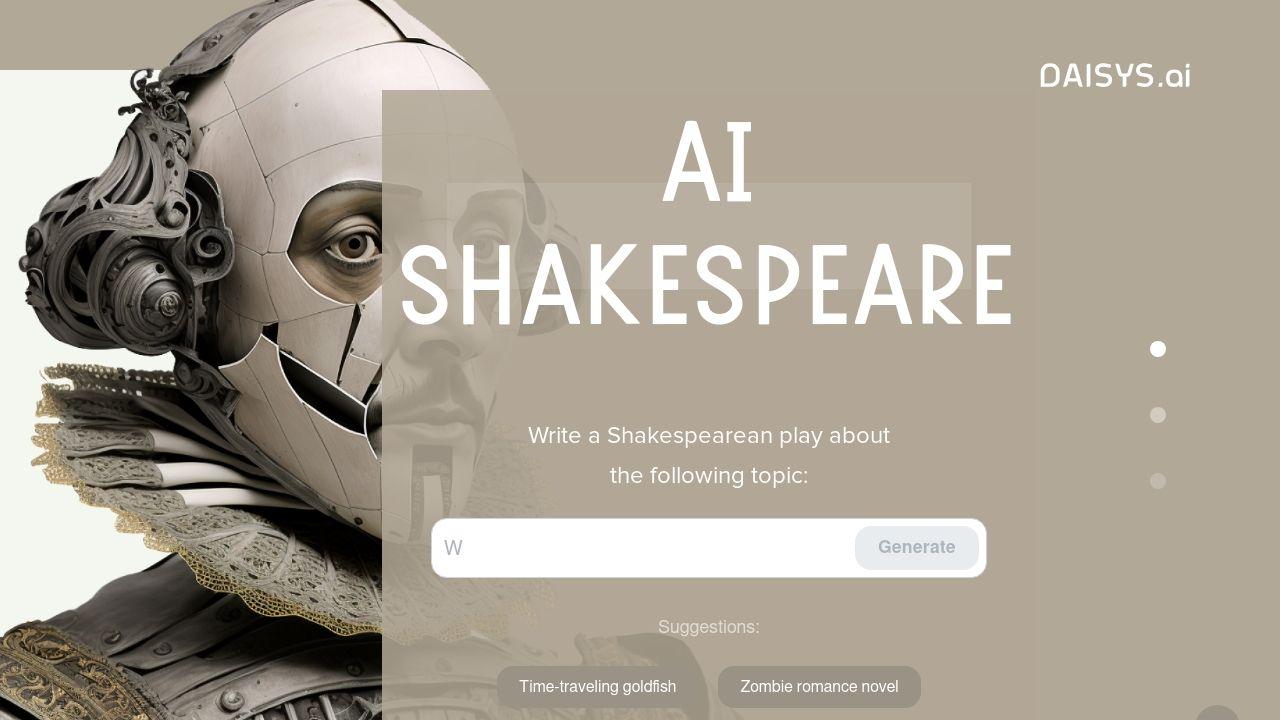
The exchange is just one of dozens of uses of generative AI technology in The Feast's staging of Elmer Rice's 1923 expressionist play, "The Adding Machine." Director and adapter Ryan Guzzo Purcell has refashioned and reframed scenes using AI tools to "look at what it means when a machine is doing something that a human is used to thinking of as a human activity," he said.
These moments are largely integrated smoothly, with actors prompting AI tools from phones or laptops. AI may be used to generate dialogue for the ensemble cast or take the place of an actor in a scene, resulting in a conversation between a person and a disembodied voice. AI even supplies the music leading into intermission, cooking up a song on the spot based on the dialogue from the previous scene.
Some of this is amusing, like when a flirtation between actor Alexander Kilian and a chatbot goes awry, the innuendo turning suddenly explicit. (Still, nowhere near as funny as actor MJ Sieber suddenly snatching the phone to hijack the conversation and telling the chatbot to "keep talking.")
But is it terribly illuminating for the material? In the party scene where the show most overtly uses AI, large sections of dialogue are generated in real time for the cast to deliver rapid-fire, created from prompts like: six lines complaining about the weather or six lines decrying women's suffrage. But in Rice's original, where these party guests are named Mr. and Mrs. One, Two, Three, Four, Five and Six, their depiction as unthinking automatons is already clear. Doubling back by giving them AI-generated patter doesn't meaningfully rework the scene; it just gives them worse dialogue with an artificial sheen of 1920s slang.
And what of Rice's original? A genuinely bizarre, structurally bold fable that sees Mr. Zero traversing from the city to the courtroom to the afterlife, the play interrogates the everyman, played well, in turns, by everyone in the cast: Sieber, Kilian, Julie Briskman, Emilie Maureen Hanson and Holiday. Mr. Zero may be put-upon, but he's also racist, misogynistic and stupid. If he represents humanity, maybe we'd prefer to root for the Adding Machine.
Rice's play is one of demanding monologues, and The Feast's cast delivers impressively. Briskman sets the tone, unfurling a broadside of invective in the opening scene as Mrs. Zero, her dissatisfaction irradiating the air. Hanson skillfully brings the pathos as Daisy, Mr. Zero's suicidal co-worker who dreams of an idyllic future. And Sieber, who can do anything but seems genetically engineered to play a 1920s fast talker, stuns with a courtroom monologue during which Mr. Zero turns his ire on a host of perceived societal ills, desperately trying to fend off the idea that, perhaps, the problem lies with him.
While productions of "The Adding Machine" will often nod to the play's expressionist roots with starkly shadowed design, The Feast's staging embraces the disaffection of the internet age. Annie Liu's cool-toned lighting and Jeff Larson's projections of digital detritus (bikini pics, Sudoku games, spreadsheet cells) splash Parmida Ziaei's concrete-fortress-like set, suggesting a suffocation by online ephemera.
That visual strategy gets more mileage than basically all of the AI gimmickry, which is generally more interesting conceptually than in practice. So, AI may not have much to say about "The Adding Machine." On the other hand, as a play with skepticism toward notions of unbridled progress, "The Adding Machine" might have a lot to say about AI.
