AI Apps Drive Consumer Spending Past Games for First Time as Mobile Revenue Hits $85 Billion


2 Sources
2 Sources
[1]
Consumers spent more on mobile apps than games in 2025, driven by AI app adoption
In 2025, consumers spent more money on non-game mobile apps than they did on games for the first time, according to the findings from market intelligence firm Sensor Tower's annual "State of Mobile" report. While this milestone had been seen in particular markets, like the U.S., or during certain quarters, 2025 marked the first time it occurred globally. Worldwide, consumers spent approximately $85 billion on apps last year, representing a 21% year-over-year increase. The figure was also nearly 2.8x the amount spent just five years ago. Generative AI, a defining trend over the past year, led the revenue growth, as in-app purchase revenue in this category more than tripled to top $5 billion in 2025. Downloads of AI apps also grew, doubling year-over-year to reach 3.8 billion. The segment's growth can be attributed to several factors. For one, the popularity of AI assistants among consumers was a large driver, with all of the top 10 apps by downloads being AI assistants. This group was led by OpenAI's ChatGPT, Google Gemini, and DeepSeek. ChatGPT alone generated $3.4 billion in global in-app purchase (IAP) revenue -- a figure that we reported on late last year. In 2025, consumers spent 48 billion hours in generative AI apps, or 3.6x the total time spent in 2024 and 10x the level seen in 2023. Session volume, meaning the number of times users opened and used an app, topped one trillion in 2025. Of note, this figure was growing faster than downloads, suggesting that existing users were deepening their engagement faster than the apps were adding new users. Another factor driving AI app revenue and adoption is that big tech companies like Google, Microsoft, and X have been heavily investing in their AI assistants to challenge ChatGPT. Over the past year, they've been rolling out new capabilities at a rapid pace, improving in areas like coding assistance, content generation, reasoning, task execution, accuracy, and more. The report specifically called out improvements in image and video generation, like ChatGPT's GPT-4o image generation model released in March, and Google's Nano Banana. Among the top AI publishers, OpenAI and DeepSeek accounted for nearly 50% of global downloads, up from 21% in 2024. Meanwhile, big tech publishers grew their share of the market from 14% to nearly 30% during this same time, crowding out earlier ChatGPT competitors like Nova, Codeway, and Chat Smith. The report also highlighted the role that mobile plays in connecting users to generative AI services. Sensor Tower estimates that the total audience for AI assistants topped 200 million in the U.S. by year-end, and more than half (110M) were accessing the assistants exclusively on mobile devices. In 2024, for comparison, only around 13 million users were mobile-only. Beyond assistants, other popular AI apps included the AI music generation app Suno; ByteDance's text-to-video app, Jimeng AI; and AI companion apps like Character.ai and PolyBuzz. However, AI wasn't the only revenue driver last year, Sensor Tower found. Other apps, including those in categories like social media, video streaming, and productivity, also helped fuel the growth, the report noted. For instance, consumers spent an average of 90 minutes per day on social media apps, totaling nearly 2.5 trillion hours, up 5% year-over-year.
[2]
Gen-AI drove mobile app downloads, revenue growth in 2025: Sensor Tower
Generative artificial intelligence apps drove mobile download growth during 2025, and for the first time, non-game apps surpassed game apps in total revenue derived from in-app purchases, according to an in-depth report by Sensor Tower. Global in-app revenue for non-game Non-game app revenue from in-app purchases surpassed game app revenue, reaching $85.6B versus $81.8B. Strong in-app purchase growth, expanded AI features, high user downloads, and investments in generative AI apps drove revenue for these leaders. Chinese companies led retail app downloads, while Asia and Latin America drove short drama engagement, narrowing global leaders' usage gaps and fueling streaming growth.
Share
Share
Copy Link
Consumer spending on mobile apps reached a historic milestone in 2025, with non-game apps surpassing games globally for the first time. Generative AI apps led the surge, tripling in-app purchase revenue to exceed $5 billion as downloads doubled to 3.8 billion. ChatGPT alone generated $3.4 billion, while users spent 48 billion hours engaging with AI assistants.
Consumer Spending Shifts as Non-Game Mobile Apps Overtake Games
The mobile app landscape experienced a fundamental shift in 2025, as consumer spending on non-game mobile apps surpassed mobile games for the first time globally, according to Sensor Tower's annual State of Mobile report
1
. While this milestone had been observed in specific markets like the U.S. or during certain quarters, 2025 marked the first year this occurred worldwide. Non-game app revenue from in-app purchase revenue reached $85.6 billion versus $81.8 billion for games2
. Worldwide, consumers spent approximately $85 billion on apps last year, representing a 21% year-over-year increase and nearly 2.8x the amount spent just five years ago1
.Generative AI Apps Triple Revenue as Adoption Accelerates
Generative AI apps emerged as the primary catalyst behind mobile app revenue growth, with in-app purchase revenue in this category more than tripling to top $5 billion in 2025
1
. Mobile app downloads of AI apps doubled year-over-year to reach 3.8 billion, demonstrating widespread AI app adoption across global markets1
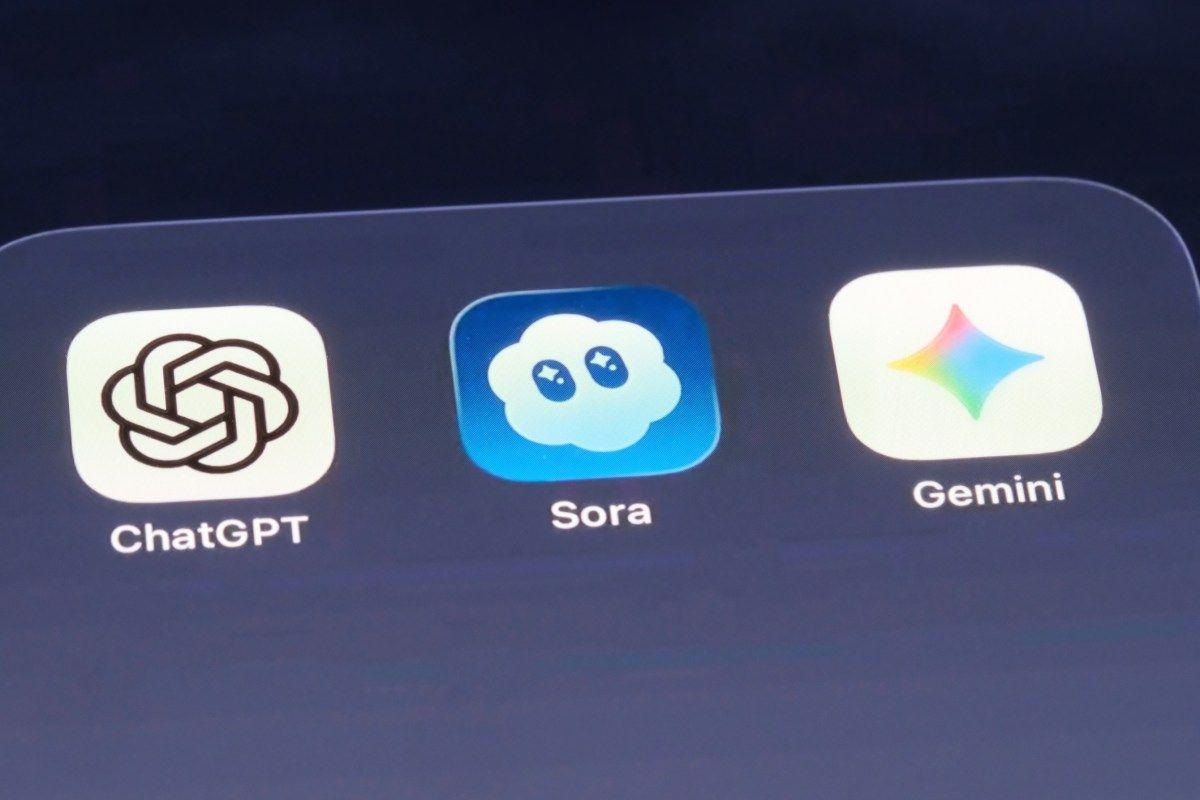
. The popularity of AI assistants among consumers drove much of this growth, with all of the top 10 apps by downloads being AI assistants led by OpenAI's ChatGPT, Google Gemini, and DeepSeek1
. ChatGPT alone generated $3.4 billion in global in-app purchase revenue, cementing its position as the dominant player in the AI assistant market1
.
Source: TechCrunch
User Engagement Deepens as AI Apps Become Daily Essentials
User engagement with AI apps reached unprecedented levels in 2025, as consumers spent 48 billion hours in generative AI apps—3.6x the total time spent in 2024 and 10x the level seen in 2023
1
. Session volume, measuring the number of times users opened and used an app, topped one trillion in 20251
. Notably, this figure grew faster than downloads, suggesting that existing users were deepening their engagement faster than the apps were adding new users—a pattern indicating that AI apps have become essential daily tools rather than novelty experiments1
.Related Stories

Big Tech Investments Reshape AI Assistant Market
Big tech companies including Google, Microsoft, and X heavily invested in their AI assistants to challenge ChatGPT's dominance, rolling out new capabilities at a rapid pace throughout 2025
1
. These improvements spanned coding assistance, content generation, reasoning, task execution, and accuracy, with particular advances in image and video generation capabilities like ChatGPT's GPT-4o image generation model released in March and Google's Nano Banana1
. The competitive landscape shifted dramatically as OpenAI and DeepSeek accounted for nearly 50% of global downloads, up from 21% in 2024, while big tech publishers grew their market share from 14% to nearly 30% during the same period, crowding out earlier ChatGPT competitors like Nova, Codeway, and Chat Smith1
.Mobile Devices Become Primary Gateway to AI Services
Mobile apps played a critical role in connecting users to generative AI services, with Sensor Tower estimating that the total audience for AI assistants topped 200 million in the U.S. by year-end
1
. More than half—110 million users—were accessing the assistants exclusively on mobile devices, a dramatic increase from only around 13 million mobile-only users in 20241
. Beyond assistants, other popular AI apps included the AI music generation app Suno, ByteDance's text-to-video app Jimeng AI, and AI companion apps like Character.ai and PolyBuzz1
. While AI apps dominated the narrative, other categories including social media, video streaming, and productivity also contributed to mobile app revenue growth, with consumers spending an average of 90 minutes per day on social media apps, totaling nearly 2.5 trillion hours, up 5% year-over-year .
Source: Seeking Alpha
References
Summarized by

Navi
Related Stories
AI Apps Drive Record-Breaking $150 Billion in Mobile Spending for 2024
23 Jan 2025•Technology

Apple made $900M from generative AI apps in 2025 while rivals spend billions on infrastructure
Today•Business and Economy
India Leads Global AI App Downloads, But Lags in Revenue Generation
10 Oct 2024•Technology

Recent Highlights
1
Google Maps unveils Ask Maps with Gemini AI and 3D Immersive Navigation in biggest update
Technology
2
Three Tennessee teens sue xAI over Grok AI creating child sexual abuse material from real photos
Policy and Regulation

3
Meta plans to cut 20% of workforce as AI spending reaches $600 billion, mirroring broader tech trend
Business and Economy
Recent Highlights
Today's Top Stories




Your Daily Dose of Curated AI News
Don’t drown in AI news. We cut through the noise - filtering, ranking and summarizing the most important AI news, breakthroughs and research daily. Spend less time searching for the latest in AI and get straight to action.

