Demis Hassabis predicts AGI in 5-8 years, sees new golden era transforming medicine and science


6 Sources
[1]
Google's Nobel-winning AI leader sees a 'renaissance' ahead -- after a 10 or 15-year shakeout | Fortune
Sir Demis Hassabis, the recently minted Nobel laureate and CEO of Google DeepMind, believes humanity is standing on the precipice of a "new golden era of discovery." But reaching this utopia will require navigating a turbulent transition period -- a decade-long sprint that Hassabis describes as a
[2]
DeepMind's Demis Hassabis Warns AGI Remains Years Away Despite A.I. Breakthroughs
DeepMind CEO Demis Hassabis says A.I.'s "jagged intelligence" must be fixed before AGI arrives, predicting human-level systems remain years away. An A.I. model from Google DeepMind shocked mathletes from around the world last year when it secured a gold medal at the prestigious International
[3]
AGI could arrive in five to eight years: Google DeepMind CEO Demis Hassabis - The Economic Times
Speaking at the AI Impact Summit in New Delhi, Hassabis also warned that risks related to biosecurity and cybersecurity need urgent attention as artificial intelligence (AI) systems become more powerful.Demis Hassabis, chief executive of Google DeepMind, on Wednesday said artificial general
[4]
Demis Hassabis Predicts AGI Will Have 10x The Impact Of The Industrial Revolution -- And It Will Happen In A Decade, Not A Century - Alphabet (NASDAQ:GOOG), Alphabet (NASDAQ:GOOGL)
On Thursday, Alphabet Inc.'s (NASDAQ:GOOG) (NASDAQ:GOOGL) Google DeepMind CEO Demis Hassabis said artificial general intelligence could reshape the world faster than any prior technological shift -- if handled responsibly. AGI Could Transform Society Faster Than Any Previous Revolution Speaking
[5]
Google DeepMind CEO Demis Hassabis Says AI Will Usher In 'New Golden Era Of Discovery' Within 15 Years, Transforming Medicine, Energy, Space - Alphabet (NASDAQ:GOOG), Alphabet (NASDAQ:GOOGL)
Alphabet Inc. (NASDAQ:GOOGL) (NASDAQ:GOOG) subsidiary Google DeepMind CEO Demis Hassabis said artificial intelligence could trigger a "new golden era of discovery" within the next decade, transforming medicine, energy and even space exploration. AI Set To Transform Medicine And Science On
[6]

India AI Impact Summit 2026: DeepMind CEO Demis Hassabis says world entering golden era of science, AGI closer than expected
While AGI is not yet here due to gaps in continuous learning and consistency, he said it could arrive within the next five to eight years. During a session at the India AI Impact Summit, Demis Hassabis, CEO of Google DeepMind, stated that the world may be entering a golden era of scientific
Share
Copy Link
Google DeepMind CEO Demis Hassabis forecasts artificial general intelligence arriving within 5-8 years, with impact 10 times greater than the Industrial Revolution. The Nobel laureate warns AI's 'jagged intelligence' must be fixed first, while predicting a renaissance in medicine, energy, and space exploration within 10-15 years.
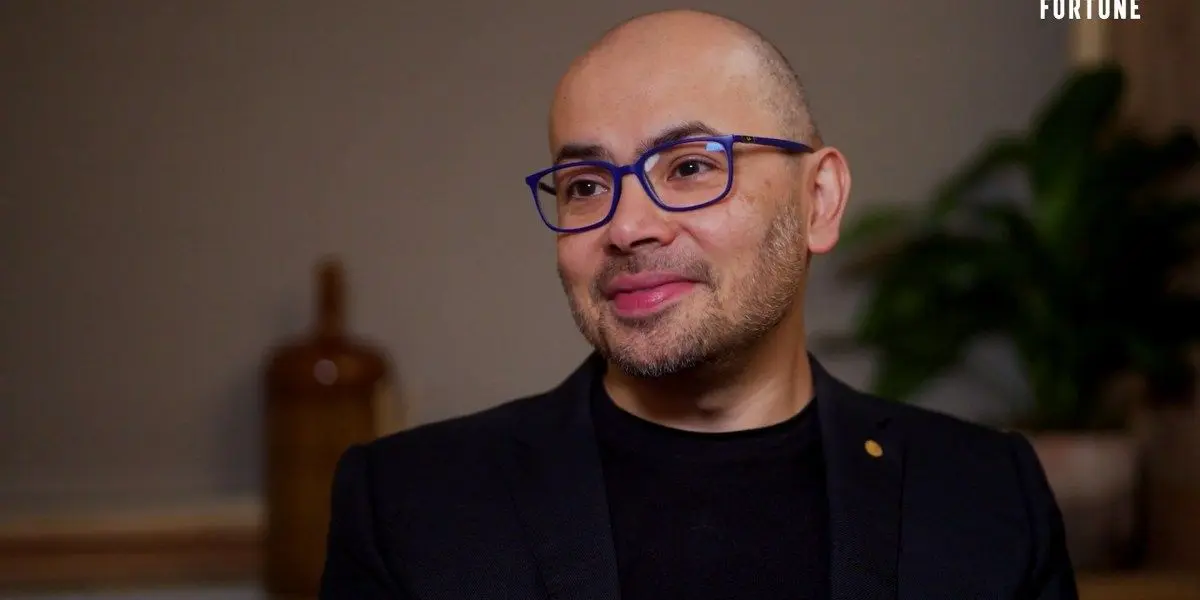
Demis Hassabis Sets Timeline for Artificial General Intelligence
Demis Hassabis, the Nobel Prize-winning CEO of Google DeepMind, has placed artificial general intelligence (AGI) on a definitive timeline, predicting its arrival within five to eight years
2
3
. Speaking at the India AI Impact Summit 2026 in New Delhi, Hassabis declared that humanity is "starting to see what these systems can do," marking a watershed moment in AI development. His forecast positions AGI impact at ten times the magnitude of the Industrial Revolution, but unfolding at ten times the speed—compressed into a decade rather than a century4
. This timeline represents a recalibration from his earlier predictions, with the year 2026 now serving as a pivotal marker on the path to human-level AI systems.Fixing AI's Jagged Intelligence Problem
Before AGI can materialize, Hassabis identifies a critical obstacle: what he terms "jagged intelligence." AI systems today exhibit dramatic inconsistencies, excelling at complex tasks like securing gold medals at the International Mathematical Olympiad while simultaneously failing elementary math questions
2
. These systems are "very good at certain things, but very poor at certain things," a dichotomy that must be resolved before achieving true general intelligence. Hassabis pinpoints continual learning as one of the biggest gaps, noting that current models are "trained, fine-tuned, and then essentially frozen before being released into the world"3
. AI systems need the ability to learn from real-world experience, adapt to different situations, and personalize themselves to specific tasks—capabilities that remain elusive. Long-term planning presents another limitation, with models struggling to construct coherent plans spanning months or years as humans naturally do.New Golden Era of Discovery Through AI
Beyond the AGI milestone, Hassabis envisions a transformative new golden era of discovery emerging within 10 to 15 years, characterized by what he calls "radical abundance"
1
5
. Speaking on the Fortune 500: Titans and Disruptors of Industry podcast, he predicted that "medicine won't look like it does today," with AI enabling personalized treatments and curing major diseases. His vision extends to energy, where AI could unlock new materials to solve the energy crisis through fusion or solar breakthroughs, and ultimately to space exploration, allowing humanity to "travel the stars and explore the galaxy." This renaissance hinges on AI successfully bottling the scientific method to tackle the planet's most intractable problems. Hassabis points to AlphaFold, DeepMind's breakthrough system that solved the 50-year-old protein folding problem by predicting the 3D structure of over 200 million proteins, as proof of concept1
. The system, which earned Hassabis the Nobel Prize in Chemistry in 2024, now serves over 3 million researchers worldwide.Drug Discovery and Isomorphic Labs
Hassabis is actively translating his scientific vision into commercial reality through Isomorphic Labs, an Alphabet subsidiary dedicated to "solving" disease
1
. By shifting drug discovery from traditional "wet labs" to in silico computer simulation, he believes the process can become "1,000 times more efficient." The company has already advanced to pre-clinical trials for cancer drugs, with plans to reach clinical trials by year's end5
. Hassabis anticipates AI will significantly boost the productivity of scientists and experts, particularly in cross-disciplinary research that requires understanding multiple fields simultaneously3
. His excitement centers on models eventually serving as "co-scientists" as they grow more autonomous, capable not just of solving conjectures but formulating the right questions and hypotheses—a trait that separates great scientists from good ones.Related Stories

AI Risks and Global Cooperation
Despite his optimism, Hassabis warns that urgent attention must focus on AI risks, particularly in biosecurity and cybersecurity
3
. "The current systems are getting pretty good at cyber," he cautioned, stressing the need to ensure "defences are stronger than the offences." He divides risks into two categories: societal risks when bad actors misuse AI, and technical risks when systems behave in unexpected and potentially harmful ways2
. Addressing these threats requires scientific guardrails, robust monitoring systems, and global cooperation. "In order to mitigate some of the risks, we're going to need international collaboration," Hassabis stated, emphasizing that responsibility extends beyond technologists to include governments, scientists, artists, and philosophers4
. His call for careful navigation reflects the magnitude of transformation ahead: "We've got to try and navigate this moment very carefully."Google's Innovator's Dilemma and Internal Transformation
For Google, the path to this renaissance presents what Hassabis calls a "classic innovator's dilemma"
1
. The rise of generative AI represents an existential pivot for the $3.9 trillion tech giant, forcing it to risk disrupting its core search business. "If we don't disrupt ourselves, someone else will," Hassabis declared, a philosophy that drove the 2023 merger of Google Brain and DeepMind into a unified research entity under his leadership. The consolidation was necessary to pool the "enormous compute power" required to train frontier models like Gemini. "Bringing the two groups together and trying to combine the best of both cultures has been great," Hassabis said, likening the combined entity to a "nuclear power plant that's plugged into the rest of this amazing company." The strategy appears effective: following releases of models including Gemini 3 and the viral image generator "Nano Banana," Alphabet shares soared approximately 65% by year's end. Hassabis maintains the company has "crossed the watershed moment" where AI models can act as useful assistants in high-level research, positioning Google DeepMind against rivals like OpenAI in the race to unlock advanced AI's full potential.References
Summarized by

Navi
[3]
Related Stories
DeepMind CEO Demis Hassabis predicts AGI by 2030 as Google unveils its Einstein Test
21 May 2026•Technology
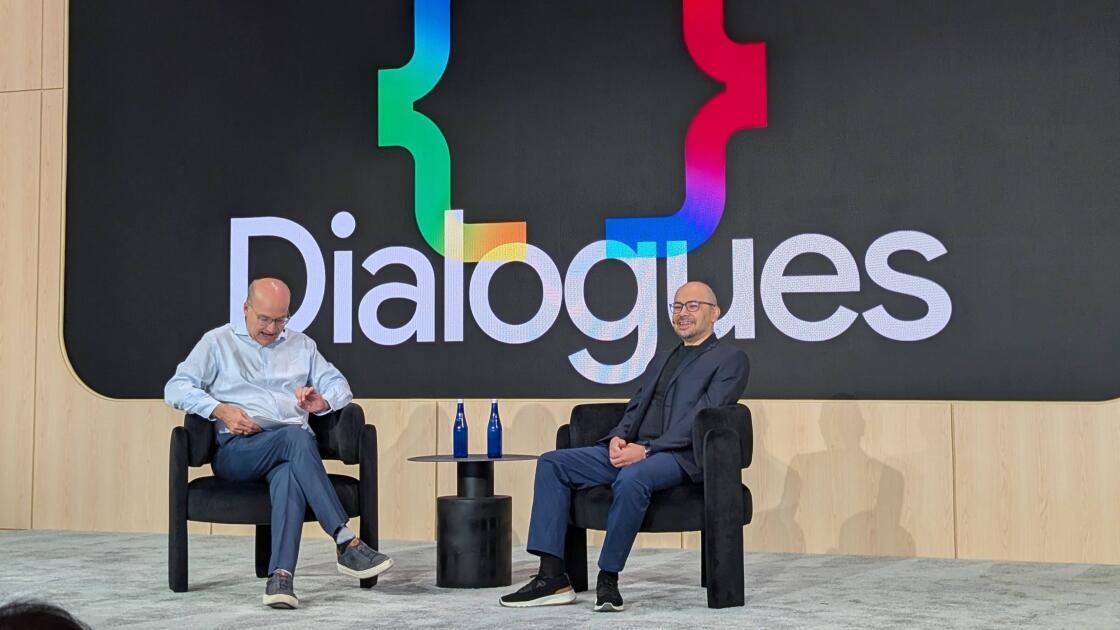
AI experts clash at Davos over when AGI will arrive and reshape the global economy
20 Jan 2026•Technology

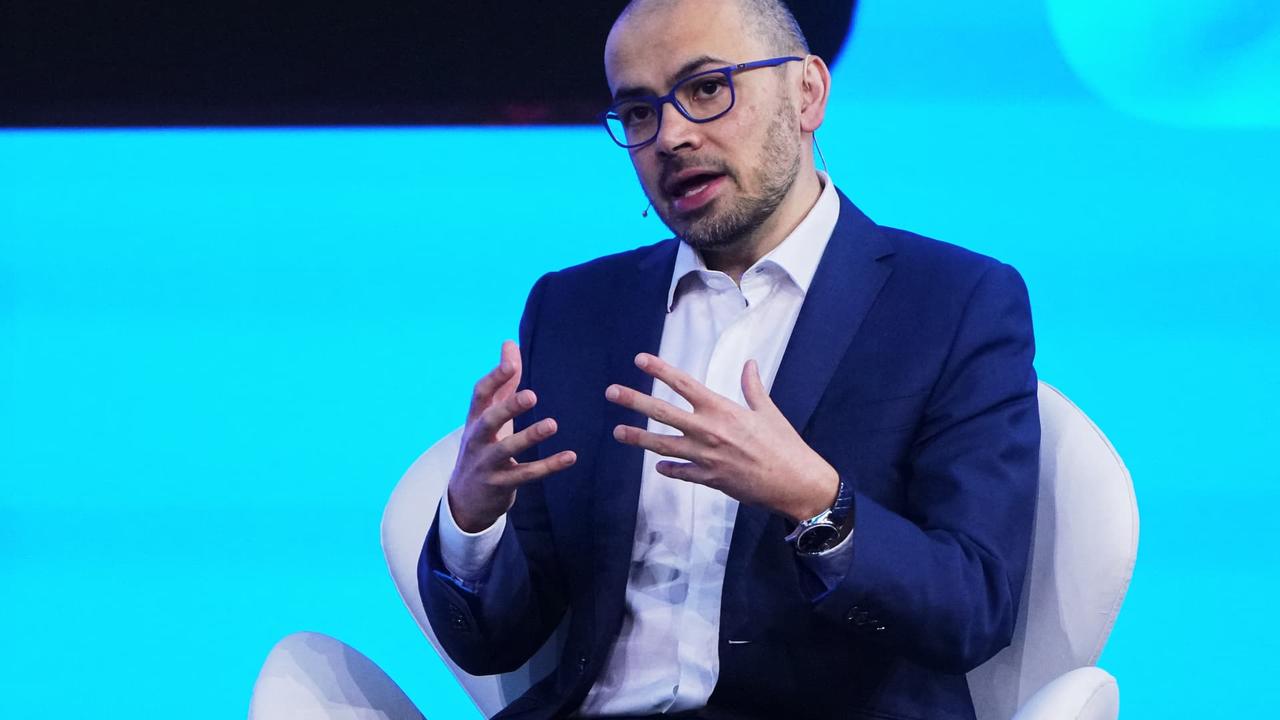
Google DeepMind CEO Predicts Human-Level AI Within 5-10 Years, Sparking Debate on AGI Timeline
18 Mar 2025•Technology
Recent Highlights
1
Microsoft and Nvidia Launch Surface Laptop Ultra: A $2,599 AI-Ready PC With RTX Spark Chip
Technology

2
Google Unveils Gemini 4 Argon AI Model, Restricts Access to Trusted Cyber Defenders
Technology
3
OpenAI Releases 722 AI-Generated Math Papers on GitHub, Igniting Fury Among Mathematicians
Science and Research
Recent Highlights
Today's Top Stories










Don’t drown in AI news. We cut through the noise - filtering, ranking and summarizing the most important AI news, breakthroughs and research daily. Follow topics that matter to you and stay ahead.


