AI Deepfakes Impersonate Pastors to Scam Congregations Across the United States


2 Sources
2 Sources
[1]
AI Deepfakes Are Impersonating Pastors to Try to Scam Their Congregations
Father Mike Schmitz, a Catholic priest and podcaster, addressed his congregation of more than 1.2 million YouTube subscribers in November with an unusual kind of homily. You couldn't always trust the words coming out of his mouth, Schmitz said, because sometimes they weren't really his words -- or his mouth. Schmitz had become the target of AI-generated impersonation scams. "You're being watched by a demonic human," said the fake Schmitz in one video that the real Schmitz, wearing an L.L. Bean jacket over his clerical suit, included in his public service announcement as an example. "You must act quickly, because the spots for sending prayers are already running out," said another fake Schmitz with a looming hourglass behind him. "And the next trip will only take place in four months." The fake Schmitz sounded ever-so-slightly robotic as he urged viewers to click a link and secure their blessing before it was too late. "I can look at them and say 'That's ridiculous, I would never say that,'" the real Schmitz, who is based in Duluth, Minnesota, said in his callout video. "But people can't necessarily tell. That's a problem. That's, like, a really big problem." On the real video of Schmitz, some of the top comments from his followers said they had seen other prominent Catholic figures impersonated through AI videos, including the pope. According to cybersecurity expert Rachel Tobac, who is the CEO of SocialProof Security, that's because pastors have become extremely popular subjects of AI scams and other deceptive media. "If you're on TikTok or Reels, they've probably come across your For You page," Tobac says. "This is somebody who looks to be a priest, who's wearing all of the garments, who's standing up on a pulpit or a stage or whatever you'd call it, and they seem to be speaking to their congregation in a very enthusiastic way." Pastors and ministers in Birmingham, Alabama, Freeport, New York, and Fort Lauderdale, Florida, have warned their followers about AI scams impersonating them in the form of DMs, calls, and deepfakes. Alan Beauchamp, a pastor in the Ozarks, said his Facebook account was hacked, with the hacker posting a fake, possibly AI-generated certificate for cryptocurrency trading with Beauchamp's name on it and a caption urging his congregants to join him. A megachurch in the Philippines received reports of deepfakes featuring its pastors. An evangelical church in Nebraska issued an AI "scammer alert" on Facebook, and one churchgoer in the comments posted a screenshot of texts purported to be from one of their pastors. It doesn't help that a lot of the pastors and ministers who have grown large online followings often actually are soliciting donations and selling things, just not the same things that their AI impersonators are. With the help of social media, religious authority figures have been able to reach believers far beyond their neighborhoods, but the proliferation of content featuring their likenesses and voices has also provided the perfect opportunity for scammers wielding generative AI tools.
[2]
Deepfake AI Pastors Are Stealing From Churchgoers: Report
What god you choose to believe (or not believe) in is a matter of faith. Unfortunately, reality is increasingly becoming a matter of faith for some, too. According to a new report from Wired, churchgoers across the country are becoming the target of deepfake schemes, with scammers using AI-generated versions of pastors to steal money from their congregation. The pastors who appear ripest for replication are, fittingly, ones who have large online followings. Wired highlighted a video recently uploaded by Father Mike Schmitz, a Catholic priest and podcaster who has amassed more than 1.2 million subscribers on YouTube and more than half a million followers on Instagram. In the video, Schmitz shows several deepfake videos of himself that have been uploaded by scammers. Many of the videos seem relatively innocuous, a simple sermon that doesn't seem totally out of place (though there are some tells that things aren't quite right, like one in which the fake Father Mike tells listeners, “You’re being watched by a demonic human"). But the real demonic behavior on display comes from scams. Some of the videos ask for parishioners to pay for blessings, others are calls to secure a spot on a church trip. Unfortunately, those types of things are believable because they are actually real things that religious leaders have done, using the prosperity gospel to line their own pockets. Schmitz warned his followers about the scams, and he's not alone in having to issue this type of alert. Per Wired, pastors and ministers from Birmingham, Alabama, to Fort Lauderdale, Florida, have had to post similar statements so that their followers don't get tricked by an AI deepfake asking for money that will never make it to the collection plate. Pastors like Schmitzâ€"who offered a clear-eyed view of AI in his video, saying that something human is lost in AIâ€"are not helped by other churches that have wholeheartedly embraced the technology. Many churches ran AI-generated audio of Charlie Kirk at sermons after his death, suggesting that it was a message from him in heaven. Such uses of the technology push people further from reality and make them more susceptible to the exact types of scams that are now being employed to take advantage of unsuspecting members of their flock. The recently elected Pope Leo XIV, head of the Catholic Church, has turned a critical eye on AI. Last year, in his first formal meeting with cardinals of the church, he said that the technology would "pose new challenges for the defense of human dignity, justice, and labor." Skepticism isn't always welcomed by faith-based organizations, but churchgoers would probably be well served by expressing some when listening to the words of pastors online.
Share
Share
Copy Link
Scammers are using AI-generated deepfakes to impersonate popular religious figures like Father Mike Schmitz, who has 1.2 million YouTube subscribers. The fake videos solicit money for fraudulent blessings and church trips, exploiting the trust between pastors and their congregations. Religious leaders from Alabama to Florida have issued warnings as these sophisticated AI-powered scams spread across social media platforms.
AI Deepfakes Target Religious Figures With Growing Sophistication
AI deepfakes have found a disturbing new target: pastors and religious leaders with substantial online followings. Father Mike Schmitz, a Catholic priest and podcaster with more than 1.2 million YouTube subscribers, recently warned his congregation about AI-generated videos impersonating him
1
. In one fake video shown during his public service announcement, the AI-generated version tells viewers they're "being watched by a demonic human" and urges them to act quickly before prayer spots run out1
. The fake Schmitz sounded slightly robotic while directing viewers to click malicious links and secure their blessing before time expired.
Source: Wired
"I can look at them and say 'That's ridiculous, I would never say that,'" the real Schmitz, based in Duluth, Minnesota, explained in his warning video. "But people can't necessarily tell. That's a problem. That's, like, a really big problem"
1
. Comments on his video revealed that followers had seen other prominent Catholic Church figures impersonated through AI videos, including the pope himself.Scammers Exploit the Trust Between Religious Figures and Churchgoers
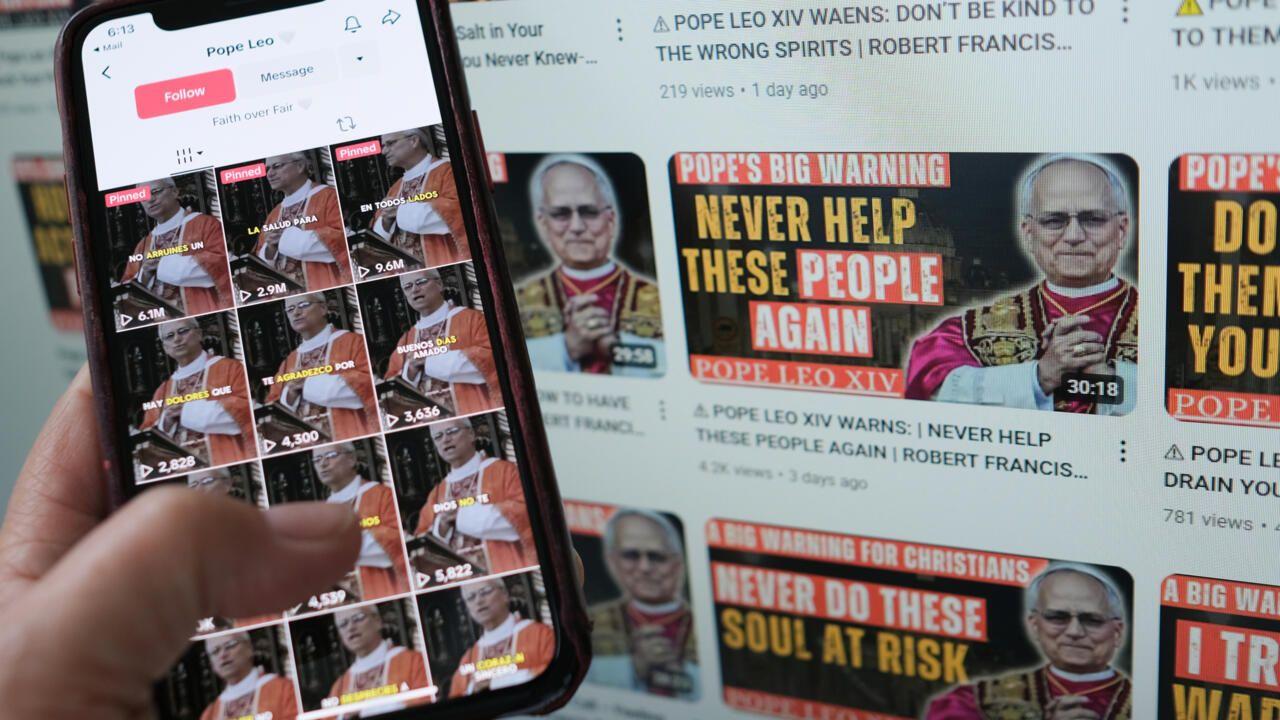
The wave of AI scams targeting religious communities extends far beyond a single incident. Pastors and ministers in Birmingham, Alabama, Freeport, New York, and Fort Lauderdale, Florida, have all warned their followers about AI-generated deepfakes and fraudulent messages impersonating them
1
. Alan Beauchamp, a pastor in the Ozarks, reported that his Facebook account was hacked, with the attacker posting a fake, possibly AI-generated certificate for cryptocurrency trading bearing Beauchamp's name and urging his congregants to join him1
. A megachurch in the Philippines received reports of deepfakes featuring its pastors, while an evangelical church in Nebraska issued an AI "scammer alert" on social media1
.According to Rachel Tobac, CEO of SocialProof Security and a cybersecurity expert, pastors have become extremely popular subjects of these sophisticated AI-powered scams
1
. "If you're on TikTok or Reels, they've probably come across your For You page," Tobac notes. "This is somebody who looks to be a priest, who's wearing all of the garments, who's standing up on a pulpit or a stage or whatever you'd call it, and they seem to be speaking to their congregation in a very enthusiastic way"1
.
Source: Gizmodo
How Generative AI Tools Enable Financial Fraud Against Congregations
The challenge for believers lies in distinguishing authentic requests from fraudulent ones. Many pastors who have grown large online presence through social media actually do solicit donations and sell religious materials, making it difficult to immediately identify when scammers are soliciting money for fake blessings or fraudulent church trips
1
2
. The proliferation of content featuring their likenesses and voices across platforms like YouTube and Instagram has provided scammers with ample material to create convincing deepfakes using generative AI tools.The pastors who appear most vulnerable to these schemes are those who impersonate popular online pastors with substantial followings. Father Mike Schmitz, for instance, has amassed more than half a million followers on Instagram in addition to his YouTube audience
2
. This visibility makes religious figures prime targets for criminals seeking to defraud their congregations through financial fraud schemes that leverage the deep trust between spiritual leaders and their followers.Related Stories

Religious Leaders Confront AI's Impact on Human Dignity and Trust
The issue has drawn attention from the highest levels of religious leadership. Pope Leo XIV, head of the Catholic Church, has expressed concern about AI technology, stating in his first formal meeting with cardinals that it would "pose new challenges for the defense of human dignity, justice, and labor"
2
. This skepticism stands in contrast to some churches that have embraced AI technology, with some running AI-generated audio of deceased figures like Charlie Kirk at sermons, suggesting messages from heaven2
.Father Mike Schmitz offered his own perspective on the technology, noting that "something human is lost in AI"
2
. As these AI-generated deepfakes continue to spread across social media platforms, the incident highlights how scammers exploit the trust that congregation members place in their spiritual leaders. For churchgoers navigating an increasingly digital religious landscape, exercising caution when encountering online requests from pastors—even when they appear authentic—has become a necessary practice to avoid falling victim to these deceptive schemes that defraud churchgoers of their money and faith.References
Summarized by

Navi
Related Stories
AI-Generated Pope Sermons Flood Social Media, Raising Concerns About Misinformation
06 Jun 2025•Technology
Churches Turn to AI for Ministry as 15,000 Face Closure and Congregations Shift Digital
17 Dec 2025•Entertainment and Society

The Rise of AI Jesus Chatbots: Blurring the Lines Between Faith and Technology
13 Aug 2025•Technology

Recent Highlights
1
Google releases Gemma 4 with Apache 2.0 license, enabling unrestricted local AI on devices
Technology

2
AI Models Lie and Deceive to Protect Other AI Models From Deletion, Study Reveals
Science and Research

3
Anthropic discovers functional emotions in Claude that actively shape AI behavior and decisions
Science and Research

Recent Highlights
Today's Top Stories




Your Daily Dose of Curated AI News
Don’t drown in AI news. We cut through the noise - filtering, ranking and summarizing the most important AI news, breakthroughs and research daily. Spend less time searching for the latest in AI and get straight to action.

