ChatGPT didn't cure dog cancer, but AI tools helped researchers develop personalized treatment


7 Sources
[1]
ChatGPT did not cure a dog's cancer
When an Australian tech entrepreneur with no background in biology or medicine said ChatGPT helped save his dog from cancer, the story couldn't help but spread. It's the kind of validation Big Tech has long craved: proof that AI will revolutionize medicine and take on one of its deadliest diseases.
[2]
A man used AI to help make a cancer vaccine for his dog - an oncologist urges caution
An Australian tech entrepreneur has helped create what appears to be a made-to-measure cancer vaccine for his dog, Rosie, using artificial intelligence tools such as ChatGPT as part of the process. The science behind this sounds intimidating - DNA sequencing, mRNA vaccines, "neoantigens" - but at
[3]
An Australian tech entrepreneur used AI to help create the first-ever bespoke cancer vaccine for a dog to treat his beloved pet Rosie | Fortune
In 2024, Sydney tech entrepreneur Paul Conyngham found out his dog Rosie had cancer. But after attacking the diagnosis with chemotherapy and surgery, the tumors persisted and Rosie got sicker. So he turned to AI and eventually developed a custom a mRNA cancer vaccine with the help of Australian
[4]
Did ChatGPT Really Cure a Dog's Cancer? It's Complicated - Decrypt
AI tools assisted with research and data exploration, but did not design the cancer therapy, despite headlines saying so. OpenAI co-founder Greg Brockman amplified a widely shared story over the weekend about a dog treated with a personalized mRNA cancer vaccine developed with help from ChatGPT,
[5]

A DIY Medical Miracle? How One Man Used ChatGPT to Help Create a Custom Cancer Vaccine for His Dog
When tech entrepreneur Paul Conyngham found out that his dog Rosie had deadly mast-cell cancer, he was devastated. When chemotherapy and surgery didn't work to shrink the tumors, the electrical and computing engineer who co-founded Core Intelligence Technologies, took matters into his own hands and
[6]

Watching his dog slowly die, techie refused to give up. Then he used AI and created a custom 'cancer vaccine' for his pet friend
Australian tech expert Paul Conyngham used artificial intelligence to help save his dog Rosie, a Staffy-Shar Pei mix, after she was diagnosed with advanced cancer. When conventional treatments like chemotherapy failed, he sequenced her DNA, identified mutations causing the tumour, and worked with
[7]

Engineer crafts custom dog cancer vaccine with ChatGPT; Rosie's tumors shrink 75%
An experimental, personalized mRNA cancer vaccine designed for a Sydney dog named Rosie has shown rapid tumor reduction after classical treatments failed. Within weeks of administration, Rosie's tumors were reported to have shrunk by approximately 50% to 75%. Her condition improved markedly, with
Share
Copy Link
Australian tech entrepreneur Paul Conyngham used ChatGPT and other AI tools to help create what may be the first bespoke cancer vaccine for a dog. His Staffordshire bull terrier mix Rosie showed tumor shrinkage after receiving the personalized mRNA vaccine. But experts warn the viral story oversimplifies AI's role—human researchers designed and manufactured the treatment, while chatbots primarily assisted with literature searches and data interpretation.
AI Assisted Research, Not a Miracle Cure
When Sydney-based tech entrepreneur Paul Conyngham learned his dog Rosie had aggressive mast cell cancer in 2024, chemotherapy and surgery failed to stop the disease. Veterinarians told him nothing more could be done for the eight-year-old Staffordshire bull terrier-shar pei mix, estimating she had only months to live
1
. Rather than accept this prognosis, Conyngham—an electrical and computing engineer who cofounded Core Intelligence Technologies and served as director for the Data Science and AI Association of Australia—turned to AI tools to explore treatment options3
.
Source: ET
Conyngham used ChatGPT to brainstorm potential therapies, and the OpenAI chatbot surfaced immunotherapy as a possibility, pointing him toward experts at the University of New South Wales Ramaciotti Centre for Genomics
1
. He paid approximately $3,000 for genomic sequencing, which produced 320 gigabytes of raw data comparing Rosie's healthy tissue against her tumors4
. This massive dataset—equivalent to 700,000 double-sided pages filled with the genetic letters A, T, C, and G—revealed the specific mutations driving her dog cancer4
.
Source: The Verge
The Science Behind Personalized Medicine
Every cell carries DNA that acts like a biological instruction manual, and cancer occurs when enough mutations accumulate to make cells grow uncontrollably
2
. The personalized mRNA vaccine approach works differently from traditional preventive vaccines. Instead of preventing infection, therapeutic cancer vaccines train the immune system to recognize and attack tumor-specific markers called neoantigens—unique protein fragments found only on cancer cells2
.Conyngham used Google's AlphaFold to model mutated proteins and identify potential treatment targets, focusing on c-KIT, a protein well-documented in literature on mast cell tumors in dogs
4
. However, David Ascher, a professor and director of biotechnology programs at the University of Queensland, clarified that AlphaFold "could contribute structural hypotheses about proteins, but it is not a turnkey cancer-vaccine design system"1
. Official guidance warns the model isn't validated for predicting mutation effects in several biologically important contexts1
.Human Expertise Designed the Treatment
While AI tools helped with data exploration, the actual bespoke cancer vaccine was designed and manufactured by human researchers. Associate professor Martin Smith, head of the Ramaciotti Centre for Genomics, was impressed when Conyngham contacted him: "He called and told me he had analyzed the data and found mutations of interest and then used AlphaFold to find the proteins that were mutated...I'm like, 'Woah, that's crazy!' I was motivated by his enthusiasm"
5
.Pall Thordarson, director of UNSW's RNA Institute and a nanomedicine pioneer, developed the custom cancer vaccine in less than two months using Conyngham's data
3
. Thordarson told The Australian this represents "the first time a personalized cancer vaccine has been designed for a dog"3
. Conyngham later revealed that xAI's Grok "designed" the final vaccine construct, though what this means in practice remains unclear1
. Ascher noted that Grok likely functioned similarly to ChatGPT: "a tool that could help with literature search, summarising papers, translating jargon, suggesting workflows, drafting code or documents, and helping a user think through options"1
.
Source: The Conversation
Mixed Results and Uncertain Attribution
Rosie received her first injection of the experimental treatment in December 2024, followed by a booster in February. Several tumors shrank dramatically, and her energy improved—Conyngham reported she jumped a fence to chase rabbits at the dog park, a stark contrast to her low-energy state before treatment
3
. However, the tumors haven't disappeared entirely, and one tumor didn't respond at all1
.Crucially, it's unclear whether the personalized mRNA vaccine caused the improvement. The experimental treatment was administered alongside checkpoint inhibitors—another immunotherapy designed to help the immune system target tumors—making it difficult to determine which therapy had effect
1
. Martin Smith said the team is performing tests to check the immune response1
. "I'm under no illusion that this is a cure, but I do believe this treatment has bought Rosie significantly more time and quality of life," Conyngham acknowledged1
.Related Stories

Why Headlines Oversimplified the Story
The nuance was lost as the story spread online. Newsweek claimed an "Owner With No Medical Background Invents Cure for Dog's Terminal Cancer," while the New York Post declared a "Tech pro saves his dying dog by using ChatGPT to code a custom cancer vaccine"
1
. OpenAI president and cofounder Greg Brockman amplified the story to hundreds of thousands of followers, while Elon Musk joined in to highlight Grok's role—a detail absent from much original coverage1
4
.Alvin Chan, an assistant professor at Nanyang Technological University in Singapore who builds AI for biomedical and drug discoveries, told The Verge that the "AI made this" framing ignores massive human effort, without which "the AI's output would have remained just text"
1
. Ascher emphasized that Rosie's case "is better seen as an unusual, highly specific proof of possibility than a template ordinary people can readily reproduce," requiring "substantial" expert labor, "not just a chatbot and a few prompts"1
.What This Means for Medical AI
Success in medicine depends not just on producing plausible information, but on the expert, physical work of producing, testing, and delivering actual treatment
1
. Thordarson suggested the case demonstrates that technology can "democratize" the process of designing cancer vaccines and that personalized medicine can be effective when done in a time-sensitive manner with mRNA technology3
. He noted that "ultimately, we're going to use this for helping humans"3
.However, this is a single dog, not a controlled study, and mast cell tumors can behave unpredictably
2
. The case highlights AI's potential as a research assistant for parsing medical literature and suggesting workflows, but the distinction between assistance and authorship matters enormously in medicine. ChatGPT and similar AI tools didn't design or create Rosie's treatment—human researchers did, drawing on years of specialized training and laboratory infrastructure that no chatbot can replace.References
Summarized by

Navi
[1]
[2]
Related Stories
Australian man uses ChatGPT to design AI vaccine for his dog's cancer, catches Sam Altman's eye
30 Mar 2026•Technology

Indian Startup Dognosis Uses AI to Train Dogs for Cancer Detection with 90% Accuracy
07 Sept 2026•Health
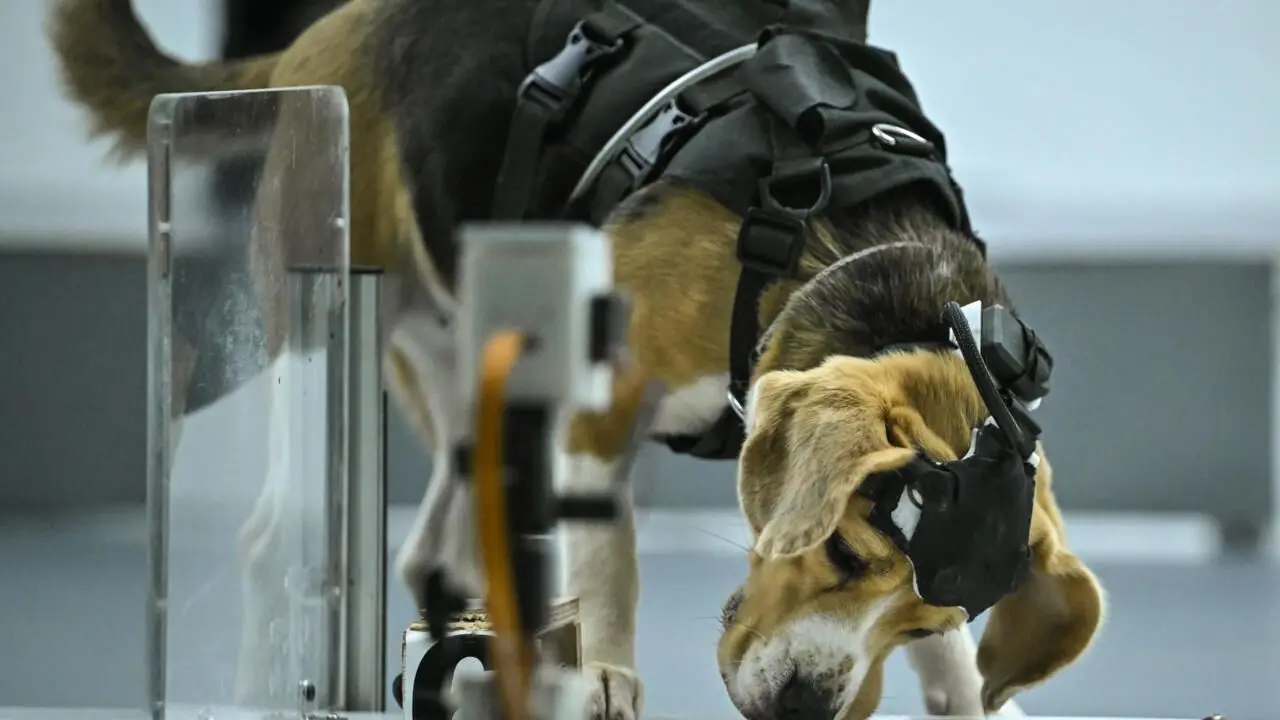
Bengaluru Startup Dognosis Pairs Cancer-Sniffing Dogs with AI to Detect 20+ Cancer Types
14 Aug 2026•Health
Recent Highlights
1
Microsoft and Nvidia Launch Surface Laptop Ultra: A $2,599 AI-Ready PC With RTX Spark Chip
Technology

2
Trump Consulted Grok AI Before Ordering Venezuela Invasion and Capture of Nicolás Maduro
Policy and Regulation

3
Scientists Build AI Model That Reconstructs Images From Brain Scans in Record Time
Science and Research

Recent Highlights
Today's Top Stories






Don’t drown in AI news. We cut through the noise - filtering, ranking and summarizing the most important AI news, breakthroughs and research daily. Follow topics that matter to you and stay ahead.


