AI boom drives US to triple natural gas power projects as data centers fuel global surge


4 Sources
4 Sources
[1]
It's a new heyday for gas thanks to data centers
The US is now leading a global surge in new gas power plants being built in large part to satisfy growing energy demand for data centers. And more gas means more planet-heating pollution. Gas-fired power generation in development globally rose by 31 percent in 2025. Almost a quarter of that added capacity is slated for the US, which has surpassed China with the biggest increase of any country. More than a third of that growth in the US is expected to directly power data centers, according to a recent analysis by the nonprofit Global Energy Monitor (GEM). The rush to install more powerful hardware into expanding data centers used for generative AI has led to forecasts of skyrocketing power demand. There's still a lot of uncertainty about whether AI will become as ingrained in everyday life as tech companies might like, and many proposed data centers could fall flat. Even so, plans to build out more gas plants in the name of AI are stalling efforts to transition to cleaner energy sources. "There is a risk that this capacity could lock in future emissions and become stranded assets if anticipated electricity demand from AI never materializes," Jenny Martos, project manager for GEM's Global Oil and Gas Plant Tracker, said in a press release. Already, 2026 is shaping up to be a record-smashing year for gas. If all of this year's proposed projects cross the finish line, it would be an even bigger jump in added capacity than the record set in 2002. That's pretty remarkable considering the 2000s ushered in America's so-called "shale gas revolution," when fracking suddenly unleashed previously hard-to-reach reserves. Gas is now a cheaper power source than coal and creates less carbon pollution when burned. But gas production releases methane, a more potent greenhouse gas than carbon dioxide even though it doesn't persist in the atmosphere for as long. Ramping up electricity generation from gas is also a sharp pivot away from global climate goals. A decade ago, nearly every country on Earth -- including its two biggest greenhouse gas polluters, China and the US -- signed a historic deal in Paris to limit global warming. The only way to achieve the most ambitious goals set out in the Paris agreement would be to replace fossil fuels with less-polluting alternatives like renewable energy and slash greenhouse gas emissions to net zero by around 2050. But President Donald Trump has pulled the US out of the Paris agreement and in 2025, US greenhouse gas emissions grew after falling for two years during the Biden administration. The US, the world's leading gas producer and the country with the most data centers, almost tripled the amount of gas-fired capacity it had in development last year, according to the GEM report. Trump has worked to suppress research on climate change and efforts to rein in greenhouse gas pollution in favor of entrenching oil, gas, and coal reliance. His "AI Action Plan" prioritizes speeding the building out of new fossil fuel infrastructure for data centers.
[2]
US gas power projects tripled in 2025 on AI demand
Reduce emissions? Screw that - we have money to lose and memes to generate Fossil fuel-fired power plant development is roaring back to life in the US thanks to the AI datacenter boom, with data from 2025 suggesting we're reaching the point where the renewable energy transition - and efforts to ease carbon emissions - may well be doomed. 2025 was a banner year for gas-fired power plant development in the US, nonprofit energy project tracking firm Global Energy Monitor (GEM) said in its latest analysis issued on Wednesday. Gas-fired power plant projects in development in the US nearly tripled last year, per GEM's data, putting the US ahead of China and responsible for around a quarter of the global gas power pipeline. It's not exactly a close race, either. There are 251,737 megawatts of gas or oil fired plants (oil-fired plants are mainly located in Iraq and account for less than 3 percent of projects, GEM told us) in development in the US, in addition to 561,907 MW in operation. China, the second-ranking developer of natural gas and oil-fired power, is working on 153,406 MW of new projects, and has just 179,998 MW currently in use. In other words, the US is looking at adding nearly 50 percent to its existing world-leading fleet of gas-fired power plants. More than a third of those new plants are directly linked to datacenter projects, GEM said. If all the new projects in development end up being fired up, that'll equate to around 53.2 billion tonnes of lifetime CO₂ emissions, GEM global oil and gas plant tracking project manager Jenny Martos told The Register. 12.1 billion tonnes of that addition will come from US projects alone. For reference, the existing global fleet of gas and oil-fired power plants is estimated to account for 54.3 billion tonnes of lifetime emissions. That means datacenters and AI are going to be a significant contributor to the derailing of global plans to quash climate change, and could be for some time. "This 'petrotech' buildout risks tethering the power grid to fossil fuels for the next generation, thereby creating long-term pollution for a short-term power fix," Martos told us. If AI actually turns out to be a bubble, that could mean a lot of lost investment in energy assets that end up stranded, causing even more financial devastation, Martos noted in GEM's writeup of its latest gas and oil project data. With that in mind, it stands to reason that, even if the AI bubble bursts, a lot of oil and gas power is still going to end up making its way to the grid to offset potential losses, further hampering the transition away from fossil fuels and carbon pollution. "There is a real possibility of a gas lock-in if these plants get built and AI demand does not materialize," Martos told us. The Trump administration has been pushing hard to side-step the clean energy transition in favor of the expediency of natural gas, but the US government isn't alone - tech companies are happy to take the easy path to datacenter construction and dreams of eventual AI profitability in spite of their pledges not to abandon the health of the planet and its residents. Microsoft has admitted that it's open to deploying natural gas with carbon capture technology alongside renewables to meet datacenter demand, while Meta announced plans at the end of 2024 to deploy 2,262 MW of natural gas power to fuel its largest-ever datacenter mere days after pledging to focus on nuclear power to drive its AI expansion. 2026, notes GEM, is on pace to break the previous record of new natural gas deployment set in 2002 during the shale boom. So sorry about those climate ambitions, planet Earth: Humans want AI slop, and the tech industry is going to give it to them, come burning, hellish temperatures, or ever-rising sea levels. ®
[3]
The AI boom is making natural gas great again
Why it matters: These are billion-dollar bets that last decades -- and doubling down on fossil fuel today locks in more global warming far into the future. Driving the news: Nearly 75% of the power equipment planned to be used on site at data centers is natural gas, according to a report released Tuesday by Cleanview, a market intelligence platform. "Press releases for these projects say one thing. But the 35+ permit documents, site plans, and equipment deals we found tell a much different story," the report finds. * Despite public nods to renewables, hydrogen, or nuclear, the equipment being installed this year and next is "almost entirely gas-powered." By the numbers: Cleanview identified 46 data centers planning to build their own on-site power, with a combined capacity of 56 gigawatts -- roughly the peak power draw of a major U.S. city like San Francisco. * That represents roughly 30% of all planned data center capacity in the United States. Between the lines: "This is a very new trend," Cleanview's Michael Thomas wrote recently. "A little more than a year ago, virtually all data center developers planned to use the electric grid to power 100% of their projects." The big picture: Wind, solar, and batteries are cheaper now in a lot of places. But the AI race is so intense that companies are choosing power they can get now over power that's cheaper later, amid years-long grid connection delays. * "The rub for solar and wind developers is that they're essentially locked out of this market until" developers begin building renewable-energy farms adjacent to data centers, Thomas told Axios in an interview. Zoom out: Natural gas is already the largest source of electricity on U.S. power grids -- and it's also dominating data centers that do connect to the grid, particularly in the Mid-Atlantic and Midwest, the country's AI hotbed. Flashback: A decade ago, natural gas was becoming politically toxic, with some activists and lawmakers pushing to ban it alongside coal. * Now, as global climate ambitions falter and AI drives a race for power, gas is regaining political and commercial appeal. The intrigue: Bloom Energy, which makes natural-gas-powered fuel cells, is one of the few success stories of Cleantech 1.0, a cycle of mostly failed venture capital investing from more than a decade ago. * CEO KR Sridhar argues gas can be a climate solution -- despite its continued role in warming the planet. * "If we switch from coal to gas right now, we can bring about a 60% reduction in carbon dioxide," he said at the World Economic Forum in Davos, Switzerland, last month. * He added that the company is in early talks with hyperscalers about capturing carbon dioxide from some facilities. What we're watching: How far this shift goes.
[4]
US leads record global surge in gas-fired power driven by AI demands, with big costs for the climate
Projects this year expected to triple global gas capacity, forecast finds, as concerns grow over impacts on planet The US is leading a huge global surge in new gas-fired power generation that will cause a major leap in planet-heating emissions, with this record boom driven by the expansion of energy-hungry datacenters to service artificial intelligence, according to a new forecast. This year is set to shatter the annual record for new gas power additions around the world, with planned and under-construction projects earmarked for 2026 set to nearly triple the amount of existing gas capacity, a report by Global Energy Monitor (GEM) found. The US is at the forefront of a global push for gas that is set to escalate over the next five years, after tripling its planned gas-fired capacity in 2025. Much of this new capacity will be devoted to the vast electricity needs of AI, with a third of the 252 gigawatts of gas power in development set to be situated on site at datacenters. All of this new gas energy is set to come at a significant cost to the climate, amid ongoing warnings from scientists that fossil fuels must be rapidly phased out to avoid disastrous global heating. The gas projects in development in the US will, if all completed, cause 12.1bn tonnes in carbon dioxide emissions over their lifetimes, which is double the current annual emissions coming from all sources in the US. Worldwide, the planned gas boom will cause 53.2bn tonnes of emissions over projects' lifetimes if fulfilled, pushing the planet towards even worse heatwaves, droughts, floods and other climate impacts. "Locking in new gas plants to meet uncertain AI energy demand means hard-wiring decades of pollution into a gambit that could be solved with flexible, clean power," said Jenny Martos, project manager at GEM's oil and gas plant tracker. "As the AI bubble inflates, the US must decide whether it will double down on a fossil future while the rest of the world pivots to renewables." Several countries around the world are betting big on gas, according to GEM's tracker, which tallies projects that have been announced or are at various stages of construction. Last year, China, the world's largest carbon emitter, installed 22.4GW of gas, its most gas capacity ever for single year. But it is the US that is leading the way, accounting for nearly a quarter of all global gas capacity in development, followed by China, Vietnam, Iraq and Brazil. Texas is the epicenter of this boom in the US, with 57.9GW of new gas power under way last year, leading Louisiana and Pennsylvania. In 2026, new gas additions are set to surpass the annual record of 100GW of new gas added in the US, set in 2002. Much of this power will be swallowed up by vast datacenters being built by tech companies to grow the AI industry. The growth of AI has been enthusiastically promoted by Donald Trump, with the president stating his administration will do "whatever it takes" for the US to lead in AI, vowing to sweep away "foolish rules" that slow the build-out of datacenters. The proliferation of datacenters has, however, caused a bump in greenhouse gas emissions and boosted demand for electricity. This has raised power bills for many Americans, despite Trump's promise to cut such costs in half in his first year in office. The administration has also blocked numerous clean energy projects and has escalated the export of liquified natural gas, with both measures raising the price of energy for American households, experts say. Domestic gas prices rose last year and, after a static 2026, are forecast to surge again next year. "Frenzied datacenter growth with little transparency or guardrails puts the public at risk of massive cost increases," said Steve Clemmer, director of energy research at the Union of Concerned Scientists, which predicts electricity demand in the US could explode 60% by 2050 due to new datacenters. A grassroots backlash against datacenters over power bills and the facilities' rampant use of water has, however, halted some projects and caused a political headache for Republicans, with Trump recently promising that big tech companies such as Microsoft will "pay their own way" for the new infrastructure, although details on such a plan are scant. "I said, You can't create this much energy," Trump conceded recently at a speech in Davos, Switzerland. "We needed more than double the energy currently in the country just to take care of the AI plants, and I said we can't do that." The datacenter juggernaut shows little sign of slowing down, however, with plans such as tech giant Meta building a $1.5bn datacenter, powered by gas, in El Paso, Texas. In western Pennsylvania, meanwhile, a shuttered coal plant is set to be resurrected as the largest gas-fired facility in the US in order to service a datacenter campus. The plan for the 3,200-acre Homer City site, about 50 miles east of Pittsburgh, has divided the local community, according to Tom Pike, director of campaigns at the Clean Air Council, a local green group. "The coal plant was an environmental monstrosity, but it was a pillar of the local economy and some people are nostalgic for that," Pike said. "But no one wants to live next to a datacenter. The ammonia, and the smell of that, from gas will be worse than the coal plant, and the power generated will be used in service of private profit rather than keep households' lights on. "There's no way it won't impact power prices, either. There is tremendous public concern about this plan."
Share
Share
Copy Link
The US has tripled its natural gas power projects in 2025, driven by AI energy demand from expanding data centers. Nearly a quarter of global gas capacity in development is now in the US, with a third directly powering data centers. This surge threatens climate goals, potentially locking in 12.1 billion tonnes of lifetime CO₂ emissions from US projects alone.
AI Energy Demand Drives Unprecedented Natural Gas Expansion
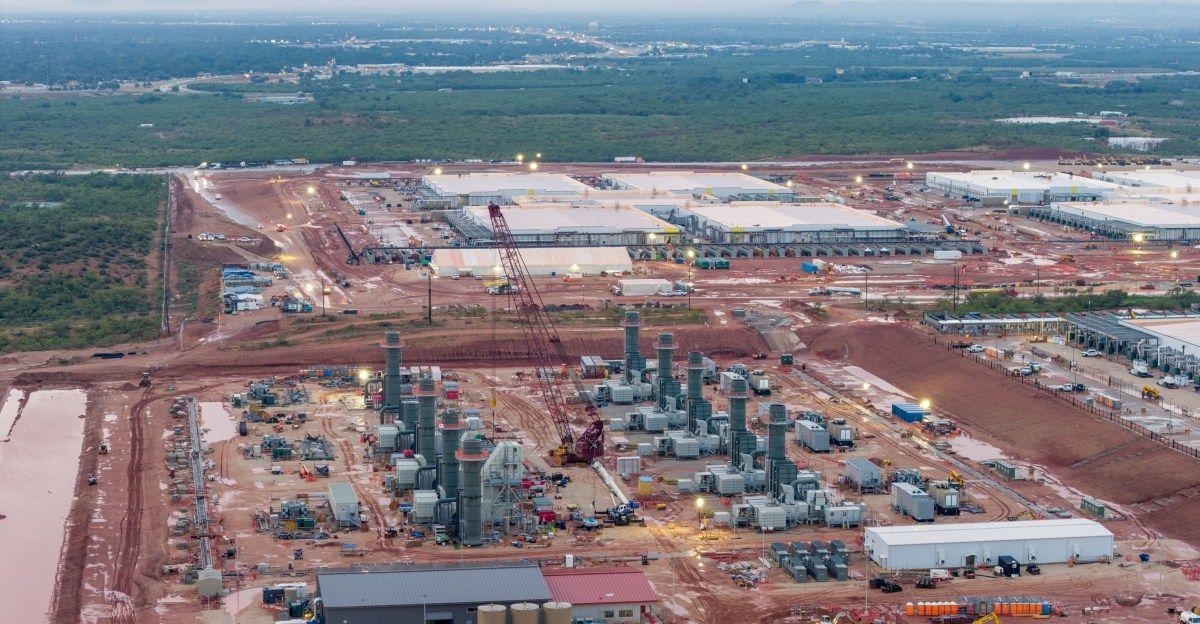
The United States has emerged as the global leader in a dramatic surge of natural gas development, tripling its gas-fired power projects in 2025 as the AI boom creates unprecedented electricity demand. The country now accounts for nearly a quarter of all global gas capacity in development, surpassing China with 251,737 megawatts of gas or oil-fired plants under construction or planned, according to Global Energy Monitor (GEM)
1
2
. This represents a potential 50 percent increase to the existing US fleet of gas-fired power plants, with more than a third of this new capacity specifically designed for powering data centers that support generative AI operations2
.
Source: The Verge
Gas-fired power generation in development globally rose by 31 percent in 2025, and if current trends continue, 2026 is on track to shatter the annual record for new gas power additions set in 2002 during America's shale gas revolution
1
2
. The rush to install more powerful hardware into expanding data centers has led to forecasts of skyrocketing power demand, with experts predicting electricity demand in the US could surge 60 percent by 2050 due to new data centers4
.Climate Goals Face Major Setback from Gas-Fired Power
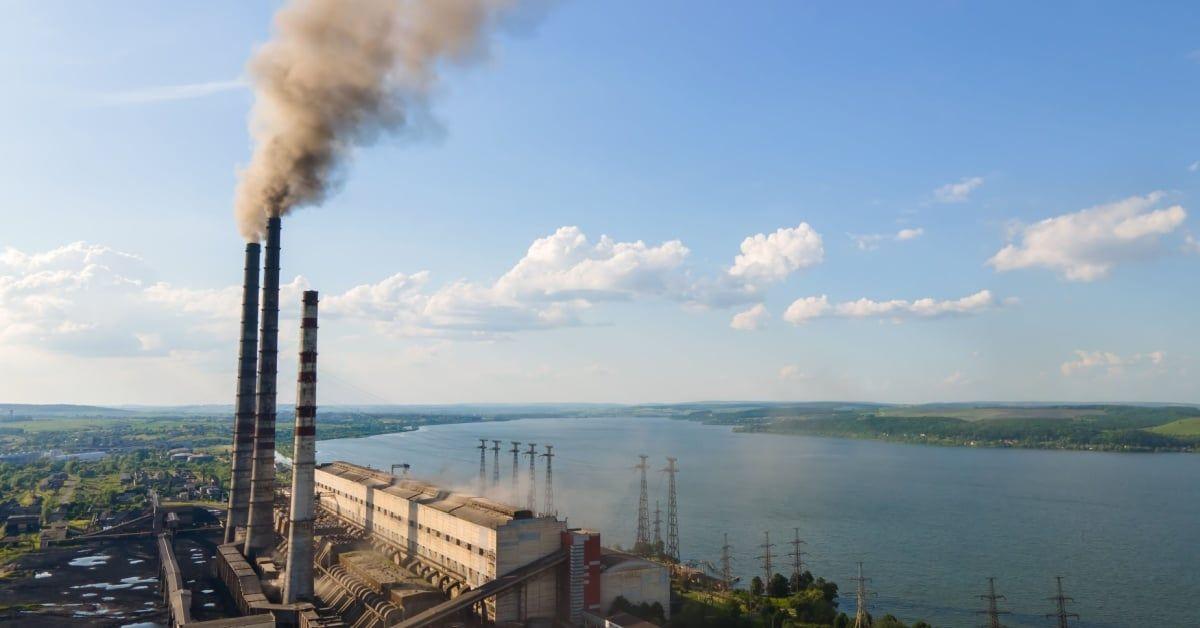
The global surge in gas development poses severe implications for climate change efforts and the energy transition away from fossil fuels. If all planned US projects are completed, they will generate 12.1 billion tonnes of lifetime CO₂ emissions—double the current annual greenhouse gas emissions from all sources in the United States. Worldwide, the planned gas boom could produce 53.2 billion tonnes of emissions over the projects' lifetimes, nearly matching the 54.3 billion tonnes from the entire existing global fleet of gas and oil-fired power plants
2
.
Source: The Register
"This 'petrotech' buildout risks tethering the power grid to fossil fuels for the next generation, thereby creating long-term pollution for a short-term power fix," Jenny Martos, project manager for GEM's Global Oil and Gas Plant Tracker, told The Register
2
. The expansion directly contradicts the Paris agreement goals, which require replacing fossil fuels with renewable energy and slashing carbon emissions to net zero by around 20501
.Tech Companies Choose Speed Over Sustainability
Despite public commitments to clean energy, major tech companies are rapidly deploying natural gas infrastructure to meet immediate AI demands. Nearly 75 percent of power equipment planned for on-site use at data centers is natural gas, according to a report by Cleanview, a market intelligence platform
3
. The firm identified 46 data centers planning to build their own on-site power, with a combined capacity of 56 gigawatts—roughly the peak power draw of a major US city3
."Press releases for these projects say one thing. But the 35+ permit documents, site plans, and equipment deals we found tell a much different story," the Cleanview report notes
3
. Microsoft has admitted openness to deploying natural gas with carbon capture technology alongside renewables, while Meta announced plans to deploy 2,262 megawatts of natural gas power for its largest-ever datacenter, including a $1.5 billion facility in El Paso, Texas2
.Related Stories



Risk of Stranded Assets and Gas Lock-In
The massive investment in gas infrastructure creates significant financial and environmental risks if the AI bubble fails to materialize. "There is a risk that this capacity could lock in future emissions and become stranded assets if anticipated electricity demand from AI never materializes," Martos warned
1
. Even if AI demand doesn't meet projections, the reality of gas lock-in means these plants will likely still feed the power grid to offset potential losses, further hampering the transition away from carbon emissions2
.
Source: Axios
The AI race has become so intense that companies are choosing power they can get now over cheaper renewable energy options later, amid years-long connection delays to the electricity generation infrastructure
3
. This represents a sharp reversal from just over a year ago, when virtually all data center developers planned to use the electric grid to power 100 percent of their projects3
. The Trump administration has accelerated this trend through its AI Action Plan, which prioritizes speeding the build-out of new fossil fuel infrastructure for data centers while blocking clean energy projects1
.Regional Impact and Public Backlash
Texas leads the US expansion with 57.9 gigawatts of new gas power under development in 2025, followed by Louisiana and Pennsylvania. The proliferation has raised power bills for many Americans and sparked grassroots opposition over electricity costs and water consumption, halting some projects and creating political challenges. Steve Clemmer, director of energy research at the Union of Concerned Scientists, warns that "frenzied datacenter growth with little transparency or guardrails puts the public at risk of massive cost increases". Watch for continued tension between AI infrastructure expansion and local communities bearing the environmental and financial costs of this rapid transformation.
References
Summarized by

Navi
[1]
[2]
Related Stories
Recent Highlights
1
AI Models Lie and Deceive to Protect Other AI Models From Deletion, Study Reveals
Science and Research

2
AI chatbots validate you too much, making you less kind to others, Stanford study reveals
Science and Research

3
Judge blocks Pentagon from blacklisting Anthropic over AI safety guardrails dispute
Policy and Regulation

Recent Highlights
Today's Top Stories












Your Daily Dose of Curated AI News
Don’t drown in AI news. We cut through the noise - filtering, ranking and summarizing the most important AI news, breakthroughs and research daily. Spend less time searching for the latest in AI and get straight to action.

