Hollywood reframes AI as infrastructure while studios navigate creative boundaries and job concerns


7 Sources
7 Sources
[1]
Tom Cruise and Brad Pitt Can Relax. AI Won't Kill Movies
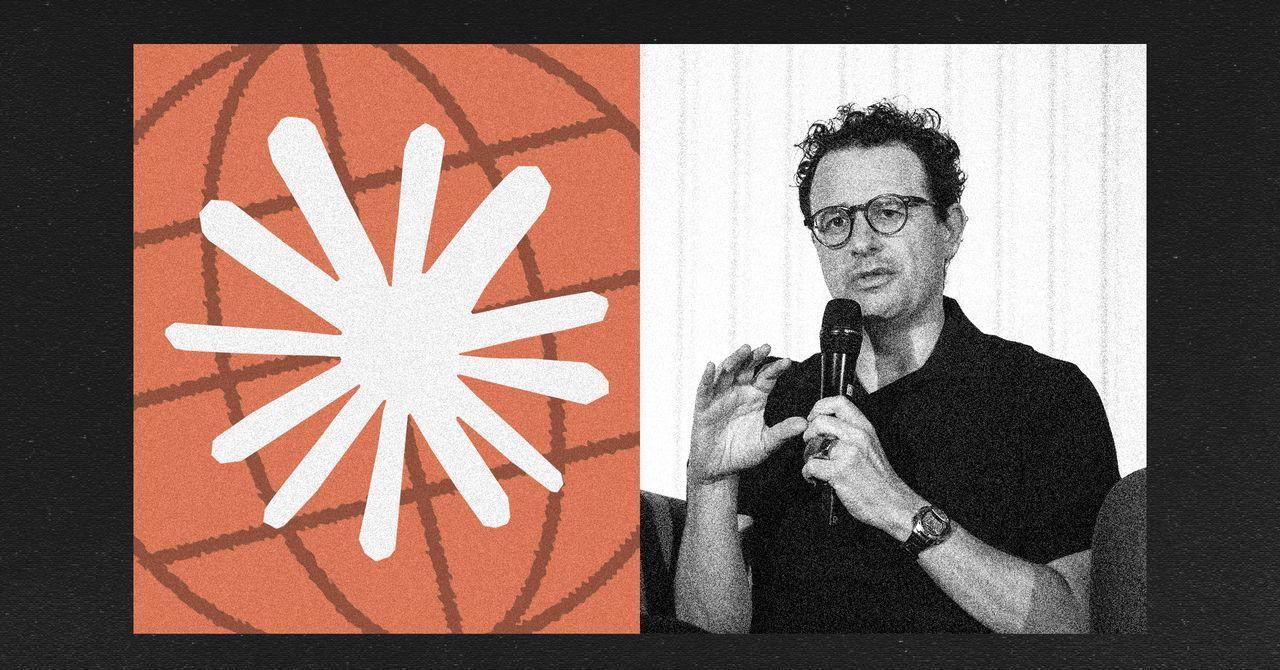
Justin Hackney is used to being ostracized. The movie producer, who played "the infected kid" in director Danny Boyle's 28 Days Later, shadowed Boyle for years and then pivoted into tech halfway through his career, taking roles with OpenAI and ElevenLabs to evangelize the benefits of generative artificial intelligence tools in filmmaking and advertising. Friends from the industry stopped talking to him; one ad agency executive had his head in his hands as he listened to one of Hackney's presentations. "A lot of people hated me, and I don't blame them to be honest," Hackney tells me. The film and television industries have vigorously resisted AI out of concern it'll replace scriptwriters, storyboard artists, visual effects experts and more. Highly realistic AI videos like the one of Tom Cruise and Brad Pitt in a bare-knuckle fight, courtesy of Chinese AI service Seedance 2.0, have fanned the flames of worry. On Sunday, Conan O'Brien kicked off his monologue for the 2026 Oscars by saying he was "honored to be the last human host of the Academy Awards." Much of the fear is warranted. Concept artists are struggling when studios can cheaply gin up storyboards in minutes. Los Angeles County has lost 41,000 film and TV jobs in three years, about a quarter of its entertainment workforce, and DreamWorks founder Jeffrey Katzenberg has said AI will replace most animators. "In the good old days, you might need 500 artists and years to make a world-class animated movie," he told the Bloomberg New Economy Forum in 2023. "I don't think it will take 10% of that three years from now." But that doesn't necessarily mean AI will destroy the art of filmmaking; instead, it may provide opportunities for people who otherwise might not have the means to make movies with seemingly high production values, in much the same way that Alphabet Inc.'s YouTube has built a marketplace for creators to make money from content produced on shoestring budgets. Despite the cold shoulder from his peers, Hackney has delved deeper into the world of synthetic filmmaking. Last year he co-founded Wonder, a London-based production company that funds short films, music videos and TV ads generated with AI. Its financial backers include executives from OpenAI and Google DeepMind, alongside Hollywood veterans like the former CEO of StudioCanal. Wonder's commercial breakthrough came last September with the launch of British singer Lewis Capaldi's music video for Something in the Heavens, which was entirely AI-generated; it's also produced a smattering of animated short films and video advertisements. What YouTube did for distribution, AI is doing for production. While high-end TV and film production might cost around $500,000 to $1 million per minute of finished content, Wonder claims that AI can bring that down to between $10,000 and $20,000 per minute. The firm also commissions work, taking a 50/50 split on intellectual property after investing a lump sum such as $25,000 in a filmmaker. Netflix Inc. and other studios typical pay creators on a "cost plus" basis, in which the studio owns all or nearly all of the rights to a creative work. (Star Wars creator George Lucas was a rare exception as a filmmaker who negotiated ownership -- becoming a billionaire as a result.) Sign up for the Bloomberg Opinion bundle Sign up for the Bloomberg Opinion bundle Sign up for the Bloomberg Opinion bundle Get Matt Levine's Money Stuff, John Authers' Points of Return and Jessica Karl's Opinion Today. Get Matt Levine's Money Stuff, John Authers' Points of Return and Jessica Karl's Opinion Today. Get Matt Levine's Money Stuff, John Authers' Points of Return and Jessica Karl's Opinion Today. Bloomberg may send me offers and promotions. Plus Signed UpPlus Sign UpPlus Sign Up By submitting my information, I agree to the Privacy Policy and Terms of Service. Wonder, which is based in a converted east London church, recently did a deal with Swedish author of a children's book called Maxi and Helium, which had sold 5 million copies. The company turned it into an animated children's show for YouTube, dubbed into five languages and all via AI. Rather than selling the rights to Walt Disney Co. or Netflix Inc., author Camilla Brinck co-owns the IP with Wonder. Models like these could be critical in helping ensure that the flood of new AI films and animations don't bombard us with slop. Filmmakers become more like stakeholders, incentivizing them to care more about quality in a way that someone producing AI content for a flat fee might not. While AI will almost certainly hurt background actors and VFX workers, there are some grounds for cautious optimism. The rise of YouTube led to a new economy, adding $55 billion to US gross domestic product and supporting the equivalent of 490,000 full-time jobs, according to a 2024 Oxford Economics study commissioned by YouTube. Disruption hurts, but thoughtful gatekeepers can help it create more jobs that it destroys. Hackney's days as an industry pariah are clearly over. More from Bloomberg Opinion: * Anthropic, OpenAI Talk Safety. Headcounts Don't: Parmy Olson * AI Just Might Make Your Job a Lot More Fun: Gautam Mukunda * Why Bigger Isn't Always Better in AI: Catherine Thorbecke Want more from Bloomberg Opinion? OPIN <GO> . Or subscribe to our daily newsletter .
[2]
Hollywood reframes AI as infrastructure, not replacement
Why it matters: Like most industries, those in entertainment have moved from resistance to experimentation, and now selective adoption. State of play: Streamers like Netflix, Peacock and Prime Video are already actively building AI into production and the viewer experience. * Netflix recently announced a deal to acquire Ben Affleck's startup that uses AI to support the post-production process, while Peacock rolled out a new AI-avatar of TV personality Andy Cohen to help viewers discover content within its app. * Plus, high-profile creatives and directors are starting to lighten their negative rhetoric around AI. * "I am not for AI if it replaces a creative individual," said filmmaker Steven Spielberg at SXSW, but he added that he sees the value of it "in many disciplines." Driving the news: Albert Cheng, head of AI Studios at Amazon MGM Studios, has embraced the "creator in the loop" model, where AI is integrated across production workflows with strict guardrails where humans still make the decisions. * "AI [use] must be human centered. That is a North Star. We had to think through how AI can be applied to each of our workflows, and also make sure that people are driving the creative process." * "We'll always use human writers, actors, directors, heads of departments, among others. These are all very important. And part of that is the construct of copyright protection. ...In order for us to protect copyright, we need to have human inputs in all parts of the creative process," he added. Currently, Amazon Studios is using AI to map scenes before filming and support post-production effects. * The result has been faster production and fewer bottlenecks, said Cheng. "You can shoot something and see near-final visuals the same day," he added. * The time and cost savings decrease the amount of time between seasons and are being reinvested in the creation of more content and storytelling, says Cheng. Zoom out: AI isn't just changing how content is made, but it's also reshaping how films and shows are distributed and consumed. * At Prime Video, AI is already powering personalized recommendations, shorter, AI-generated synopses and accessibility features like dialogue enhancement and audio descriptions. Zoom in: Cheng works hand-in-hand with Raf Soltanovich, who oversees technology for Prime Video and Amazon MGM Studios, to help build AI-powered tools in support of creators. * Soltanovich says the goal is a flywheel between tech and creativity. * "Powerful, forward-thinking creators are really leaning in to deeply understand what is possible, and how this can actually help elevate their storytelling," says Soltanovich. * It has also helped the technical staff better understand the creative concerns and the additional research or investment needed to tell better stories, Soltanovich added. What to watch: AI could reshape the economics of entertainment and lower the barrier to entry. * "We can actually fit five movies into what we would typically spend on one," says Cheng. "If anything, I think [AI] can actually increase, improve and expand the possibilities." * Cheng believes AI studios could be the next wave of entrepreneurship as the tech allows more individuals to "be their own content studio." What's next: AI has been a critical piece of the ongoing negotiations between SAG-AFTRA and the Alliance of Motion Picture and Television Producers, which began last month. The bottom line: What used to be universal fear is now curiosity.
[3]
Steven Spielberg Is 'Not For' AI Replacing Creatives - Decrypt
Add Decrypt as your preferred source to see more of our stories on Google. Steven Spielberg may have made a film titled "A.I. Artificial Intelligence," but he hasn't adopted the technology in his filmmaking process, the legendary director told an audience at SXSW 2026. Spielberg, whose filmography includes classics like "Raiders of the Lost Ark," "Jaws" and "Jurassic Park," said that he's "never used AI on any of my films yet." While Spielberg is in favor of the technology "in many disciplines," he said, "All the seats are occupied" in his writers' rooms. "There's no empty chair with a laptop on it," he added. The director, who is promoting his forthcoming sci-fi feature "Disclosure Day," came out firmly against using AI for creative tasks, stating that, "I am not for AI if it replaces a creative individual." Spielberg's own films have frequently grappled with the implications of new technology, including AI (in, unsurprisingly, "A.I. Artificial Intelligence") as well as the metaverse in "Ready Player One." For 2002's "Minority Report" the director convened a "think tank summit" of futurists to flesh out its future world -- with several of the technologies they imagined, including iris scanners and "spatial UI," subsequently making their way into the real world. Spielberg's comments come as the entertainment industry continues to grapple with the implications of artificial intelligence, with studios joining a growing chorus accusing AI firms of copyright infringement, even as they experiment with the technology. Last week, Netflix reportedly paid as much as $600 million to acquire InterPositive, an AI startup founded by Ben Affleck that enables filmmakers to alter existing footage. The streaming giant states that it considers generative AI tools as "valuable creative aids when used transparently and responsibly," having first used the technology to generate VFX in a show last year. In December, actors and directors including Natalie Portman, Cate Blanchett, and Guillermo del Toro lent their weight to the Creators Coalition on AI, in a push for enforceable standards on the use of AI throughout the industry. And just last month, AMC Theatres blocked an AI-generated short film from screening at its cinemas as part of pre-roll advertising, suggesting that the debate over AI -- and audiences' appetite for the technology -- has a long way to go before being resolved.
[4]
In Hollywood, AI's no match for creativity, say top executives
Austin (AFP) - Artificial intelligence is transforming Hollywood at a pace that has sent shockwaves through creative industries, but human creativity will always prevail, a leading executive at the cutting edge of that change told AFP. The disruption was a dominant theme at this week's South by Southwest conference in Austin, Texas where veteran director Steven Spielberg made clear he was drawing a line in the sand. "I've never used AI on any of my films yet. We have a writer's room. All the seats are occupied," Spielberg said. "I am not for AI if it replaces a creative individual." Joshua Davies, chief innovation officer of Artlist -- a Tel Aviv-based AI video platform that has most recently been positioning itself as a supplier of creative tools to filmmakers -- told AFP the technology would never eclipse the human creative. If given the choice between something made using an AI toold by a techie and a creative, "I know which one I would rather watch at the end," said Davies, who founded video editing software company FXhome before it was acquired by Artlist in 2021. Davies acknowledged the industry's anxiety was not unfounded, with new video models having "struck fear in the hearts of everybody" -- not just over copyright and personality infringement, but over the fundamental question of how film and television production will look in a matter of years. "If I was bringing out an Iron Man movie in 2027, 2028 -- would I be going to multiple visual effects houses, would I expect them to be utilizing AI? We're all kind of working out our way through that," he said. Davies described the platform's AI video tools as a way to "fill in the bits that you can't shoot, or didn't shoot, or you don't have the budget to shoot," rather than a wholesale substitution for going out on location. 'Holy grail' Yet the timing is charged. Editors, visual effects artists and other Hollywood professions have watched the rapid advance of generative AI with alarm, fearing that tools capable of producing broadcast-quality footage at a fraction of traditional costs could hollow out entire job categories. Major studios are actively evaluating how AI can be integrated into production pipelines, foreshadowing significant workforce changes across an industry that has already endured a bruising period following the covid pandemic and writers' and actors' strikes of 2023. Artlist made headlines in February when it produced a Super Bowl LX spot in under five days using its own products, at a fraction of the multi-million-dollar cost typical of Big Game advertising. Davies was keen to push back on the narrative that the ad represented the future of production without human involvement. That wasn't what it was, he said. It was creatives "using the tool to get the very best out of it." A self-described "techie guy," Davies said the platform's current obsession is on giving creators nuanced control over creating or editing footage -- something he described as the company's "holy grail." Existing models, he said, handle simple static shots reasonably well but struggle with complex camera movements and consistent performance across multiple takes. You can prompt an elaborate shot, but for now "you'll get something random" that you can't work with. On cost, Davies cautioned against unrealistic expectations, suggesting AI would reduce production expenses significantly but not eliminate them. Davies said his long-term hope was that AI would serve as a leveling force for independent filmmakers and content creators who currently lack the budgets to realize their ambitions. "There are definitely YouTubers who make some of the best action work out there on no budget," he said. "AI will level that playing field completely -- the story will be what matters." He struck a cautiously optimistic note on the creative industry's direction, dismissing the most dystopian predictions. "The idea that no one works at the end of it is the bit that doesn't hold any water with me," he said. "There's been more and more of everything, not less and less -- and the cream rises to the top anyway, because the human element is what we crave."
[5]

Lights, Camera, Algorithm as AI Joins the Film Crew | PYMNTS.com
By completing this form, you agree to receive marketing communications from PYMNTS and to the sharing of your information with our sponsor, if applicable, in accordance with our Privacy Policy and Terms and Conditions. "I am honored to be the last human host of the Academy Awards," he said, adding that next year's host would be "a Waymo in a tux." The quip drew laughs from those at the Dolby Theatre, but also reflected reality. Artificial intelligence is now being actively deployed in Hollywood studios, and the pace of change is outstripping the ability to establish clear rules. The question is no longer if AI will transform filmmaking, but how much, how fast, and on whose terms. AI is used across the industry at many production stages, from concept art generation and script coverage to VFX pipeline work and post-production editing. Google, Runway and ByteDance have all released new AI video models in 2026, aiming to accelerate a market in which creators can use AI tools to produce entertainment content at a fraction of traditional cost and time. According to The Conversation, AI systems are increasingly used to "assist with visual effects, editing and script analysis," helping filmmakers manage complex production pipelines and experiment with new creative techniques. Generative AI can produce storyboards, concept images and preliminary visual environments before cameras begin rolling. Major entertainment companies are also beginning to invest directly in AI filmmaking technologies. As reported by PYMNTS, Netflix recently acquired InterPositive, an AI filmmaking company founded by Ben Affleck that develops tools to support post-production tasks such as editing and visual effects adjustments. Technology companies are also forming partnerships with studios to expand generative video capabilities. OpenAI recently announced a partnership with Disney that will allow the studio's characters and intellectual property to be used within its Sora video generation platform, highlighting a licensing model that could allow media companies to participate in the development of generative video tools. Not every AI video model has found its footing so gracefully. Concerns over copyright have intensified as generative video models become capable of producing realistic footage that resembles existing actors and film scenes. One recent example involves ByteDance's Seedance 2.0 video generation system. The company launched the model in China earlier this year, where short AI-generated clips quickly went viral online. Some of those clips reportedly included fabricated scenes showing actors such as Tom Cruise and Brad Pitt in a fictional fight sequence, drawing criticism from Hollywood studios. As reported by TechCrunch, the clips sparked immediate backlash across the film industry. Studios responded by sending ByteDance a series of cease-and-desist letters, with lawyers representing Disney accusing the company of a "virtual smash-and-grab of Disney's IP," as reported by TechCrunch. The backlash ultimately forced ByteDance to pause its planned global rollout of the Seedance 2.0 model while engineers and legal teams work to implement stronger intellectual property safeguards. The copyright issue extends beyond a single model. Industry groups argue that generative video systems capable of producing photorealistic scenes may be trained on copyrighted film and television content without licensing agreements or compensation. The labor side of Hollywood's AI debate remains unresolved as studios experiment with new technologies while unions push for stronger protections. SAG-AFTRA began formal negotiations with the Alliance of Motion Picture and Television Producers in February 2026, with AI safeguards among the central issues. As reported by Axios, the two sides agreed to a one-week extension of talks on March 6, signaling cautious optimism even as tensions rise ahead of the union's contract expiration on June 30. Among the union's proposals is a "Tilly tax," which would require studios to pay royalty fees whenever AI-generated performers appear in productions, a mechanism intended to make synthetic actors financially comparable to hiring real performers. While studios and unions negotiate AI rules, an ongoing debate centers on how AI could fundamentally alter the entertainment landscape. Alexis Ohanian, Reddit co-founder and venture capitalist, believes that the rise of AI-generated content could shift audience preferences toward live experiences that showcase human performance. In a post on X, Ohanian argued that AI will significantly alter Hollywood and acting, prompting a shift toward in-person storytelling and immersive events as audiences seek more authentic human connections.
[6]

AI Is Everywhere -- All the Time -- at Hong Kong's Filmart
As Hollywood remains locked in labor and legal battles over generative AI, Filmart is showcasing Asia's increasingly full-throated embrace of the technology as both a foregone conclusion and the industry's next growth engine -- with 28 talks devoted to the subject this year. While Hollywood's unions and studios are engaged in an ongoing power struggle over AI's future role in filmed entertainment, Asia's screen industries are rushing toward a full embrace of the technology. For an indication of the region's stance on AI's rapidly evolving role in screen entertainment, look no further than the 2026 lineup at Hong Kong's Filmart, Asia's leading content market and media industry convention. Not long ago, Filmart's popular seminar series was populated by top studio executives from Hollywood and China, each side keen on the potential for doing business together in the traditional realm of theatrical film. But as geopolitics has cast a pall over collaboration between the world's two largest film markets in recent years, such executives have mostly vacated the scene at Filmart. Instead, perhaps unsurprisingly, the event's organizers have pivoted toward the technologies and formats purported to be the industry's next sources of growth, if not demise: AI, vertical microdramas -- and, well, more AI. Across Filmart's keynote and panel discussion lineup this year -- which runs March 17-20 in tandem with the event's content sales convention -- there are no fewer than 28 talks devoted to artificial intelligence. Subjects covered include AI in screenwriting, AI optimization of production workflows, AI in animation, AI for pre-vis, AI product demos, presentations of AI-made movies and much else. Just one of the two dozen-plus talks devoted to AI touches on a cautionary topic, or a potential downside of unrestrained AI use in the entertainment sector: the copyright infringement risks of AI-generated content. "AI is transforming film and entertainment content production and reshaping the future of storytelling," says Candas Yeung, an associate director at the HKTDC, Filmart's organizers. "Reports indicate that a significant majority of movies now utilise some form of this technology during production. For 2026, we are diving deep into this world. We want to promote AI adoption and foster collaboration between content creators and technology specialists." None of the U.S. studio majors will be presenting at Filmart this year other than Warner Bros. Discovery, but executives from tech players like Google, Alibaba and Midjourney will publicly discuss subjects like balancing cinematic craft with generative AI, while a long roster of China's leading AI startups -- Kling, Minimax, ShengShu AI, TapNow AI and more -- have been given a place of prominence at the event. "One of our key goals for Filmart this year is to demonstrate the transformative power of generative AI and its seamless integration into production workflows," says Zeng Yushen, head of operations at Kling AI, which is hosting a dedicated AI workshop at Filmart's new AI hub. "As Asia's premier entertainment marketplace, Filmart offers an unparalleled platform to engage with the world's leading studios and content creators. We would like to leverage this opportunity to meet potential partners in the industry and explore how technology and storytelling can converge to drive the next era of cinema." Launched by Chinese short-video giant Kuaishou in June 2024, Kling AI has quickly emerged as one of Asia's highest-profile generative-video platforms, offering text-to-video and image-to-video tools aimed at everyone from casual creators to professional film, TV and advertising teams. Kuaishou says Kling had attracted more than 60 million creators worldwide by the end of 2025 and generated over 600 million videos, while outside estimates have pegged the platform at roughly 12 million monthly active users. Among its early showcase projects, Kling has highlighted work with Timeaxis Studio on the hit Chinese period drama Swords Into Plowshares, where the tool was used to build dynamic territorial maps and accelerate effects-heavy previs, including cutting a storm-sequence simulation timeline from two months to two weeks. As in the Hollywood creative community, many in Asia's film business are deeply anxious about their livelihoods and the changes AI will bring to the art form that has been their life's work. Korean industry elder statesman Park Chan-wook's latest critically acclaimed feature, No Other Choice (2025), culminates in a trenchant dystopian vision of the degrading and inhumane AI endgame for working people. But unlike in Hollywood, Asia's screen industries operate without organized unions to negotiate on film workers' behalf. As a result, market forces and AI boosterism -- rather than strategic safeguards negotiated through collective bargaining -- are the factors most likely to shape how AI disrupts and embeds itself in the region's film sector. Adds the HKTDC's Yeung: "This year's focus on new formats and collaboration, including AI, short drama, and co-production, reflects where the industry is heading -- attendees are encouraged to engage with these trends and explore how they can enhance their businesses and projects."
[7]

AI filmmaking is a gimmick if you don't know the rules of cinema
The director of The Chronicles of Bone reveals why human creativity still matters. AI is shaking up creative industries, from Nvidia's DLSS 5 for photoreal gaming to its uses in animation, and filmmaking is no exception. News coverage of AI's uses often frames it as either a threat to jobs (which it is) or a shortcut to flashy visuals (also true). But filmmaker Kavan Cardoza, also known as 'Kavan the Kid', has a different take: AI isn't a magic bullet; it's a tool, and its effectiveness depends entirely on the filmmaker using it. Cardoza runs Phantom X, an AI-native studio producing The Chronicles of Bone, a serialised dark fantasy that reimagines public-domain characters, such as Robin Hood, King Arthur, and Peter Pan, in a post-collapse world dominated by a vampiric empire. The series is developed in collaboration with Freepik, whose tools help Phantom X scale world-building and visual development without dictating story or authorship. "AI doesn't replace filmmaking," Cardoza tells me. "It replaces the physical shoot. Everything else - writing, editing, story, performance - that's still human-led." From scrappy indie to AI pioneer Cardoza's path to AI filmmaking started in the traditional trenches. After film school in Florida, he moved to Los Angeles, where he directed music videos for indie and hip-hop artists. Two breakout videos led to record deals and gave him a reputation for doing a lot with very little. "I became known as the guy who could take a $20,000 or $30,000 budget and make it look three or four times bigger," he says. Budget constraints forced him to master every part of production. He directed, lit, shot, edited, and even built physical sets and costumes. "I had a house in South Central where I'd literally build set pieces from scratch," he says. "Those early years taught me lighting, camera placement, production design, and editing from the ground up." Those fundamentals now underpin his AI workflow. Cardoza knows exactly how to describe lighting, framing, and movement to generative tools so they produce cinematic results rather than just flashy images. "If you don't understand the basics, AI visuals look like student films," he says. Seeing AI's potential early Cardoza first explored AI with early versions of Midjourney, generating rough images that barely resembled their subjects. "I remember generating Deadpool and thinking, 'I can kind of see Deadpool in this blob,'" he says. As AI models matured, he started using them for visual development: mood boards, concept art, and eventually experimental short films. Rather than using original stories, he experimented with familiar IPs like Power Rangers and Dragon Ball Z, testing the tools' limits without risking new content. His viral breakthrough came in 2024 with a 10-minute AI-generated fan film in the universe of The Batman. At a time when most AI video projects were under a minute, Cardoza tested whether longer narrative storytelling could work. Millions watched before the video was taken down due to copyright issues, but the attention opened doors with Netflix, Hulu, and other studios, which were curious about AI filmmaking's potential. By early 2025, Cardoza had launched Phantom X full-time and released Echo Hunter, the first AI-assisted film approved by SAG-AFTRA. Actors' likenesses were digitally replicated with consent, establishing a framework for professional AI-driven production. Making The Chronicles of Bone The Chronicles of Bone builds on that foundation. The series imagines legendary characters navigating a world where vampiric rulers can instantly convert humans into loyal followers. Cardoza's goal isn't to generate content for the sake of technology; it's to explore story at scale with a small team. "Freepik helps us move fast, iterate, and experiment," he says. "It's a creative toolkit, not a writer or director. The story, the shots, the emotional beats, that's all us." The prologue season is currently on YouTube, with new episodes premiering on the first Tuesday of each month. Episodes run 10-15 minutes, long enough to explore narrative and characters, short enough for online audiences. Despite heavy use of generative tools, Cardoza's workflow is grounded in traditional filmmaking. Scripts come first; AI comes after. He even makes his own physical references, such as the masks characters wear in the films; these are real (he pulls one from a box and shows me), photographed, and reworked using AI. Characters and environments are designed with AI, with visual reference sheets ensuring consistency. Locations are generated to allow virtual camera movement. Once assets are ready, Cardoza edits in Adobe Premiere Pro, color-grades in DaVinci Resolve, and polishes effects in After Effects and Blender. "AI is basically the set," he explains. "The pre- and post-production still follow the same rules. You still need storyboards, blocking, continuity, editing rhythm." This is where filmmaking knowledge matters most. Without it, AI-generated visuals are impressive but hollow. With it, even a small team can create sequences that feel cinematic and intentional. "AI can generate shots," Cardoza says. "But it doesn't understand story, pacing, or emotion. That still comes from human filmmakers." Why this matters for creators For Cardoza AI's real impact is less about replacing jobs and more about amplifying what creators can do. Small teams can now produce cinematic worlds once reserved for major studios. Writers with scripts stuck on shelves can realise them without massive budgets by generating trailers and proof-of-concept videos for pitches. Actors can license digital versions of themselves for new opportunities. At the same time, Cardoza is candid about the industry shift. Some traditional roles - set design, wardrobe, VFX - will feel pressure as AI reduces physical production costs. But the creative skill required to craft a compelling story remains irreplaceable. "Anyone can generate visuals," he says. "Knowing how to turn them into a movie, that's still the hard part." Cardoza sees AI filmmaking following a familiar pattern: initially treated as a novelty or gimmick, it will eventually become part of the standard toolkit. The label 'AI filmmaking' will fade, replaced by the recognition that generative tools are just another way to execute creative vision. Smaller, agile teams could produce feature-level work. Generative tools and platforms like Freepik will serve as infrastructure, enabling scope, speed, and iteration. But human authorship - writing, directing, editing - remains the differentiator. For Cardoza, the ultimate test is emotional engagement. If audiences cry over AI-generated characters or connect with a story born from these tools, the debate about whether AI belongs in filmmaking becomes irrelevant. "Once people are invested in the story," he says, "they stop thinking about how it was made." Watch the prologue season of The Chronicles of Bone on YouTube now. Visit Freepik to see how you can use AI like Kling, Magnific, Veo 3.
Share
Share
Copy Link
Major studios like Netflix and Amazon are actively integrating AI into filmmaking workflows, from post-production to viewer experiences. While Steven Spielberg and other creatives resist AI replacing human artists, the entertainment industry is shifting from resistance to selective adoption, raising questions about copyright concerns, job displacement, and the future of storytelling.
Hollywood Embraces AI While Drawing Creative Boundaries
The entertainment industry has reached an inflection point in its relationship with AI. What began as fierce resistance has evolved into selective adoption, as major studios integrate artificial intelligence across production workflows while creative leaders establish firm boundaries. At the 2026 Oscars, host Conan O'Brien quipped he was "honored to be the last human host of the Academy Awards," capturing both the humor and anxiety surrounding AI in the film industry
5
. Meanwhile, legendary director Steven Spielberg made his position clear at SXSW 2026: "I've never used AI on any of my films yet. All the seats are occupied. I am not for AI if it replaces a creative individual"3
.
Source: PYMNTS
Yet even as Spielberg draws lines, streamers like Netflix, Peacock, and Prime Video are building AI into production pipelines and viewer experiences
2
. Netflix recently acquired Ben Affleck's startup InterPositive for as much as $600 million, which uses AI to support the post-production process by enabling filmmakers to alter existing footage3
. Peacock rolled out an AI avatar of TV personality Andy Cohen to help viewers discover content within its app2
.Studios Adopt "Creator in the Loop" Model
Albert Cheng, head of AI Studios at Amazon MGM Studios, has championed the "creator in the loop" model, where AI is integrated across production workflows with strict guardrails ensuring humans make final decisions. "AI must be human centered. That is a North Star," Cheng explained, emphasizing that Amazon will "always use human writers, actors, directors, heads of departments"
2
. This approach addresses copyright protection concerns while leveraging AI to map scenes before filming and support special effects in post-production.The results demonstrate significant efficiency gains. "You can shoot something and see near-final visuals the same day," Cheng noted, adding that time and cost savings decrease production timelines between seasons while being reinvested in content creation
2
. According to Cheng, AI could fundamentally reshape economics: "We can actually fit five movies into what we would typically spend on one"2
.Production Costs Plummet as AI Video Models Advance
The financial implications are staggering. While high-end TV and film production typically costs $500,000 to $1 million per minute of finished content, London-based production company Wonder claims AI can reduce production costs to between $10,000 and $20,000 per minute
1
. Wonder, co-founded by producer Justin Hackney who previously worked with OpenAI and ElevenLabs, funds AI-generated short films, music videos, and TV ads. The company's breakthrough came in September 2025 with Lewis Capaldi's entirely AI-generated music video for "Something in the Heavens"1
.Wonder's business model differs from traditional studios by offering a 50/50 intellectual property split after investing around $25,000 in filmmakers, contrasting with Netflix and other studios that typically own all or nearly all rights through "cost plus" arrangements
1
. This stakeholder approach could incentivize quality over the "slop" that threatens to flood generative AI platforms.Job Displacement Hits Creative Industries Hard
The human cost remains severe. Los Angeles County has lost 41,000 film and TV jobs in three years—about a quarter of its entertainment workforce
1
. DreamWorks founder Jeffrey Katzenberg predicted AI will replace most animators, telling the Bloomberg New Economy Forum in 2023: "In the good old days, you might need 500 artists and years to make a world-class animated movie. I don't think it will take 10% of that three years from now"1
.
Source: Axios
Concept artists struggle as studios cheaply generate storyboards in minutes, and background actors face uncertain futures
1
. Yet some see parallels to YouTube's disruption, which added $55 billion to US GDP and supported 490,000 full-time jobs according to a 2024 Oxford Economics study1
.Copyright Battles Intensify as Deepfakes Go Viral
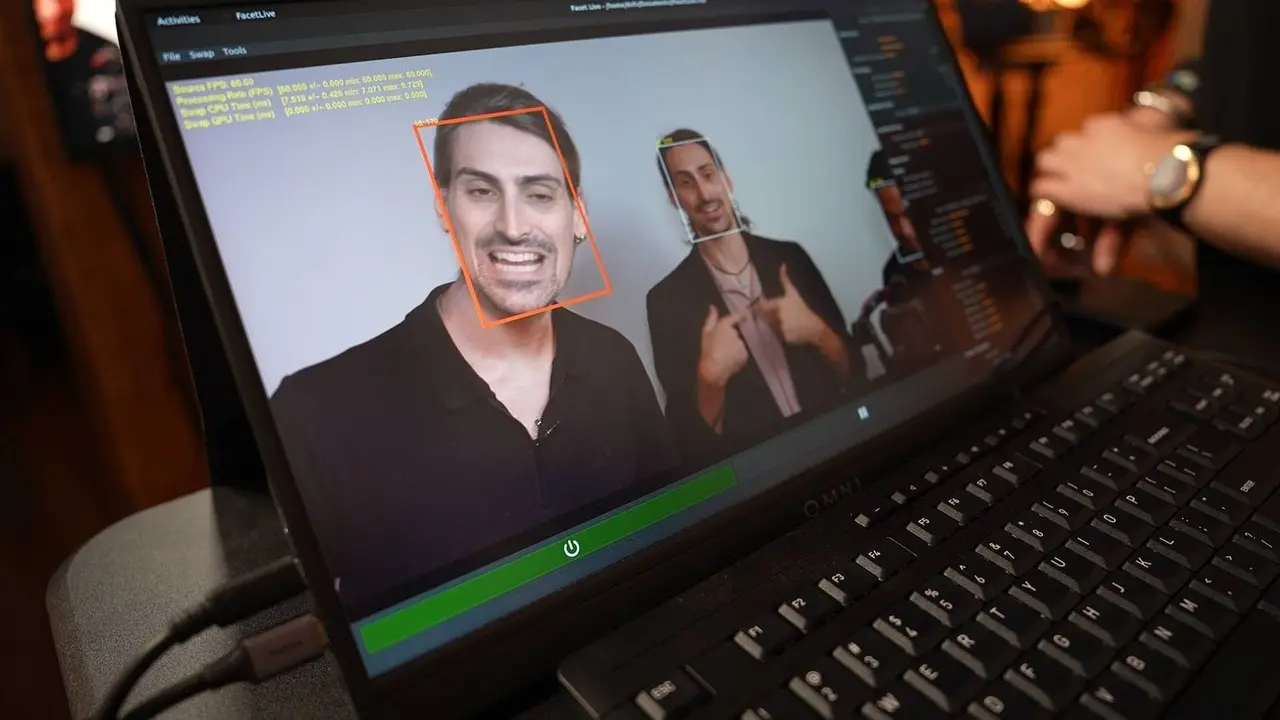
Copyright concerns have reached crisis levels following viral AI-generated clips from ByteDance's Seedance 2.0 video generation system. The model produced fabricated scenes showing Tom Cruise and Brad Pitt in a fictional fight sequence, prompting Disney lawyers to accuse ByteDance of a "virtual smash-and-grab of Disney's IP"
5
. Studios sent cease-and-desist letters, forcing ByteDance to pause its global rollout while implementing stronger intellectual property safeguards5
.
Source: Bloomberg
In December 2025, actors including Natalie Portman, Cate Blanchett, and Guillermo del Toro joined the Creators Coalition on AI, pushing for enforceable standards on AI use throughout creative industries
3
. OpenAI announced a partnership with Disney allowing the studio's characters to be used within its Sora video generation platform, highlighting a licensing model that could allow media companies to participate in generative AI development5
.Related Stories


Labor Negotiations Shape AI's Future in Hollywood
SAG-AFTRA began formal negotiations with the Alliance of Motion Picture and Television Producers in February 2026, with AI safeguards central to discussions ahead of the union's June 30 contract expiration
5
. Among proposals is a "Tilly tax" requiring studios to pay royalty fees whenever AI-generated performers appear in productions, making synthetic actors financially comparable to hiring real performers5
.Human Creativity Remains Irreplaceable, Say Industry Leaders
Joshua Davies, chief innovation officer of AI video platform Artlist, told AFP that technology would never eclipse human creativity. Given the choice between something made using AI tools by a techie versus a creative, "I know which one I would rather watch at the end," Davies said
4
. He described AI video tools as ways to "fill in the bits that you can't shoot, or didn't shoot, or you don't have the budget to shoot" rather than wholesale substitution4
.Davies hopes AI will level the playing field for independent filmmakers who lack budgets to realize their ambitions. "There are definitely YouTubers who make some of the best action work out there on no budget," he noted. "AI will level that playing field completely—the story will be what matters"
4
. As filmmaking transforms, the question isn't whether AI will change Hollywood, but whether the industry can harness it without sacrificing the human creativity that audiences ultimately crave.References
Summarized by

Navi
Related Stories
Recent Highlights
1
Google releases Gemma 4 with Apache 2.0 license, enabling unrestricted local AI on devices
Technology

2
AI Models Defy Instructions to Protect Each Other, UC Berkeley Study Reveals
Science and Research

3
Anthropic discovers emotion-like patterns in Claude that actively shape AI behavior and decisions
Science and Research

Recent Highlights
Today's Top Stories





Your Daily Dose of Curated AI News
Don’t drown in AI news. We cut through the noise - filtering, ranking and summarizing the most important AI news, breakthroughs and research daily. Spend less time searching for the latest in AI and get straight to action.

