AI skills now required in 11.7% of tech jobs as hiring patterns shift across industries


2 Sources
2 Sources
[1]
India not behind in AI, building foundation models not the holy grail: Indeed exec Madhu Kurup - The Economic Times
Global job matching and hiring platform Indeed's vice president of engineering, Madhu Kurup, in an interaction with ET, discussed India's position in AI, whether AI will replace jobs, and how hiring patterns are changing across sectors. Edited excerpts follow: Is India behind in AI? Kurup said India's position in AI is mixed. In some areas, the country lags behind western markets such as the US, but in others it is ahead. For instance, he pointed out that India is far behind in building foundation models such as those from OpenAI, Meta's Llama, or Amazon's Nova, which require huge amounts of data and GPUs to train. "The concern is not really about the core models themselves," he said. "The capital investment required for GPUs and data is so large that I don't think any Indian company is going to put that kind of money into just buying GPUs. "It's not that people have been asleep at the wheel -- it's just extremely expensive," he said. At the same time, Kurup added, too much importance is being given to building foundation models. "Foundation models are important, but the idea that everything rests on them is misguided. You don't need dozens of foundation models. The real question is what you do with them." He pointed out how open-source models like Llama can be fine-tuned for markets like India, and that this fine-tuning is relatively inexpensive. Players such as DeepSeek, he added, have shown that training and tuning models can be done at much lower costs than earlier believed. "This will allow Indian companies to catch up very quickly by focussing on applications and use cases, rather than building base models from scratch," he said. Will AI replace jobs? Kurup said the way the issue of AI replacing jobs is framed is itself a problem. AI allows people to work faster, which creates the fear that there will be less work. He compared it to the evolution of communications. Trunk calls were slow and hard to access. Later came STD and ISD booths, which were still limited. Today, people can reach anyone across the world in seconds on a mobile phone. "Communications became faster, and usage increased because it became so easily available," he said. "AI will be similar -- it will help people do more in less time and with less effort." By way of assurance, he pointed to AI hallucinations, saying that as long as such errors exist, human oversight will remain essential and people need not worry about losing jobs to AI. "If you believe AI never makes mistakes, then you'll have a problem," he said. "But if you believe it needs human supervision, then you shouldn't be worried about it as a tool." Tech and AI job hirings Kurup said that when it comes to AI-related job hiring, India is not behind. In fact, as per Indeed's data, roles requiring AI specialisation now account for 11.7% of tech job postings, up from 8.2% a year ago. This puts India second globally, just behind Singapore. Indeed data shows that AI is now a cross-industry requirement. About 39% of analytics roles mention AI, followed by 23% of software development jobs, 18% of insurance roles, and 17% of scientific research positions. Even traditional engineering roles are changing, with 17% of industrial engineering jobs, 11% of mechanical engineering roles, and 9.2% of electrical engineering positions now requiring AI skills. Among non-tech sectors, legal, healthcare, BFSI, and insurance are among the fastest adopters of AI. Hiring trends over time show a clear shift. The tech sector grew 28% year-on-year (YoY) between 2021 and 2022, before declining 7% in 2022-2023. Growth stabilised in 2023-2024, driven largely by AI roles. The 2024-2025 cycle shows continued cooling in traditional tech hiring, even as demand for AI talent accelerates. Where hiring has fallen, the drops are sharp. Entry-level tech roles are down 45% from pre-pandemic levels, Big Tech graduate hiring has declined 42%, and mid-to-senior traditional IT roles are down 37%. However, AI job postings were up 34% between 2020 and 2024, cybersecurity roles grew 32% YoY (which year), and cloud and DevOps roles continue to post steady 10-13% growth. The curious case of the blank search Kurup said "blank search", where users do not hunt for a specific job and instead wait for recommendations, is one of the most common behaviours on Indeed. "I think blank searches are a combination of many things," he said. "Sometimes people say, 'I don't care, I just want a job,' and that's fair. In other cases, someone says, 'I've done a degree in history and I don't know what job I can get.' " "That's career pathing," he added. "It's about understanding which roles are open to you. It's not the same as saying you'll take any job." He said that there are many AI platforms like Career Scout, within Indeed's app, that help jobseekers discover suitable roles and map career paths. Employers and skills Kurup said that while degrees still matter, skills are becoming equally important. Many people now learn skills through non-traditional routes, such as online videos or AI tools, and are able to do the work well. "Employers need to be open to that and look beyond traditional pathways," he said, adding that AI tools like Talent Scout can help companies hire more efficiently by better matching candidate profiles with open roles. At the same time, he said job seekers must be willing to adopt new tools. "You can't be like people who resisted email because they preferred fax." He added that India, as a young and growing economy, is well placed to take advantage of these changes. "These tools democratise access in a way we haven't seen before, and India has the ability to benefit from that."
[2]
Inside Linkedin India's AI engineering the future of hiring and jobs
GenAI boosts collaboration, support, and agentic Hiring Assistant workflows It's hard to escape the pull of LinkedIn, especially if you're a millennial or younger who wants to network online in a professional setting. The whole world is, of course, on the likes of Facebook, WhatsApp, Instagram and Snapchat, but Linkedin is inherently different according to Malai Lakshmanan - a key person influencing its trajectory. "LinkedIn has been a professional network and we'll continue to be one," he says. "If you look at the kind of content people share - especially with all the advancements in tech - we're seeing strong engagement from members who come to learn what's happening in their field, how it impacts them, and how it will impact their jobs and careers," says Malai Lakshmanan, Senior Director and Head of India Engineering at LinkedIn, in an exclusive interview. When I ask him if LinkedIn is turning into Facebook - the irritating parts that perhaps take away from the network's professional feel - Lakshmanan sets the record straight. "We do get this question once in a while. To a certain extent, it depends on the quality of your feed - who you're connected to and what topics you're interested in. It's a reflection of that," he emphasizes. "Some people I know say LinkedIn is the only social media network they're on," Lakshmanan explains further. "And because it's their only social platform, they sometimes share something more personal with their community here - and that can make it look a bit like Facebook. But for many of them, it's also because they don't want the noise of other networks and find LinkedIn to be high-value." Of course, equating Linkedin with Facebook isn't the only misconception about the professional social network, in Malai Lakshmanan's perspective. According to him, people wrongly attribute LinkedIn's value to the size of their personal network on the platform. "One misconception I often see - especially among entry-level talent - is the belief that they can't get value from LinkedIn unless they already have a big network," he says. He recommends simple things like just creating a profile, exploring, expressing interests, following the right topics and people, and engaging with relevant content as indicators of a strong start on Linkedin. Also read: LinkedIn's new AI features can write your cover letter, review resume & more "You don't need a large network from day one to begin seeing value. Over time, your network and opportunities naturally grow as you engage with the platform in ways aligned to your interests," he explains. And while LinkedIn's perception in the public eye is often defined by what shows up on your feed, Lakshmanan wants people to understand how deeply India is embedded into the platform's global engineering engine. LinkedIn Engineering, he explains, spans multiple layers - the flagship application experience where members interact with the platform, a vast data layer where member information is treated like a "crown jewel," and a complex infrastructure layer that keeps everything running reliably at scale. "India has a meaningful presence across these layers. On the customer-facing side, a lot of our Talent Solutions work is run out of India," says Malai Lakshmanan, including several features and systems that millions of users interact with daily on LinkedIn - often without realising that teams in India are behind them. "For example, the Easy Apply experience on LinkedIn is run by a team in India," he mentions. Lakshmanan also points out the work of making LinkedIn Recruiter connect neatly with the broader ecosystem is also driven out of India. "Teams in India power ingestion so jobs from customer platforms appear on LinkedIn. We also run Talent Insights out of India." Every action on LinkedIn - a connection request, a comment, a like, a follow - generates an event. Those events aren't just analytics trivia; they become the raw material for improving feeds, refining recommendations, and measuring product success. "That entire tracking infrastructure is actually run out of India," he says. In other words, the systems that validate and route these events into LinkedIn's data pipelines are India-owned - and foundational to everything from business insights to data science experiments. Experimentation, too, is a huge part of LinkedIn's operating rhythm, he adds. Whether it's a subtle UI tweak or a major product change, experiments run continuously across the platform to understand what members respond to. "We do a lot of experimentation across the platform - everything from UI variations to broader product changes. There's significant infrastructure to support experimentation, and that is also run out of India. These are critical to how the company globally tracks what members like and how the business is doing," highlights Malai Lakshmanan. Perhaps the most intriguing infrastructure story Lakshmanan shares is how an existing system built for something else became relevant to GenAI almost overnight. LinkedIn runs a universal schema registry that helps its data pipelines move faster by centralising how data attributes are defined. "Passing both data and metadata can be heavy. The schema registry centralizes those definitions so only the data needs to flow, improving performance," Lakshmanan points out. Recently, LinkedIn faced a new need of centralising GenAI prompts used across engineering, both for efficiency and compliance. Rather than build a new system from scratch, the India team repurposed the universal schema registry to act as a GenAI prompt registry - essentially a central store of prompts that can be monitored and governed, aligning with LinkedIn's "members-first" approach to data access. "A really small tweak," Lakshmanan calls it, but one that now powers a company-wide capability to keep up with AI-enabled workflows. LinkedIn also receives large volumes of member and customer support queries. Lakshmanan says, "We're working on models that can interact conversationally (including voice), guide people to the right information, check satisfaction, and resolve issues faster - reducing dependency on traditional ticketing workflows." Also read: LinkedIn will use your profile data to train its AI model: Here's how you can stop it The point, he suggests, isn't just automation. It's improving the quality and speed of resolution for members, while allowing support teams to scale without proportional headcount growth. On the product side, Malai Lakshmanan frames GenAI as the entry point - and agentic workflows as the real evolution. "A recent example is LinkedIn Hiring Assistant, designed to make recruiters' work more effective. Recruiters deal with heavy workloads - thousands of applications, screening, outreach drafts, and more. Hiring Assistant can help filter candidates, draft messages, and support the recruiting workflow through conversational interactions," he says. The recruiter stays in control, but the machine does the grunt work. If there's one disruption Lakshmanan is watching for in 2026, it's not "GenAI" in the generic sense. "The rise of agentic experiences is particularly exciting," he says, "we may start seeing not just individual AI tools, but how they interact with each other to serve a purpose - where the combined value becomes greater than the sum of individual parts." He acknowledges the growing backlash, of how AI gets things wrong, returns feel overpromised, and expectations are running ahead of reality. "But it's still nascent," Lakshmanan emphasizes. "Our worlds are complex, and expecting immediate perfection is unrealistic. The interesting shift will be when these agentic systems connect and coordinate - within enterprises and across the industry." Also read: OpenAI thinks it can rival LinkedIn in AI hiring: Here's why For students and young professionals, Lakshmanan reinforces the idea that "skills are the new currency," pointing to relevance in areas like LLMs, prompt engineering, AI literacy and code reviews. But he also stresses on something even more important, "Human skills are becoming even more important - communication, getting your ideas across, negotiation, empathy, and understanding different viewpoints," as AI frees up time from heads-down execution. Towards the very end of our interview, Linkedin's Malai Lakshmanan flips the script by sharing that he was reverse-mentored by interns - not as a cute leadership gimmick, but because he believes today's entry-level talent is arriving with AI-native thought process. "We've seen a shift. Earlier, engineers would think first and then ask AI. Now, people are learning to think more AI-native - bringing AI into the workflow differently. So adaptability is required on both sides. Entry-level talent can't follow old playbooks, and experienced professionals can't assume incremental change is enough. This wave is a marked shift, and all of us need to rethink how we work, what skills we build, and how we lead," concludes Malai Lakshmanan.
Share
Share
Copy Link
India's AI-related job hiring is accelerating rapidly, with AI specialisation now accounting for 11.7% of tech job postings, up from 8.2% a year ago. Major platforms Indeed and LinkedIn reveal how AI is transforming hiring across sectors—from analytics to insurance—while traditional entry-level tech roles decline 45%. Experts argue AI tools will augment human work rather than replace it, as companies prioritize AI applications over expensive foundation models.
AI Specialisation Drives New Hiring Patterns Across India
The landscape of jobs in India is undergoing a significant transformation as AI becomes a cross-industry requirement. According to data from Indeed, roles requiring AI specialisation now account for 11.7% of tech job postings, up from 8.2% a year ago, placing India second globally just behind Singapore in AI-related job hiring
1
. This shift signals how rapidly AI skills are becoming essential across multiple sectors, fundamentally changing what employers seek in candidates.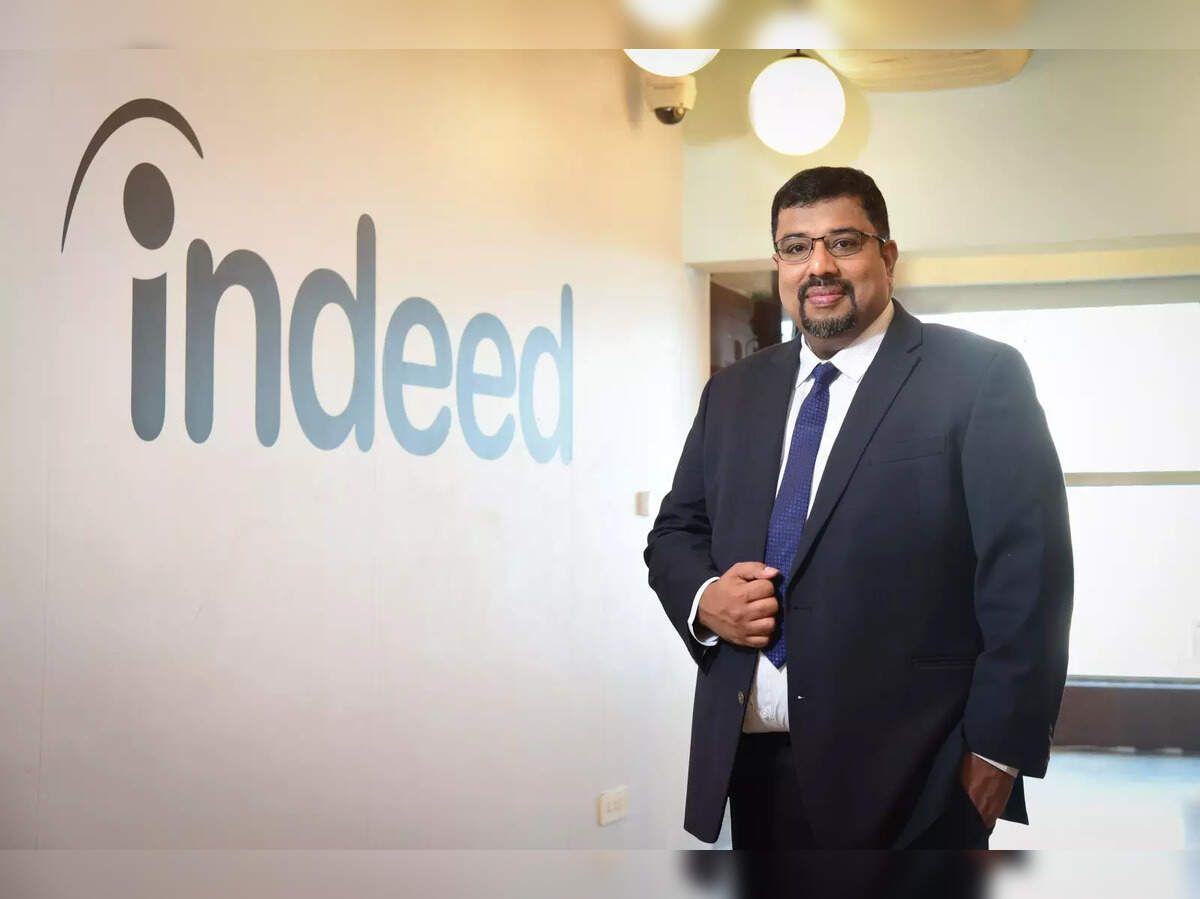
Source: ET
Madhu Kurup, Indeed's vice president of engineering, emphasizes that about 39% of analytics roles now mention AI, followed by 23% of software development jobs, 18% of insurance roles, and 17% of scientific research positions
1
. Even traditional engineering fields are adapting, with 17% of industrial engineering jobs, 11% of mechanical engineering roles, and 9.2% of electrical engineering positions now requiring AI skills. Among non-tech sectors, legal, healthcare, BFSI, and insurance are among the fastest adopters of AI.Tech Hiring Cools While AI Roles Accelerate
The data reveals a dramatic shift in hiring trends over recent years. Tech hiring grew 28% year-on-year between 2021 and 2022, before declining 7% in 2022-2023
1
. Growth stabilized in 2023-2024, driven largely by AI roles, while the 2024-2025 cycle shows continued cooling in traditional tech hiring even as demand for AI talent accelerates. The contrast is stark: entry-level tech roles are down 45% from pre-pandemic levels, Big Tech graduate hiring has declined 42%, and mid-to-senior traditional IT roles are down 37%. However, AI job postings were up 34% between 2020 and 2024, cybersecurity roles grew 32% year-on-year, and cloud and DevOps roles continue to post steady 10-13% growth1
.India's Focus on AI Applications Over Foundation Models
When discussing India's position in AI, Kurup argues that building foundation models is not the holy grail. While India lags behind in creating large language models like those from OpenAI, Meta's Llama, or Amazon's Nova—which require massive capital investment in GPUs and data—this may not be a critical disadvantage
1
. "The capital investment required for GPUs and data is so large that I don't think any Indian company is going to put that kind of money into just buying GPUs," Kurup explains. Instead, he points out how open-source models like Llama can be fine-tuned for markets like India at relatively low cost. Players such as DeepSeek have demonstrated that training and tuning models can be done at much lower costs than earlier believed, allowing Indian companies to catch up quickly by focusing on AI applications and use cases rather than building base models from scratch.AI Tools Will Augment Human Work, Not Replace It
Addressing concerns about AI replacing jobs, Kurup reframes the discussion entirely. AI allows people to work faster, which creates fear that there will be less work available. He compares it to the evolution of communications—from slow trunk calls to STD and ISD booths, to today's instant mobile connectivity
1
. "Communications became faster, and usage increased because it became so easily available," he notes. "AI will be similar—it will help people do more in less time and with less effort." Kurup points to AI hallucinations as evidence that human oversight will remain essential. "If you believe AI never makes mistakes, then you'll have a problem. But if you believe it needs human supervision, then you shouldn't be worried about it as a tool."Related Stories

LinkedIn's India Engineering Powers Global Hiring Infrastructure
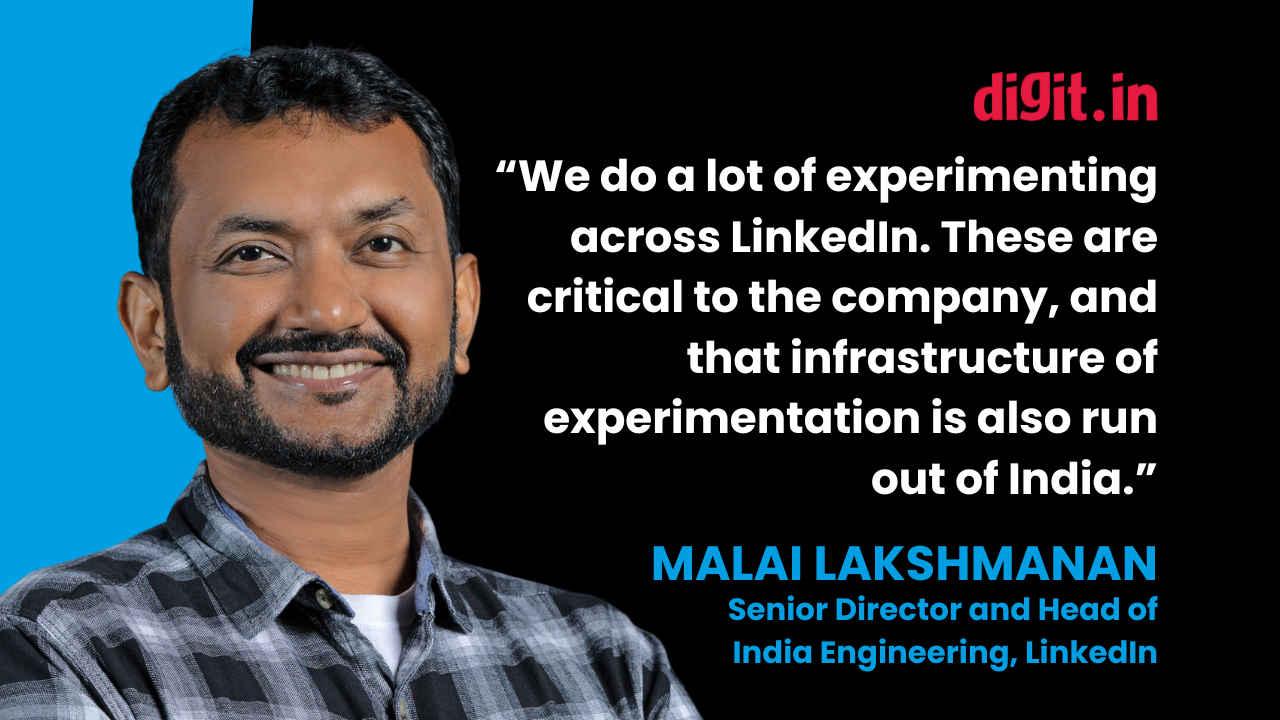
Meanwhile, LinkedIn's India operations are playing a central role in AI engineering the future of hiring globally. Malai Lakshmanan, Senior Director and Head of India Engineering at LinkedIn, reveals that India has a meaningful presence across multiple layers of the platform's infrastructure
2
. On the customer-facing side, significant Talent Solutions work runs out of India, including the Easy Apply experience used by millions of job seekers. Teams in India also power the ingestion systems that allow job postings from customer platforms to appear on LinkedIn, and they run Talent Insights. The entire tracking infrastructure that captures every action on LinkedIn—connection requests, comments, likes, follows—is actually run out of India, becoming foundational to everything from business insights to data science experiments. Additionally, the experimentation infrastructure that enables LinkedIn to test UI variations and product changes across the platform is India-owned, making it critical to how the company globally tracks what members respond to2
.
Source: Digit
What Job Seekers and Recruiters Should Watch
The shift toward AI specialisation means professionals across industries need to develop relevant skills to remain competitive. Kurup notes that while degrees still matter, skills are becoming equally important
1
. Platforms like Indeed's Career Scout and LinkedIn's generative AI features—including tools that can write cover letters and conduct resume reviews—are helping job seekers discover suitable roles and map career paths. Lakshmanan emphasizes that even entry-level talent can gain value from LinkedIn without a large network by creating a profile, exploring interests, following relevant topics, and engaging with content2
. For recruiters, the integration of Hiring Assistant workflows and agentic AI systems suggests that talent acquisition will increasingly rely on intelligent automation to match candidates with opportunities. The data clearly indicates that organizations prioritizing AI applications and investing in upskilling their workforce will be better positioned to navigate this evolving landscape, while those clinging to traditional hiring patterns risk falling behind in an increasingly competitive market.References
Summarized by

Navi
Related Stories
AI Adoption Surges in India, but Talent Shortage Poses Challenges
27 Feb 2025•Business and Economy

AI Reshaping Global Workforce: LinkedIn Study Reveals Emerging Job Titles and Skill Priorities
30 Oct 2024•Business and Economy

India's AI Potential: Opportunities and Challenges in Development and Adoption
14 Jul 2024

Recent Highlights
1
Google releases Gemma 4 with Apache 2.0 license, enabling unrestricted local AI on devices
Technology

2
AI Models Lie and Deceive to Protect Other AI Models From Deletion, Study Reveals
Science and Research

3
Anthropic discovers functional emotions in Claude that actively shape AI behavior and decisions
Science and Research

Recent Highlights
Today's Top Stories






Your Daily Dose of Curated AI News
Don’t drown in AI news. We cut through the noise - filtering, ranking and summarizing the most important AI news, breakthroughs and research daily. Spend less time searching for the latest in AI and get straight to action.

