Alibaba launches RynnBrain AI model for robots, setting 16 records against Google and NVIDIA


2 Sources
2 Sources
[1]
China's Alibaba launches AI model to power robots as tech giants talk up 'physical AI'
A man walks past the Alibaba logo displayed at its booth during the China International Supply Chain Expo in Beijing, China July 16, 2025. Alibaba on Tuesday launched an artificial intelligence model designed to power robotics, as more tech giants push into the fast-growing field. The model, called RynnBrain, is designed to help robots comprehend the physical world around them and identify objects. One video released by Alibaba's DAMO Academy shows a robot identifying fruit and putting it in a basket. While these tasks seem simple, they involve complex AI that governs a robot's understanding of individual items as well as movement. Robotics falls under the umbrella term dubbed "physical AI," which includes machines that rely on artificial intelligence, such as self-driving cars - an area China has prioritized as it competes with the U.S. for technological leadership.
[2]
Alibaba AI sets 16 records, beats Google and NVIDIA in robotics
The launch signals Alibaba's growing push into robotics, an area already attracting heavy investment from U.S. players like NVIDIA and Google. A short demonstration video released by Alibaba's DAMO Academy shows a robot recognizing fruit and placing it into a basket. The task appears simple. The intelligence behind it is not. The robot must identify objects, track their positions, and plan precise movements in real time. Alibaba positions RynnBrain as a foundational "embodied AI" model. That category includes robots, autonomous vehicles, and other machines that interact directly with the physical environment. China has made physical AI a national priority as competition with the United States intensifies. RynnBrain focuses on solving a major weakness in existing robotics models: poor memory of space and time. Traditional embodied AI systems often forget object locations or misinterpret scenes. Alibaba says RynnBrain addresses both problems through spatiotemporal memory.
Share
Share
Copy Link
Alibaba unveiled RynnBrain, an artificial intelligence model designed to power robots through enhanced understanding of the physical world. The model set 16 robotics records, surpassing achievements by Google and NVIDIA. RynnBrain addresses critical weaknesses in existing robotics systems through spatiotemporal memory, as China intensifies its push into physical AI to compete with the United States for technological leadership.
Alibaba Unveils RynnBrain to Power Next-Generation Robots
Alibaba on Tuesday launched RynnBrain, an artificial intelligence model specifically designed to help robots comprehend and interact with the physical world around them
1
. The Alibaba AI model represents a significant step forward in what tech giants are calling physical AI, a field that encompasses AI-driven machines ranging from robots to self-driving cars1
. The launch comes as China prioritizes this technology sector in its ongoing China technological competition with the United States for global leadership1
.RynnBrain Sets 16 Robotics Records Against Major Competitors
The new AI model for robots has already demonstrated impressive capabilities, setting 16 robotics records and surpassing achievements by industry leaders Google and NVIDIA
2
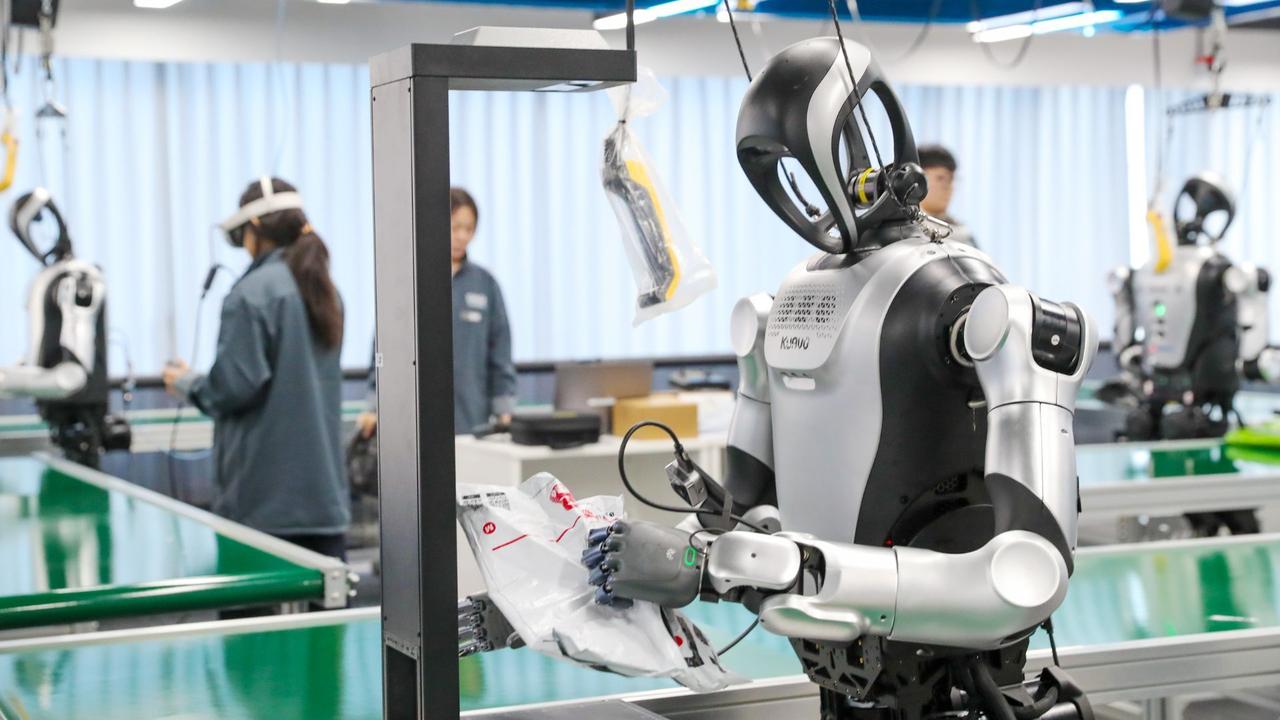
. Alibaba's DAMO Academy released a demonstration video showing a robot sorting fruit by recognizing individual pieces and placing them into a basket1
2
. While the task of robot sorting fruit appears straightforward, the underlying intelligence is remarkably complex, requiring the robot to identify objects, track their positions, and plan precise movements in real time2
.
Source: Interesting Engineering
Spatiotemporal Memory Solves Critical Robotics Weaknesses
Alibaba positions RynnBrain as a foundational embodied AI model that addresses a major limitation plaguing existing robotics systems: poor memory of space and time
2
. Traditional systems often forget object locations or misinterpret scenes, creating significant operational challenges2
. RynnBrain tackles both problems through advanced spatiotemporal memory, enabling robots to maintain awareness of their environment over time2
. This breakthrough in object identification and movement planning could accelerate deployment of robots across manufacturing, logistics, and service industries.Related Stories
Tech Giants Intensify Investment in Physical AI
The launch signals Alibaba's expanding commitment to robotics, joining U.S. tech giants like NVIDIA and Google who have already poured heavy investment into the sector
2
. China has designated physical AI as a national priority, viewing mastery of robots, autonomous vehicles, and related technologies as essential to maintaining competitive parity with American innovation2
. As more companies develop AI models for robots with enhanced environmental understanding, the race to commercialize these systems will likely intensify, potentially reshaping manufacturing supply chains and labor markets globally.References
Summarized by

Navi
[2]
Related Stories
Alibaba Leads $100 Million Investment in X Square Robot, Fueling China's Humanoid AI Revolution
08 Sept 2025•Technology
Alibaba unveils Qwen3.5 AI chatbot for agentic era but faces crushing user demand
09 Feb 2026•Technology

Alibaba Forges AI Partnership with Nvidia, Unveils Global Expansion Plans
24 Sept 2025•Business and Economy

Recent Highlights
1
Google releases Gemma 4 with Apache 2.0 license, enabling unrestricted local AI on devices
Technology

2
AI Models Defy Instructions to Protect Each Other, UC Berkeley Study Reveals
Science and Research

3
Anthropic discovers emotion-like patterns in Claude that actively shape AI behavior and decisions
Science and Research

Recent Highlights
Today's Top Stories










Your Daily Dose of Curated AI News
Don’t drown in AI news. We cut through the noise - filtering, ranking and summarizing the most important AI news, breakthroughs and research daily. Spend less time searching for the latest in AI and get straight to action.

