Alphabet buys Intersect for $4.75 billion to solve AI data centers' power crunch


17 Sources
17 Sources
[1]
Alphabet to buy Intersect Power to bypass energy grid bottlenecks | TechCrunch
Google parent Alphabet has agreed to buy Intersect Power, a data center and clean energy developer, for $4.75 billion in cash plus the assumption of the company's debt. The acquisition, which was announced Monday, will help Alphabet expand its power generation capacity alongside new data centers without having to rely on local utilities that are struggling to keep up with the demand of AI companies. Securing access to energy that powers data centers has become a critical part of training AI models. Alphabet previously held a minority stake in Intersect Power after Google and TPG Rise Climate led an $800 million strategic funding round in the company last December. That partnership set a target of $20 billion in total investment by 2030. The acquisition includes Intersect's future development projects, but excludes its existing operation, which will be bought out by other investors and managed as a separate company. Intersect's new data parks, which are essentially locations next to wind, solar, and battery power, are expected to be operational late next year and fully completed by 2027, Google said when it announced its minority investment. The transaction is expected to close in the first half of next year. Google will be the primary user. However, Intersect's campuses are designed as industrial parks that can host other companies' AI chips alongside Google's.
[2]
Google's parent buys data center energy specialist Intersect for $4.75 billion to help power AI
MOUNTAIN VIEW, Calif. (AP) -- Google's corporate parent on Monday announced an agreement to buy data center energy specialist Intersect for $4.75 billion as part of its effort to secure the vast amounts of electricity needed to power artificial intelligence technology. Alphabet, which depends on Google's search engine and other online services for most of its revenue, is buying out Intersect in its entirety after purchasing a stake in the San Francisco-based startup a year ago. Intersect had previously raised $2.1 billion from Google and other early investors. After the acquisition is completed during the first half of next year, Alphabet intends to allow Intersect to operate independently while continuing its efforts to secure the energy sources needed for the sprawling data centers being built to power the AI services rolling out from Google and rivals such as OpenAI. The power-hungry data centers, which are being likened to AI factories, is fueling a backlash in communities where residents have been interpreting their steadily rising electricity bills as evidence that they help helping footing the boom for a technology boom that could still go bust. Intersect focuses on finding ways to increase and diversify the supply of energy in an effort to keep hold down power costs. It's already working on a data center for Mountain View, California-based Alphabet in Haskell County, Texas. Google's inroads with AI has helped increase Alphabet's stock price by more than 60% so far this year, generating an additional $1.4 trillion in shareholder wealth.
[3]
Google Buys Data Center Company for $4.75 Billion
Google has agreed to buy Intersect, a data center and energy developer, for $4.75 billion, the tech giant said on Monday, as it pushes to build out its infrastructure for artificial intelligence. The all-cash deal is set to help Google bolster the supply of power to its data centers, the giant computing facilities that power A.I. Intersect, a privately held company that operates data centers and energy plants and is based in San Francisco, had already been working with Google to build the computing sites, and Google had invested in the company last December. "Intersect will help us expand capacity, operate more nimbly in building new power generation in lock step with new data center load and reimagine energy solutions to drive U.S. innovation and leadership," Sundar Pichai, the chief executive of Google, said in a statement. Intersect did not respond to a request for comment. Google, Amazon, Meta, Microsoft and OpenAI have committed billions of dollars to building data centers worldwide in a frenzied race to dominate A.I. Many of the companies have created new financial arrangements to fund the construction, including by having smaller firms take on debt to pay for the projects and keep the investments off their balance sheets. An outright acquisition of a data center or energy company has been rare. For years, Google was under regulatory scrutiny over whether it was illegally maintaining monopolies in areas such as internet search, which appeared to dampen its mergers-and-acquisitions activity. But while the company was found to have violated antitrust laws in recent years, the penalties have been relatively light. In the statement on Monday, Google said it would acquire some of Intersect's employees, data center projects and multiple gigawatts of its energy capacity. Intersect will continue operating as an independent company and retain its data centers in Texas and California that its other customers use. Google said the deal would particularly help speed the build-out of its A.I. infrastructure in Haskell, Texas, where it is investing $40 billion through 2027.
[4]
Google looks to buy its way out of AI power crunch with $4.75B Intersect acquisition
Google parent Alphabet's $4.75 billion deal to acquire Intersect, a clean energy developer and data center infrastructure company, represents a major exit for a company that was headquartered for many years in the Pacific Northwest. More broadly for the industry, the deal adds a new twist to the competition among cloud giants to secure the energy required to power their AI ambitions. The deal, announced Monday, is expected to give Google a team that can develop, build, and generate power directly alongside data centers -- bypassing the long wait that companies typically face to connect new facilities to the electrical grid. Founded in 2016, Intersect was based in Beaverton, Ore., before officially moving its headquarters earlier this year to San Francisco. Intersect has grown into a major player in utility-scale renewable energy, with major assets in solar power and battery storage. The company has raised more than $10 billion to date and already had a partnership with Google, which took a minority stake in a funding round last year. "AI today is stuck behind one of the slowest, oldest industries in the country: electric power," wrote Intersect founder and CEO Sheldon Kimber, in a blog post announcing the deal. "The country has racks full of GPUs that can't be energized because there isn't enough electricity for them." Microsoft and Amazon are also racing to secure power for AI data centers, but through different approaches. Neither has acquired a power developer outright. * Microsoft has signed large renewable deals and is restarting the Three Mile Island nuclear plant. * Amazon has a long-term agreement for nuclear power from the Susquehanna plant in Pennsylvania and is investing in small modular reactor technology. Alphabet's agreement to acquire Intersect is structured as $4.75 billion in cash plus the assumption of debt. It's expected to close in the first half of 2026. Intersect, which has more than 360 employees, will continue to operate under its own brand, with Kimber remaining as CEO. The company's operations in Texas and California will be carved out and remain with current investors including TPG Rise Climate and Climate Adaptive Infrastructure.
[5]

Alphabet is acquiring a data center company to ramp up its AI infrastructure
Google's parent company Alphabet has announced an acquisition of Intersect, a "data center and energy infrastructure" company that aims to provide additional support for building out its capacity for AI. The deal sees Alphabet paying $4.75 billion in cash for Intersect alongside the assumption of its debt, though the company itself will remain under its own brand separate from both Google and its parent company. This new team will "partner closely" with Google's in-house infrastructure team as it works to build additional data centers while simultaneously diversifying its energy intake, though pre-existing assets in Texas and California will be spun off into their own independent company. Intersect isn't a new investment for Google; the brand already own a minority stake in it from a funding round dated December 2024. The two have since begun work on a "co-located data center and power site" in Texas that will be bundled as part of this deal. Today's announcement specifically points to a goal of building data centers "without passing on costs to grid customers," an ongoing problem facing US residents throughout the entire country. Intersect was founded in 2016 and its current CEO, Sheldon Kimber, plans to remain onboard as CEO. Meanwhile, Google and Alphabet CEO Sundar Pichai said this as part of the deal: Intersect will help us expand capacity, operate more nimbly in building new power generation in lockstep with new data center load, and reimagine energy solutions to drive US innovation and leadership. We look forward to welcoming Sheldon and the Intersect team. Alphabet expects the deal to close in the first half of 2026.
[6]

Google parent Alphabet buys data center and energy firm in massive deal
Why it matters: Tech giants are aggressively hunting for power to serve energy hungry data centers that train AI models and handle queries. Driving the news: The transaction includes "multiple gigawatts of energy and data center projects in development, or under construction" from Intersect's existing partnership with Google, they said. * Google and the climate investor TPG Rise Climate unveiled that strategic deal with Intersect last year, and Google has a minority stake in the company. State of play: Intersect will continue to operate as a separate brand that CEO Sheldon Kimber will lead, the announcement states. * It will "partner closely" with Google on new and existing projects, including a co-located data center and power development in Haskell County, Texas. * The companies expect the deal to close in the first half of next year. Yes, but: The deal for Intersect -- which co-locates industrial energy demand with natural gas and renewable generation -- doesn't include its existing assets in Texas, and existing and in-development projects in California, they said. Flashback: The Google-Intersect-TPG partnership announced last December envisions "catalyzing" $20 billion in renewables infrastructure investment this decade, Intersect said at the time. The big picture: There's growing interest among regulators, tech companies and some power providers in co-locating big data centers and new power sources. What's next: The deal is slated to close in the first half of next year, the companies said.
[7]

Alphabet acquires Intersect as global data centre deals soar to $61bn
Sundar Pichai at the World Economic Forum Annual Meeting 2020 in Davos-Klosters, Switzerland. Image: World Economic Forum Annual Meeting/ Flicker (CC BY-NC-SA 2.0) Companies are seeking out data centre deals to feed the unprecedented energy requirements needed for AI. Alphabet caps the year off with a new data centre business acquisition, as global investments into the market hits $61bn. The tech giant is acquiring Intersect, a data centre and energy infrastructure solutions provider. The transaction includes a $4.75bn cash deal plus the assumption of debt. Google is already a business partner and a minority stake holder in Intersect. With the transaction, Alphabet is gaining ownership of Intersect's workforce, and multiple gigawatts of energy and data centre projects in development, or under construction, from its existing partnership with Google. Although, the company's operations are set to remain separate from Alphabet and Google under the Intersect brand. Its existing operating assets in Texas and its operating and in-development assets in California, will not be part of the acquisition, the companies said in a statement. These will operate as an independent company, supported by existing investors TPG Rise Climate, Climate Adaptive Infrastructure, and Greenbelt Capital Partners. "Intersect will help us expand capacity, operate more nimbly in building new power generation in lockstep with new data centre load," said Sundar Pichai, the CEO of Google and Alphabet. Sheldon Kimber, the founder and CEO of Intersect commented, "Modern infrastructure is the linchpin of American competitiveness in AI." The battle for data centres The unprecedented scale at which AI systems are trained and deployed is, in turn, putting pressure on businesses to seek out data centre deals to support the massive growth. This hunger for data centres has pushed the global investment in the data centre market to $61bn, marked by a "construction frenzy that shows no signs of slowing", according to a recent S&P report. 2024's investment into the market was just marginally lower, at $60.8bn. Data shows that there are around 4,000 data centres in the US, compared to the UK that has roughly 500 and Ireland that has more than 130. Meanwhile, a McKinsey report estimates that data centres worldwide need around $6.7trn by 2030 to keep up with the pace and growing compute power needed for the technology. This, as the electricity demand from data centres is set to more than double from 415TWh in 2024 to 945TWh by 2030. 2025 year saw dozens of new, massive data centre deals. In November, Microsoft and Google made in total more than $16bn in data centre commitments in Europe. While a month earlier, Ireland-based international data centre infrastructure developer Echelon Data Centres acquired a 37-acre site with grid power near Milan, with plans to invest up to $3bn into it. Earlier this summer, Amazon announced a A$20bn investment into its Australian data centre infrastructure in Sydney and Melbourne. Meanwhile, in Ireland, as the data centre hunger consumed 22pc of the country's total metred electricity in 2024, Equinix acquired BT's Irish data centre operations for €59m. While this year, Echelon announced a €3.5bn investment into two new data centres in Co. Wicklow. And OpenAI announced its first European data centre in Norway, in participation with UK data centre infrastructure provider Nscale. Bloomberg reported that the company is also planning for a massive new data centre in India, in what would be a push for its 'OpenAI for Countries' venture under Stargate. According to a Rest of World report, data centres in 21 countries around the world, including India, Singapore, several South American and North African countries, operate in hotter than ideal temperatures, placing heavier burden on cooling systems and reducing the efficiency of power transmission. Don't miss out on the knowledge you need to succeed. Sign up for the Daily Brief, Silicon Republic's digest of need-to-know sci-tech news. Sundar Pichai at the World Economic Forum Annual Meeting 2020 in Davos-Klosters, Switzerland. Image: World Economic Forum Annual Meeting/ Flicker (CC BY-NC-SA 2.0)
[8]

Alphabet buys data center energy specialist Intersect for $4.75 billion to help power AI
Alphabet, which depends on Google's search engine and other online services for most of its revenue, is buying out Intersect in its entirety after purchasing a stake in the San Francisco-based startup a year ago. Intersect had previously raised $2.1 billion from Google and other early investors. After the acquisition is completed during the first half of next year, Alphabet intends to allow Intersect to operate independently while continuing its efforts to secure the energy sources needed for the sprawling data centers being built to power the AI services rolling out from Google and rivals such as OpenAI. The power-hungry data centers, which are being likened to AI factories, are fueling a backlash in communities where residents have been interpreting their steadily rising electricity bills as evidence that they are helping foot the boom for a technology boom that could still go bust.
[9]

Alphabet acquires Intersect Power for $4.75B to solve AI energy gap
Alphabet, Google's parent company, has agreed to acquire Intersect Power, a data center and clean energy developer, for $4.75 billion in cash plus assumption of the company's debt. Announced on Monday, the deal enables expansion of power-generation capacity for new data centers by bypassing local utilities strained by AI demand. The acquisition addresses the challenge of securing reliable energy, which has emerged as essential for training artificial intelligence models that power data centers. Local utilities face difficulties meeting the surging electricity needs driven by AI operations. Alphabet previously acquired a minority stake in Intersect Power through an $800 million strategic funding round led by Google and TPG Rise Climate in December. This earlier partnership established a goal of reaching $20 billion in total investments by 2030 to support large-scale clean energy and data infrastructure development. Under the current agreement, Alphabet gains Intersect Power's future development projects. Existing operations are excluded and will undergo a buyout by other investors, allowing them to operate independently as a separate entity. Intersect Power's new data parks consist of sites positioned adjacent to wind, solar, and battery power sources. Google indicated during the announcement of its minority investment that these facilities will become operational in late next year and reach full completion by 2027. The transaction anticipates closure during the first half of next year. Google plans to serve as the primary user of these data parks. The campuses function as industrial parks capable of accommodating AI chips from other companies alongside Google's infrastructure.
[10]

Google's parent buys data center energy specialist Intersect for $4.75 billion to help power AI
MOUNTAIN VIEW, Calif. (AP) -- Google's corporate parent on Monday announced an agreement to buy data center energy specialist Intersect for $4.75 billion as part of its effort to secure the vast amounts of electricity needed to power artificial intelligence technology. Alphabet, which depends on Google's search engine and other online services for most of its revenue, is buying out Intersect in its entirety after purchasing a stake in the San Francisco-based startup a year ago. Intersect had previously raised $2.1 billion from Google and other early investors. After the acquisition is completed during the first half of next year, Alphabet intends to allow Intersect to operate independently while continuing its efforts to secure the energy sources needed for the sprawling data centers being built to power the AI services rolling out from Google and rivals such as OpenAI. The power-hungry data centers, which are being likened to AI factories, is fueling a backlash in communities where residents have been interpreting their steadily rising electricity bills as evidence that they help helping footing the boom for a technology boom that could still go bust. Intersect focuses on finding ways to increase and diversify the supply of energy in an effort to keep hold down power costs. It's already working on a data center for Mountain View, California-based Alphabet in Haskell County, Texas. Google's inroads with AI has helped increase Alphabet's stock price by more than 60% so far this year, generating an additional $1.4 trillion in shareholder wealth.
[11]

Google Wants More Energy to Fuel AI. It's Buying This Company to Help Power Its Data Centers.
CEO Sundar Pichai said the purchase will boost the firm's ability to meet the power needs of AI data centers. Google parent Alphabet just struck another big energy deal aimed at growing its AI data center footprint. Alphabet (GOOGL) said Monday it's buying energy infrastructure provider Intersect for $4.75 billion to help support its data center buildout. CEO Sundar Pichai said the purchase of Intersect, which Google had already owned a stake in through a previous funding round, "will help us expand capacity, operate more nimbly in building new power generation in lockstep with new data center load, and reimagine energy solutions to drive US innovation and leadership." Alphabet said its deal with Intersect would also serve its commitment to "unlock abundant, reliable, affordable energy supply that enables the buildout of data center infrastructure without passing on costs to grid customers." Alphabet shares were up less than 1% in recent trading. They've added nearly two-thirds of their value in 2025 as revenues surged, thanks in part to gains from AI.
[12]

Google share price jumps over 60 per cent this year as parent Alphabet buys data center energy specialist Intersect
Alphabet intends to allow Intersect to operate independently while continuing its efforts to secure the energy sources needed for the sprawling data centers being built to power the AI services rolling out from Google and rivals such as OpenAI. Google's corporate parent Alphabet today announced an agreement to buy data center energy specialist Intersect for $4.75 billion as part of its effort to secure the vast amounts of electricity needed to power artificial intelligence technology. Google's inroads with AI has helped increase Alphabet's stock price by more than 60 per cent so far this year, generating an additional $1.4 trillion in shareholder wealth. Alphabet (GOOG) share price on Monday rose 0.50 per cent. Alphabet, which depends on Google's search engine and other online services for most of its revenue, is buying out Intersect in its entirety after purchasing a stake in the San Francisco-based startup a year ago. Intersect had previously raised $2.1 billion from Google and other early investors. After the acquisition is completed during the first half of next year, Alphabet intends to allow Intersect to operate independently while continuing its efforts to secure the energy sources needed for the sprawling data centers being built to power the AI services rolling out from Google and rivals such as OpenAI. The power-hungry data centers, which are being likened to AI factories, is fueling a backlash in communities where residents have been interpreting their steadily rising electricity bills as evidence that they help helping footing the boom for a technology boom that could still go bust. Intersect focuses on finding ways to increase and diversify the supply of energy in an effort to keep hold down power costs. It's already working on a data center for Mountain View, California-based Alphabet in Haskell County, Texas.
[13]

Why Alphabet Just Paid $4.75 Billion for Intersect -- and What It Means for the Future of Artificial Intelligence (AI) | The Motley Fool
Then on Dec. 22, Alphabet announced a definitive agreement to acquire Intersect, a provider of data center and energy infrastructure solutions, for $4.75 billion. As Alphabet continues to push the frontiers of all things artificial intelligence (AI), investors may be wondering how the Intersect deal fits into the company's long-term roadmap. Let's dig into why this deal represents a savvy move by Alphabet, and unpack what it could mean for the broader AI infrastructure movement. When it comes to AI-related capital expenditures (capex), most investors immediately think of graphics processing units (GPUs), server architecture, and other networking gear hosted inside data centers. While these costs are indeed important, the rising expenses of procuring chips are only part of the equation. Intersect develops utility-scale renewable energy solutions for data centers. The company places various sources of power generation, such as wind, solar, and battery, alongside data centers. This co-location strategy allows Intersect to power its infrastructure efficiently, bypassing long wait times associated with new facilities accessing the U.S. electrical grid. One of the biggest drains on gross margins for AI developers is the rising cost of energy. As AI workloads continue to grow, investors can expect training and inference costs to multiply exponentially from their current levels. Alphabet is trying to hedge against these headwinds by gaining control over its future energy costs. Tucking Intersect into its ecosystem allows Alphabet to access data center capacity more efficiently than relying on external utility providers. This will become increasingly important as the company brings new products and services online to its Gemini model and Google Cloud Platform (GCP). Investors should not be surprised by Alphabet's decision to acquire Intersect. The company already employs a vertically integrated business model across its search, cloud, advertising, and consumer electronics businesses. Whether it's furthering research in quantum computing through DeepMind, accelerating the production of its custom Tensor Processing Unit chips, or refining the algorithms powering search across Google and YouTube, Alphabet's core assets are stitched together by the same thread: artificial intelligence. Intersect represents another layer of Alphabet's vertically integrated model, providing the company with greater cost visibility as well as critical flexibility around the future of its infrastructure buildouts. For the last three years, chip companies such as Nvidia, Advanced Micro Devices, and Broadcom have raced to design cutting-edge hardware to serve as the backbone of generative AI development. While demand for next-generation chips isn't waning by any stretch of the imagination, most hyperscalers realize that AI accelerators will eventually become commoditized. In my eyes, Alphabet's acquisition of Intersect already signals that these dynamics are in motion. Although chip procurement remains a priority, Alphabet is getting a head start in laying the groundwork to lower the overall cost of compute and improve the flow of data within GPU clusters by acquiring Intersect. This deal suggests that hyperscalers will not be able to afford to rely on incremental improvements from GPU developers and external power providers in the long run. In a broader sense, this move by Alphabet signals that the AI infrastructure era will feature much more than new chips. Over the next several years, I suspect more players in big tech will follow a similar playbook to that of Alphabet and begin accelerating investment in the energy infrastructure space -- diversifying their AI budgets beyond new chips and interconnect gear. Ultimately, I believe the biggest winners of the AI revolution will be those who control all aspects of the value chain, from hardware and software design to the costs associated with energy management and infrastructure development.
[14]
Alphabet to buy clean energy developer Intersect in $4.75 billion deal amid AI push
Big Tech has ramped up investments in energy firms as U.S. power grids struggle to keep pace with the soaring electricity demand of generative AI amid an intensifying race to capitalize on the booming technology. Alphabet said on Monday it would buy clean energy developer Intersect for $4.75 billion in cash, plus assumed debt, as tech giants spend billions to expand the computing and power capacity necessary for developing artificial intelligence. Big Tech has ramped up investments in energy firms as U.S. power grids struggle to keep pace with the soaring electricity demand of generative AI amid an intensifying race to capitalize on the booming technology. Under the deal, the Google parent will acquire Intersect's energy and data center projects in development or under construction. The company has $15 billion of assets either operating or under construction. By 2028, Intersect projects representing about 10.8 gigawatts of power are expected to be online or in development. This is more than 20 times the electricity produced by the Hoover Dam. The acquisition adds to a string of Alphabet's investments and partnerships in the energy space. Earlier this month, utility company NextEra expanded its partnership with Google Cloud to build new energy supplies for the company's operations across the U.S. Deal terms Google, along with TPG Rise Climate, backed Intersect as part of a more than $800 million funding round in December last year. That announcement also included plans to develop industrial parks for housing gigawatts of data center capacity co-located with new clean energy plants. Intersect's operations will remain separate from Alphabet. The company's existing operating assets in Texas and its operating and in-development assets in California will not be part of the acquisition and will operate as an independent company, supported by existing investors, Alphabet said. Its Texas projects include Quantum, a clean energy storage system being built directly alongside a data center campus for Google. Intersect will also explore a range of emerging technologies to increase and diversify energy supply, while supporting Google's U.S. data center investments, Alphabet said.
[15]

Alphabet Acquiring Data Center Firm Intersect | PYMNTS.com
By completing this form, you agree to receive marketing communications from PYMNTS and to the sharing of your information with our sponsor, if applicable, in accordance with our Privacy Policy and Terms and Conditions. The $4.75 billion deal is designed to allow more artificial intelligence (AI) data center and generation capacity to come online more quickly while accelerating energy development and innovation, Alphabet said in a Monday (Dec. 22) news release. "Intersect will help us expand capacity, operate more nimbly in building new power generation in lockstep with new data center load, and reimagine energy solutions to drive US innovation and leadership. We look forward to welcoming Sheldon and the Intersect team," said Sundar Pichai, CEO of Google and Alphabet. The deal gives the tech giant access to Intersect's team and multiple gigawatts of energy and data center projects that are either in development, or under construction, from an existing partnership with Google. "Intersect will also explore a range of emerging technologies to increase and diversify energy supply, while supporting Google's U.S. data center investments to meet its Cloud customers' and users' demand," the release added. Intersect's operations will remain separate from Alphabet and Google under the Intersect brand and will be overseen by founder and CEO Sheldon Kimber. The company says the deal is within keeping with Google's efforts to increase energy supply while promoting "the rapid commercialization" of advanced energy technologies." As covered here earlier this year, Google and a number of other tech companies are investing heavily in data centers amid growing demand for AI. Google told PYMNTS earlier this year that it plans to spend $25 billion on data centers and AI infrastructure in the PJM electric grid region over the next two years. PJM, a regional transmission organization, coordinates the movements of wholesale electricity in 13 states and Washington, D.C., for a coverage area that stretches from New Jersey to North Carolina and Illinois to the nation's capital. Experts have told PYMNTS that the U.S. may need to rethink its methods of expanding its power infrastructure to meet AI demand. "If the U.S. only relies on traditional approaches to expand the country's power infrastructure to meet AI infrastructure's voracious appetite for power, the U.S. will fall behind on its plans to lead in AI globally," Allan Schurr, chief commercial officer at energy transition company Enchanted Rock, told PYMNTS. "Delays in adding new transmission and generation capacity, which can range from three to 10-plus years, will force companies to seek out alternative locations to support AI infrastructure."
[16]

Alphabet to buy clean energy developer Intersect in $4.75 billion deal amid AI push
Dec 22 (Reuters) - Alphabet said on Monday it would buy clean energy developer Intersect for $4.75 billion in cash, plus assumed debt, as tech giants spend billions to expand the computing and power capacity necessary for developing artificial intelligence. Big Tech has ramped up investments in energy firms as U.S. power grids struggle to keep pace with the soaring electricity demand of generative AI amid an intensifying race to capitalize on the booming technology. Under the deal, the Google parent will acquire Intersect's energy and data center projects in development or under construction. The company has $15 billion of assets either operating or under construction. By 2028, Intersect projects representing about 10.8 gigawatts of power are expected to be online or in development. This is more than 20 times the electricity produced by the Hoover Dam. The acquisition adds to a string of Alphabet's investments and partnerships in the energy space. Earlier this month, utility company NextEra expanded its partnership with Google Cloud to build new energy supplies for the company's operations across the U.S. DEAL TERMS Google, along with TPG Rise Climate, backed Intersect as part of a more than $800 million funding round in December last year. That announcement also included plans to develop industrial parks for housing gigawatts of data center capacity co-located with new clean energy plants. Intersect's operations will remain separate from Alphabet. The company's existing operating assets in Texas and its operating and in-development assets in California will not be part of the acquisition and will operate as an independent company, supported by existing investors, Alphabet said. Its Texas projects include Quantum, a clean energy storage system being built directly alongside a data center campus for Google. Intersect will also explore a range of emerging technologies to increase and diversify energy supply, while supporting Google's U.S. data center investments, Alphabet said. (Reporting by Arsheeya Bajwa in Bengaluru; Editing by Shilpi Majumdar)
[17]
Alphabet to Buy Intersect for $4.75 Billion as AI-Investment Plans Grow -- Update
Alphabet agreed to buy Intersect for $4.75 billion, a deal the Google parent said would help address the near insatiable demand for energy to power the expansion of artificial intelligence. The company said Monday it would pay in all cash, plus debt, for Intersect's data-center projects that are in development, plus multiple gigawatts of energy and the Intersect team as part of the deal. Alphabet said it is aiming to increase its data-center and generation capacity with the acquisition, which is set to close in the first half of 2026. Tech companies such as Alphabet have shared plans to spend hundreds of billion dollars to keep up in the race to develop AI, which requires a significant number of data centers and amounts of computing capacity. Google already owned a minority stake in Intersect, which builds renewable energy plants to power data centers that are used for AI computing. In December 2024, Intersect announced a funding round with Google and said the companies aimed to provide $20 billion in data-center capacity investment by the end of the decade. Intersect's operations are expected to remain separate under its own brand and would continue to be led by its chief executive, Sheldon Kimber. A portion of the Beaverton, Ore., company's assets will be bought out by existing investors and run as a separate company, Kimber said. Alphabet said that Intersect's assets in Texas and California wouldn't be part of the acquisition, and would instead be supported by other existing investors. The company will also explore a range of technologies to increase and diversify energy supply, while supporting Google's U.S. data-center investments to meet Google Cloud customer demand, Alphabet said. Intersect will collaborate closely with Google's infrastructure team and continue work on the companies' co-located data-center and power site, which is under construction in Haskell County, Texas. The company said in 2024 it expected the co-located project to be operational in 2026 and fully complete by 2027. Alphabet, along with Meta Platforms, Microsoft and Amazon.com, have shared ambitious plans to increase data-center footprints to train and power AI projects. The companies have run up against capacity constraints and plan to spend billions to increase their energy supplies. Alphabet said in October it plans to increase spending on computing power for AI in 2026. The Mountain View, Calif., company lifted estimates for capital expenditures this year to a range of $91 billion to $93 billion, up from $52.5 billion in 2024. Google is working to improve its AI model and chatbot Gemini. Sales from its cloud division, which sells computing power to data centers, increased 34% in the most recent quarter.
Share
Share
Copy Link
Google's parent company Alphabet announced a $4.75 billion acquisition of Intersect, a clean energy developer and data center company, to bypass energy grid bottlenecks that slow AI expansion. The deal lets Alphabet build power generation alongside data centers, avoiding lengthy grid connection delays that have stalled the industry's AI ambitions.
Alphabet Intersect Acquisition Tackles AI Power Shortage
Google's parent company Alphabet has agreed to acquire Intersect Power, a data center and clean energy developer, for $4.75 billion in cash plus the assumption of debt
1
. The deal, announced Monday, addresses a critical bottleneck facing the tech industry: securing electricity supply for energy-intensive AI operations. By bringing Intersect's capabilities in-house, Alphabet aims to bypass energy grid bottlenecks that have left cloud providers waiting months or years to connect new facilities to local utilities struggling with surging demand4
.
Source: ET
The transaction represents a strategic shift in how tech giants compete in the AI race. Alphabet previously held a minority stake in Intersect after Google and TPG Rise Climate led an $800 million funding round in December 2024, with that partnership targeting $20 billion in total investment by 2030
1
. Intersect had raised $2.1 billion from Google and other early investors before this buyout2
.Expanding AI Infrastructure Without Grid Dependency
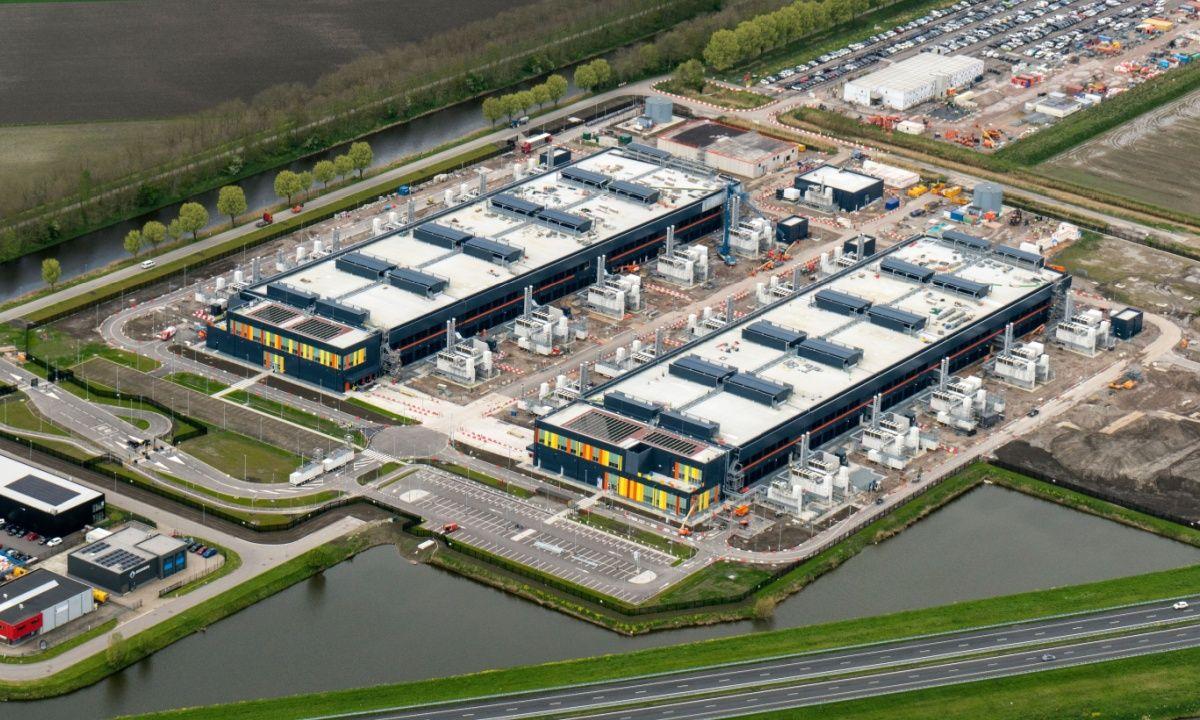
Intersect's model centers on building data parks directly adjacent to solar power, battery storage, and wind facilities. This approach allows power generation capacity to scale in lockstep with data center load, eliminating the grid connection delays that have hampered AI data centers across the industry
5
. "AI today is stuck behind one of the slowest, oldest industries in the country: electric power," wrote Intersect founder and CEO Sheldon Kimber in a blog post announcing the deal. "The country has racks full of GPUs that can't be energized because there isn't enough electricity for them"4
.
Source: PYMNTS
The acquisition includes Intersect's future development projects and multiple gigawatts of computing capacity, but excludes existing operations in Texas and California, which will be carved out and managed as a separate company by other investors
3
. Google will be the primary user of these new facilities, though Intersect's campuses are designed as industrial parks that can host other companies' AI hardware alongside Google's chips1
.How This Differs From Competitors' Energy Strategies
While Microsoft and Amazon are also racing to secure electricity supply for AI operations, neither has acquired a power developer outright. Microsoft has signed large renewable deals and is restarting the Three Mile Island nuclear plant, while Amazon has pursued a long-term agreement for nuclear power from Pennsylvania's Susquehanna plant and is investing in small modular reactor technology
4
. Alphabet's direct acquisition strategy represents a more integrated approach to solving the AI power crunch.The deal will particularly accelerate expanding AI infrastructure in Haskell, Texas, where Google is investing $40 billion through 2027
3
. Intersect's new data parks are expected to become operational late next year and reach full completion by 2027.Related Stories
Addressing Rising Electricity Costs and Community Concerns
The power-hungry nature of AI data centers has sparked backlash in communities where residents have seen steadily rising electricity bills, interpreting them as evidence they're helping foot the bill for a technology boom that could still go bust
2
. Google specifically pointed to a goal of building data centers "without passing on costs to grid customers," acknowledging this ongoing problem facing US residents5
.Founded in 2016 and previously headquartered in Beaverton, Oregon, before moving to San Francisco earlier this year, Intersect has grown into a major player in utility-scale renewable energy with more than 360 employees
4
. Sheldon Kimber will remain as CEO, with Intersect continuing to operate under its own brand and partnering closely with Google's in-house infrastructure team5
.Market Impact and Future Implications
Google's inroads with AI have helped increase Alphabet's stock price by more than 60% so far this year, generating an additional $1.4 trillion in shareholder wealth
2
. The acquisition marks a rare outright purchase of a data center or energy company by a major tech firm. For years, Google faced regulatory scrutiny over potential monopolies in areas like internet search, which appeared to dampen its mergers-and-acquisitions activity, though recent antitrust penalties have been relatively light3
."Intersect will help us expand capacity, operate more nimbly in building new power generation in lockstep with new data center load, and reimagine energy solutions to drive US innovation and leadership," said Sundar Pichai, CEO of Google and Alphabet
5
. The transaction is expected to close in the first half of 2026. This move signals that securing reliable energy infrastructure has become as critical as developing AI models themselves, potentially setting a precedent for how tech companies address power constraints in their race to dominate artificial intelligence.
Source: Silicon Republic
References
Summarized by

Navi
[2]
Related Stories
Google's $800M Clean Energy Initiative: Powering AI-Driven Data Centers with Renewable Sources
11 Dec 2024•Business and Economy

Google and Meta Lead Massive AI Infrastructure Investments in the US
15 Jul 2025•Business and Economy

Google's $85 Billion AI Investment: A Push for Employee Productivity and Market Dominance
24 Jul 2025•Technology
Recent Highlights


Recent Highlights
Today's Top Stories









Your Daily Dose of Curated AI News
Don’t drown in AI news. We cut through the noise - filtering, ranking and summarizing the most important AI news, breakthroughs and research daily. Spend less time searching for the latest in AI and get straight to action.

