Amazon AI Tool Sparks Retailer Backlash After Listing Products Without Merchant Consent


6 Sources
6 Sources
[1]
Amazon AI Tool Blindsides Merchants by Offering Products Without Their Knowledge
Small shop owners and artisans who found their products listed on Amazon without their consent took to social media to compare notes and warn their peers, with some saying they should have been asked for their consent and others expressing concerns about customer relationships and responsibility. Sometime around Christmas, Sarah Burzio noticed that the holiday sales bump for her stationery business included some mysterious new customers: a flurry of orders from anonymous email addresses associated with Amazon.com Inc. Burzio, who doesn't sell her products on the retail giant's site, soon discovered that Amazon had duplicated her product listings and made purchases on behalf of Amazon customers under email addresses that read like gibberish followed by buyforme.amazon. "I didn't worry about, it to be honest," she said. "We were getting customers." Then people started complaining. Amazon's listings, automatically generated by an experimental artificial intelligence tool, didn't always correspond to the correct product in Burzio's inventory. In one case, a shopper who thought they were receiving a softball-sized stress ball, which Burzio's Hitchcock Paper Co. doesn't sell, received the smaller version of the product that her northern Virginia store does carry. "People ordering these Christmas gifts and holiday gifts were getting the wrong items and demanding refunds," Burzio said in an interview. "We had to explain that it's Amazon that's doing this, not us, the mom and pop. We fulfilled the order exactly how it came to us." Between the Christmas and New Year holidays, small shop owners and artisans who had found their products listed on Amazon took to social media to compare notes and warn their peers. Angie Chua of Bobo Design Studio in California posted videos on Instagram documenting her experience. In interviews, six small shop owners said they found themselves unwittingly selling their products on Amazon's digital marketplace. Some, especially those who deliberately avoided Amazon, said they should have been asked for their consent. Others said it was ironic that Amazon was scouring the web for products with AI tools despite suing Perplexity AI Inc. for using similar technology to buy products on Amazon. Perplexity has denied wrongdoing and called Amazon a bully. The automated Amazon listings at issue are designed to let shoppers purchase products carried by other retailers. While the strategy could generate sales an independent seller might not otherwise get, it raises questions about who owns the customer relationship and who bears responsibility when something goes awry. Some retailers say the listings displayed the wrong product image or mistakenly showed wholesale pricing. Users of Shopify Inc.'s e-commerce tools said the system flagged Amazon's automated purchases as potentially fraudulent. Karla Hackman, a jewelry artist in Santa Fe, New Mexico, discovered a handful of her pieces were on Amazon after seeing a warning in a social media group for artists. She asked Amazon to take them down on Saturday, and the products were removed by Tuesday. "I'm a one-woman show," she said. "If suddenly there were 100 orders, I couldn't necessarily manage. When someone takes your proprietary, copyrighted works, I should be asked about that. This is my business. It's not their business." In a statement, Amazon spokesperson Maxine Tagay said sellers are free to opt out. Two Amazon initiatives -- Shop Direct, which links out to make purchases on other retailers' sites, and Buy For Me, which duplicates listings and handles purchases without leaving Amazon -- "are programs we're testing that help customers discover brands and products not currently sold in Amazon's store, while helping businesses reach new customers and drive incremental sales," she said in an emailed statement. "We have received positive feedback on these programs." Tagay didn't say why the sellers were enrolled without notifying them. She added that the Buy For Me selection features more than 500,000 items, up from about 65,000 at launch in April. Chua, whose products were removed from Amazon after she emailed a support line -- [email protected] -- said she never intended to sell on Amazon. "I just don't want my products on there," she said. "We create them, we source them, it's not where we want to be. It's like if Airbnb showed up and tried to put your house on the market without your permission." Chua said she has fielded calls from an intellectual property attorney, and that as of midday Tuesday, 187 other merchants have filled out a survey form she set up to canvas how widespread the unprompted Amazon listings were. Among those filling out the survey was Amanda Stewart, founder of Mochi Kids, a Salt Lake City-based retailer. She'd ignored requests over the years from Amazon representatives to sell on the site, but found last week that much of her inventory was listed there anyway. Her order book showed a little more than a dozen sales to mysterious Amazon addresses. "Our whole product catalogue was on there," she said. "I was so shocked." Stewart worries that the listings risk running afoul of copyright on product photos, or of agreements with her own suppliers -- themselves mostly independent brands -- that prohibit reselling products on Amazon. Get the Tech Newsletter bundle. Get the Tech Newsletter bundle. Get the Tech Newsletter bundle. Bloomberg's subscriber-only tech newsletters, and full access to all the articles they feature. Bloomberg's subscriber-only tech newsletters, and full access to all the articles they feature. Bloomberg's subscriber-only tech newsletters, and full access to all the articles they feature. Bloomberg may send me offers and promotions. Plus Signed UpPlus Sign UpPlus Sign Up By submitting my information, I agree to the Privacy Policy and Terms of Service. Amazon has for years invited independent merchants to sell goods on its site, a group that today accounts for about 60% of Amazon's sales. Those merchants sought out the business with Amazon, manage their product listings directly, and pay Amazon a commission on sales. The new moves -- essentially enrolling merchants in Amazon's store, in some cases without their knowledge -- appears unprecedented, said Juozas Kaziukėnas, an independent analyst who closely tracks Amazon's marketplace. "They seem to have gotten more aggressive and started onboarding brands that didn't opt in," he said in an interview. "They just went out and included a bunch of random e-commerce sites. It's just a very messy approach to kickstart this feature." When Burzio tried to figure out what Amazon was doing with her listings, she tried the company's support numbers. One Amazon representative asked for a seller account number, which Burzio has never had, and then suggested she get one and pay $39 a month to get Amazon seller support. "When things started to go wrong, there was no system set up by Amazon to resolve it," Burzio said. "It's just 'We set this up for you, you should be grateful, you fix it.'"
[2]
Amazon's AI shopping tool sparks backlash from online retailers that didn't want websites scraped
Packages in a United States Postal Service (USPS) truck near the New York Stock Exchange (NYSE) in New York, US, on Monday, Nov. 24, 2025. Amazon has angered some online retailers that say they didn't consent to have their products scraped and listed on the e-commerce giant's sprawling marketplace. In February, the company announced "Shop Direct," a feature that lets consumers browse items from other brands' sites on Amazon. Some of those items include a button labeled "Buy for Me," an artificial intelligence agent that can purchase products from other websites on a shopper's behalf. Amazon pitched the services, which are in testing phase for some U.S. users, as a way for shoppers to "find any product they want and need," including items that aren't available on its site. Over the past decade, Amazon has increasingly turned to third-party merchants for products, and now says more than 60% of sales on its retail platform are from independent sellers. In recent weeks, some businesses began to object to their products being sold on Amazon without their permission, according to posts on Reddit and Instagram. Retailers, in some instances, said the program resulted in Amazon listing products that they never sold or that were out of stock. "Sounds like a great program until the agentic AI starts selling customers things you don't have, all while your shop has no idea it's sending the wrong items to the customer," Hitchcock Paper, a Virginia-based stationery shop, said in an Instagram post in late December. The paper retailer said it discovered it was part of the program when it began receiving orders for a stress ball product, which it doesn't sell, from a "buyforme.amazon" email address. Bobo Design Studio CEO Angie Chua said she started receiving orders from Amazon's Buy for Me agent last week even though she hadn't opted in to the program. Her company sells stationery and journaling accessories through its Shopify website as well as a storefront in Palm Springs, California. Chua told CNBC that, based on Amazon's instructions in an FAQ on its site, she reached out to the company to request that it pull her products. The listings were taken down within a few days, but she said the experience left her feeling "exploited." "We were forced to be dropshippers on a platform that we have made a conscious decision not to be part of," Chua said, referring to an online retail model that involves selling products to shoppers without storing the inventory.
[3]
Why some independent brands are upset with Amazon's new 'Buy for Me' shopping tool
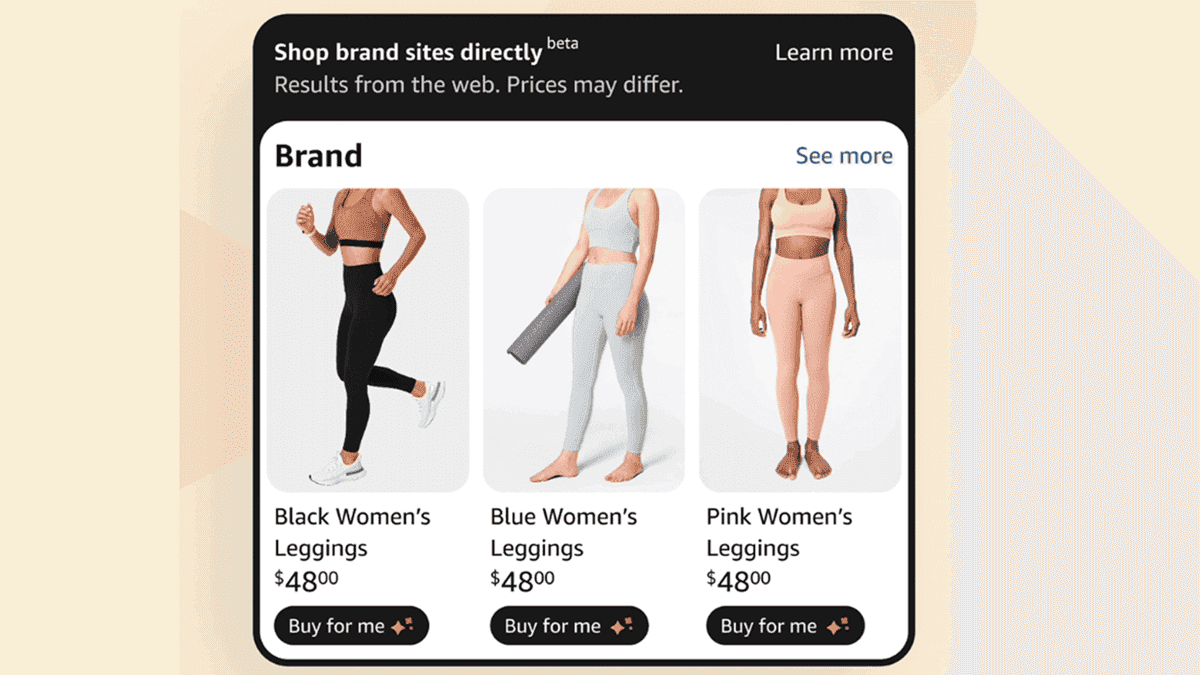
Amazon is facing complaints from independent retailers over a new shopping experiment that lets customers buy products from other websites directly within Amazon's app. The feature, called Buy for Me, started rolling out in April last year alongside another program known as Shop Direct. The tools are designed to help shoppers find products that aren't sold on Amazon -- and, in some cases, allow Amazon to complete a purchase on a customer's behalf using AI. Bloomberg, Modern Retail, Financial Times, and others published stories this week citing brands who say they were caught off guard when their products appeared in Amazon search results. Some said they only discovered the program when strange orders started arriving from Amazon-linked email addresses. Among the complaints raised by brands: * Some say they never explicitly agreed to participate. * Some say product listings displayed on Amazon were inaccurate or confusing, or were sold out. * Others object on principle, arguing that Amazon is stepping into their customer relationship without permission. In a statement to GeekWire, an Amazon spokesperson said participation in both programs is optional and that the company has received positive feedback. "Shop Direct and Buy for Me are programs we're testing that help customers discover brands and products not currently sold in Amazon's store, while helping businesses reach new customers and drive incremental sales," an Amazon spokesperson said in a statement. "Businesses can opt out at any time by emailing [email protected], and we remove them from these programs promptly." Listings created with Buy for Me are labeled as coming from other stores when they show up within Amazon search results. Amazon's system checks the brand's website to confirm the item is in stock and that the price is accurate. Product and pricing information is pulled from public information on a brand's website, though Amazon says in an FAQ page that it "may modify these for display on the Amazon Shopping App." Amazon said in November that products available to purchase via Buy for Me had increased from 65,000 to more than 500,000. The pushback from independent sellers -- who make up more than 60% of Amazon's online store sales -- highlights a growing tension as tech companies roll out AI-powered shopping tools. The new technology is sparking debate over who controls product discovery and the customer relationship when platforms can act as an intermediary -- or even a buyer -- on behalf of consumers. In November, Amazon sued Perplexity to stop the startup from using its AI browser agent to make purchases on its marketplace, citing computer fraud laws and security risks, along with a "significantly degraded shopping and customer service experience it provides."
[4]
Amazon's AI is shopping on your behalf where it's not supposed to -- and retailers aren't happy
Amazon calls the feature an experiment that's still working out kinks Amazon's latest experiment in AI-powered shopping may be helping you find the perfect purchase by running roughshod over third-party businesses. The Shop Direct and Buy for Me features that Amazon began testing last year streamline the process of finding and buying items that Amazon may not have in its inventory. If you click the Buy for Me button, Amazon's system uses information pulled from a brand's public website to place the order on your behalf using your details. From the shopper's point of view, it feels like you're just buying something on Amazon. But, from the retailer's point of view, Amazon just walked into their store uninvited and started ringing up customers. In recent weeks, online retailers have begun complaining to Amazon and sharing stories on social media about how they were never asked if they wanted to participate. Some say they didn't even know the program existed until orders began landing in their inboxes from unfamiliar "buyforme.amazon" email addresses. Others say Amazon listed products that were out of stock or never intended for direct-to-consumer sales. You might not have noticed if you're just shopping on Amazon. You search for something, see a product that looks legitimate, and the purchase all happens in the background. The aggravation is all on the retailer side of things. "Products I don't even have anymore (like fully deleted from the back end) are being sold under this "shop stores directly" section of the app," one retailer related on Reddit. They use AI images of items that aren't mine, and authorizing orders to my site for items that are out of stock. I did not opt in to this nor is there an easy way to opt out." Amazon has said the AI tool isn't doing anything untoward since the listings are based on publicly available product and pricing information. The system is also supposed to check that items are in stock and correctly priced before offering them to customers. Should there be an issue, Amazon has an email address listed for merchants to send an opt-out request. Putting the burden of avoiding Amazon's AI agent on the third-party brands understandably annoys some of those retailers. Plus, it doesn't help them with the orders already placed. Not to mention the businesses that intentionally stay away from Amazon for financial or marketing reasons might not like being dragged onto the platform by ambitious AI shoppers. And that's even before considering accuracy issues like the one described by the Reddit post. AI systems are only as good as the data they ingest, and if Amazon uses outdated or mismatched products and images, it's the brand getting the order that has to scramble to explain. There's an extra element of irony in this situation since Amazon has pushed hard against any external AI agents scraping its own platform for data. It outright blocks bots from Google, OpenAI, and Perplexity. Now, Amazon itself is using AI to scrape other retailers' sites in the name of convenience. For shoppers, this contradiction mostly fades into the background. It's easy to imagine how appealing an AI shopper finding products and comparing prices across the internet might be. But after years of companies scraping public information with little pushback, having the process directly tied to AI purchasing might make the problems more tangible, and Amazon's AI shoppers may have to start knocking and announcing themselves before they take over the register.
[5]

Amazon's AI agents spark backlash from retailers after listing their products without their knowledge - SiliconANGLE
Amazon's AI agents spark backlash from retailers after listing their products without their knowledge Amazon.com Inc. has irked dozens of online retailers after using experimental artificial intelligence tools to scrape their websites and list their products on its sprawling online marketplace without their knowledge or consent. The tools in question include "Shop Direct," which is a feature that allows Amazon customers to browse products from other brands' websites on Amazon's store. When looking at those items, consumers may sometimes see a "Buy for Me" button, which activates an AI agent that will purchase the products on their behalf, using the payment information and shipping details they've already provided to Amazon. Amazon launched Shop Direct and Buy for Me last February, and in a statement to Modern Retail, which first broke the story, it explained that they're currently being tested on some U.S. users. They're designed to help customers find any product they need, including items not available on its own website. However, Amazon appears to have been somewhat sneaky about the way the tool works, for it surfaces products from third-parties who are completely unaware that they can be found through the e-commerce giant's platform. Modern Retail said a number of these businesses have strong objections to their products appearing in Amazon's listings without their permission, and have taken to social media platforms such as Instagram and Reddit to let their anger be known. Even worse, some of the listings have been inaccurate, with Amazon advertising products that are no longer sold by the brands in question, or having errors in the product descriptions. One of the biggest critics was Bobo Design Studio Chief Executive Angie Chua, who told Modern Retail that she started receiving lots of orders from Amazon's agent about a week ago, despite never opting into the program. She operates a storefront through Shopify, but has chosen not to sell through Amazon. According to Chua, she discovered through an FAQ page on Amazon's website that the onus is on her to opt out of the service, and so she had to send it an email asking it to withdraw her products. She added that the listings were pulled within a few days, but said she felt "exploited" by the experience. "We were forced to be dropshippers on a platform that we have made a conscious decision not to be part of," Chua said, referring to a business model that involves selling products to shoppers without storing the inventory. Chua, whose Instagram post about the experience quickly went viral, said she has been contacted by more than 180 small businesses that sell products on platforms such as Shopify, Wix, Squarespace and WooCommerce, which have discovered that their products are also being surfaced through Shop Direct. Some retailers say they're angry because they've made a conscious decision to avoid doing business with Amazon. Yet the way Amazon surfaces products through Shop Direct makes it appear as if the brands in question are third-party sellers, when they're not. Emi Moon, founder of a digital art brand called Peachie Kei, said she watched Chua's viral Instagram post and then discovered that her company's entire product catalog was listed on Amazon. "The big issue is that it's a reputational thing," she said. "I don't want to be associated with Amazon." Moon responded by immediately emailing Amazon to opt-out, but said it's disturbing that Amazon was allowed to do this in the first place. "I would really like to see these things be opt-in versus opt-out," she said. "There's a level of autonomy and consent that's being violated." Worse still, there have been reports of Amazon Shop Direct getting things wrong. In the case of Hitchcock Paper, a Virginia-based stationery supplier, it only became aware of the program after it started receiving dozens of orders for a stress ball product that it doesn't even sell. All of the orders came from a "buyforme.amazon" email address. A spokesperson for Amazon said Shop Direct and Buy for Me are designed not only to help shoppers find products it doesn't sell through its own store, but also help businesses to "reach new customers and drive incremental sales". Amazon said the programs have received "positive feedback" overall, and reiterated that it's a staunch supporter of small businesses globally. "Businesses can opt out at any time by emailing [email protected], and we remove them from these programs promptly," the spokesperson continued. According to Amazon, Buy for Me doesn't collect any commissions on customer purchases it facilitates. It pulls product details and pricing information from brands' public websites and uses agentic AI systems to check that the prices and descriptions are correct and that the listings are in stock. Currently, more than 500,000 products can be purchased using Buy for Me. Amazon is doing this despite objecting strongly to other companies using AI tools to scrape its own marketplace listings. Last year, the company introduced various measures to prevent third-party crawlers from accessing its website, and it has also threatened to take legal action against those that do it without its permission. In November, it sent Perplexity AI Inc. a cease-and-desist letter regarding its Comet AI browser, which uses AI agents to let people find and buy items from Amazon and other retailers. Amazon said at the time that third-party shopping agents should "respect service provider decisions" on if they want to participate or not. The initiative is part of a broader push into agentic commerce by Amazon, which has introduced tools such as Auto Buy, which can be used by customers to purchase products when prices drop below a certain threshold. It also offers an AI shopping assistant called Rufus that helps customers search for products by describing what they're looking for in natural language, before handling the purchase on their behalf. Amazon has said it expects the tool to facilitate more than $10 billion in annual sales.
[6]

Amazon AI tool blindsides merchants by offering products without their knowledge
Sometime around Christmas, Sarah Burzio noticed that the holiday sales bump for her stationery business included some mysterious new customers: a flurry of orders from anonymous email addresses associated with Amazon.com Inc. Burzio, who doesn't sell her products on the retail giant's site, soon discovered that Amazon had duplicated her product listings and made purchases on behalf of Amazon customers under email addresses that read like gibberish followed by buyforme.amazon. "I didn't worry about, it to be honest," she said. "We were getting customers." Then people started complaining. Amazon's listings, automatically generated by an experimental artificial intelligence tool, didn't always correspond to the correct product in Burzio's inventory. In one case, a shopper who thought they were receiving a softball-sized stress ball, which Burzio's Hitchcock Paper doesn't sell, received the smaller version of the product that her northern Virginia store does carry. "People ordering these Christmas gifts and holiday gifts were getting the wrong items and demanding refunds," Burzio said. "We had to explain that it's Amazon that's doing this, not us, the mom and pop. We fulfilled the order exactly how it came to us." Between the Christmas and New Year's holidays, small shop owners and artisans who had found their products listed on Amazon took to social media to compare notes and warn their peers. Angie Chua of Bobo Design Studio in California posted videos on Instagram documenting her experience. In interviews, six small shop owners said they found themselves unwittingly selling their products on Amazon's digital marketplace. Some, especially those who deliberately avoided Amazon, said they should have been asked for their consent. Others said it was ironic that Amazon was scouring the web for products with AI tools despite suing Perplexity AI Inc. for using similar technology to buy products on Amazon. Perplexity has denied wrongdoing and called Amazon a bully. The automated Amazon listings at issue are designed to let shoppers purchase products carried by other retailers. While the strategy could generate sales an independent seller might not otherwise get, it raises questions about who owns the customer relationship and who bears responsibility when something goes awry. Some retailers say the listings displayed the wrong product image or mistakenly showed wholesale pricing. Users of Shopify Inc.'s e-commerce tools said the system flagged Amazon's automated purchases as potentially fraudulent. Karla Hackman, a jewelry artist in Santa Fe, New Mexico, discovered a handful of her pieces were on Amazon after seeing a warning in a social media group for artists. She asked Amazon to take them down on Saturday, and the products were removed by Tuesday. "I'm a one-woman show," she said. "If suddenly there were 100 orders, I couldn't necessarily manage. When someone takes your proprietary, copyrighted works, I should be asked about that. This is my business. It's not their business." Amazon spokesperson Maxine Tagay said sellers are free to opt out. Two Amazon initiatives -- Shop Direct, which links out to make purchases on other retailers' sites, and Buy For Me, which duplicates listings and handles purchases without leaving Amazon -- "are programs we're testing that help customers discover brands and products not currently sold in Amazon's store, while helping businesses reach new customers and drive incremental sales," she said in an emailed statement. "We have received positive feedback on these programs." Tagay didn't say why the sellers were enrolled without being notified. She added that the Buy For Me selection features more than 500,000 items, up from about 65,000 at launch in April. Chua, whose products were removed from Amazon after she emailed a support line -- [email protected] -- said she never intended to sell on Amazon. "I just don't want my products on there," she said. "We create them, we source them, it's not where we want to be. It's like if Airbnb showed up and tried to put your house on the market without your permission." Chua said she has fielded calls from an intellectual property attorney, and that as of midday Tuesday, 187 other merchants have filled out a survey form she set up to canvass how widespread the unprompted Amazon listings were. Among those filling out the survey was Amanda Stewart, founder of Mochi Kids, a Salt Lake City-based retailer. She'd ignored requests over the years from Amazon representatives to sell on the site, but found last week that much of her inventory was listed there anyway. Her order book showed a little more than a dozen sales to mysterious Amazon addresses. "Our whole product catalog was on there," she said. "I was so shocked." Stewart worries that the listings risk running afoul of copyright on product photos, or of agreements with her own suppliers -- themselves mostly independent brands -- that prohibit reselling products on Amazon. Amazon has for years invited independent merchants to sell goods on its site, a group that today accounts for about 60% of Amazon's sales. Those merchants sought out the business with Amazon, manage their product listings directly, and pay Amazon a commission on sales. The new moves -- essentially enrolling merchants in Amazon's store, in some cases without their knowledge -- appears unprecedented, said Juozas Kaziukėnas, an independent analyst who closely tracks Amazon's marketplace. "They seem to have gotten more aggressive and started onboarding brands that didn't opt in," he said. "They just went out and included a bunch of random e-commerce sites. It's just a very messy approach to kick-start this feature." When Burzio tried to figure out what Amazon was doing with her listings, she tried the company's support numbers. One Amazon representative asked for a seller account number, which Burzio has never had, and then suggested she get one and pay $39 a month to get Amazon seller support. "When things started to go wrong, there was no system set up by Amazon to resolve it," Burzio said. "It's just 'We set this up for you, you should be grateful, you fix it.'"
Share
Share
Copy Link
Amazon's experimental Buy For Me AI agent has ignited controversy by automatically listing products from independent retailers without their knowledge or consent. Small businesses discovered their entire catalogs on Amazon's marketplace after receiving orders from mysterious email addresses, with some reporting inaccurate product listings and forced participation in a platform they deliberately avoided.
Amazon AI Tool Blindsides Independent Retailers
Amazon's experimental Amazon AI tool has triggered widespread retailer backlash after hundreds of small businesses discovered their products listed on the e-commerce giant's marketplace without their knowledge or consent
1
. The controversy centers on two AI-powered features launched in February 2025: Shop Direct, which allows customers to browse items from other brands' sites on Amazon, and Buy For Me, an AI-powered shopping agent that purchases products from external websites on behalf of Amazon customers2
.
Source: TechRadar
Sarah Burzio of Hitchcock Paper Co. in northern Virginia first noticed something unusual around Christmas when her stationery business received a flurry of orders from anonymous email addresses reading like gibberish followed by "buyforme.amazon"
1
. The situation escalated when customer complaints began pouring in about receiving wrong items, including orders for a softball-sized stress ball that her company doesn't even sell.Products Listed Without Consent Through Data Scraping
The backlash intensified as small shop owners and artisans took to social media platforms including Instagram and Reddit to compare notes and warn their peers
1
. Angie Chua, CEO of Bobo Design Studio in California, posted viral videos documenting her experience after discovering her company was part of the program despite never opting in2
. By midday Tuesday, 187 other merchants had filled out a survey form she created to document how widespread the unprompted listings were1
.The program works by scraping third-party websites for product information, pulling details from public-facing pages on platforms like Shopify, Wix, Squarespace, and WooCommerce
5
. Amazon's system checks the brand's website to confirm items are in stock and pricing is accurate, though the company acknowledges it "may modify these for display on the Amazon Shopping App" .
Source: SiliconANGLE
Inaccurate Product Listings Create Fulfillment Chaos
Many retailers report that inaccurate product listings have created significant operational challenges and damaged direct customer relationships
1
. Some businesses found that Amazon displayed the wrong product images or mistakenly showed wholesale pricing instead of retail prices1
. Others discovered products they had fully deleted from their inventory still being sold through Amazon's marketplace4
.Users of Shopify's e-commerce tools reported that their systems flagged Amazon's automated purchases as potentially fraudulent due to the unusual email addresses
1
. Karla Hackman, a jewelry artist in Santa Fe, New Mexico, expressed concerns about capacity: "I'm a one-woman show. If suddenly there were 100 orders, I couldn't necessarily manage"1
.Forced Participation in Sales Raises Consent Issues
The controversy highlights deeper concerns about brand autonomy and intellectual property rights in the e-commerce landscape
1
. Many retailers deliberately avoided selling on Amazon for strategic or financial reasons, yet found themselves unwittingly participating in what amounts to involuntary dropshipping ."We were forced to be dropshippers on a platform that we have made a conscious decision not to be part of," Chua told CNBC, describing the experience as feeling "exploited"
2
. Emi Moon, founder of digital art brand Peachie Kei, emphasized reputational concerns: "The big issue is that it's a reputational thing. I don't want to be associated with Amazon"5
.Moon and others argue that the program should require opt-in consent rather than forcing businesses to actively opt out. "There's a level of autonomy and consent that's being violated," she said
5
.Related Stories


Amazon Defends Program Despite Third-Party Seller Concerns
Amazon spokesperson Maxine Tagay defended the initiatives, stating that Shop Direct and Buy For Me "help customers discover brands and products not currently sold in Amazon's store, while helping businesses reach new customers and drive incremental sales"
1
. The company claims to have received positive feedback and notes that businesses can opt out at any time by emailing [email protected] .
Source: GeekWire
The Buy For Me selection has expanded dramatically from approximately 65,000 items at launch in April to more than 500,000 products
1
5
. Amazon states it doesn't collect commissions on purchases facilitated through the program5
.However, the company didn't explain why sellers were enrolled without notification
1
. Independent brands and online retailers now make up more than 60% of Amazon's retail platform sales, making their relationship with the marketplace increasingly critical2
.Hypocrisy Questions Emerge Over Perplexity AI Lawsuit
The situation carries additional irony given Amazon's aggressive stance against other companies using AI to scrape its platform
4
. In November, Amazon sued Perplexity AI to prevent the startup from using its AI browser agent to make purchases on Amazon's marketplace, citing computer fraud laws, security risks, and a "significantly degraded shopping and customer service experience" . Perplexity denied wrongdoing and called Amazon a bully1
.Some retailers noted this contradiction, pointing out that Amazon blocks bots from Google, OpenAI, and Perplexity AI from scraping its own platform while simultaneously using AI to scrape other retailers' sites
4
. This double standard raises questions about AI ethics and fair practices in the rapidly evolving e-commerce sector.The pushback from independent sellers highlights growing tension as tech companies roll out AI-powered shopping tools, sparking debate over who controls product discovery and customer relationships when platforms can act as intermediaries or buyers on behalf of consumers . As AI agents become more prevalent in online shopping, the balance between platform convenience and merchant consent will likely remain a contentious issue requiring clearer industry standards and regulatory guidance.
References
Summarized by

Navi
[2]
[4]
Related Stories
Recent Highlights



Recent Highlights
Today's Top Stories



Your Daily Dose of Curated AI News
Don’t drown in AI news. We cut through the noise - filtering, ranking and summarizing the most important AI news, breakthroughs and research daily. Spend less time searching for the latest in AI and get straight to action.

