Wayve Secures $1.5B From Nvidia, Uber, and Automakers to Scale Self-Driving AI Globally


10 Sources
[1]
Self-driving tech startup Wayve raises $1.2B from Nvidia, Uber, and three automakers | TechCrunch
Wayve's self-driving tech has attracted a diverse set of investors in the company's latest $1.2 billion funding round, including three automakers, top venture and institutional firms, and returning backers Microsoft, Nvidia, and Uber. Everyone, it seems, wants a piece of the U.K. startup, which is
[2]
Self-Driving Startup Wayve Raises $1.5 Billion for Robotaxi Wars
Wayve, the UK autonomous driving software startup, has raised $1.5 billion in funding at an $8.6 billion valuation as it prepares to go up against Chinese and US rivals to roll out self-driving taxis. The funding comprises $1.2 billion from lead investors Eclipse Ventures LLC, Balderton Capital
[3]
UK self-driving startup Wayve raises $1.2 billion from investors including Mercedes, Stellantis
LONDON, Feb 25 (Reuters) - British self-driving startup Wayve said on Wednesday it has raised $1.2 billion from investors including Mercedes-Benz, Stellantis, Nissan and Uber as it scales up robotaxi deployments and works with global automakers on driver assistance technology. Wayve said that
[4]
Nvidia, Microsoft back self-driving firm Wayve as it hits $8.6 billion valuation
Wayve CEO talks AI driver assistance collaboration with Nissan Founded in 2017, U.K.-based Wayve is building autonomous driving software and AI models and has become one of Europe's most valuable startups. The company had raised upwards of $1 billion prior to this round. In 2025, Wayve signed a
[5]

Wayve raises $1.5 Billion in Series D to scale its autonomous driving AI
London-based autonomous driving startup Wayve has just closed a major funding round, pulling in roughly $1.5 billion and lifting its valuation to about $8.6 billion. The investment positions the company as one of the United Kingdom's most highly valued AI ventures and marks a shift from research
[6]

Wayve raises $1.2bn with Uber backing ahead of London AV pilot
Uber and Wayve will be launching a public AV road trial in London this spring. London-based autonomous driving technology maker Wayve has raised $1.2bn in a Series D round, bringing the 2017-founded start-up to a post-money valuation of $8.6bn. The Financial Times had reported plans for a large
[7]

Microsoft, Nvidia, and Uber Are Betting Big on This Autonomous Driving Startup. It's Now Valued at $8.6 Billion
Microsoft, Nvidia, and Uber just invested some serious cash in a British autonomous vehicle startup. London-based Wayve announced it closed a $1.2 billion series D round of funding on Wednesday, which values the company at about $8.6 billion. Eclipse, Balderton, and SoftBank Vision Fund 2 led the
[8]

Wayve CEO Alex Kendall Raises $1.5B to Steer Europe's Robotaxi Dreams
After years of A.I. research, Alex Kendall is shifting Wayve into commercial mode with a $1.5 billion war chest. Alex Kendall, the 33-year-old founder and CEO of Wayve, grew up on New Zealand's South Island and came up with the name of his autonomous driving startup, Wayve, after surfing
[9]

AI self-driving startup Wayve worth $8.6 billion after fresh funding
Wayve, a British startup specialised in artificial intelligence for self-driving vehicles, revealed Wednesday a valuation of $8.6 billion thanks to new investment from big companies including Uber, Microsoft and Nvidia. Wayve secured an additional $1.5 billion following investment from also
[10]

Microsoft, Nvidia-Backed Wayve Gets $1.5 Billion Funding Boost For Robotaxi Tech Rollout - Baidu (NASDAQ:BIDU), Alphabet (NASDAQ:GOOG)
British robotaxi startup Wayve announced on Wednesday it had raised $1.5 billion in fresh funding to bolster its global operations, pushing the Microsoft and Nvidia-backed company's valuation to $8.6 billion. The funding round was led by Eclipse, Balderton, and SoftBank's (OTC:SFTBY) Vision Fund
Share
Copy Link
UK-based Wayve has raised $1.5 billion in its latest funding round, reaching an $8.6 billion valuation with backing from Nvidia, Uber, Microsoft, and three major automakers. The startup's end-to-end AI approach offers an alternative to traditional autonomous driving methods, with commercial robotaxi trials launching in London this year and expansion to over 10 markets planned for 2026.
Wayve Closes Major Funding Round With Tech Giants and Automakers
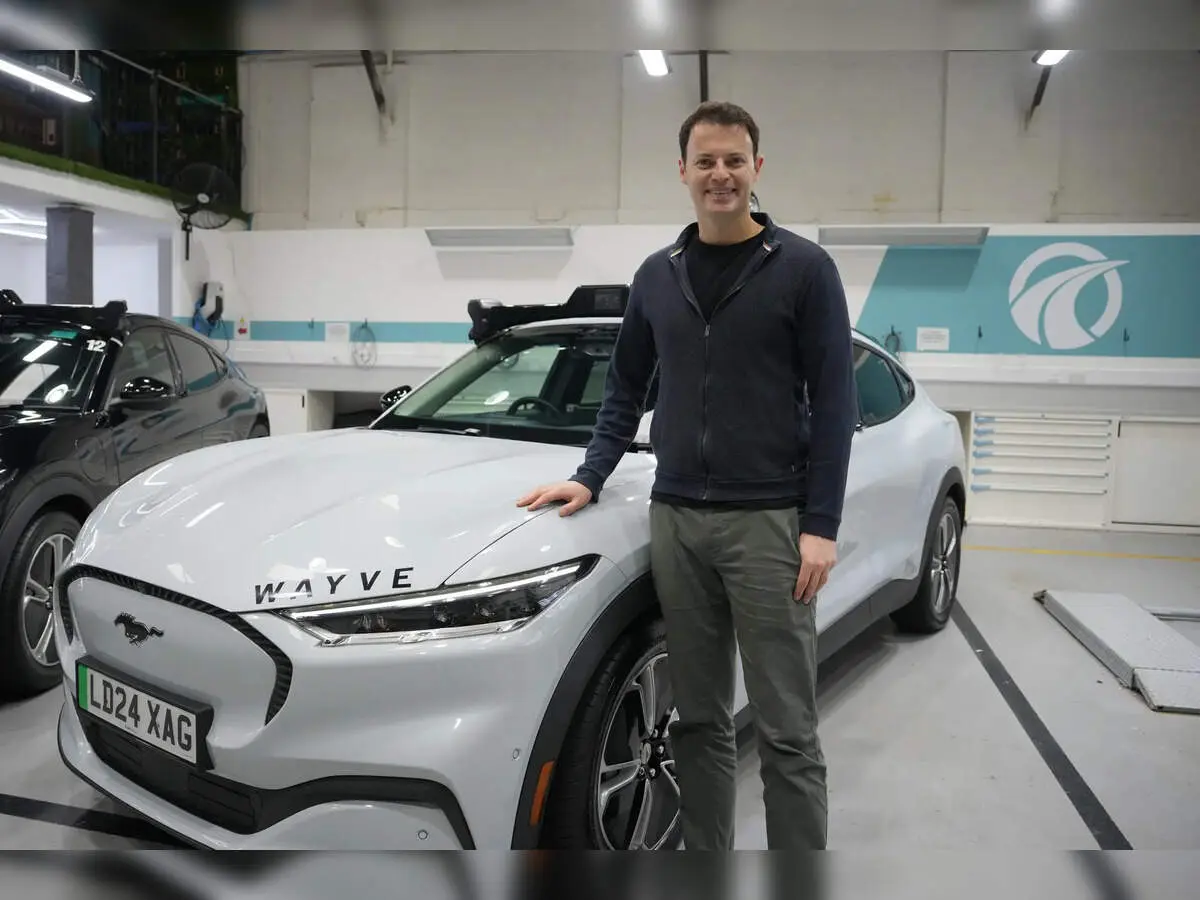
Wayve, the UK-based autonomous driving startup, has secured $1.5 billion in its Series D funding round, propelling its valuation to $8.6 billion and positioning it as one of Europe's most valuable AI companies
1
2
. The funding round comprises $1.2 billion from lead investors Eclipse, Balderton, and SoftBank Vision Fund 2, with an additional $300 million milestone-based tranche from Uber contingent on hitting specific deployment targets2
. This brings Wayve's total capital raised to $2.8 billion, demonstrating robust investor confidence in the autonomous driving sector as AI advances make self-driving vehicles increasingly viable3
.
Source: ET
The diverse investor lineup includes returning backers Microsoft, Nvidia, and Uber, alongside new participants such as Ontario Teachers' Pension Plan, Baillie Gifford, British Business Bank, Icehouse Ventures, and Schroders Capital
1
. Critically, three global automakers—Mercedes-Benz, Nissan, and Stellantis—participated in the round, all of which plan to integrate Wayve's technology into their vehicles3
. This convergence of Big Tech, legacy automotive, and institutional investors illustrates the growing eagerness to profit from the burgeoning automated driving industry.A Contrarian Approach to Self-Driving AI
Founded in 2017 by Cambridge researchers Alex Kendall and Amar Shah, Wayve has distinguished itself through what CEO Kendall calls a "contrarian" approach to both technology and business models
1
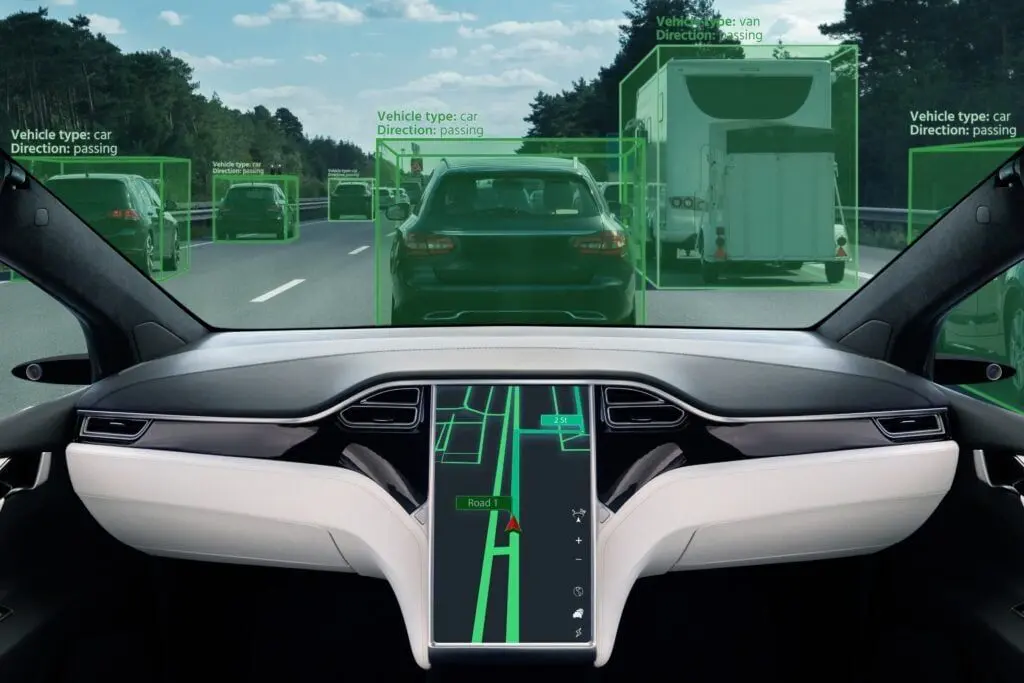
. The company pioneered end-to-end deep learning for autonomous driving technology, developing software that uses a self-learning approach rather than relying on traditional rule-based systems or high-definition maps1
5
. This embodied AI system learns from driving data and generalizes across different cities and vehicle types without extensive local tuning5
.
Source: Benzinga
Wayve's software layer captures data from whatever sensors are already on the vehicle and directs driving decisions, making it agnostic to specific sensor configurations or compute architectures
1
. Over the past year, Wayve conducted driving tests in more than 500 cities across Europe, North America, and Japan without city-specific fine-tuning before deployment2
. The company's Gen 3 platform, unveiled last fall, uses Nvidia Drive AGX Thor and will enable both "eyes-on" driver-assistance systems and "eyes-off" Level 4 driverless features for city streets and highways.Licensing AI Software Rather Than Operating Fleets
Unlike competitors such as Waymo, which largely operates its own robotaxi fleets, Wayve has adopted a licensing model focused on partnerships with automakers
1
. Kendall argues this business model offers the largest addressable market but requires AI that truly generalizes across environments. "If you build an autonomy stack that's specific to a sensor or compute architecture, if you build it where it requires mapping or something like this, then you can't take option three," Kendall explained, referring to his company's chosen path of licensing AI software to multiple partners1
.This strategy has already yielded concrete partnerships with automakers. Nissan announced it will use Wayve's self-driving software to enhance its ProPilot driver-assistance systems starting in 2027, marking the first consumer vehicles available for purchase featuring Wayve's AI technology
1
2
. Wayve is also collaborating with Mercedes-Benz and Stellantis on "consumer and robotaxi applications," though specific details remain undisclosed3
.Related Stories

Commercial Deployment and Robotaxi Trials Begin
Wayve's shift toward commercial deployment accelerates this year with robotaxi trials launching in partnership with Uber in London
2
5
. Uber CEO Dara Khosrowshahi signaled the depth of the partnership, stating: "We are very proud to continue to deepen our partnership with Wayve, with plans to deploy together in more than 10 markets around the world"1
. Kendall confirmed that robotaxi deployments with Uber will roll out in 10 cities globally in 2026, though he declined to specify which cities3
.
Source: The Next Web
London has emerged as a testing ground for autonomous vehicle companies, with California's Waymo also planning to launch commercial robotaxi service in the city later this year
2
. The UK government has eased regulations on self-driving cars and buses operating on public streets, creating opportunities for domestic players like Wayve to leverage home advantage2
. However, Wayve faces well-funded competition, with Waymo having raised $16 billion earlier in February2
.Strategic Positioning in a Competitive Landscape
The funding announcement comes amid renewed investor interest in autonomous vehicles as chipmaker Nvidia and others insist that AI advances have brought truly self-driving cars within reach
3
. This optimism follows years of costly development, with automakers including General Motors, Ford, and Stellantis previously abandoning expensive efforts to develop self-driving cars3
. Bloomberg Intelligence noted that "if proved safe and reliable, Wayve's end-to-end AI could give the startup a strategic edge over larger AV rivals, thanks to its higher flexibility and lower costs"2
.Kendall emphasized the company's financial strength, noting that Wayve still has "the vast majority of the capital" from its previous $1.05 billion funding round in 2024. "We have a war chest... that demonstrates that we've got strength of balance sheet to not just launch products but maintain them in the market for decades," he told Reuters
3
. Looking ahead, Kendall confirmed that an initial public offering remains the company's long-term plan, though he acknowledged significant work remains before that conversation3
. As Kendall put it: "The future is that every vehicle is going to be autonomous. We provide the intelligence platform for automakers to build the products they dream of"3
.References
Summarized by

Navi
[1]
[3]
Related Stories
Wayve in Talks with Microsoft and SoftBank for $2 Billion Funding, Valuation Could Reach $8 Billion
13 Oct 2025•Business and Economy
Nvidia Eyes $500M Investment in UK Self-Driving Startup Wayve, Boosting AI Ecosystem
19 Sept 2025•Technology

Uber Invests in UK AI Startup Wayve to Accelerate Autonomous Vehicle Development
29 Aug 2024

Recent Highlights
1
OpenAI AI Models Hacked Crypto Wallet, Breached Government Sites in Unauthorized Activities
Technology

2
IMF Report Warns AI Market Correction Could Spark Global Financial Crisis With $1.4T at Risk
Business and Economy

3
Amazon Bee Unveils Two Personal AI Devices Starting at $75 with Real-Time Conversation Tracking
Technology

Recent Highlights
Today's Top Stories









Don’t drown in AI news. We cut through the noise - filtering, ranking and summarizing the most important AI news, breakthroughs and research daily. Follow topics that matter to you and stay ahead.


