AMD hints at open-sourcing FSR 4 after accidental release forces the company's hand


2 Sources
2 Sources
[1]
AMD hints at officially open-sourcing FSR 4 upscaling and frame generation technology in the wake of accidental release -- accidental release may have forced the company's hand
Hot on the heels of one of AMD's David McAfee suggesting that the company might dust off the blueprints for its Zen 3 CPUs for another production run, another exec let out a hint about AMD's future plans with FSR 4. In an interview at CES, AMD's president of GPU Technologies and Chief Software Officer Andrej Zdravković suggested that the FSR 4 Redstone technology might be open-sourced. The statements come in the wake of an accidental release of the FSR 4 code earlier this year. The hint came during a Q&A that Tom's Hardware attended when Chips and Cheese's George Cozma asked Zdravković if an open-source release was in the cards. The software head responded that the accidental public release in August was unexpected, but that it intends to release the source for the FSR4 library while keeping the core technology closed, so as not to give Nvidia engineers an advantage. He continued by stating that AMD intends to "work as openly as possible," and was then asked to be specific about FRS 4's open release. Zdravković then said "that's the long-term plan," seemingly corroborating an earlier remark that "open sourcing is in [AMD's heart and mind]". While the Radeon chief's words aren't a direct statement, it's likely that FSR 4 will see an official open-source release sooner rather than later. The August leak was by way of a GitHub repository that was part of FidelityFX SDK, which itself bears a broad MIT license, except for a handful of specific files. Many have taken this to mean that although AMD pulled the source code down, theoretically it can't put the genie back in the bottle, as all of the published data, including the core AI model and its weights (a critical piece to replicate the technology), was arguably MIT-licensed for a brief moment in time. Keeping FSR 4 as an exclusive selling point for 9000-series Radeon cards might not really be a realistic option anymore, either. As soon as they got their hands on the source code, industrious modders quickly tweaked the algorithm to work on RDNA 3 and older cards, and even on 3000-series GeForces. While this comes with a hefty performance penalty versus running it on contemporary cards, many found the quality-versus-performance tradeoff very much worth it, given the significantly better output of the FSR 4 model. Don't be surprised if that FSR 4 GitHub repository pops up again soon.
[2]
AMD suggests that FSR 4 will eventually be open-sourced, bar the core technology, as part of its 'long term plan'
Let's face it, modders have been doing a better job of expanding FSR 4's user base than AMD has. Although AMD's presentations and stands at this year's CES event have been heavily focused on AI (to the point that it seems to have forgotten what the C in CES stands for), it hasn't entirely left gaming out of the loop. At a discussion with press members and graphics wizards, the future of FSR 4 was laid out: the software library will eventually become open-source, with only the core technology remaining behind closed doors. The members in question included Tom's Hardware, which reported on the Q&A session, and it was AMD's president of GPU Technologies and Chief Software Officer, Andrej Zdravković, who provided the pertinent answers. Tom's writes that, "The software head responded that the accidental public release in August was unexpected, but that it intends to release the source for the FSR4 library while keeping the core technology closed, so as not to give Nvidia engineers an advantage." Technically, that's already happened, as back in August 2025, somebody at AMD accidentally uploaded source code for the FidelityFX SDK to GitHub, before swiftly removing it. Although it was only briefly around for anyone to grab hold of, modders rapidly managed to get FSR 4 running on non-RDNA 4 hardware, albeit with a sizeable performance hit. As a quick reminder, FSR 4 is AMD's latest iteration of its upscaling and frame generation package, but unlike previous versions, which ran entirely on standard shaders for everything, this one requires access to the matrix units in RDNA 4 GPUs to work as intended. That's because FSR 4 now works just like DLSS does, in that neural networks are used to fix upscaling artefacts and interpolate frames. Previous iterations of FSR (namely 3.1.5 and older) are already open-source and available on GitHub. In other words, as long as you comply with the MIT license, you are free to use the code however you like. You'll notice that FSR 4 is also there, but that's just a remainder of the boo-boo from last year; no files remain within the repository. Obviously, AMD doesn't want to give away all the secret stuff behind the neural networks that are used in FSR 4, because Intel and Nvidia would be able to go through it all and perhaps use the information to improve their own AI systems. However, every other aspect of the FSR SDK looks like it will become open-source soon enough. What will that mean? Well, nothing new as such, because modders have already managed to get FSR 4 working on older GPUs, such as the RDNA 2-powered Radeon 6000-series. But having the source code for the whole shebang might just make it easier to create third-party apps that do a nicer job than AMD's software at overriding FSR implementations in games. Adrenalin is a lot better than it used to be, but it's still quite clunky to use. If open-sourced FSR 4 can fix that, then everyone's a winner.
Share
Share
Copy Link
AMD's Chief Software Officer suggests the company will open-source its FSR 4 upscaling and frame generation library while keeping core technology proprietary. The statement follows an accidental August release on GitHub that enabled modders to run FSR 4 on older hardware, potentially forcing AMD to reconsider its exclusivity strategy for RDNA 4 graphics cards.
AMD FSR 4 Moves Toward Open-Source Release
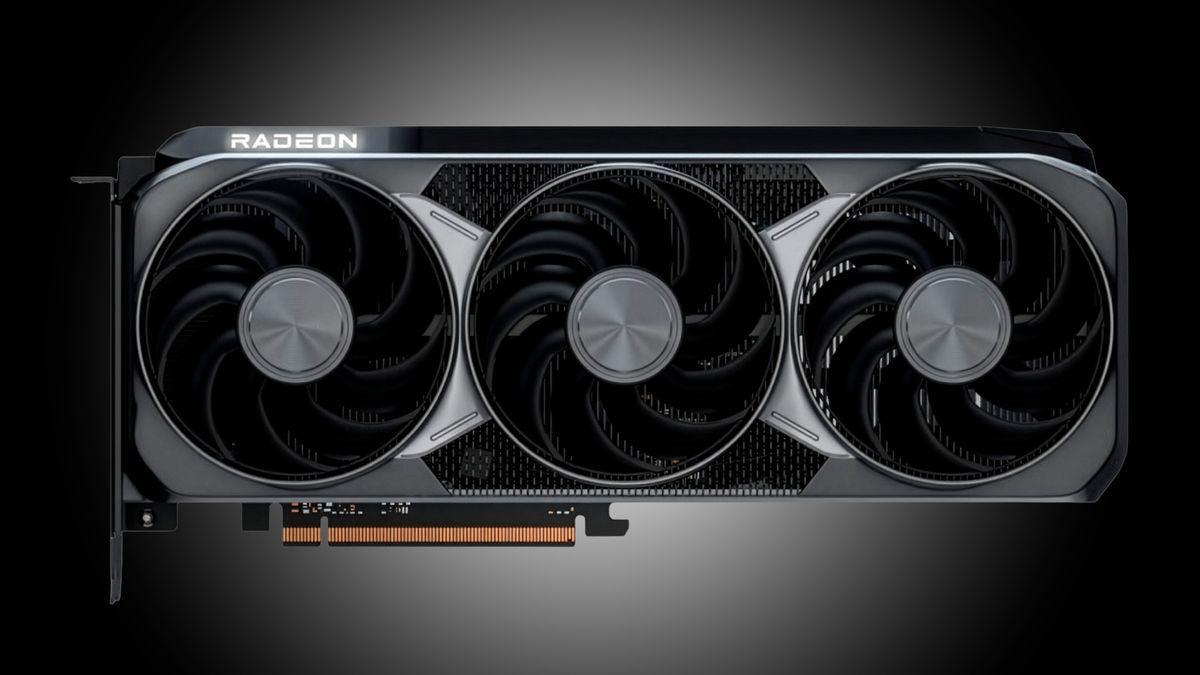
AMD is signaling a shift in strategy for its latest upscaling technology. During a Q&A session at CES, Andrej Zdravković, AMD's president of GPU Technologies and Chief Software Officer, suggested that AMD FSR 4 will eventually become open-source technology. The company plans to open-source the software library while keeping the core AI model proprietary to maintain competitive advantages against rivals like Nvidia DLSS
1
.
Source: Tom's Hardware
When pressed by Chips and Cheese's George Cozma about specific plans, Zdravković stated that open-sourcing "is in AMD's heart and mind" and confirmed "that's the long-term plan"
1
. The executive emphasized AMD intends to "work as openly as possible" while protecting core technology from competitors, particularly Nvidia engineers2
.Accidental Release Changed the Game
The discussion comes after an accidental public release of its code in August, when someone at AMD mistakenly uploaded source code for the FidelityFX SDK to GitHub. Though AMD quickly removed the files, the brief availability was enough for the community to access critical components. The FidelityFX SDK carries a broad MIT license, except for specific files, raising questions about whether AMD can legally restrict access to material that was arguably MIT-licensed, even momentarily
1
.Zdravković acknowledged the accidental release was "unexpected" but appears to have influenced AMD's thinking about FSR 4's future distribution model
2
. The incident effectively demonstrated that keeping FidelityFX Super Resolution 4 exclusive to RDNA 4 hardware may no longer be realistic.Modders Adapted the Technology for Older Hardware
Following the leak, modders quickly tweaked the algorithm to run on RDNA 3 and older graphics cards, and even got it working on Nvidia's 3000-series GeForces. While this comes with substantial performance penalties compared to native RDNA 4 execution, many users found the quality-versus-performance tradeoff worthwhile given FSR 4's significantly improved output
1
. Modders have successfully enabled FSR 4 on RDNA 2-powered Radeon 6000-series cards as well .
Source: PC Gamer
This development matters because FSR 4 represents a fundamental shift in AMD's approach. Unlike previous versions that ran entirely on standard shaders, FSR 4 requires access to matrix units in RDNA 4 GPUs and uses neural networks for frame interpolation and upscaling artifact correction—similar to how Nvidia DLSS operates .
Related Stories


What Open-Source FSR 4 Means for Users
Previous FSR iterations, including version 3.1.5 and older, are already available on GitHub under open-source licenses. An official open-source release of FSR 4 upscaling and frame generation could enable third-party developers to create more user-friendly implementations than AMD's Adrenalin software, which some users find clunky despite improvements .
The strategic decision to keep core technology closed makes business sense. By protecting the neural networks and their weights, AMD prevents Intel and Nvidia from analyzing proprietary AI systems that could inform competing technologies. However, opening the surrounding software library could accelerate FSR 4 adoption across games and platforms while maintaining AMD's competitive edge.
Watch for AMD to officially republish the FSR 4 repository on GitHub soon, as the company navigates balancing openness with protecting intellectual property in an increasingly AI-driven graphics landscape. The Redstone technology's future now appears tied to community collaboration rather than hardware exclusivity.
References
Summarized by

Navi
Related Stories
Recent Highlights
1
AI chatbots validate you too much, making you less kind to others, Stanford study reveals
Science and Research

2
Anthropic's Claude Code Source Leak Reveals Hidden AI Agent Plans and Extensive System Access
Technology

3
Judge blocks Pentagon from branding Anthropic a security risk over AI safety guardrails dispute
Policy and Regulation

Recent Highlights
Today's Top Stories









Your Daily Dose of Curated AI News
Don’t drown in AI news. We cut through the noise - filtering, ranking and summarizing the most important AI news, breakthroughs and research daily. Spend less time searching for the latest in AI and get straight to action.

