AMD's FSR 'Redstone': A Leap Forward in AI-Powered Gaming Graphics


4 Sources
[1]
AMD's mysterious FSR 'Redstone' might make DLSS obsolete
Summary FSR Redstone, launching in 2025, features neural radiance caching, ray regeneration, and AI-driven frame generation. Ray regeneration is AMD's answer to Nvidia's DLSS ray reconstruction, aiming to improve image quality. Redstone will be exclusive to RDNA 4 cards, matching DLSS features and
[2]
AMD FSR4 (Redstone) Gets AI Frame Generation and Ray Tracing Enhancements
AMD's next FSR4 update -- codenamed Redstone -- is landing in late 2025 and it's bringing some pretty neat AI tricks to your gaming rig. If you've been rocking RDNA 4 hardware (think RX 9060 XT, 9070, or 9070 XT), buckle up: this upgrade could give your frame rates a serious boost while making
[3]
FSR 'Redstone' is AMD's answer to DLSS 4 Ray Reconstruction, Neural Shaders, and Frame Gen
As an Amazon Associate, we earn from qualifying purchases. TweakTown may also earn commissions from other affiliate partners at no extra cost to you. Path Tracing or Full Ray Tracing is widely considered the end game for real-time lightning in games, and it's best to think of it like ray-tracing
[4]
AMD told us its plan for how FSR will eventually kill DLSS
AMD sees a future where FSR reigns and DLSS is no more. As AMD's Frank Azor explains, this might not be as far-fetched as it sounds. As an Amazon Associate, we earn from qualifying purchases. TweakTown may also earn commissions from other affiliate partners at no extra cost to you. "In the long
Share
Copy Link
AMD unveils FSR 'Redstone', a significant upgrade to its graphics technology, introducing AI-driven features to compete with NVIDIA's DLSS 4. Set for release in 2025, Redstone aims to revolutionize gaming performance and visual quality.
AMD Unveils FSR 'Redstone': A New Era in AI-Enhanced Gaming Graphics
AMD is set to revolutionize the gaming graphics landscape with its upcoming FSR 'Redstone' update, scheduled for release in the second half of 2025. This significant upgrade to AMD's FidelityFX Super Resolution (FSR) technology introduces a suite of AI-powered features designed to compete directly with NVIDIA's Deep Learning Super Sampling (DLSS) 4
1
2
.Key Features of FSR 'Redstone'

Source: TweakTown
FSR 'Redstone' brings three major AI-driven enhancements to the table:
-
Neural Radiance Caching: This feature targets games with path tracing, using AI to infer thousands of additional rays from a cache of traced rays. It's a significant advancement for rendering complex lighting scenarios more efficiently
1
3
. -
Ray Regeneration: AMD's answer to NVIDIA's ray reconstruction, this AI-based denoiser aims to improve the image quality of ray-traced effects. It replaces traditional denoisers with an AI-driven solution, potentially offering clearer reflections and shadows
1
2
. -
AI-Driven Frame Generation: Unlike the current FSR 4, which uses fixed logic for frame generation, Redstone employs an AI model to create intermediate frames. This approach promises smoother gameplay, especially in fast-paced sequences, and could potentially double the effective frame rate in supported titles
2
3
.
Exclusive to RDNA 4 GPUs
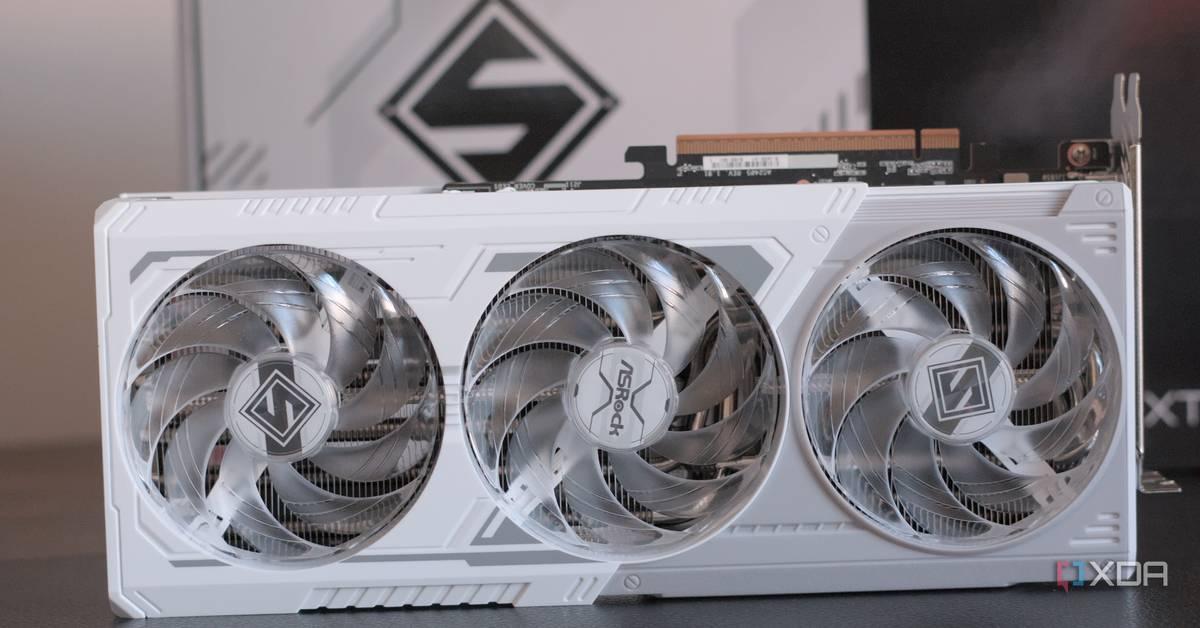
FSR 'Redstone' will be exclusive to AMD's RDNA 4 graphics cards, including the newly announced RX 9060 XT. This limitation is due to the significant machine learning capabilities required to drive these AI features in real-time
1
2
3
.Competing with NVIDIA's DLSS 4
Source: TweakTown
AMD's FSR 'Redstone' is positioned as a direct competitor to NVIDIA's DLSS 4 technology. By introducing features like Neural Radiance Cache and AI-based ray regeneration, AMD aims to match DLSS 4's capabilities point-for-point
1
3
.Frank Azor, AMD's Consumer and Gaming Marketing chief, emphasized the company's strategy: "We made FSR ubiquitous, open source, easy to adopt, and applicable to not just our graphics cards but also our competitors' graphics cards"
4
.Related Stories

The Road Ahead: Project Amethyst and Console Integration
AMD is not limiting its ambitions to PC gaming. Through Project Amethyst, a collaboration with Sony, AMD is working on integrating machine learning solutions into the PlayStation ecosystem. This move could significantly boost FSR adoption across multiple platforms
4
.Azor highlighted the potential impact: "If you're developing for PlayStation and other platforms, where are you going to allocate your upscaling resources? The technology that will benefit you across PC and multiple consoles, or apply your resources to a proprietary technology that's not applicable to the console version, and only the PC version"
4
.Challenges and Future Prospects
Despite AMD's ambitious plans, several challenges remain. Currently, FSR 4 is available in fewer games compared to DLSS 4. However, AMD reports rapid adoption, with the number of supported games doubling from 30 to 60 in just six weeks
4
.The exclusive nature of FSR 'Redstone' to RDNA 4 GPUs also presents a limitation, as it requires specific hardware capabilities not present in older graphics cards or current gaming consoles
3
4
.As the graphics technology landscape continues to evolve, AMD's push for open-source, cross-platform solutions could potentially reshape the industry. However, NVIDIA's established presence and continuous innovation in the field ensure that the competition in AI-enhanced gaming graphics remains fierce.
References
Summarized by

Navi
[1]
[3]
Related Stories
AMD Unveils FSR 4: AI-Powered Upscaling Technology Exclusive to RDNA 4 GPUs
28 Feb 2025•Technology

AMD launches FSR Redstone with AI frame generation to directly challenge Nvidia DLSS dominance
10 Dec 2025•Technology
AMD's FSR 4: AI-Powered Upscaling Exclusive to RDNA 4 GPUs Promises Significant Improvements
07 Jan 2025•Technology

Recent Highlights



Recent Highlights
Today's Top Stories






Don’t drown in AI news. We cut through the noise - filtering, ranking and summarizing the most important AI news, breakthroughs and research daily. Follow topics that matter to you and stay ahead.


