Andrew Yang warns millions of white-collar jobs face AI automation wave within 18 months


4 Sources
4 Sources
[1]
AI will 'result in the great disemboweling of white-collar jobs,' according to Andrew Yang
The former presidential candidate has spoken up about his fears of AI's negative impact on the job market in a pretty dire blog post A sobering statistic from JPMorgan Chase underscores the growing anxiety around AI and jobs: U.S. employers announced more than 1.1 million job cuts in 2025. Of those, about 55,000 cited AI as a factor -- less than 5% of layoffs and roughly 0.03% of total employment. Still, as 2026 begins, fears about AI's impact on the workforce continue to rise. Among the most vocal is entrepreneur and former presidential candidate Andrew Yang, who warns that automation could displace millions of workers in the years ahead. In a recent Substack post, Yang outlined a troubling outlook for the job market, arguing that rapid advances in AI could intensify disruption already underway. He warns of risks as companies replace humans with AI Yang's blog post, titled "The End of the Office," forecasted the biggest social impacts that'll result from the surge of AI across companies and the resulting displacement of white-collar and office workers. "It won't just be the managers. It will be the call-center workers, the marketers, the coders, the financial forecasting teams, and on and on; business functions are going to get compressed into a handful of key employees supplemented by AI," he stated. "In essence, the number of people necessary to make large corporations function is going to be dramatically reduced." Yang also predicted that personal bankruptcies will also increase over time as more and more jobs are lost. It's bad now, but he states that it's going to get worse as more workers become unemployed and fall into dire financial situations. Not only will this affect office workers, but it will also impact your workers from more labor-intensive professions. "Even if you're not an office worker, you may be affected," Yang sombly noted. "Let's say you're a drycleaner or a dog walker or a hairstylist. If people in your community stop going to the office, your business is going to suffer because there are fewer business shirts to launder, people will walk their dogs themselves and cut back on trips to the salon, etc." The rest of Yang's bullet points allude to current and future college grads having an even harder time securing jobs, metro office spaces being abandoned as workers who once filled them are laid off, and the public's pessimistic opinions toward AI increasing. One of the closing quotes from his blog sets out to make everyone aware of the trying times ahead: "I know that we could and should be doing much more for the people and families of this country. In the absence of that kind of coming together, we are left with every-person-for-yourself in the face of the greatest technological transformation of our lifetimes." The takeaway It's becoming clear that AI adoption may reshape the workforce before its benefits are fully realized. As companies prioritize automation, many workers worry about what that shift could mean for job stability. Public concern is already high. A February 2026 YouGov poll found that 63% of Americans believe AI will reduce the number of jobs available in the United States. At the same time, AI has advanced rapidly and is now embedded in roles once considered uniquely human, raising new questions about how work will evolve. In a recent blog post, Yang outlined a sobering outlook for the future of employment -- a reminder that individuals and families should stay informed and prepared as the technology continues to reshape the workplace. Follow Tom's Guide on Google News and add us as a preferred source to get our up-to-date news, analysis, and reviews in your feeds.
[2]
Ex-presidential candidate Andrew Yang warns that millions of white-collar workers will lose their jobs within 18 months: 'The AI jobpocalypse is here' | Fortune
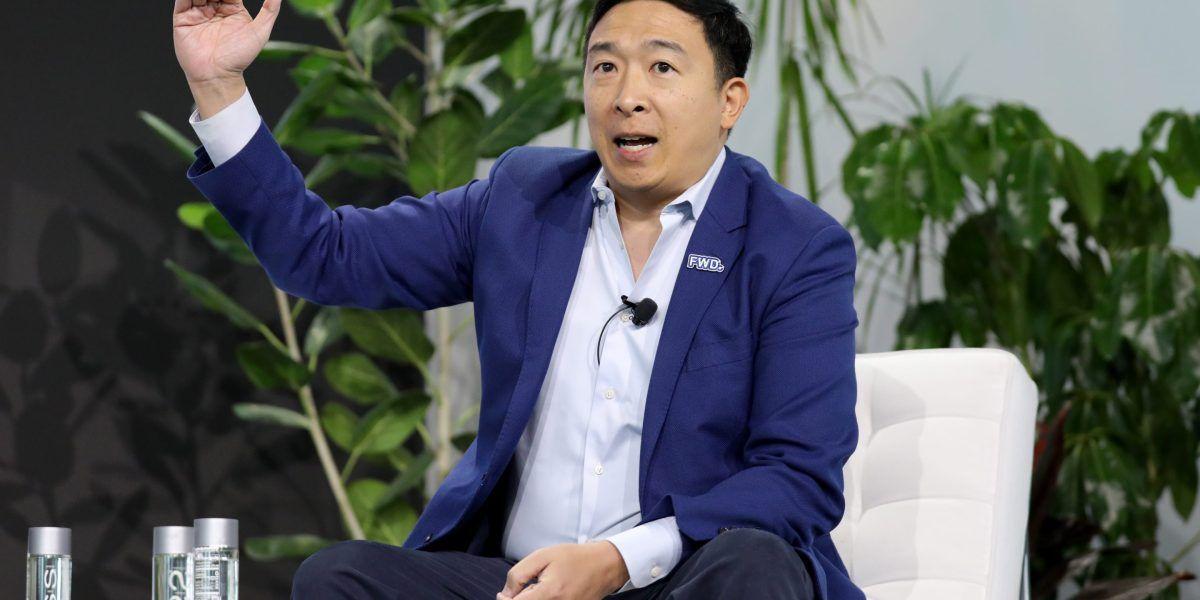
The artificial intelligence boom has fueled grand promises: Cures for cancer, self-driving metropolises, and even interplanetary travel. It's also powered a stock market surge that's padded plenty of retirement accounts. But beneath the optimism, entrepreneur and former presidential candidate Andrew Yang says a far more immediate disruption is underway -- and the U.S. is not ready for it. "I believe that millions of white-collar workers are going to lose their jobs in the next 12 to 18 months due to AI," Yang said in an Instagram video that's garnered over 600,000 views. "AI is now able to do the work of a very, very smart human in minutes or even seconds. This is going to displace marketers, coders, designers, lawyers, accountants, call center workers -- you name it." Yang joins a chorus of business leaders -- from Anthropic CEO Dario Amodei to Ford CEO Jim Farley -- warning about the nightmare that could be coming for white-collar workers. However, the economic fallout in reality could reach far beyond officeworkers. "When people lose their jobs, it affects dry cleaners, dog walkers, hairstylists, restaurants -- all local businesses that see less people who are able to spend. Personal bankruptcies are going to surge," Yang added. The end result, the 51-year-old said, will be a more extreme winner-take-all economy, where the path to social mobility and middle-class status is "broken." "The AI job apocalypse is real," Yang said. "It's underway right now." Yang has been sounding alarms about automation for years. While running for president in the 2020 campaign cycle, he made universal basic income the centerpiece of his platform, proposing $1,000 a month for every American over 18 in order to mitigate impending job automation. As generative AI has moved from research labs into the mainstream, he has only intensified that warning. "Millions of people could lose their job in America," Yang told Fortune in 2023, when asked about the negative risks of AI. "We should reckon with what the human effects are. If we don't have meaningful countermeasures or ways to help people transition, then we should be diligent about safeguarding people during what could be a very rocky period." But what once sounded fringe is continuing to get support among many top business leaders. Responding to billionaire Michael Dell's plan to fund investment accounts for newborns, Elon Musk wrote on X: "There will be no poverty in the future and so no need to save money... there will be universal high income." Sam Altman, the CEO of OpenAI and the force behind ChatGPT, has also expressed openness to a guaranteed income program. "I used to be really excited about things like UBI," Altman said on the This Past Weekend podcast last year. "I still am kind of excited, like, universal basic income, where you just give everybody money." For decades, higher education has been sold as the safest hedge against economic disruption. As manufacturing jobs disappeared and the digital economy took off, the answer was to go to college and learn how to code. But Yang argued that AI is undermining that formula. The traditional education premium -- the wage boost that comes with a degree -- has already begun to shrink, with the unemployment rate of college graduates on the rise. As fewer graduates see a clear return on their investment, it's likely dozens, or even hundreds, of more colleges will shut their doors, he said. "If you're weighing going back to school or sending your child in this direction, question the cost of the degree heavily, as the cost-benefit is changing -- for the worse -- in real time," Yang wrote on his Substack this week. "If it's low-cost, vocational or top-tier, you're fine. If it's expensive and doesn't lead to a concrete opportunity... maybe re-examine it." And while he does not think AI will mark the end of going to college altogether, there is a growing need to develop soft skills -- like grit and communication -- throughout an education experience rather than focusing on getting high grades. "Employers might want to hire people who are consistently delightful or tough, which doesn't necessarily map to SAT scores," Yang said. "So being a high-performing athlete, a talented singer, dancer, actor, or the head of student government could be more important than how smart you are."
[3]
AI Will Destroy Millions of White Collars Jobs in the Coming Months, Andrew Yang Warns, Driving Surge of Personal Bankruptcies
Andrew Yang -- millionaire entrepreneur, noted Ivy leaguer, and one-time presidential hopeful -- has a grim warning for his fellow salaried professionals: AI is about to wipe "millions" of office jobs over the coming months. In an essay published on his Substack and flagged by Business Insider, Yang explained what he calls the "great disemboweling of white-collar jobs" due to AI. "Do you sit at a desk and look at a computer much of the day?" he challenged. "Take this very seriously." "This automation wave will kick millions of white-collar workers to the curb in the next 12-18 months," Yang wrote. "As one company starts to streamline, all of their competitors will follow suit. It will become a competition because the stock market will reward you if you cut headcount and punish you if you don't. As one investor put it, 'sell anything that consists of people sitting at a desk looking at a computer.'" Yang predicts that mid-career office professionals will be among the first to go. Right now, there are around 70 million office workers in the United States, but "expect that number to be reduced substantially, by 20-50 percent in the next several years," the entrepreneur warned. Yang went so far as to urge anyone in mid-career management, particularly those who own homes in the affluent burbs of Silicon Valley or Westchester County, New York to put there house up for sale now, to avoid the mad scramble once the labor apocalypse hits. "It might not feel great being first, but you don't want to be last," Yang wrote. Going on, Yang predicted that personal bankruptcies will "surge" as office workers struggle to find gainful employment to maintain their lifestyles. This, he says, will also come for service workers down-wind of office labor -- those employed as drycleaners, hair stylists, and dog walkers. The "great disemboweling" will likewise impact recent college grads -- a section which is already suffering through a brutal hiring market in the US -- according to Yang. All of this will result in even greater unrest and angst as the wealth generated by the AI spending boom will largely go to the few CEOs and executives at the top of the food chain. "Imagine what people are going to think when we all feel like serfs to AI overlords that have soaked up the white-collar work?" Yang posits. At the end of the day, Yang's pronouncement reads like a lot of the other AI doomsaying out there, much of which comes, ironically, from the tech moguls themselves. Like those prophecies, Yang's ends when it comes time to supply a constructive answer to the world-upending crisis beyond some vague idea of universal basic income. "Expect it to get incredibly, intergenerationally rough out there," Yang concluded. "Batten down the hatches, and do what you can for yourself and those around you."
[4]
AI automation to drive mass white-collar job losses in 12-18 months, says Andrew Yang
Andrew Yang, a former presidential candidate, predicts significant job losses for white-collar workers. He believes artificial intelligence will replace many office roles within the next year to eighteen months. This automation surge could impact millions, leading to economic challenges. Yang advocates for universal basic income and AI company taxes to mitigate these effects. Andrew Yang, entrepreneur and former Democratic presidential candidate, has cautioned that millions of white-collar employees in the United States may face unemployment within the next 12 to 18 months due to the fast-paced growth of artificial intelligence (AI), according to Business Insider. Yang believes AI will increasingly take over responsibilities currently handled by mid-career office professionals, call centre workers, marketers, software developers, and other skilled employees. He described the coming shift as a "great disembowelling" of white-collar employment. AI Advancing Faster Than Workers Expect Discussing the swift integration of AI tools across industries, Yang emphasized that many companies are adopting automation far more quickly than employees realize. He noted that tasks once considered secure -- because they involved analytical thinking, writing expertise, or technical decision-making -- are now being managed by generative AI systems. These systems are capable of drafting reports, writing code, reviewing contracts, and even responding to customer service inquiries with impressive fluency. According to Yang, the automation surge will "kick millions of white-collar workers to the curb" in the near future. He further warned that "as one company starts to streamline, all of their competitors will follow suit." Yang suggested that large-scale job displacement could have widespread economic effects. Reduced employment may result in lower consumer spending, weaker housing markets, and decreased tax revenues, ultimately impacting local economies across the country. To soften the blow of AI-driven disruption, Yang supports initiatives such as universal basic income (UBI), workforce retraining programs, and implementing taxes on AI companies. He argues that proactive measures are essential to help workers adapt and to stabilize the broader economy. (You can now subscribe to our Economic Times WhatsApp channel)
Share
Share
Copy Link
Former presidential candidate Andrew Yang issued a stark warning that AI automation will eliminate millions of white-collar jobs within 12 to 18 months, calling it the 'great disemboweling' of office work. His prediction comes as U.S. employers announced over 1.1 million job cuts in 2025, with 55,000 citing AI as a factor, though Yang believes the worst is yet to come.
Andrew Yang Predicts Mass White-Collar Job Losses From AI Automation
Former presidential candidate Andrew Yang has issued one of his most urgent warnings yet about AI's impact on employment, predicting that millions of white-collar jobs will disappear within the next 12 to 18 months. In a recent Substack post titled "The End of the Office" and an Instagram video that garnered over 600,000 views, Yang described what he calls the "great disemboweling of white-collar jobs" driven by rapid AI automation
2
3
. "AI is now able to do the work of a very, very smart human in minutes or even seconds," Yang stated, warning that this capability will displace marketers, coders, designers, lawyers, accountants, and call center workers across industries2
.
Source: Futurism
The Scale of Economic Disruption Extends Beyond Office Workers
Yang's forecast paints a troubling picture for the estimated 70 million office workers currently employed in the United States, with the entrepreneur predicting that number could be reduced by 20-50 percent in the coming years
3
. The job displacement won't stop at desk workers, according to Yang's analysis. "Even if you're not an office worker, you may be affected," he noted, explaining that service workers like dry cleaners, dog walkers, and hairstylists will see their businesses suffer as fewer people commute to offices and consumer spending drops1
. Yang predicts personal bankruptcies will surge as unemployed workers struggle to maintain their lifestyles, creating ripple effects throughout local economies2
3
.
Source: ET
Current Data Shows Early Signs of AI's Labor Market Impact
While Yang's predictions sound dire, some data already points to AI's growing role in workforce reductions. A sobering statistic from JPMorgan Chase reveals that U.S. employers announced more than 1.1 million job cuts in 2025, with approximately 55,000 citing AI as a factor—representing less than 5% of layoffs and roughly 0.03% of total employment
1
. However, Yang argues this is just the beginning of a much larger wave. "As one company starts to streamline, all of their competitors will follow suit," he wrote, noting that stock markets will reward companies that cut headcount and punish those that don't3
. Public concern is already mounting, with a February 2026 YouGov poll finding that 63% of Americans believe AI will reduce the number of jobs available in the United States1
.Related Stories

The AI Job Apocalypse Challenges Traditional Career Paths
The implications of this AI-driven transformation extend to higher education and career planning. Yang argues that the traditional education premium—the wage boost from earning a degree—has already begun to shrink, with college graduate unemployment rates rising
2
. "If you're weighing going back to school or sending your child in this direction, question the cost of the degree heavily," Yang advised, suggesting that only low-cost vocational programs or top-tier institutions may justify their expense2
. He predicts dozens or even hundreds more colleges will close as the cost-benefit calculation shifts. Yang also urged mid-career professionals, particularly those in affluent areas like Silicon Valley or Westchester County, New York, to consider selling their homes now to avoid a future market scramble3
.Solutions Remain Vague as Warnings Intensify
Yang has been sounding alarms about automation for years, making Universal Basic Income the centerpiece of his 2020 presidential campaign with a proposal for $1,000 monthly payments to every American over 18
2
. He now advocates for initiatives including UBI, workforce retraining programs, and taxes on AI companies to mitigate the economic disruption4
. His concerns have found support among tech leaders, with Elon Musk predicting "universal high income" and OpenAI CEO Sam Altman expressing openness to guaranteed income programs2
. Yang's closing message offers little comfort: "Expect it to get incredibly, intergenerationally rough out there. Batten down the hatches, and do what you can for yourself and those around you"3
. As companies continue adopting AI tools at accelerating rates, Yang's warnings serve as a call for workers to stay informed and prepared for what he describes as "the greatest technological transformation of our lifetimes"1
.
Source: Fortune
References
Summarized by

Navi
[1]
Related Stories
Anthropic CEO Warns: AI Could Eliminate Half of Entry-Level White-Collar Jobs in 5 Years
29 May 2025•Technology
Block's 4,000-person layoff sparks debate: AI revolution or corporate cost-cutting in disguise?
05 Mar 2026•Business and Economy
Jack Dorsey cuts 4,000 jobs at Block, citing AI tools that 'can do more and do it better'
27 Feb 2026•Business and Economy

Recent Highlights
1
AI chatbots assist in planning violent attacks as safety guardrails fail, studies reveal
Technology

2
Three Tennessee teens sue xAI over Grok AI creating child sexual abuse material from real photos
Policy and Regulation
3
Pentagon reveals how Military AI chatbots accelerate targeting decisions in Iran operations
Technology

Recent Highlights
Today's Top Stories










Your Daily Dose of Curated AI News
Don’t drown in AI news. We cut through the noise - filtering, ranking and summarizing the most important AI news, breakthroughs and research daily. Spend less time searching for the latest in AI and get straight to action.

