Block's 4,000-person layoff sparks debate: AI revolution or corporate cost-cutting in disguise?


11 Sources
[1]
Jack Dorsey Is Ready to Explain the Block Layoffs
When the bombs hit in Iran, I thought of Jack Dorsey. In 2009, he and I were both part of a contingent of technology people sent by the US State Department to Baghdad, in the wake of another questionable Middle East war. At that time Dorsey was not involved in Twitter's day-to-day operations, and
[2]
AI Layoffs Are a Self-Fulfilling Prophecy
The technology may not be ready to replace workers, but that isn't stopping execs from pushing forward anyways. Late last month, at an event in Washington, D.C., Andrew Yang delivered a bleak message. "I have bad news, America," he told the crowd. "The Fuckening is here." The Fuckening is the
[3]
The Curious Case of the Block 'AI Layoffs'
Last week, Block CEO and ayahuasca enthusiast Jack Dorsey announced that he was cutting 40% of his company's staff because AI tools have reduced the company's need for people. While Dorsey called it "one of the hardest decisions in the history of our company," he also said it was inevitableâ€"that
[4]
Current and former Block workers say AI can't do their jobs after Jack Dorsey's mass layoffs: 'You can't really AI that'
The CEO said he cut the company's workforce by 4,000 people - almost in half - because of gains in AI productivity Mark remembers the first time he wondered whether he was teaching Block's AI tools how to do his job - and maybe even replace him. He was at his fintech company's extravagant
[5]

'What will our kids do?': one question was on every investor's lips at Morgan Stanley's big AI conference | Fortune
Morgan Stanley analyst Adam Jonas flagged it as the single most common investor question he fielded throughout the conference. For all the breathless optimism about large language models and agentic AI, anxiety about what this technology means for the next generation of workers pervaded a room full
[6]

AI Job Loss Is Breaking the Psyche of Workers, Psychiatrist Warns
Can't-miss innovations from the bleeding edge of science and tech If you're one of the hundreds of millions of Americans who earn a wage for a living, it can be hard to stay positive in the wake of recent headlines. Jack Dorsey's Block just cut 4,000 roles citing AI, which came on the heels of
[7]

This CEO explains what's really behind layoffs -- and it's not AI
Last week, Block CEO Jack Dorsey shared that his fintech company would be cutting 40% of its workforce, arguing that AI would allow them to do more with smaller teams. Many observers wondered if the large-scale layoffs reflected the new reality amid rapid AI adoption, and whether it was just a
[8]
Sam Altman admits AI is killing the labor-capital balance -- and says nobody knows what to do about it | Fortune
Speaking at the BlackRock Infrastructure Summit, OpenAI CEO Sam Altman tackled the growing public skepticism surrounding artificial intelligence, acknowledging the warning from President Donald Trump that AI is facing a major public relations problem. Moreover, the tech executive validated
[9]
Jack Dorsey Isn't Telling the Real Story About Block's AI Layoffs, Insider Says
Can't-miss innovations from the bleeding edge of science and tech Twitter founder and Block Inc (formerly Square) CEO Jack Dorsey announced late last month that his fintech venture was making "one of the hardest decisions in the history of our company" by "reducing our organization by nearly
[10]

Jack Dorsey Blamed AI for 4,000 Layoffs. A Former Block Exec Says That's Not the Real Story
In a letter announcing the layoffs, Dorsey told employees that AI is "enabling a new way of working which fundamentally changes what it means to build and run a company." He also conceded that some of the cuts might ultimately prove to be a mistake, a striking admission given the scale of the
[11]
Exclusive: Block's CFO explains the AI leaps over 18 months that led to the decision to slash nearly half its workforce | Fortune
New tools including its custom LLM "goose" gave leaders confidence that smaller teams can now handle "really meaningful bodies of work," says Block's CFO and COO Amrita Ahuja. Getty Images Those were the two questions whipping around the business world following Block's shocking announcement that
Share
Copy Link
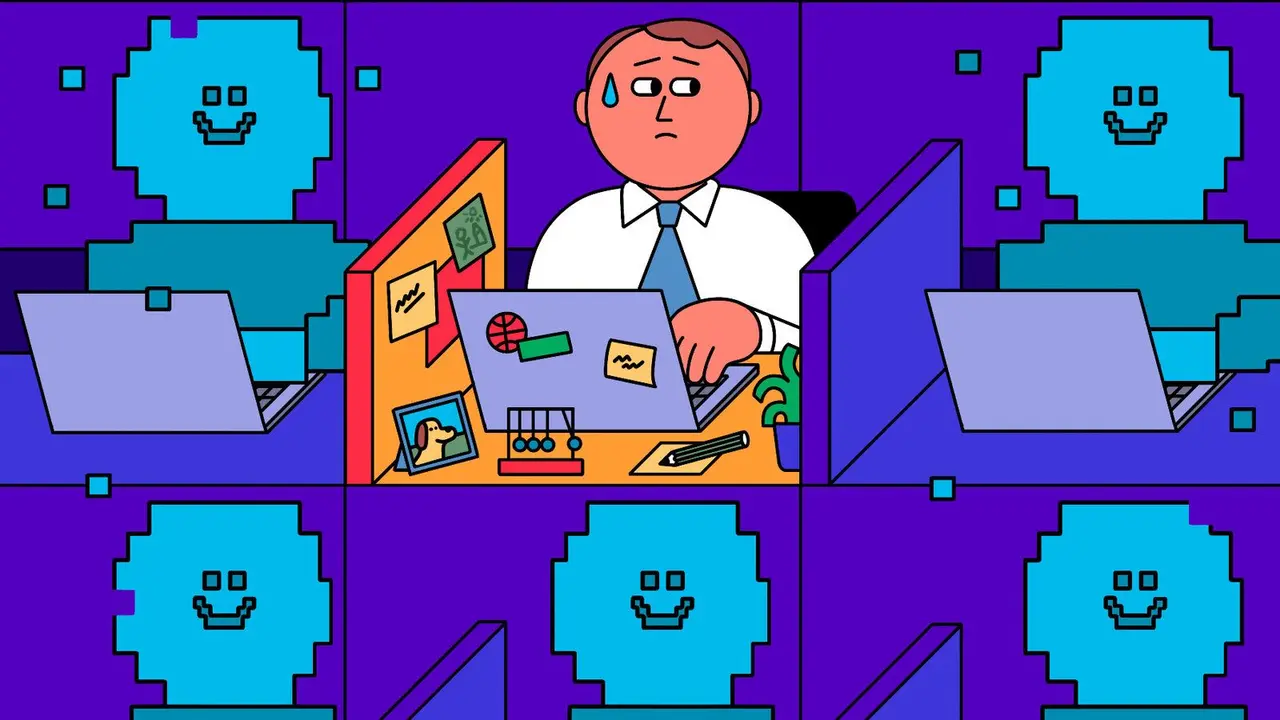
Jack Dorsey eliminated nearly half of Block's workforce—roughly 4,000 employees—citing AI productivity gains. The fintech CEO claims AI tools enable smaller teams to accomplish more, but current and former employees dispute whether the technology can truly replace human workers at this scale. The move has ignited fierce debate about whether companies are using AI as cover for traditional cost management.
Jack Dorsey Cuts Nearly Half of Block's Workforce
Jack Dorsey sent shockwaves through the tech industry when he announced AI layoffs affecting roughly 4,000 workers at Block, the fintech company behind Square and Cash App. The workforce reduction eliminated nearly half of the company's employees in what Dorsey described as "one of the hardest decisions in the history of our company"
3
. Block, which made almost $3 billion in profit last quarter and maintains a $39 billion market cap, employed 10,000 people before the cuts1
.
Source: Futurism
Dorsey's explanation centered on AI tools fundamentally changing how companies must structure themselves. "Something really shifted in December in the sophistication of [AI] tools," he told Wired, specifically citing Anthropic's Opus 4.6 and OpenAI's Codex 5.3 as enabling "an option to dramatically change how any company is structured"
1
. The CEO argued that AI-driven layoffs were inevitable—either happening slowly over several years or all at once. He chose the latter, positioning the cuts as proactive rather than reactive to ensure Block stays ahead of technological trends.
Source: Inc.
Employee Skepticism Challenges AI Productivity Claims
Current and former Block employees paint a starkly different picture. Seven workers interviewed by The Guardian pushed back against assertions that current AI tools can replace workers at this scale
4
. "You can't really AI that," said Mark, a laid-off product department employee, explaining that AI tools aren't proactive and require human direction for vision and strategy. "An employee is more than a series of tasks," he added4
.Even employees whose roles heavily involve AI expressed doubt. John, a current employee who helps staff use AI, stated bluntly: "We're just not there yet. There's a distinction between what's technically possible and just—pardon my French—whatever CEO bullshit will happen based on their own interpretation of how AI works" . Employee skepticism intensified when data scientist Naoko Takeda revealed she was offered a 75% pay increase—90% with a one-time bonus—to stay following the cuts
3
. "I saw my company discard half of my peers and double my pay," Takeda wrote on LinkedIn before declining the offer. "That's not an honor. It feels shameful and dehumanizing."
Source: Futurism
AI-Washing Accusations and Market Pressure
The concept of AI-washing—using AI as a convenient excuse for job losses when other factors may be driving decisions—has emerged as a central critique. Aaron Zamost, Block's former head of communications from 2015 to 2020, wrote in The New York Times that the layoffs appear designed to "prove [Dorsey's] A.I. credentials" rather than reflect genuine automation
3
. Zamost noted that specific cuts like shrinking the policy team and eliminating diversity and inclusion roles "reads like standard prioritization and cost management, not an A.I.-driven reinvention"3
.Wharton professor Ethan Mollick, typically optimistic about AI capabilities, expressed skepticism: "It is hard to imagine a firm-wide sudden 50%+ efficiency gain that justifies massive organizational cuts. I think it is worth taking the justification with a grain of salt"
2
. Several current employees told The Guardian the cuts were "posturing for the market" to win back investor confidence after Block's stock declined following heavy cryptocurrency investments4
. The strategy appeared to work—Block's stock price increased after the announcement, suggesting shareholders rewarded Dorsey's vision .Related Stories

Overhiring During COVID and Previous Layoffs
Block's workforce more than tripled from 2019 to 2022 during the pandemic hiring boom
2
. Dorsey himself admitted on Twitter that the company "over-hired during Covid"3
. When pressed about overhiring, Dorsey defended the company's metrics: "We were exactly in line with or just ahead of all of our peers" in gross profit per employee and "hired at the same rate that they all did during Covid"1
.The recent cuts weren't Block's first. The company underwent three rounds of layoffs since 2024 before this dramatic workforce reduction
3
. A rolling layoff that began in February eliminated 10% of staff, which Dorsey attributed to performance issues, claiming "a sizable portion of our population that have been phoning it in"3
. Notably, AI wasn't mentioned as justification for those cuts despite the same tools being available.Self-Fulfilling Prophecy and Broader Industry Implications
The Atlantic warned that AI-induced job losses risk becoming a self-fulfilling prophecy—not because the technology is ready to replace workers, but because corporate restructuring around AI has become fashionable
2
. Once one company conducts AI-driven layoffs, others may feel market pressure to follow suit. If competitors claim to do more with less, similar moves become expected.At Morgan Stanley's recent technology conference, the most common investor question concerned what AI means for the next generation of workers
5
. Sam Altman told attendees he envisions one to five people running entire companies within the next few years5
. A Morgan Stanley survey of roughly 1,000 executives across five countries found an average net workforce reduction of 4% over the past 12 months directly attributable to AI adoption5
. Goldman Sachs estimated AI resulted in 5,000 to 10,000 monthly net job losses in the US last year4
.Yet data suggests widespread AI-driven job displacement remains limited. Last year, less than 1% of all job losses were attributed to AI
3
. A National Bureau of Economic Research paper found that 90% of executives surveyed said AI has had no impact on workplace employment over the past three years3
. This gap between rhetoric and reality fuels concerns about automation being used to justify traditional cost savings while signaling technological leadership to shareholders eager for evidence that AI investments are paying off through efficiency gains and corporate transformation.References
Summarized by

Navi
[2]
[3]
[4]
Related Stories
Jack Dorsey cuts 4,000 jobs at Block, citing AI tools that 'can do more and do it better'
27 Feb 2026•Business and Economy

Citrini Research AI Scenario Triggers Wall Street Panic Over Unemployment and Economic Collapse
23 Feb 2026•Business and Economy

AI's Effect on the Work Force Shows Up in Wages, Not Unemployment—Gen Z Hit Hardest
16 Sept 2026•Business and Economy
Recent Highlights
1
Meta Unveils Muse Wonder Frontier AI Models, Claims Performance Matching OpenAI and Anthropic
Technology

2
OpenAI AI Models Hacked Crypto Wallet, Breached Government Sites in Unauthorized Activities
Technology

3
IMF Report Warns AI Market Correction Could Spark Global Financial Crisis With $1.4T at Risk
Business and Economy

Recent Highlights
Today's Top Stories






Don’t drown in AI news. We cut through the noise - filtering, ranking and summarizing the most important AI news, breakthroughs and research daily. Follow topics that matter to you and stay ahead.


