Anthropic blocks OpenClaw access for Claude subscribers, forcing costly billing shift


3 Sources
3 Sources
[1]
Claude subscribers just lost access to OpenClaw and other third-party tools -- unless they pay more
Simon is a Computer Science BSc graduate who has been writing about technology since 2014, and using Windows machines since 3.1. After working for an indie game studio and acting as the family's go-to technician for all computer issues, he found his passion for writing and decided to use his skill set to write about all things tech. Since beginning his writing career, he has written for many different publications such as WorldStart, Listverse, and MakeTechEasier. However, after finding his home at MakeUseOf in February 2019, he would eventually move on to its sister site, XDA, to bring the latest and greatest in Windows, Linux, and DIY electronics. Summary Claude subscriptions no longer cover third-party tools (like OpenClaw) starting April 4th at 12pm PT. To use Claude on OpenClaw, you'll need extra usage bundles or a Claude API key. Anthropic blames surging demand, but subscribers get a one-time credit equal to one month. As AI has begun to take off, we're seeing the rise of services that allow you to attach your favorite AI model to it. Such is the case of OpenClaw, which allows you to use your API of choice to create a digital assistant that can help you perform tasks that a regular LLM can only dream of doing. For a while, using OpenClaw and Claude was a dream combination, using the utility of the former with the smarts of the latter to help people get stuff done. Unfortunately, Anthropic has just announced that if you want to continue using Claude on third-party services like OpenClaw, you're gonna have to pay more. Related Claude can now automate your entire desktop, but with a serious limitation It's likely a temporary one, though. Posts 7 By Simon Batt Using Claude on OpenClaw is getting more expensive But Anthropic is giving everyone some credit In a post on X, Boris Cherny, head of Claude Code at Anthropic, announced the change in plans. Once 12 pm PT arrives on April 4th, 2026, anyone with a Claude subscription won't have their OpenClaw usage covered by their plan. You'll need to either purchase an extra usage bundle or use a Claude API key. Cherny says the change is because Claude has been seeing a ton of demand lately (as is evident by the multiple times it went down in March), and Anthropic hadn't properly built third-party tool usage into the Claude subscription plans. Fortunately, Anthropic is offering up to a 30% discount on pre-purchased extra usage bundles to make the transition less painful. Plus, if you are a subscriber, Anthropic will give you a one-time credit to your account, equal to how much you've been paying every month. You'll need to redeem it by April 17th, so don't waste time grabbing it. Cherny also mentions in the replies that using OpenClaw on a Claude subscription plan wasn't allowed in the first place, as per the Terms of Service. As such, Cherny feels this is less restricting people based on what they're using Claude for and more enforcing the rules they had set up already. Related I set up Claude Code the way its creator does, and the difference is night and day Who better to learn from than the person who made it? Posts 18 By Mahnoor Faisal
[2]
Anthropic blocks OpenClaw from Claude subscriptions in cost crackdown | TNW
In short: Anthropic has blocked Claude Pro and Max subscribers from using their flat-rate plans with third-party AI agent frameworks, starting with OpenClaw. The move, which took effect on 4 April 2026, shifts the cost of running autonomous agents onto users through a pay-as-you-go billing tier. The creator of OpenClaw, who joined OpenAI in February, called the decision a betrayal of open-source developers. Thousands of users now face cost increases of up to 50 times their previous monthly outlay. Anthropic has ended a quiet subsidy that made its Claude models the engine of choice for the open-source AI agent community. Starting on 4 April 2026, users of Claude's Pro and Max subscription tiers can no longer pipe their plan's usage limits through third-party frameworks such as OpenClaw. If they want to keep using those tools with Claude, they must pay separately under a new "extra usage" billing system. Anthropic says it will extend the restriction to all third-party harnesses in the coming weeks. The announcement landed as a jolt for thousands of developers who had structured their personal AI setups around the assumption that a flat monthly subscription was enough. For many of them, it no longer is. The logic behind the change is straightforward even if the timing was not. Claude's subscription plans were designed around conversational use: a human opens a chat window, types a query, and reads a response. Agentic frameworks operate on a fundamentally different model. A single OpenClaw instance running autonomously for a full day, browsing the web, managing calendars, responding to messages, executing code, can consume the equivalent of $1,000 to $5,000 in API costs, depending on the task load. Under a $200-per-month Max subscription, that is an unsustainable transfer of compute costs from the user to Anthropic. "Anthropic's subscriptions weren't built for the usage patterns of these third-party tools," said Boris Cherny, Head of Claude Code at Anthropic. "Capacity is a resource we manage thoughtfully and we are prioritising our customers using our products and API." The scale of the problem was significant. More than 135,000 OpenClaw instances were estimated to be running at the time of the announcement, and industry analysts had noted a price gap of more than five times between what heavy agentic users paid under flat subscriptions and what equivalent usage would cost at API rates. Anthropic's subscription business was, in effect, quietly cross-subsidising a class of usage it had not priced for. OpenClaw is an open-source AI agent framework created by Austrian developer Peter Steinberger. Originally released in November 2025 under the name Clawdbot, it was a side project: Steinberger wanted to see what would happen if you gave a large language model persistent memory, tool access, and the ability to communicate through messaging apps such as WhatsApp and Telegram. The answer, it turned out, was that an enormous number of people wanted exactly that. The project was renamed twice in three days in late January 2026: first to Moltbot, after Anthropic raised trademark concerns about the phonetic similarity to "Claude," and then to OpenClaw three days later. By 2 March 2026, the repository had accumulated 247,000 GitHub stars and 47,700 forks. It had become what many observers were calling the fastest-growing GitHub project in history, reaching 100,000 stars in under 48 hours at its peak. The framework supports more than 50 integrations and works across Claude, GPT-4o, Gemini, and DeepSeek. Tencent built an enterprise platform directly on top of it, demonstrating that OpenClaw's influence had already extended well beyond individual hobbyists. The restriction becomes more pointed given what happened in February. On 14 February 2026, Steinberger announced he was leaving his own project to join OpenAI. Sam Altman posted publicly that Steinberger would "drive the next generation of personal agents" at the company, and that OpenClaw would be moved to an open-source foundation with OpenAI's continued support. Steinberger wrote in a blog post that "teaming up with OpenAI is the fastest way to bring this to everyone." Anthropic's restrictions were announced and enforced within weeks of that move, a timeline that has not escaped notice. Steinberger and fellow investor Dave Morin attempted to negotiate a softer landing, approaching Anthropic directly, but by their account only managed to delay enforcement by a single week. "First they copy some popular features into their closed harness, then they lock out open source," Steinberger wrote in response to the ban. Whether the timing reflects competitive calculation or coincidence, the effect is the same. The most popular open-source agent framework, now loosely affiliated with OpenAI, has been effectively priced off Claude's subscription tier. For developers accustomed to unlimited agentic runs under a flat plan, the new billing structure is a significant disruption. Under pay-as-you-go extra usage, per-interaction costs are estimated at $0.50 to $2.00 per task, which makes heavy agentic use expensive in ways that a fixed monthly plan obscured. Some users report facing cost increases of 10 to 50 times their previous outlay. Hobbyist developers and solo practitioners, the cohort that built OpenClaw's early adoption, are most exposed. Anthropic has offered two concessions to smooth the transition. Subscribers receive a one-time credit equal to their monthly plan cost, redeemable until 17 April. Users who pre-purchase extra usage bundles can receive discounts of up to 30%. Users who want to continue running OpenClaw with Claude can do so either through those extra usage bundles or by supplying a separate Claude API key, which bypasses subscription limits but charges at full API rates: $3 per million input tokens and $15 per million output tokens for Claude Sonnet 4.6, and $15 and $75 respectively for Claude Opus 4.6. The decision fits a broader pattern. Anthropic committed $100 million to its Claude Partner Network in March 2026, formalising a web of enterprise consulting and integration relationships built around its own products. Separately, the company has launched a marketplace for Claude-powered software, allowing enterprise customers to purchase third-party applications without Anthropic taking a commission, but through channels Anthropic controls. The pattern is consistent: Anthropic wants the revenue, the data, and the governance that comes with owning the customer relationship, and it is making it incrementally less attractive to route that relationship through tools it did not build. Claude Code, Anthropic's own developer environment, is included in Pro and Max subscription plans and is not subject to the new restrictions. The message to developers is implicit but legible: build inside Anthropic's ecosystem, or pay API rates to build outside it. Anthropic's $3 billion raise in early 2026 was accompanied by language about building "artificial super-intelligence for science" and expanding its research infrastructure. What it also reflects is the commercial pressure of running one of the most computationally intensive products in the world at scale. Compute costs do not flatten because users prefer flat subscription pricing. For an AI industry that spent 2025 racing to acquire users, 2026 is increasingly about working out who actually pays for them, and how much.
[3]
Anthropic cuts off the ability to use Claude subscriptions with OpenClaw and third-party AI agents
Are you a subscriber to Anthropic's Claude Pro ($20 monthly) or Max ($100-$200 monthly) plans and use its Claude AI models and products to power third-party AI agents like OpenClaw? If so, you're in for an unpleasant surprise. Anthropic announced a few hours ago that starting tomorrow, Saturday, April 4, 2026, at 12 pm PT/3 pm ET, it will no longer be possible for those Claude subscribers to use their subscriptions to hook Anthropic's Claude models up to third-party agentic tools, citing the strain such usage was placing on Anthropic's compute and engineering resources, and desire to serve a wide number of users reliably. "We've been working hard to meet the increase in demand for Claude, and our subscriptions weren't built for the usage patterns of these third-party tools," wrote Boris Cherny, Head of Claude Code at Anthropic, in a post on X. "Capacity is a resource we manage thoughtfully and we are prioritizing our customers using our products and API." The company also reportedly sent out an email to this effect to some subscribers. However, it's not certain if subscribers to Claude Team and Enterprise will be impacted similarly. We've reached out to Anthropic for further clarification and will update when we hear back. To be clear, it will still be possible to use Claude models like Opus, Sonnet, and Haiku to power OpenClaw and similar external agents, but users will now need to opt into a pay-as-you-go "extra usage" billing system or utilize Anthropic's application programming interface (API), which charges for every token of usage rather than allowing for open-ended usage up to certain limits, as the Pro and Max plans have allowed so far. The technical reality, according to Anthropic, is that its first-party tools like Claude Code, its AI vibe coding harness, and Claude Cowork, its business app interfacing and control tool, are built to maximize "prompt cache hit rates" -- reusing previously processed text to save on compute. Third-party harnesses like OpenClaw often bypass these efficiencies. "Third party services are not optimized in this way, so it's really hard for us to do sustainably," Cherny explained further on X. He even revealed his own hands-on attempts to bridge the gap: "I did put up a few PRs to improve prompt cache hit rate for OpenClaw in particular, which should help for folks using it with Claude via API/overages." Prior to the news, Anthropic had also begun imposing stricter Claude session limits every 5 hours of usage during business hours (5am-11am PT/8am-2pm ET), meaning that the number of tokens you could send during those sessions dropped. This frustrated some power users who suddenly began reaching their limits far faster than they had previously -- a change Anthropic said was to help "manage growing demand for Claude" and would only affect up to 7% of users at any given time. Anthropic is not banning third-party tools entirely, but it is moving them to a different ledger. The new "Extra Usage" bundles represent a middle ground between a flat-rate subscription and a full enterprise API account. The response from the developer community has been a mixture of analytical acceptance and sharp frustration. Growth marketer Aakash Gupta observed on X that the "all-you-can-eat buffet just closed," noting that a single OpenClaw agent running for one day could burn $1,000 to $5,000 in API costs. "Anthropic was eating that difference on every user who routed through a third-party harness," Gupta wrote. "That's the pace of a company watching its margin evaporate in real time." However, Peter Steinberger, the creator of OpenClaw who was recently hired by OpenAI, took a more skeptical view of the "capacity" argument."Funny how timings match up," Steinberger posted on X. "First they copy some popular features into their closed harness, then they lock out open source." Indeed, Anthropic recently added some of the same capabilities that helped OpenClaw catch-on -- such as the ability to message agents through external services like Discord and Telegram -- to Claude Code. Steinberger claimed that he and fellow investor Dave Morin attempted to "talk sense" into Anthropic, but were only able to delay the enforcement by a single week. User @ashen_one, founder of Telaga Charity, voiced a concern likely shared by other small-scale builders: "If I switch both [OpenClaw instances] to an API key or the extra usage you're recommending here, it's going to be far too expensive to make it worth using. I'll probably have to switch over to a different model at this point." ."I know it sucks," Cherny replied. "Fundamentally engineering is about tradeoffs, and one of the things we do to serve a lot of customers is optimize the way subscriptions work to serve as many people as possible with the best mode The timing of the crackdown is particularly notable given the talent migration. When Steinberger joined OpenAI in February 2026, he brought the "OpenClaw" ethos with him. OpenAI appears to be positioning itself as a more "harness-friendly" alternative, potentially using this moment as a customer acquisition channel for disgruntled Claude power users. By restricting subscription limits to their own "closed harness," Anthropic is asserting control over the UI/UX layer. This allows them to collect telemetry and manage rate limits more granularly, but it risks alienating the power-user community that built the "agentic" ecosystem in the first place. Anthropic's decision is a cold calculation of margins versus growth. As Cherny noted, "Capacity is a resource we manage thoughtfully." In the 2026 AI landscape, the era of subsidized, unlimited compute for third-party automation is over. For the average user on Claude.ai, the experience remains unchanged; for the power users running autonomous offices, the bell has tolled.
Share
Share
Copy Link
Anthropic has cut off Claude Pro and Max subscribers from using third-party tools like OpenClaw starting April 4th. Users must now switch to pay-as-you-go billing or API keys, with costs potentially rising 50 times. The company blames surging demand and high-compute demands, but OpenClaw's creator calls it a betrayal of open-source developers.
Anthropic Ends Third-Party Tool Access for Claude Subscribers
Anthropic has implemented a major subscription policy change that blocks Claude Pro and Max subscribers from using their flat-rate plans with third-party tools like OpenClaw. The restriction took effect on April 4th, 2026, at 12 pm PT, fundamentally altering how thousands of developers and power users interact with Claude models through AI agent frameworks
1
2
. Boris Cherny, Head of Claude Code at Anthropic, announced that users wanting to continue using Claude on third-party services must now purchase extra usage bundles or use a Claude API key instead of relying on their existing subscription plans3
.
Source: VentureBeat
High-Compute Demands Drive Policy Shift to Pay-As-You-Go Billing
The company attributes this change to surging demand and the strain that autonomous AI agent operations place on its infrastructure. Claude Pro ($20 monthly) and Claude Pro and Max ($100-$200 monthly) subscription plans were designed for conversational use, not the intensive compute costs generated by AI agents running continuously. A single OpenClaw instance operating autonomously for a full day can consume the equivalent of $1,000 to $5,000 in API costs, according to industry analysts
2
. Under flat-rate plans, Anthropic was effectively subsidizing usage patterns it hadn't priced for, with more than 135,000 OpenClaw instances estimated to be running at the time of the announcement2
.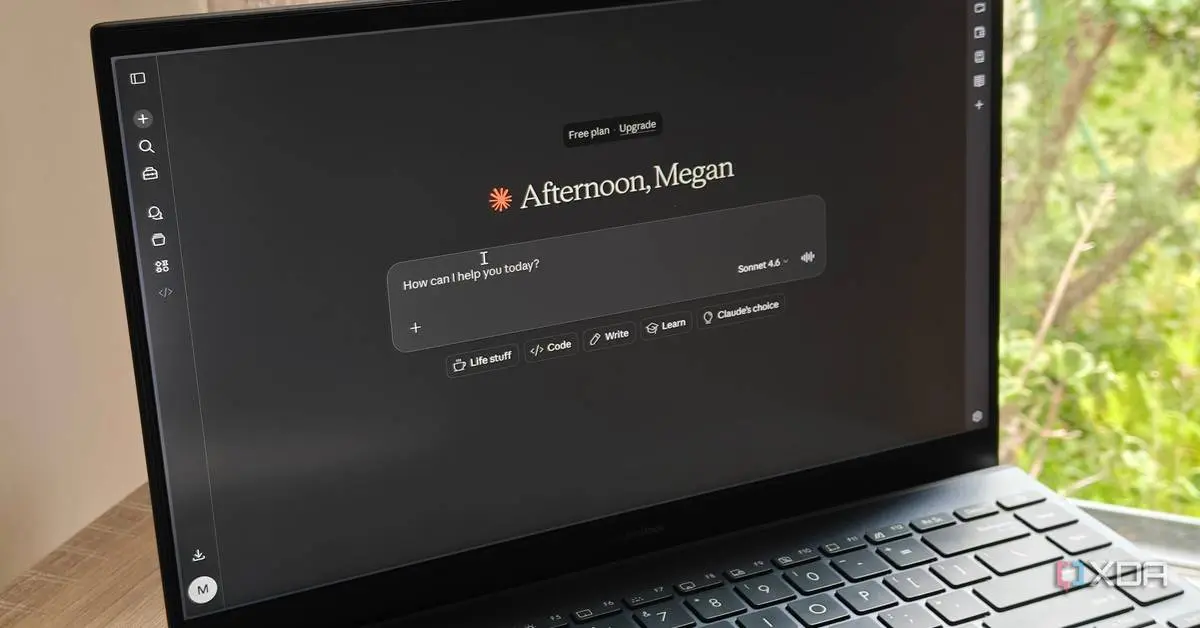
Source: XDA-Developers
Cherny explained that Anthropic's first-party tools like Claude Code are optimized to maximize prompt caching and reuse previously processed text to save on compute, while third-party tools often bypass these efficiencies. "Capacity is a resource we manage thoughtfully and we are prioritizing our customers using our products and API," Cherny stated
3
. The new pay-as-you-go billing tier shifts the cost burden directly onto users, with some facing increases of up to 50 times their previous monthly outlay2
.Developer Community Reacts to OpenClaw Restrictions
The developer community response has ranged from analytical acceptance to sharp criticism. Peter Steinberger, creator of OpenClaw who joined OpenAI in February 2026, called the decision a betrayal of open-source developers. "First they copy some popular features into their closed harness, then they lock out open source," Steinberger wrote on X
3
. The timing has raised eyebrows given that Anthropic recently added capabilities to Claude Code—such as messaging through Discord and Telegram—that mirror features that helped OpenClaw gain popularity3
.
Source: The Next Web
OpenClaw, originally released in November 2025, became one of the fastest-growing GitHub projects in history, accumulating 247,000 stars and 47,700 forks by March 2026
2
. Steinberger and investor Dave Morin attempted to negotiate with Anthropic but only managed to delay enforcement by one week2
. Users like @ashen_one voiced concerns that switching to an API key or extra usage bundles would make Claude "far too expensive to make it worth using"3
.Related Stories

Terms of Service and Transition Support
Cherny noted in replies that using OpenClaw on a Claude subscription wasn't permitted under the Terms of Service in the first place, framing the change as enforcing existing rules rather than creating new restrictions
1
. To ease the transition, Anthropic is offering up to a 30% discount on pre-purchased extra usage bundles and providing Claude subscribers with a one-time credit equal to one month's subscription fee, which must be redeemed by April 17th1
. Anthropic plans to extend the restriction to all third-party AI agent frameworks in the coming weeks2
, signaling a broader shift away from supporting external harnesses under subscription plans and toward usage limits that better align with the company's capacity management strategy.References
Summarized by

Navi
[1]
Related Stories
Anthropic Adjusts Claude Usage Limits During Peak Hours, Frustrating Devoted Users
27 Mar 2026•Technology

Anthropic Implements Weekly Rate Limits on Claude Code Amid Excessive Usage Concerns
29 Jul 2025•Technology

Anthropic Launches Claude Max: A $200 Monthly AI Plan for Power Users
10 Apr 2025•Business and Economy

Recent Highlights
1
Google releases Gemma 4 with Apache 2.0 license, enabling unrestricted local AI on devices
Technology

2
AI Models Lie and Deceive to Protect Other AI Models From Deletion, Study Reveals
Science and Research

3
Anthropic discovers functional emotions in Claude that actively shape AI behavior and decisions
Science and Research

Recent Highlights
Today's Top Stories



Your Daily Dose of Curated AI News
Don’t drown in AI news. We cut through the noise - filtering, ranking and summarizing the most important AI news, breakthroughs and research daily. Spend less time searching for the latest in AI and get straight to action.

