3 Sources
3 Sources
[1]
Apple at 50: The iPhone maker 'blew a 5-year lead' on AI, but former insiders say it can still win
CUPERTINO, Calif. -- Nasdaq brought its market open festivities to Apple's sprawling Silicon Valley headquarters on Tuesday, the eve of the company's 50th birthday. From a desk inside Apple Park, the ring-shaped campus that Steve Jobs spent his last years helping design, Tim Cook rang the opening bell and, in the process, ushered in the iPhone maker's second half-century. It was a celebratory occasion, but one arriving at a pivotal point for an iconic American company that faces major challenges today and in the years ahead as the technology industry gets swept up by artificial intelligence. Prior to the AI boom, which started with the launch of OpenAI's ChatGPT in late 2022, Apple was able to win by dominating the consumer device market and adding its Siri voice assistant across its product portfolio. The pitch has always been simple: Pay a premium for a device, and trust that what happens on it stays yours, whether it's messages, photos or notes. Personal data isn't fuel for an advertising engine. Two of Apple's megacap tech peers took the opposite approach. Google and Meta are the giants of digital advertising, giving away their key services for free and making tens of billions of dollars a year in profit by targeting users with promotions. Apple's principle came from Jobs, its co-founder and longtime CEO. Cook, his successor, has been preaching it since becoming CEO in 2011, shortly before Jobs' death. For much of Apple's 50-year history, it's been gospel in Cupertino. That's why Apple's latest move feels so out of character.
[2]
Apple at 50: Beyond the iPhone, a new growth playbook takes shape
Apple's making a big move, shifting gears to become a major player in AI and services. This isn't just a tweak; it's crucial for their future growth. While their hardware will still be around, the real focus is on blending services and smart AI to create a seamless experience across all your Apple devices. As Apple turns 50, the company that once defined personal computing -- and later reshaped the modern smartphone industry with the iPhone -- is staring at a quieter, but potentially more consequential transition. The next decade may not be about a single breakthrough device, but about whether Apple can evolve into an AI-first, services-led company without losing its hardware edge. Also Read: Apple at 50: India was once a journey. Now it's a growth engine The next growth engine: services, but not alone Apple's growth over the past five decades has come in distinct waves. The Apple II and Macintosh established computing, the iPod and iTunes reshaped media, and the iPhone created the modern mobile economy. More recently, growth has been steadied by services and wearables rather than a single breakout device. "Apple will focus on... growing revenue based on users, so they can sell more subscriptions, more services," Francisco Jeronimo, VP for Data and Analytics at IDC EMEA, told The Economic Times. "This is one of the fastest growing components of the company... and it guarantees a low churn from users." In a January 2025 note, Morgan Stanley analysts led by Erik Woodring wrote that "services remains Apple's most durable growth driver," citing high-margin subscriptions and ecosystem lock-in as key advantages. The note projected mid-teens growth in services over the next few years. That aligns with broader industry estimates. Nabila Popal, Senior Director at IDC, said services are "the fastest growing group," though she does not expect them to overtake hardware revenues "in the next five years... but perhaps closer to 10 years," contingent on how Apple executes its AI strategy. The opportunity, as Jeronimo points out, is still underpenetrated: "The percentage of users using those services is still very low... so there's a massive opportunity for them to grow." Hardware isn't dead, it's just evolving Even as services scale, Apple's hardware ecosystem remains the core engine -- and the foundation for everything else. "Smartphones... will remain an anchor for Apple's revenues rather than a major growth driver," said Prachir Singh, Senior Research Analyst at Counterpoint Research. Future improvements, he added, are likely to be "incremental." That puts pressure on Apple to find new hardware categories. Not necessarily to replace the iPhone, but to expand the ecosystem around it. Jeronimo frames it as a strategy of "companion devices": "When someone buys an iPhone, it's likely they will buy a Mac... an iPad... an Apple Watch." New devices -- from smart glasses to rings -- are about "slicing the cake into more pieces" to grow the installed base. Reports from Mark Gurman at Bloomberg and analyst Ming-Chi Kuo suggest Apple is working on several such bets like foldable iPhones, smart home hubs, and lightweight AR glasses. But timelines remain uncertain, with Kuo indicating foldables may not arrive before 2026 and true AR glasses closer to the end of the decade. Wearables, however, are seen as a nearer-term growth lever. "Wearables... have significant scope to become more intelligent," Singh said, pointing to advances in battery efficiency and AI as enablers. But success will hinge on use cases, not just hardware. Jeronimo points to the Apple Watch as a template. "When they understood that the opportunity was with healthcare and well-being, the sales really went through," he said. "That's the same with other wearables... they need to bring the right use case for people to say, 'I need this.'" That challenge is already visible in Apple's mixed reality push. The Vision Pro, while technologically advanced, has struggled with adoption due to limited use cases and high pricing -- a reminder that not every Apple product becomes an iPhone-scale success. Still, Singh sees spatial computing as "a longer-term opportunity... 5-10+ years," with a potential portfolio ranging from high-end headsets to more accessible smart glasses. Also Read: Design, disruption, and drama: Apple's most defining controversies AI: the make-or-break moment If there is one theme that cuts across every analyst conversation, it is that Apple's future will be defined by how it handles AI. "This will be the defining year of Apple's AI strategy," Popal said, pointing to upcoming updates to Siri and deeper integration with external models. "If executed right, it won't matter how late Apple was... the moment is now." Jeronimo is more blunt about the stakes. AI, he said, is "probably the technology that is more detrimental for Apple long term, if they don't get it right." The shift is not just technical -- it's about how users interact with devices. "Smartphones are not smart anymore," Jeronimo said. "AI enables a completely different experience... moving from apps to an intelligent assistant that acts on your behalf." In that world, the interface itself changes. Users no longer open apps -- they ask, and the system responds, pulling context from across services, devices, and data. Apple has begun moving in that direction with its "Apple Intelligence" push, combining on-device processing with cloud-based models. But critics argue it is playing catch-up. Even so, Jeronimo cautions against writing Apple off. "Apple was never the company that brought features first -- they want to provide the best experience," he said. "Consumers don't care where it comes from... they care about the experience." That could mean more partnerships. Both Jeronimo and Popal point to a model where Apple integrates multiple AI systems -- potentially including those from Google or others -- while positioning Siri as the interface layer. If executed well, Popal said, such an approach "may be the saving grace for Apple and provide consumers choice." Leadership: continuity over disruption Overlaying all of this is the question of leadership. Tim Cook has led Apple for over a decade, steering it through supply chain crises, regulatory scrutiny, and a transition toward services. According to Popal, "there is no reason for anyone to demand a change" so far, given Apple's consistent growth under his leadership. But succession is inevitable -- and increasingly discussed. John Ternus, Apple's senior vice president of hardware engineering, is widely seen as a leading candidate. Popal describes him as "a great suitor given his 20-year Apple tenure, technical expertise and involvement" across major products. If he does take over, the expectation is continuity, not disruption. "I doubt leadership change... will create a material shift in culture," Popal said, noting that any successor is likely to be an internal candidate "ingrained in Apple's vision." Jeronimo agrees saying that Apple's strength lies in leaders who understand its long-term philosophy. "They need someone who really knows the company... rooted to the basics," he said, adding that the next CEO must also be "a visionary" capable of navigating new technological shifts. The risk: missing the next shift For all its strengths -- brand, ecosystem, capital -- Apple faces a familiar risk if it fails to adapt to a paradigm shift. "We've seen multiple times... companies that were at the top... like Nokia and BlackBerry," Jeronimo said. Apple, he added, is acutely aware of those examples. For IDC, the biggest risk is clear. "Apple's ability to execute a strategy in an AI-first world will be its next defining... moment," Popal said. "That is the biggest risk." Also Read: Apple's Biggest Hits: iPhone, Mac, and the products that changed the game The sixth decade Apple's first 50 years were defined by category-defining products. Its next decade may be defined by something less visible, but more profound like the transition from a hardware company to what Popal calls "a leading AI-integrated solutions and services company." That shift will not hinge on a single device. It will depend on whether Apple can connect its ecosystem -- devices, services, and AI -- into a seamless experience that users don't just use, but rely on. Or, as Jeronimo puts it, the goal is simple, even if execution is not. Keep building products and services that "continue to excite their customers" -- and stay ahead of whatever comes next.
[3]
Apple Turns 50 -- Now Faces AI Test - Apple (NASDAQ:AAPL)
Ives highlights Apple's unmatched legacy, from the Macintosh to the iPhone, and its edge in controlling the entire tech stack -- chips, software, and services -- with 2.5 billion iOS devices globally. This ecosystem now positions Apple to lead in AI, but it also raises the stakes. WWDC: The AI Moment Apple has come a long way since 1997, when the Cupertino, California-based company was on the brink of collapse and posted a $1 billion loss. That year, Apple's late co-founder Steve Jobs returned, streamlined the focus on just a few core products, and introduced the "Think Different" campaign, which helped restore consumer confidence. Also in 1997, Apple secured a critical $150 million investment from Microsoft, which helped keep the company afloat. Nearly three decades later, Apple is one of the most successful and valuable companies in the world, and on pace to cross $1 billion in AI revenue this year from commissions alone. Ives expects Apple to lay out its long-awaited AI strategy at the company's annual Worldwide Developers Conference (WWDC) in June. He expects a sharper focus on Siri's evolution into a more personalized, context-aware assistant. After last year's muted showing, expectations are high. He points to potential integration with Google's Gemini models, alongside new developer tools and APIs aimed at embedding AI deeper across Apple's ecosystem -- with privacy and on-device processing as key differentiators. Hardware Meets AI Tailwinds 2026 is set to be a pivotal year for Apple's product cycle. Ives points to AI-ready devices, advanced silicon, and a potential foldable iPhone as key catalysts. But the real shift may lie ahead, with growing anticipation for a subscription-driven AI services layer. After 50 years of reshaping tech interaction, Ives argues the next challenge for Apple is both simpler and harder: turning its ecosystem into an AI powerhouse. Image: Shutterstock Market News and Data brought to you by Benzinga APIs To add Benzinga News as your preferred source on Google, click here.
Share
Share
Copy Link
As Apple celebrates its 50th anniversary, the tech giant confronts a defining moment in artificial intelligence. Former insiders acknowledge Apple blew a 5-year lead on AI, but the company's upcoming WWDC in June could reveal a long-awaited AI strategy. With 2.5 billion iOS devices globally and a strategic shift toward becoming an AI-first, services-led company, Apple's next chapter depends on executing its AI vision while maintaining its hardware edge.
Nasdaq brought its market open festivities to Apple Park on Tuesday, marking the eve of Apple's 50th anniversary as Tim Cook rang the opening bell from the company's ring-shaped Silicon Valley headquarters
1
. The celebratory milestone arrives at a pivotal moment for the tech giant, as the company confronts mounting pressure to prove it can compete in an industry transformed by artificial intelligence. Former insiders acknowledge that Apple blew a 5-year lead on AI, with the technology boom starting when OpenAI launched ChatGPT in late 20221
. Yet analysts suggest the company still has a path to victory if it executes its long-awaited AI strategy correctly.
Source: ET
Apple AI now represents both the company's greatest challenge and most significant opportunity. Francisco Jeronimo, VP for Data and Analytics at IDC EMEA, described AI as "probably the technology that is more detrimental for Apple long term, if they don't get it right"
2
. The strategic shift extends beyond technology to Apple's entire business model. The company is transitioning toward becoming an AI-first, services-led company while attempting to maintain its hardware ecosystem advantage2
. This new growth playbook marks a departure from Apple's historical reliance on breakthrough devices, instead focusing on services-led growth and deeper AI integration across its 2.5 billion iOS devices globally3
.
Source: Benzinga
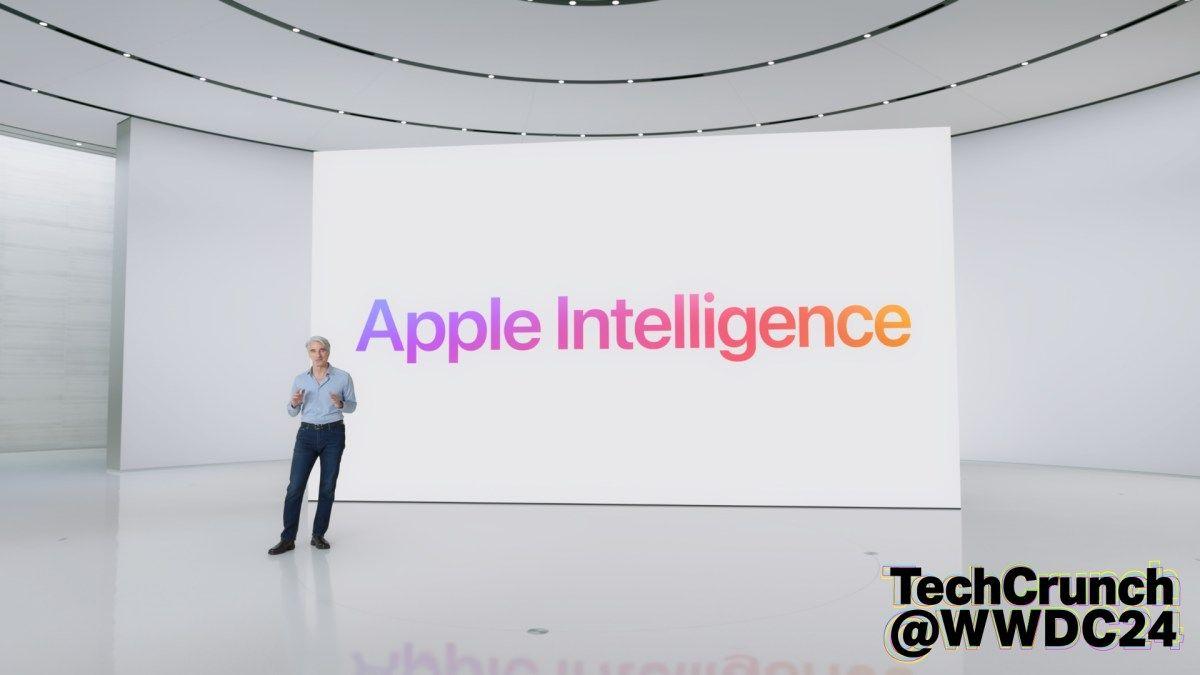
All eyes turn to the Worldwide Developers Conference in June, where Apple faces AI test from investors and consumers alike. Wedbush analyst Dan Ives expects Apple to unveil its long-awaited AI strategy at WWDC, with particular focus on transforming Siri into an advanced, personalized Siri that functions as a more context-aware assistant
3
. Potential integration with Google Gemini models alongside new developer tools and APIs could embed AI deeper across Apple's ecosystem, with user privacy and on-device processing serving as key differentiators3
. Nabila Popal, Senior Director at IDC, emphasized that "if executed right, it won't matter how late Apple was... the moment is now"2
.Related Stories
Morgan Stanley analysts project mid-teens growth in subscription services over the next few years, citing high-margin subscriptions and ecosystem lock-in as key advantages
2
. Services remain Apple's most durable growth driver, though IDC estimates suggest they won't overtake hardware revenues for approximately 10 years, contingent on successful AI execution2
. The iPhone will remain an anchor for revenues rather than a major growth driver, with future improvements likely to be incremental according to Prachir Singh, Senior Research Analyst at Counterpoint Research2
. Apple's strategy now focuses on companion devices like Apple Watch, iPad, and Mac to expand the installed base, with reports suggesting work on foldable iPhones, smart home hubs, and lightweight AR glasses, though Vision Pro has struggled with adoption due to limited use cases2
. Ives expects Apple to reach $1 billion in AI revenue this year from commissions alone, positioning the company to become an AI powerhouse if it successfully integrates AI-ready devices with a potential subscription-driven AI services layer3
.Summarized by
Navi
[1]
1
Policy and Regulation

2
Technology

3
Technology