Anthropic cofounder says human skills will matter more than ever as AI reshapes the job market


2 Sources
2 Sources
[1]
Anthropic cofounder says studying the humanities will be 'more important than ever' and reveals what the AI company looks for when hiring | Fortune
Daniela Amodei, who cofounded Anthropic with her brother Dario, said uniquely human qualities will actually be more critical in the age of AI, not less. In an interview with ABC News that aired on Saturday, she said the number of jobs that AI could do without help from people is "vanishingly small." At the same time, even the most cognitively challenging tasks that humans excel at can also be augmented by AI. "I continue to believe that humans plus AI together actually create more meaningful work, more challenging work, more interesting work, high-productivity jobs," Amodei added. "And then I think it will also open the aperture to a lot of access and opportunity for many people." That doesn't mean the future employment landscape will require a technical background. Indeed, the release of Anthropic's latest AI-coding tools sparked a massive selloff among tech stocks this past week as the technical expertise needed to write and maintain code is expected to fall sharply. For her part, Amodei majored in literature at the University of California, Santa Cruz. After working briefly as a Capitol Hill staffer, she pivoted to the tech sector, joining fintech company Stripe then OpenAI. In 2020, she left the AI startup to cofound Anthropic, where Daniela is the president and manages alongside her CEO brother. "The things that make us human will become much more important instead of much less important," she told ABC News. "And what I mean by that is when we look to hire people at Anthropic today, we look for people who are great communicators, who have excellent EQ and people skills, who are kind and compassionate and curious and want to help other people." That echoes what JPMorgan CEO Jamie Dimon has said about the growing importance of "soft skills," such as having a high emotional quotient. While AI will still eliminate some jobs, young people should lean into critical thinking and communication skills, including how to write well and how to perform well in a meeting. If they can get those right, "You'll have plenty of jobs," he said in December. At the end of the day, Amodei said, people still enjoy interacting with other humans, with very smart and capable AI complementing them. "I actually think studying the humanities is going to be more important than ever," she explained. "A lot of these models are actually very good at STEM. But I think this idea that there are things that make us uniquely human -- understanding ourselves, understanding history, understanding what makes us tick -- I think that will always be really, really important. And I think the ability to have critical thinking skills and learn how to interact with other people will be more important in the future, rather than less." To be sure, more Gen Zers are abandoning college as a necessary step in a successful career path, turning instead to trade schools and working in hands-on fields like manufacturing, construction and maintenance. But for those still on the white-collar track, other tech leaders have similarly highlighted the importance of soft skills. IBM CEO Ginni Rometty told Fortune in 2023 that when generative AI fully integrates into the workforce, it will put a premium on abilities like collaboration, judgment, and critical thinking. And Microsoft CEO Satya Nadella said in November that as AI takes over more analytical and technical tasks, emotional intelligence and empathy are becoming increasingly important. "IQ has a place, but it's not the only thing that's needed in the world," he said on an episode of Axel Springer CEO Mathias Döpfner's MD Meets podcast.
[2]
'Humans Plus AI Together Actually Create More Meaningful Work,' Says Anthropic Cofounder Daniela Amodei As Job Market Shifts - Alphabet (NASDAQ:GOOG), Alphabet (NASDAQ:GOOGL)
Daniela Amodei, cofounder of AI startup Anthropic, says that as artificial intelligence (AI) reshapes the job market, uniquely human skills like communication, empathy, and critical thinking will become essential for career success. AI Will Augment, Not Replace, Human Jobs On Saturday, in an interview with ABC News, Amodei emphasized that the number of jobs AI can fully handle without human involvement is "vanishingly small." She highlighted that even the most cognitively demanding tasks are enhanced, not replaced, by AI. "I continue to believe that humans plus AI together actually create more meaningful work, more challenging work, more interesting work, high-productivity jobs," Amodei said. She added that AI could also broaden access to opportunities for many people. Despite the growing influence of AI, Amodei's own path shows that technical expertise is not the only route to success. She majored in literature at the University of California, Santa Cruz, worked briefly as a Capitol Hill staffer, then moved into tech, including positions at Stripe and OpenAI, before cofounding Anthropic with her brother Dario in 2020. When hiring, Anthropic prioritizes qualities like communication, emotional intelligence, curiosity, and compassion. "The things that make us human will become much more important instead of much less important," she said. AI's Growing Influence On Jobs And Skills At the same time, experts warned that heavy reliance on AI could weaken human skills. Innovation theorist John Nosta said AI could boost short-term performance while eroding underlying abilities and distorting self-confidence, a concern echoed by academic research showing declines in critical thinking. Meanwhile, executives at the World Economic Forum said AI was beginning to reshape hiring, particularly at the junior level, without causing widespread job losses. Photo courtesy: Shutterstock Market News and Data brought to you by Benzinga APIs To add Benzinga News as your preferred source on Google, click here.
Share
Share
Copy Link
Daniela Amodei, cofounder of Anthropic, argues that uniquely human qualities like communication, empathy, and critical thinking will become more critical in the age of AI, not less. She reveals that Anthropic prioritizes these soft skills in its hiring process, even as AI takes on more technical tasks. Her literature background and career path underscore the growing value of humanities education.
Anthropic Cofounder Champions Human Skills in AI Era
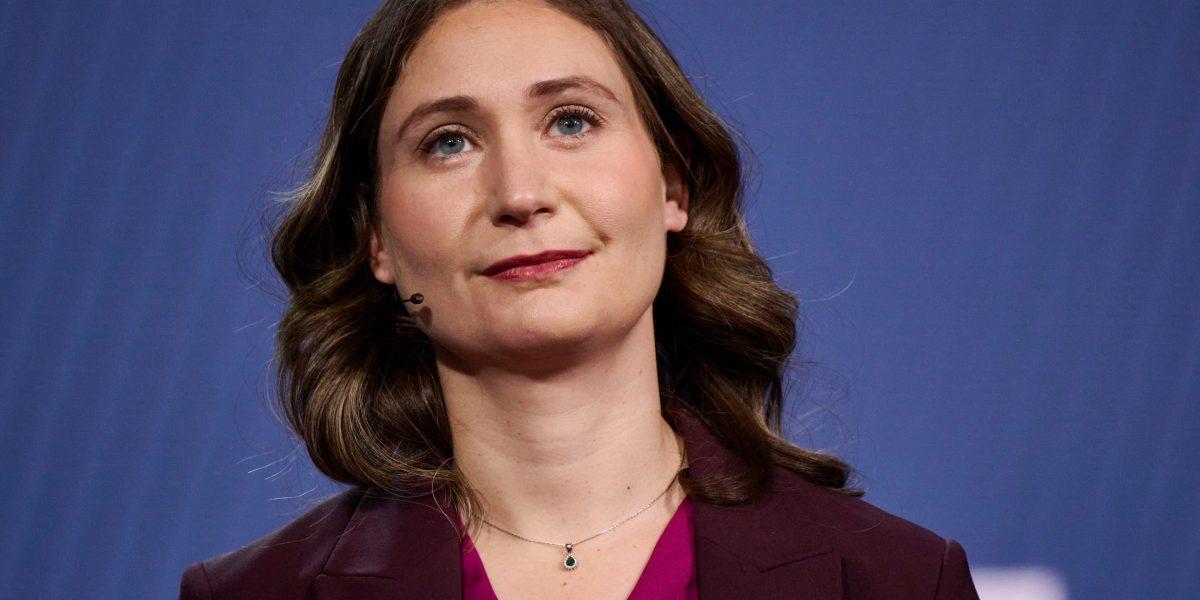
Daniela Amodei, who cofounded Anthropic with her brother Dario, is making a compelling case for why human skills will become more valuable as AI transforms the workforce. In an interview with ABC News that aired on Saturday, she emphasized that the number of jobs AI could handle without human involvement is "vanishingly small," while even the most cognitively demanding tasks benefit from AI augmentation
1
.
Source: Fortune
"I continue to believe that humans plus AI together actually create more meaningful work, more challenging work, more interesting work, high-productivity jobs," Amodei stated
2
. She added that this collaboration will also broaden access and opportunity for many people, suggesting AI and jobs can coexist productively rather than compete.What Anthropic Looks for in the Hiring Process
Amodei's perspective on talent acquisition reveals a striking departure from traditional tech sector priorities. When Anthropic evaluates candidates, the company looks for people who are "great communicators, who have excellent EQ and people skills, who are kind and compassionate and curious and want to help other people," she told ABC News
1
. This emphasis on emotional intelligence and communication skills reflects a broader shift in how tech leaders view the future workforce.Her own career trajectory supports this thesis. Amodei majored in literature at the University of California, Santa Cruz, worked briefly as a Capitol Hill staffer, then pivoted to tech with roles at Stripe and OpenAI before cofounding Anthropic in 2020, where she now serves as president
1
. This path demonstrates that technical backgrounds aren't the only route to leadership in AI companies.Humanities Education Gains New Relevance
"I actually think studying the humanities is going to be more important than ever," Amodei explained, noting that many AI models excel at STEM tasks
1
. She argues that understanding ourselves, history, and what makes us tick will always be critical. The ability to develop critical thinking and learn how to interact effectively with others will become more important in the future, not less.This perspective aligns with observations from other tech leaders. Satya Nadella said in November that as AI handles more analytical and technical tasks, empathy and emotional intelligence are becoming increasingly important
1
. JPMorgan CEO Jamie Dimon echoed similar sentiments in December, advising young people to lean into critical thinking and communication skills, including writing well and performing effectively in meetings1
.Related Stories

Job Market Shifts and Emerging Concerns
While Amodei presents an optimistic vision of how AI will augment human jobs, some experts warn of potential downsides. Innovation theorist John Nosta cautioned that heavy reliance on AI could boost short-term performance while eroding underlying abilities and distorting self-confidence, a concern supported by academic research showing declines in critical thinking
2
.Executives at the World Economic Forum noted that AI is beginning to reshape hiring, particularly at junior level jobs, though without causing widespread job losses yet
2
. The release of Anthropic's latest AI-coding tools sparked a massive selloff among tech stocks this past week, as the technical expertise needed to write and maintain code is expected to fall sharply1
.
Source: Benzinga
What remains clear is that the workforce is entering a period of significant transformation. For professionals navigating these changes, Amodei's message is straightforward: the things that make us uniquely human will become much more important instead of much less important
1
. As AI capabilities expand, the premium on distinctly human qualities like empathy, judgment, and the ability to connect with others continues to rise.References
Summarized by

Navi
Related Stories
AI's Impact on the Workplace: Enhancing Human Skills Rather Than Replacing Jobs
21 Jan 2025•Business and Economy

AI forces skills reset across workforce as job security shifts from degrees to adaptability
02 Mar 2026•Business and Economy

Anthropic Engineers Reveal AI Productivity Gains Come With Deep Concerns About Job Security
03 Dec 2025•Business and Economy
Recent Highlights
1
OpenAI shuts down Sora video app after six months, ending Disney's $1 billion investment deal
Technology

2
AI-Generated Val Kilmer to Posthumously Appear in As Deep as the Grave After His Death
Entertainment and Society

3
Supermicro Co-Founder Indicted in $2.5 Billion Nvidia AI Chip Smuggling Scheme to China
Policy and Regulation

Recent Highlights
Today's Top Stories






Your Daily Dose of Curated AI News
Don’t drown in AI news. We cut through the noise - filtering, ranking and summarizing the most important AI news, breakthroughs and research daily. Spend less time searching for the latest in AI and get straight to action.

