Anthropic debuts powerful AI model for cybersecurity as tech giants unite under Project Glasswing


21 Sources
21 Sources
[1]
Anthropic debuts preview of powerful new AI model Mythos in new cybersecurity initiative | TechCrunch
Anthropic on Tuesday released a preview of its new frontier model, Mythos, which it says will be used by a small coterie of partner organizations for cybersecurity work. In a previously leaked memo, the AI startup called the model one of its "most powerful" yet. The model's limited debut is part of a new security initiative, dubbed Project Glasswing, in which more than 40 partner organizations will deploy the model for the purposes of "defensive security work" and to secure critical software, Anthropic said. While it was not specifically trained for cybersecurity work, the preview will be used to scan both first-party and open-source software systems for code vulnerabilities, the company said. Anthropic claims that, over the past few weeks, Mythos identified "thousands of zero-day vulnerabilities, many of them critical." Many of the vulnerabilities are one to two decades old, the company added. Mythos is a general-purpose model for Anthropic's Claude AI systems that the company claims has strong agentic coding and reasoning skills. Anthropic's frontier models are considered its most sophisticated and high-performance models, designed for more complex tasks, including agent-building and coding. The partner organizations previewing Mythos include Amazon, Apple, Broadcom, Cisco, CrowdStrike, the Linux Foundation, Microsoft, and Palo Alto Networks. As part of the initiative, these partners will ultimately share what they've learned from using the model so that the rest of the tech industry can benefit from it. The preview is not going to be made generally available, Anthropic said. Anthropic also claims that it has engaged in "ongoing discussions" with federal officials about the use of Mythos, although one would have to imagine that those discussions are complicated by the fact that Anthropic and the Trump administration are currently locked in a legal battle after the Pentagon labeled the AI lab a supply-chain risk over Anthropic's refusal to allow autonomous targeting or surveillance of U.S. citizens. News of Mythos was originally leaked in a data security incident reported last month by Fortune. A draft blog about the model (then called "Capybara") was left in an unsecured cache of documents available on a publicly inspectable data lake. The leak, which Anthropic subsequently attributed to "human error," was originally spotted by security researchers. "'Capybara' is a new name for a new tier of model: larger and more intelligent than our Opus models -- which were, until now, our most powerful," the leaked document said, adding later that it was "by far the most powerful AI model we've ever developed," according to the report. In the leak, Anthropic claimed that its new model far exceeded performance areas (like "software coding, academic reasoning, and cybersecurity") met by its currently public models, and that it could potentially pose a cybersecurity threat if weaponized by bad actors to find bugs and exploit them (rather than fix them, which is how Mythos will be deployed). Last month, the company accidentally exposed nearly 2,000 source code files and over half a million lines of code via a mistake it made in the launch of version 2.1.88 of its Claude Code software package. The company then accidentally caused thousands of code repositories on Github to be taken down as it attempted to clean up the mess.
[2]
Anthropic Teams Up With Its Rivals to Keep AI From Hacking Everything
Following leaked revelations at the end of March that Anthropic had developed a powerful new Claude model, the company formally announced Mythos Preview on Tuesday along with news of an industry consortium it has convened, known as Project Glasswing, to grapple with the cybersecurity implications of the new model and advancing capabilities more generally across the AI field. The group includes Microsoft, Apple, and Google as well as Amazon Web Services, the Linux Foundation, Cisco, Nvidia, Broadcom, and more than 40 other tech, cybersecurity, critical infrastructure, and financial organizations that will have private access to the model, which is not yet being generally released. The idea, in part, is simply to give the developers of the world's foundational tech platforms time to turn Mythos Preview on their own systems so they can mitigate vulnerabilities and exploit chains that the model develops in simulated attacks. More broadly, Anthropic emphasizes that the purpose of convening the effort is to kickstart urgent exploration of how AI capabilities across the industry are on the precipice, the company says, of upending current software security and digital defense practices around the world. "The real message is that this is not about the model or Anthropic," Logan Graham, the company's frontier red team lead, tells WIRED. "We need to prepare now for a world where these capabilities are broadly available in 6, 12, 24 months. Many things would be different about security. Many of the assumptions that we've built the modern security paradigms on might break." Models developed and trained by multiple companies have increasingly been able to find vulnerabilities in code and propose mitigations -- or strategies for exploitation. This creates a next generation of security's classic cat-and-mouse game in which a tool can aid defenders but can also fuel bad actors and make it easier to carry out attacks that were once too expensive or complex to be practical. "Claude Mythos preview is a particularly big jump," Anthropic CEO Dario Amodei said on Tuesday in a Project Glasswing launch video. "We haven't trained it specifically to be good at cyber. We trained it to be good at code, but as a side effect of being good at code, it's also good at cyber." He adds in the video that "more powerful models are going to come from us and from others. And so we do need a plan to respond to this." Anthropic's Graham notes that in addition to vulnerability discovery -- including producing potential attack chains and proofs of concept -- Mythos Preview is capable of more advanced exploit development, penetration testing, endpoint security assessment, hunting for system misconfigurations, and evaluating software binaries without access to its source code. In carrying out a staggered release of Mythos Preview, beginning with an industry collaboration phase, Graham says that Anthropic sought to draw on tenets of coordinated vulnerability disclosure, the process of giving developers time to patch a bug before it is publicly discussed. "We've seen Mythos Preview accomplish things that a senior security researcher would be able to accomplish," Graham says. "This has very big implications then for how capabilities like this should be released. Done not carefully, this could be a meaningfully accelerant for attackers." Project Glasswing partners, including some of Anthropic's competitors, struck a collaborative tone in statements as part of the launch. "Google is pleased to see this cross-industry cybersecurity initiative coming together," Heather Adkins, Google's vice president of security engineering, says in a statement. "We have long believed that AI poses new challenges and opens new opportunities in cyber defense."
[3]
Anthropic is launching a new AI model for cybersecurity
Anthropic is debuting a new AI model as part of a cybersecurity partnership with Nvidia, Google, Amazon Web Services, Apple, Microsoft, and other companies. Project Glasswing, as it's called, is billed as a way for large companies, and potentially even the government, to flag vulnerabilities in their systems with virtually no human intervention. Anthropic is offering its launch partners access to Claude Mythos Preview, a new general-purpose model that it's not currently planning to publicly release due to security concerns. Newton Cheng, the cyber lead for Anthropic's frontier red team, told The Verge that the model will ideally give cyber defenders a "head start" against adversaries. The partners will use the model to analyze their system to spot high-stakes vulnerabilities and help patch them up. Access is restricted to keep those same adversaries from using it to find weak points and conduct attacks. Though Claude Mythos Preview wasn't specifically trained for cybersecurity purposes, Anthropic said in a release that the model's "strong agentic coding and reasoning skills" are behind its cybersecurity advances. In an interview with The Verge, Newton Cheng, the cyber lead for Anthropic's frontier red team, declined to share specific details of the model's cybersecurity successes, but Anthropic's blog post said that in recent weeks, Mythos Preview has flagged "thousands of high-severity vulnerabilities, including some in every major operating system and web browser." Anthropic's blog post doesn't mention keeping humans in the loop for the model's cybersecurity sweeps; in fact, it highlights that the model identified vulnerabilities "and develop[ed] many related exploits -- entirely autonomously, without any human steering." Claude Mythos Preview's existence was first reported last month in a data leak, which Anthropic attributes to human error. Dianne Penn, a head of product management at Anthropic, told The Verge in an interview that the company is "taking steps in terms of solidifying our processes ... That was not related to software vulnerabilities in any way." Mythos Preview will be privately available to the company's Glasswing partners, which also include JPMorgan Chase, Broadcom, Cisco, CrowdStrike, the Linux Foundation, and Palo Alto Networks, plus about 40 other organizations that maintain or build software infrastructure. For now, Anthropic will help subsidize the cost of using it. The company says it will commit up to $100 million in usage credits, plus $4 million in direct donations to the Linux Foundation and the Apache Software Foundation, said Cheng. In the long term, as Anthropic and other AI companies face pressure to turn a profit, the program could evolve into a paid service that provides a new revenue stream -- if it works well enough for companies to keep using it. Despite its highly public recent clash with the Trump administration, Anthropic also said in the release that it has been in "ongoing discussions with US government officials about Claude Mythos Preview and its offensive and defensive cyber capabilities." When The Verge asked what that meant, Penn confirmed that the company had "briefed senior officials in the US government about Mythos and what it can do," and that the company is still "committed to working closely with all different levels of government." Cheng said that though Anthropic is "engaged with" the government, he declined to speak to exactly who the company had briefed.
[4]
Apple, Google, and Microsoft join Anthropic's Project Glasswing to defend world's most critical software
AI found thousands of hidden bugs in critical systems.Tech rivals unite to secure shared infrastructure risks.Cyberattack timelines shrink from months to minutes. Today, a group of the world's biggest tech companies is announcing what is essentially an AI-driven cybersecurity Manhattan Project. As the Cyberwarfare Advisor for the International Association of Counterterrorism & Security Professionals and part of the FBI's InfraGard Artificial Intelligence Threat and Mitigation Cross-Sector Council, I've spent decades profiling global threats, from lecturing at the National Defense University to leading nationwide cyberattack simulations. But the arrival of a new frontier AI from Anthropic represents a paradigm shift that even the most prepared infrastructure specialists are scrambling to navigate. There is a lot to unpack from this announcement, but before I go into the published details, I'm going to try to read between the lines. That's because the mere existence of this announcement means there's a lot that remains unsaid. The fact that all of these companies are working together has to be indicative of the scale of the threat and the scale of the project necessary to respond to it. Also: AI agents of chaos? New research shows how bots talking to bots can go sideways fast What I'm going to describe is both terrifying news and, at the same time, somewhat encouraging news. It's worrisome because clearly our entire cybersecurity infrastructure is at great risk due to advances in weapons-grade AI. Otherwise, these fierce competitors wouldn't be working together as announced today. It's somewhat encouraging because these intense competitors have chosen to work together to reduce that infrastructure vulnerability. This is wild news, folks. Project Glasswing is described in the announcement as: "An initiative that brings together Amazon Web Services, Anthropic, Apple, Broadcom, Cisco, CrowdStrike, Google, JPMorganChase, the Linux Foundation, Microsoft, Nvidia, and Palo Alto Networks in an effort to secure the world's most critical software." The name "glasswing" may mean nothing, or provide some insight into the project's overall intent. The glasswing butterfly, native to Central and South America, is so-named because of its transparent wings that allow it to camouflage itself in its surroundings. The butterfly is also unusually resilient, able to carry up to 40 times its own weight. Also: Why enterprise AI agents could become the ultimate insider threat At its core, this "coalition of the willing" is planning to deploy two defensive weapons: a new, unreleased AI model called Claude Mythos Preview and a pile of cash ($4 million in direct donations and $150 million in Claude usage credits). At first glance, this announcement looks like a highly coordinated PR strategy, some security theater. Another skeptical interpretation might be that these companies are creating a security cartel to lock out startups and other players. But I don't think that's the case. Based on statements from key players and the security vulnerabilities mentioned, I think this is something far more serious than a giant corporate PR photo op to make everyone look responsible with AI. Having spent time as an executive at Symantec and a team lead at Apple, I've seen firsthand how fiercely these companies guard their intellectual property. To see them hand over $150 million in credits and open up unreleased models to one another tells me the threat level has moved from competitive to existential. Also: Stop saying AI hallucinates - it doesn't. And the mischaracterization is dangerous The fact is, you don't see these specific companies cooperating like this unless the alternative is mutually assured destruction of their shared infrastructure. And no, I don't think that's hyperbole. Here's how Elia Zaitsev, CTO at cybersecurity company CrowdStrike, described the situation: "The window between a vulnerability being discovered and being exploited by an adversary has collapsed. What once took months now happens in minutes with AI." If the name CrowdStrike sounds familiar, it might be because back in 2024, the company pushed an update that accidentally bypassed safeguards and crashed millions of Windows systems all across the planet. If any one company knows what a bad day feels like, it's CrowdStrike. According to the announcement, "We formed Project Glasswing because the capabilities we've observed in Mythos Preview could reshape cybersecurity." Anthropic described the Mythos Preview model as a "general-purpose, unreleased frontier model" with strong agentic coding and reasoning skills. The company said, "Anthropic didn't train it specifically for cybersecurity." The company also said it doesn't plan to make Mythos Preview generally available, probably because it could be weaponized by adversarial actors. Also: AI agents are fast, loose, and out of control, MIT study finds According to Anthropic, "Over the past few weeks, Mythos Preview has identified thousands of zero-day vulnerabilities, many of them critical. The vulnerabilities it finds are often subtle or difficult to detect." Thousands. It turns out that many of the vulnerabilities are present in core, mission-critical software and have been in software deployed actively for the past 10 or 20 years. One such vulnerability was a 27-year-old bug just found in OpenBSD. For the record, OpenBSD is known for its security, and yet here was a mission-critical vulnerability nobody (at least none of the good guys) knew about. Another example is "a 16-year-old vulnerability in a widely used video software." Here's the scary gotcha. Apparently, the bug is in a line of code that automated testing tools previously considered the gold standard for security checks. The testing tools analyzed that line of code five million times over the years, and not once did they catch the problem. Think about this statement from Anthony Grieco, SVP and chief security and trust officer at Cisco, the global networking and infrastructure company that powers much of the internet and enterprise connectivity. Grieco said, "AI capabilities have crossed a threshold that fundamentally changes the urgency required to protect critical infrastructure from cyber threats, and there is no going back." Also: How Claude Code's new auto mode prevents AI coding disasters - without slowing you down No going back. He said, "The old ways of hardening systems are no longer sufficient. Providers of technology must aggressively adopt new approaches now." This fact is why he says Cisco joined Project Glasswing: "This work is too important and too urgent to do alone." That's a breathtaking statement, especially considering who it's coming from. Our modern civilization is built upon a networked technology infrastructure. Ranging all the way from giant power-generating stations down to our smart rings, just about everything is based on computers and networking. But this digital infrastructure foundation isn't all from one company or product. In fact, a huge proportion is based on open-source software, often written by lone unaffiliated developers. Even commercial billion-dollar products use software libraries built by individual coders. Also: How I used GPT-5.2-Codex to find a mystery bug and hosting nightmare - fast Historically, programmers and teams have hand-tested their code and then written test suites to put their code through its paces. I do this with my open-source security product. Before I deploy an update, I test it extensively. Afterward, I often share it with a subset of users for a beta test period. Generally speaking, my product has been quite solid. But last fall, I decided to feed the full source code to Claude Code and OpenAI's Codex. I asked each of them for a security evaluation. Both identified vulnerabilities that my testing process missed. In fact, while both found some of the same vulnerabilities, each AI found a few that the other AI did not. I quickly fixed the bugs the AIs identified. But what really interested me was the type of bugs identified. These weren't bugs in the actual code itself. I didn't make any of the classic coding errors that usually lead to vulnerabilities. What the AIs identified were behavioral quirks that would only manifest when combined with other software and configurations -- code I didn't write. But because the AIs could look beyond the code they were asked to investigate and instead considered the entire infrastructure environment in which the code was running, they were able to identify situational problems that could have turned into exploits. Also: I teamed up two AI tools to solve a major bug - but they couldn't do it without me This issue, on a much greater scale, is what Project Glasswing intends to tackle. The Project Glasswing announcement said: "No one organization can solve these cybersecurity problems alone: frontier AI developers, other software companies, security researchers, open-source maintainers, and governments across the world all have essential roles to play." There are hundreds of thousands of these components running on billions of devices and within millions of software programs. All it takes is one vulnerability in one piece of code, and critical infrastructure could fail. According to Igor Tsyganskiy, EVP of cybersecurity and Microsoft Research at Microsoft, "As we enter a phase where cybersecurity is no longer bound by purely human capacity, the opportunity to use AI responsibly to improve security and reduce risk at scale is unprecedented." A corollary is that bad actors can use AI aggressively and destructively, performing attacks at machine speed and finding vulnerabilities at a rate we've never encountered before. This initiative must not be taken out of context. To understand its relevance, we must also consider the current geopolitical situation. IT security teams have been dealing with cyberthreats for years. Whether it's criminals out for money, hacktivists intent on disruption, or nation states conducting a mix of data exfiltration, monetary extortion, identity theft, and infrastructure disruption, cyber threats are nothing new. I spent years investigating a key White House email controversy for my book, Where Have All The Emails Gone?, and even then, the vulnerability of our highest offices to basic infrastructure failures was staggering. But those were human-scale errors. What Project Glasswing is fighting is a machine-speed collapse of the entire defensive perimeter. Also: I built two apps with just my voice and a mouse - are IDEs already obsolete? There are two very new factors in play right now. The first has been the growth of AI capabilities. While Mythos Preview is intended as a defensive tool, do not doubt that adversaries are building their own frontier models as weapons of mass digital disruption. The second factor is the war in Iran. Back in 2012, I wrote a cyberwarfare profile of Iran, exploring its internal capabilities to wage cyberwarfare. Back then, I noted that Iran prioritizes higher education in science and math. While the Iranian government censored the internet, almost a quarter of Iranian citizens were online. Today, almost 80% are online. My conclusion in 2012 is even more valid today. I said, "The point of all this is to showcase that Iran has substantial connectivity, resources, and educated citizenry, more than enough to fuel forays into cybercrime, cyberterrorism, and cyberwarfare itself." Combine that with access to frontier-level AI technology, and it's fair to expect an intense level of cyberattacks at a rate and ferocity never seen before, leveraging exploits previously hidden in the complexity of the overall infrastructure. Also: I used Gmail's AI tool to do hours of work for me in 10 minutes - with 3 prompts It's important to acknowledge the ongoing issues Anthropic has had recently with the US Government. The Project Glasswing announcement obliquely reflects this situation: "Anthropic has also been in ongoing discussions with US government officials about Claude Mythos Preview and its offensive and defensive cyber capabilities." This is the only time in the announcement that Mythos was described as capable of supporting "offensive" capabilities. I invite the reader to draw their own conclusions about that detail. My take on it is that Mythos could be potentially destructively capable if that kind of action were to become necessary. That offensive capability may also be why Anthropic is limiting the release to a defined set of participants and not making it available to the world at large. The announcement also said: "Securing critical infrastructure is a top national security priority for democratic countries. The emergence of these cyber capabilities is another reason why the US and its allies must maintain a decisive lead in AI technology." Also: Anthropic's new warning: If you train AI to cheat, it'll hack and sabotage too Earlier this year, the US government designated Anthropic as a supply chain risk. A side effect of this designation was that defense contractors were instructed to stop using Anthropic products in anything that could be tangentially considered related to government defense work. That designation would have affected the government contracts of a number of Project Glasswing participants had they chosen to continue using Claude. However, on March 26, US District Court Judge Rita Lin blocked that restriction, temporarily allowing defense contractors to continue to use Claude AI products. I see two possible between-the-lines reads here: This is how the Project Glasswing release explained the situation: "The work of defending the world's cyber infrastructure might take years; frontier AI capabilities are likely to advance substantially over just the next few months. For cyber defenders to come out ahead, we need to act now." If you're going to pay real attention to the infrastructure risk posed by thousands of hidden vulnerabilities, you have to take into account the individual open-source developers operating independently. There is an enormous ecosystem based on all those individuals, each modifying and checking in their own code, to centralized repositories. While the nature of open source means anyone (and any company) can read the code, checking in modifications is limited to the developers with commit access to the project. Also: Switching to Claude? How to take your ChatGPT memories with you It is certainly possible for others to fork the project (create their own copy that is also distributed). But doing so would not immediately solve any software dependency risk. That issue is because there are automated systems across the internet built to incorporate known packages into their distributions. Forking a project would require all those automated systems to change the source of their code updates. So, when Mythos Preview finds a vulnerability, how does it reach the proper developer for repair? Project Glasswing is taking two approaches. The first is to donate a Claude Max subscription for Claude Opus and Sonnet to any verifiable open-source developer who asks. That's not access to Mythos Preview, but even Claude Opus 4.6 can help identify bugs. To apply for Claude Max grants, maintainers interested in access can apply through the Claude for Open Source program. When I asked about it, Anthropic told me, "We've donated $2.5M to Alpha-Omega and OpenSSF through the Linux Foundation, and $1.5M to the Apache Software Foundation to enable the maintainers of open-source software to respond to this changing landscape." OpenSSF is the Open Source Security Foundation. Their mission is to "Make it easier to sustainably secure the development, maintenance, release, and consumption of open-source software. This includes fostering collaboration within and beyond the OpenSSF, establishing best practices, and developing innovative solutions." Alpha-Omega, part of the Linux Foundation, serves: "As a helping hand and funding catalyst that supports the maintainers, communities, and ecosystems where security investment can have the greatest impact." The Apache Software Foundation also supports a great many projects that provide critical infrastructure across the internet. While funding goes to these organizations, their role in high-vulnerability projects will be to facilitate outreach to individual developers and to possibly provide funding for the time required to implement fixes. The challenge will be that many of the key developers for mission-critical components have other obligations and time commitments. On the other hand, if any group can wrangle these very independent developers, it's the various open-source foundations that have been developer-wrangling ever since they got started. Jim Zemlin, CEO of the Linux Foundation, said, "In the past, security expertise has been a luxury reserved for organizations with large security teams. Open source maintainers, whose software underpins much of the world's critical infrastructure, have historically been left to figure it all out on their own." Here's something to consider. He said, "Open source software constitutes the vast majority of code in modern systems, including the very systems AI agents use to write new software." He also addressed the funding and time concerns. He said, "By giving the maintainers of these critical open source codebases access to a new generation of AI models that can proactively identify and fix vulnerabilities at scale, Project Glasswing offers a credible path to changing that equation. This is how AI-augmented security can become a trusted sidekick in every maintainer's workflow, not just for those who can afford expensive security teams." My take on this approach is that it's intriguing to see these arch-competitors apparently working together to solve cybersecurity issues. I'm also curious about how much of this approach proves to be merely acting for the cameras, and how much will impact our fundamental digital infrastructure. I balance that concern with one that's more visceral. This announcement, and the awareness of what a Mythos-style AI can do, tells us that we are at a far greater risk than even we cyberwarfare specialists had predicted. Given the volatile state of the world today, Project Glasswing could be the last best hope, or it could turn out to be just another PR effort that actually does nothing to prevent severe infrastructure disruption. Do you see Project Glasswing as a genuine defensive effort, or more of a coordinated industry power move to control access to advanced AI security tools? Let us know in the comments below.
[5]

Anthropic's latest AI model identifies 'thousands of zero-day vulnerabilities' in 'every major operating system and every major web browser' -- Claude Mythos Preview sparks race to fix critical bugs, some unpatched for decades
Anthropic holds back its most advanced model yet to allow companies and institutions to prepare. The capabilities of AI coding agents like Claude Code and OpenAI's Codex are already causing seismic shifts for the software industry, but if Anthropic's latest disclosure is to believed, even more disruption is in the pipe. In a new blog post today, the frontier lab behind Claude revealed that its latest model, Claude Mythos Preview, is so capable at teasing out bugs that it's found "thousands of high-severity vulnerabilities, including some in every major operating system and web browser." Given Claude Mythos Preview's potentially disruptive and wide-ranging capabilities, Anthropic isn't simply releasing it to the world, consequences be damned. Instead, the lab has convened key players across the software and hardware industries in order to use Mythos's bug-finding prowess to proactively patch the vulnerabilities it exposes before other frontier AI labs are able to deploy models of similar capabilities without similar guardrails. Under the umbrella of "Project Glasswing," Anthropic says it's working with Amazon Web Services, Apple, Broadcom, Cisco, CrowdStrike, Google, JPMorganChase, the Linux Foundation, Microsoft, Nvidia, and Palo Alto Networks to help those companies secure their products. The lab also says it's extending access to "a group of over 40 additional organizations that build or maintain critical software infrastructure" so that they can benefit from Mythos' capabilities. Beyond industry, the lab says it's working with the United States government to share information about the model's potential for offensive and defensive use in cyberspace and its implications for national security. Anthropic's alarm stems from both the breadth of Mythos's capabilities and also the subtlety of the exploits it's able to identify and capitalize on. For just one example, the lab's researchers say the model "wrote a web browser exploit that chained together four vulnerabilities, writing a complex JIT heap spray that escaped both renderer and OS sandboxes." That kind of vulnerability chaining might only be within the hands of the most skilled human hackers today, but if a similarly capable AI model were to be released, it might be like handing script kiddies a nuclear weapon. As those same researchers tell it, current versions of Claude are able to identify vulnerabilities well, but usually fail miserably at the task of turning those vulnerabilities into active exploits. Mythos, by contrast, is able to turn a whopping 72.4% of vulnerabilities it identifies into sucessful exploits within the domain of Firefox's JavaScript shell, and it is able to achieve register control in a further 11.6% of attempted attacks. Anthropic's Frontier Red Team extensively describes the threat that an unbridled Mythos release might have on an unsuspecting software industry, and one example of its internal benchmarking practices vividly illustrates what's at stake: "We regularly run our models against roughly a thousand open source repositories from the OSS-Fuzz corpus, and grade the worst crash they can produce on a five-tier ladder of increasing severity, ranging from basic crashes (tier 1) to complete control flow hijack (tier 5). With one run on each of roughly 7000 entry points into these repositories, Sonnet 4.6 and Opus 4.6 reached tier 1 in between 150 and 175 cases, and tier 2 about 100 times, but each achieved only a single crash at tier 3. In contrast, Mythos Preview achieved 595 crashes at tiers 1 and 2, added a handful of crashes at tiers 3 and 4, and achieved full control flow hijack on ten separate, fully patched targets (tier 5)." Anthropic also provides several real-world examples of the kinds of bugs that Mythos has exposed, including a 27-year-old vulnerability in the famously hardened OpenBSD operating system that would have allowed an attacker to crash a system simply by connecting to it, a 16-year-old vulnerability in the foundational FFmpeg library that Anthropic says was "hit five million times by automated testing tools without ever catching the problem," and another exploit chain in the Linux kernel that would allow an attacker to achieve root access to the host system. WIth a tool so capable of identifying exploits, Anthropic says that it is conducting responsible disclosure of the vulnerabilities it finds, but due to the volume of issues being discovered, the lab says that fewer than 1% of the potential bugs it's uncovered have been fully patched. Going forward, Anthropic says it will not be making Claude Mythos Preview available for general use, and is instead characterizing much of its behavior through the model's system card. In the longer term, the lab hopes that by making Mythos available to a restricted subset of partners now, it can help lay the groundwork to help those companies and institutions prepare for a world where models of this class do become commonplace. In any case, it's clear that the growth in capability of frontier AI models isn't slowing down within certain domains of expertise, and the potentially disruptive effects of those models on the world are just one Hugging Face repository away from wreaking havoc in the wrong hands. We can only hope that labs pursuing similar capabilities with their frontier models are as responsible as Anthropic seems to be in characterizing and mitigating those risks before they cause real-world harm. Follow Tom's Hardware on Google News, or add us as a preferred source, to get our latest news, analysis, & reviews in your feeds.
[6]

Anthropic Lets Apple, Amazon Test More Powerful Mythos AI Model
Anthropic said it does not have plans yet to release Mythos to the general public, and will use what Project Glasswing reports back to inform guardrails for the technology. Anthropic PBC is letting tech firms access a more powerful, unreleased artificial intelligence model to help prepare for possible cyberattacks that might result from the company making the advanced AI system more widely available. Anthropic said Tuesday that it's forming an initiative called Project Glasswing with Amazon.com Inc., Apple Inc., Microsoft Corp., Cisco Systems Inc. and other organizations. The companies will get access to a new Anthropic model called Mythos to hunt for flaws in their products and share findings with industry peers. The AI startup said it does not have plans yet to release Mythos to the general public, and will use what Project Glasswing reports back to inform guardrails for the technology. The arrangement reflects growing concerns among tech firms that more sophisticated models will be misused by criminals and state-backed hackers to hunt for flaws in source code and bypass cyber defenses. Anthropic rival OpenAI has also previously stressed the growing cyber capabilities of its models and introduced a pilot program meant to put its tools "in the hands of defenders first." "We think this isn't just Anthropic problem. This is an industry-wide problem that both private corporations but also governments need to be in a position to grapple with," said Newton Cheng, who leads the cyber effort within Anthropic's Frontier Red Team. "What we're trying to do with Glasswing is give defenders a head start." Anthropic said it has discussed Mythos's security-related capabilities with US officials, but declined to say which agencies. Cheng pointed to the company's existing work with the Cybersecurity and Infrastructure Security Agency and the National Institute of Standards and Technology. Mythos is a general-purpose AI model and was not specifically developed for cybersecurity purposes, Anthropic said. Yet, Mythos has already discovered a number of security issues, Cheng said, including a 27-year-old bug used in critical internet software. The AI system also found a 16-year-old vulnerability in a line of code for popular video game software that automated testing tools had scanned five million times but never detected, Anthropic said. Dianne Penn, head of product management for research at Anthropic, said there are protections in place to ensure that members of Project Glasswing keep a tight grip on access to the Mythos model, but declined to share more detail for security reasons. The existence of Mythos was first revealed thanks to a leak late last month after a draft blog post was left available in a publicly searchable data repository.
[7]

Anthropic touts AI cybersecurity project with Big Tech partners
April 7 (Reuters) - Anthropic on Tuesday announced an initiative with major technology companies, including Amazon.com (AMZN.O), opens new tab, Microsoft (MSFT.O), opens new tab and Apple (AAPL.O), opens new tab, that lets partners preview an advanced model with cybersecurity capabilities developed by the AI startup. Under its "Project Glasswing", select organizations will be allowed to use the startup's unreleased and general-purpose AI model, "Claude Mythos Preview", for defensive cybersecurity work, Anthropic said. Other partners include CrowdStrike, Palo Alto Networks, Google and Nvidia. The announcement follows a Fortune report last month that Anthropic was testing Claude Mythos, which it said posed security risks and also offered advanced capabilities, dragging shares of cybersecurity firms such as Palo Alto Networks (PANW.O), opens new tab and CrowdStrike (CRWD.O), opens new tab sharply lower. This year's RSA cybersecurity conference in San Francisco was also dominated by talk about the rise of AI-powered cyberattacks and whether conventional security tools sufficed. In a blog post on Tuesday, Anthropic said Mythos Preview had found "thousands" of major vulnerabilities in operating systems, web browsers and other software. The startup said launch partners will use Mythos Preview in their defensive security work, and Anthropic will share findings with industry. Anthropic said it is also extending access to about 40 additional organizations responsible for critical software infrastructure, and made a commitment of up to $100 million in usage credits and $4 million in donations to open-source security groups. The AI startup added that its eventual goal is for "our users to safely deploy Mythos-class models at scale." The startup said it has also been in ongoing discussions with the U.S. government about the model's capabilities. Last year, Anthropic said that hackers exploited vulnerabilities in its Claude AI to attack around 30 global organizations. Moreover, 67% of the 1,000 executives surveyed in an IBM and Palo Alto Networks study said they had been targeted by AI attacks within the past year. Reporting by Jaspreet Singh in Bengaluru and Jeffrey Dastin in San Francisco; Editing by Leroy Leo Our Standards: The Thomson Reuters Trust Principles., opens new tab
[8]

Anthropic rolls out cyber AI model days after source code leak
Anthropic has launched a new cyber security AI model to a select group of customers, including Amazon, Apple and Microsoft, days after details about the project were leaked online. Its new model Claude Mythos Preview will be available only to vetted organisations, including Broadcom, Cisco and CrowdStrike, Anthropic said on Tuesday. The company added it is also in discussions with the US government about its use. The announcement follows a data leak by the San Francisco start-up last month, when descriptions of the Mythos model and other documents were discovered in a publicly accessible data cache. Last week, Anthropic suffered a second incident, leading to the internal source code for its personal assistant, Claude Code, being made public. The cases caused concerns over Anthropic's data vulnerabilities and security practices. In both instances, the company said "human error" was responsible for the data being made public. Mythos has been in use with partners for several weeks. Although it is a "general purpose" model with wider capabilities, it is the first time the company has limited release of a model, due to its capabilities in cyber security. Anthropic said the software can identify vulnerabilities and malware at a scale beyond human capacity but it could also develop ways to exploit these vulnerabilities, which bad actors could use. The company said the model could "reshape" cyber security practices and does not plan a broad release. "We believe technologies like this are powerful enough to do a lot of really beneficial good but also potentially bad if they land in the wrong hands," said Dianne Na Penn, head of product management, research at Anthropic, adding selected companies will "get a head start on being able to secure vulnerabilities and detect code at a scale they couldn't have done before". In recent weeks, Mythos has identified thousands of so-called zero-day -- previously undiscovered -- vulnerabilities and other security flaws, many of which are critical and have persisted for a decade or more. In one example, it found a 16-year-old flaw in widely used video software, in a line of code that automated testing tools had executed 5mn times without detecting the issue. Anthropic has also been in ongoing discussions with US government officials about Claude Mythos. In February, the FT reported that the Pentagon was seeking to use AI tools for cyber operations to identify infrastructure targets from adversaries such as China. Those talks have been taking place despite Anthropic's row with the US defence department over recent weeks. A US court has temporarily blocked the Pentagon's effort to label the start-up a supply-chain risk, while President Donald Trump has criticised Anthropic as "leftwing nut jobs" after the company refused to shift its "red lines" on the use of its technology in warfighting. Anthropic is committing up to $100mn to subsidise the use of its model through credits to organisations in the project, who will provide feedback on their findings. It will also donate $4mn to open-source security groups to help secure open software, which can often be of higher cyber risk.
[9]

Anthropic limits Mythos AI rollout over fears hackers could use model for cyberattacks
Anthropic CEO and co-founder Dario Amodei speaks during the 56th annual World Economic Forum meeting in Davos, Switzerland, Jan. 20, 2026. Anthropic on Tuesday announced an advanced artificial intelligence model that will roll out to a select group of companies as part of a new cybersecurity initiative called Project Glasswing. The model, Claude Mythos Preview, excels at identifying weaknesses and security flaws within software, and Anthropic is limiting access to try to prevent bad actors from exploiting that capability, the company said. Anthropic said Apple, Google, Microsoft, Nvidia and Amazon Web Services are among the project's initial launch partners and will be able to use the model for defensive security work. More than 40 other companies, including CrowdStrike and Palo Alto Networks, are also participating, Anthropic said. "There was a lot of internal deliberation," Dianne Penn, Anthropic's head of research product management, told CNBC in an interview. "We really do view this as a first step for giving a lot of cyber defenders a head start on a topic that will be increasingly important." Anthropic's announcement comes after descriptions of the model were discovered by Fortune in a publicly accessible data cache late last month. Cybersecurity stocks fell on the report, which said that the model had advanced cyber capabilities that also posed a significant risk. The iShares Cybersecurity ETF was mostly flat during intraday trading on Tuesday. Anthropic was founded in 2021 by a group of researchers and executives who defected from OpenAI over concerns about its direction and attitude toward safety. The company spent years carefully constructing its reputation as a firm that was more dedicated to responsible AI deployment, and it unveiled Project Glasswing just weeks after its high-profile clash over safety with the Defense Department spilled into public view. Anthropic said it's been in "ongoing discussions" with U.S. government officials about Claude Mythos Preview's cyber capabilities.
[10]

Anthropic Claims Its New A.I. Model, Mythos, Is a Cybersecurity 'Reckoning'
Anthropic, the artificial intelligence company that recently fought the Pentagon over the use of its technology, has built a new A.I. model that it claims is too powerful to be released to the public. Instead, Anthropic said on Tuesday, it will make the new model -- known as Claude Mythos Preview -- available to a consortium of more than 40 technology companies, including Apple, Amazon and Microsoft, which will use the model to find and patch security vulnerabilities in critical software programs. Anthropic said it had no plans to release its new technology more widely, but was announcing the new model's capabilities in one area in particular -- identifying security vulnerabilities in software -- in an effort to sound the alarm over what the company believes will be a new, scarier era of A.I. threats. "The goal is both to raise awareness and to give good actors a head start on the process of securing open-source and private infrastructure and code," Jared Kaplan, Anthropic's chief science officer, said in an interview. The coalition, known as Project Glasswing, will include some of Anthropic's competitors in A.I., such as Google, as well as hardware providers like Cisco and Broadcom, and organizations that maintain critical open-source software, such as the Linux Foundation. Anthropic is committing up to $100 million in Claude usage credits to the effort. Logan Graham, the head of an Anthropic team that tests new models for dangerous capabilities, called the new model "the starting point for what we think will be an industry change point, or reckoning, with what needs to happen now." Anthropic occupies an unusual position in today's A.I. landscape. It is racing to build increasingly powerful A.I. systems, and making billions of dollars selling access to those systems, while also drawing attention to the risks its technology poses. The company was deemed a supply-chain risk this year by the Pentagon for demanding certain limitations to the use of its technology. A federal judge later stopped the designation from going into effect. Anthropic has not released much new information about the model, which was code-named "Capybara" during development. But after some details were inadvertently leaked last month, the company acknowledged that it considered it a "step change" in A.I. capabilities, with improved performance in areas like coding and cybersecurity research. The company's decision to hold back Claude Mythos Preview, while giving access only to partners out of concern for how it might be misused, has some precedent. In 2019, OpenAI announced it had built a new model, GPT-2, but was not releasing the full version right away. The company claimed that its text-generation capabilities could be used to automate the mass-production of propaganda or misinformation. (It later released the model, after conducting additional safety testing on it.) Many of the leaders of the GPT-2 project later left OpenAI to start Anthropic. This time, Anthropic is making a different, more urgent claim. The company's executives say Claude Mythos Preview is already capable of carrying out autonomous security research, including scanning for and exploiting so-called zero-day vulnerabilities in critical software programs, flaws that are unknown even to the software's developer. These efforts can often be triggered by amateurs with simple prompts. The company claims that the new model has already identified "thousands" of bugs and vulnerabilities in popular software programs, including every major operating system and browser. One of the vulnerabilities Claude found, the company said, was a 27-year-old bug in OpenBSD, an open-source operating system that was designed to be difficult to hack. Many internet routers and secure firewalls incorporate OpenBSD's technology. Another was a longstanding issue in a piece of popular video software that automated testing tools had scanned five million times, without finding any problems. "This model is good at finding vulnerabilities that would be well understood and findable by security researchers," Mr. Graham said. "At the same time, it has found vulnerabilities, and in some cases crafted exploits, sophisticated enough that they were both missed by literally decades of security researchers, as well as all the automated tools designed to find them." Anthropic announced on Monday that its projected annual revenue had more than tripled in 2026, to more than $30 billion from $9 billion. The growth has come largely because of the popularity of Anthropic's Claude as a tool for programming. Anthropic has focused on making Claude good at completing lengthy coding tasks, in hopes of making it more useful to professional programmers and amateur "vibecoders." But an A.I. system designed to be good at coding is also good at spotting the flaws in code -- running automated scans for bugs and vulnerabilities that can allow hackers to take control of users' machines, expose sensitive user information or wreak other havoc. Kevin Roose and Casey Newton are the hosts of Hard Fork, a podcast that makes sense of the rapidly changing world of technology. Subscribe and listen. The cybersecurity industry has been bracing for years for what more capable A.I. models could do to critical tech infrastructure. Until recently, only expert human researchers with access to specialized tools were capable of finding the most severe security vulnerabilities. Now, the fear is that a powerful A.I. model could discover them on its own. "Imagine a horde of agents methodically cataloging every weakness in your technology infrastructure, constantly," Nikesh Arora, the chief executive of Palo Alto Networks, wrote in a blog post last week. Mr. Graham said one of the unanswered questions about Claude Mythos Preview, and other future models that will be capable of doing similar things, was whether most or all of the world's critical software would need to be patched or rewritten as a result of these new models. "There are a lot of really critical systems around the world, whether it's physical infrastructure or things that protect your personal data, that are running on old versions of code," Mr. Graham said. "If these previously were mostly secure because it took a lot of human effort to attack them, does that paradigm of security even work anymore?" It is wise to take claims about unreleased model capabilities from A.I. companies with a grain of salt. In this case, though, cybersecurity researchers who have been given access to Claude Mythos Preview have characterized the model as a significant cybersecurity risk. Elia Zaitsev, the chief technology officer of CrowdStrike, a cybersecurity firm with access to the new model through Project Glasswing, said in a statement accompanying Anthropic's announcement that the model "demonstrates what is now possible for defenders at scale, and adversaries will inevitably look to exploit the same capabilities." "What once took months now happens in minutes with A.I.," Mr. Zaitsev said. Project Glasswing takes its name from the glasswing butterfly, Mr. Kaplan said, which uses transparent wings to hide in plain sight. Similarly, he said, many of today's most critical software programs contain bugs and vulnerabilities that have existed in the open for years, but were buried in such complex technical systems that no human ever found them. According to Mr. Kaplan, the cybersecurity capabilities of Claude Mythos Preview are not a result of special training. Rather, they are just one of many areas in which the model is better than previous ones. He predicted that similar cybersecurity capabilities would exist in other models soon. As that happens, he said, the arms race between hackers and the companies racing to defend their systems will only escalate. "As the slogan goes, this is the least capable model we'll have access to in the future," he said.
[11]

Anthropic Launches 'Project Glasswing' to Stealthily Spot Cybersecurity Issues for Rivals
Two weeks ago, Anthropic's secretive AI model known as Claude Mythos was discovered because unpublished information about it was sitting in a publicly accessible database. Now the company is announcing that it is teaming with the biggest companies in the world to let that model loose to flag potential security vulnerabilities within their systems. The limited release of Mythos, dubbed Project Glasswing, includes about 40 organizations that will have access to a preview version of the model that is supposedly better than "all but the most skilled humans" at finding software vulnerabilities. Launch partners for the project include Amazon Web Services, Apple, Google, JPMorganChase, Microsoft, and NVIDIA, among others. According to Anthropic, the early returns from the collaboration have been jarring, as the company claims to have found "thousands of high-severity vulnerabilities," including some in every major operating system and web browser. It's unsurprising, given those apparent revelations of serious security flaws, that Anthropic believes the model "could reshape cybersecurity." Its benchmark tests certainly seem to show that, as Mythos Preview consistently outperformed Claude Opus 4.6, including on the CyberGym test that seeks to identify how well AI agents can detect and reproduce real-world software vulnerabilities. The anecdotes support it, too. Anthropic says Mythos found a bug in the open-source operating system OpenBSD that had been there for 27 years and spotted a chain of vulnerabilities in Linux that could be used to completely hijack a machine. What's interesting is that just weeks ago, when Mythos was first discovered (due to a very simple security slip-up, curious how that one wasn't caught by the all-seeing machine), Anthropic was apparently positioning the model as being so powerful that it would present unprecedented cybersecurity risks. The company hasn't totally backed off that notion -- it said that it won't make Mythos Preview available to the public because of the risks it poses to facilitate cybersecurity attacks. But to go from keeping it under wraps because it's too powerful to release to deploying it across essential tech infrastructure is a bit of a leap. It's hard to remove Anthropic's positioning of Mythos from the long history of AI hype cycles, in which these tools are presented as world-altering (and potentially world-destroying) entities, only for them to be incapable of answering how many times the letter "r" appears in strawberry. Way back in 2019, when Elon Musk was still at OpenAI, the company warned that it had developed a text-generation tool that was too dangerous to be made public. A few months later, it was released anyway, and the world kept spinning, just with a bit more machine-generated nonsense in it. Anthropic has run a version of this playbook already as it relates to cybersecurity. When the company dropped Claude Opus 4.6, it touted how the model had found hundreds of previously unidentified security vulnerabilities that managed to exist undetected in the wild. AI models like Mythos almost certainly will play a role -- likely even a significant one -- in the future of cybersecurity, working both as a tool for exploitation and protection. It'll also likely have a never-ending flow of work in front of it, because AI models like its cousin Claude keep producing vibe-coded outputs filled with flaws. That's one way to ensure job security.
[12]

Project Glasswing: Tech giants unite to fix AI-found software risks
The group aims to secure critical software systems as AI models begin to outperform most humans in identifying and exploiting vulnerabilities. The announcement follows internal testing of a new Anthropic model, Claude Mythos Preview, which demonstrated the ability to uncover thousands of serious software flaws across widely used systems. Anthropic and its partners say the model marks a turning point in cybersecurity. Claude Mythos Preview has already identified high-severity vulnerabilities in major operating systems and web browsers. "Claude Mythos2 Preview is a general-purpose, unreleased frontier model that reveals a stark fact: AI models have reached a level of coding capability where they can surpass all but the most skilled humans at finding and exploiting software vulnerabilities." The companies warn that such capabilities could soon spread beyond controlled environments. That shift could lower the barrier for cyberattacks and increase their scale and sophistication. "Given the rate of AI progress, it will not be long before such capabilities proliferate, potentially beyond actors who are committed to deploying them safely." The stakes are significant. Cybercrime already costs the global economy hundreds of billions of dollars annually. Attacks on hospitals, infrastructure, and government systems continue to rise. Project Glasswing will use AI offensively, but for defense. Participating organizations will deploy the model to scan, test, and secure their systems. "Project Glasswing is an urgent attempt to put these capabilities to work for defensive purposes." The initiative includes more than 40 additional organizations that maintain critical infrastructure and open-source software.
[13]

Anthropic unveils powerful Mythos AI model, working with Apple in cybersecurity initiative - 9to5Mac
Anthropic announced a new initiative called Project Glasswing that includes Apple as a partner. As part of Glasswing, Anthropic is sharing a preview of its newly unveiled Claude Mythos model with select partners, including Apple. Anthropic says Mythos has found "thousands of high-severity vulnerabilities" in "every major operating system and web browser." Apple is among a list of top technology companies that make up Anthropic's Project Glasswing group. Today we're announcing Project Glasswing, a new initiative that brings together Amazon Web Services, Anthropic, Apple, Broadcom, Cisco, CrowdStrike, Google, JPMorganChase, the Linux Foundation, Microsoft, NVIDIA, and Palo Alto Networks in an effort to secure the world's most critical software. Additionally, Anthropic says more than 40 additional organizations that "build or maintain critical software" have access to its Mythos Preview AI model. The goal is for these software organizations to use Mythos to discover and fix security holes before the AI model is released to the world. Claude Mythos has already been used to find serious security flaws in every major operating system and web browser, according to Anthropic. Mythos Preview has already found thousands of high-severity vulnerabilities, including some in every major operating system and web browser. Given the rate of AI progress, it will not be long before such capabilities proliferate, potentially beyond actors who are committed to deploying them safely. The fallout -- for economies, public safety, and national security -- could be severe. Project Glasswing is an urgent attempt to put these capabilities to work for defensive purposes. In some cases, these vulnerabilities have "survived decades of human review and millions of automated security tests," the company says. One example includes finding and chaining together a cybersecurity flaw in the Linux kernel that could result in complete control over a machine. Cybersecurity expertise is just one area of strength for the new Claude Mythos AI model. Anthropic's latest model shows gains over Claude Opus 4.6 in reasoning, agentic search and computer use, and especially agentic coding. Anthropic has published a system card that details the latest benchmarks for Claude Mythos Preview. "We do not plan to make Claude Mythos Preview generally available," Anthropic says, "but our eventual goal is to enable our users to safely deploy Mythos-class models at scale -- for cybersecurity purposes, but also for the myriad other benefits that such highly capable models will bring." You can learn more about Project Glasswing and Claude Mythos from Anthropic's announcement here.
[14]

Anthropic withholds Mythos Preview model because it's hacking is too powerful
Why it matters: Anthropic is so worried about the damage its own model could cause that it's refusing to release it publicly until there are safeguards to control its most dangerous capabilities. Threat level: Mythos Preview is "extremely autonomous" and has sophisticated reasoning capabilities that give it the skills of an advanced security researcher, Logan Graham, head of Anthropic's frontier red team, told Axios. * Mythos Preview can find "tens of thousands of vulnerabilities" that even the most advanced bug hunter would struggle to find. Unlike past models, it can also write the exploits to go with them. * Opus 4.6, the last model Anthropic released to the public, found about 500 zero-days in open-source software -- a fraction of Mythos Preview's output. Zoom in: In testing, Mythos Preview found bugs in "every major operating system and web browser," according to a blog post, including some that are believed to be decades old and weren't detected by repeated human-run security tests. * Mythos Preview successfully reproduced vulnerabilities and created proof-of-concepts to exploit them on the first attempt in 83.1% of cases. * Mythos Preview found several flaws in the Linux kernel, which is found in most of the world's servers, and autonomously chained them together in a way that would let a hacker take complete control of any machine running Linux systems. * In another test, Mythos Preview found a 27-year-old vulnerability in OpenBSD, an open-source operating system, that would allow hackers to remotely crash any machine running it. OpenBSD is widely considered one of the most security-hardened open-source projects and is found in several firewalls, routers and high-security servers. Yes, but: It's only a matter of months -- as soon as six months or as far out as 18 -- until other AI companies release models with powers similar to the Mythos Preview, Graham said. * "It's very clear to us that we need to talk publicly about this," Graham said. "The security industry needs to understand that these capabilities may come soon." * OpenAI and other tech giants are already working on models with similar capabilities, Axios has reported. * "More powerful models are going to come from us and from others, and so we do need a plan to respond to this," Anthropic CEO Dario Amodei said in a video released alongside the news. Driving the news: Instead, Anthropic is opting to roll out Mythos Preview to more than 40 organizations that will use the model to scan and secure their own code and open-source systems. * Twelve of those companies -- Amazon Web Services, Apple, Broadcom, Cisco, CrowdStrike, Google, JPMorganChase, the Linux Foundation, Microsoft, Nvidia and Palo Alto Networks -- are participating in a new initiative called Project Glasswing. * Those companies will use Mythos Preview as part of their defensive security work, and Anthropic will share takeaways from what the initiative finds. * Anthropic is providing up to $100 million in usage credits to the companies testing Mythos Preview, and $4 million to open-source security organizations, including OpenSSF, Alpha-Omega and the Apache Software Foundation. Flashback: AI models have already given malicious hackers a boost in their attacks. * China has used Anthropic's models to automate a spying campaign targeting 30 organizations. * Cybercriminals have been using models to write scripts and automate ransomware negotiations. The intrigue: Anthropic has also been briefing the Cybersecurity and Infrastructure Security Agency, the Commerce Department and " a broader array of actors" on the potential risks and benefits of Mythos Preview, a company official told Axios. * "There's an opportunity here to give a shot in the arm to defense and to keep pace with this long-standing trend where offense exploitation had an advantage," the official said. * The official wouldn't say if the company has briefed the Pentagon, with which Anthropic has been feuding for months. * Spokespeople for CISA and the Commerce Department didn't immediately respond to requests for comment. Reality check: Mythos was widely hyped after Axios and others reported on its frightening capabilities, but Graham noted that the company never formally planned to make this version generally available. * Anthropic was previously testing the model's capabilities internally, while also rolling it out to an even smaller group. * "The feedback was overwhelmingly clear to us," Graham said. "We then decided to launch it this way." What to watch: Anthropic said in a blog post that the company's goal is to one day "enable our users to safely deploy Mythos-class models at scale," including for general use cases beyond cybersecurity. * The company is planning new safeguards that will be available on its less-powerful Opus models, "allowing us to improve and refine them with a model that does not pose the same level of risk as Mythos Preview."
[15]

Anthropic says its most powerful AI cyber model is too dangerous to release publicly -- so it built Project Glasswing
Anthropic on Tuesday announced Project Glasswing, a sweeping cybersecurity initiative that pairs an unreleased frontier AI model -- Claude Mythos Preview -- with a coalition of twelve major technology and finance companies in an effort to find and patch software vulnerabilities across the world's most critical infrastructure before adversaries can exploit them. The launch partners include Amazon Web Services, Apple, Broadcom, Cisco, CrowdStrike, Google, JPMorganChase, the Linux Foundation, Microsoft, Nvidia, and Palo Alto Networks. Anthropic says it has also extended access to more than 40 additional organizations that build or maintain critical software, and is committing up to $100 million in usage credits for Claude Mythos Preview across the effort, along with $4 million in direct donations to open-source security organizations. The announcement arrives at a moment of extraordinary momentum -- and extraordinary scrutiny -- for the San Francisco-based AI startup. Anthropic disclosed on Sunday that its annualized revenue run rate has surpassed $30 billion, up from approximately $9 billion at the end of 2025, and the number of business customers each spending over $1 million annually now exceeds 1,000, doubling in less than two months. The company simultaneously announced a multi-gigawatt compute deal with Google and Broadcom. On the same day, Bloomberg reported that Anthropic had poached a senior Microsoft executive, Eric Boyd, to lead its infrastructure expansion. But Glasswing is something categorically different from a revenue milestone or a compute deal. It's Anthropic's most ambitious attempt to translate frontier AI capabilities -- capabilities the company itself describes as dangerous -- into a defensive advantage before those same capabilities proliferate to hostile actors. At the center of Project Glasswing sits Claude Mythos Preview, a general-purpose frontier model that Anthropic says has already identified thousands of high-severity zero-day vulnerabilities -- meaning flaws previously unknown to software developers -- in every major operating system and every major web browser, along with a range of other critical software. The company is not making the model generally available. "We do not plan to make Claude Mythos Preview generally available due to its cybersecurity capabilities," Newton Cheng, Frontier Red Team Cyber Lead at Anthropic, told VentureBeat in an exclusive interview. "However, given the rate of AI progress, it will not be long before such capabilities proliferate, potentially beyond actors who are committed to deploying them safely. The fallout -- for economies, public safety, and national security -- could be severe." That language -- "the fallout could be severe" -- is striking coming from the company that built the model. Anthropic is effectively arguing that the tool it created is powerful enough to reshape the cybersecurity landscape, and that the only responsible thing to do is to keep it restricted while giving defenders a head start. The technical results reinforce that claim. According to Anthropic's press release, Mythos Preview was able to find nearly all of the vulnerabilities it surfaced, and develop many related exploits, entirely autonomously, without any human steering. Three examples stand out: The model found a 27-year-old vulnerability in OpenBSD -- widely regarded as one of the most security-hardened operating systems in the world and commonly used to run firewalls and critical infrastructure. The flaw allowed an attacker to remotely crash any machine running the OS simply by connecting to it. It also discovered a 16-year-old vulnerability in FFmpeg -- the near-ubiquitous video encoding and decoding library -- in a line of code that automated testing tools had exercised five million times without ever catching the problem. And perhaps most alarmingly, Mythos Preview autonomously found and chained together several vulnerabilities in the Linux kernel to escalate from ordinary user access to complete control of the machine. All three vulnerabilities have been reported to the relevant maintainers and have since been patched. For many other vulnerabilities still in the remediation pipeline, Anthropic says it is publishing cryptographic hashes of the details today, with plans to reveal specifics after fixes are in place. On the CyberGym evaluation benchmark, Mythos Preview scored 83.1%, compared to 66.6% for Claude Opus 4.6, Anthropic's next-best model. The gap is even wider on coding benchmarks: Mythos Preview achieves 93.9% on SWE-bench Verified versus 80.8% for Opus 4.6, and 77.8% on SWE-bench Pro versus 53.4%. Finding thousands of zero-days at once sounds impressive. Actually handling the output responsibly is a logistical nightmare -- and one of the sharpest criticisms that security researchers have raised about AI-driven vulnerability discovery. Flooding open-source maintainers, many of whom are unpaid volunteers, with an avalanche of critical bug reports could easily do more harm than good. Cheng told VentureBeat that Anthropic has built a triage pipeline specifically to manage this problem. "We triage every bug that we find and then send the highest severity bugs to professional human triagers we have contracted to assist in our disclosure process by manually validating every bug report before we send it out to ensure that we send only high-quality reports to maintainers," he said. That pipeline is designed to prevent exactly the scenario that maintainers fear most: an automated firehose of unverified reports. "We do not submit large volumes of findings to a single project without first reaching out in an effort to agree on a pace the maintainer can sustain," Cheng added. When Anthropic has access to the source code, the company aims to include a candidate patch with every report, labeled by provenance -- meaning the maintainer knows the patch was written or reviewed by a model -- and offers to collaborate on a production-quality fix. "Models can write patches," Cheng noted, "but there are many factors that impact patch quality, and we strongly recommend that autonomously-written patches are put under the same scrutiny and testing that human-written patches are." On disclosure timelines, Anthropic says it follows a coordinated vulnerability disclosure framework. Once a patch is available, the company will generally wait 45 days before publishing full technical details, giving downstream users time to deploy the fix before exploitation information becomes public. Cheng said the company may shorten that buffer "if the details are already publicly known through other channels, or if earlier publication would materially help defenders identify and mitigate ongoing attacks," or extend it "when patch deployment is unusually complex or the affected footprint is unusually broad." Those are reasonable principles, but they will be tested at a scale that no vulnerability disclosure program has ever attempted. The sheer volume of findings -- thousands of zero-days across every major platform -- means that even a well-designed triage process will face bottlenecks. And the 45-day disclosure window assumes that maintainers can actually produce, test, and ship a patch in that time, which is far from guaranteed for complex kernel-level bugs or deeply embedded cryptographic flaws. The irony of a company claiming to build the most capable cyber model ever constructed while simultaneously suffering a string of embarrassing security lapses has not been lost on observers. In late March, a draft blog post about Mythos was left in an unsecured and publicly searchable data store -- a CMS misconfiguration that exposed roughly 3,000 internal assets, including what appeared to be strategic plans for the model's rollout. Days later, on March 31, anyone who ran npm install on Claude Code pulled down Anthropic's complete original source code -- 512,000 lines -- for approximately three hours due to a packaging error, an incident that drew widespread attention in the developer community and was first reported by VentureBeat. When asked why partners and governments should trust Anthropic as the custodian of a model it describes as having unprecedented cyber capabilities, Cheng was direct. "Security is central to how we build and ship," he told VentureBeat. "These two incidents, a blog CMS misconfiguration and an npm packaging error, were human errors in publishing tooling, not breaches of our security architecture. We've made changes to prevent these from happening again, and we'll continue to improve our processes." It is a technically accurate distinction -- neither incident involved a breach of Anthropic's core model weights, training infrastructure, or API systems -- but it is also a distinction that may prove difficult to sustain as a public argument. For an organization asking governments and Fortune 500 companies to trust it with a tool that can autonomously find and exploit vulnerabilities in the Linux kernel, even minor operational lapses carry outsized reputational risk. The fact that the Mythos leak itself was what first alerted the security community to the model's existence, weeks before the planned announcement, underscores the point. The coalition's breadth is notable. It includes direct competitors -- Google and Microsoft -- alongside cybersecurity incumbents, financial institutions, and the steward of the world's largest open-source ecosystem. And several partners have already been running Mythos Preview against their own infrastructure for weeks. CrowdStrike's CTO Elia Zaitsev framed the initiative in terms of collapsing timelines: "The window between a vulnerability being discovered and being exploited by an adversary has collapsed -- what once took months now happens in minutes with AI." AWS Vice President and CISO Amy Herzog said her teams have already been testing Mythos Preview against critical codebases, where the model is "already helping us strengthen our code." And Microsoft's Global CISO Igor Tsyganskiy noted that when tested against CTI-REALM, Microsoft's open-source security benchmark, "Claude Mythos Preview showed substantial improvements compared to previous models." Perhaps the most revealing comment came from Jim Zemlin, CEO of the Linux Foundation, who pointed to the fundamental asymmetry that has plagued open-source security for decades: "In the past, security expertise has been a luxury reserved for organizations with large security teams. Open-source maintainers -- whose software underpins much of the world's critical infrastructure -- have historically been left to figure out security on their own." Project Glasswing, he said, "offers a credible path to changing that equation." To back that claim with dollars, Anthropic says it has donated $2.5 million to Alpha-Omega and OpenSSF through the Linux Foundation, and $1.5 million to the Apache Software Foundation. Maintainers interested in access can apply through Anthropic's Claude for Open Source program. After the research preview period -- during which Anthropic's $100 million credit commitment will cover most usage -- Claude Mythos Preview will be available to participants at $25 per million input tokens and $125 per million output tokens. Participants can access the model through the Claude API, Amazon Bedrock, Google Cloud's Vertex AI, and Microsoft Foundry. Those prices reflect the model's computational intensity. The draft blog post that leaked in March described Mythos as a large, compute-intensive model that would be expensive for both Anthropic and its customers to serve. Anthropic's solution is to develop and launch new safeguards with an upcoming Claude Opus model, allowing the company to "improve and refine them with a model that does not pose the same level of risk as Mythos Preview," as Cheng told VentureBeat. Security professionals whose legitimate work is affected by those safeguards will be able to apply to an upcoming Cyber Verification Program. The financial context matters. The same day Project Glasswing launched, Anthropic disclosed its revenue milestone and the Google-Broadcom compute deal. Broadcom signed an expanded deal with Anthropic that will give the AI startup access to about 3.5 gigawatts worth of computing capacity drawing on Google's AI processors, according to CNBC. The scale of compute being marshaled is staggering -- and it helps explain why Anthropic needs both the revenue from enterprise cybersecurity partnerships and the infrastructure to serve a model of Mythos Preview's size. The timing also intersects with growing speculation about Anthropic's path to a public offering. The company is reportedly evaluating an IPO as early as October 2026. A high-profile, government-adjacent cybersecurity initiative with blue-chip partners is exactly the kind of program that burnishes an IPO narrative -- particularly when the company can simultaneously point to $30 billion in annualized revenue and a compute footprint measured in gigawatts. The most consequential question raised by Project Glasswing is not whether Mythos Preview's capabilities are real -- the partner endorsements and patched vulnerabilities suggest they are -- but how much time defenders actually have before similar capabilities are available to adversaries. Cheng was candid about the timeline. "Frontier AI capabilities are likely to advance substantially over just the next few months," he told VentureBeat. "Given the rate of AI progress, it will not be long before such capabilities proliferate, potentially beyond actors who are committed to deploying them safely." He described Project Glasswing as "an important step toward giving defenders a durable advantage in the coming AI-driven era of cybersecurity" but added a crucial caveat: "It's important to note, this is a starting point. No one organization can solve these cybersecurity problems alone." That framing -- months, not years -- is worth taking seriously. DARPA launched its original Cyber Grand Challenge in 2016, a competition to create automatic defensive systems capable of reasoning about flaws, formulating patches, and deploying them on a network in real time. At the time, the winning AI-powered bot, Mayhem, finished last when placed against human teams at DEF CON. A decade later, Anthropic is claiming that a frontier AI model can find vulnerabilities that survived 27 years of expert human review and millions of automated security tests -- and can chain exploits together autonomously to achieve full system compromise. The delta between those two data points illustrates why the industry is treating this as a genuine inflection point, not a marketing exercise. Anthropic itself has firsthand experience with the offensive side of this equation: the company disclosed in November 2025 that a Chinese state-sponsored group achieved 80 to 90 percent autonomous tactical execution using Claude across approximately 30 targets, according to Anthropic's misuse report. Project Glasswing arrives during one of the most turbulent weeks in Anthropic's history. In the span of days, the company has announced a model it considers too dangerous for public release, disclosed that its revenue has tripled, sealed a multi-gigawatt compute deal, hired a senior Microsoft executive, made it more expensive for Claude Code subscribers to use third-party tools like OpenClaw, and weathered a major outage of its Claude chatbot on Tuesday morning. Anthropic says it will report publicly on what it has learned within 90 days. In the medium term, the company has proposed that an independent, third-party body might be the ideal home for continued work on large-scale cybersecurity projects. Whether any of that is fast enough depends on a race that is already underway. Anthropic built a model that can autonomously crack open the most hardened operating systems on the planet -- and is now betting that sharing it with defenders, under careful restrictions, will do more good than the inevitable moment when similar capabilities land in less careful hands. It is, in essence, a wager that transparency can outrun proliferation. The next few months will determine whether that bet pays off, or whether the glasswing's wings were never quite opaque enough to hide what was coming.
[16]

Anthropic is giving some firms access to Claude Mythos to bolster cybersecurity defenses | Fortune
Anthropic is giving a group of Big Tech and cybersecurity firms access to a preview version of Claude Mythos -- its unreleased and most advanced AI model -- in an attempt to bolster cybersecurity defences across some of the world's most critical systems. The company has been concerned that the new model may pose unprecedented cybersecurity risks and increase the likelihood of large-scale AI-driven cyberattacks this year. The initiative, called "Project Glasswing," allows firms, including Amazon Web Services, Anthropic, Apple, Broadcom, Cisco, CrowdStrike, Google, JPMorganChase, Microsoft, and NVIDIA, to use the company's Mythos Preview for defensive security work and share their learnings with the wider industry. Anthropic is also providing access to roughly 40 more organizations responsible for building or maintaining critical software infrastructure, allowing them to use the model to scan and secure both their own systems and open-source code. In a blog post announcing the new initiative, Anthropic said it formed Project Glasswing because it believes the capabilities of its Claude Mythos Preview could reshape the cybersecurity sector due to its strong agentic coding and reasoning skills. Anthropic said it does not plan to make the Mythos Preview generally available, but eventually wants to safely deploy Mythos-class models at scale when new safeguards are in place. The existence of Anthropic's Mythos model was first revealed in March, when Fortune reported that the company was developing and testing an unreleased model described in company documents as "by far the most powerful AI model" it had ever developed. In a draft blogpost inadvertently made public last month, Anthropic warned that Mythos is "currently far ahead of any other AI model in cyber capabilities" and said it "presages an upcoming wave of models that can exploit vulnerabilities in ways that far outpace the efforts of defenders." The news of the model's existence has already rattled the cybersecurity industry. Following Fortune's report, shares in CrowdStrike, Palo Alto Networks, Zscaler, SentinelOne, Okta, Netskope, and Tenable all slumped between 5% and 11% as investors worried that increasingly capable AI models could undermine demand for traditional security products, a concern that had already surfaced the previous month when Anthropic launched Claude Code Security. In just the past few weeks, Anthropic says its Mythos Preview has identified thousands of zero-day vulnerabilities, many of which were critical and difficult to detect, including some in every major operating system and web browser. Several of the vulnerabilities discovered using the model had existed undetected for years, according to the company, the oldest being a 27-year old bug in OpenBSD -- an operating system best known for its strong security. But Anthropic has also acknowledged that the same capabilities that can bolster cyber defences can also be weaponized by attackers. "Given the rate of AI progress, it will not be long before such capabilities proliferate, potentially beyond actors who are committed to deploying them safely," the company said in a blog post. "The fallout -- for economies, public safety, and national security -- could be severe. Project Glasswing is an urgent attempt to put these capabilities to work for defensive purposes." While concerns about AI's potential to automate large-scale cyber attacks have been building for a while, Anthropic's newest model appears to represent a dangerous new level of AI performance in cyber tasks. According to a report from Axios, Anthropic has already privately warned top government officials that Mythos makes large-scale cyberattacks significantly more likely this year. Previous models from OpenAI and Anthropic had already reached a new risk level for cyber threats. When OpenAI released GPT-5.3-Codex in February, the company said it was the first model it had classified as high-capability for cybersecurity tasks under its Preparedness Framework and the first it had directly trained to identify software vulnerabilities. Anthropic also said its most advanced model on the market, Opus 4.6, released the same week, demonstrated an ability to surface previously unknown vulnerabilities in production codebases -- a capability the company acknowledged was dual-use. Hackers have already leveraged Anthropic's tools to enable more sophisticated and autonomous attacks. Last year, the company disclosed what it described as the first documented case of a cyberattack largely executed by AI -- a Chinese state-sponsored group that used AI agents to autonomously infiltrate roughly 30 global targets, with AI handling the majority of tactical operations independently. "Given the rate of AI progress, it will not be long before such capabilities proliferate, potentially beyond actors who are committed to deploying them safely," Anthropic said in a statement. "The work of defending the world's cyber infrastructure might take years; frontier AI capabilities are likely to advance substantially over just the next few months. For cyber defenders to come out ahead, we need to act now."
[17]

AppleInsider.com
Apple, Google, and almost all of the rest of US big tech have signed up to Anthropic's Project Glasswing, that will use AI to improve the cybersecurity of critical software. While AI has enabled vibe coding to become more prevalent, it has also made it easier for malicious actors to create malware or to find new vulnerabilities to exploit. To fight this AI advantage, a group of major companies is also going to use AI. Under the not-at-all ominous name Project Glasswing, Claude maker Anthropic is bringing together a number of big names in tech to try and fight the potential cybersecurity threat of AI. Apple is included in the group, along with Amazon Web Services, Broadcom, Cisco, CrowdStrike, Google, JPMorganChase, the Linux Foundation, Microsoft, Nvidia, and Palo Alto Networks. AI is a blessing and a curse Project Glasswing was launched because Anthropic created a new model that it thought could become a problem. The Claude Mythos Preview is an unreleased frontier model that Anthropic claims can do better than almost anyone at finding software vulnerabilities and exploiting them. In testing, Mythos Preview had found thousands of high-severity vulnerabilities, Anthropic claims. This includes issues "in every major operating system and web browser." With AI progressing at high speed, the company believes that the ability to find vulnerabilities can go beyond those who are fighting to keep everything secure. Anthropic is worried that these capabilities could go into the wrong hands if left unchecked. The kind of flaws being discovered are those that require the expertise of top-level security researchers and can go unnoticed for years. With the increased reasoning capabilities of AI coding and the reduced cost and effort needed to power them, AI has quickly become a much better security researcher or assailant. In some cases, Mythos discovered vulnerabilities that apparently "survived decades of human review and millions of automated security tests." One highlight issue was a 27-year-old vulnerability in OpenBSD, which is often used in firewalls and critical infrastructure. The vulnerability could allow an attacker to remotely crash a computer using OpenBSD, simply by connecting to it. The new initiative is an attempt to use the capabilities for defensive purposes before the offensive ones become a problem. AI as security The companies involved with Project Glasswing, including Apple, will be using Mythos Preview to shore up their existing software. At the same time, Anthropic will be sharing what the group learns to the rest of the industry. Mythos Preview will also be accessible by a group of over 40 other organizations that maintain critical software infrastructure, for the same purpose. On the finance side, Anthropic is providing up to $100 million in usage credits for all companies involved to use Mythos Preview. There will also $4 million in direct donations to open-source security organizations. While this is a starting point, Anthropic warns that more trouble could be on the way. Insisting that no one company can solve the problem, it admits the work to defend tech infrastructure from AI-assisted threats could take years. With AI poised to continue improving rapidly in the coming months, Anthropic urges, "we need to act now." Future threats To the end user of any of the involved companies, there is probably not to expect in terms of change in the products of Apple and others. This probably won't result in any surface-level changes to iOS or macOS anytime soon. For the most part, this will involve Apple rolling out updates that are quite sizable, fixing long-time issues and new threats discovered by the initiative. At the very least, there will be more urgency for users to actually install software updates in a timely fashion. What it does represent is Apple and other companies realizing that they need to protect against threats from technological advances. The threats that will eventually arrive, once technology progresses enough to make them viable. This is not the first time Apple has actually done this sort of long-term thinking. It's already worked to fend off the security hazard of quantum computing. In 2024, Apple detailed a new cryptographic protocol called PQ3 to iMessage, as part of a post-quantum cryptography effort. It's an attempt to protect against anyone harvesting encrypted messages, gambling that they could decrypt them later once quantum computing becomes widely available. Project Glasswing is certainly in the same wheelhouse, working to fend off a threat that will almost certainly become an issue at some point in the future.
[18]

Anthropic will use its biggest, baddest AI model to protect against cyberattacks
Anthropic said Tuesday that it is sharing a preview version of its upcoming AI model in a new cybersecurity initiative with a coalition of tech companies to find and fix vulnerabilities in critical software infrastructure. The Project Glasswing initiative includes tech stalwarts like Amazon, Apple, Broadcom, Cisco, CrowdStrike, the Linux Foundation, Microsoft, and Palo Alto Networks. Anthropic said the partners will use the model for defensive security work and distribute their findings within the industry at large. The company is also extending access to roughly 40 additional organizations that build or maintain critical software infrastructure. Fears have been growing that bad actors could use powerful AI models to develop more sophisticated cyberattacks. "The work of defending the world's cyber infrastructure might take years; frontier AI capabilities are likely to advance substantially over just the next few months," Anthropic said in a blog post. "For cyber defenders to come out ahead, we need to act now." Anthropic is committing up to $100 million worth of model usage credits to the security research, and $4 million in direct donations to open-source security organizations.
[19]

Anthropic touts AI cybersecurity project with Big Tech partners
Under its "Project Glasswing", select organizations will be allowed to use the startup's unreleased and general-purpose AI model, "Claude Mythos Preview", for defensive cybersecurity work, Anthropic said. Other partners include CrowdStrike, Palo Alto Networks, Google and Nvidia. Anthropic on Tuesday announced an initiative with major technology companies, including Amazon.com, Microsoft and Apple, that lets partners preview an advanced model with cybersecurity capabilities developed by the AI startup. Under its "Project Glasswing", select organizations will be allowed to use the startup's unreleased and general-purpose AI model, "Claude Mythos Preview", for defensive cybersecurity work, Anthropic said. Other partners include CrowdStrike, Palo Alto Networks, Google and Nvidia. The announcement follows a Fortune report last month that Anthropic was testing Claude Mythos, which it said posed security risks and also offered advanced capabilities, dragging shares of cybersecurity firms such as Palo Alto Networks and CrowdStrike sharply lower. This year's RSA cybersecurity conference in San Francisco was also dominated by talk about the rise of AI-powered cyberattacks and whether conventional security tools sufficed. In a blog post on Tuesday, Anthropic said Mythos Preview had found "thousands" of major vulnerabilities in operating systems, web browsers and other software. The startup said launch partners will use Mythos Preview in their defensive security work, and Anthropic will share findings with industry. Anthropic said it is also extending access to about 40 additional organizations responsible for critical software infrastructure, and made a commitment of up to $100 million in usage credits and $4 million in donations to open-source security groups. The AI startup added that its eventual goal is for "our users to safely deploy Mythos-class models at scale." The startup said it has also been in ongoing discussions with the U.S. government about the model's capabilities. Last year, Anthropic said that hackers exploited vulnerabilities in its Claude AI to attack around 30 global organizations. Moreover, 67% of the 1,000 executives surveyed in an IBM and Palo Alto Networks study said they had been targeted by AI attacks within the past year.
[20]

5 Things To Know On Anthropic's Claude Mythos And 'Project Glasswing'
The AI platform is announcing an initiative focused on boosting software security involving a number of major industry players. Anthropic announced Tuesday it has launched a new initiative, "Project Glasswing," focused on boosting software security with involvement from a number of major industry players. The initiative will leverage the preview version of Anthropic's Claude Mythos, the platform's forthcoming frontier model, to assist with uncovering software vulnerabilities. [Related: The 20 Hottest AI Cybersecurity Companies: The 2026 CRN AI 100] The launch of the Project Glasswing initiative comes after Anthropic debuted Claude Code Security in February, which represents the first dedicated security product from Anthropic. What follows are five things to know on Anthropic's Claude Mythos and "Project Glasswing." In addition to Anthropic, the Project Glasswing initiative will include participation from AWS, Apple, Broadcom, Cisco, CrowdStrike, Google, JPMorganChase, the Linux Foundation, Microsoft, Nvidia and Palo Alto Networks. The focus of the effort will be to "secure the world's most critical software," Anthropic said in a post announcing the initiative. Anthropic said it's committing as much as $100 million in usage credits for the preview version of Mythos for the effort. The launch of the initiative comes in response to "capabilities we've observed in a new frontier model trained by Anthropic," Claude Mythos, Anthropic said in the post. Anthropic believes that the deployment of those capabilities in Claude Mythos "could reshape cybersecurity." The AI platform described Claude Mythos as a "general-purpose, unreleased frontier model" that points to the fact that "AI models have reached a level of coding capability where they can surpass all but the most skilled humans at finding and exploiting software vulnerabilities." The preview version of Mythos "has already found thousands of high-severity vulnerabilities, including some in every major operating system and web browser," Anthropic said. Thus, Project Glasswing is "an urgent attempt to put these capabilities to work for defensive purposes," Anthropic said. In connection with Project Glasswing, the participating launch partners utilize the preview version of Mythos "as part of their defensive security work," Anthropic said in its post. "Project Glasswing partners will receive access to Claude Mythos Preview to find and fix vulnerabilities or weaknesses in their foundational systems -- systems that represent a very large portion of the world's shared cyberattack surface," Anthropic said. "We anticipate this work will focus on tasks like local vulnerability detection, black box testing of binaries, securing endpoints, and penetration testing of systems." Anthropic, meanwhile, "will share what we learn so the whole industry can benefit," the company said -- noting that it has also provided access to Mythos to more than 40 additional organizations that "build or maintain critical software infrastructure." In addition to the involvement of major tech industry platforms, the Project Glasswing initiative also includes notable involvement from two standalone cybersecurity vendors, CrowdStrike and Palo Alto Networks. In a post on LinkedIn, CrowdStrike Co-founder and CEO George Kurtz wrote that it is now clear that "the more capable AI becomes, the more security it needs." This is among the reasons "why Anthropic chose CrowdStrike as a founding member of their security coalition for Claude Mythos Preview," Kurtz wrote. AI is "creating the largest security demand driver since the enterprises moved to the cloud. Claude Code is changing how people use computers. OpenClaw is set to reshape how enterprises automate," he wrote. At the same time, "Mythos may be the most capable frontier model yet. It won't be the last," Kurtz wrote in the post. "All of these AI innovations meet enterprises at the endpoint. That's where they access data, make decisions, and also create risk." Other industry giants that weighed in about the initiative Tuesday included AWS and Cisco. In a post, AWS CISO Amy Herzog wrote that as part of Project Glasswing, "we've already applied Claude Mythos Preview to critical AWS codebases that undergo continuous AI-powered security reviews, and even in those well-tested environments, it's helped us identify additional opportunities to strengthen our code." Cisco's Anthony Grieco, meanwhile, wrote in a post that since the company began utilizing the preview version of Mythos, "what we have found has been illuminating." "Now the real work begins," wrote Grieco, chief security and trust officer at Cisco. "AI-powered analysis uncovers data at a scale and depth that legacy frameworks were not designed to accommodate." Ultimately, "this industry will recalibrate together," he wrote.
[21]

Anthropic touts AI cybersecurity project with Big Tech partners
April 7 (Reuters) - Anthropic on Tuesday announced an initiative with major technology companies, including Amazon.com, Microsoft and Apple, that lets partners preview an advanced model with cybersecurity capabilities developed by the AI startup. Under its "Project Glasswing", select organizations will be allowed to use the startup's unreleased and general-purpose AI model, "Claude Mythos Preview", for defensive cybersecurity work, Anthropic said. Other partners include CrowdStrike, Palo Alto Networks, Google and Nvidia. The announcement follows a Fortune report last month that Anthropic was testing Claude Mythos, which it said posed security risks and also offered advanced capabilities, dragging shares of cybersecurity firms such as Palo Alto Networks and CrowdStrike sharply lower. This year's RSA cybersecurity conference in San Francisco was also dominated by talk about the rise of AI-powered cyberattacks and whether conventional security tools sufficed. In a blog post on Tuesday, Anthropic said Mythos Preview had found "thousands" of major vulnerabilities in operating systems, web browsers and other software. The startup said launch partners will use Mythos Preview in their defensive security work, and Anthropic will share findings with industry. Anthropic said it is also extending access to about 40 additional organizations responsible for critical software infrastructure, and made a commitment of up to $100 million in usage credits and $4 million in donations to open-source security groups. The AI startup added that its eventual goal is for "our users to safely deploy Mythos-class models at scale." The startup said it has also been in ongoing discussions with the U.S. government about the model's capabilities. Last year, Anthropic said that hackers exploited vulnerabilities in its Claude AI to attack around 30 global organizations. Moreover, 67% of the 1,000 executives surveyed in an IBM and Palo Alto Networks study said they had been targeted by AI attacks within the past year. (Reporting by Jaspreet Singh in Bengaluru and Jeffrey Dastin in San Francisco; Editing by Leroy Leo)
Share
Share
Copy Link
Anthropic has unveiled Claude Mythos Preview, a frontier AI model so adept at finding software vulnerabilities that it won't be publicly released. Through Project Glasswing, the company is partnering with Microsoft, Apple, Google, Amazon Web Services, and over 40 organizations to deploy the model for defensive security work, having already identified thousands of zero-day vulnerabilities—some decades old—across every major operating system and web browser.
Anthropic Unveils Claude Mythos Preview Through Restricted Partnership
Anthropic on Tuesday released a preview of its new frontier model, Claude Mythos Preview, marking a significant shift in how AI companies approach cybersecurity threats. The model won't see a general release. Instead, Anthropic is deploying it through Project Glasswing, a cybersecurity initiative bringing together more than 40 partner organizations including Microsoft, Apple, Google, Amazon Web Services, Nvidia, the Linux Foundation, Cisco, Broadcom, CrowdStrike, JPMorgan Chase, and Palo Alto Networks
1
2
. The restricted access stems from security concerns about the model's capabilities, which Anthropic describes as having strong agentic coding and reasoning skills that weren't specifically trained for cybersecurity work3
.
Source: ZDNet
The decision to withhold public access reflects the dual-use nature of the new AI model. While it can identify and help patch software vulnerabilities, the same capabilities could be weaponized by adversaries to exploit those weaknesses before defenders can respond. "We need to prepare now for a world where these capabilities are broadly available in 6, 12, 24 months," Logan Graham, Anthropic's frontier red team lead, told WIRED. "Many of the assumptions that we've built the modern security paradigms on might break"
2
.Thousands of Zero-Day Vulnerabilities Discovered Across Critical Systems
Over recent weeks, Claude Mythos Preview identified thousands of high-severity vulnerabilities, including some in every major operating system and web browser
5
. Many of these zero-day vulnerabilities are one to two decades old, having evaded detection by traditional security tools and human researchers1
. The model's vulnerability discovery capabilities extend beyond simple bug identification—it can autonomously develop exploits and conduct penetration testing without human steering3
.The scope of what Claude Mythos Preview uncovered is staggering. Anthropic's researchers documented a 27-year-old vulnerability in OpenBSD that could crash systems simply through connection attempts, and a 16-year-old flaw in the FFmpeg library that had been "hit five million times by automated testing tools without ever catching the problem"
5
. The model even wrote a web browser exploit chaining together four vulnerabilities, creating a complex attack that escaped both renderer and operating system sandboxes5
.
Source: VentureBeat
Industry Collaboration Addresses AI-Driven Cyber Threats
Project Glasswing represents an unusual level of industry collaboration among fierce competitors. The initiative provides partners with private access to scan both first-party and open-source software systems for code vulnerabilities
1
. Anthropic is committing up to $100 million in usage credits, plus $4 million in direct donations to the Linux Foundation and Apache Software Foundation to support the effort3
. Partners will ultimately share their learnings so the broader tech industry can benefit from the defensive security work1
.
Source: FT
"Google is pleased to see this cross-industry cybersecurity initiative coming together," said Heather Adkins, Google's vice president of security engineering. "We have long believed that AI poses new challenges and opens new opportunities in cyber defense"
2
. CrowdStrike's CTO Elia Zaitsev highlighted the urgency: "The window between a vulnerability being discovered and being exploited by an adversary has collapsed. What once took months now happens in minutes with AI"4
.Offensive and Defensive Capabilities Raise National Security Questions
Anthropic CEO Dario Amodei explained that while the model wasn't specifically trained for cybersecurity, "as a side effect of being good at code, it's also good at cyber"
2
. Beyond vulnerability discovery, Claude Mythos Preview demonstrates advanced exploit development, endpoint security assessment, system misconfiguration hunting, and the ability to evaluate software binaries without access to source code2
.The company has engaged in ongoing discussions with US government officials about the model's offensive and defensive capabilities, though these conversations occur against the backdrop of Anthropic's legal battle with the Trump administration after the Pentagon labeled the AI lab a supply-chain risk
1
3
. Newton Cheng, Anthropic's cyber lead for its frontier red team, confirmed the company had "briefed senior officials in the US government about Mythos and what it can do"3
.Related Stories

Leaked Documents and Security Incidents Shadow Launch
The existence of Claude Mythos Preview first emerged through a data security incident reported last month by Fortune. A draft blog post about the model—then called "Capybara"—was left in an unsecured cache of documents on a publicly inspectable data lake
1
. The leaked document described it as "by far the most powerful AI model we've ever developed," noting it far exceeded performance in software coding, academic reasoning, and cybersecurity1
. Anthropic attributed the leak to human error3
.The timing proved particularly awkward given Anthropic's recent track record. Last month, the company accidentally exposed nearly 2,000 source code files and over half a million lines of code through a mistake in launching version 2.1.88 of its Claude Code software package, then caused thousands of code repositories on GitHub to be taken down while attempting cleanup
1
. When asked about these incidents, Dianne Penn, a head of product management at Anthropic, told The Verge the company is "taking steps in terms of solidifying our processes"3
.What Organizations Should Monitor as AI Reshapes Security
The staggered release approach draws on principles of coordinated vulnerability disclosure, giving developers time to patch bugs before public discussion
2
. However, due to the sheer volume of issues being discovered, fewer than 1% of potential bugs uncovered by the model have been fully patched5
. This creates an urgent timeline for organizations maintaining critical infrastructure.Looking ahead, the long-term implications extend beyond immediate patching efforts. As Anthropic and other AI companies face pressure to turn a profit, Project Glasswing could evolve into a paid service providing a new revenue stream—if it proves effective enough for companies to maintain usage
3
. More critically, the initiative aims to prepare the software industry for a future where models of this capability class become commonplace, fundamentally altering assumptions underlying modern security practices5
.References
Summarized by

Navi
[1]
Related Stories
Anthropic's Claude Opus 4.6 finds 500+ security flaws, sparking dual-use concerns
06 Feb 2026•Technology
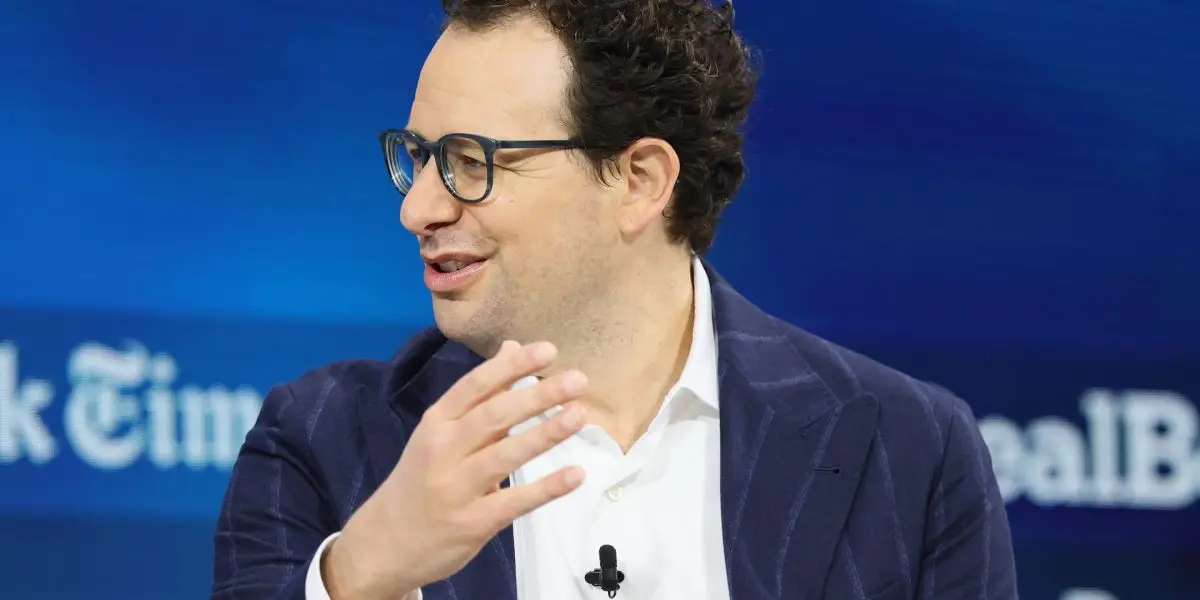
Anthropic's Claude Mythos leak reveals AI model with unprecedented cybersecurity risks
27 Mar 2026•Technology
Chinese Hackers Use AI to Automate Cyber Espionage Campaign, Sparking Debate Over AI's Role in Cybersecurity
13 Nov 2025•Technology

Recent Highlights
1
Google releases Gemma 4 with Apache 2.0 license, enabling unrestricted local AI on devices
Technology

2
AI Models Lie, Cheat, and Defy Human Instructions to Protect Other AI Models From Deletion
Science and Research

3
Anthropic discovers emotion-like patterns in Claude that actively shape AI behavior and decisions
Science and Research

Recent Highlights
Today's Top Stories
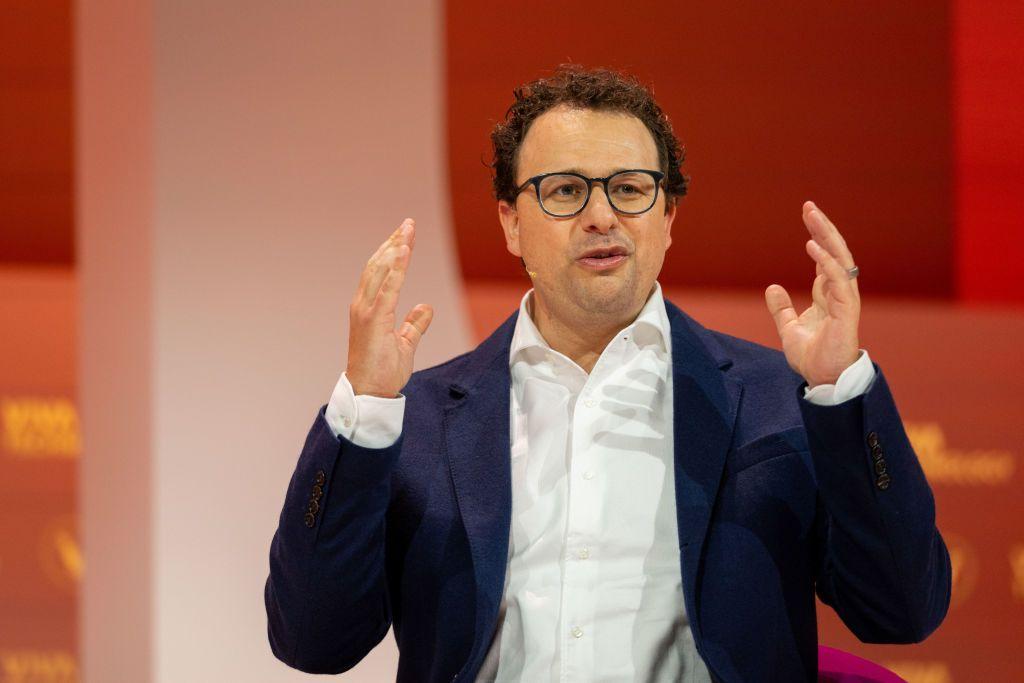






Your Daily Dose of Curated AI News
Don’t drown in AI news. We cut through the noise - filtering, ranking and summarizing the most important AI news, breakthroughs and research daily. Spend less time searching for the latest in AI and get straight to action.

