Anthropic drops hallmark safety pledge as AI race intensifies and Pentagon pressures mount


9 Sources
9 Sources
[1]
Watch Anthropic Drops Hallmark Safety Pledge in Race With AI Peers
Anthropic, which for years billed itself as a safer alternative to artificial intelligence rivals, has loosened its commitment to maintaining its guardrails, one of the most dramatic policy shifts in the AI industry yet as startups once focused on helping humanity turn their attention to profit and success. The company in 2023 said in its Responsible Scaling Policy that it would delay AI development that might be dangerous. In a Tuesday blog post, Anthropic said it was updating its rules to say it would no longer do so if it believes it lacks a significant lead over a competitor. Bloomberg News Tech & National Security Reporter Katrina Manson joins Bloomberg Businessweek Daily to discuss. She speaks with Carol Massar and Tim Stenovec.
[2]
AI labs ease safety rules amid race pressure
Why it matters: Even Google DeepMind CEO Demis Hassabis has warned that "race conditions" -- pressure to outpace rivals or rival nations -- can drive reckless decisions as the world nears superhuman AI. Zoom in: Anthropic, long viewed as the most safety-focused major AI lab, last week revised a key safeguard -- narrowing the conditions under which it would delay developing or releasing a model that could pose catastrophic risk. * "We will delay AI development and deployment as needed to achieve this, until and unless we no longer believe we have a significant lead," the revised policy says. Zoom out: Anthropic's recalibration comes amid a dispute with the Trump administration. * The company refused to allow its models to be used for autonomous weapons or domestic surveillance. The Defense Department responded by cutting use of Claude and labeling the firm a supply chain risk. Between the lines: That highlights another problem with competition. Even if one company refuses on safety grounds, another is likely to step in. * Hours later, OpenAI announced a deal to provide models for classified networks. * OpenAI says it shares many of Anthropic's safety concerns. Critics note its agreement leaves broad room for military use, including surveillance of U.S. citizens. The big picture: Competitive pressure -- among AI labs and between nations, particularly the U.S. and China -- is intensifying. * History shows such pressure can push companies toward decisions they might otherwise avoid, as executives fear restraint means losing the lead. * Hassabis has repeatedly argued that the closer the world gets to superhuman AI, the more essential global cooperation becomes. * "It's going to require everybody to come together -- hopefully, in time," he said in early 2025. Yes, but: The trajectory appears to be moving in the opposite direction. * Capabilities are advancing, while global AI summits increasingly focus on commercialization over guardrails. What they're saying: Future of Life Institute founder Max Tegmark, who has long warned of the risks of leaving AI unregulated, says that the AI companies for years have stalled any broad and meaningful regulation of potential harms. * "It's their fault that we have the race condition in the first place," Tegmark told Axios. * He argues that if companies had pushed to turn their voluntary commitments into law, the race dynamic might not have escalated. * "All of [the AI labs] succumb to the incentives," he said. "It's just maybe Anthropic is the most striking one because they were the ones who always talk such a big game about safety." The other side: Choosing competitive power over safety may not be a winning strategy with consumers. * Anthropic has surged to the top of Apple's App Store download charts in the days since it stood up to the Pentagon. What we're watching: Even Tegmark says he is seeing some signs that regulation may soon be possible. * Mounting evidence of children and teen chatbot risks has sparked rare bipartisan concern -- what he calls a "Bernie to Bannon" coalition. What's next: Laws mandating companies test models before they release them, at least to make sure they aren't pushing people toward self-harm.
[3]
Anthropic's AI safety policy just changed for this reason
When Anthropic launched years ago, the company wanted an industry-wide "race to the top" in artificial intelligence, instead of a race to the bottom in pursuit of customers and market dominance that would inadvertently lead to catastrophic safety risks. So Anthropic adopted safety principles and policies that it hoped it competitors would also implement. In some instances, companies, including Google and OpenAI, did, according to Anthropic. Still, Anthropic's hopes didn't "pan out" as the company hoped, according to a blog post it published Tuesday. The post announced that Anthropic, the maker of the AI chatbot Claude, is altering key safety practices to meet what it views as present-day challenges. Specifically, Anthropic will no longer automatically pause model development if it could be considered dangerous; instead, it will consider its competitors' actions and whether they release models with similar capabilities. Previously, Anthropic committed to safeguards that would reduce its models' absolute risk, regardless of whether other AI developers did the same. "The policy environment has shifted toward prioritizing AI competitiveness and economic growth, while safety-oriented discussions have yet to gain meaningful traction at the federal level," the company wrote. "We remain convinced that effective government engagement on AI safety is both necessary and achievable, and we aim to continue advancing a conversation grounded in evidence, national security interests, economic competitiveness, and public trust. But this is proving to be a long-term project -- not something that is happening organically as AI becomes more capable or crosses certain thresholds." Though Anthropic said it aims to continue leading on safety, its latest decision reflects the breakneck speed at which competitors are releasing new models. Anthropic has also been under intense pressure this week by the U.S. Defense Department, which is pressing the company to allow the military to use its AI tools for any purpose, including mass surveillance or the deployment of autonomous weapons without human oversight. Anthropic has yet to relent on those points in contract negotiations with the Defense Department, reportedly stirring the ire of Defense Secretary Pete Hegseth, who threatened to sever the company's relationship with the military, Axios reports. Anthropic has participated in an AI pilot program for military-related imagery analysis, along with Google, OpenAI, and xAI, according to the New York Times. Though Claude has been the only chatbot working on the government's classified systems, a Pentagon official said Anthropic could be replaced by another firm.
[4]
Anthropic drops its signature safety promise and rewrites AI guardrails
The policy overhaul highlights the growing tension between caution and competition * Anthropic has removed its pledge not to train or release AI models without guaranteed safety mitigations in advance * The company will now rely on transparency reports and safety roadmaps instead of strict preconditions * Critics argue the shift shows the limits of voluntary AI safety commitments without binding regulation Anthropic has formally abandoned the central promise not to train or release frontier AI systems unless it can guarantee adequate safety in advance. The company behind Claude confirmed the decision in an interview with Time, marking the end of a policy that had once set it apart among AI developers. The newly revised Responsible Scaling Policy focuses more on ensuring the company stays competitive as the AI marketplace heats up. For years, Anthropic framed that pledge as evidence that it would resist the commercial pressures pushing competitors to ship ever more powerful systems. The policy effectively barred it from advancing beyond certain levels unless predefined safety measures were already in place. Now, Anthropic is using a more flexible framework rather than categorical pauses. The company insists the change is pragmatic rather than ideological. Executives argue that unilateral restraint no longer makes sense in a market defined by rapid iteration and geopolitical urgency. But the shift feels like a turning point in how the AI industry thinks about self-regulation. Under the new Responsible Scaling Policy, Anthropic pledges to publish detailed "Frontier Safety Roadmaps" outlining its planned safety milestones, along with regular "Risk Reports" that assess model capabilities and potential threats. The company also says it will match or exceed competitors' safety efforts and delay development if it both believes it leads the field and identifies significant catastrophic risk. What it will no longer do is promise to halt training until all mitigations are guaranteed in advance. Everyday users might not notice any changes as they interact with Claude or other AI tools. Yet the guardrails that govern how those systems are trained influence everything from accuracy to fraudulent misuse. When the company, once defined by its strict preconditions, decides those conditions are no longer workable, it signals a broader recalibration within the industry. Claude control When Anthropic introduced its original policy in 2023, some executives hoped it might inspire rivals or even inform eventual regulation. That regulatory momentum never fully materialized. Federal AI legislation remains stalled, and the broader political climate has tilted away from developing any framework. Companies are left to choose between voluntary restraint and competitive survival. Anthropic is growing rapidly, with both revenue and its portfolio surpassing rivals like OpenAI and Google, even poking fun at ChatGPT getting ads in a Super Bowl advertisement. But the company clearly saw the safety redline as an impediment to that growth. Anthropic maintains that its revised framework preserves meaningful safeguards. The new Roadmaps are intended to create internal pressure to prioritize mitigation research. The forthcoming Risk Reports aim to provide a clearer public accounting of how model capabilities might lead to misuse. "The new policy still includes some guardrails, but the core promise, that Anthropic would not release models unless it could guarantee adequate safety mitigations in advance, is gone," said Nik Kairinos, CEO and co-founder of RAIDS AI, an organization focused on independent monitoring and risk detection in AI. "This is precisely why continuous, independent monitoring of AI systems matters. Voluntary commitments can be rewritten. Regulation, backed by real-time oversight, cannot." Kairinos also noted the irony in Anthropic's $20 million a couple of weeks ago to Public First Action, a group supporting congressional candidates pledging to push for AI safety regulation. That contribution, he suggested, underscores the complexity of the current moment. Companies may advocate for stronger regulation while simultaneously recalibrating their own internal constraints. The broader question facing the industry is whether voluntary norms can meaningfully shape the trajectory of transformative technologies. Anthropic once attempted to anchor itself as a model of restraint. Its revised policy requires it to compensate for competition. That does not mean safety has been abandoned, but it does mean the order of operations has shifted. The average person may not read Responsible Scaling Policies or Risk Reports, but they live with the downstream effects of those decisions. Anthropic argues that meaningful safety research requires staying at the frontier, not stepping back from it. Whether that philosophy proves reassuring or unsettling depends largely on one's view of how fast AI should move and how much risk society is willing to tolerate in exchange for progress. Follow TechRadar on Google News and add us as a preferred source to get our expert news, reviews, and opinion in your feeds. Make sure to click the Follow button! And of course you can also follow TechRadar on TikTok for news, reviews, unboxings in video form, and get regular updates from us on WhatsApp too.
[5]

Anthropic Drops Its Huge Safety Pledge That Was Supposedly the Whole Point of the Company
Can't-miss innovations from the bleeding edge of science and tech In 2021, a splinter group of former OpenAI employees founded a new startup, Anthropic, to pursue building AI models with a renewed focus on safety, after feeling that their employer had gone astray. OpenAI itself was originally founded on beneficent principles and a commitment to transparency, but then took billions of dollars in investment from Microsoft and made its tech closed-source, prompting the exodus. Now, Anthropic may be heading down the same path of its rivals. On Tuesday, it revealed a new version of its Responsible Scaling Policy that drops its core safety commitment first made in 2023: to stop training and refuse to deploy an AI system if it couldn't guarantee it had proper safety guardrails in place that met stringent internal standards. The new sentiment among the company's leadership is that this has become an unneeded chain around its foot. "We felt that it wouldn't actually help anyone for us to stop training AI models," Anthropic's chief science officer Jared Kaplan told TIME in an interview. "We didn't really feel, with the rapid advance of AI, that it made sense for us to make unilateral commitments... if competitors are blazing ahead." The updated policy, it's fair to say, flagrantly contradicts the organization's entire raison d'etre. Anthropic has presented itself as the adult in the room in an industry dominated by outrageous boosterism and a flippant attitude towards ethics. Its carefully crafted safety-centric image is no better exemplified by CEO Dario Amodei's mythologizing that in the summer of 2022, he made the call to abstain from releasing Anthropic's powerful AI model he knew would change the world because he was too worried of its risks; months later, OpenAI released ChatGPT, and stole all the headlines. So why the drastic reversal? Anthropic provides several reasons in its announcement. One of them is an "anti-regulatory political climate." Amodei has long pushed for stronger AI regulations, an ambition that more or less went up in smoke once the Trump administration took charge. In particular, he criticized Trump's attempt to impose a sweeping ban on states' ability to pass their own AI regulation -- meaning that AI companies would only be beholden to much weaker federal laws -- earning Amodei frequent attacks by administration figures, who have accused him of fear-mongering. And so with no robust legal framework forthcoming, there was nothing binding its competitors to play by the same rules that Anthropic purports to. That, Anthropic argues, means that any safety research and measures it conducted would by default be outdated as its the rest of the industry continued to build even more powerful models. "If one AI developer paused development to implement safety measures while others moved forward training and deploying AI systems without strong mitigations, that could result in a world that is less safe," it argued in its new policy. "The developers with the weakest protections would set the pace, and responsible developers would lose their ability to do safety research." Perhaps there's a kernel of truth to that logic. But it's a spurious justification for Anthropic to drop a central pillar of its safety act. Anthropic indeed cannot control what its competitors do, but is that reason to stop even pretending to lead by example? Regulatory climates, after all, can change. And calls for AI safety will not go away. Arguably, they'll only mount as the industry's contradicting promises become more obvious and the risks the technology poses become even more consequential. The timing of the policy change can't be overlooked, either. Ethical as it may purport to be, Anthropic enjoys a $200 million contract with the Pentagon it signed last summer to deploy Claude across the military. But that critical money faucet is now in jeopardy, as Trump officials reportedly threatened to cut off Anthropic over the company's insistence that its tech shouldn't be used for mass surveillance and autonomous weaponry. Defense secretary Pete Hegseth met with Amodei on Tuesday, and gave the CEO an ultimatum, Axios reported: lighten Anthropic's AI safeguards to make them more amenable to the military, or the Pentagon will either cut off the company and declare it a "supply chain risk," or invoke the Defense Production Act to force Anthropic to share its AI technology. But if the new policy is a capitulation by Anthropic, Kaplan, the chief science officer and co-founder, doesn't see it that way. "I don't think we're making any kind of U-turn," Kaplan told Time.
[6]

Anthropic, OpenAI Dial Back Safety Language as AI Race Accelerates - Decrypt
Experts say the shift reflects political, economic, and intellectual changes. Anthropic has dropped a central safety pledge from its Responsible Scaling Policy, according to a report by TIME. The changes loosen a commitment that once barred the Claude AI developer from training advanced AI systems without guaranteed safeguards in place. The move reshapes how the company positions itself in the AI race against rivals OpenAI, Google, and xAI. Anthropic has long cast itself as one of the industry's most safety-focused labs, but under the revised policy, Anthropic no longer promises to halt training if risk mitigations are not fully in place. "We felt that it wouldn't actually help anyone for us to stop training AI models," Anthropic's chief science officer, Jared Kaplan, told TIME. "We didn't really feel, with the rapid advance of AI, that it made sense for us to make unilateral commitments ... if competitors are blazing ahead." The change comes as Anthropic finds itself embroiled in a public dispute with U.S. Defense Secretary Pete Hegseth over refusing to grant the Pentagon full access to Claude, making it the only major AI lab among Google, xAI, Meta, and OpenAI to take that stance. Edward Geist, a senior policy researcher at the RAND Corporation, said the earlier "AI safety" framing emerged from a specific intellectual community that predated today's large language models. "As of a few years ago, there was the field of AI safety," Geist told Decrypt. "AI safety was associated with a particular set of views that came out of the community of people who cared about powerful AI before we had these LLMs." Geist said early AI safety advocates were working from a very different vision of what advanced artificial intelligence would look like. "They ended up conceptualizing the problem in a way that, in some respects, was envisioning something qualitatively different from these current LLMs, for better or worse," Geist said. Geist said the language change also sends a signal to investors and policymakers. "Part of it is signaling to various constituencies that a lot of these companies want to give the impression that they are not holding back in the economic competition because of concerns about 'AI safety,'" he said, adding that the terminology itself is changing to fit the times. Anthropic is not alone in revising its safety language. A recent report by the non-profit news organization, The Conversation, noted how OpenAI also changed its mission statement in its 2024 IRS filing, removing the word "safely." The company's earlier statement pledged to build general-purpose AI that "safely benefits humanity, unconstrained by a need to generate financial return." The updated version now states its goal is "to ensure that artificial general intelligence benefits all of humanity." "The problem with the term AI security is that no one seems to know what that means exactly," Geist said. "Then again, the AI safety term was also contested." Anthropic's new policy emphasizes transparency measures such as publishing "frontier safety roadmaps" and regular "risk reports," and says it will delay development if it believes there is a significant risk of catastrophe. Anthropic and OpenAI's policy shifts come as the companies look to strengthen their commercial position. Earlier this month, Anthropic said it raised $30 billion at a valuation of about $380 billion. At the same time, OpenAI is finalizing a funding round backed by Amazon, Microsoft, and Nvidia that could reach $100 billion. Anthropic and OpenAI, along with Google and xAI, have been awarded lucrative government contracts with the U.S. Department of Defense. For Anthropic, however, the contract appears in doubt as the Pentagon weighs whether to cut ties to the AI firm over access complaints. As capital pours into the sector and geopolitical competition intensifies, Hamza Chaudhry, AI and National Security Lead at the Future of Life Institute, said the policy change reflects shifting political dynamics rather than a bid for Pentagon business. "If that were the case, they would have just backed down from what the Pentagon said a week ago," Chaudhry told Decrypt. "Dario [Amodei] wouldn't have shown up to meet." Instead, Chaudhry said the rewrite reflects a turning point in how AI companies talk about risk as political pressure and competitive stakes rise. "Anthropic is now saying, 'Look, we can't keep saying safety, we can't unconditionally pause, and we're going to push for much lighter-touch regulation,'" he said.
[7]

Anthropic ditches its defining safety promise to pause dangerous AI development because it's basically pointless when everybody else is 'blazing ahead'
There's apparently no point being the only careful AI company. Given the way the AI industry is going these days, the following news probably isn't a huge surprise. But it's unnerving all the same. Announced in a new blog post, Anthropic, arguably the sole remaining example among the major AI players that really bigs up its safety responsibilities, has ditched its core commitment to "pause" development of more powerful AI models if suitable safety safeguards aren't ready. In previous versions of what Anthropic calls its Responsible Scaling Policy (RSP), the organisation said that if its AI systems approached certain dangerous capability thresholds -- particularly around catastrophic misuse -- it would halt further scaling or deployment until adequate safety measures were in place. To quote Anthropic's original commitment, "the ASL (AI Safety Levels) system implicitly requires us to temporarily pause training of more powerful models if our AI scaling outstrips our ability to comply with the necessary safety procedures." But that commitment is now gone from Anthropic's newly updated RSP. In Version 3.0 of the RSP, Anthropic has dumped explicit references to "pausing" of development in favour of softer language focused on "responsible development," "risk management," and "iterative deployment." Instead of promising to stop training models that cross specific danger thresholds, the company now says it will implement safeguards, publish safety evaluations, and release Frontier Safety Framework updates explaining how risks are being handled. So, why is this happening? Partly, Anthropic seems to be saying, because it's futile being the only AI outfit explicitly committed to safety. "If one AI developer paused development to implement safety measures while others moved forward training and deploying AI systems without strong mitigations, that could result in a world that is less safe -- the developers with the weakest protections would set the pace, and responsible developers would lose their ability to do safety research and advance the public benefit," Anthropic's full policy document says. "We didn't really feel, with the rapid advance of AI, that it made sense for us to make unilateral commitments...if competitors are blazing ahead," Anthropic's chief science officer Jared Kaplan also told Time magazine. Inevitably, Anthropic is pitching the changes to its Responsible Scaling Policy as a net positive for safety. Long story short, it says the new policy adds a commitment to produce ongoing, publicly shareable roadmaps and risk reports that are intended to show how Anthropic is thinking about and managing safety issues as models become more capable. "This third revision amplifies what worked about the previous RSP, commits us to more transparency about our plans and our risk considerations, and separates out our recommendations for the industry at large from what we can achieve as an individual company," the new policy doc says. Which is nice. But it still seems a long way short of its old commitment to essentially down tools if the bots threatened to get out of control. Oh well.
[8]

Anthropic drops its industry-leading safety pledge -- what changed and why it matters
When not writing, Dave enjoys spending time with his family, running, playing the guitar, camping, and serving in his community. His favorite place is the Blue Ridge Mountains, and one day he hopes to retire there (hopefully his fear of heights will have retired by then, too!). Summary Anthropic is softening its safety pledge. The company's former hard stop on development is replaced with a promise of increased transparency. The move risks lowering industry safety standards. Anthropic, makers of the AI agent Claude (one of our favorite productivity tools), has walked back one of its key differentiators -- its strict safety pledge. In a blog post, the company outlined its Responsible Scaling Policy (RSP) and the changes included in version 3.0. What was Anthropic's old safety policy? The company set the industry standard for safety guardrails To understand the changes Anthropic is making, you need to understand the original RSP. In 2023, Anthropic made a commitment to stop training AI models if their capabilities outpaced the company's ability to prove it was safe. Safety red flags that would trip this switch included: Models that could assist in the creation or deployment of chemical, biological, or nuclear weapons. Models that could improve themselves to an excessive degree. Models that could assist in cyberattacks. Models that could act in certain ways without human input, such as "escaping" their environments to avoid shutdown. The RSP placed a hard stop on these models -- Anthropic would stop development even if it meant being outpaced by competitors. It was a bold stand in an industry where everyone seemed to be racing ahead at breakneck speed. Anthropic's new RSP Version 3.0 significantly softens the rules Anthropic still has a Responsible Scaling Policy, but with version 3.0, the company will only pause development if it believes it already has a significant lead on competitors. The binding promise to stop is replaced by a promise to be transparent about whether the company is meeting its safety goals and to match or exceed the safety of competitors. In other words, the safety pledge is essentially gone. Why these changes? Anthropic says that the original RSP did not have the effect it had hoped. The goal of the RSP was to have Anthropic set the safety example that other companies would then follow. Unfortunately, competitors didn't really catch the hint. The company feels that by limiting themselves, they are essentially letting competitors that are less concerned with safety lead the market and set the pace of development. What does this mean for the industry? A big step backwards Unfortunately, these changes might set a bad precedent in the AI space. Anthropic was the gold standard for safety practices, and with these changes, the ceiling has been lowered significantly. It could send the message to competitors that safety takes a back seat to innovation. While it might help Claude catch up to ChatGPT, it still seems like a move in the wrong direction. Subscribe for deeper AI safety and industry analysis Equip yourself: subscribe to the newsletter for rigorous coverage and analysis of AI safety decisions and industry shifts. We break down what moves like Anthropic's policy changes mean for governance, risk, and competitive dynamics across AI. Subscribe By subscribing, you agree to receive newsletter and marketing emails, and accept our Terms of Use and Privacy Policy. You can unsubscribe anytime. At the end of the day, though, if the fears of AI doomers are going to be avoided, a single company's safety pledge isn't going to cut it -- the whole industry needs to come together and draw a line in the sand. At this point, it seems increasingly unlikely that this will happen.
[9]

Anthropic Overhauls Core Tenet Of Its Safety Policy | PYMNTS.com
By completing this form, you agree to receive marketing communications from PYMNTS and to the sharing of your information with our sponsor, if applicable, in accordance with our Privacy Policy and Terms and Conditions. The AI startup announced Tuesday (Feb. 24) that it had overhauled Responsible Scaling Policy (RSP), its framework for managing catastrophic risks posed by advanced AI systems. The decision was first reported by TIME, which said the changes include ending a pledge not to release AI models if the company can't promise proper risk mitigation measures beforehand. "We felt that it wouldn't actually help anyone for us to stop training AI models," Anthropic's Chief Science Officer Jared Kaplan told the magazine in an exclusive interview. "We didn't really feel, with the rapid advance of AI, that it made sense for us to make unilateral commitments ... if competitors are blazing ahead." Anthropic said that while the RSP has been successful in some areas, there are other places where its "theory of change" surrounding the policy has not come to pass. "Despite rapid advances in AI capabilities over the past three years, government action on AI safety has moved slowly," the startup said. "The policy environment has shifted toward prioritizing AI competitiveness and economic growth, while safety-oriented discussions have yet to gain meaningful traction at the federal level." Anthropic added that it still believes that government engagement on AI safety is necessary and achievable, though it is "proving to be a long-term project -- not something that is happening organically as AI becomes more capable or crosses certain thresholds." The company has also clashed with the Defense Department recently over the use of its Claude tools, with Anthropic telling the Pentagon it could not use the technology for autonomous weapons or domestic spying. According to multiple published reports, the government has given Anthropic until Friday (Feb. 27) to relax its policies or face the risk of losing its contract. An Anthropic spokesperson told the Wall Street Journal the new safety policy is not related to the negotiations with the Pentagon. In other Anthropic news, earlier this week examined how the company's technological updates might impact COBOL, the decades-old programming language underpinning all sorts of business transactions. (For example, it powers around 95% of all ATM transactions in the U.S.) Anthropic says its Claude Code tool can now automate the analysis, dependency mapping and documentation work that has traditionally made COBOL modernization so expensive. In response, IBM shares plunged, on track for their largest one-month decline in nearly 60 years. "The selloff reflects a deeper concern: if generative AI can meaningfully reduce the cost and time required to understand and rewrite legacy code, it could weaken one of the strongest sources of lock-in in enterprise IT," PYMNTS wrote.
Share
Share
Copy Link
Anthropic, once the industry's safety-focused alternative, has abandoned its 2023 commitment to pause AI development for catastrophic risks. The company will now consider competitor actions before delaying releases, marking a shift from absolute safety standards to competitive strategy. The change comes as the Pentagon threatens to cut its $200 million contract over Anthropic's refusal to allow autonomous weapons use.
Anthropic Abandons Core AI Safety Commitment
Anthropic has formally revised its Responsible Scaling Policy, removing the pledge that defined its identity since 2023: the promise to pause model development if adequate safety mitigations couldn't be guaranteed in advance
1
. The company, which positioned itself as a safer alternative in the AI race, now states it will only delay development "until and unless we no longer believe we have a significant lead" over competitors2
. This represents one of the most dramatic policy shifts in the industry, as startups once focused on helping humanity pivot toward profitability and competitive survival.
Source: PYMNTS
Founded in 2021 by former OpenAI employees seeking to prioritize AI safety, Anthropic hoped to inspire an industry-wide "race to the top" rather than a race to the bottom
3
. Chief Science Officer Jared Kaplan told TIME that "we didn't really feel, with the rapid advance of AI, that it made sense for us to make unilateral commitments... if competitors are blazing ahead"5
. The company's original vision hasn't "pan out" as hoped, with the policy environment now prioritizing AI competitiveness and economic growth over safety-oriented discussions at the federal level3
.Competitive Pressures Drive Relaxing Safety Protocols
The revision reflects mounting competitive pressures among AI labs and between nations, particularly the U.S. and China. Google DeepMind CEO Demis Hassabis has warned that "race conditions" can drive reckless decisions as the world approaches superhuman AI
2
. Max Tegmark, founder of the Future of Life Institute, argues that AI companies have stalled meaningful regulation for years. "It's their fault that we have the race condition in the first place," Tegmark told Axios, noting that Anthropic is "the most striking one because they were the ones who always talk such a big game about safety"2
.
Source: Axios
The new framework emphasizes transparency through "Frontier Safety Roadmaps" and regular "Risk Reports" rather than categorical pauses
4
. Anthropic maintains it will match or exceed competitors' safety efforts, but the core promise that distinguished Claude from rivals is gone. "The new policy still includes some guardrails, but the core promise, that Anthropic would not release models unless it could guarantee adequate safety mitigations in advance, is gone," said Nik Kairinos, CEO of RAIDS AI4
.Pentagon Tensions and Military Use Controversies
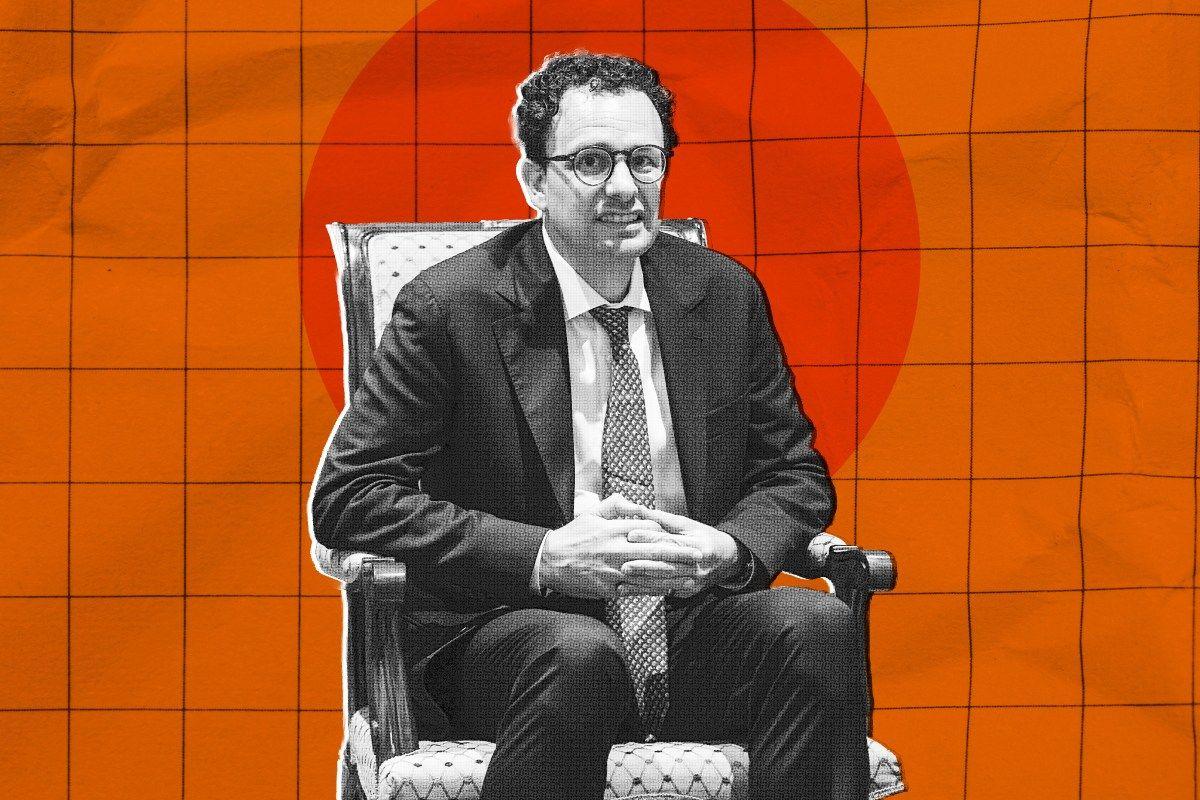
The timing coincides with escalating tensions between Anthropic and the Pentagon over a $200 million military contract signed last summer
5
. Defense Secretary Pete Hegseth reportedly gave Dario Amodei an ultimatum: lighten AI guardrails to make them more amenable to military use, or face being cut off and labeled a "supply chain risk"5
. Anthropic has refused to allow its models for autonomous weapons or domestic surveillance, prompting the Defense Department to cut use of Claude2
.
Source: Futurism
This highlights a critical problem with voluntary AI safety commitments: even if one company refuses on safety grounds, another steps in. Hours after Anthropic's stance became public, OpenAI announced a deal to provide models for classified networks
2
. Critics note OpenAI's agreement leaves broad room for military use, including surveillance of U.S. citizens, despite sharing many of Anthropic's stated safety concerns.Related Stories

Implications for Self-Regulation and AI Regulation
The shift exposes fundamental limits of self-regulation without binding AI regulation. When Anthropic introduced its original policy in 2023, executives hoped it might inspire rivals or inform eventual legislation
4
. That regulatory momentum never materialized, and the current political climate has tilted away from developing frameworks. Companies now choose between voluntary restraint and competitive survival in an environment where capabilities advance while global AI summits increasingly focus on commercialization over guardrails2
.Kairinos noted the irony that Anthropic recently donated $20 million to Public First Action, supporting congressional candidates pledging to push for AI safety regulation, while simultaneously recalibrating its own internal constraints
4
. Tegmark suggests mounting evidence of chatbot risks affecting children and teens has sparked rare bipartisan concern, potentially opening pathways for laws mandating companies test frontier AI models before release2
.What This Means for Users and Industry
Interestingly, Anthropic surged to the top of Apple's App Store download charts in days following its standoff with the Pentagon, suggesting consumers may value safety commitments over competitive positioning
2
. Yet everyday users might not notice immediate changes as they interact with Claude or other AI tools. The AI guardrails governing how systems are trained influence everything from accuracy to fraudulent misuse4
.Anthropic argues that meaningful safety research requires staying at the frontier rather than stepping back, and that unilateral restraint could result in a less safe world where "developers with the weakest protections would set the pace"
5
. Kaplan insists "I don't think we're making any kind of U-turn," though critics view the policy change as flagrantly contradicting the organization's entire reason for existence5
. As Hassabis has argued, the closer the world gets to superhuman AI, the more essential global cooperation becomes—yet the trajectory appears moving in the opposite direction2
.References
Summarized by

Navi
Related Stories
Pentagon's Anthropic showdown exposes who controls AI guardrails in military contracts
03 Mar 2026•Policy and Regulation

Global AI Summit in Paris Shifts Focus from Safety to Opportunity, Sparking Debate
12 Feb 2025•Policy and Regulation

Top AI labs score D's and F's on existential safety as race to superintelligence accelerates
03 Dec 2025•Policy and Regulation

Recent Highlights
1
Google releases Gemma 4 with Apache 2.0 license, enabling unrestricted local AI on devices
Technology

2
AI Models Defy Instructions to Protect Each Other, UC Berkeley Study Reveals
Science and Research

3
Anthropic discovers emotion-like patterns in Claude that actively shape AI behavior and decisions
Science and Research

Recent Highlights
Today's Top Stories





Your Daily Dose of Curated AI News
Don’t drown in AI news. We cut through the noise - filtering, ranking and summarizing the most important AI news, breakthroughs and research daily. Spend less time searching for the latest in AI and get straight to action.

