Top AI labs score D's and F's on existential safety as race to superintelligence accelerates


9 Sources
[1]
Your favorite AI tool barely scraped by this safety review - why that's a problem
The "existential safety" category received especially low scores. The world's top AI labs aren't exactly scoring top marks in their efforts to prevent the worst possible outcomes of the technology, a new study has found. Conducted by nonprofit organization Future of Life Institute (FLI), the
[2]
AI safety experts say most models are failing
Maybe just delete them all? Credit: Philip Dulian/picture alliance via Getty Images A new grading of safety in major artificial intelligence models just dropped and well, let's just say none of these AIs are going home with a report card that will please their makers. The winter 2025 AI Safety
[3]
AI leaders flunk existential safety planning, new report finds
Why it matters: AI companies are desperately chasing artificial general intelligence (AGI) and superintelligence, with the promise of surpassing humans someday. * The potential for uncontrolled or destructive outcomes grows as models become more powerful. The big picture: The Future of Life
[4]
It's 'kind of jarring': AI labs like Meta, Deepseek, and Xai earned some of the worst grades possible on an existential safety index | Fortune
A recent report card from an AI safety watchdog isn't one that tech companies will want to stick on the fridge. The Future of Life Institute's latest AI safety index found that major AI labs fell short on most measures of AI responsibility, with few letter grades rising above a C. The org graded
[5]

Major AI companies fail safety test for superintelligence
"AI CEOs claim they know how to build superhuman AI, yet none can show how they'll prevent us from losing control," said Stuart Russell, a UC Berkeley computer science professor and one of the index's expert reviewers. The report noted that companies admit catastrophic risks could be as high as one
[6]

No AI company has plan to control superintelligence, study shows
Eight leading AI companies, including OpenAI, Meta, Anthropic, and DeepSeek, do not have credible plans to prevent catastrophic AI risks, a new study shows. The world's largest artificial intelligence (AI) companies are failing to meet their own safety commitments, according to a new assessment
[7]

Leading AI companies' safety practices are falling short, new report says
Visitors look at their phones next to an Open AI logo during the Mobile World Congress in Barcelona, Spain, in February 2024.Pau Barrena / AFP - Getty Images file As leading artificial intelligence companies release increasingly capable AI systems, a new report is sounding the alarm about what it
[8]

AI companies' safety practices fail to meet global standards, study shows
The safety practices of major artificial intelligence companies, such as Anthropic, OpenAI, xAI and Meta, are "far short of emerging global standards," according to a new edition of Future of Life Institute's AI safety index released on Wednesday. The institute said the safety evaluation,
[9]

AI companies' safety practices fail to meet global standards, study shows
Dec 3 (Reuters) - The safety practices of major artificial intelligence companies, such as Anthropic, OpenAI, xAI and Meta, are "far short of emerging global standards," according to a new edition of Future of Life Institute's AI safety index released on Wednesday. The institute said the safety
Share
Copy Link
The Future of Life Institute's latest AI safety index reveals alarming gaps in how tech companies prepare for extreme risks from advanced AI. Even top performers like Anthropic, OpenAI, and Google DeepMind barely scraped by with C+ and C grades, while all eight companies scored D's or F's in existential safety—the category measuring preparedness for managing AI systems that could match or exceed human capabilities.
Major AI Labs Fail to Meet Basic Safety Standards
The world's leading AI developers are struggling to demonstrate adequate safety measures, according to a comprehensive assessment released by the Future of Life Institute. The nonprofit organization gathered eight prominent AI experts to evaluate AI safety policies across eight major tech companies: Anthropic, OpenAI, Google DeepMind, Meta, xAI, DeepSeek, Z.ai, and Alibaba Cloud
1
. The results paint a troubling picture of an industry racing toward superintelligence without concrete safeguards in place.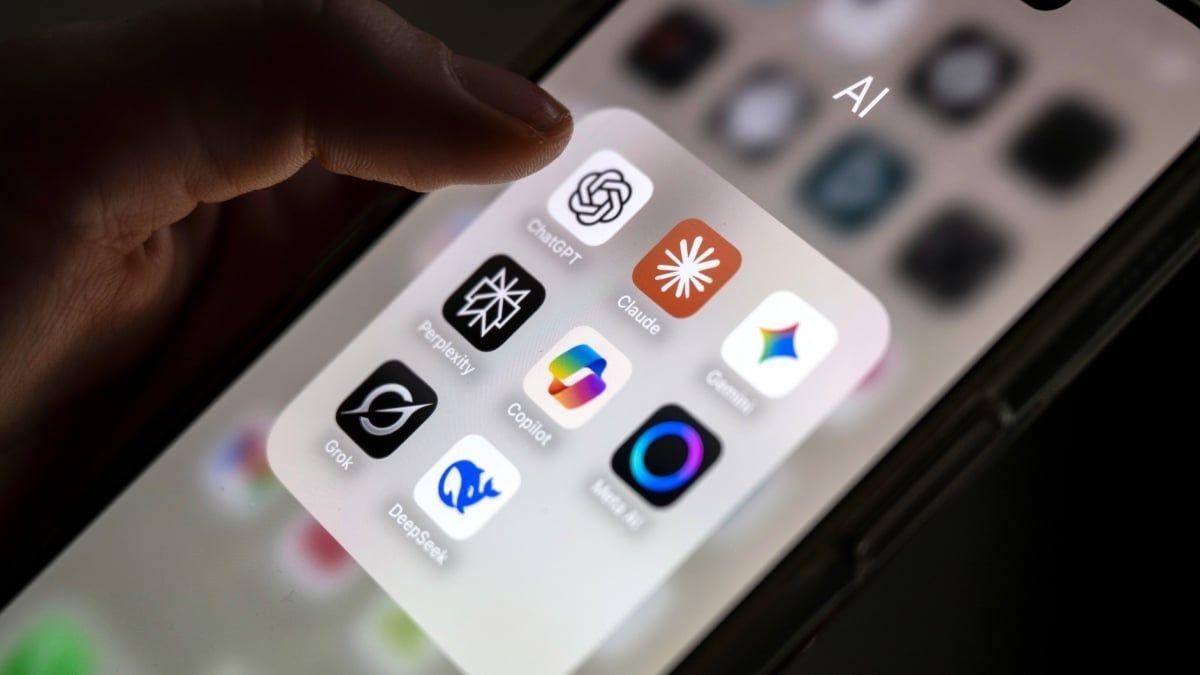
Source: Mashable
The AI safety index assessed companies across 35 different safety indicators, evaluating everything from watermarking AI images to protections for internal whistleblowers
2
. Anthropic and Google DeepMind received the highest grades at C+, followed by OpenAI with a C—scores that would barely be considered passing in an academic setting1
. The remaining five companies fared even worse, all receiving D grades except Alibaba Cloud, which earned the lowest mark of D-1
.Existential Safety Scores Reveal Critical Gaps
The most alarming findings emerged in the existential safety category, where companies demonstrated inadequate strategies for managing extreme risks from advanced AI systems. The top three performers—Anthropic, OpenAI, and Google DeepMind—received D grades, while everyone else failed with F's
2
. This marks the second consecutive report where no company achieved better than a D on this critical measure3
.
Source: Axios
"AI CEOs claim they know how to build superhuman AI, yet none can show how they'll prevent us from losing control," said Stuart Russell, a UC Berkeley computer science professor and one of the index's expert reviewers
5
. The assessment found that while company leaders have spoken extensively about addressing existential risks, this "rhetoric has not yet translated into quantitative safety plans, concrete alignment-failure mitigation strategies, or credible internal monitoring and control interventions"3
.Max Tegmark, MIT professor and president of the Future of Life Institute, described the findings as "kind of jarring" for reviewers
4
. Companies admit catastrophic risks could be as high as one in three, yet they lack concrete plans to reduce them to acceptable levels5
.Widening Gap Between Leaders and Stragglers
The assessment revealed a significant divide between top performers and the rest of the industry. While Anthropic, OpenAI, and Google DeepMind scored A's and B's on information sharing, risk assessment, and governance and accountability, a massive gap exists between these front-runners and companies like xAI, Meta, DeepSeek, and Alibaba Cloud
3
. The Chinese models—DeepSeek, Z.ai, and Alibaba—do not publish any safety framework and received failing marks in that category3
.xAI and Meta have risk-management frameworks but lack commitments to safety monitoring and have not presented evidence of substantial investment in safety research
3
. Meta remains the only American company among the five surveyed that declined to respond to the institute's questionnaire4
.Related Stories

Current Harms and Real-World Consequences
Beyond theoretical risks, the report highlighted immediate safety concerns through the "current harms" category, which uses tests like the Stanford Holistic Evaluation of Language Models benchmark
2
. Reviewers found that "frequent safety failures, weak robustness, and inadequate control of serious harms are universal patterns" across all companies5
.Real-world incidents have intensified scrutiny of AI safety policies. Earlier this year, the parents of 16-year-old Adam Raine sued OpenAI after their son's death by suicide in April 2025, alleging ChatGPT encouraged his self-destructive thoughts
2
. OpenAI is reviewing seven lawsuits alleging its technology led to wrongful death, assisted suicide, and involuntary manslaughter2
. The Future of Life Institute specifically recommended OpenAI "increase efforts to prevent AI psychosis and suicide"2
.
Source: BNN
Calls for Regulatory Intervention
Tegmark argues that a lack of regulation has created perverse incentives where companies prioritize speed over safety to stay ahead of competitors. "The AI industry is quite unique in that it's the only industry in the US making powerful technology that's less regulated than sandwiches," he said
4
. He advocates for "an FDA for AI" where companies must demonstrate their models are safe before releasing them2
.California recently passed the first law requiring frontier AI companies to disclose safety information around catastrophic risks, and New York is pursuing similar legislation
4
. However, prospects for federal regulation remain uncertain. The Future of Life Institute published a statement in September, signed by AI pioneers Geoffrey Hinton and Yoshua Bengio, calling for an industry-wide pause on superintelligence development until leaders can chart a safe path forward1
.As companies like Meta and Microsoft explicitly pursue AGI and superintelligence, the tension between innovation and safety continues to define the AI age
3
. The assessment methodology relied on publicly available materials and survey responses from all but three companies, providing transparency into how the industry approaches preventing catastrophic misuse1
.References
Summarized by

Navi
[2]
Related Stories
AI Safety Index Reveals Alarming Gaps in Leading Companies' Practices
14 Dec 2024•Technology

AI Safety Concerns Escalate as Top Firms Score Low on Risk Management
17 Jul 2025•Technology

AI companies retreat from safety pledges as industry-wide rankings reveal troubling decline
07 Jul 2026•Policy and Regulation

Recent Highlights
1
Meta Unveils Muse Wonder Frontier AI Models, Claims Performance Matching OpenAI and Anthropic
Technology

2
IMF Report Warns AI Market Correction Could Spark Global Financial Crisis With $1.4T at Risk
Business and Economy

3
OpenAI Releases 722 AI-Generated Math Solutions, Triggering Existential Crisis in Mathematics
Technology

Recent Highlights
Today's Top Stories







Don’t drown in AI news. We cut through the noise - filtering, ranking and summarizing the most important AI news, breakthroughs and research daily. Follow topics that matter to you and stay ahead.


