Anthropic prepares for massive IPO as CEO warns competitors are taking unwise AI bubble risks


22 Sources
22 Sources
[1]
Anthropic CEO weighs in on AI bubble talk and risk-taking among competitors | TechCrunch
Anthropic CEO Dario Amodei shared his thoughts on if the AI industry was in a bubble at The New York Times DealBook Summit on Wednesday. This was in addition to throwing shade on one particular unnamed competitor, which was clearly OpenAI. Amodei declined to give a simple yes-or-no answer to question of a bubble, saying it was a complex situation, but instead explained his thoughts about the economics of AI in more detail. He described himself as bullish on the potential of the technology, but cautioned that there could be players in the ecosystem who might make a "timing error" or could see "bad things" happen when it comes to the economic payoffs. "There's an inherent risk when the timing of the economic value is uncertain," Amodei explained. He said companies had to take risks to compete with each other and authoritarian adversaries -- a reference to the threat from China -- but added that some players were not "managing that risk well, who are taking unwise risks." The issue, he said, is the uncertainty around how quickly the economic value of AI will grow and properly mapping that to the lag times on building more data centers. "There's [a] genuine dilemma, which we as a company try to manage as responsibly as we can," Amodei said. " And then I think there are some players who are 'YOLO-ing,' who pull the risk dial too far, and I'm very concerned," he added, using the slang term for "you only live once," which is often used to justify risk-taking. Plus, he spoke to the question around AI chips' deprecation timelines. That's another hot-button topic and a factor that could negatively impact the industry's economics if GPUs become obsolete and lose their value ahead of schedule. "The issue isn't the lifetime of the chips -- chips keep working for a long time. The issue is new chips come out that are faster and cheaper...and so the value of old chips can go down somewhat," Amodei said He said Anthopic was making conservative assumptions on this front and others as it planned for an uncertain future. The AI company's revenue has grown 10x per year over the past three years, the CEO said, going from zero to $100 million in 2023, then $100 million to $1 billion in 2024, and will land somewhere between $8-10 billion by the end of this year. But Amodei said he would be "really dumb" to just assume that the pattern would continue. "I don't know if a year from now, if it's going to be 20 billion or if it's going to be 50 ... it's very uncertain. I try to plan conservatively. So I plan for the lower side of it, but that is very disconcerting," he said. AI companies like his have to plan how much compute they'll need in the years ahead, and how much they should invest in data centers. If they don't buy enough, they may not be able to serve their customers. And if they buy too much, they'll struggle to keep up with costs or, in the worst-case scenario, they could go bankrupt. Last month, OpenAI landed in a PR crises when its CFO said she wanted the U.S. government to "backstop" her company's infrastructure loans, aka insure them so taxpayers would pick of the bill if OpenAI could not. After the furor, she walked back the comments. Those who take more risks could overextend themselves, Amodei warned, especially if "you're a person who just kind of, like constitutionally, just wants to 'YOLO' things, or just likes big numbers," he said, in a veiled reference to OpenAI CEO Sam Altman. "We think we're going to be okay in, basically, almost all worlds...I can't speak for other companies," he said.
[2]
Anthropic taps IPO lawyers as it races OpenAI to go public
Anthropic has tapped law firm Wilson Sonsini to begin work on one of the largest initial public offerings ever, which could come as soon as 2026, as the artificial intelligence start-up races OpenAI to the public market. The maker of the Claude chatbot, which is in talks for a private funding round that would value it at more than $300bn, has chosen the US west coast law firm in recent days, according to two people with knowledge of the decision. The start-up, led by chief executive Dario Amodei, has also discussed a potential IPO with big investment banks, according to multiple people with knowledge of those talks. The people characterised the discussions as preliminary and informal, suggesting that the company is not close to picking its IPO underwriters. Nonetheless, these moves represent a significant step up in Anthropic's preparations for an IPO that would test the appetite of public markets to back the massive, lossmaking research labs at the heart of the AI boom. Wilson Sonsini has advised Anthropic since 2022, including on multibillion-dollar investments from Amazon, and has worked on high-profile tech IPOs such as Google, LinkedIn and Lyft. Investors in the company are enthusiastic about an IPO, arguing that Anthropic can seize the initiative from its larger rival OpenAI by listing first. Anthropic could be prepared to list in 2026, according to one person with knowledge of the company's plans. Another person close to the company cautioned that an IPO so soon was unlikely. "It's fairly standard practice for companies operating at our scale and revenue level to effectively operate as if they are publicly traded companies," said an Anthropic spokesperson. "We haven't made any decisions about when or even whether to go public, and don't have any news to share at this time." OpenAI is also undertaking preliminary work to ready itself for a public offering, according to people with knowledge of that company's plans, though they cautioned it was too soon to set even an approximate date for a listing. But both companies may also be hampered by the fact that their rapid growth and the astronomical costs of training AI models make their financial performance difficult to forecast. The pair will also be attempting IPOs at valuations that are unprecedented for US tech start-ups. OpenAI was valued at $500bn in October. Anthropic received a $15bn commitment from Microsoft and Nvidia last month, which will form part of a funding round expected to value the group between $300bn and $350bn. Anthropic has been working through an internal checklist of changes required to go public, according to one person familiar with the process. The San Francisco-headquartered start-up hired Krishna Rao, who worked at Airbnb for six years and was instrumental in that company's IPO, as chief financial officer last year. Wilson Sonsini did not respond to a request for comment.
[3]
Anthropic reportedly preparing for one of the largest IPOs ever in race with OpenAI: FT
The potential listings would test investor appetite for high-burn AI firms amid bubble fears and surging valuations. Anthropic, the AI startup behind the popular Claude chatbot, is in early talks to launch one of the largest initial public offerings as early as next year, the Financial Times reported Wednesday. For the potential IPO, Anthropic has engaged law firm Wilson Sonsini Goodrich & Rosati, which has previously worked on high-profile tech IPOs such as Google, LinkedIn and Lyft, the FT said, citing two sources familiar with the matter. The start-up, led by chief executive Dario Amodei, was also pursuing a private funding round that could value it above $300 billion, including a $15 billion combined commitment from Microsoft and Nvidia, per the report. It added that Anthropic has also discussed a potential IPO with major investment banks, but that sources characterized the discussions as preliminary and informal. If true, the news could position Anthropic in a race to market with rival ChatGPT-maker OpenAI, which is also reportedly laying the groundwork for a public offering. The potential listings would also test investors' appetite for loss-making AI startups amid growing fears of a so-called AI bubble. However, an Anthropic spokesperson told the FT: "It's fairly standard practice for companies operating at our scale and revenue level to effectively operate as if they are publicly traded companies," adding that no decisions have been made on timing or whether to go public. CNBC was unable to reach Anthropic and Wilson Sonsini, which has advised Anthropic for a few years, for comment. According to one of the FT's sources, Anthropic has been working through internal preparations for a potential listing, though details were not provided. The FT report follows several notable changes at the company of late, including the hiring of former Airbnb executive Krishna Rao, who played a key role in the firm's 2020 IPO. CNBC also reported last month that Anthropic was recently valued to the range of $350 billion after receiving investments of up to $5 billion from Microsoft and $10 billion from Nvidia. In its race to overtake OpenAI in the AI space, the startup has also been expanding aggressively, recently announcing a $50 billion AI infrastructure build-out with data centers in Texas and New York, and tripling its international workforce. According to the FT report, investors in the company are enthusiastic about Anthropic's potential IPO, which could see it "seize the initiative" from OpenAI. While OpenAI has been rumoured to be considering an IPO, its chief financial officer recently said the company is not pursuing a near-term listing, even as it closed a $6.6 billion share sale at a $500 billion valuation in October.
[4]
Dario Amodei on the Risk of an A.I. Bubble, Regulation and A.G.I.
The Anthropic chief executive spoke with Andrew Ross Sorkin at the DealBook Summit. Spending on A.I. now accounts for a huge portion of the United States' G.D.P. growth. The big question on Wall Street: Does the astronomical level of investment driving that growth actually pencil out? It depends whether you're talking about the technology or the economics, Dario Amodei, the C.E.O. of Anthropic, said at the DealBook Summit. "On the technological side of it, I feel really solid," he said. But he also acknowledged the considerable risks that have recently spooked markets: "Even if the technology is really powerful and fulfills all its promises, I think there may be players in the ecosystem who, if they just make a timing error, if they just get it off by a little bit, bad things could happen." Amodei, whose company is now valued at $183 billion, spoke at length on the economics of the A.I. boom. He criticized what he called a "YOLO" approach to deal making by some of his competitors and defended the circular deals being made to finance data centers. The interview, which you can watch here, also addressed A.G.I., the battle over artificial intelligence regulations and the risks of selling advanced chips to China. Here are five highlights. On A.I. spending Google, Microsoft, Amazon and Meta are each spending tens of billions of dollars a quarter on infrastructure for artificial intelligence. Anthropic's main rival, OpenAI, has said it plans to spend at least $1 trillion, and Anthropic recently announced that it plans to spend $50 billion. Amodei said big spending could backfire for some companies: There's a real dilemma deriving from uncertainty in how quickly the economic value is going to grow and the lag times on building the data centers that drives it. There's a genuine dilemma, which we as a company try to manage as responsibly as we can. And then I think there are some players who, you know, who are YOLO, who pull the risk dial too far. And I'm very concerned. Though he declined to say which companies he considered "YOLO," the elephant in the room was OpenAI, which he did not discuss. On circular deals Analysts have questioned deals to finance data centers in which an A.I. start-up like Anthropic raises money from tech giants that then sell the start-up products and services. Nvidia is set to make 15 percent of its sales this year from so-called circular deals, according to an estimate by Goldman Sachs. Amodei defended the deal structure, saying: One player has capital and has an interest, because they're selling the chips, and the other player is pretty confident they'll have the revenue at the right time, but they don't have $50 billion at hand. So I don't think there's anything inappropriate about that in principle. Now, if you start stacking these where they get to huge amounts of money and you're saying, you know, by 2027 or 2028, I need to make $200 billion a year, then yeah, you can overextend yourself. On A.G.I. Amodei said that achieving artificial general intelligence, or A.G.I. -- a machine that can do anything the human brain can do -- is a matter of scale rather than innovation. He said: I think scaling is going to get us there. Every once in a while there will be a small modification, you know, so small you may not even read about it. When should we expect A.G.I.? There's no one particular point, right? This is what I've said over and over. I've never liked these terms -- A.G.I., artificial superintelligence -- I don't know what it means. Just like we had an exponential with Moore's law, chips getting faster and faster until they could do any simple calculation faster than any human, I think the models are just going to get more and more capable at everything. On selling chips to China Amodei reiterated his stance that the U.S. should not sell advanced A.I. chips in China. That contradicts the position of one of Anthropic's partners, Nvidia, which has emphasized that it is essential to maintain access to the Chinese market. He said that it's a national security issue, not an economic issue, adding: I think we're building a growing and singular capability that has singular national security implications, and democracies need to get there first. It is absolutely an imperative. On A.I. regulation While other companies in the industry oppose strong A.I. regulation, Amodei has taken the opposite position, which he reiterated at the Summit. He said: I am concerned that there are some who see this technology as analogous to previous technological revolutions -- as being like the internet, as being like telecommunications -- where, yes, there are some issues, but the market will figure it out, which I think was maybe a more reasonable view in these previous technological revolutions.I think those who are closest to A.I. don't feel this way. If you poll the actual researchers who work on A.I. -- not investors who invest in some A.I. application companies, not general tech commentators who, you know, think they know something about A.I. -- but the actual people who are building the technology, they're excited about the potential, but they're also worried. They're worried about the national security risks. They're worried about alignment of the models. They're worried about the economic impacts of the models. Amodei argued that, despite his concerns, he's not a "prophet of doom." "I'm incredibly optimistic about the technology -- frankly, much more optimistic than some people who describe themselves as boosters of the technology," he said. "But nothing that powerful doesn't have a significant number of downsides." Thanks for reading! We'll see you tomorrow. We'd like your feedback. Please email thoughts and suggestions to [email protected].
[5]

Anthropic IPO talks set up Wall Street showdown with OpenAI
Mateusz Slodkowski/SOPA Images/LightRocket via Getty Images Anthropic is in talks to launch one of the biggest ever initial public offerings as early as next year, according to reports, in a move that pushed its rivalry with OpenAI towards a new arena: the stock market. The Claude chatbot maker has tapped law firm Wilson Sonsini to begin working on a potential float, reported the Financial Times, citing people familiar with the matter, while the startup has also held similar early talks with investment banks. Rival OpenAI has already been forced to deny multiple reports that it is considering an IPO in the next year or so, with its chief financial officer recently saying it is not going to list in the near term. Nonetheless, Anthropic's talks have set it on a new collision course with the ChatGPT maker -- one that would see the two loss-making startups competing for vast amounts of investor cash on Wall Street, a new front in the fast-accelerating AI race. "It's fairly standard practice for companies operating at our scale and revenue level to effectively operate as if they are publicly traded companies," said an Anthropic spokesperson, per the FT. "We haven't made any decisions about when or even whether to go public, and don't have any news to share at this time." Anthropic recently hired former Airbnb executive Krishna Rao, who played an important role in the firm's 2020 IPO. Meanwhile, CNBC reported last month that Anthropic had got investments of up to $5 billion from Microsoft and $10 billion from Nvidia that valued it at about $350 billion. However, an IPO from either company would be a key test of whether investors are still nervous about the industry effectively operating in a bubble. Google chief executive Sundar Pichai and OpenAI boss Sam Altman have both admitted many tech stocks are overvalued in the last six months. And the heads of Goldman Sachs and Morgan Stanley are among the Wall Street figures to have predicted a sharp comedown for global stock markets over the next two years or so. That has not stopped the vast sums of cash flowing towards the AI hyperscalers, however. Anthropic recently announced a $50 billion AI infrastructure build-out with data centers in Texas in New York, while in September it committed to tripling its overseas workforce.
[6]

Anthropic Starts Early IPO Prep Ahead of Possible 2026 Debut: Report - Decrypt
A 2026 listing could sharpen competition in frontier AI as public markets begin pricing hyperscale model development, Decrypt was told. Anthropic has reportedly begun formal IPO groundwork by tapping Wilson Sonsini, a U.S. law firm that has advised it since 2022, as it weighs a possible listing as soon as next year and looks to test whether public markets could be ready for an AI lab still deep in capital-intensive growth. The AI development company has reportedly engaged the firm while holding early, informal talks with major banks, according to an initial report from the Financial Times, citing people familiar. Estimates from sources vary, with one person saying Anthropic could be ready by 2026, while another cautions that doing so remains unlikely. An Anthropic spokesperson cited in the report said that the company has not made "any decisions about when or even whether to go public." The same report indicates that Anthropic appears to be tightening internal readiness as it pursues a private round that could lift its valuation above $300 billion, with early commitments totaling at least $15 billion from Microsoft and Nvidia. Its most recent post-money valuation was pegged at $183 billion in September. Based on the West Coast, Wilson Sonsini has advised Anthropic for three years and has also worked on advisory roles for other major tech IPOs, including Apple in 1980 and Google in 2004. Decrypt has reached out to Anthropic and Wilson Sonsini for comment. The move positions Anthropic alongside other major AI labs such as OpenAI in exploring a path to the public markets, though both face the same constraint: training costs that scale faster than revenue and financial forecasts that remain difficult to anchor, even as investor appetite for frontier AI bets continues to rise. "An IPO by Anthropic as soon as 2026, if realized, would dramatically tighten the competitive pressure among major AI labs," Ram Kumar, core contributor at blockchain and AI infrastructure firm OpenLedger, told Decrypt. Once sealed, it could "formalize valuation expectations, push capital markets to assign public valuations to AI output, and likely trigger a rush of IPO-and-exit plays across the sector," Kumar noted. For investors and enterprises, this could mean that "AI will increasingly be seen not just as a research cost, but as an investable asset class with tradable equity, quantifiable growth targets, and public scrutiny," he added. Still, more broadly, the timing for Anthropic's public debut "raises critical questions," Kumar said. "The biggest risk is valuation distortion: large public market expectations may incentivize speed over substance, pushing labs to prioritize growth metrics over data quality, safety, transparency, or long-term infrastructure, all key pillars of a trustworthy AI ecosystem," he opined. Yet given how "data-feedback loops and scale tend to concentrate power," there is possible danger over how public market pressure "could accelerate consolidation, reduce diversity of models, and entrench a small number of dominant players," he said. "An IPO-driven race can deliver capital, but it won't by itself guarantee fair distribution of value, traceability, or long-term ecosystem health," Kumar warned. "We need fair growth, where contributors are recognized and rewarded, and where intelligence becomes a collectively owned infrastructure rather than the private plaything of a few."
[7]

Anthropic considers IPO preparations as AI rivalry intensifies
The developer of the Claude AI assistant is preparing its corporate structure for a possible public listing, with reports suggesting it has brought in Wilson Sonsini to guide early-stage IPO planning. Anthropic has begun laying the groundwork for a possible stock market listing as competition between artificial intelligence firms heats up. That's according to a report in the Financial Times which claims the company has appointed the Silicon Valley firm Wilson Sonsini to advise on an eventual public offering. One FT source said the move could position the San Francisco-based group to pursue an IPO as early as 2026, although the company has made no commitment to going public and stressed that it has not set a timetable. Anthropic, which is behind the Claude range of AI models, is currently raising new private funding that is expected to value the business well above $300 billion (€257.6bn). The law firm's involvement marks a notable shift for a company that until recently operated more like a research lab than a business preparing for public markets. Anthropic has expanded its corporate structure over the past couple of years to meet surging interest in its AI technology. This included hiring former Airbnb executive Krishna Rao as chief financial officer. The latest development comes amid intensifying competition among the leading developers of large AI models. According to reports, OpenAI, valued at roughly $500bn (€429.27bn) in October, has also been assessing what a future listing might involve. It too has downplayed any immediate plans, and both groups are grappling with the difficulty of forecasting revenues in a rapidly shifting market. OpenAI is refocusing efforts on improving ChatGPT after continuous bugs with its newest chatbot rollout, while Google and Anthropic have released new models that outperformed GPT-5 on several industry benchmarks. Anthropic's Opus 4.5 and Google's Gemini 3 have been particularly strong in evaluations of reasoning and long-context performance, raising questions about how long OpenAI can maintain its early dominance. Despite commanding hundreds of millions of weekly users, OpenAI faces pressure from competitors whose products are gaining traction. Anthropic's preparations, alongside OpenAI's own internal work, suggest both companies are beginning to position themselves for the scrutiny that comes with public markets, even as they continue to warn that no listing is imminent. The sector's soaring valuations -- and the unpredictable costs associated with building ever larger models -- mean any IPO would test investor appetite for businesses whose growth depends on extraordinary levels of capital and computational scale.
[8]

Dario Amodei Says Anthropic 'Doesn't Do Code Reds', Takes a Dig at OpenAI | AIM
Amodei warns of possible AI bubble, says some players are 'YOLOing' on spending. Anthropic CEO Dario Amodei, in a recent interview with the NYT at DealBook Summit, said the company "doesn't do any code reds," distancing itself from the ongoing consumer-focused AI race between OpenAI and Google. He said the company is taking a different approach from other major AI firms, choosing to focus on enterprise customers rather than competing in the consumer market. "Both[OpenAI and Google] of the players that you mentioned... are primarily focused on the consumer," Amodei said, adding that this is the reason for the 'Code Red' intensity between them. According to him, Anthropic is not part of that battle. "We kind of have to worry less about this back and forth. We have a little bit of a privileged position where we can just keep growing and just keep developing our models, and we don't have to do any Code Reds," he said. Amodei added that the company has been optimising its models specifically for business use cases, with coding emerging as the fastest-moving area. Notably, the company recently released Claude 4.5 Opus. He said Anthropic is now extending its capabilities into finance, biomedicine, retail, energy, and manufacturing. Amodei argued that enterprise-oriented AI systems differ significantly from consumer-focused ones. "It is surprising how different the personality and capabilities of the models are if you're building for businesses versus consumers," Amodei said. Addressing questions about long-term defensibility, Amodei said model switching is harder than it appears, even for companies using APIs. Amodei said parts of the AI industry may be entering a bubble, pointing to massive capital spending by leading companies and warning that some players are "YOLOing" in their approach. He said the economic side of the AI boom carries real risks, even though the technology continues to progress rapidly. "There may be players in the ecosystem who, if they just make a timing error, if they just get it off by a little bit, bad things could happen," he said. While he declined to name companies, the comment comes as OpenAI and others plan tens of billions in annual spending on compute and data centres. Amodei said he distinguishes between the strength of the technology and the uncertainty of the economics surrounding it. "On the technological side, I feel really solid," he said, adding that scaling laws have held steadily for more than a decade. "...As you train these models in this very simple way, with a few simple modifications, they get better and better at every task under the sun." Anthropic, he said, is seeing that translated into revenue. The company expects between $8 billion to $10 billion in revenue at the end of this year, he said. The concern, he noted, lies in the gap between uncertain future revenue and the long lead times for data-centre construction. "There's a real dilemma deriving from uncertainty in how quickly the economic value is going to grow and the lag times on building the data centres that drive this," he said.
[9]

Anthropic reportedly planning one of the biggest IPOs ever as race with OpenAI heats up
One of the world's biggest AI startups might be eyeing a massive IPO. According to a new report in the Financial Times, Anthropic has tapped the Palo Alto-based law firm Wilson Sonsini to help the company go public as soon as early next year. The law firm has a deep well of experience shepherding major tech IPOs and has worked with Google, LinkedIn, Lyft, and Square on their public offerings. In the lead-up to a potential IPO, the Financial Times reports that the company is drumming up a private round of funding that would peg its value at over $300 billion. According to the report, the company is also discussing its plans with large investment banks, but those talks are in their early stages. Anthropic might be trying to outmaneuver its rival OpenAI, which is reportedly considering an IPO in the second half of 2026, by going public first and could be valued at as much as a once-unthinkable $1 trillion. OpenAI recently pivoted away from its roots as a nonprofit to restructure itself as a public benefit corporation in a move that set the stage for a potential future IPO. Though the for-profit part of OpenAI will continue to operate under a nonprofit parent company, the change ushers in a new era for the business of AI - one likely to be more focused on juicing revenue, attracting investment and pleasing shareholders.
[10]

Anthropic CEO Warns of 'YOLO' Spending in AI Race
Anthropic CEO Dario Amodei appeared at The New York Times Dealbook Summit on Wednesday, following reports that the firm is in informal discussions for an IPO in early 2026. As the Financial Times reported on Tuesday, the AI startup has hired the law firm Wilson Sonsini to coordinate the process of registering as a publicly traded company. The next day, at The New York Times' event, Amodei sat down with Andrew Ross Sorkin, who didn't ask Amodei about the IPO report. Instead, the Times' journalist probed Amodei about a variety of topics, including regulation and the likelihood of a bubble enveloping the AI sector. Anthropic, known for its flagship AI model Claude, has seen revenue explode over the last two years. Inc. reported this week that the company projects hitting $9 billion in annual recurring revenue before the end of the year. Still, Anthropic doesn't expect to break even on its capital expenditures until 2028 and recently announced a plan to spend $50 billion on its own data centers throughout the U.S.
[11]

We Might Finally Get Some Big AI IPOs -- Which Would Mean a Look at Their Financials
The startup's public debut would test investor appetite for AI amid concerns about bloated valuations. And its filing would offer a look under the financial hood of a well-known chatbot company. Anthropic, maker of the Claude chatbot, is preparing for an initial public offering that could come next year, according to the Financial Times. The company is also said to be in talks to raise funding that would push its valuation over $300 billion. The report followed others saying OpenAI, the company behind rival ChatGPT, is also getting ready for an IPO that could drive its valuation to $1 trillion. Spokespeople for both Anthropic and OpenAI denied having set plans for an IPO in those reports. The first of these companies to reach public markets will set the bar for the rest -- and open up the AI-investment landscape beyond the biggest publicly traded tech companies like Nvidia (NVDA), Oracle (ORCL), Microsoft (MSFT), and Meta Platforms (META), whose stock valuations have lately stoked concerns of bubble-ish excesses. It would also give the masses a good look at the economics of AI language-model developers. Elon Musk's xAI, the company behind the Grok chatbot, in late November was said to be preparing to close a $15 billion fundraising round in December, pushing its pre-money valuation to $230 billion. IPO documents, particularly those called S-1 filings, are rich sources of information, because companies are legally bound to give public-market investors a thorough look at the business before they raise funds from them. The big reveal is in the financials -- what revenue growth looks like, profit margins, and how much cash companies are burning to develop new products, the latter of which has been a source of AI investor angst. They'll also show companies' cap tables, detailing their ownership structure. Filings from Anthropic or OpenAI would adress a lot of investor questions about the state of frontier AI development. Meanwhile, private markets are flush with AI startups. The sector has drawn roughly 65% of venture capital investments in 2025 through the third quarter, according a PitchBook's report published this week. Though that figure is skewed by the multibillion-dollar fundraising rounds of a few big startups, it also shows how ubiquitous such startups have become. "No other emerging technology has accounted for a larger share of total deal activity," PitchBook director of research Kyle Stanford and his team wrote in the report. The old high-water mark was in early 2013, when mobile accounted for roughly 20% of deal counts; AI accounts for 35% currently. That could make for an exciting pipeline of coming IPOs if one AI startup unlocks the floodgates to public markets. But it could also fuel Dotcom bubble comparisons.
[12]

Anthropic CEO Dario Amodei Sounds Alarm on A.I. Firms' 'YOLO' Spending
Without naming any specific companies, Amodei warned that not all A.I. companies are managing spending risks responsibly. Dario Amodei, head of Anthropic, is concerned that some A.I. firms may be playing fast and loose with the staggering sums they're spending on data centers and compute power. "I think there are some players who are 'YOLO' -ing, who pull the risk dial too far," said the CEO during The New York Times' Dealbook Summit today (Dec. 3). Sign Up For Our Daily Newsletter Sign Up Thank you for signing up! By clicking submit, you agree to our <a href="http://observermedia.com/terms">terms of service</a> and acknowledge we may use your information to send you emails, product samples, and promotions on this website and other properties. You can opt out anytime. See all of our newsletters Even Anthropic, which Amodei decribed as more "conservative" than its rivals, recently pledged to invest $50 billion in building out data centers across the U.S. Others are spending far more. OpenAI, for example, has struck data center and GPU deals worth more than $1 trillion in 2025 alone. A.I. startups are increasingly caught in a delicate balancing act: the long timelines needed to build data centers versus the uncertainty surrounding the technology's ultimate economic payoff. Navigating these variables comes with "some amount of irreducible risk," said Amodei, who, without naming any specific companies, warned that not all players are managing that risk responsibly. "Even if the technology is really powerful and fulfills all its promises, I think that with some players in the ecosystem, if they get it off by a little bit, bad things could happen," he said. Like its rivals, Anthropic has leaned more heavily into circular financing deals with chipmakers and cloud providers. Under these arrangements, hardware companies invest in A.I. model developers, who then use that funding to purchase their compute products. The deals have raised eyebrows across Silicon Valley about whether they are sustainable for companies like Anthropic and OpenAI, which are currently valued at $183 billion and $500 billion, respectively, but are not yet profitable. There's nothing inherently "inappropriate" about such deals, according to Amodei. "You can overextend yourself, of course," he added, noting that companies must balance the danger of spending too much on compute with the risk of not acquiring enough to serve customers. One area where the executive has fewer concerns is competition. Earlier this week, OpenAI chief Sam Altman reportedly declared an internal "code red" to improve ChatGPT after Google's newest Gemini model surpassed the chatbot on benchmark tests. The release didn't perturb Anthropic,said Amodei, who emphasized that his company targets a different market and is focused primarily on enterprise rather than consumer products. "I'm just very grateful that Anthropic is taking a different path," he said. "We don't have to do any code reds."
[13]

Anthropic CEO Dario Amodei acknowledges risks of huge spending on AI - The Economic Times
Anthropic CEO Dario Amodei expressed concerns about the substantial financial risks in the AI industry, particularly regarding massive data center investments. He highlighted the dilemma of predicting future compute needs, warning that miscalculations could lead to either excess capacity or missed revenue opportunities for companies like his own.Dario Amodei, CEO of Anthropic, one of the leading companies behind the artificial intelligence boom, acknowledged Wednesday that the industry was taking on considerable risk as it spends hundreds of billions of dollars on the data centres that power artificial intelligence. "On the economic side, I have my concerns that even if the technology is really powerful and fulfils all its promises, I think that with some players in the ecosystem, if they get it off by a little bit, bad things could happen," he said at the DealBook Summit. Amodei, whose company is among those spending billions on new computing facilities, declined to say which companies might find themselves in a difficult position. But he acknowledged that even his own company -- which he said takes a conservative approach -- faces uncertainty as it builds data centres that will not be finished for years. "It's a real dilemma with how the economic value will grow and lag time on the data centres that drives it," Amodei said. "I think it's genuine uncertainty and a genuine dilemma, which we as a company try to manage as responsibly as we can." In September, Anthropic, which makes the Claude chatbot, completed a funding round that valued it at $183 billion, up nearly three times from its value of about $61.5 billion just six months earlier. OpenAI, the company that started the AI boom three years ago, is now worth an estimated $500 billion, making it the most valuable startup in the world. (The New York Times has sued OpenAI and its partner, Microsoft, accusing them of copyright infringement of news content related to AI systems. OpenAI and Microsoft have denied those claims.) But today, AI technologies are often losing money. Almost 8 in 10 businesses have started using generative AI, but just as many have said it has had "no significant bottom-line impact," according to recent research from McKinsey. Anthropic is not profitable. Neither is its chief rival, OpenAI. Still, like Google, Amazon and other tech giants, the two startups continue to spend big on the computing power need to build and deliver their AI technologies. Anthropic recently said it would invest $50 billion in new data centres. As he and his company decide how much to spend on these enormous computing facilities, they enter what he called "the cone of uncertainty," where they risk spending either too much or too little. If Amodei spends too much, the company could be stuck with computing power it does not need. If he spends too little, it will miss out on much-needed revenue. "That is very concerning," Amodei said. "I have to decide now -- literally now or, in some cases, a few months ago -- how much compute I need to buy to serve the models in early 2027." The cone is so wide, he said, "it's hard to avoid making a mistake on one side or the other."
[14]

Is Anthropic's $300B IPO The Canary In The AI Bubble -- Or The Next Tech Giant?
Enter your email to get Benzinga's ultimate morning update: The PreMarket Activity Newsletter Anthropic is about to test just how inflated -- or justified -- the AI valuation curve really is. The startup behind the Claude LLM is reportedly preparing for an IPO as early as 2026 while in talks for a funding round that could value the company north of $300 billion, reported FT. Track AI stocks via the AIQ ETF here. That number doesn't just set expectations sky-high -- it's a financial smoke alarm for anyone wondering whether AI is entering bubble territory or simply rewriting the definition of scale. The Biggest Valuation Stress-Test Yet Anthropic's upcoming offering isn't just another tech IPO story -- it's a full-market referendum on whether enterprise AI can support numbers that look more like Category-5 hurricanes than cautious public-market math. This is a three-year-old company asking to stand shoulder to shoulder with legacy giants that took decades to reach similar valuations. If the market bites, expect every late-stage AI startup to accelerate its IPO calendar. If it chokes, the sector could reprice overnight. Read Also: People Will Let AI Trade Their 'Robinhood Money' Enterprise Focus Vs Hype Economics Unlike the consumer-viral trajectory of OpenAI's ChatGPT and its peers, Anthropic has positioned itself squarely as the AI vendor of choice for enterprises: safe, reliable, compliance-friendly. That may be the smarter pitch for public markets -- which prefer predictable revenue streams over meme-level enthusiasm. Anthropic's push into developer tooling and Claude-powered business workflows hints at a model designed to turn hype into sticky-contract ARR rather than experiment-driven churn. Pressure Is Building -- And Not Just For Anthropic A $300 billion IPO forces uncomfortable questions: Are AI valuations tracking technological progress, or investor adrenaline? Does enterprise AI adoption scale fast enough to justify public-market exposure? Does regulation slow or accelerate growth? With peers like Cohere, Mistral, and AI21 circling funding ramps, Anthropic's pricing may set the reference point for everyone else. Investor Takeaway Anthropic isn't just going public -- it's stepping onto a tightrope stretched over the entire AI economy. If it lands clean, investors may call this the beginning of a supercycle. If it slips, the fall won't be limited to one company. This IPO isn't an offering -- it's a diagnostic. Read Next: Anthropic Has A Sharp Edge Against OpenAI -- Cheaper Chips Photo: Shutterstock Market News and Data brought to you by Benzinga APIs
[15]
Some players not managing risk in AI infrastructure race: Anthropic CEO Dario Amodei
Speaking at the New York Times Dealbook Summit, Dario Amodei, who founded Anthropic in 2023, said, "Whenever there's uncertainty, there is a risk of overextension and some (companies) are turning the dial too far." Anthropic CEO Dario Amodei warned that as the competition to secure artificial intelligence (AI) infrastructure intensifies, "some players are not managing that risk well; they're taking unwise risks". He did not name any companies. Speaking at the New York Times Dealbook Summit, Amodei, who founded Anthropic in 2023, said, "Whenever there's uncertainty, there is a risk of overextension and some (companies) are turning the dial too far." Amodei said both investors and AI companies are in a dilemma due to the speed of the technology. "There's real uncertainty in how quickly the economic value will grow, and a lag in building the data centres needed to support it," he added. "It's a genuine dilemma that we at Anthropic try to manage responsibly, but some players are YOLO-ing (taking on too much risk), and that concerns me." Also Read: Anthropic plans an IPO as early as 2026 Amodei said that he and some of his cofounders were among the first to document the scaling laws of AI. "When you increase compute and data with small modifications, models improve dramatically," he said. "They get better at coding, science, biomedicine, law, finance, materials, and manufacturing, essentially all the sources of value in the economy." That has translated into high business growth for the company. "Our revenue has grown tenfold each year for the last three years: from zero to $100 million in 2023, from $100 million to $1 billion in 2024, and it's on track to land somewhere between $8 billion and $10 billion by the end of this year," Amodei said. In a fireside chat, Amodei described a "cone of uncertainty" around future growth, where revenue projections for the next year could range from $20 billion to $50 billion. "We plan conservatively for the lower side," he said.
[16]

Anthropic Races OpenAI as It Preps a Mega IPO | PYMNTS.com
By completing this form, you agree to receive marketing communications from PYMNTS and to the sharing of your information with our sponsor, if applicable, in accordance with our Privacy Policy and Terms and Conditions. For banks, payments processors and FinTechs racing to operationalize AI for fraud, compliance, customer service and developer productivity, an Anthropic listing would also be a referendum on whether public investors will fund the soaring compute costs behind "frontier" models. According to the Financial Times, Anthropic has tapped law firm Wilson Sonsini "to begin work on one of the largest initial public offerings ever," with the company "in talks for a private funding round" that would value it above $300 billion. The FT reported the company has also held preliminary, informal conversations with large investment banks about a potential flotation, though it is not close to selecting underwriters. Wilson Sonsini has advised Anthropic since 2022, including on commercial aspects of Amazon's multibillion-dollar investments, the FT said. The backdrop is a public-market test of massive, lossmaking AI research labs whose growth -- and training costs -- are difficult to forecast. The FT noted that IPO ambitions are colliding with unprecedented private-market valuations: OpenAI was valued at $500 billion in October, while Anthropic's expected funding round is pegged between $300 billion and $350 billion and includes a reported $15 billion commitment from Microsoft and Nvidia. Anthropic has been working through internal go-public readiness items and hired former Airbnb executive Krishna Rao as CFO last year, the FT added. An Anthropic spokesperson told the FT: "It's fairly standard practice for companies operating at our scale and revenue level to effectively operate as if they are publicly traded companies." PYMNTS' recent Anthropic coverage has tracked the company's push into regulated financial workflows: the launch of Claude for Financial Services with verified data sources and audit trails; subsequent finance-focused updates including an Excel add-in and market-data connectors; and broader monetization and scaling signals, from premium subscriptions to major fundraises, rising valuations and enterprise productivity features (like creating spreadsheets and documents inside Claude). PYMNTS has also covered reporting that Anthropic could reach profitability sooner than OpenAI, a key lens investors will apply if IPO preparations accelerate.
[17]
Amazon-Backed Anthropic Moves Closer To One Of The Largest Tech IPOs Ever, Taps Wilson Sonsini As It Sets Eyes On Over $300 Billion Valuation: Report - Alphabet (NASDAQ:GOOG), Amazon.com (NASDAQ:AMZN)
Anthropic, backed by Alphabet Inc.'s (NASDAQ:GOOG) (NASDAQ:GOOGL) Google and Amazon.com (NASDAQ:AMZN), has reportedly begun laying the legal and financial groundwork for what could become one of the biggest tech IPOs in history as it races OpenAI toward the public markets. Anthropic Steps Up IPO Preparations Anthropic has tapped Silicon Valley firm Wilson Sonsini to begin early IPO preparations while it negotiates a funding round that could boost its valuation to more than $300 billion, reported the Financial Times, citing people familiar with the matter. The move signals a significant escalation in the Claude-parent's push toward a public debut that could come as early as 2026. The firm, which has advised Anthropic since 2022, is known for steering landmark tech listings, including Google, LinkedIn, which was later acquired by Microsoft Corp (NASDAQ:MSFT) and Lyft Inc. (NASDAQ:LYFT). Subscribe to the Benzinga Tech Trends newsletter to get all the latest tech developments delivered to your inbox. Valuation Could Surpass $300 Billion Anthropic is currently in talks to raise a funding round that would value the company at more than $300 billion, the report said. Last month, Microsoft and Nvidia Corp (NASDAQ:NVDA) committed $15 billion to the San Francisco-based startup as part of its next capital raise, which could push its valuation as high as $350 billion. In September, Anthropic's valuation more than doubled to $183 billion after raising $13 billion in new funding. See Also: Jeff Bezos, Mark Zuckerberg And Elon Musk Got Richer Since Trump Came To Power, Says Bernie Sanders -- New Data Shows He May Have A Point Company Says No Decision Is Final An Anthropic spokesperson told the publication that the company operates with the discipline of a listed firm but has not committed to going public. It's common for companies at Anthropic's scale to function like public companies, the spokesperson said, adding that the startup has made no decisions about when or whether to go public. Anthropic did not immediately respond to Benzinga's request for comments. OpenAI is also quietly preparing for a potential IPO, though no timeline has been set, the report noted. Anthropic's Revenue Run Rate Surges In October, Anthropic said it expects to hit its internal target of a $9 billion annual revenue run rate by the end of 2025 and is projecting more than $20 billion in annualized revenue next year in its base case, with a potential upside of up to $26 billion. The company also disclosed that its current annual revenue run rate is approaching $7 billion, up from just over $5 billion in August. During the same time, OpenAI also outlined a five-year strategy focused on expanding revenue sources, securing debt financing, and raising additional capital to help meet its $1 trillion investment plan. Benzinga's Edge Stock Rankings indicate GOOG is performing strongly in the short, medium and long term. Click here to compare it with other companies in its sector. Check out more of Benzinga's Consumer Tech coverage by following this link. Read Next: Meta's Ray-Ban Smart Glasses Might Never Have Happened If Not For One Cold Email -- EssilorLuxottica's Rocco Basilico Reveals How It All Started Photo Courtesy: gguy on Shutterstock.com Disclaimer: This content was partially produced with the help of AI tools and was reviewed and published by Benzinga editors. AMZNAmazon.com Inc$234.550.06%OverviewGOOGAlphabet Inc$316.740.23%GOOGLAlphabet Inc$316.370.18%LYFTLyft Inc$22.260.09%MSFTMicrosoft Corp$490.650.13%NVDANVIDIA Corp$181.03-0.24%Market News and Data brought to you by Benzinga APIs
[18]
Anthropic plans an IPO as early as 2026
An IPO would give the company a more efficient way to raise capital and provide leverage for bigger acquisitions through public stock. The move comes as AI adoption gains pace, driven by higher enterprise tech spending and growing investor appetite. Anthropic, the artificial intelligence startup backed by Alphabet's Google and Amazon.com , has hired the law firm Wilson Sonsini to prepare for an initial public offering that could take place as early as 2026, the Financial Times reported on Tuesday. Wilson Sonsini and Anthropic did not immediately respond to Reuters' requests for a comment. An IPO would give the company a more efficient way to raise capital and provide leverage for bigger acquisitions through public stock. The move comes as AI adoption gains pace, driven by higher enterprise tech spending and growing investor appetite. Claude maker Anthropic could be prepared to list in 2026, according to the report. The AI startup has also discussed with major investment banks about a potential IPO, the newspaper said, citing people with knowledge of the discussions. The FT report said, however, that the talks are in early stages and informal, indicating the company is still far from selecting its IPO underwriters. "It's fairly standard practice for companies operating at our scale and revenue level to effectively operate as if they are publicly traded companies," an Anthropic spokesperson told FT. "We haven't made any decisions about when or even whether to go public, and don't have any news to share at this time." Anthropic is negotiating a private funding round that could give the AI startup a valuation exceeding $300 billion, the report said. Microsoft-backed OpenAI is preparing for what could rank among the largest initial public offerings ever, with a potential valuation of up to $1 trillion. The company is laying the groundwork to go public and may file with securities regulators as early as the second half of 2026, Reuters has reported. However, OpenAI's chief financial officer, Sarah Friar, said in November that an IPO is not in the startup's near-term plans.
[19]

Anthropic CEO Warns AI Firms Against Reckless Spending Amid Growth Boom
Amodei said is taking a safer approach. The company focuses on business clients and careful planning, while some rivals spend massive sums to grow fast and reach huge revenue goals. He hinted that companies like OpenAI are pushing very hard to hit targets like $200 billion by 2027. Such aggressive spending could create serious financial problems. The warning comes as many AI startups raise huge amounts of money. In 2025, companies like , Mercor, and Cursor completed multiple funding rounds, often doubling or tripling their valuations. Experts fear this fast spending could create an AI bubble. Investors are concerned that some companies may not earn enough to cover their massive costs.
[20]
Anthropic Explores Potential 2026 IPO Amid Rapid Growth and Market Pressures
Anthropic Begins Early IPO Prep and Seeks New Funding as its Valuation Targets Over $300 Billion Anthropic, the artificial intelligence company behind the Claude chatbot, has started formal groundwork for a potential initial public offering. The company has hired long-time adviser Wilson Sonsini Goodrich & Rosati to support early preparations and internal readiness. It has also begun informal talks with major investment banks about a possible listing as early as 2026. A spokesperson has said the firm has not decided when, or even whether, to go public. This approach allows leadership to test public market conditions while keeping the option to remain private.
[21]

Anthropic accelerates toward Wall Street to edge OpenAI out
The artificial intelligence startup Anthropic, OpenAI's direct competitor, has hired Wilson Sonsini to prepare its IPO, reports the Financial Times. This move marks a decisive step in its listing strategy, which could occur as soon as 2026. The California-based company, which develops the Claude chatbot, is also said to be in discussions with several major banks, the FT adds. These talks remain informal at this stage, signaling that the appointment of banks to lead the IPO is not yet on the agenda. Behind this push lies a twofold objective: to outrun OpenAI in the markets and to capitalize on the high level of interest from investors in artificial intelligence. According to sources cited by the Financial Times, Anthropic is currently seeking to raise funds at a valuation of between $300bn and $350bn. In October, OpenAI was worth $500bn. Despite substantial losses and enormous research costs, both companies are counting on an IPO to reinforce their positions and fund their accelerated development. Anthropic, founded in San Francisco and led by Dario Amodei, has already positioned itself for this transition. Last year, it recruited Krishna Rao, a former Airbnb executive involved in its IPO, as chief financial officer. Wilson Sonsini, which has advised the startup since 2022, has already steered IPOs for Google, LinkedIn, and Lyft. In response to the rumor, an Anthropic spokesman gave the usual noncommittal reply: it is normal for companies of this size to consider an IPO, but no definitive decision has been made. In other words, the IPO project is seriously being considered.
[22]

'We don't do code reds': Anthropic CEO Dario Amodei takes a jab at OpenAI and Google
Amodei urges measured growth, citing Anthropic's rapid revenue rise but stressing stable, business-focused strategy to avoid costly mistakes. OpenAI's Sam Altman reportedly announced a 'code red' after Google revealed its new Gemini 3 model, setting off fresh tension in the race to stay ahead. Just as this drama gathered attention, Dario Amodei, the CEO of Anthropic, stepped into the spotlight with pointed remarks that seemed aimed at his fast-spending rivals. While he didn't name anyone, he still raised questions about the recently created rush and the huge bets some companies are making. He showed his concerns and warned that a single wrong move could bring heavy losses. His comments landed at a moment when pressure around competition was already rising, making his subtle swipe feel even sharper. Speaking at The New York Times DealBook Summit, Dario raised concerns about the growing financial risk in the fast-moving AI sector. He explained that while the technology behind AI is improving quickly, the money side of the industry is entering uncertain territory. Also read: Cloudflare says its WAF is already protecting users from new React security flaws: Here what it means He further added that companies are spending huge amounts to build large data centres that will take years to complete. These centres are needed to train and run powerful AI systems, yet no one can confidently predict how much demand there will be by the time they are ready. Amodei further added that the gap between future needs and present spending has created a wide "cone of uncertainty" that could damage companies if they get their calculations wrong. During his appearance at the event, Amodei drew a careful line between Anthropic's approach and that of unnamed rivals. He did not mention OpenAI directly, but his comments appeared aimed at competitors that are moving very fast and spending heavily. He said some companies are "YOLOing", meaning they are taking big financial bets without enough caution. According to him, even a small mistake in timing could cause serious losses. Also read: Motorola Edge 70 India launch date, specifications, price and everything else we know so far Amodei also highlighted the trend of 'circular deals', where chip makers invest in AI firms that then use that money to buy more of their chips. He admitted that Anthropic has taken part in such arrangements but on a smaller level. He added that these deals can work well only if the numbers remain realistic. For example, building a new data centre of a large size can cost around 10 billion dollars over five years. If companies start assuming future earnings of more than 200 billion dollars a year to justify such spending, they could be putting themselves in danger. He said that the bigger issue is predicting demand. Data centres take one to two years to build, which means that the decisions for the year 2027 must be taken now. If a company buys too little computing capacity, it will lose customers. If it buys too much, then it would be hard for them to survive any financial hits. This is termed as the 'cone of uncertainty' that Amodei says every major AI company is currently facing. Also read: Sam Altman quietly explored buying a rocket company to rival Elon Musk's SpaceX He went on further and explained that Anthropic's revenue has grown very quickly in the last three years, reaching up to 10 billion dollars in 2024. However, even with the strong growth, he still cannot predict whether the company will make 20 billion or 50 billion dollars the upcoming year. This unpredictability is one of the concerning factors making him believe that careful planning is essential for the AI companies. During the final wordings Amodei said that Anthropic is trying to manage its risks by focusing on business customers, which usually provide more stable income. He stressed that the company aims to avoid sudden or extreme decisions and instead follow a steady path as the AI industry continues to expand.
Share
Share
Copy Link
Anthropic has engaged law firm Wilson Sonsini to prepare for what could be one of the largest IPOs ever, potentially as early as 2026. The Claude chatbot maker, valued at over $300 billion, is racing OpenAI to public markets. Meanwhile, CEO Dario Amodei criticized unnamed competitors for 'YOLO-ing' investments, warning that some AI companies are mismanaging risks despite uncertain economic payoffs.
Anthropic Engages Wilson Sonsini for Potential IPO
Anthropic has taken a major step toward going public by engaging law firm Wilson Sonsini to begin work on what could become one of the largest initial public offerings in history, according to recent reports
2
. The maker of the Claude chatbot is currently in talks for a private funding round that would value the company at more than $300 billion, with a $15 billion combined commitment from Microsoft and Nvidia3
. Wilson Sonsini, which has advised Anthropic since 2022 on multibillion-dollar investments from Amazon, has previously worked on high-profile tech IPOs including Google, LinkedIn, and Lyft2
. The San Francisco-headquartered startup hired Krishna Rao, a former Airbnb executive who was instrumental in that company's IPO, as chief financial officer last year, signaling its serious intent to prepare for the public market2
.
Source: Market Screener
Race with OpenAI to Public Markets Intensifies
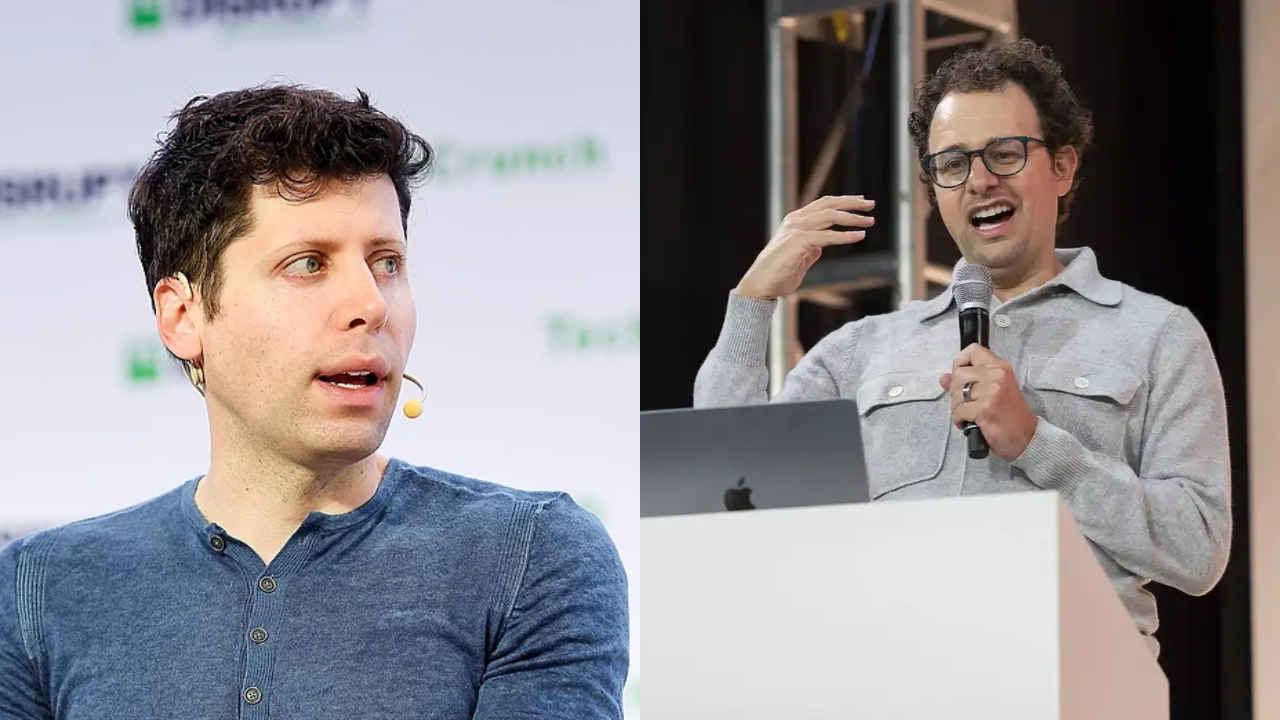
The Anthropic IPO preparations set up a potential Wall Street showdown with rival OpenAI, which is also undertaking preliminary work to ready itself for a public offering
2
. Investors in Anthropic are enthusiastic about the company seizing the initiative from its larger rival by listing first, with one source suggesting the company could be prepared to list in 20262
. OpenAI, valued at $500 billion in October, has been forced to deny multiple reports about near-term listing plans, with its CFO recently stating the company is not pursuing an IPO in the immediate future3
. Both high-valuation AI companies face the challenge of attempting IPOs at valuations that are unprecedented for US tech startups, which will test investor appetite for loss-making AI firms amid growing concerns about market dynamics2
.
Source: Digit
Dario Amodei Warns of AI Bubble and Industry Risk
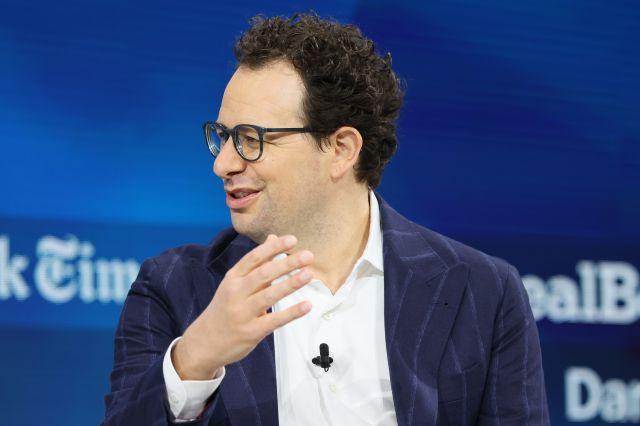
At The New York Times DealBook Summit, Anthropic CEO Dario Amodei shared candid thoughts on the AI bubble debate, declining to give a simple yes-or-no answer but warning that some players in the ecosystem might make timing errors or see "bad things" happen when it comes to economic payoffs
1
. Amodei described himself as bullish on the technology's potential but cautioned about AI industry risk, stating there's "inherent risk when the timing of the economic value is uncertain"1
. The CEO took particular aim at unnamed competitors who are "YOLO-ing" their investments, using the slang term for "you only live once" to describe those pulling "the risk dial too far"1
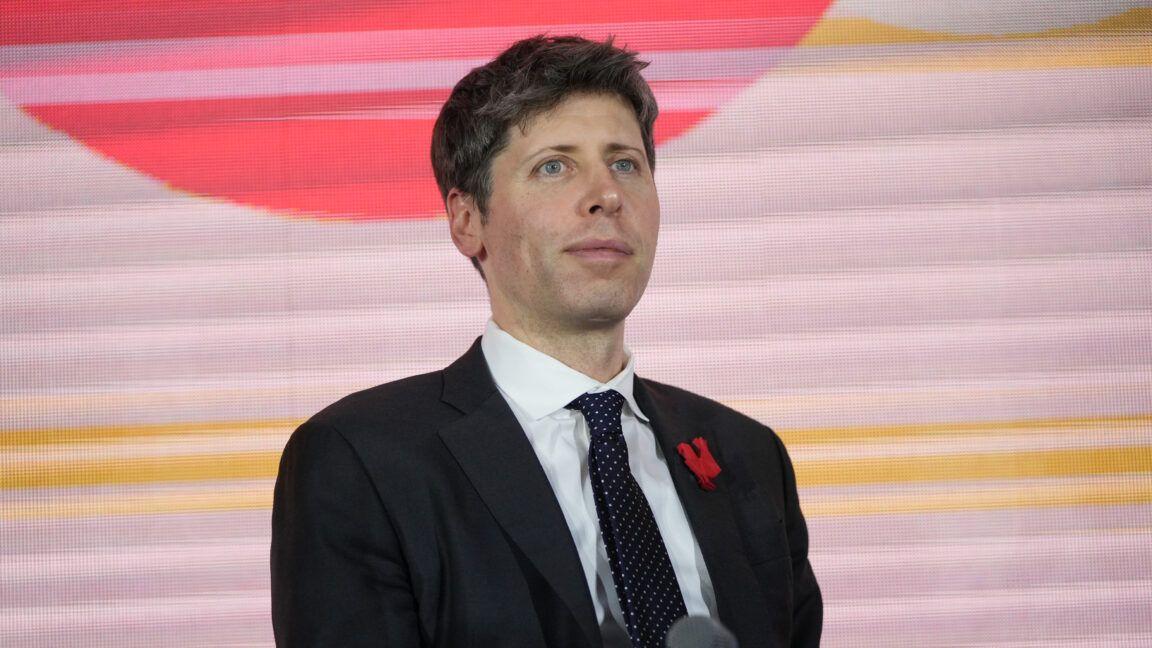
. His comments appeared to reference OpenAI CEO Sam Altman, particularly after OpenAI's CFO landed in a PR crisis last month by suggesting the US government should "backstop" the company's infrastructure loans1
.
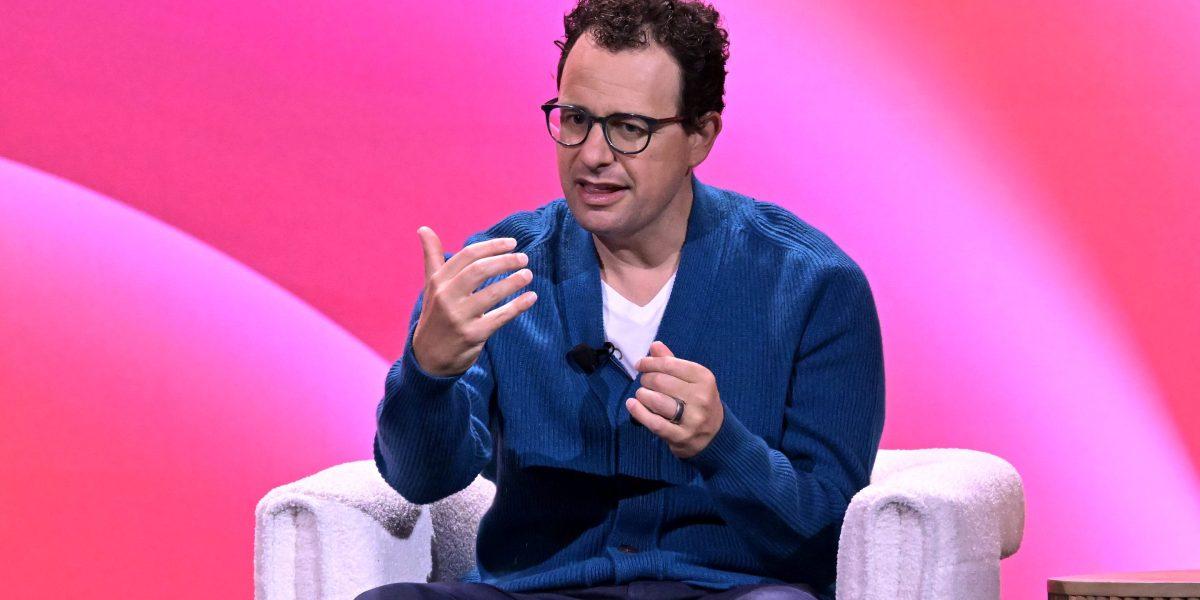
Source: Observer
Revenue Growth and Conservative Planning Approach
Anthropic has experienced explosive revenue growth, growing 10x per year over the past three years—from zero to $100 million in 2023, then $100 million to $1 billion in 2024, and projected to reach between $8-10 billion by the end of this year
1
. Despite this impressive trajectory, Amodei emphasized conservative risk management, stating he would be "really dumb" to assume the pattern would continue without question1
. The uncertainty around whether next year's revenue will be $20 billion or $50 billion creates challenges for planning compute needs and data centers investments1
. Anthropic recently announced a $50 billion AI infrastructure build-out with data centers in Texas and New York, while also tripling its international workforce3
.Related Stories
Economic Challenges and Market Uncertainty
The core dilemma facing AI companies involves uncertainty in how quickly economic value will grow and the lag times on building data centers to support that growth
4
. Amodei defended so-called circular deals—where an AI startup raises money from tech giants like Nvidia that then sell products and services back to the startup—as appropriate when one player has capital and interest while the other is confident about future revenue4
. However, he warned that stacking these deals to huge amounts could lead companies to overextend themselves if they need to make $200 billion a year by 2027 or 20284
. The CEO also addressed concerns about AI chips depreciation, noting that while chips keep working for a long time, new chips that are faster and cheaper can reduce the value of older ones1
. Anthropic is making conservative assumptions on this front as it plans for an uncertain future, with Amodei stating "we think we're going to be okay in, basically, almost all worlds"1
.Broader Industry Implications and Policy Positions
Beyond financial concerns, Amodei addressed critical policy issues at the DealBook Summit, including his stance on AI regulation and national security
4
. Unlike other companies in the industry that oppose strong AI regulation, Amodei has taken the opposite position, expressing concern that some view this technology as analogous to previous technological revolutions where the market would figure things out4
. On selling advanced AI chips to China, Amodei reiterated his stance that the US should not provide such access, framing it as a national security issue rather than an economic one, and emphasizing that "democracies need to get there first"4
. Regarding Artificial General Intelligence (AGI), Amodei suggested it's a matter of scale rather than innovation, predicting that models will simply "get more and more capable at everything" rather than reaching one particular breakthrough point4
. Wall Street figures including heads of Goldman Sachs and Morgan Stanley have predicted a sharp comedown for global stock markets over the next two years, adding another layer of uncertainty to any potential listing5
.References
Summarized by

Navi
[1]
Related Stories
Anthropic CEO Warns AI Industry Must Embrace Transparency to Avoid Tobacco-Style Regulatory Backlash
17 Nov 2025•Policy and Regulation
AI bubble concerns intensify as tech leaders seek returns on trillions in investment
17 Jan 2026•Business and Economy
Global AI Summit in Paris Shifts Focus from Safety to Opportunity, Sparking Debate
12 Feb 2025•Policy and Regulation

Recent Highlights
1
Apple Plans Major Siri AI Overhaul in iOS 27 With Third-Party Chatbot Integration
Technology

2
OpenAI shuts down Sora after six months, ending Disney's $1 billion licensing partnership
Technology

3
AI chatbots validate you too much, making you less kind to others, Stanford study reveals
Science and Research

Recent Highlights
Today's Top Stories






Your Daily Dose of Curated AI News
Don’t drown in AI news. We cut through the noise - filtering, ranking and summarizing the most important AI news, breakthroughs and research daily. Spend less time searching for the latest in AI and get straight to action.

