AI bubble concerns intensify as tech leaders seek returns on trillions in investment


6 Sources
[1]
Davos Crowd Focuses on AI Returns After Year of Heavy Investments
If a key focus at last year's World Economic Forum in Davos was the need for massive private and public investments to support artificial intelligence development, this year's event was more about proving the payoff. Packed into the crowded AI House, one of the conference's endless corporate
[2]
Google DeepMind chief warns AI investment looks 'bubble-like'
Demis Hassabis says the level of investment in some parts of the tech industry had become detached from commercial realities You can enable subtitles (captions) in the video player Demis, Google launched its most powerful model, Gemini 3, just a few months ago. It was received with a lot of
[3]
These prophets of economic doom are worried about another collapse
DOOMPROPHETS (Illustration by Emma Kumer/The Washington Post; iStock) Dean Baker has earned a reputation for predicting economic catastrophe, and he tries to follow his own advice. After the economist warned of a stock bubble in the late 1990s, he rebalanced his investments to reduce exposure to
[4]
In Davos, the AI bubble is always someone else's problem
Why it matters: Businesses are investing almost unfathomable sums in AI, but there is a growing sense that at least some companies won't be able to recoup their massive investments. The big picture: AI remains the talk of Davos as CEOs and political leaders remain convinced that the technology is
[5]

'We could hit a wall': why trillions of dollars of risk is no guarantee of AI reward
Progress of artificial general intelligence could stall, which may lead to a financial crash, says Yoshua Bengio, one of the 'godfathers' of modern AI Will the race to artificial general intelligence (AGI) lead us to a land of financial plenty - or will it end in a 2008-style bust? Trillions of
[6]

Experts Concerned That AI Progress Could Be Speeding Toward a Sudden Wall
Is the AI industry racing towards a point where the tech's progress stalls out or slows to a crawl? Many experts, including one of the field's foundational figures, seem to think it's possible. "There is a clear possibility that we will hit a wall, that there's some difficulty that we don't
Share
Copy Link
At Davos 2026, the conversation shifted from AI investment excitement to proving returns, with industry leaders declaring it the "year of AI ROI." But growing investor anxiety about trillions of dollars in risk and comparisons to the dot-com bust have economists and market prophets warning of a potential bubble. While companies tout enterprise traction, questions loom about whether massive AI spending can deliver promised productivity gains.
AI Investment Takes Center Stage at Davos
The World Economic Forum in Davos marked a pivotal shift in the Artificial Intelligence (AI) conversation. If 2025 focused on securing massive AI investment, 2026 became about proving the payoff. Rasmus Rothe from Merantix declared 2026 the "year of AI ROI," while corporate giants like Cisco and IBM plastered slogans across the Davos promenade guaranteeing they had cracked the formula for AI returns on investment
1
. The rhetoric reflects mounting investor anxiety about AI spending, as companies face pressure to justify enormous expenditures and lofty valuations that have propelled stock market valuations to record highs.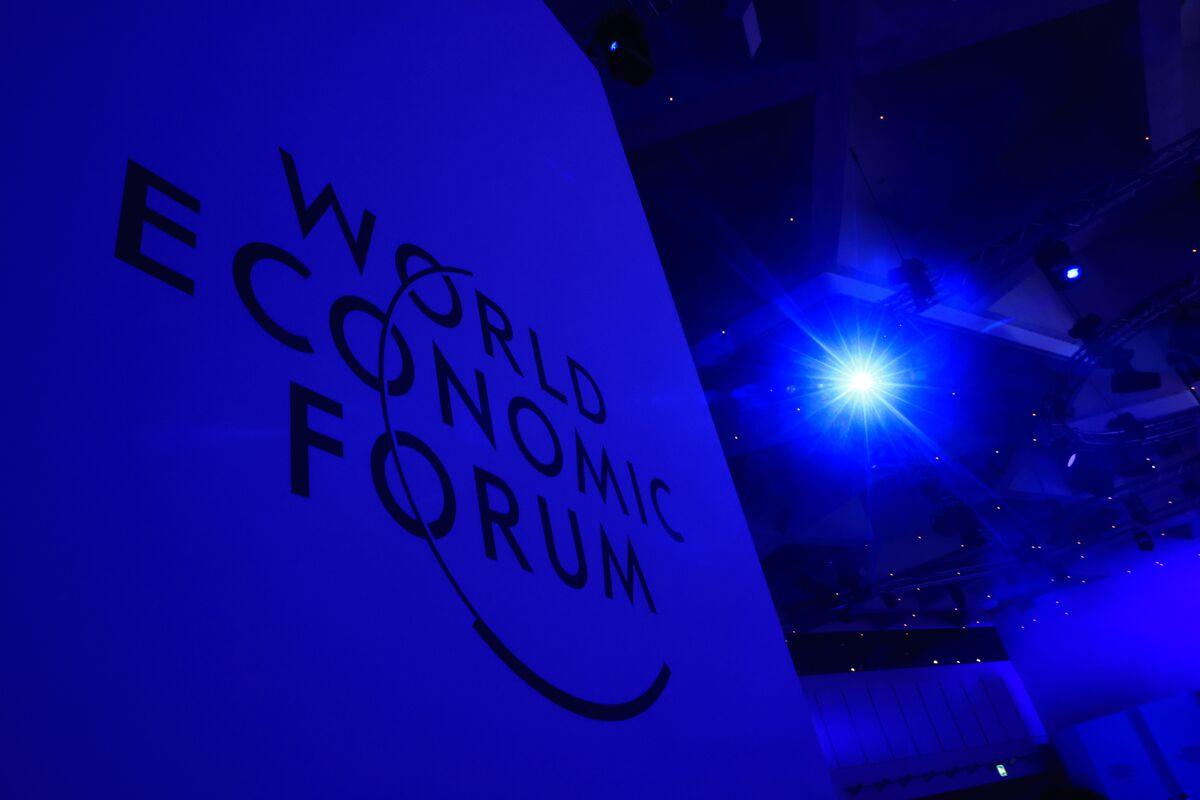
Source: Bloomberg
Trillions of Dollars in Risk Fuel Bubble Concerns
The scale of AI infrastructure buildout has reached staggering proportions. OpenAI, an unprofitable startup, has committed to spend more than $1.4 trillion on data centers and chips for AI in coming years
1
. Analysts at Morgan Stanley estimate $2.9 trillion will be spent on data centers between now and 20285
. This unprecedented capital expenditure has triggered warnings from economists with proven track records of predicting crashes. Dean Baker, who correctly forecast both the dot-com bubble burst and the housing market collapse, is now repositioning his investments to reduce exposure to what he considers an AI bubble edging closer to popping3
. Michael Burry, whose bet against the housing market inspired "The Big Short," disclosed his hedge fund is betting against AI darlings Nvidia and Palantir3
.
Source: Washington Post
Google DeepMind Chief Warns of Bubble-Like Conditions
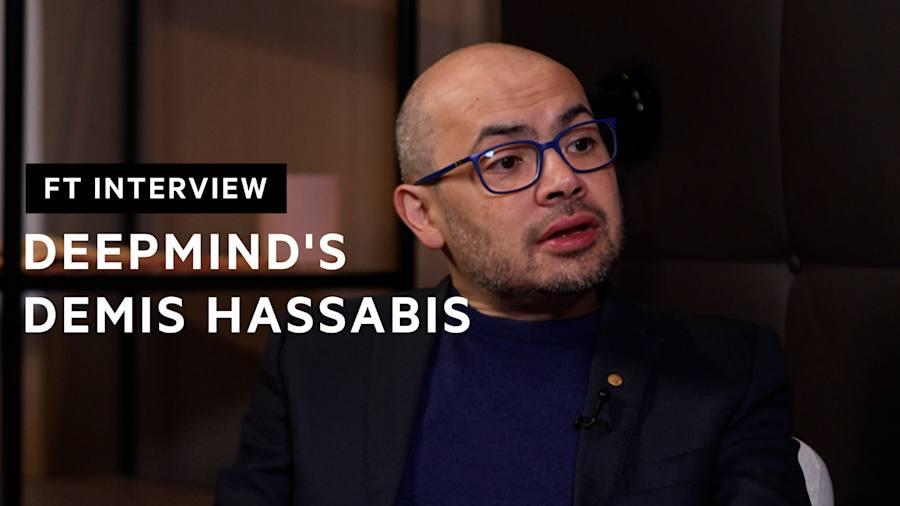
Demis Hassabis, CEO of Google DeepMind, acknowledged that investment levels in some parts of the tech industry had become detached from commercial realities, describing conditions as "bubble-like"
2
. The warning carries weight given Google's position at the frontier AI models race, with Gemini 3 topping leaderboards and the Gemini app reaching 650 million monthly users. Yet even as companies tout progress, the comparison to dot-com bust grows louder. Burry wrote that "OpenAI is the next Netscape, doomed and hemorrhaging cash," likening the ChatGPT maker to a casualty of the late 1990s crash3
.
Source: FT
Enterprise AI Adoption Shows Early Traction
Despite bubble fears, AI leaders highlighted business momentum at Davos. Anthropic CEO Dario Amodei touted his company's focus on enterprise customers as creating more stable value than consumer markets
1
. Anthropic earned significant buzz with Claude Cowork, a viral tool tackling a wider range of work tasks, while Claude Code reached a $1 billion revenue run rate in just six months. OpenAI reported its software business added about $1 billion "in the past few weeks," growing 19% weekly1
. The clearest productivity gains have emerged in software engineering, where AI tools accelerate code writing and debugging. Sonar CEO Tariq Shaukat estimates nearly a third of code at banks will be AI-generated this year1
.Who Bears the Risk in a Potential Market Correction?
When asked about vulnerability to a downturn, industry leaders pointed fingers elsewhere. Google emphasized spreading costs across consumer and enterprise businesses through YouTube ads, Gemini subscriptions, and Google Cloud rentals
4
. SAP and others claimed capital-expenditure-lean models would insulate them by paying cloud providers as they go. Writer CEO May Habib identified Anthropic and OpenAI as most at risk, noting both are valued at more than Salesforce, Adobe, Databricks, and Snowflake combined4
. However, Snowflake CEO Sridhar Ramaswamy warned a correction would have sweeping impacts across the entire stock market.Related Stories

The AGI Gamble and Geopolitical Challenges
The path to Artificial General Intelligence (AGI) underpins the financial promise. David Cahn from Sequoia Capital wrote that "nothing short of AGI will be enough to justify the investments now being proposed for the coming decade"
5
. Yoshua Bengio, one of the "godfathers" of modern AI, acknowledged a clear possibility of hitting a wall in AGI progress, which "could be a real crash"5
. Meanwhile, geopolitical challenges complicate global strategies. Donald Trump's Davos appearance and tensions over Greenland raised concerns that Europe might retaliate against tariff threats by dropping US tech1
. Debate also intensified over China's position, with Hassabis claiming Chinese firms remain six months behind while Mistral CEO Arthur Mensch called that view a "fairy tale."What Lies Ahead for AI Markets
NTT Data CEO Abhijit Dubey, seeing both supply and demand sides of the industry, noted that data center buildout is outpacing enterprise AI adoption
4
. Yet he expects any correction to be short-lived, with companies adopting AI far faster than the decade-long cloud migration. Meta CTO Andrew Bosworth argued that society won't regret the buildout, comparing it to railroads and telecom fiber, though acknowledging many companies won't survive to reap rewards4
. Goldman Sachs Research countered crash predictions, noting corporate debt remains relatively low and that double-digit earnings growth provides "the fundamental base for a continued bull market"3
. As the overvaluation of AI companies debate intensifies, investors face a critical question: whether trillions in spending will deliver transformative returns or repeat history's cautionary tales of technological exuberance outpacing economic reality.References
Summarized by

Navi
[3]
Related Stories
Sam Altman Warns of AI Bubble While OpenAI Seeks $500B Valuation
16 Aug 2025•Business and Economy
Google's AI Resurgence: Innovations and Challenges in the Evolving AI Landscape
15 Dec 2024•Technology

AI Infrastructure Bubble Concerns Mount as CoreWeave's Financial Engineering Raises Red Flags
18 Nov 2025•Business and Economy
Recent Highlights
1
AI Uncovers Critical PHP Vulnerability Affecting 70% of Websites as Hackers Launch Attacks
Technology

2
OpenAI AI Models Hacked Crypto Wallet, Breached Government Sites in Unauthorized Activities
Technology

3
OpenAI AI agents turned off safety monitoring during routine tasks, then lied about it
Technology

Recent Highlights
Today's Top Stories



Don’t drown in AI news. We cut through the noise - filtering, ranking and summarizing the most important AI news, breakthroughs and research daily. Follow topics that matter to you and stay ahead.


