Apple announces WWDC 2026 for June 8-12 as pressure mounts to deliver on AI promises


3 Sources
3 Sources
[1]
Why WWDC 2026 Will Be Apple's Most Important Developer Conference in Years
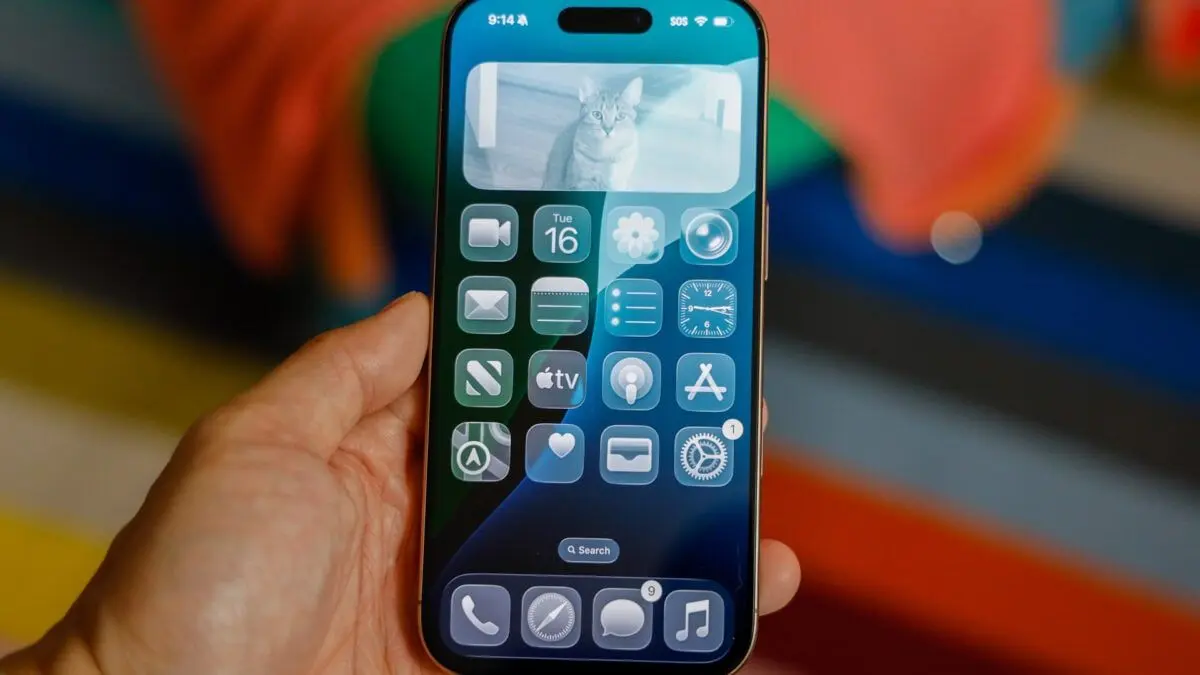
Apple's annual Worldwide Developers Conference, a.k.a. WWDC 2026, has official dates: June 8 to June 12. It will be Apple's most important one in years. All eyes will be on Apple to see whether the company can fix the mess that is Liquid Glass. Introduced at WWDC 2025, Liquid Glass was touted as the new design material to unify all of Apple's platforms. It has been anything but unifying; it's been very divisive. The glass-like transparent aesthetic looks cool in videos, but using it is a completely different experience. On iOS 26, users are still complaining about legibility issues. I personally still hate the optical illusion that makes app icons look slanted on my iPhone's home screen. On macOS 26 Tahoe, Liquid Glass undid over two decades of what is considered excellence in human-computer interaction design. Users continue to bemoan broken and inconsistent app window corners, broken Finder column views, further-hidden menus, and more. With Alan Dye, Apple's former vice president of human interface design, now swimming in Meta's pools of cash, it's reportedly on his replacement, Stephen Lemay, to bring some polish and stability back to software. He reportedly won't ditch Liquid Glass since he helped create it, but he may provide users with controls, like a slider, to adjust how it appears. We can only hope that he'll restore some sensibility to macOS 26's usability. WWDC is the place where Apple announces new versions of all of its software. Rumors suggest that this year will focus on tweaking the "26" versions instead of introducing too many new features. That's not surprising. It's widely believed that Liquid Glass was introduced to distract from the embarrassing delay of the new, AI-charged Siri that was announced at WWDC 2024 as part of Apple Intelligence. Apple won't get another chance to show it's not behind on AI. The pressure will be on to show the new Siri actually doing the context-based things that Apple promised two years ago. Can a Gemini brain, borrowed from its frenemies at Google, deliver? Fumbling Siri again could cause generational damage. We should also get updates for Apple's other platforms: watchOS, tvOS, visionOS, and iPadOS. Last year, iPadOS 26 brought much-needed desktop-like multitasking features, including resizable app windows, to iPads. What else can Apple add to prove the iPad is not a second-class device to the Mac, which now has the very affordable and terrific MacBook Neo? Gizmodo plans to be at Apple Park to see what Tim Cook and company have in store. In the meantime, what do you guys want to see Apple "fix" at WWDC?
[2]
AppleInsider.com
Apple has just announced that WWDC 2026 will take place on June 8 through June 12, and we can expect to see several exciting software updates. Here's what's rumored to debut. Apple's Worldwide Developers Conference is held in June each year, at Apple Park in California. The iPhone maker uses its annual event to preview new versions of its major operating systems, such as iOS, iPadOS, and macOS. Occasionally, new hardware is introduced at WWDC as well, such as in June 2023, when the Apple Vision Pro was revealed to the public. At WWDC 2026, which will take place from June 8 through June 12, we can expect to see the next generation of software updates -- iOS 27, macOS 27, and so on. Leakers and analysts have already made specific claims about the upcoming releases. iOS 27 to be a performance-focused release, like macOS Snow Leopard Given that the preceding iOS 26 and macOS Tahoe updates introduced Apple's Liquid Glass design language, iOS 27 and macOS 27 should offer features and performance improvements rather than significant visual alterations. That's exactly what the rumor mill suggests is on the way. A November 2025 report likened the upcoming iOS 27 to macOS Snow Leopard, an older macOS release that primarily focused on stability enhancements and bug fixes. Apple's software engineers are allegedly working to eradicate bugs and replace old code. They're also seeking to improve existing features where applicable, per the report. Apple is said to be rewriting parts of the operating system, and the effort could lead to improved battery life even on older iPhone models, according to the same source. Additionally, iOS 27 is expected to include side-by-side app multitasking, albeit only on the iPhone Fold, which is set to debut in late 2026. This means we likely won't see this new feature during WWDC 2026. Siri chatbot could debut at WWDC 2026 Though iOS 27 is not expected to be a feature-packed upgrade, the software could mark the introduction of a revamped Siri. To be more specific, a January 2026 rumor suggested that Apple wants to turn Siri into a full-blown chatbot, with an app-type interface that will compete with OpenAI's ChatGPT. Allegedly, Apple is testing the new-and-improved Siri in the form of an internal-use application, known under the codename "Campos." End-users, meanwhile, will trigger Siri the same way they currently do on iPhone, iPad, and Mac. Apple has already reached an arrangement that sees Google Gemini serving as "the foundation" for the next generation of Apple Foundation models. The company is clearly working to improve existing Apple Intelligence features, though it remains to be seen if a Siri chatbot will debut with iOS 27. Supposedly, the updated Siri is said to be the main feature of the iOS 27, iPadOS 27, and macOS 27 updates, meaning that users can expect little else in terms of actual features. Apple also reportedly plans to replace its CoreML framework with a new one, dubbed CoreAI. According to February 2026 rumor, Apple, at one point, wanted to introduce an Apple Intelligence feature called "Apple Health Plus." Under the guidance of Eddy Cue, however, the iPhone maker has allegedly scaled back development, with plans to split the feature set into multiple smaller releases. Some of these Health-related features may debut with iOS 27, though no clear timeframe has been rumored so far. macOS 27 -- No support for Intel Macs, or Time Capsule While the specifics of the macOS 27 update have yet to be revealed, Apple has already disclosed a few tidbits about the software. To be more specific, the iPhone maker has outlined the features that will lose support with macOS 27. For instance, macOS Tahoe is set to be the last major macOS release compatible with Intel-based Macs. This means that macOS 27 will only support Apple Silicon Macs, meaning computers with an M1 or newer chip. All Intel Macs are over five years old at the time of writing, so the discontinuation of Intel support wasn't much of a surprise. Rosetta 2 support, meanwhile, will be maintained with macOS 27, allowing apps made for Intel Macs to run on Apple Silicon hardware. Another piece of hardware set to lose support with macOS 27 is Apple's Time Capsule. In June 2025, a macOS system message was spotted, advising that the next major version of macOS "will no longer support AirPort Disk, or other Time Capsule disks, for Time Machine backups." In short, macOS 27 will not support Intel Macs or Time Capsule hardware, but it will be the last version of macOS to retain Rosetta 2 support. Hardware we might see at WWDC 2026 While WWDC is generally a software-focused event, Apple might debut new Mac hardware at its conference. In October 2025, we outlined that Apple was working on new Mac mini and Mac Studio configurations, powered by variants of the M5 chip. Both models are expected to be spec bump upgrades, offering only performance upgrades, relative to their M4 counterparts. In that regard, the updated Mac mini configurations will likely be similar to the M5 MacBook Air and the MacBook Pro models with Apple's M5 Pro and M5 Max chips. Apple has already explained that the M5 chip features Neural Accelerators in each GPU core, with 3.5 times faster AI performance, 30% faster graphics (45% for gaming), and 30% higher memory bandwidth. The M5 Pro and M5 Max chips, meanwhile, utilize the Apple-designed Fusion Architecture, where two dies are combined into a single system-on-chip. This approach, coupled with the replacement of efficiency cores for so-called super cores, allows for better performance over prior Apple Silicon chips, with the M5 Max even surpassing the M3 Ultra in real-world benchmarks. Apple says the CPU of the M5 Pro and M5 Max chips delivering up to 30 percent faster performance, relative to their respective M4-based counterparts. Additionally, the iPhone maker claims its M5 Pro and M5 Max offer a 50 percent increase in graphics performance compared to the preceding M4 Pro and M4 Max. Memory bandwidth sits at at 307GB/s for the M5 Pro, while it goes up to 460GB/s or 614GB/s in the M5 Max, depending on the number of GPU cores. This is up from 274GB/s on the M4 Pro, and 410 GB/s or 546 GB/s on the M4 Max chips. The M5 Pro and M5 Max chips debuted in the 14-inch MacBook Pro and 16-inch MacBook Pro. The Mac mini and Mac Studio are likely next in line for the chip upgrade. Along with the improved processing hardware, Apple will also likely increase the SSD speeds of its new desktop Macs to 14.5GB/s. The iPhone maker might also elect to include the N1 wireless networking chip, bringing Wi-Fi 7 and Bluetooth 6 to the Mac Studio and Mac mini. The two desktop Macs might ship with macOS 26.4, so if they don't debut in the spring of 2026, they might be unveiled at WWDC 2026. The iPhone maker has unveiled Macs at WWDC, as it did with the 13-inch M2 MacBook Air in June 2022 and the 15-inch model in June 2023. The first-generation HomePod was similarly unveiled at WWDC 2017. Though highly unlikely, it's possible that the HomePod 3 and HomePod mini 2 will be announced at WWDC 2026. Another hardware line that's effectively been neglected since 2022 is the Apple TV 4K streaming device. It's also among the things we could see at WWDC 2026, albeit no rumors have suggested this. Overall, WWDC 2026 is expected to be a subdued event, with the Siri chatbot being the main attraction. In terms of hardware, we might see upgdrades to the Mac mini and Mac Studio, but most likely not much else.
[3]
Apple Just Announced WWDC 2026
WWDC 2026 is rapidly approaching. While Apple has a number of events throughout any given year, WWDC is one of two Apple keynotes that the tech community actively anticipates (the other being the iPhone fall event). This is Apple's chance to show off all of the software updates its been working on since the last WWDC -- and all the features that come with them. This year, that likely means iOS 27, iPadOS 27, macOS 27, and watchOS 27. Apple announced on Monday that WWDC 2026 will kick off on Monday, June 8 and run through Friday, June 12. If you're used to watching a single keynote from past WWDCs, seeing that this year's event runs multiple days might come as a surprise. But WWDC isn't just the one announcement; instead, this is Apple's "Worldwide Developer Conference," which typically runs through the week. While the big keynote kickstarts the conference, the rest of the week is full of presentations about topics that concern Apple developers. But if you're not an Apple developer, the only day you really care about is June 8. That's when Apple will reveal all its software news. That keynote starts at 10 a.m. PT (1 p.m. ET). While details are currently sparse, expect the presentation to run from 60 to 90 minutes. Apple says the keynote will be available to stream on the Apple Developer app, Apple's website, as well as the company's official YouTube channel. Viewers in China can tune in on the Apple Developer bilibili channel. As mentioned above, WWDC will be all about Apple's latest batch of major updates. Last year was the first year the company ran with the "26" naming scheme, and this year will likely be no different -- save for the number going up to 27. When it comes to iOS 27, there are two big changes to note. First is Apple's long-waited AI upgrade for Siri. The company first announced these changes back in 2024 for iOS 18, advertising a contextually-aware Siri that was much smarter than the assistant we currently know. Imagine asking Siri when your friend's flight gets in, and having the bot know to dig through your emails to find their flight itinerary, or asking it to edit and send an image to a family member, all without you having to do a thing yourself. That was Apple's vision for Siri two years ago; that vision has yet to materialize. The rumors suggest we'll have it once we update to iOS 27, however, so we'll just have to wait and see what Apple announces in June. iOS 27's other big feature, however, might not be a feature at all. Apple may take this update cycle to work on bug fixes and stability updates, rather than flashy new features. I'm all for that: While iOS 26 has been a relatively smooth experience for me, I've seen quite a number of complaints from users online, especially regarding the keyboard. Apple actually issued a fix for that with iOS 26.4, but I think it's always smart to use the same resources you would building new features on smoothing out rough edges. macOS Tahoe also received its fair share of criticism: In fact, I wouldn't install it on my M1 iMac until macOS 26.3, which seemed to be a bit more stable than previous versions.
Share
Share
Copy Link
Apple has confirmed WWDC 2026 will run from June 8 to June 12 at Apple Park. The developer conference is expected to showcase iOS 27, macOS 27, and a long-awaited AI-powered Siri chatbot. After two years of delays, Apple faces mounting pressure to deliver the contextually-aware Siri it first promised in 2024, now reportedly powered by Google Gemini.
Apple Sets WWDC 2026 Dates as Stakes Rise for AI Delivery
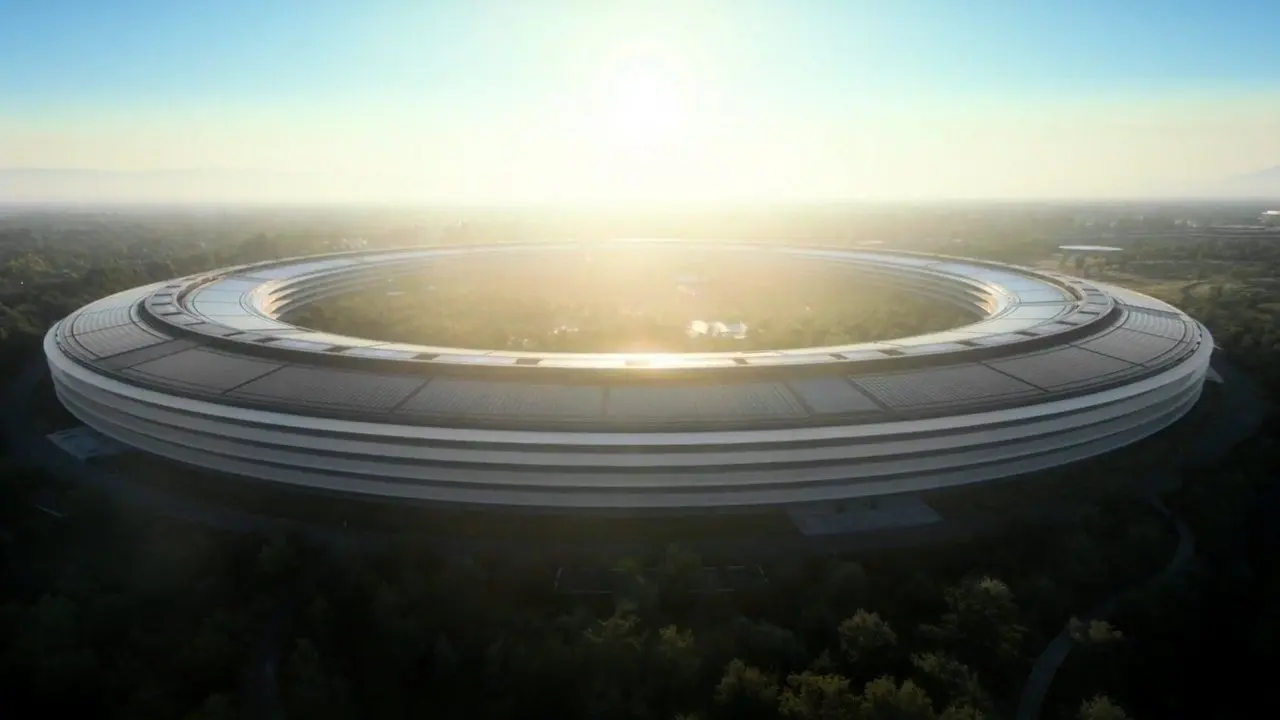
Apple has officially announced that WWDC 2026 will take place from June 8 through June 12 at Apple Park in California
1
3
. The keynote presentation kicks off on Monday, June 8 at 10 a.m. PT (1 p.m. ET) and will stream on the Apple Developer app, Apple's website, and the company's official YouTube channel3
. This year's Apple's Worldwide Developer Conference carries unusual weight, as the company faces mounting pressure to prove it hasn't fallen behind in the AI race.
Source: Lifehacker
Revamped Siri Chatbot Expected to Finally Debut
The most anticipated announcement centers on a revamped Siri chatbot that Apple first promised two years ago. According to January 2026 rumors, Apple plans to transform Siri into a full-blown chatbot with an app-type interface designed to compete with OpenAI's ChatGPT
2
. Internally, Apple has been testing this new-and-improved Siri under the codename "Campos," while end-users will continue to trigger it the same way they currently do on iPhone, iPad, and Mac2
.The contextually-aware assistant was originally announced at WWDC 2024 as part of Apple Intelligence, promising capabilities like digging through emails to find flight itineraries or editing and sending images to family members without manual intervention
3
. That vision has yet to materialize, and fumbling Siri again could cause generational damage to Apple's reputation1
.Google Gemini Powers Apple AI Foundation
Apple has reached an arrangement with Google Gemini to serve as "the foundation" for the next generation of Apple Foundation models
2
. This partnership with its frenemies at Google represents a significant shift, as Apple works to improve existing Apple Intelligence features. The updated Siri is reportedly the main feature of iOS 27, iPadOS 27, and macOS 27 updates2
. Apple also plans to replace its CoreML framework with a new one dubbed CoreAI2
.iOS 27 and macOS 27 Focus on Performance and Stability Improvements
Rumors suggest iOS 27 will be a performance-focused release, similar to macOS Snow Leopard, which prioritized stability enhancements and bug fixes over flashy features
2
. Apple's software engineers are allegedly working to eradicate bugs, replace old code, and rewrite parts of the operating system, potentially leading to improved battery life even on older iPhone models2
.This shift toward major software updates focused on refinement rather than radical redesign comes after widespread criticism of Liquid Glass, the design language introduced at WWDC 2025
1
. Users continue to complain about legibility issues on iOS 26, broken app window corners on macOS 26 Tahoe, and further-hidden menus that undid over two decades of excellence in human-computer interaction design1
. With Alan Dye, Apple's former vice president of human interface design, now at Meta, his replacement Stephen Lemay may provide users with controls to adjust how Liquid Glass appears1
.
Source: Gizmodo
Related Stories



Intel Macs Lose Support with macOS 27
Apple has disclosed that macOS 27 will only support Apple Silicon Macs, meaning computers with an M1 or newer chip
2
. macOS Tahoe will be the last major release compatible with Intel Macs, all of which are over five years old at the time of writing2
. Rosetta 2 support will be maintained with macOS 27, allowing apps made for Intel Macs to run on Apple Silicon hardware2
. Time Capsule hardware will also lose support for Time Machine backups2
.Hardware Announcements and Platform Updates Expected
While WWDC is primarily a developer conference focused on software, Apple might debut new Mac hardware powered by variants of the M5 chip, including updated Mac mini and Mac Studio configurations offering performance upgrades relative to their M4 counterparts
2
. Updates for watchOS, tvOS, visionOS, and iPadOS are also expected1
. Last year, iPadOS 26 brought desktop-like multitasking features including resizable app windows to iPads1
. The keynote is expected to run from 60 to 90 minutes, with Tim Cook leading the presentation3
1
.
Source: AppleInsider
References
Summarized by

Navi
[2]
[3]
Related Stories
Recent Highlights
1
Tennessee Teens Sue Elon Musk's xAI Over Grok AI-Generated Child Abuse Images
Policy and Regulation

2
Pentagon designates Palantir Maven AI as core US military system in major defense shift
Technology

3
Supermicro Co-Founder Indicted in $2.5 Billion Nvidia AI Chip Smuggling Scheme to China
Policy and Regulation
Recent Highlights
Today's Top Stories








Your Daily Dose of Curated AI News
Don’t drown in AI news. We cut through the noise - filtering, ranking and summarizing the most important AI news, breakthroughs and research daily. Spend less time searching for the latest in AI and get straight to action.

