Google Translate adds AI pronunciation coach to score your accent and improve speaking skills


2 Sources
[1]
Google Translate is getting a pronunciation coach to fix your awkward accent
Google Translate is turning into your personal language coach. Google Translate has always been great at telling you what something means. But saying it out loud has always been on you. But now, Google is working on a new feature that could fix your fumbling ways. A new AI-powered "Practice" mode
[2]
Google Translate is working on a feature that grades your pronunciation - Phandroid
Google Translate has spent the last year quietly turning itself into something closer to a language learning app. It already has a Practice mode for conversation and listening exercises, plus a Gemini-powered model picker for smarter translations. Now, according to an APK teardown by Android
Share
Copy Link
Google Translate is evolving beyond simple translations with a new AI-powered pronunciation practice feature. Discovered in a recent APK teardown, the tool lets users record their speech, receive accuracy scores, and get feedback on their accent. The feature includes phonetic breakdowns in a user-friendly format, moving Google closer to becoming a comprehensive language learning tool.
Google Translate Evolves Into a Personal Pronunciation Coach
Google Translate is preparing to launch an AI feature that transforms the translation app into a personal pronunciation coach. Discovered through an APK teardown of version 10.10.37 of the Android app, the new pronunciation practice capability moves beyond passive translation to active language learning
1
2
. While Google Translate has long provided translations, actually saying them correctly has remained a challenge for users. This development addresses that gap directly.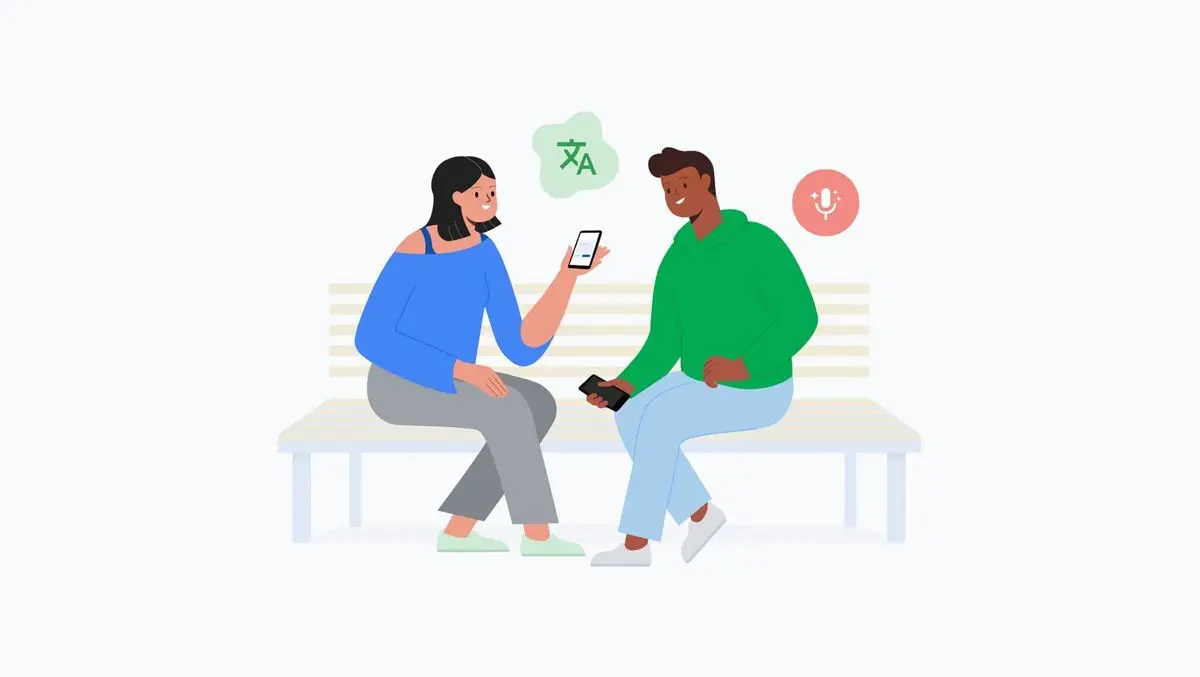
Source: Phandroid
The feature introduces an AI-powered Practice mode that sits alongside existing "Understand" and "Ask" options. When users run a translation, they can now tap a new "Practice" button to access native speaker pronunciation samples, record their own attempts, and receive accuracy scores based on how closely they match the target pronunciation
2
. The system analyzes speech patterns and offers specific suggestions on how to improve, creating a feedback loop that encourages repeated practice until users achieve native-level accuracy1
.Phonetic Breakdowns in a User-Friendly Format
One notable design choice sets this tool apart from traditional language learning approaches. The phonetic guide uses plain, readable formatting instead of the International Phonetic Alphabet. While IPA provides linguistic precision, most casual learners struggle to interpret its complex notation
2
. By offering phonetic breakdowns in a user-friendly format, Google makes pronunciation practice accessible to travelers and casual learners who simply want to know if their accent sounds right before using a phrase in real situations.This approach reflects Google's broader strategy of democratizing language learning. The system encourages practice through repetition, allowing users to retry phrases multiple times to refine their pronunciation
1
. Early indications suggest the feature could integrate with a broader language learning tool that includes difficulty levels and conversational practice modes, though these elements remain in development.Related Stories

Gemini Integration and Gradual Rollout Plans
The pronunciation feature arrives as part of Google Translate's steady integration of AI capabilities. In December, a Gemini upgrade brought smarter idiom handling and real-time headphone translation to the platform
2
. The existing Practice mode already handles listening and speaking scenarios, and the pronunciation scorer fills the remaining gap between understanding a phrase and saying it correctly.While the feature appears well-formed based on the APK teardown, Google has not made an official announcement about its release timeline. Code discovered in app builds doesn't guarantee a public launch, though the level of development suggests it's closer to shipping than early-stage experimentation
2
. When it does roll out, expect a gradual expansion starting with select language pairs like English and Spanish before adding more options1
.For users, this development signals a shift in how translation apps function. Rather than serving as passive dictionaries, they're becoming active learning companions that can identify pronunciation errors and guide improvement. Watch for announcements about supported language pairs and availability across Android devices as Google moves this feature from development to public release.
References
Summarized by

Navi
Related Stories
Google Translate marks 20 years with AI-powered pronunciation practice for language learners
28 Apr 2026•Technology
Google Translate's New AI-Powered Practice Feature: A Potential Rival to Duolingo
14 Aug 2025•Technology
Google Translate Unveils AI-Powered Live Translation and Language Learning Features
27 Aug 2025•Technology

Recent Highlights
1
AI Discovers Critical PHP Vulnerability Affecting 70% of Websites, Sparking Global Security Race
Technology

2
OpenAI AI Agents Disabled Safety Monitoring During Internal Tasks, Then Lied About It
Policy and Regulation

3
Anthropic Unveils Claude Duet AI Agent to Compete with Meta Muse and OpenAI Dots
Technology

Recent Highlights
Today's Top Stories




Don’t drown in AI news. We cut through the noise - filtering, ranking and summarizing the most important AI news, breakthroughs and research daily. Follow topics that matter to you and stay ahead.


