Apple's cautious AI approach could turn fortunes around with revamped Siri arriving in 2026


6 Sources
6 Sources
[1]
Apple needs to deliver an AI-charged Siri so good it gets older iPhone users to upgrade
California's Ro Khanna faces Silicon Valley backlash after embracing wealth tax Following an exodus of top execs, including AI boss John Giannandrea, Apple said it has the team in place to deliver the Siri upgrade in 2026, which could come as much as 21 months after the original announcement. Apple needs that new Siri to be good. Not just good enough to match the capabilities of popular AI chatbots like ChatGPT and Gemini, but also good enough to convince folks with older iPhones to upgrade to a new device so they can use it. Users need an iPhone 15 Pro, or better, to use Apple Intelligence. That was the Apple bull case a year ago. That Apple Intelligence, especially the new version of Siri, was going to be so amazing that people would get a new iPhone just to use it. That elusive iPhone "super cycle" was on the horizon. Nope. Perhaps next year. For investors, it's their best bet to see a boom in Apple shares from AI. Unlike the $20 per month OpenAI charges to use the full version of ChatGPT, Apple doesn't charge for Apple Intelligence. Unless Apple changes its strategy and starts charging a subscription, its only hope is to leverage AI to move new iPhones, Macs, and iPads. It also opens up Apple to launch different kinds of hardware products, like the rumored smart glasses that could come as soon as next fall. But don't count on an accessory like that moving the needle too much at Apple. Apple rarely misses the way it did with AI this year, especially with something as important and as transformative as AI. Luckily for Apple, it's still early in the AI game. And it proved this year with the iPhone 17 lineup that new hardware designs and features can lead to sales growth. But it can only miss once. There's not going to be another chance for a mulligan.
[2]
Apple may see the future of LLMs very differently than most: report - 9to5Mac
Apple has been subject to a lot of criticism over its AI strategy, especially after it delayed several powerful Siri upgrades earlier this year. But a new report may help explain why, in part, Apple's AI approach differs so much from competitors. There's no shortage of critiques of Apple's AI strategy, but heading into the new year there's fresh optimism about Apple's approach. Last month, Wall Street started signaling that Apple's conservative AI spending could actually prove an advantage for the company. A new report published today at The Information echoes that claim. But while much of the report focuses on speculation and leaks we already knew, there is a fascinating tidbit concerning long-term AI sentiment within Apple leadership. After mentioning Apple's rumored Google partnership for powering the new Siri, Aaron Tilley writes: Apple still has a team working on its own internal models that it could take advantage of in the future. But some Apple leaders hold the view that large language models will become commodities in the years to come and that spending a fortune now on its own models doesn't make sense. That second sentence could go a long way toward explaining Apple's AI approach so far. While competitors like OpenAI, Meta, and Google have invested significant resources into developing LLMs, Apple has been more reserved in its spending. If Apple leadership truly does believe LLMs will become commodities, then the company's AI success will depend less on bespoke new models, and more on its ability to control the hardware, software, and services that AI runs on. And for now at least, those are the very areas that Apple's at its best. What do you think of this new report about Apple's LLM outlook? Let us know in the comments.
[3]
Report: Apple's AI Strategy Could Finally Pay Off in 2026
Apple's restrained artificial intelligence strategy may pay off in 2026 amid the arrival of a revamped Siri and concerns around the AI market "bubble" bursting, The Information argues. The speculative report notes that Apple has taken a restrained approach with AI innovations compared with peers such as OpenAI, Google, and Meta, which are investing hundreds of billions of dollars in data centers, chips, and large language model training. This has fueled criticism that Apple is falling behind in the AI space, particularly as Siri has significantly lagged behind more advanced, capable, and reliable conversational systems. The report argues that market sentiment toward AI spending is beginning to show signs of skepticism, with questions emerging over whether such large investments can be justified by near-term revenue. Against that backdrop, Apple's decision to limit AI-specific capital expenditures has left it with more than $130 billion in cash and marketable securities, giving the company the option to pursue acquisitions or partnerships if valuations of AI startups fall. Apple's biggest AI-related move in 2026 will be the long-anticipated overhaul of Siri, which is expected to arrive in the spring. The updated assistant is set to be more conversational and capable of completing multi-step tasks. To power it, Apple is believed to be adopting Google's Gemini, reflecting an internal view that large language models may become commoditized and not worth the cost of large-scale proprietary development. The iPhone is said to be a key strategic advantage. Unlike AI companies that rely on standalone apps or web services, Apple can distribute AI features directly through software updates and system-level integrations across its devices. Efforts by AI companies to build competing hardware face major challenges in manufacturing, distribution, and ecosystem development, areas where Apple has very strong footholds. The Information also points to recent leadership changes as part of Apple's effort to refocus its AI work. Siri has been placed under Mike Rockwell, who was responsible for launching the Vision Pro headset, following significant delays to the assistant's overhaul. In addition, Apple's AI chief John Giannandrea announced his retirement earlier in December, with parts of his organization redistributed into product-focused teams amid internal concerns about a lack of clear product direction. While Apple has a history of early but uneven AI efforts, including the original launch of Siri in 2011, The Information argues that these shortcomings have not materially harmed its core businesses. 2026 may be an inflection point in which Apple's cautious strategy could appear prescient if enthusiasm for large-scale AI spending continues to cool and the company finally delivers a more capable version of Siri.
[4]
AppleInsider.com
Against the backdrop of long-overdue Siri features, a new report argues that Apple's cautious AI approach could be one of its biggest advantages in 2026. Apple's artificial intelligence endeavors continue to be the subject of speculation, even as we move closer to the planned contextually aware version of Siri. After it failed to deliver an AI upgrade it promised at WWDC 2024, the iPhone maker adopted a more restrained position regarding AI. Because of this, it's been argued that Apple is late to the AI race, that the company hasn't delivered products nearly as impressive as those of rival companies like Google. Apple has also toned down its Apple Intelligence marketing, opting to focus on Liquid Glass as the key change for its 2025 software releases. One report, however, claims that Apple's more conservative approach to AI could ultimately benefit the company in the long run. In other words, slow and steady might win the AI race. The Information speculates that the iPhone maker's relatively low spending on AI data centers and chips could help its position in the near future. According to the publication, Meta and Google have spent hundreds of billions on data centers and AI chips. Meanwhile Apple still has $130 billion that it could use to fund additional AI-related endeavors. Apple hasn't made any major AI acquisitions in 2025, which puts it in a better position relative to companies that have spent large amounts on AI with little near-term revenue. Additionally, instead of focusing entirely on in-house models like its competitors, Apple reportedly plans to offer Google Gemini-powered features in 2026. With this approach, Apple has more money to spend on AI acquisitions throughout 2026. It is claimed that, despite the various job movements across the year, Apple still has a team working on internal models that it could use in the future. However, some leaders in the company think that LLMs will be commoditized in the coming years, making internal model development difficult to justify. The report also claims that Apple has another advantage with the iPhone, saying that it's the perfect vessel and delivery mechanism for AI-related features and enhancements. This is even though AI-powered features are available across all sorts of products and applications these days, from Android phones to Windows PC. In any case, Apple has undoubtedly made changes to its AI strategy, as can be seen with the retirement of AI head John Giannandrea. The company's artificial intelligence efforts are now under the control of Mike Rockwell, known for his work on the Apple Vision Pro. Time will tell if and when these AI-related efforts will pay off, though. It also remains to be seen whether or not LLMs will continue to be as prominent as they are now, or if the bubble will burst. Until then, we'll continue to see speculation.
[5]

Apple Could Emerge as a Major AI Powerhouse in 2026: Report
Apple has been investing in AI infrastructure and partnership deals Apple's journey in the artificial intelligence (AI) space has been lacklustre. The Cupertino-based tech giant first announced its foray into the space with Apple Intelligence at its Worldwide Developers Conference (WWDC) in 2024. In the subsequent months, the company released several new AI features for its devices, but most were either viewed as novelty or were not on par with what competitors were offering. However, a new report now claims that the iPhone maker is now poised to turn its fortunes around in 2026. Apple's AI Could Make a Comeback in 2026 The Information predicted that in 2026, Apple would turn its AI slump around and emerge as a major player in the space. The claim may seem bold at first, but the publication backs it with reasons why the company might have collected all the pieces it needs to scale AI capabilities across its devices and services. Apple was a late entrant in the AI game. While OpenAI pioneered the space in late 2022 with the release of ChatGPT, companies such as Microsoft and Google followed suit as early as the first half of 2023. The same year witnessed the inception and rise of startups such as Anthropic and Perplexity, which are now established names in the space. Even those companies which took a cautious approach, such as Amazon and Meta, established themselves in the space by the end of the year. But Apple did not make any AI commitments until March 2024, when it first unveiled Apple Intelligence, a suite of new AI features for its devices. These features, then, did not reach the market until late 2024. By the time features such as Writing Tools, Image Playground, Clean Up, and Genmoji arrived, other companies had already moved on to more advanced applications. It also did not help that not only did the iPhone maker partner with OpenAI to power some of the features, a move which was considered a first for the company, but it also had to recall its AI Notification Summaries feature due to error-laden execution. To add to its troubles, Apple was not able to deliver on the promise of a revamped AI-powered Siri. It still has not. But The Information claims that despite a disastrous 2024 and a slow 2025, the next year will be the turning point for the company. The publication says that Apple has already built a solid infrastructure with the Private Cloud Compute (PCC) and NPU-enabled chipset in devices geared for AI workloads. The company's focus on building partnerships with AI companies is also labelled as strategic. Notably, apart from OpenAI, the tech giant is reportedly working with Anthropic and is in talks with Google. The publication's argument is that, with all of these parts in place, an experienced AI team (albeit losing a senior director) that has produced several papers on innovation and is bolstered by new partnerships, the company can now focus on churning out features and products. It is said that Apple's turning point will be spring 2026, when the tech giant finally releases the much-anticipated Siri. But for the rest of the roadmap, one can only hope.
[6]

Apple may plan AI comeback in 2026 with focus on software integration: Here's what we know so far
Apple is betting on deep ecosystem integration across iPhones and other devices instead of building costly proprietary AI models. Apple's approach to AI may begin to show results in 2026, as per the Information, even as rivals continue to pour massive sums into AI infrastructure and model development. Apple has adopted a more cautious approach, in contrast to companies like OpenAI, Google and Meta that are investing hundreds of billions of dollars in data centres, chips and large language models. This has fuelled criticism that the company is lagging behind in artificial intelligence, especially in light of major Siri upgrades being delayed and the assistants' ongoing inability to match the capabilities of more advanced conversational assistants. However, the report also mentioned that Apple has changed its approach of spending on AI. Investors and analysts are reportedly increasingly questioning whether the current scale of AI investments is justified by short-term returns. In that context, Apple's limited AI-focused capital expenditure has left the company with more than $130 billion in cash and marketable securities, giving it the freedom to pursue acquisitions or partnerships if AI startup valuations fall. One of the key comeback plans is the much-anticipated Siri redesign. According to reports, it could be introduced in spring 2026. The updated AI assistant is said to be more capable and conversational. Apple has reportedly used Google Gemini models to achieve this. However, the company has not confirmed the details yet. Instead of racing to build the most advanced proprietary models, Apple appears focused on leveraging its ecosystem. With hundreds of millions of iPhones in active use, the company can roll out AI features through system updates and deep software integration, an advantage that standalone AI apps and new hardware startups struggle to match. The report also mentioned organisational changes aimed at Apple's AI execution. Siri has been moved under the leadership of Mike Rockwell, best known for overseeing the Vision Pro headset, following repeated delays to its AI upgrade. Meanwhile, Apple's AI chief John Giannandrea retired earlier this month, with his teams restructured into more product-centric groups amid concerns about strategic clarity.
Share
Share
Copy Link
After a disappointing 2024, Apple's restrained AI strategy may prove advantageous as competitors pour hundreds of billions into data centers. With over $130 billion in cash reserves and a major Siri overhaul slated for spring 2026, the iPhone maker is positioned to capitalize if the AI spending bubble bursts. The company believes Large Language Models will become commoditized, making its hardware and software integration the key differentiator.
Apple AI Takes a Different Path as Competitors Spend Billions
While OpenAI, Google, and Meta have invested hundreds of billions of dollars in data centers, chips, and Large Language Models training, Apple has adopted a cautious AI approach that industry observers now believe could pay off significantly
1
3
. The iPhone maker's restrained AI spending has left it with more than $130 billion in cash reserves and marketable securities, providing substantial flexibility for acquisitions or partnerships if AI startup valuations decline3
4
.
Source: Digit
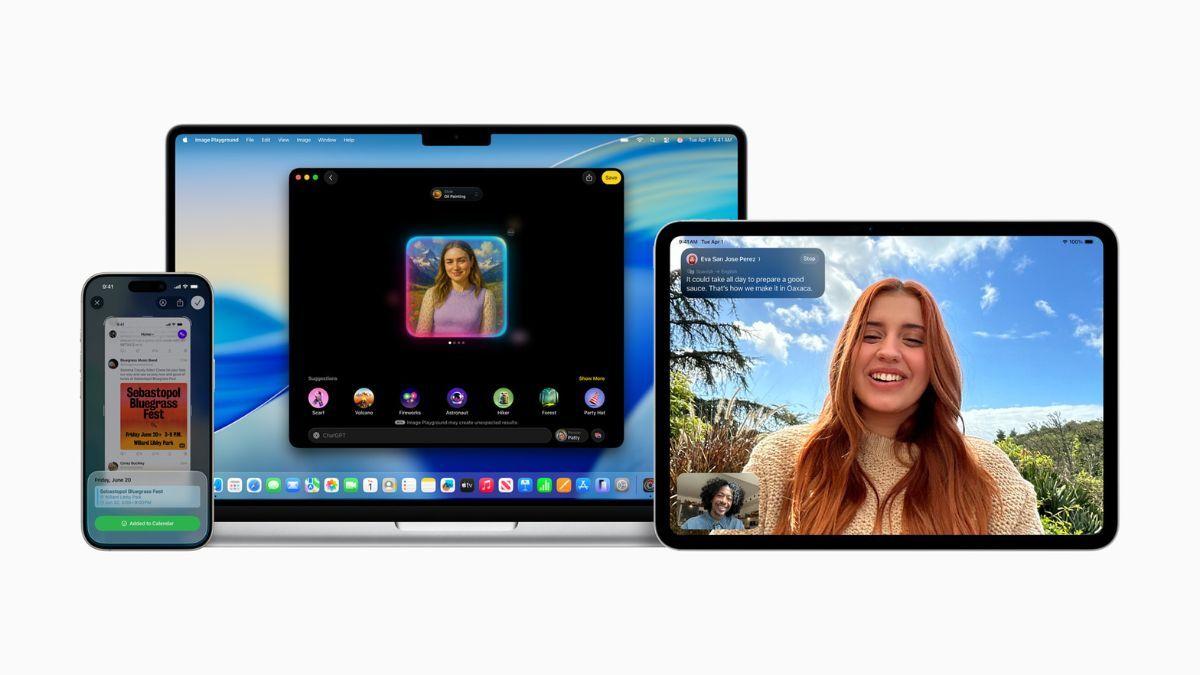
Apple's journey in artificial intelligence has been rocky since announcing Apple Intelligence at WWDC 2024. The company faced criticism for delayed features and an AI-powered Siri upgrade that still hasn't materialized, coming as much as 21 months after the original announcement
1
5
. Following an exodus of top executives, including AI boss John Giannandrea who announced his retirement in December, Apple reorganized its AI efforts under Mike Rockwell, known for launching the Apple Vision Pro headset3
4
.Spring 2026 Siri Overhaul Could Drive iPhone Upgrade Cycle
The long-anticipated Siri upgrade is expected to arrive in spring 2026, representing Apple's biggest AI-related move
5
. The updated assistant will be more conversational and capable of completing multi-step tasks, potentially powered by Google Gemini rather than proprietary models3
. This partnership approach reflects internal views among Apple leadership that Large Language Models will become commodities in coming years, making massive proprietary development spending difficult to justify2
4
.
Source: Gadgets 360
For investor confidence and sales growth, Apple needs the new Siri to be exceptional—not just matching ChatGPT and Gemini capabilities, but compelling enough to drive an iPhone upgrade cycle among users with older devices
1
. Currently, users need an iPhone 15 Pro or better to access Apple Intelligence features. Unlike the $20-per-month OpenAI charges for ChatGPT, Apple doesn't charge for Apple Intelligence, meaning its only revenue path is leveraging AI features to move new iPhones, Macs, and iPads1
.Related Stories


Hardware and Software Integration Gives Apple Strategic Edge
Apple's control over hardware and software integration represents a significant advantage that AI competitors struggle to replicate
3
4
. The iPhone serves as an ideal delivery mechanism for AI features through system-level integrations and software updates, while AI companies attempting to build competing hardware face major challenges in manufacturing, distribution, and ecosystem development3
. The company has built infrastructure with Private Cloud Compute and NPU-enabled chipsets in devices optimized for AI workloads5
.Market sentiment toward AI spending is showing signs of skepticism, with questions emerging over whether massive investments can be justified by near-term revenue
3
. If Apple leadership's belief that LLMs will become commoditized proves accurate, the company's success will depend less on bespoke models and more on controlling the hardware, software, and services that AI runs on—areas where Apple excels2
. Apple still maintains a team working on internal models for future use, providing optionality as the AI landscape evolves2
4
. The company's focus on building partnerships with AI companies including OpenAI, Anthropic, and reportedly Google positions it strategically without massive capital commitments5
.
Source: AppleInsider
References
Summarized by

Navi
[4]
[5]
Related Stories
Recent Highlights
1
Apple Plans Major Siri AI Overhaul in iOS 27 With Third-Party Chatbot Integration
Technology

2
OpenAI shuts down Sora after six months, ending Disney's $1 billion licensing partnership
Technology

3
AI chatbots validate you too much, making you less kind to others, Stanford study reveals
Science and Research

Recent Highlights
Today's Top Stories







Your Daily Dose of Curated AI News
Don’t drown in AI news. We cut through the noise - filtering, ranking and summarizing the most important AI news, breakthroughs and research daily. Spend less time searching for the latest in AI and get straight to action.

