Apple loses senior Siri executive and AI researchers to Google DeepMind and Meta


7 Sources
7 Sources
[1]
Apple Loses More AI Researchers and a Siri Executive in Latest Departures
The company has struggled to keep up with peers in the artificial intelligence race, and a decision to outsource some technology to Alphabet Inc.'s Google has rankled staff, contributing to an exodus of talent from its AI ranks. Apple Inc. has lost at least four more of its artificial intelligence researchers in recent weeks in addition to a top Siri executive, with the staff headed to employers such as Meta Platforms Inc. and Google DeepMind. The latest exits include Yinfei Yang, Haoxuan You, Bailin Wang and Zirui Wang. Yang left to start a new company, while You and Bailin Wang joined Meta, according to people familiar with the matter. You left for that company's Superintelligence research arm, and Bailin Wang is working on Meta recommendations, said the people, who asked not to be identified because the moves haven't been announced. The departures underscore the continued turbulence within Apple's AI division. The company has struggled to keep up with peers in the artificial intelligence race, and a decision to outsource some technology to Alphabet Inc.'s Google has rankled staff. In recent months, the company has suffered an exodus of talent, especially from its AI ranks. In Zirui Wang's case, the researcher is joining Google DeepMind, which is helping Apple build the core AI models that will power new features. That includes the technology underpinning an upgraded version of the Siri voice assistant that's launching this year. In another previously unreported development, Apple executive Stuart Bowers left for Google DeepMind as well. He was one of the company's most senior executives working on Siri. Bowers had been a top leader on Apple's failed self-driving car project before becoming one of the managers in charge of turning around the company's voice assistant. He got an expanded role last year working on Siri's ability to figure out how to respond to a user. In that role, he reported to new Siri chief Mike Rockwell. Apple, Google and Meta spokespeople declined to comment. Apple's AI challenges have contributed to a stock slump this year -- even as the company's sales reach new heights. It reported blockbuster earnings on Thursday, including more than $85 billion in iPhone sales. Still, the lack of compelling AI breakthroughs and the ongoing drain of top talent remain a significant overhang, complicating the company's efforts to engineer a turnaround. The defections follow a major reorganization of Apple's AI efforts last year. Chief Executive Officer Tim Cook relieved longtime AI chief John Giannandrea of his duties and handed responsibility to software head Craig Federighi. Apple also hired Amar Subramanya, a former Google and Microsoft Corp. AI executive, to oversee parts of the organization. The recent departures came from Apple's Foundation Models, or AFM, team, which develops the underlying technology behind the Apple Intelligence platform. The group has faced mounting scrutiny following repeated delays to the new Siri and a muted reception to Apple's current AI features. Over the summer, the team lost its former leader, Ruoming Pang, to Meta. It is now run by AI researcher Zhifeng Chen. Until the end of last year, the AFM team had been overseen by former Google executive Daphne Luong. She was sidelined alongside Giannandrea and remains at Apple reporting to him, without operational responsibilities. Chen and Apple's AI research and testing teams now report to Subramanya. The company is preparing two new versions of Siri. One is a near-term update that will tap into personal data to answer queries. The other is a more ambitious overhaul for later this year that's built around a chatbot-style interface. Both versions will run on a new architecture powered by models developed by Google's team. Apple has lost well over a dozen AI researchers in the past six months, with many exits stemming from the company's decision to outsource some of its technology. When asked on Thursday why Apple choose to use Google, Cook said it would provide "the most capable foundation" for Apple's AI models. "We believe that we can unlock a lot of experiences and innovate in a key way due to the collaboration," he said during a post-earnings conference call with analysts. The company continues to rely on its own models for on-device Apple Intelligence features. And it's unlikely to depend on outside partners indefinitely, given the competitive stakes of the AI race and the need to deliver a unique experience.
[2]
Apple loses more AI researchers, Siri exec to Google and Meta - 9to5Mac
A new report from Bloomberg today highlights the ongoing exodus from Apple's artificial intelligence and Siri teams. Mark Gurman reports that Apple has lost "least four more of its artificial intelligence researchers in recent weeks in addition to a top Siri executive." The report says the departing employees are headed to companies including Meta and Google DeepMind: The latest exits include Yinfei Yang, Haoxuan You, Bailin Wang and Zirui Wang. Yang left to start a new company, while You and Bailin Wang joined Meta, according to people familiar with the matter. You left for that company's Superintelligence research arm, and Bailin Wang is working on Meta recommendations, said the people, who asked not to be identified because the moves haven't been announced. In Zirui Wang's case, the researcher is joining Google DeepMind, which is helping Apple build the core AI models that will power new features. That includes the technology underpinning an upgraded version of the Siri voice assistant that's launching this year. Meanwhile, Stuart Bowers has also left for Google DeepMind. Gurman describes Bowers as one of Apple's most "senior executives working on Siri." His role inside Apple was expanded last year and he reported to Siri chief Mike Rockwell. Bowers also worked on Apple's defunct self-driving car project. There's a bit of irony in Bowers leaving Apple for Google, where he will work on the Gemini models that Apple is using to build its next-generation version of Siri. Apple's AI and Siri teams have gone through major reorganizations over the last year. Most notably, John Giannandrea stepped down from his role as the company's SVP of Machine Learning and AI Strategy in December. Giannandrea is staying on as an advisor until spring 2026 before ultimately retiring.
[3]
Apple Said to Push Ahead With Siri Chatbot Despite AI Talent Drain
Apple's Foundation Models team is currently run by Zhifeng Chen Apple's artificial intelligence (AI) projects have so far sparked a tepid response from users and investors. Despite announcing AI as a key venture during its latest earnings call, CEO Tim Cook did not specify any monetisation plans, leading to a weak stock market reaction. Now, a new report reveals that the Cupertino-based tech giant might have lost multiple AI researchers to rival companies, adding to its list of problems. However, despite the setbacks, the company is reportedly continuing with its plans to release a chatbot-style Siri experience later this year. Multiple Employees Leave Apple According to a Bloomberg report, Apple has lost four AI researchers in recent weeks. The list reportedly includes Yinfei Yang, Haoxuan You, Bailin Wang, and Zirui Wang. This list of exits is in addition to the departure of Stuart Bowers, a Senior Director, who left last month to join a rival. Two of the former Apple researchers, You and Bailin Wang, have reportedly joined Meta, with the former working with the Superintelligence Labs while the latter working with the Recommendations team. Zirui Wang and Bowers have both joined Google DeepMind, as per the report. Yang, on the other hand, is said to be working on his company, which is currently in stealth. Interestingly, the four researchers were reportedly working in Apple's Foundation Models (AFM) team, whereas Bowers was working on Siri. The departures have reportedly resulted in prompt reorganisation in the Cupertino tech giant. Most notably, the AFM team is currently said to be headed by AI researcher Zhifeng Chen after the former chief, Ruoming Pang, left for Meta last year. Despite the talent drain, the report claims that Apple remains on track for its Siri projects. The first project, which is sometimes referred to as the Advanced Siri, is said to let the voice assistant access the user's data scattered across the device and answer queries based on it. The second is a more ambitious project that aims to turn Siri into a chatbot-style experience. It is said to be dubbed Campos internally, and is slated to arrive later this year, likely alongside iOS 27 and adjacent updates for other devices. This AI chatbot is said to come equipped with all the capabilities of a typical chatbot, such as ChatGPT or Gemini. Both versions are said to be powered by Google's custom AI models.
[4]
Apple loses more AI researchers and a Siri executive in latest departure - The Economic Times
Apple has lost at least four more of its artificial intelligence researchers in recent weeks in addition to a top Siri executive, with the staff headed to employers such as Meta Platforms and Google DeepMind. The latest exits include Yinfei Yang, Haoxuan You, Bailin Wang and Zirui Wang. Yang left to start a new company, while You and Bailin Wang joined Meta, according to people familiar with the matter. You left for that company's Superintelligence research arm, and Bailin Wang is working on Meta recommendations, said the people, who asked not to be identified because the moves haven't been announced. The departures underscore the continued turbulence within Apple's AI division. The company has struggled to keep up with peers in the artificial intelligence race, and a decision to outsource some technology to Alphabet Inc.'s Google has rankled staff. In recent months, the company has suffered an exodus of talent, especially from its AI ranks. In Zirui Wang's case, the researcher is joining Google DeepMind, which is helping Apple build the core AI models that will power new features. That includes the technology underpinning an upgraded version of the Siri voice assistant that's launching this year. In another previously unreported development, Apple executive Stuart Bowers left for Google DeepMind as well. He was one of the company's most senior executives working on Siri. Bowers had been a top leader on Apple's failed self-driving car project before becoming one of the managers in charge of turning around the company's voice assistant. He got an expanded role last year working on Siri's ability to figure out how to respond to a user. In that role, he reported to new Siri chief Mike Rockwell. Apple, Google and Meta spokespeople declined to comment. Apple's AI challenges have contributed to a stock slump this year -- even as the company's sales reach new heights. It reported blockbuster earnings on Thursday, including more than $85 billion in iPhone sales. Still, the lack of compelling AI breakthroughs and the ongoing drain of top talent remain a significant overhang, complicating the company's efforts to engineer a turnaround. The defections follow a major reorganization of Apple's AI efforts last year. Chief Executive Officer Tim Cook relieved longtime AI chief John Giannandrea of his duties and handed responsibility to software head Craig Federighi. Apple also hired Amar Subramanya, a former Google and Microsoft Corp. AI executive, to oversee parts of the organization. The recent departures came from Apple's Foundation Models, or AFM, team, which develops the underlying technology behind the Apple Intelligence platform. The group has faced mounting scrutiny following repeated delays to the new Siri and a muted reception to Apple's current AI features. Over the summer, the team lost its former leader, Ruoming Pang, to Meta. It is now run by AI researcher Zhifeng Chen. Until the end of last year, the AFM team had been overseen by former Google executive Daphne Luong. She was sidelined alongside Giannandrea and remains at Apple reporting to him, without operational responsibilities. Chen and Apple's AI research and testing teams now report to Subramanya. The company is preparing two new versions of Siri. One is a near-term update that will tap into personal data to answer queries. The other is a more ambitious overhaul for later this year that's built around a chatbot-style interface. Both versions will run on a new architecture powered by models developed by Google's team. Apple has lost well over a dozen AI researchers in the past six months, with many exits stemming from the company's decision to outsource some of its technology. When asked on Thursday why Apple choose to use Google, Cook said it would provide "the most capable foundation" for Apple's AI models. "We believe that we can unlock a lot of experiences and innovate in a key way due to the collaboration," he said during a post-earnings conference call with analysts. The company continues to rely on its own models for on-device Apple Intelligence features. And it's unlikely to depend on outside partners indefinitely, given the competitive stakes of the AI race and the need to deliver a unique experience.
[5]

Apple Loses A Senior Exec Working On Siri And 4 AI Researchers As Talent Bleed Resumes
Apple's AI-related talent bleed continues unabated, judging from the most recent spate of hard-hitting departures. In a new report out today, Bloomberg's Mark Gurman has disclosed that Apple has lost Stuart Bowers to Google's DeepMind. Bowers was one of the most senior Apple executives working on Siri, and reported directly to Siri head Mike Rockwell. Additionally, Apple has lost four AI researchers: Yinfei Yang, Haoxuan You, Bailin Wang and Zirui Wang. This comes as Apple lost four key executives back in December 2025 as well. It started with Apple's AI czar, John Giannandrea, who was kicked to the proverbial curb in late 2025, and summarily replaced with Microsoft's Amar Subramanya. Then, it was the turn of Apple's head of UI design, Alan Dye, who was formally poached by Meta around the same time. Then, Apple announced that its general counsel, Kat Adams, and its vice president for Environment, Policy, and Social Initiatives, Lisa Jackson, would be leaving the company soon. Of course, the Cupertino giant's core iPhone design team is also bleeding talent to Jony Ive's io, which was recently acquired by OpenAI in its quest for an "iPhone Killer" device. According to Bloomberg's Mark Gurman, OpenAI has hired around 40 Apple engineers in the last month or so alone! Some of these prominent hires from Apple include Matt Theobald, a manufacturing design expert, and Cyrus Daniel Irani, the lead on human interface design. Moreover, Abidur Chowdhury, the designer of the iPhone Air and a rising star within the company, recently left his cushy job with the tech giant to pursue a stint at an unnamed AI startup. Coming back, Bowers' departure is particularly hard-hitting given the fact that he would presumably work on Google's Gemini AI models, the same ones whose bespoke variant is expected to power a revamped Siri launching in the next few months.
[6]

Apple Loses More AI Researchers to Meta and Google | PYMNTS.com
Bloomberg's Mark Gurman characterizes the departures as an example of ongoing turbulence within Apple's AI unit. The company has scrambled to stay on pace with its AI peers, and its decision to hand off some technology to Google hasn't sat well with staff, the report added. In addition to the four departures, Bloomberg said Apple executive Stuart Bowers has also left for DeepMind. He had been a senior leader in the company's abandoned self-driving vehicle project before moving over to revamping Apple's Siri voice assistant. The news follows a series of reports last year about executive departures at Apple. The company said in December that Lisa Jackson, vice president for environment, policy and social initiatives, was due to retire in late January of this year, while Kate Adams, general counsel, will retire in late 2026. Also in December, The Wall Street Journal (WSJ) reported that dozens of employees had left Apple for OpenAI and Meta in recent months. Those workers included engineers and designers with expertise in areas such as audio, watch design and robotics. Apple last week reported earnings for what CEO Tim Cook called "a quarter for the record books," posting $143.8 billion in quarterly revenue, up 16% year over year. "But for the banking, payments and digital commerce crowd, the more interesting thread running through Apple's fiscal 2026 first-quarter earnings call for the period ending Dec. 27 wasn't just iPhone demand, it was how Cook is positioning Apple Intelligence as a business lever, why Apple picked Google as a key AI partner, and what Apple says it's doing to keep payments safer," PYMNTS wrote. The CEO framed Apple Intelligence less as a standalone product and more as an operating-system-level capability that can increase the value of its entire ecosystem and, by extension, make room to monetize across hardware and services. Cook focused on early usage and practical features rather than grand "AI platform" rhetoric, stressing that the experience is meant to be "personal" and "private," integrated into the way customers already interact with the iPhone.
[7]

Apple loses more AI researchers to Meta and Google DeepMind By Investing.com
Investing.com -- Apple Inc. has lost at least four more artificial intelligence researchers in recent weeks, Bloomberg reported Friday. The departing researchers include Yinfei Yang, who left to start a new company, while Haoxuan You and Bailin Wang joined Meta, the report said. You moved to Meta's Superintelligence research division, and Bailin Wang is now working on Meta's recommendations systems. Access breaking news faster with institutional-grade feeds, immediate stock impact metrics, and analyst response tracking -- get 55% off InvestingPro. Meanwhile, researcher Zirui Wang has joined Google DeepMind, the same company that is helping Apple build core AI models for new features, including technology for an upgraded version of Siri launching this year. In another development, Stuart Bowers, a senior executive working on Siri, has also left for Google DeepMind. Bowers had previously been a top leader on Apple's self-driving car project before becoming one of the managers tasked with improving the company's voice assistant. Last year, he received an expanded role focused on Siri's response capabilities, reporting to new Siri chief Mike Rockwell. These exits highlight ongoing challenges within Apple's AI division as the company struggles to keep pace with competitors in the artificial intelligence field. The decision to outsource some technology to Alphabet Inc.'s Google has reportedly caused discontent among staff, contributing to what has become an exodus of talent, particularly from Apple's AI teams.
Share
Share
Copy Link
Apple has lost at least four AI researchers and a top Siri executive to competitors including Google DeepMind and Meta in recent weeks. The departures underscore ongoing turbulence within Apple's AI division as the company struggles to retain talent amid its decision to outsource key technology to Google.
Apple Loses AI Researchers and Siri Executive to Rivals
Apple has lost at least four more AI researchers and a senior Siri executive in recent weeks, marking another significant blow to the company's artificial intelligence efforts
1
. The latest exits include Yinfei Yang, Haoxuan You, Bailin Wang, and Zirui Wang, with Yang leaving to start a new company while You and Bailin Wang joined Meta2
. You now works with Meta's Superintelligence research arm, while Bailin Wang contributes to Meta recommendations1
.
Source: Wccftech
Stuart Bowers Departure Highlights Internal Turbulence
In a previously unreported development, Stuart Bowers, one of Apple's most senior executives working on Siri, left for Google DeepMind
5
. The Stuart Bowers departure is particularly significant given his expanded role last year working on Siri's ability to respond to users, where he reported directly to Siri chief Mike Rockwell4
. Bowers had previously been a top leader on Apple's failed self-driving car project before transitioning to manage the company's voice assistant turnaround efforts1
. There's notable irony in his move to Google DeepMind, where he will likely work on the Gemini AI models that Apple is using to build its next-generation version of Siri2
.Foundation Models Team Faces Mounting Pressure
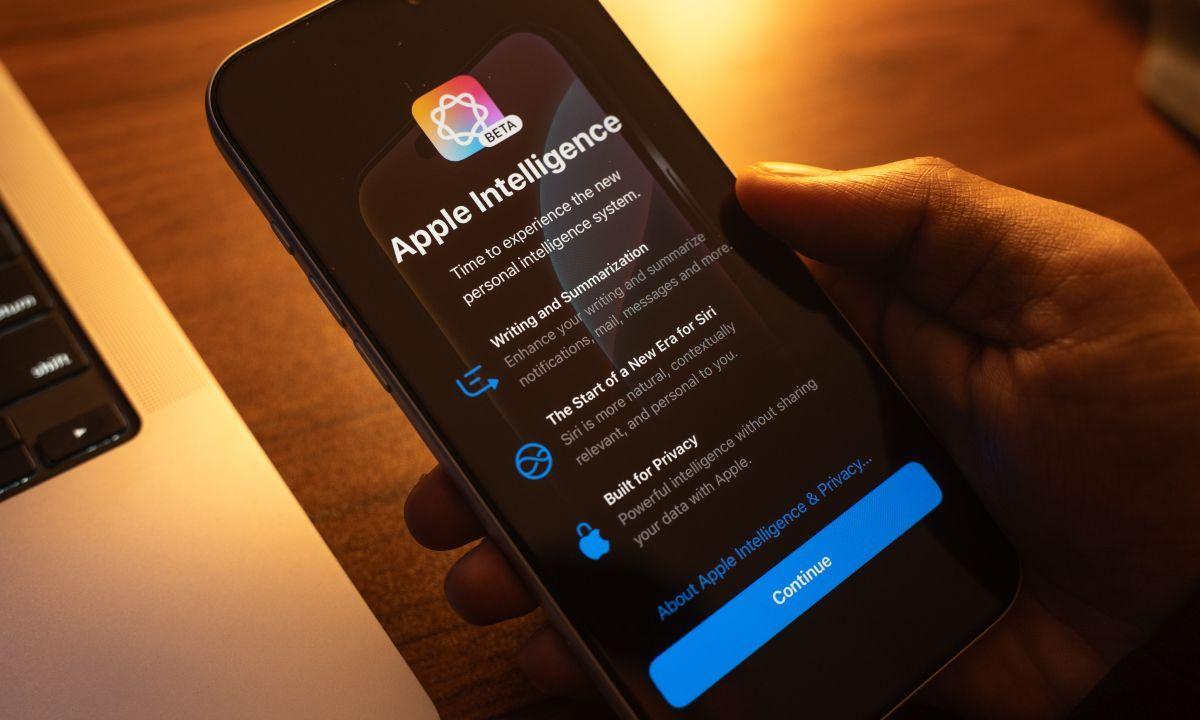
The recent departures came from Apple's Foundation Models, or AFM, team, which develops the underlying technology behind the Apple Intelligence platform
1
. The group has faced mounting scrutiny following repeated delays to the new Siri and a muted reception to Apple's current AI features. Over the summer, the team lost its former leader, Ruoming Pang, to Meta, and is now run by AI researcher Zhifeng Chen4
. Apple has lost well over a dozen AI researchers in the past six months, with many exits stemming from the company's decision to outsource some of its technology1
.
Source: PYMNTS
Reorganization and Talent Retention Issues in Apple's AI Division
The exodus of AI researchers follows a major reorganization of Apple's AI efforts last year. CEO Tim Cook relieved longtime AI chief John Giannandrea of his duties and handed responsibility to software head Craig Federighi
4
. Apple also hired Amar Subramanya, a former Google and Microsoft AI executive, to oversee parts of the organization. Former Google executive Daphne Luong, who had overseen the AFM team until the end of last year, was sidelined alongside Giannandrea and remains at Apple without operational responsibilities1
. The AI talent drain extends beyond researchers, with OpenAI reportedly hiring around 40 Apple engineers in recent months, including manufacturing design expert Matt Theobald and human interface design lead Cyrus Daniel Irani5
.Related Stories

Google DeepMind Partnership and Upgraded Siri Plans
Zirui Wang's move to Google DeepMind is particularly notable as the company is helping Apple build the core AI models that will power new features, including the technology underpinning an upgraded version of the Siri voice assistant launching this year
3
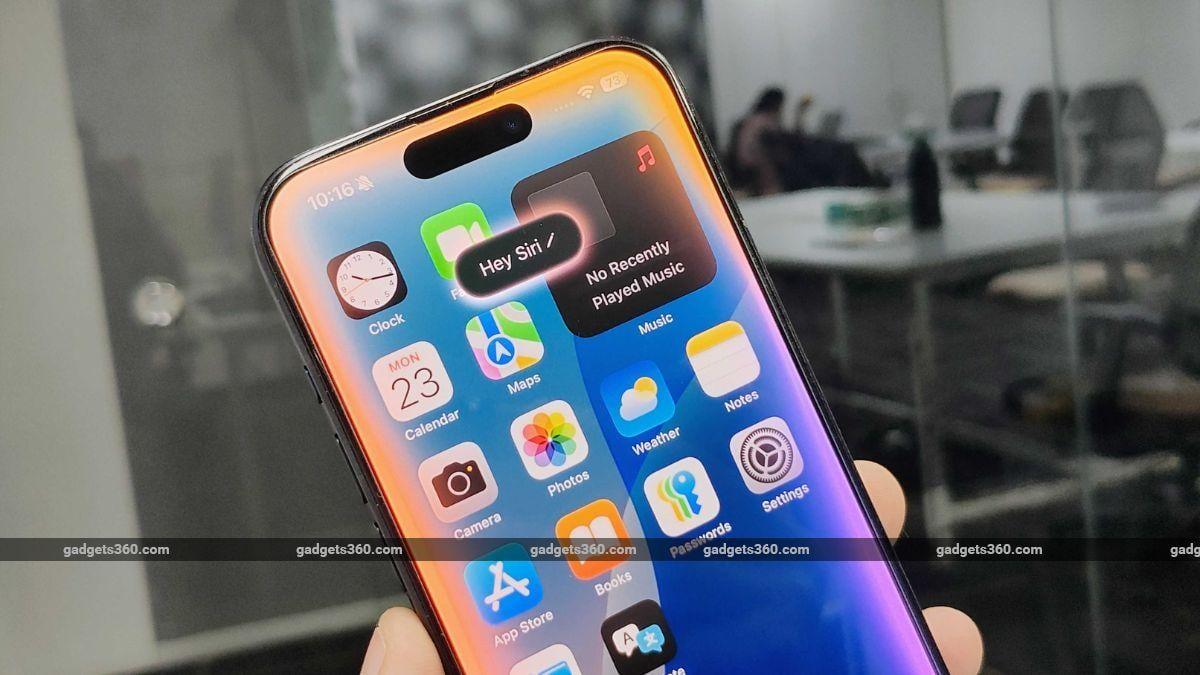
. Apple is preparing two new versions of Siri: a near-term update that will tap into personal data to answer queries, and a more ambitious overhaul for later this year built around a chatbot-style interface . Both versions will run on a new architecture powered by models developed by Google's team, though Apple continues to rely on its own models for on-device Apple Intelligence features4
.
Source: Gadgets 360
Stock Impact and Competitive Landscape for AI
Apple's AI challenges have contributed to a stock slump this year, even as the company reported blockbuster earnings on Thursday, including more than $85 billion in iPhone sales
1
. The lack of compelling AI breakthroughs and the ongoing drain of top talent remain a significant overhang, complicating the company's efforts to engineer a turnaround in the competitive landscape for AI. When asked why Apple chose to use Google, Cook said it would provide "the most capable foundation" for Apple's AI models, adding that the company believes it can "unlock a lot of experiences and innovate in a key way due to the collaboration"4
. The decision to outsource some technology to Google has reportedly rankled staff, contributing to the exodus of talent from its AI ranks1
. It's unlikely Apple will depend on outside partners indefinitely, given the competitive stakes of the AI race and the need to deliver a unique chatbot experience4
.References
Summarized by

Navi
Related Stories
Recent Highlights
1
OpenAI Releases GPT-5.4, New AI Model Built for Agents and Professional Work
Technology
2
AI chatbots helped teens plan violent attacks in 8 of 10 cases, new investigation reveals
Technology
3
Pentagon shuts door on Anthropic talks as Microsoft and Big Tech rally behind AI firm's lawsuit
Policy and Regulation
Recent Highlights
Today's Top Stories



Your Daily Dose of Curated AI News
Don’t drown in AI news. We cut through the noise - filtering, ranking and summarizing the most important AI news, breakthroughs and research daily. Spend less time searching for the latest in AI and get straight to action.

