AWS and Aumovio expand partnership to accelerate AI-driven development of self-driving vehicles


2 Sources
2 Sources
[1]
AWS, Aumovio expand AI-driven development of self-driving vehicles
LAS VEGAS, Jan 6 (Reuters) - Amazon's (AMZN.O), opens new tab cloud unit has partnered with German automotive hardware supplier Aumovio (AMV0n.DE), opens new tab to support the commercial rollout of self-driving vehicles, starting with Aurora's (AUR.O), opens new tab autonomous trucks, the companies said on Tuesday. As part of an expansion of a long-running partnership, Amazon Web Services will become Aumovio's preferred cloud provider for autonomous driving development driven by artificial intelligence tools. The new tools are set to be used for the first time for autonomous freight company Aurora's planned deployment of driverless trucks at scale from 2027. Automakers worldwide have poured billions into AI systems that power long-awaited self-driving technologies, which have faced several technical challenges. The collaboration reflects a broader shift in autonomous driving from research to commercial deployment, particularly in freight. Aurora has already launched limited driverless operations in the U.S. Using AWS's cloud systems, Aumovio's engineers can sift through vast amounts of driving data with generative and agentic AI to detect rare situations such as road debris and pedestrians in traffic lanes and speed up training and validation of autonomous systems. "When you validate a Level 4 system, you're trying to prove it behaves correctly in extremely rare situations that are very hard to find in the real world," Jeremy McClain, head of system and software at Aumovio's autonomous mobility unit, told Reuters. "Without AI, finding those edge cases in massive data sets would be very difficult." Aumovio, which was spun off from German tire maker Continental last year, supplies the hardware platform for Aurora's self-driving system and a separate "fallback" system designed to bring a truck safely to a stop if the primary autonomous driver fails, company executives said in an interview. Reporting by Akash Sriram in Bengaluru and Abhirup Roy in Las Vegas; Editing by Sahal Muhammed Our Standards: The Thomson Reuters Trust Principles., opens new tab * Suggested Topics: * Artificial Intelligence * ADAS, AV & Safety * Partnerships & M&A * Software-Defined Vehicle Abhirup Roy Thomson Reuters Abhirup Roy is a U.S. autos correspondent based in San Francisco, covering Tesla and the wider electric and autonomous vehicle industry. He previously reported from India on global corporations, capital markets regulation, white-collar crime, and corporate litigation. Contact him at (415) 941-8665 or connect securely via Signal on abhiruproy.10 Akash Sriram Thomson Reuters Akash reports on technology companies in the United States, electric vehicle companies, and the space industry. His reporting usually appears in the Autos & Transportation and Technology sections. He has a postgraduate degree in Conflict, Development, and Security from the University of Leeds. Akash's interests include music, football (soccer), and Formula 1.
[2]
AMZN stock today: Why Amazon shares jumps after AWS expands self-driving vehicle deal
Amazon stock today: Amazon shares climbed more than 3% on Tuesday after the company announced an expansion of its cloud partnership tied to the commercial rollout of self-driving vehicles, a move that investors viewed as another growth signal for Amazon Web Services. Amazon said its cloud division, Amazon Web Services, has partnered with German automotive hardware supplier Aumovio to support the deployment of autonomous vehicles, beginning with Aurora's driverless freight trucks, as per a report. As part of the expanded agreement, AWS will become Aumovio's preferred cloud provider for autonomous driving development using artificial intelligence tools, as per a Reuters report. The collaboration is set to play a key role in Aurora's plans to deploy autonomous trucks at scale starting in 2027. Shares of Aurora jumped more than 8% on Tuesday following the announcement, highlighting broader investor optimism around commercial self-driving technology. Also read: Why data-center cooling stocks dropped fast after Nvidia CEO Jensen Huang spoke at CES - here's the breakdown Automakers and technology firms worldwide have invested billions of dollars in AI-powered autonomous systems, though progress has been slowed by technical hurdles. The AWS-Aumovio partnership reflects a shift in the industry away from research and toward real-world commercial deployment, particularly in freight transport. Aurora has already launched limited driverless truck operations in the United States. Ozgur Tohumcu, general manager for automotive and manufacturing at Amazon Web Services, said that, "The big accelerant in the industry has been the use of engineering AI, because it allows development and validation with significantly fewer resources," as quoted by Reuters. Under the partnership, Aumovio engineers will use AWS cloud infrastructure alongside generative and agentic AI to analyze massive volumes of driving data. The technology helps identify rare but critical scenarios, such as road debris or pedestrians in traffic lanes, and speeds up the training and validation process for autonomous systems. Also read: Why Adidas stock is falling today after Bank of America cut ADS stock price target Jeremy McClain, head of system and software at Aumovio's autonomous mobility unit, said that, "When you validate a Level 4 system, you're trying to prove it behaves correctly in extremely rare situations that are very hard to find in the real world," adding that, "Without AI, finding those edge cases in massive data sets would be very difficult," as quoted by Reuters. Aumovio, which was spun off from German tire maker Continental last year, supplies the hardware platform for Aurora's self-driving system. It also provides a backup "fallback" system designed to safely stop a truck if the primary autonomous system fails. Why did Amazon stock rise today? Amazon shares climbed after AWS announced an expanded partnership linked to autonomous vehicles. When will Aurora deploy driverless trucks at scale? Aurora plans large-scale deployment starting in 2027.
Share
Share
Copy Link
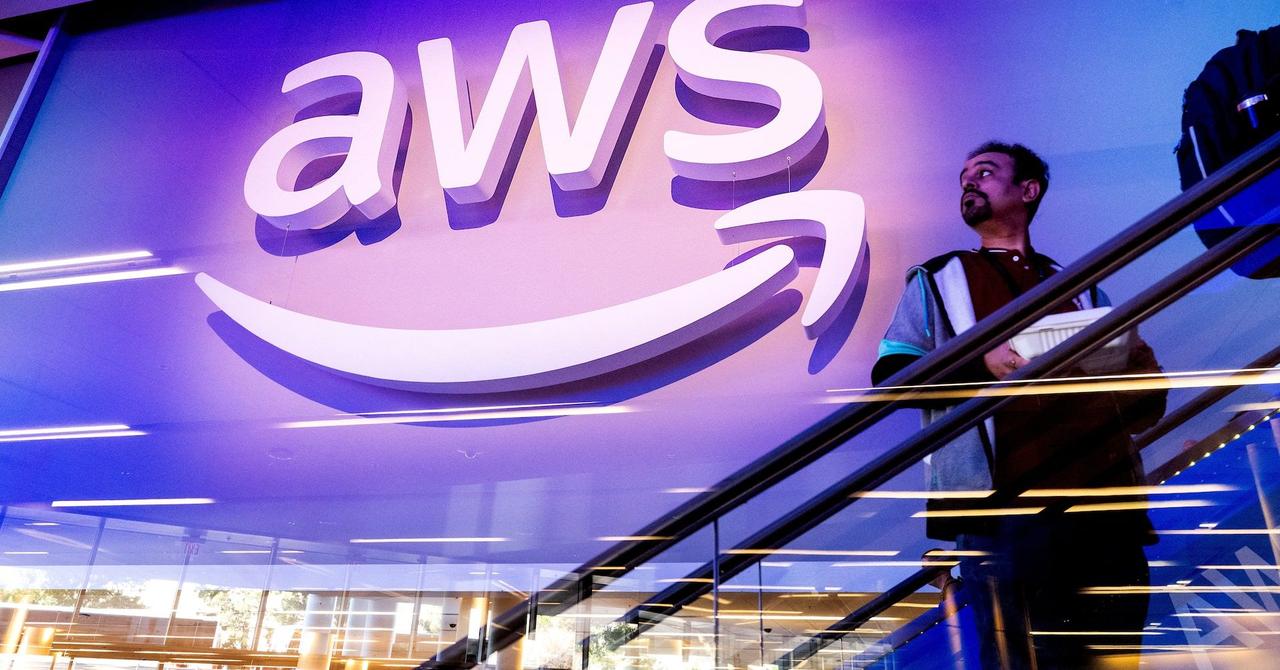
Amazon Web Services has expanded its partnership with German automotive supplier Aumovio to support the commercial rollout of self-driving vehicles. The collaboration will leverage generative and agentic AI tools to accelerate Aurora's planned deployment of driverless freight trucks at scale from 2027, marking a shift from research to real-world autonomous driving deployment.
AWS Becomes Preferred Cloud Provider for Autonomous Driving Development
Amazon Web Services has significantly expanded its partnership with German automotive hardware supplier Aumovio to support the commercial deployment of self-driving vehicles, with AWS becoming Aumovio's preferred cloud provider for AI-driven development
1
. The expanded partnership announced Tuesday will first be applied to Aurora's autonomous trucks, with the autonomous freight company planning large-scale deployment of driverless trucks starting in 20271
. The market responded positively to the news, with AMZN stock climbing more than 3% on Tuesday, while Aurora shares jumped over 8%, reflecting broader investor optimism around commercial autonomous driving technology2
.
Source: ET
Generative and Agentic AI Tools Transform Autonomous Systems Training
The cloud partnership enables Aumovio engineers to leverage generative and agentic AI tools to analyze massive volumes of driving data, a critical capability for the training and validation of autonomous systems
1
. Using AWS cloud systems, engineers can detect rare but critical scenarios such as road debris and pedestrians in traffic lanes, situations that are essential for validating Level 4 autonomous systems. "When you validate a Level 4 system, you're trying to prove it behaves correctly in extremely rare situations that are very hard to find in the real world," Jeremy McClain, head of system and software at Aumovio's autonomous mobility unit, told Reuters. "Without AI, finding those edge cases in massive data sets would be very difficult"1
.From Research to Commercial Deployment in Freight Transport
The collaboration reflects a broader industry shift in autonomous driving from research to commercial deployment, particularly in freight transport
1
. Ozgur Tohumcu, general manager for automotive and manufacturing at Amazon Web Services, noted that "the big accelerant in the industry has been the use of engineering AI, because it allows development and validation with significantly fewer resources"2
. Aurora has already launched limited driverless operations in the United States, positioning itself for the planned 2027 scale-up1
. Aumovio, which was spun off from German tire maker Continental last year, supplies the hardware platform for Aurora's self-driving system and a separate fallback system designed to bring a truck safely to a stop if the primary autonomous driver fails1
.
Source: Reuters
Related Stories

What This Means for the Autonomous Vehicle Industry
Automakers worldwide have poured billions into AI systems that power self-driving technologies, though the sector has faced several technical challenges
1
. This expanded partnership between AWS and Aumovio demonstrates how cloud infrastructure combined with generative AI and agentic AI is accelerating the path to commercial viability for driverless freight trucks. The ability to identify edge cases more efficiently through AI-powered data analysis addresses one of the most significant bottlenecks in autonomous driving development. For AWS, this cloud partnership represents another growth signal for its automotive and manufacturing vertical, while for the broader industry, Aurora's planned 2027 deployment could mark a turning point in the commercial deployment of self-driving vehicles at scale.References
Summarized by

Navi
Related Stories
Aurora, NVIDIA, and Continental Partner to Deploy AI-Powered Driverless Trucks at Scale
07 Jan 2025•Technology

Honda Partners with AWS to Develop Software-Defined Vehicles and Enhance EV Charging with Generative AI
08 Jan 2025•Technology

Amazon Unveils AI Advancements at AWS re:Invent 2024, Boosting Stock and Cloud Strategy
04 Dec 2024•Technology

Recent Highlights
1
Tennessee Teens Sue Elon Musk's xAI Over Grok AI-Generated Child Abuse Images
Policy and Regulation

2
Supermicro Co-Founder Indicted in $2.5 Billion Nvidia AI Chip Smuggling Scheme to China
Policy and Regulation
3
Val Kilmer to appear posthumously in As Deep as the Grave through AI-generated performance
Entertainment and Society

Recent Highlights
Today's Top Stories











Your Daily Dose of Curated AI News
Don’t drown in AI news. We cut through the noise - filtering, ranking and summarizing the most important AI news, breakthroughs and research daily. Spend less time searching for the latest in AI and get straight to action.

